What do you think?
Rate this book


352 pages, Kindle Edition
Published January 6, 2023
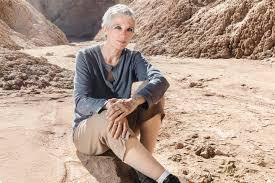
we may wish to continue ignoring our downward spiral of self-destruction, in which case, the outcome is already determined. as we completely relinquish our survival instinct, we will not only sacrifice an entire biosphere, but also, most extraordinarily for any species, our own kind.in the secret life of the universe, french-american astrobiologist nathalie cabrol — director of the seti institute's carl sagan center — offers a thrilling, enlightening course on the current science of the search for life beyond earth. cabrol explores the latest theories on life's origins and the promising new discoveries that bring us collectively closer to finding it elsewhere. covering an expanse of subjects likely familiar to readers of general science, cabrol communicates with clarity and obvious passion. importantly, cabrol places the search for life beyond earth within the context of humanity's present and increasingly perilous moment on earth, urgently entreating us to correct course, re-engage with our planetary roots, and take better care of "our vessel in space."
"...This is the odyssey that I wish to share with you in the following pages—the discoveries, of course, but also the questions that remain unanswered, including that of our humble beginnings: What is the origin of life? What is life? Are we alone in the universe?"
"This is an epic quest that seeks answers to the mysteries of life, a balancing act of microscopes exploring the most elemental bricks of life and radio telescopes searching for advanced extraterrestrial civilizations in the farthest reaches of the universe. This voyage of incredible significance sparks awe, curiosity, and an insatiable thirst for understanding. And it brings necessary changes in perspectives."
"Nearly two decades after I became a part of the SETI Institute, it was my turn to lead a new NAI-funded project. With a multidisciplinary team, our goal was to develop techniques for planetary exploration that could enable the detection of the signatures of life, called biosignatures. And 2015 was also the year when I was appointed as the director of the Carl Sagan Center, becoming the SETI Institute’s chief scientist."
"...A basic extrapolation of the Kepler data on the number of exoplanets in our galaxy alone suggests that tens of billions of Earth-sized planets could be located in the habitable zone of sun-like stars. Suppose only one in a billion has developed a type of life that made it to higher levels of complexity and intelligence. Then nearly a dozen advanced civilizations could populate our galaxy alone. Even if it were only one per one hundred galaxies, there could still be billions of them in the universe. And because the probability distribution in nature predicts more puddles than large lakes, more small buttes than Himalayas, more small planets than large ones, and more simple life than complex life, it follows that the universe is likely teeming with planets harboring simple life."
The first modern biochemical model for the origin of life [suggests] that life arose gradually from inorganic molecules, building blocks like amino acids forming first. They then combined to make complex polymers in warm pools at the water’s edge. Oparin did not see any fundamental differences between a living organism and lifeless matter. He thought that the characteristics of life had arisen as part of the evolution of matter. In other words, prebiotic chemistry transitioned to biology. [p. 35]
More often than not, the term “development” is used in an exclusive economic sense—the justification being that the type of economy is itself an index of other social features. What then is economic development? A society develops economically as its members increase jointly their capacity for dealing with the environment. This capacity for dealing with the environment is dependent on the extent to which they understand the laws of nature (science), on the extent to which they put that understanding into practice by devising tools (technology), and on the manner in which work is organized. [Chapter I: Some Questions on Development]
Once we set foot on Mars, it will only be a matter of time before the planet becomes contaminated. Humans are walking microbiomes and the environmental conditions on Mars might not be different enough to prevent some terrestrial microorganisms from adapting to a new planet. Humanity’s arrival will thus signal a permanent modification of the Martian environment, and we may bring life to a place that possibly never had it before. [p. 89]