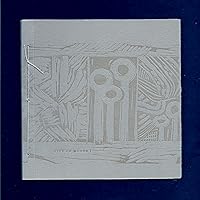
Poetry. Full of the will and the weather, that great skeptic Wallace Stevens walked to work and wrote his poems, poems you may well already love and believe. (Good, as they say, for you.) And as for Chris Tonelli, he walks in that read him, and be merciful unto yourself. His foot standeth in an even place. This book'll make you bloom--Graham Foust.
I'm a person that writes in books once I know I'm going to try to keep them forevers. So, I've written in this book and turned down corners of many pages. (not finished yet, so i'm sorta assuming it won't all become a shit show, and going ahead with the 5 stars.)
***
That was my old review. My better more thorough less vulgar review can be found... where is it? I mean, literally, I cannot find my own review.
I do believe this was one of the first poetry books I ever purchased by a living author. Of course, I'd read many a poem over the years, but mostly it was from those read by the Dead Poet Society. And though I'd read my own poems in bars, I hadn't really been introduced to the idea that there was a world where people intentionally gathered 'round just to listen to each other's poems rather than being tricked into it by alcoholic beverages or coerced by the threat of a bad grade.
So, having traveled from Chapel Hill to Raleigh with a poetry-reading friend, and met Chris who was hosting the event, I ordered his book. And it arrived wrapped in brown paper with my name and address written in ink. And a note of some sort to the effect of "Thank you for ordering my book I hope you enjoy it." And I felt amazed. How this was what poetry was supposed to be, somehow, connected with community, not just words. And I felt a worn warmth and clarity as real as the indentation from a handheld pen that had pressed the ink deep beyond the surface of the brown wrapping paper.
And that was the feeling I had about this book. I had met not only Chris but also his family at dinner before or after the poetry reading, I no longer recall the sequence. And I could feel the love between him and his wife and kids. And in this book, one of his early ones if I recall, I felt the heart of a man who was doing all these things, thinking all these things, loving all these people, and how he had inscribed his examined life on these pages such that anyone who picked up and read this book could access all that.
All that was a lot. It was both perceptive and questioning, appreciative and striving, all wrapped up in words that allowed for a sense of grace in being mortal. Yes, it was okay to be mortal. And that was a good feeling. Like the feeling of receiving a plain brown parcel addressed in ink by hand.
This is what thinking must sound like. This book reminded me of reading old school poetry, I mean the masters, like when I first read Rilke and Dickenson and Basho and Lorca and felt like I knew what silence and transformation meant for the first time. Poems that are crafted and felt, as if they've been there for a thousand years and will be there for a thousand more.