

What do you think?
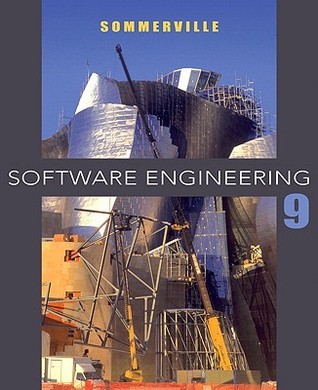
Software Engineering
Intended for introductory and advanced courses in software engineering.
The ninth edition of Software Engineering presents a broad perspective of software engineering, focusing on the processes and techniques fundamental to the creation of reliable, software systems. Increased coverage of agile methods and software reuse, along with coverage of 'traditional' plan-driven software engineering, gives readers the most up-to-date view of the field currently available. Practical case studies, a full set of easy-to-access supplements, and extensive web resources make teaching the course easier than ever.
The book is now structured into four
1: Introduction to Software Engineering
2: Dependability and Security
3: Advanced Software Engineering
4: Software Engineering Management
The ninth edition of Software Engineering presents a broad perspective of software engineering, focusing on the processes and techniques fundamental to the creation of reliable, software systems. Increased coverage of agile methods and software reuse, along with coverage of 'traditional' plan-driven software engineering, gives readers the most up-to-date view of the field currently available. Practical case studies, a full set of easy-to-access supplements, and extensive web resources make teaching the course easier than ever.
The book is now structured into four
1: Introduction to Software Engineering
2: Dependability and Security
3: Advanced Software Engineering
4: Software Engineering Management
792 pages, Hardcover
First published January 1, 1982
Ratings & Reviews
Friends & Following
Create a free account to discover what your friends think of this book!
Community Reviews
Displaying 1 - 30 of 47 reviews

October 19, 2019
Read this with a book club at work. It's a great book filled with lots of arcihtecture and best design concepts. It's defiintely a book I'll need to go back and reread a couple times.

December 31, 2014
Well, I know this borders on cheating, but I hope you will forgive me. It is 6 p.m. Eastern Time (3 p.m. here, in California) on 12/31/2014. I have read 99 books in 2014 and I pledged to read 100. I hate breaking pledges, so I will briefly review the textbook I have been teaching from all year. I had to read over 50 pages of the textbook today while grading the final exam, so I hope this justifies the inclusion of this review here.
I had taught Software Engineering, since mid-1990s, from various textbooks before I found Sommerville, Edition 6. Now I teach from the most current Edition 9, which is a truly mature textbook. It is divided, quite logically, into four main parts: Introduction to Software Engineering, Dependability and Security, Advanced Software Engineering, and Software Management. These parts comprise 26 content-packed chapters that I all manage to cover in the Software Engineering course. Sommerville is by far the best textbook on the subject I have ever read. The best feature of the text is that it is comprehensive, deep enough, and readable, if a bit boring (simply because the subject is quite boring).
Of course, I have minor qualms as to the allocation of space for individual topics. I would use more space for the Web-based programming and portable-device programming and less on obsolete concepts such as, say, the spiral model. I would expand space dedicated to agile methods. I am sure this will all come in the next edition.
My students programmatically do not like textbooks from which they are learning, yet they tolerate this one, and they do read all 716 pages (and are quizzed on all the material). This is another indication that it is quite a good textbook.
To lighten this overly serious review, let me quote a funny bit from Edition 8 of this textbook. Sommerville listed factors that influence programmers' productivity. One of these factors was termed "Outside awareness". The explanation made it clear that "outside awareness" meant "a window". Don't you love euphemisms?
Four and a quarter stars.
I had taught Software Engineering, since mid-1990s, from various textbooks before I found Sommerville, Edition 6. Now I teach from the most current Edition 9, which is a truly mature textbook. It is divided, quite logically, into four main parts: Introduction to Software Engineering, Dependability and Security, Advanced Software Engineering, and Software Management. These parts comprise 26 content-packed chapters that I all manage to cover in the Software Engineering course. Sommerville is by far the best textbook on the subject I have ever read. The best feature of the text is that it is comprehensive, deep enough, and readable, if a bit boring (simply because the subject is quite boring).
Of course, I have minor qualms as to the allocation of space for individual topics. I would use more space for the Web-based programming and portable-device programming and less on obsolete concepts such as, say, the spiral model. I would expand space dedicated to agile methods. I am sure this will all come in the next edition.
My students programmatically do not like textbooks from which they are learning, yet they tolerate this one, and they do read all 716 pages (and are quizzed on all the material). This is another indication that it is quite a good textbook.
To lighten this overly serious review, let me quote a funny bit from Edition 8 of this textbook. Sommerville listed factors that influence programmers' productivity. One of these factors was termed "Outside awareness". The explanation made it clear that "outside awareness" meant "a window". Don't you love euphemisms?
Four and a quarter stars.

January 3, 2019
کتاب قوی و خوبی بود

May 3, 2016
I think this book is more useful for managers than programmers and Code Complete, the other textbook for my software engineering class, is much better for developers (as such, me right now). However, if you're interested in learning about different software engineering methods and styles of work / management / planning / cycles then this is pretty good. It goes into more detail than Code Complete on different styles of collective coding.
April 6, 2012
A seminal volume in the software engineering world. If you are serious about improving your credentials as a true software engineer, you simply must read this text.
Read
February 4, 2011Has good research material in it. Using it for my 260 assignment.

February 6, 2022
An awful lot of the ideas in this book have been embedded into the requirement definition in my employer, and I would suspect throughout large portions of the industry. As a result, the book now reads like a long list of blindingly obvious points.
I've been reading First 6th Chapters of this book in a Software Engineering course at the university.
I've been reading First 6th Chapters of this book in a Software Engineering course at the university.

June 24, 2023
Easy to understand for those learning about the foundations of software engineering. I found the writing to be a bit opinionated at times, for example the author’s opinion on Model Based SE. Overall, thorough book that ties in Software Systems Engineering well.

Read
July 9, 2021ودي أقول إني استفدت بس والله مش فاهم

August 3, 2013
This book is very good for any one in software field. Some times I lost in the examples. But overall, you can depend on it. I studied it in 2003, but I use it again in 2012 and 2013 and I think I will use it again.
October 10, 2010
A bit boring but well-written!
March 16, 2012
A bit dry.

March 3, 2023
It's a textbook. I would have given it 3.5 stars, but I cannot give it a half-star, and I don't think it deserves a 3-star rating.
The book covers a lot of ground, from an intro to processes, engineering, refinement, improvement, modeling, architecture, and more to advanced concepts such as security, SOA, and different system types. The book is highly academic and was used in my master's course at TESU (SWT-571) alongside Code Complete as a companion book. Overall, the content needs to be updated as some of these concepts have not aged well. Likewise, a lot of the content is not overly practical, but instead, the academic theoretical knowledge may struggle to be applied by new software engineers in the business. As someone who works as a Senior Software Engineer at a mid-sized SaaS firm, I can say that I would not expect folks reading this to know some of the concepts, nor would I feel like someone working through the content would be adequately prepared for a job.
A lot more needs to be said these days surrounding CI/CD, cloud computing, Infrastructure as Code, elasticity, reliability, and scalability. Some of the practices in this book use terminology and references to software and tooling over a decade old. The industry moves fast. Books like these don't remain on par for long.
While the book is academic, it is at least logically written and somewhat consumable as a textbook for a student, which remains tolerable. Software engineers looking for a management track may find this textbook more valuable. Still, it does leave a lot to be desired, which remains a shortcoming of the author and academia geared toward the software industry.
The book covers a lot of ground, from an intro to processes, engineering, refinement, improvement, modeling, architecture, and more to advanced concepts such as security, SOA, and different system types. The book is highly academic and was used in my master's course at TESU (SWT-571) alongside Code Complete as a companion book. Overall, the content needs to be updated as some of these concepts have not aged well. Likewise, a lot of the content is not overly practical, but instead, the academic theoretical knowledge may struggle to be applied by new software engineers in the business. As someone who works as a Senior Software Engineer at a mid-sized SaaS firm, I can say that I would not expect folks reading this to know some of the concepts, nor would I feel like someone working through the content would be adequately prepared for a job.
A lot more needs to be said these days surrounding CI/CD, cloud computing, Infrastructure as Code, elasticity, reliability, and scalability. Some of the practices in this book use terminology and references to software and tooling over a decade old. The industry moves fast. Books like these don't remain on par for long.
While the book is academic, it is at least logically written and somewhat consumable as a textbook for a student, which remains tolerable. Software engineers looking for a management track may find this textbook more valuable. Still, it does leave a lot to be desired, which remains a shortcoming of the author and academia geared toward the software industry.

May 9, 2025
The book covers all the essential topics that you have to master to move from "software developer" to "software engineer". In particular, I liked how it covers the software engineering from a theoretical point of view, trying to provide useful guidelines and a systematic approach to the discipline. Sure, as I say in CS textbooks' reviews - if you expect to read 1 book on the topic, it is better for you to change profession. In addition, some topics may not be understandable immediately, without practical experience. I refer to problems of enterprise software engineering and other domains with strict, established processes, like aeronautics or healthcare domain. But, in the general, the manual does a fantastic job of highlighting different topics that are important to learn as a software engineer. Just, consider it as the starting point, not "all-in-one".

November 17, 2017
I read this book as part of a software methodology course on my computer science education. Where the book truly shines is at its thorough core of process and methodology explanations. For this reason alone I would recommend reading the book, but as a modern approach to learn about the processes the book is unfortunately quite heavy and self repeating. I will most likely use this book as a glossary, in case I forget the name of a concept in the future.

Read
January 4, 2022Heady technical book for class. Not much else to say, class didn't follow the book, but it is insightful and helped with many core concepts. The topic is so fluid that any one perspective (or book) is just good as a resource for critical thought, this book is no different. If you are into concrete concepts to abstract applications (as in uses not programs) this book will help. If you prefer open-ended abstract principals in software engineering, I would not choose this one.

October 1, 2025
I read this book while cursing my engineering degree at university. It was a real challenge, because the professor gave us an exam on the entire book, using the case studies and the solutions proposed by the author. For me, it was a complete nightmare.
Nowadays, I apply a lot of what I learned from this book. Back then, I ignored many of those methods.
Nowadays, I apply a lot of what I learned from this book. Back then, I ignored many of those methods.

March 29, 2023
The book itself is easy to understand and covers the surface quite well. However, it is not really helpful for developers to achieve better and smoother workflow. Would recommend it to people such as business managers to grab some basic idea of how an SWE project works.

Read
May 19, 2023İçinde süreçler, yönetim, test, mimari, sistemler ve temel yazılımla alakalı akla gelebilecek her konuya değinen bir kaynak. Teoriden ziyade iş hayatında zamanla edinilen pratik bilgiyle de harmanlandığında mükemmel bir başvuru, pekiştirme kitabı oluyor.
December 13, 2017
I used this book as reference in my Graduation project, i think it's important to all CS students.
December 27, 2018
Must read.

May 20, 2019
I am not interested in this field but when i read it, i found it simple and easy to study ..
it is well-written book ..
it is well-written book ..

October 24, 2019
It is good book that software engineers can take help, in professional or even a beginner can take. But some topics are not in it

February 13, 2021
Sommerville is another text book of sofware engineering, a must read book for those on the big sofware development project
October 25, 2022
One of the best literature out there to keep up with the industry practices. Jargon at places

May 8, 2023
Pratig och upprepande, men fyller sitt syfte.

June 2, 2024
Started it as a beginner in the field, long but never boring and has a lot of helpful tips and exercises.
August 11, 2025
Got to Read this for my Mechatronics Engineering, learned a lot of cool stuff

December 17, 2025
Injects useful and professional perspectives.
February 10, 2026
Good. I've read only some specific chapters, too.
Displaying 1 - 30 of 47 reviews