

What do you think?

Mrs. Warren's Profession
.
60 pages, Paperback
First published January 1, 1898
About the author
George Bernard Shaw
2,497 books4,285 followersGeorge Bernard Shaw stands as one of the most prolific and influential intellectuals of the late nineteenth and early twentieth centuries, a man whose literary output was matched only by his fervent commitment to social reform. Rising from a modest background in Dublin to become a global icon of letters, Shaw redefined the purpose of the stage, transforming it from a place of mere entertainment into a forum for rigorous intellectual debate and moral inquiry. His unique "Shavian" style—characterized by sharp-witted dialogue, paradoxical reasoning, and a relentless assault on Victorian hypocrisy—ensured that his voice resonated far beyond the footlights. As a playwright, critic, and philosopher, he remains a singular figure in history, being one of only two individuals to have been honored with both a Nobel Prize in Literature and an Academy Award. This rare crossover of high-art recognition and mainstream cinematic success speaks to his versatility and the enduring relevance of his narratives. His dramatic work, which includes over sixty plays, often tackled the most pressing issues of his day, from the rigid structures of the British class system to the complexities of gender roles and the ethical dilemmas of capitalism. In masterpieces like Pygmalion, he used the science of phonetics to demonstrate the artificiality of class distinctions, a theme that would later reach millions through the musical adaptation My Fair Lady. In Man and Superman, he delved into the philosophical concepts of the "Life Force" and the evolution of the human spirit, while Major Barbara forced audiences to confront the uncomfortable relationship between religious idealism and the industrial military complex. Beyond his theatrical achievements, Shaw was a foundational force in political thought, serving as a leading light of the Fabian Society. His advocacy for gradual socialist reform, rather than violent revolution, helped shape the trajectory of modern British politics and social welfare. He was instrumental in the creation of the London School of Economics, an institution that continues to influence global policy and economic theory. Shaw was also a formidable critic, whose reviews of music and drama set new standards for the profession, characterized by an uncompromising honesty and a deep knowledge of the arts. His personal lifestyle was as distinctive as his writing; a committed vegetarian, teetotaler, and non-smoker, he lived with a disciplined focus that allowed him to remain productive well into his ninth decade. He was a man of contradictions, often engaging in provocative public discourse that challenged the status quo, even when his views sparked intense controversy. His fascination with the "Superman" archetype and his occasional support for authoritarian figures reflected a complex, often elitist worldview that sought the betterment of humanity through radical intellectual evolution. Despite these complexities, his core mission was always rooted in a profound humanitarianism and a desire to expose the delusions that prevented society from progressing. He believed that the power of the written word could strip away the masks of respectability that hid social injustice, and his plays continue to be staged worldwide because the human foibles he satirized remain as prevalent today as they were during his lifetime. By blending humor with gravity and intellect with accessibility, Shaw created a body of work that serves as both a mirror and a compass for modern civilization. His legacy is not just in the scripts he left behind, but in the very way we think about the intersection of art, politics, and the individual’s responsibility to the collective good. He remains the quintessential public intellectual, a man who never feared to speak his mind or to demand that the world become a more rational and equitable place.
Ratings & Reviews
Friends & Following
Create a free account to discover what your friends think of this book!
Community Reviews
Displaying 1 - 30 of 398 reviews

June 20, 2011
Getting Biblical about this, should the sins of the fathers be visited upon the children unto the tenth generation? Does this apply to mothers too? Or shall we be a bit more modern and forgiving about it? The daughter in this play took the hard Biblical line and applied it to her mother, cutting her off from all contact when she found out that her extremely privileged youth and expensive education as a lawyer had been paid for by her mother's hard work first on her back and secondly running houses full of girls who also laid down to work.
She didn't, however, offer to pay her mother back.
Hypocrite.
Tremendously entertaining read featuring lots of good-natured people and one or two who weren't. It puts the pros of prostitution - self-employment, self-determination and high earnings mostly - against the cons - social suicide if you are found out and paternity of a child might be difficult to identify, chief among them.
At the time of writing, 1898, this was a shocking, distasteful story. Now whether or not it's shocking depends on who the prostitute is and her exact position in the world of whoredom.
A friend's daughter who had been working in a secretarial position in Hong Kong, turned up on the internet in the missionary position and whether or not she took private clients was kind of irrelevant after that. The family was shocked, horrified and ashamed but did not in any way cut their daughter off, but she attempted suicide anyway.
If we hear of a woman being a street prostitute to support her drug habit, we feel differently than if she had been doing it to support her children. And for women a little further up the scale, the call girls, escorts, part-time whores, there is a sort of good-luck-to-her attitude mixed with a bit of disgust as to why she couldn't find herself a more conventional job.
For those at the top of the whoredom tree, the girlfriend harems of the late Hugh Hefner and his like, there is often fame! Look at The Girls Next Door - Holly, Kendra and the rest, moved on from their $1,000 a week 'pocket money' and sexual obligations twice a week! (See Bunny Tales for details of their job descriptions!)
Mind, this disparity in reaction to prostitution has always existed at the top of society. The working-class girls were socially-unacceptable whores, but the aristocratic ones, working at the very pinnacle of society, were called 'courtesans' and the King's 'favourite' and other such euphemisms and much lauded for their beauty and connections. Now they are called 'celebrities" and "WAGS" (wives and girlfriends of footballers) and even 'trophy wives'.
The main difference between those days and now is that then social opprobrium was the likely result on people discovering you were a whore, whereas now, its more likely people will sidle up to you and say 'what's it really like, do you uh, enjoy it?' and want to know the sleazy, details! It was probably the same then but manners didn't allow them to say it.
Rewritten March 24th 2018
Original review June 28th 2011
She didn't, however, offer to pay her mother back.
Hypocrite.
Tremendously entertaining read featuring lots of good-natured people and one or two who weren't. It puts the pros of prostitution - self-employment, self-determination and high earnings mostly - against the cons - social suicide if you are found out and paternity of a child might be difficult to identify, chief among them.
At the time of writing, 1898, this was a shocking, distasteful story. Now whether or not it's shocking depends on who the prostitute is and her exact position in the world of whoredom.
A friend's daughter who had been working in a secretarial position in Hong Kong, turned up on the internet in the missionary position and whether or not she took private clients was kind of irrelevant after that. The family was shocked, horrified and ashamed but did not in any way cut their daughter off, but she attempted suicide anyway.
If we hear of a woman being a street prostitute to support her drug habit, we feel differently than if she had been doing it to support her children. And for women a little further up the scale, the call girls, escorts, part-time whores, there is a sort of good-luck-to-her attitude mixed with a bit of disgust as to why she couldn't find herself a more conventional job.
For those at the top of the whoredom tree, the girlfriend harems of the late Hugh Hefner and his like, there is often fame! Look at The Girls Next Door - Holly, Kendra and the rest, moved on from their $1,000 a week 'pocket money' and sexual obligations twice a week! (See Bunny Tales for details of their job descriptions!)
Mind, this disparity in reaction to prostitution has always existed at the top of society. The working-class girls were socially-unacceptable whores, but the aristocratic ones, working at the very pinnacle of society, were called 'courtesans' and the King's 'favourite' and other such euphemisms and much lauded for their beauty and connections. Now they are called 'celebrities" and "WAGS" (wives and girlfriends of footballers) and even 'trophy wives'.
The main difference between those days and now is that then social opprobrium was the likely result on people discovering you were a whore, whereas now, its more likely people will sidle up to you and say 'what's it really like, do you uh, enjoy it?' and want to know the sleazy, details! It was probably the same then but manners didn't allow them to say it.
Rewritten March 24th 2018
Original review June 28th 2011

February 19, 2018
People are always blaming their circumstances for what they are. I don't believe in circumstances. The people who get on in this world are the people who get up and look for the circumstances they want, and if they can't find them, make them.
Mrs Warren's Profession ~~ George Bernard Shaw
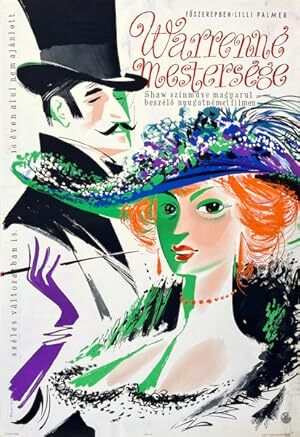
#7 of my 2018 Shaw Project
Shaw's Mrs Warren's Profession was banned for nearly 30 years by a Lord Chamberlain who condemned it for being immoral & improper. It has lost none of its edginess these past 125 years.
Mrs Warren's Profession is a complex comedy - not your typical satire or farce, instead a character driven story focused on the relationship between Vivie and Mrs. Warren. Complex in the sense that any of the older men mentioned in the play could be her father ~~ it's a harsh reality that is brought to light with a comedic tone. Without ever mentioning the word prostitution, Shaw's play is able to delve into the moral taboos and consequences of the profession.

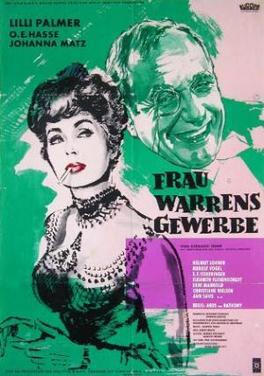
Mrs. Warren is a dream role for any actress. She is light & comedic when needed, strong & emotional at others. She drives the play even when she is not appearing on stage. It's no wonder Uta Hagen, Cherry Jones, Elizabeth Ashley, Joan Plowright, Coral Browne, Lili Palmer & Imelda Staunton have loved playing her.
Shaw here highlights a still taboo subject matter & does so brilliantly.
April 11, 2026
Seven years after my last read of Mrs Warren's Profession, I continue to be intrigued by this script. What hampers Mrs Warren's Profession in production is most readers & directors place too much emphasis on Shaw's writings about the play, rather than to the text of the play itself.
With this read I'm convinced the three themes of the play are love, lust & commerce, & while Shaw knew commerce & love well, he had trouble tackling lust in his work. If you treat Mrs Warren's Profession simply as a philosophical debate, you lose what makes this exciting. I think Mrs Warren's Profession a wonderful play with terrific scenes. Best of all, Mrs. Warren is a very witty, exciting & sympathetic character with great complexity.
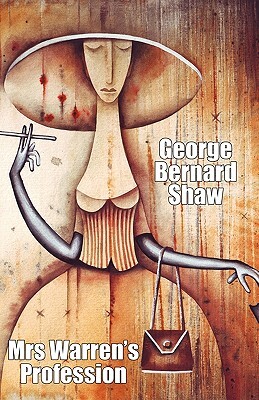
Mrs Warren's Profession ~~ George Bernard Shaw
#7 of my 2018 Shaw Project
Shaw's Mrs Warren's Profession was banned for nearly 30 years by a Lord Chamberlain who condemned it for being immoral & improper. It has lost none of its edginess these past 125 years.
Mrs Warren's Profession is a complex comedy - not your typical satire or farce, instead a character driven story focused on the relationship between Vivie and Mrs. Warren. Complex in the sense that any of the older men mentioned in the play could be her father ~~ it's a harsh reality that is brought to light with a comedic tone. Without ever mentioning the word prostitution, Shaw's play is able to delve into the moral taboos and consequences of the profession.
Mrs. Warren is a dream role for any actress. She is light & comedic when needed, strong & emotional at others. She drives the play even when she is not appearing on stage. It's no wonder Uta Hagen, Cherry Jones, Elizabeth Ashley, Joan Plowright, Coral Browne, Lili Palmer & Imelda Staunton have loved playing her.
Shaw here highlights a still taboo subject matter & does so brilliantly.
April 11, 2026
Seven years after my last read of Mrs Warren's Profession, I continue to be intrigued by this script. What hampers Mrs Warren's Profession in production is most readers & directors place too much emphasis on Shaw's writings about the play, rather than to the text of the play itself.
With this read I'm convinced the three themes of the play are love, lust & commerce, & while Shaw knew commerce & love well, he had trouble tackling lust in his work. If you treat Mrs Warren's Profession simply as a philosophical debate, you lose what makes this exciting. I think Mrs Warren's Profession a wonderful play with terrific scenes. Best of all, Mrs. Warren is a very witty, exciting & sympathetic character with great complexity.

June 3, 2007
Mrs. Warren’s Profession (1883) was first collected in Plays Pleasant and Unpleasant, where Shaw classifies it as one of his “unpleasant” plays. And, boy, is Shaw ever right.
Partly, this is because of the theme of the play: women are drawn into prostitution because of economic necessity, not because of a defect of moral character or the consequences of a disastrous love affair. This in itself is an uncomfortable truth for a Victorian audience, guaranteed to make ‘em squirm in their seats. Moreover, Shaw makes it even more difficult for the audience by refusing to manipulate their intellects by enlisting their sentiments. Both the women, the prostitute-turned-madam mother (Kitty Warren) and her sheltered, disapproving daughter (Vivie Warren), are hard-headed and unsympathetic, and both their male friends are rather sleazy characters, capable of flirting with both mother and daughter. Stop looking for honor and love here, Shaw tells us, and get back to the economic issue. That’s what’s important.
It is a noble experiment, and, although I think it could have used a little more heart, I found Mrs. Warren’s Profession both thought provoking and satisfying. I enjoyed reading it enough that I would like to see it performed.
Here are a few excerpts from Kitty’s defense of her life choice to her unsympathetic daughter Vivie:
But where can a woman get the money to save in any other business? Could y o u save out of four shillings a week and keep yourself dressed as well? Not you. Of course, if youre a plain woman and can’t earn anything more; or if you have a turn for music, or the stage, or newspaper-writing: thats different. But neither Liz nor I had any turn for such things at all: all we had was our appearance and our turn for pleasing men. Do you think we were such fools as to let other people trade in our good looks by employing us as shopgirls, or barmaids, or waitresses, when we could trade in them ourselves and get all the profits instead of starvation wages? Not likely. . .
What is any respectable girl brought up to do but to catch some rich man’s fancy and get the benefit of his money by marrying him?--as if a marriage ceremony could make any difference in the right or wrong of the thing! Oh, the hypocrisy of the world makes me sick! Liz and I had to work and save and calculate just like other people; elseways we should be as poor as any good-for-nothing drunken waster of a woman that thinks her luck will last for ever. [With great energy] I despise such people: theyve no character; and if theres a thing I hate in a woman, it’s want of character. . .
Of course it’s worthwhile to a poor girl, if she can resist temptation and is good-looking and well conducted and sensible. It’s far better than any other employment open to her. I always thought that it oughtn’t to be. . . But it’s so, right or wrong; and a girl must make the best of it. . . I should have been a fool if I’d taken to anything else.

September 20, 2012
1893 Shaw play about how economic systems create prostitution. The play was banned for several years and Shaw with a wink published it in a collection of his "unpleasant" plays that point to Victorian hypocrisy. Vivie Warren has been given every economic advantage by her mother, Kitty. She gets an an elite private education, a law degree, and a prestigious position. Mother has had little contact with her daughter, but now wants to reunite with her. When they do get together, Kitty reveals she was not only a prostitute but ran a series of highly successful brothels in Europe.
Mom wants unconditional love and acceptance, but daughter disapproves. Apparently squirmy audiences--who always have assumed moral defects in sex workers and can't even talk about "the oldest profession" and what is now a global multi-trillion-dollar business (separating it out from marriage as in part economic relationship), don't generally want to see this play.
But ultimately this is a play about women's liberation and a critique of the aspects of capitalism and patriarchy that force or urge women into what can sometimes be a high-paying profession. One of many Shaw plays that feature strong, independent women. Makes me think of also Victorian Ibsen's Hedda Gabler and The Doll's House, also still important plays. I don't think this is one of Shaw's very best plays, but it is provocative and funny in poking fun at societal hypocrisy. See also Chester Brown's Paying For It, or Mary Wept, his study of prostitution in the Bible.
Mom wants unconditional love and acceptance, but daughter disapproves. Apparently squirmy audiences--who always have assumed moral defects in sex workers and can't even talk about "the oldest profession" and what is now a global multi-trillion-dollar business (separating it out from marriage as in part economic relationship), don't generally want to see this play.
But ultimately this is a play about women's liberation and a critique of the aspects of capitalism and patriarchy that force or urge women into what can sometimes be a high-paying profession. One of many Shaw plays that feature strong, independent women. Makes me think of also Victorian Ibsen's Hedda Gabler and The Doll's House, also still important plays. I don't think this is one of Shaw's very best plays, but it is provocative and funny in poking fun at societal hypocrisy. See also Chester Brown's Paying For It, or Mary Wept, his study of prostitution in the Bible.

May 8, 2010
George Bernard Shaw was ahead of his time, and this play was banned when it was written (1893).
It exposes the hypocrisy of a society that condemns those who are not chaste, but does little to assuage the poverty that leaves some women few alternatives to survive (similar territory to JB Priestly's "The Inspector Calls", set less than 20 years later). Equally controversially, it makes a strident case for women's emancipation in general, whilst retaining Shaw's peppering of acerbic wit (Wilde with a social conscience, perhaps?). It also has a very modern ending, i.e. ambiguous and probably not happy.
Intellectual, highly educated and fiercely independent twenty-something Vivie is an only child who was farmed out to families and tutors, and barely knows her enigmatic but apparently respectable mother.
She learns that her mother used to be a prostitute and then made more serious money from running several profitable brothels in mainland Europe. Most of the play is concerned with Vivie trying to come to terms with this and how it affects her feelings towards the mother who wants to be loved unconditionally.
Vivie wants to be sympathetic, but struggles, "People are always blaming their circumstances for what they are. I don’t believe in circumstances. The people who get on in this world are the people who get up and look for the circumstances they want, and, if they cant find them, make them".
The main relationships are between parents and children, rather than lovers. The troubled mother and daughter relationship is contrasted in a minor way with a slightly awkward but mildly comical father and son relationship (Frank Gardener, and his father, the vicar). Less comfortably, there are dubious undertones of quasi-incestuous attraction and I'm puzzled at Shaw's motives for that.
Nevertheless, Shaw pushes a powerful message in an entertaining way. The fact that Vivie is not a warm character toys with readers'/audience's sympathies in a way that only enhances his case.
It exposes the hypocrisy of a society that condemns those who are not chaste, but does little to assuage the poverty that leaves some women few alternatives to survive (similar territory to JB Priestly's "The Inspector Calls", set less than 20 years later). Equally controversially, it makes a strident case for women's emancipation in general, whilst retaining Shaw's peppering of acerbic wit (Wilde with a social conscience, perhaps?). It also has a very modern ending, i.e. ambiguous and probably not happy.
Intellectual, highly educated and fiercely independent twenty-something Vivie is an only child who was farmed out to families and tutors, and barely knows her enigmatic but apparently respectable mother.
She learns that her mother used to be a prostitute and then made more serious money from running several profitable brothels in mainland Europe. Most of the play is concerned with Vivie trying to come to terms with this and how it affects her feelings towards the mother who wants to be loved unconditionally.
Vivie wants to be sympathetic, but struggles, "People are always blaming their circumstances for what they are. I don’t believe in circumstances. The people who get on in this world are the people who get up and look for the circumstances they want, and, if they cant find them, make them".
The main relationships are between parents and children, rather than lovers. The troubled mother and daughter relationship is contrasted in a minor way with a slightly awkward but mildly comical father and son relationship (Frank Gardener, and his father, the vicar). Less comfortably, there are dubious undertones of quasi-incestuous attraction and I'm puzzled at Shaw's motives for that.
Nevertheless, Shaw pushes a powerful message in an entertaining way. The fact that Vivie is not a warm character toys with readers'/audience's sympathies in a way that only enhances his case.

January 22, 2015

Read a play
I know that this play is a classic and there are a lot of people who like it. It just didn't do it for me. I thought it was boring and pretentious, and I literally hated every single character in it. Basically the plot centers around a middle-aged Mrs. Warren and her young adult daughter, Vivie. Mrs. Warren, or Kitty as many gentlemen call her, was absent for much of Vivie's childhood, and Vivie grew up a bit resentful and very independent. She studied hard and went to college, and has kind of cut out a very nice life for herself. She has a boyfriend named Frank who is an egotistical prat and Vivie only tolerates him half the time. Mrs. Warren comes home with one of her gentleman "friends" who instantly decides he is going to marry Vivie. Vivie, being independent, aptly refuses, and Mr. Crofts (our snobbish and entitled gentleman caller) decides to tell Evie what her mother does for a living. (Hint: she beds men for lots of $$$)
Well, once its discovered that Mrs. Warren owns a brothel, Vivie cuts her off, even though the generous amount of money that has gathered from this profession over the years has paid for Vivie's education, and given her a very privileged life.
Can we say hypocrite?
I dunno. I understand and respect the profound statement this play made on the people who first saw it performed and continues to make today. There are a lot of interesting and humanistic issues at hand here. And I know that it certainly would have been extremely forward-thinking and cutting-edge for its time (turn-of-the-century Victorian England). It just bored me to tears, and I could not find myself caring about a single character in it. Their relationships with one another were really odd, and at times very contradictory. They all seemed to love each other AND hate each other in the same breath. I couldn't find many redeeming qualities in any of them, and ultimately, came to this conclusion:


October 29, 2019
”What’s any respectable girl brought up to do but to catch some rich man’s fancy and get the benefit of his money by marrying him? As if a marriage ceremony could make any difference in the right or wrong of the thing. The hypocrisy of the world makes me sick!”
”Of course, dearie, it’s only good manners to be ashamed of it. It’s expected from a woman. Women have to pretend to feel a great deal that they don’t feel.”
One of Shaw’s problem plays, Mrs. Warren’s Profession was initially banned by Britain’s theater censor for its frank subject matter. It was first preformed privately in 1902, and not publicly staged in London until 1925. It’s hard to distinguish what the censor objected to more — the open discussion of prostitution, or Shaw’s brutal ravaging of the hypocrisy of Victorian society and its slanted, inconsistent morals.
”If you ever had to pick and choose your acquaintances on moral principles you better clear out of this country unless you want to cut yourself out of all decent society.”
”As long as you don’t fly openly in the face of Society, Society doesn’t ask any inconvenient questions, and it makes precious short work of the cads who do.”
Shaw, at heart, was a polemicist. He was unwilling to allow his audience to become comfortable with a mere light entertainment with a tacked on message. True, Mrs. Warren’s Profession is loaded with clever characters and Shaw’s impeccable wit, but he never allows the humor to overshadow the message. Even his most charming characters are uncomfortably flawed and implicated in the monstrousness of the social and economic system Shaw is attacking. Indeed, perhaps his most admirable character is Sir George Crofts, a thoroughly despicable old codger whose best quality is his absolute unflinching owning of what he is and what he does. By comparison, the more charming, sympathetic characters all fall short.
The heart of the play is the interaction between mother and daughter: Mrs. Kitty Warren, a former prostitute and present madam, and her daughter, Vivie, who she had sent away to be raised in boarding schools and given the best education and all life’s advantages. Both are strong independent women in the Shaw tradition, but are set at odds by their different worlds. The irony of Mrs. Warren using her wealth to give her daughter opportunities that she never had was that her daughter was thus educated to despise how her mother made her money. Shaw teases a repprochement between mother and daughter, but then introduces complications that scotch it. This is not to be a simple drawing room play with everything worked out at the happy ending. The entrenched problem that Shaw was addressing was still very much in place (as, indeed, to a large extent, it still is) and he wasn’t about to allow a cheap happy ending to send his audience home feeling good.
”Of course, dearie, it’s only good manners to be ashamed of it. It’s expected from a woman. Women have to pretend to feel a great deal that they don’t feel.”
One of Shaw’s problem plays, Mrs. Warren’s Profession was initially banned by Britain’s theater censor for its frank subject matter. It was first preformed privately in 1902, and not publicly staged in London until 1925. It’s hard to distinguish what the censor objected to more — the open discussion of prostitution, or Shaw’s brutal ravaging of the hypocrisy of Victorian society and its slanted, inconsistent morals.
”If you ever had to pick and choose your acquaintances on moral principles you better clear out of this country unless you want to cut yourself out of all decent society.”
”As long as you don’t fly openly in the face of Society, Society doesn’t ask any inconvenient questions, and it makes precious short work of the cads who do.”
Shaw, at heart, was a polemicist. He was unwilling to allow his audience to become comfortable with a mere light entertainment with a tacked on message. True, Mrs. Warren’s Profession is loaded with clever characters and Shaw’s impeccable wit, but he never allows the humor to overshadow the message. Even his most charming characters are uncomfortably flawed and implicated in the monstrousness of the social and economic system Shaw is attacking. Indeed, perhaps his most admirable character is Sir George Crofts, a thoroughly despicable old codger whose best quality is his absolute unflinching owning of what he is and what he does. By comparison, the more charming, sympathetic characters all fall short.
The heart of the play is the interaction between mother and daughter: Mrs. Kitty Warren, a former prostitute and present madam, and her daughter, Vivie, who she had sent away to be raised in boarding schools and given the best education and all life’s advantages. Both are strong independent women in the Shaw tradition, but are set at odds by their different worlds. The irony of Mrs. Warren using her wealth to give her daughter opportunities that she never had was that her daughter was thus educated to despise how her mother made her money. Shaw teases a repprochement between mother and daughter, but then introduces complications that scotch it. This is not to be a simple drawing room play with everything worked out at the happy ending. The entrenched problem that Shaw was addressing was still very much in place (as, indeed, to a large extent, it still is) and he wasn’t about to allow a cheap happy ending to send his audience home feeling good.

February 11, 2018
My favorite Bernard Shaw play for one reason, Vivie.
The plot deftly explores some taboo subjects of the time through Mrs. Warren and her family and male friends back in England. Mrs. Warren’s former occupation was as a high end prostitute and her current occupation is as a madam of several brothels around Europe. Several of the men, former lovers of Mrs. Warren, are suitors for Vivie, Mrs. Warren’s adult daughter who did not inherit Mrs. Warren’s great looks. So it gets a little awkward except that Vivie falls for no one.
I will cut to the chase so as not to ruin the plot. While Mrs. Warren gets title billing, the play is really more about those around Mrs. Warren. Let me just say throughout the play that Vivie is continually giving every one a giant middle finger. There is not one person in the play who she does not, playfully or otherwise, insult. Yes she is witty and yes she can be cold. She isn’t omniscient and doesn’t pretend to be. Her character juxtaposed against her aging mother foreshadows a coming change to Victorian society. This play predates the UK women’s suffrage movement but when I envision Vivie a suffragette is who I see.
Shaw evokes a good deal of sympathy not only for Mrs. Warren but for those women who were victims of the economic and social injustices and inequalities that led many into the prostitution trap. But it is Vivie, stubborn, independent and perhaps at times ruthless by Victorian standards, who marches headlong into the 20th century needing nothing from men or her mother or at least she thinks so.
MRS WARREN [wildly] My God, what sort of woman are you?
VIVIE [coolly] The sort the world is mostly made of, I should hope. Otherwise I don't understand how it gets its business done. Come pull yourself together.
Later
FRANK. No use, Praddy. Viv is a little Philistine. She is indifferent to my romance, and insensible to my beauty.
VIVIE. Mr Praed: once for all, there is no beauty and no romance in life for me. Life is what it is; and I am prepared to take it as it is.
The plot deftly explores some taboo subjects of the time through Mrs. Warren and her family and male friends back in England. Mrs. Warren’s former occupation was as a high end prostitute and her current occupation is as a madam of several brothels around Europe. Several of the men, former lovers of Mrs. Warren, are suitors for Vivie, Mrs. Warren’s adult daughter who did not inherit Mrs. Warren’s great looks. So it gets a little awkward except that Vivie falls for no one.
I will cut to the chase so as not to ruin the plot. While Mrs. Warren gets title billing, the play is really more about those around Mrs. Warren. Let me just say throughout the play that Vivie is continually giving every one a giant middle finger. There is not one person in the play who she does not, playfully or otherwise, insult. Yes she is witty and yes she can be cold. She isn’t omniscient and doesn’t pretend to be. Her character juxtaposed against her aging mother foreshadows a coming change to Victorian society. This play predates the UK women’s suffrage movement but when I envision Vivie a suffragette is who I see.
Shaw evokes a good deal of sympathy not only for Mrs. Warren but for those women who were victims of the economic and social injustices and inequalities that led many into the prostitution trap. But it is Vivie, stubborn, independent and perhaps at times ruthless by Victorian standards, who marches headlong into the 20th century needing nothing from men or her mother or at least she thinks so.
MRS WARREN [wildly] My God, what sort of woman are you?
VIVIE [coolly] The sort the world is mostly made of, I should hope. Otherwise I don't understand how it gets its business done. Come pull yourself together.
Later
FRANK. No use, Praddy. Viv is a little Philistine. She is indifferent to my romance, and insensible to my beauty.
VIVIE. Mr Praed: once for all, there is no beauty and no romance in life for me. Life is what it is; and I am prepared to take it as it is.

January 23, 2018
The Oldest Profession
26 January 2018 – Kuala Lumpar
Fortunately I have discovered that there are a couple of versions of this play on Youtube, one of them having been viewed over twenty-five thousand times (I believe that it is a performance), so when I have a bit more time, since I am currently out and about in Kuala Lumpar at this present moment, I'll sit down and watch it, and maybe write a more detailed blog post of the play. However, at this present time I'll simply write this review based on the reading of the play, which isn't always the best (though if you have read the review on The Widower's Houses, you will note that Shaw actually wanted us to read the play as well as watching it performed).
Like a lot of his plays, Shaw opens this play with a prelude where he not only discussed some of the themes that arise from the play – that is prostitution – but also the problems that he had in attempting to stage it (and the hypocrisy thereof). He did manage to stage it in 1902 in a Gentleman's Club (no, not that type of club), which was the only way he could get around the censorship laws – that is a private production. Mind you, this type of censorship is nothing new, and even today you will have some form of censorship, even if it is only self imposed.
One of the problems that Shaw faced involved the content of the play. As he points out, a play can have a rape scene, but as long as it occurs within marriage, that was okay. However, he also points out that this form of censorship only applies to new plays, because once a play had been accepted, then it is always accepted – so plays such as Shakespeare's Titus Andronicus were fine, where as his plays certainly weren't. In a way this was all about Victorian purity, but what Shaw was getting at was that this so called Victorian purity covered up a whole series of sins.
The play is about a woman and her relationship with her daughter. The afore said Mrs Warren is, or should I say was, a prostitute. However since her younger days she has moved up the ranks and is not only considerably wealthy, but she is also a part owner of a chain of brothels across Europe. This leads to some complications because it turns out that Vivie, Mrs Warren's daughter, is in love with a guy who could quite well be her half-brother, (and his father happens to be a vicar). However, due to the nature of her profession, it is not always possible to determine who the real father actually is.
What Shaw is getting at here is that society treats the prostitute as the wrongdoer, and we even have some rather cruel words which are used to describe a woman of such a profession. However Shaw suggests that this is not the case, and in many instances women are forced into this job simply to make ends meet. In those days women were paid the same as immigrant workers happen to be paid today – you could say that they were the Victorian form of the immigrant worker. The idea was that women shouldn't be working, and respectable women would stay at home and serve the husband. Actually, it was a lot worse than it was in the fifties, since during this time the woman was the property of the husband, and the husband even had the right to beat his wife if she played up (as long as the stick was no thicker than his thumb, not that that justifies such an action).
Yet, as he points out, this is one of those vices that really aren't going to go away, namely because of vested interests that are involved. There are an awful lot of powerful people who gain a benefit from prostitution, and thus not interested in changing the laws to protect women, or to even pay them a living wage. In a way it is similar where it comes to immigrant workers – they are cheap. As an American friend once told me, it is difficult, if not impossible, to stay in business unless you use immigrant workers. Okay, there is also the case of the minimum wage being an issue across the board these days, however the question that Shaw is addressing has to do with the system that forces women into brothels. He isn't condemning the woman – she is acting out of necessity, and this is the attitude that Shaw wants us to understand.
However, the problem is that the play is somewhat dated when we consider the situation in which we live now. In pretty much every state in Australia prostitution is now legal (or at least decriminalised) and there are strict health laws governing in industry. This doesn't really change much though, except opening up a profession to women who otherwise would not have entered it (most 'legal' prostitutes are university students). Sex slavery still exists, as do the women who are attempting to support a drug habit. It is just that this has pretty much gone further underground. In a way there is a reason why it is referred to as the 'world's oldest profession', and it is a profession that is going to be staying around for quite a while.
26 January 2018 – Kuala Lumpar
Fortunately I have discovered that there are a couple of versions of this play on Youtube, one of them having been viewed over twenty-five thousand times (I believe that it is a performance), so when I have a bit more time, since I am currently out and about in Kuala Lumpar at this present moment, I'll sit down and watch it, and maybe write a more detailed blog post of the play. However, at this present time I'll simply write this review based on the reading of the play, which isn't always the best (though if you have read the review on The Widower's Houses, you will note that Shaw actually wanted us to read the play as well as watching it performed).
Like a lot of his plays, Shaw opens this play with a prelude where he not only discussed some of the themes that arise from the play – that is prostitution – but also the problems that he had in attempting to stage it (and the hypocrisy thereof). He did manage to stage it in 1902 in a Gentleman's Club (no, not that type of club), which was the only way he could get around the censorship laws – that is a private production. Mind you, this type of censorship is nothing new, and even today you will have some form of censorship, even if it is only self imposed.
One of the problems that Shaw faced involved the content of the play. As he points out, a play can have a rape scene, but as long as it occurs within marriage, that was okay. However, he also points out that this form of censorship only applies to new plays, because once a play had been accepted, then it is always accepted – so plays such as Shakespeare's Titus Andronicus were fine, where as his plays certainly weren't. In a way this was all about Victorian purity, but what Shaw was getting at was that this so called Victorian purity covered up a whole series of sins.
The play is about a woman and her relationship with her daughter. The afore said Mrs Warren is, or should I say was, a prostitute. However since her younger days she has moved up the ranks and is not only considerably wealthy, but she is also a part owner of a chain of brothels across Europe. This leads to some complications because it turns out that Vivie, Mrs Warren's daughter, is in love with a guy who could quite well be her half-brother, (and his father happens to be a vicar). However, due to the nature of her profession, it is not always possible to determine who the real father actually is.
What Shaw is getting at here is that society treats the prostitute as the wrongdoer, and we even have some rather cruel words which are used to describe a woman of such a profession. However Shaw suggests that this is not the case, and in many instances women are forced into this job simply to make ends meet. In those days women were paid the same as immigrant workers happen to be paid today – you could say that they were the Victorian form of the immigrant worker. The idea was that women shouldn't be working, and respectable women would stay at home and serve the husband. Actually, it was a lot worse than it was in the fifties, since during this time the woman was the property of the husband, and the husband even had the right to beat his wife if she played up (as long as the stick was no thicker than his thumb, not that that justifies such an action).
Yet, as he points out, this is one of those vices that really aren't going to go away, namely because of vested interests that are involved. There are an awful lot of powerful people who gain a benefit from prostitution, and thus not interested in changing the laws to protect women, or to even pay them a living wage. In a way it is similar where it comes to immigrant workers – they are cheap. As an American friend once told me, it is difficult, if not impossible, to stay in business unless you use immigrant workers. Okay, there is also the case of the minimum wage being an issue across the board these days, however the question that Shaw is addressing has to do with the system that forces women into brothels. He isn't condemning the woman – she is acting out of necessity, and this is the attitude that Shaw wants us to understand.
However, the problem is that the play is somewhat dated when we consider the situation in which we live now. In pretty much every state in Australia prostitution is now legal (or at least decriminalised) and there are strict health laws governing in industry. This doesn't really change much though, except opening up a profession to women who otherwise would not have entered it (most 'legal' prostitutes are university students). Sex slavery still exists, as do the women who are attempting to support a drug habit. It is just that this has pretty much gone further underground. In a way there is a reason why it is referred to as the 'world's oldest profession', and it is a profession that is going to be staying around for quite a while.

December 12, 2025
The edition of Mrs Warren’s Profession that I read included Shaw’s own introduction, “The Author’s Apology,” where he discusses the censorship the play faced upon its release. It made me wonder, why is it that when art holds up a mirror to society, society so often recoils from its own reflection? We tear down the artist for pulling out the dust we’ve collectively swept under the rug. The same thing happened with Maugham’s Rain, and both works seem to press on a similar, uncomfortable wound.
Vivie and Mrs. Warren are wonderfully realized characters, and their relationship is explored with such nuance and honesty. Shaw was truly ahead of his time. I had studied his play Arms and the Man during senior secondary school, and I still remember how brilliantly he used satire to reveal the absurdities of the aristocratic class. So I’d been looking forward to revisiting his work after all these years and this play absolutely blew my mind.
I can’t pinpoint exactly what struck me so powerfully, but Mrs Warren’s Profession is exceptionally, almost disarmingly, well written. It reminded me why Shaw remains one of the sharpest, boldest voices in theatre.
Vivie and Mrs. Warren are wonderfully realized characters, and their relationship is explored with such nuance and honesty. Shaw was truly ahead of his time. I had studied his play Arms and the Man during senior secondary school, and I still remember how brilliantly he used satire to reveal the absurdities of the aristocratic class. So I’d been looking forward to revisiting his work after all these years and this play absolutely blew my mind.
I can’t pinpoint exactly what struck me so powerfully, but Mrs Warren’s Profession is exceptionally, almost disarmingly, well written. It reminded me why Shaw remains one of the sharpest, boldest voices in theatre.

May 2, 2025
An excellent play by Irish playwright Shaw. he wrote so many and I'm slowly getting through them. This one was filled with witty moments as seen in Wildes and Goldonis comedy plays. I recommend listening to this on audiobook if you cant see it on stage.

February 10, 2010
Of the Shaw I read in my short stint as a dramaturg, this was my favorite. It bears all his hallmarks: feisty women choosing between an artist and a businessman, a basic farcical British romance plot, a hypocritical priest, lots of quipping about philosophy, and attempts to make the characters vivid and surprising.
At the latter task, he succeeds more in this book than in any of the others, truly turning the form of the light comedy on its head and committing to Ibsenesque realism. He still captures neither the minutely precise psychology of Chekhov nor the solid (if predictable) comedy of Wilde, but he does present characters that are more visceral and true than elsewhere in his work.
The characters do not boast quite the same implacable self-awareness that often marks Shaw's puppet debates. Instead, they prove capable of incongruity, uncontrollable emotional responses, and pique. His standard cast of allegorical types seem to chafe at the philosophical bounds Shaw always sets, allowing them to rise above their role as argumentative stances, as they never do in Candida or Man and Superman.
Shaw is always at his best when he lets his imagination run away with him, when he ceases to be obsessively concerned with the message he's conveying, and begins to write fluidly, naturally, allowing the characters to take on the aspect of living. A sweeping pen often captures more, in nuance and paradox, than a precise one does in the endless detailing of careful construction.
Of course, there must first be something within the mind of the author to spill out, and here, Shaw gets as close as he will ever get to admitting a real, central conflict in his philosophies. He is not merely stating both sides in reasonable, forceful, hyperbole, as is usual, he lets arguments fall apart, lets them be unsure and imprecise, and it is in these strange, unshavian moments of unsurety that we get the most interesting insights.
That Shaw let his pen run so freely seems almost an oversight on his part, when compared with his works before and since, but I suspect it merely caught him at a moment of personal and philosophical fluidity, when he was too intrigued by the procession of thought to remember to be the Ridiculous and Overbearing Shaw.
If only he had recognized the use of this ambiguity and embraced it, we might not have had to deal with the unfortunate polarizing mess of the half-sarcastic, self-loving/self-loathing, self-obsessed, larger-than-life Shaw as he wended through his unusually long (and unfortunately long-winded) career.
At the latter task, he succeeds more in this book than in any of the others, truly turning the form of the light comedy on its head and committing to Ibsenesque realism. He still captures neither the minutely precise psychology of Chekhov nor the solid (if predictable) comedy of Wilde, but he does present characters that are more visceral and true than elsewhere in his work.
The characters do not boast quite the same implacable self-awareness that often marks Shaw's puppet debates. Instead, they prove capable of incongruity, uncontrollable emotional responses, and pique. His standard cast of allegorical types seem to chafe at the philosophical bounds Shaw always sets, allowing them to rise above their role as argumentative stances, as they never do in Candida or Man and Superman.
Shaw is always at his best when he lets his imagination run away with him, when he ceases to be obsessively concerned with the message he's conveying, and begins to write fluidly, naturally, allowing the characters to take on the aspect of living. A sweeping pen often captures more, in nuance and paradox, than a precise one does in the endless detailing of careful construction.
Of course, there must first be something within the mind of the author to spill out, and here, Shaw gets as close as he will ever get to admitting a real, central conflict in his philosophies. He is not merely stating both sides in reasonable, forceful, hyperbole, as is usual, he lets arguments fall apart, lets them be unsure and imprecise, and it is in these strange, unshavian moments of unsurety that we get the most interesting insights.
That Shaw let his pen run so freely seems almost an oversight on his part, when compared with his works before and since, but I suspect it merely caught him at a moment of personal and philosophical fluidity, when he was too intrigued by the procession of thought to remember to be the Ridiculous and Overbearing Shaw.
If only he had recognized the use of this ambiguity and embraced it, we might not have had to deal with the unfortunate polarizing mess of the half-sarcastic, self-loving/self-loathing, self-obsessed, larger-than-life Shaw as he wended through his unusually long (and unfortunately long-winded) career.

March 25, 2020
4 stars
A funny readable play with hard truths and biting critiques. Absolutely radical. I loved it, and I’m dying to read more Shaw after this one.
A funny readable play with hard truths and biting critiques. Absolutely radical. I loved it, and I’m dying to read more Shaw after this one.

October 28, 2025
Vivie Warren è cresciuta lontana dalla madre per quasi tutta la sua vita. Ha frequentato le migliori istituzioni che il denaro potesse comprare, ha completato gli studi e ha acquisito un diploma di laurea in matematica. È una ragazza determinata, che ha già in mente cosa la aspetta per l’avvenire: un futuro interamente dedicato al lavoro e al raggiungimento del successo.
Non è una ragazza a cui piaccia oziare, a cui piaccia indulgere nel lusso che la madre le può offrire. Di Mrs Warren Vivie sa ben poco. Non conosce il suo passato, non sa chi sia suo padre o che attività svolga la madre per essere così ricca e frequentare i circoli più esclusivi. Terminata l’università, Vivie si sta concedendo qualche settimana di riposo in campagna, in attesa che arrivi sua madre, decisa a farle conoscere alcuni dei suoi amici più cari, quasi a voler suggellare con quell’occasione un nuovo inizio per il loro rapporto.
L’incontro tra madre e figlia, però, sarà più burrascoso di quanto la signora Warren avrebbe mai potuto immaginare. Vivie, infatti, non è disposta a comportarsi da figlia ubbidiente, una figlia grata alla propria madre per la vita che le ha permesso di condurre, per i risultati che il suo denaro le ha permesso di raggiungere. Giovane e affilata come una lama, Vivie crede di sapere ormai tutto dell’esistenza, di poter giudicare chiunque non sia in grado di conformarsi ai suoi valori, e non è disposta a piegarsi ai desideri della madre, che ora vorrebbe finalmente poter instaurare con la figlia un vero rapporto.
Mrs Warren, infatti, ha tenuto lontano la figlia dalla verità che non ha mai avuto la forza di pronunciare ad alta voce e che ora è costretta a rivelare in un confronto difficile, ma inevitabile. Mrs Warren, incalzata dalle domande di Vivie, racconta così alla figlia del suo passato difficile, di una povertà inimmaginabile, dei lavori come cameriera e sguattera nei bar per dodici ore al giorno per pochi scellini, del destino di sua sorella, morta giovane a causa del suo lavoro in fabbrica. Cosa avrebbe ottenuto a sfregare pavimenti tutto il giorno, a pulire bicchieri fino a tarda notte, cosa avrebbe guadagnato dal mantenere una certa rispettabilità se poi fosse morta giovane o avesse avuto un marito più innamorato della bottiglia che di lei?
Continua a leggere qui: https://parlaredilibri.wordpress.com/...
Non è una ragazza a cui piaccia oziare, a cui piaccia indulgere nel lusso che la madre le può offrire. Di Mrs Warren Vivie sa ben poco. Non conosce il suo passato, non sa chi sia suo padre o che attività svolga la madre per essere così ricca e frequentare i circoli più esclusivi. Terminata l’università, Vivie si sta concedendo qualche settimana di riposo in campagna, in attesa che arrivi sua madre, decisa a farle conoscere alcuni dei suoi amici più cari, quasi a voler suggellare con quell’occasione un nuovo inizio per il loro rapporto.
L’incontro tra madre e figlia, però, sarà più burrascoso di quanto la signora Warren avrebbe mai potuto immaginare. Vivie, infatti, non è disposta a comportarsi da figlia ubbidiente, una figlia grata alla propria madre per la vita che le ha permesso di condurre, per i risultati che il suo denaro le ha permesso di raggiungere. Giovane e affilata come una lama, Vivie crede di sapere ormai tutto dell’esistenza, di poter giudicare chiunque non sia in grado di conformarsi ai suoi valori, e non è disposta a piegarsi ai desideri della madre, che ora vorrebbe finalmente poter instaurare con la figlia un vero rapporto.
Mrs Warren, infatti, ha tenuto lontano la figlia dalla verità che non ha mai avuto la forza di pronunciare ad alta voce e che ora è costretta a rivelare in un confronto difficile, ma inevitabile. Mrs Warren, incalzata dalle domande di Vivie, racconta così alla figlia del suo passato difficile, di una povertà inimmaginabile, dei lavori come cameriera e sguattera nei bar per dodici ore al giorno per pochi scellini, del destino di sua sorella, morta giovane a causa del suo lavoro in fabbrica. Cosa avrebbe ottenuto a sfregare pavimenti tutto il giorno, a pulire bicchieri fino a tarda notte, cosa avrebbe guadagnato dal mantenere una certa rispettabilità se poi fosse morta giovane o avesse avuto un marito più innamorato della bottiglia che di lei?
Continua a leggere qui: https://parlaredilibri.wordpress.com/...
October 23, 2025
I did not read the actual text, I watched the National Theatre Live production starring Imelda Staunton and Bessie Carter.


September 20, 2012
We get a more vivid picture of Shaw's style of social commentary-- again, there are no true protagonists and all characters are to blame (since they all belong in a certain spot in this aformentioned society). The men circle Mrs. Warren's daughter like sharks-- they are crazy post-Victorians who treat the "elephant in the room" (in this case, prostitution) as a mere triviality. It is not as witty as say, O. Wilde, but it exposes great truths in hyper-articulate strings of dialogue. I really enjoy these examples ("Widower's Houses," for instance) of the younger generation realizing and figuring out the macabre, uncaring strings of corruption in the society they were born into.

October 22, 2016
Shaw may or may not have become my favourite playwriter!
Very forward for its time, it deals with issues that are taboo even to this day, let alone the 19th century.
Very forward for its time, it deals with issues that are taboo even to this day, let alone the 19th century.

November 7, 2023
“Women have to pretend to feel a great deal that they don’t feel.”

October 24, 2025
I saw the National Theatre Live performance starring Imelda Staunton and Bessie Carter and according to my friend since audiobooks count, watching theatre productions and reading the subtitles also counts as reading :)

May 30, 2014
Yet again a powerful play by Shaw wherein he makes an attempt to contradict the society’s norms and people’s hypocrisy towards it .
In ‘Mrs. Warren’s Profession’ Shaw shows how a mother’s profession turns a daughter’s life upside down.
Vivie (the daughter) is a highly educated woman, who wants to lead her life independently according to her own terms. She strongly believes in- simple living and high thinking, where as her mother Mrs Warren wants Vivie to flaunt her beauty and get herself a husband.
But as soon as Vivie rejects to marry one of her mother’s business partner grudgingly he reveals her mother true profession. Vivie becomes furious and questions her mothers’ choice of profession. Mrs Warren gives her own reasons and the circumstances, which were responsible for it. Vivie, obliges her mothers reasoning, but as soon as she comes to know her mother is still running the business even though they have enough money for themselves and also is responsible for destroying the life of so many girls she decides to disown her own mother though her mother claims that, till now what ever luxury Vivie had it was all from her profession.
Surly there arises a lot of question while reading this play. But whether to support Vivie’s decision or to sympathise with Mrs Warren, who had lots of hope from her one and only daughter is left to us readers.
In ‘Mrs. Warren’s Profession’ Shaw shows how a mother’s profession turns a daughter’s life upside down.
Vivie (the daughter) is a highly educated woman, who wants to lead her life independently according to her own terms. She strongly believes in- simple living and high thinking, where as her mother Mrs Warren wants Vivie to flaunt her beauty and get herself a husband.
But as soon as Vivie rejects to marry one of her mother’s business partner grudgingly he reveals her mother true profession. Vivie becomes furious and questions her mothers’ choice of profession. Mrs Warren gives her own reasons and the circumstances, which were responsible for it. Vivie, obliges her mothers reasoning, but as soon as she comes to know her mother is still running the business even though they have enough money for themselves and also is responsible for destroying the life of so many girls she decides to disown her own mother though her mother claims that, till now what ever luxury Vivie had it was all from her profession.
Surly there arises a lot of question while reading this play. But whether to support Vivie’s decision or to sympathise with Mrs Warren, who had lots of hope from her one and only daughter is left to us readers.

Read
May 5, 2013Typical Shaw! Amazing in its incisive insight into the bourgeoisie's hypocritical pretensions to moral goodness. Vivie Warren is a university educated young woman. She is unaware of the fact that her mother Mrs. Warren's profession was prostitution and that she is now the owner of several successfully running brothel houses. When she realizes the "shocking" truth, she boldly disowns her mother and her wealth. She wants to lead the life of an honest hardworking woman. What she fails to see is that her "honesty" and "goodness" are values she got through her mother's prostitution. In other words without the so called immorality there is no morality. Upper class values of truth, honesty, morality will not exist unless there exists crime, dishonesty and immorality. They are interrelated and we "educated" rich will forever be disgraced inwardly because we owe all of ideas of beauty and goodness to the downtrodden. Shaw beautifully puts forward this view through his play..i am not going to quote some of his brilliant dialogues here cos i want you guys to read it.
April 13, 2022
st joan + pnp marriage market

May 15, 2026
Das Stück ist in weiten Teilen eine kluge Darstellung der Prostitution als etwas, das nicht per se unmoralischer ist als jede andere Form von Lohnsklaverei, und die Thematik aufgrund ihrer Zuspitzung moralischer Fragen bezüglich der Arbeit wohl gewählt. Die These nun, dass durch Prostitution ein höherer Lebensstandard zu erreichen sei als der der durchschnittlichen Arbeiterin, ist jedoch etwas unhaltbar - und widersprüchlich, nachdem Mrs. Warren, von der Prostituierten zur Puffmutter aufgestiegen, schließlich dadurch widerlegt wird, selbst junge Damen auszubeuten und durch ungerechte Entlohnung kleinzuhalten. Das Stück verliert sich selbst gegen Ende, wenn Vivie, durch ihren Shaw so wichtigen eigenen Willen, einen Weg wählt, der sie weder zur Ausgebeuteten noch zur Ausbeuterin macht. Doch steht ihr nicht dieser Weg eben nur offen, weil ihre Mutter ihr eine gesellschaftliche Position jenseits der Slums erwirtschaftet hat, und beutet sie nicht selbst in ihrer Kanzlei, wie man aus einer Nebenbemerkung entnehmen kann, Arbeiter aus? Die Position also ist die das Kleinbürgers, der seinen "Mittelweg" für den rechten hält, und dabei mitleidsvoll nach unten und hasserfüllt nach oben blickt. Wenn es keine Mrs. Warrens und Sir George Crofts gäbe, die raffend vom Fleiß der kleinen Leute zehren, dann gäbe es auch keine Slums und könnte jeder als kleiner Buchhalter ein angenehmes Leben fristen. Shaw benennt viele Dinge zurecht, und er argumentiert stringent, aber das Stück verliert dann doch durch seine Thesenhaftigkeit, da es eben die unhaltbaren kleinbürgerlichen Thesen des Fabianismus und nicht die des Marxismus sind, die hier auf der Bühne exponiert werden sollen. Wo ein bürgerlicher Humanist der Zeit (Ibsen!) ohne starke ideologische Basis die Wahrheit ausgesprochen hätte, verstrickt sich Shaw in den Widersprüchen seiner durchdachten Behauptungen.

October 18, 2021
Adam Driver was in this play as Frank on Broadway in 2010! Quite a change from his performances in Girls and Star Wars. Can you imagine him saying "Kissums?"

To be honest I didn't really understand the play. It doesn't help that almost 15 pages in this edition of 80 starts with a very preachy "Author's Apology". I get that Mrs. Warren was very successful in her business and her daughter disapproved. What I didn't understand was
The mother is much more fun to be around than her daughter. All that "grind, grind, grind" didn't do much for her personality or her character in the play.

Currently available for free for Kindle on Amazon.
To be honest I didn't really understand the play. It doesn't help that almost 15 pages in this edition of 80 starts with a very preachy "Author's Apology". I get that Mrs. Warren was very successful in her business and her daughter disapproved. What I didn't understand was
The mother is much more fun to be around than her daughter. All that "grind, grind, grind" didn't do much for her personality or her character in the play.
Currently available for free for Kindle on Amazon.

December 28, 2023
This is one of my favourite plays by one of my favourite playwrights -- George Bernard Shaw -- so you may wonder why I am not giving this the full five stars. Answer: this is a review of both the play and the audio performance of the play, and there are just enough flaws in the performances (particularly Shirley Knight's on again-off again accent, and Basil Langton's grating performance as Reverend Gardner) to lower this performance in my estimation.
That said, Mrs. Warren's Profession is one of Shaw's tightest works. It is oddly short for Shaw, and his brevity makes his wit particularly cutting, while throwing a bullseye dart at the the center of the board that makes what he wants to talk about plain: the lack of opportunity for women in Victorian England and the stigma attached to those who do what they feel must be done to not only make ends meet but to flourish (as well as questioning the very idea of all of us being forced to just make ends meet). Yet despite all his heavy and important thought, Mrs. Warren's Profession remains funny and light and entertaining.
Add to all that the fact that it was banned in England for nearly a decade after it was first staged, and Mrs. Warren's Profession is a play that is dear to my jaded old heart. I remain on the lookout for a recorded stage version that does it absolute justice, but L.A. Theatre Works comes awfully close.
That said, Mrs. Warren's Profession is one of Shaw's tightest works. It is oddly short for Shaw, and his brevity makes his wit particularly cutting, while throwing a bullseye dart at the the center of the board that makes what he wants to talk about plain: the lack of opportunity for women in Victorian England and the stigma attached to those who do what they feel must be done to not only make ends meet but to flourish (as well as questioning the very idea of all of us being forced to just make ends meet). Yet despite all his heavy and important thought, Mrs. Warren's Profession remains funny and light and entertaining.
Add to all that the fact that it was banned in England for nearly a decade after it was first staged, and Mrs. Warren's Profession is a play that is dear to my jaded old heart. I remain on the lookout for a recorded stage version that does it absolute justice, but L.A. Theatre Works comes awfully close.

Read
August 1, 2025Ya know it’s bad when I side with the mother 👎👎👎
May 7, 2010
Rereading Mrs Warren’s Profession after several years, the surprise was how little we would need to change it to play it in modern dress. A daughter, having consumed an expensive education, discovers that her natural mother is a vulgarian working on the fringes of society, and decides to ostracise her from then on. In variation, it is the same theme as Charles Dickens’ Great Expectations, which did the same thing thirty years earlier with a son and his ex-criminal benefactor. We could repeat the cycle with all those bankers’ sons, who were happy to receive the benefits as long as the prosecutors politely ignored Daddy's activities.
George Bernard Shaw’s genius is in extracting the main points without muddying the waters, and that is presumably how he came to fall foul of the censors in England and America. Traditionally, children in literature may support erring parents only as long as they make it clear that it is because of filial duty, and women may benefit from breaking social taboos, as long as they die in the last act. (Verdi had this down pat in La Traviata.) Shaw even explicitly rejects the weasel option of claiming that prostitution is merely a question of governance. Medically test the workers (but not the customers) and the objections disappear.
Shaw declines all the easy options and presents the matter squarely: No weeping, no invoking merciful deities, no plausible deniability. At the end, Mrs Warren marches off into the sunset to engage in another fulfilling and profitable workday. The daughter continues to enjoy the benefits of an excellent private education. Customers continue to puchase the services offered by Mrs Warren’s international chain of bordellos.
Shaw makes it completely clear that the daughter entirely approves her mother’s youthful decision to join her older sister in running a running a "private hotel", as the only decently paid “profession” open to poor young women with no talent in singing, dancing or hosting talk shows. She merely thinks her mother a fool not to have done as the propertied classes have traditionally done (and the older sister did), and retired into respectability as soon as the ill-gotten fortune is large enough to found a dynasty.
Ultimately, the issue as Shaw presents it is: Why is it acceptable to make a fortune out of factories or call centres, but not bordellos, when the real harm in both cases is to the ill-used, underpaid employees, in the case of "legitimate" businesses lulled into stupid self-congratulation at their superior “morality”?
George Bernard Shaw’s genius is in extracting the main points without muddying the waters, and that is presumably how he came to fall foul of the censors in England and America. Traditionally, children in literature may support erring parents only as long as they make it clear that it is because of filial duty, and women may benefit from breaking social taboos, as long as they die in the last act. (Verdi had this down pat in La Traviata.) Shaw even explicitly rejects the weasel option of claiming that prostitution is merely a question of governance. Medically test the workers (but not the customers) and the objections disappear.
Shaw declines all the easy options and presents the matter squarely: No weeping, no invoking merciful deities, no plausible deniability. At the end, Mrs Warren marches off into the sunset to engage in another fulfilling and profitable workday. The daughter continues to enjoy the benefits of an excellent private education. Customers continue to puchase the services offered by Mrs Warren’s international chain of bordellos.
Shaw makes it completely clear that the daughter entirely approves her mother’s youthful decision to join her older sister in running a running a "private hotel", as the only decently paid “profession” open to poor young women with no talent in singing, dancing or hosting talk shows. She merely thinks her mother a fool not to have done as the propertied classes have traditionally done (and the older sister did), and retired into respectability as soon as the ill-gotten fortune is large enough to found a dynasty.
Ultimately, the issue as Shaw presents it is: Why is it acceptable to make a fortune out of factories or call centres, but not bordellos, when the real harm in both cases is to the ill-used, underpaid employees, in the case of "legitimate" businesses lulled into stupid self-congratulation at their superior “morality”?
“SIR GEORGE CROFTS. Do you remember your Crofts scholarship at Newnham? Well, that was founded by my brother the M.P. He gets his 22 per cent out of a factory with 600 girls in it, and not one of them getting wages enough to live on. . . If you’re going to pick and choose your acquaintances on moral principles, you’d better clear out of this country, unless you want to cut yourself out of all decent society. – Mrs Warren’s Profession, George Bernard Shaw (1893)”

December 10, 2008
I thought of Shaw's play last week when reading
Populärmusik från Vittula
, Mikael Niemi's fine memoir of life in the extreme north of Sweden. In Mrs Warren, the action proceeds at a rather sedate pace. After an hour or two, it gradually becomes clear that Mrs Warren is a former prostitute who's turned respectable, and that the girl her son is keen on is in fact his half-sister. Tears, raised voices, shocked expressions all round.
People in Pajala are better at this kind of thing. When Matti turns sixteen, his father tells him that there are some important things he needs to know. "Oh shit, not the birds and the bees!" thinks Matti, who's already got some rather embarrassing sexual experience after being half-raped by a beautiful in-law at a wedding party. But his father has a different agenda in mind. He calmly tells Matti that his father - Matti's grandfather - put it around a bit when he was young, and three girls in the town are consequently off limits. Matti absorbs the new information and is disappointed; one of his newly revealed cousins is in a parallel class at school and quite hot. Oh well.
Now that's the way to do it.
People in Pajala are better at this kind of thing. When Matti turns sixteen, his father tells him that there are some important things he needs to know. "Oh shit, not the birds and the bees!" thinks Matti, who's already got some rather embarrassing sexual experience after being half-raped by a beautiful in-law at a wedding party. But his father has a different agenda in mind. He calmly tells Matti that his father - Matti's grandfather - put it around a bit when he was young, and three girls in the town are consequently off limits. Matti absorbs the new information and is disappointed; one of his newly revealed cousins is in a parallel class at school and quite hot. Oh well.
Now that's the way to do it.
This entire review has been hidden because of spoilers.

February 2, 2014
February 1, 2014:
I read this play for the Modern British Drama class I'm taking at the university I attend. I found this one to be pretty interesting and I'm looking forward to reading more if Shaw's work.
January 14, 2017:
Re-reading this play 3 years later, to help my boyfriend get happily through a class where this is required reading. Found it strikingly similar to Widower's Houses in terms of the overall takeaway, despite the main characters of each having different stances at the end of each play. I found that I had forgotten how this play ends, so it was nice to refresh myself on it.
I read this play for the Modern British Drama class I'm taking at the university I attend. I found this one to be pretty interesting and I'm looking forward to reading more if Shaw's work.
January 14, 2017:
Re-reading this play 3 years later, to help my boyfriend get happily through a class where this is required reading. Found it strikingly similar to Widower's Houses in terms of the overall takeaway, despite the main characters of each having different stances at the end of each play. I found that I had forgotten how this play ends, so it was nice to refresh myself on it.
Displaying 1 - 30 of 398 reviews