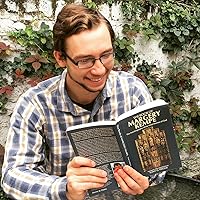
This remarkable work examines the life and times of Hypatia, child of God and illuminator of mankind. Set in the early 5th century AD, the events and personalities of that important turning point in Western Civilization are presented in great mystical detail. There is a great lesson portrayed in the book and it is about to be repeated in our time.
Large format paper back for easy reading. Historical epic concerning the Ancient Egyptian philosopher, from the author of The Water Babies.
Charles Kingsley was an English clergyman, university professor, historian, and novelist, particularly associated with the West Country and north-east Hampshire.
He was educated at Helston Grammar School before studying at King's College London, and the University of Cambridge. Charles entered Magdalene College, Cambridge in 1838, and graduated in 1842. He chose to pursue a ministry in the church. From 1844, he was rector of Eversley in Hampshire, and in 1860, he was appointed Regius Professor of Modern History at the University of Cambridge.
His writing shows an impulse to reconfigure social realities into dream geographies through Christian idealism.
This was a difficult read, two volumes of victorian historical fiction addressing a feminist heroine, Hypatia. If you have heard of her at all, you know that she was a Greek mathematician who was dragged to death or cut to pieces by seashells in 4th century century Alexandria. Christian zealots were responsible for her murder, apparently completed on the altar of a church. Kingsley's novel takes some intestinal fortitude, not only because the namesake is gruesomely slaughtered, but also because of the norms of his times-the novel is antisemitic and racist in many of it's passages, and Hypatia is thought to have received help with her mathematical problems by a promising male student, who later defects to Christianity, having previously rejected Judaism. One can only imagine the response to the novel in 1853 when women were encouraged away from scholarship, lest their heads be clouded, and they avoid marriage. Hypatia is used as a cautionary tale in a sexist way, but the author's main concern is a critique of the church of his own time, told through the narrative of Alexandria. I looked in vain for historical inaccuracies-one of the few I found was that Theon was alive at the time of his daughters death/dismemberment. But generally, I learned a great deal from the novel and wrote pages of reflection about it before I looked up the biographical information on Kingsley, a clergyman and academic. I will not bore anyone with my lengthy analysis, but I would love to have a discussion about the novel some day with someone equally perplexed by its many layers.
قرأت هذا الكتاب بعد ما أثير حول نقل الدكتور يوسف زيدان له في روايته ذائعة الصيت عزازيل.
ما من شك أن هناك نقاط تشابه بين الكتابين خاصة في الهيكل السردي وزمان وقوع الأحداث وبعض الشخصيات التاريخية (ولكن هذا شيء طبيعي في الروايات التي تتناول مرحلة تاريخية ما بشخوصها الحقيقية). فكلا الكتابين يتحدث عن راهب مصري يشد الرحال إلى مدينة الإسكندرية في زمن الفيلسوفة هيباتيا.
ولكن في تقديري ينتهي التشابه عند هذا الحد.
تدور أحداث هذه الرواية في إطار خرافي يتداخل مع أساطير الرومان والإغريق والقوطيين وتستخدم أسلوباً ثقيلاً من العهد الفيكتوري أقرب إلى المسرح الكلاسيكي لتحكي قصة الأيام الأخيرة للفيلسوفة وعالمة الرياضيات هيباتيا، في حين نجد أن رواية عزازيل تستند إلى أحداث تاريخية واقعية بأسلوب روائي مشوق ومحكم لتحدثنا عن تاريخ الكنيسة الشرقية، فتتجاوز بأحداثها قصة هيباتيا، والتي لا تمثل فيها سوى فصل عابر، زماناً ومكاناً حتى أن البعض اختلط عليه الأمر وظن أن يوسف زيدان يعرض في الرواية لمخطوط حقيقي وانتقد الرواية على هذا الأساس.
أقرب الفصول لرواية زيدان الفصول الأخيرة من رواية هيباتيا حيث يخرج المؤلف عن الشكل المسرحي ويسترسل في سرد فلسفي لما بعد موت هيباتيا فيتحدث عن ادعاء البعض سلوكهم طريق الرب (أو السماء) في حين أنهم يسلكون في واقع الأمر طريق الشيطان.
خلاصة هذه المقارنة السريعة، أنه من المجحف والمضلل ادعاء أن يوسف زيدان نقل "بالمسطرة"، كما قال البعض، روايته من تلك الرواية، فرواية يوسف زيدان أقيم من حيث المضمون والأسلوب بمراحل. ولكني في نفس الوقت لا يمكنني استبعاد فكرة تأثره بها فنقاط التشابه الهيكلية أوضح من أن تكون مجرد مصادفة خاصة في الخمس الأخير من رواية هيباتيا. ربما قرأها يوسف زيدان أو قرأ ملخصاً لها أو حتى مجرد أن يكون قد سمع بها فاستلهمها فهذا يكفي لإحداث هذا التشابه الشكلي.
وبالرغم من ذلك تظل رواية عزازيل بالتأكيد عمل متفرد قيم بشهادة النقاد والترجمات والانتشار الواسع والجوائز والتي ما كانت لتتغافل عن "نقل المسطرة" إن صدق القائلون.
This entire review has been hidden because of spoilers.
لا يمكن لأحد انكار التشابه بينها و بين عزازيل ليوسف زيدان و ان لم يكن إلى هذا الحد الفادح .. لاتزال الأسئلة تدور حول مقتل هيباتيا وهل بالفعل كانوا المسيحيين ؟ و هل للبابا كيرلس يد في هذه الجريمة .. و ان كانت له فهل هذا يلغي إثرائه للمكتبة الأبائية بأحد اعطم الكتب ك"حوار حول الثالوث." تساؤلا ت يطرحها القارىء و يسعى الكاتب للوصول إليها .
For a book that started so well, I was mightily disappointed with the progression and ending of this one. Charles Kingsley does a good job showing the corruption of the catholic church in the 5th century but he completely gets Hypatia wrong. Being a christian he is obsessed with belief, and I think the whole point is that Hypatia's life was devoted to mathematics and astronomy, to finding proofs for reality rather than justification for belief. He has her completely frazzled because she can't convince any of the gods, particularly Appolo or Aphrodite to manifest themselves to her. She is lead astray by the men in her life because she will do anything to get the people to return to worshiping the gods she adors. He even uses the most interesting character in the book, Raphael Oben-Ezra, a skeptical Jew who converts to christianity because he falls in love with a pure woman, to use logic to convince Hypatia that Jesus is god. Then he throws in what is supposed to be a lovely miracle at the end. He also flits over the destruction of the library at Alexandria. Pity.
St. Augustine appears deus ex machina-style to convert and marry a couple, a philosopher roams the desert with his dog for a whole chapter while talking to her like a character out of Waiting for Godot, and the monk protagonist learns that women are not the root of all evil. What more could you want?
I read this as research for a presentation I held on Hypathia and my edition includes two parts.
The first is a collection of scenes of Kingsley's original novel and as that it felt extremely disjointed, which is only logical! We learned a lot about her philosophy but couldn't grasp the overall plot and therefore, weren't able to understand why Hypathia had to die at the end. I just think better scenes could have been chosen to convey this particular story. Sadly, I also wasn't a fan of Kingsley's writing: it consistes of very long and difficult to understand sentences which didn't exactly help my enjoyment.
The second part is an essay by Thomas Michael Schmidt on Hypathia as a public woman during the tensions of platonism and christianity. As I had read a couple of works on the ancient philosopher beforehand, there wasn't a lot I hadn't already heard but the author incorporated all the important details to her person. Furthermore, the view on platonism through the christian lense was interesting and something new.
Overall, I would say that there are better works on Hypathia out there, but if you want to read everything on her, you could still give this one a try.
It’s part adventure story, part political drama - but a bit of a slog. I wouldn’t recommend it to anyone for pleasurable reading. It was written over 150 years ago and is very much a relic of its times.
That said, it’s a very well preserved relic, and makes for an interesting discussion of masculinity, personal aspirations, inter-religious tensions (between paganism, Judaism and Christianity), and many other topics - as a good novel should.
It contains some Christian messages, but it wouldn’t fulfil that role for the modern reader because it is far too concerned with critiquing authority. For the reader who is unaware of the differences between the Catholic Church and the Church of England (within which Kingsley served), the book may come across more anti-church (with a small ‘c’) than Kingsley probably intended.
It takes a while to unfold, but once I reached the end I realised the plot was a bit disappointing. It’s about a young enthusiastic man going out into the world with unrealistic expectations, eventually returning to his home with his tail between his legs. Not a bad metaphor for the average day.
ফিলামন। তরুন খ্রিস্টান সন্ন্যাসী। খ্রিস্ট ধর্মের প্রতি তার অন্ধ বিশ্বাস। একেই দুনিয়ার সেরা এবং একমাত্র ধর্ম হিসেবে জানে সে। ছোট থেকে দুই সন্ন্যাসীর কাছে বড় হয়। ১৮ বছর হলে সে দুনিয়া ঘুরে দেখার ইচ্ছেয় মঠ থেকে বিদায় নিয়ে বের হয় আলেকজেন্দ্রিয়ার পথে ছোট একটা ডিংগী নিয়ে। পথে দেখা হয়ে যায় গথ আর পতিতা পেলাজিয়ার সাথে। পেলাজিয়া তাকে আশ্রয় দেয়। আর গথেরা তাকে যোদ্ধা বানাতে চায়।
আলেকজেন্দ্রিয়ায় এসে ধর্মগুরুর বাসায় এসে সে অনেকটাই দিশাহারা হয়ে যায়। একপেকটেশনের সাথে রিয়ালিটি না মিললে যা হয় আর কি। ধর্মগুরু তাকে নিজের রাজনৈতিক কারনে ব্যবহার করতে চায়। এমন সময়ে তার সাথে দেখা হয়ে যায় হাইপেশিয়া, পৌত্তলিক, দেবদেবীর পূজারী অধ্যাপিকার সাথে। তিনি ফিলামনের জ্ঞানের চোখ খুলে দেন।
I deeply wanted to like this book. Hypatia is a historical figure: a woman who was a notable mathematician, philosopher, astronomer that lived in Egypt during Roman rule (about 4th century AD). I struggled through a few chapters of dreck about a young and particularly holy Christian monk, and the weary political machinations surrounding the Heathen Priestess Hypatia, and gave up. Nice Illustrations, though. The edition I have is too old to have an ISBN, and doesn't include a copyright date. The book was originally published in the 1800's.
This work of historical fiction was a very pleasant surprise. Because it is set in Alexandria at the beginning of the fifth century A.D. when Pagans, Christians, and Jews were locked in bitter hostilities with one another, I expected the religious prejudices of the author, an Anglican priest, to ruin everything. The preface did not set a good tone, portraying the Roman Empire as utterly rapacious and oppressive (it was that, but it was also much more than that) in contrast to Christianity which he described as nothing but love and the light of the world (no mention of burning of heretics, witches, and Jews or the Crusades). However, Kingsley was a highly intelligent man and, while his biases were evident, and at one or two places he did get preachy, overall his deep scholarship overcame his religious faith, and he produced a work of real value to anyone interested in what it might have been like to live in Egypt at that time and even to be in Hypatia's inner circle.
I especially enjoyed a number of set pieces that gave flesh and bones to some of the ideas circulating at that time, which we usually encounter only in the abstract in textbooks. He presents his version of Hypatia giving a lecture to her followers (we have no records of her actual lectures), not merely as an outline of contemporary Neoplatonic beliefs but as a truly poetic and inspiring oration. It gives us an idea of the appeal of Neoplatonism and why Hypatia drew such devoted followers, who found much more than mere wonder at her physical beauty or her extraordinary accomplishments in mathematics and astronomy. (A letter Synesius wrote to Hypatia has survived and is a wonderful testament to the spell she cast over so many of her contemporaries.) In an attempt to communicate to modern readers (the novel was published in 1853) the quality of "pomp" Kingsley found in reading Homer in the original Greek, he offers a kind of translation of a sizeable passage of the Iliad. And when one of the characters loses everything in the riots, he becomes a Cynic, wearing rags and living in the streets. His internal dialogue is a vivid expression of the thoughts and feelings of Cynicism and Skepticism.
I enjoyed the first half of the novel, where the energy was focused on introducing the characters and describing the places and the times. Kingsley writes well. At about the half-way point, however, he begins adding complications to the plot, and by the three-quarter mark the plot and relationships become rather thick and, for me at least, obscure. By the last quarter of the book, it descends into melodrama, and the writer's biases become too prominent for my taste. I should say that a Christian with an interest in the Roman Empire might find considerable interest in a section describing how Neoplatonism can be made to transition smoothly into Christianity.
If you have a pre-existing interest in Hypatia or in that time of the Roman Empire, Hypatia or New Foes with an Old Face is well worth your time. And if the subject matter is new to you, I think this novel could easily spark your interest to look for more about it. The 2009 movie Agora, which also tells the story of Hypatia, is a great place to start. Plus the letter of Synesius to Hypatia, easily accessible on the Internet.
I did like this book. It is harder to read and comprehend with references to ancient places and characters' names that were difficult to pronounce. Raphael Aben-Ezer's journey to truth through experience related to my own and quickened my reading pulse moreso than protagonist young Philammon, or the mesmerizing Hypatia--I wanted so much for a certain outcome for Philammon which eluded but which kept me enthralled following his youthful quest. The digital version on Kindle was rife with typos making reading a project as I submitted each occurrence (once I discovered the reporting tool). I was motivated to read a book like this due to my sense the division and fragmentation we see today, even with respect to the church, is sabotaging the health of our political, social, and moral power structures. Interesting character, Miriam, with her surprise twist near the end that effectively reiterated the authors theme. I found several passages throughout this book that elicited chuckles, sadness, shock, even a queasy cringe and quotable quotes--probably not common in many books on philosophy, morality, religion. Very glad I made the extra effort to read it to the end in spite of the story beginning slow as Philammon is being introduced.
أنهيت الرواية وفي داخلي شعور بالضيق، خصوصًا بسبب موت هيباتيا. تعاطفت معها كثيرًا، ليس فقط بسبب مصيرها، ولكن بسبب إصرارها على أفكارها ومحاولتها الدفاع عنها في مواجهة التعصب والصراع الديني وصراع السلطة.
أكثر ما أثارني في الرواية هو هذا الصراع بين الدين والسلطة والفكر، وكيف يمكن أن يتحول الاختلاف في الأفكار إلى تعصب وصدام، ثم إلى مأساة.
وفي الوقت نفسه، كانت نهاية بلاجيا وفيلامون سعيدة، وهو ما أعطاني شيئًا من الراحة بعد النهاية المؤلمة لهيباتيا، وكأن الرواية تركت لي نافذة صغيرة للأمل وسط كل هذا الصراع.
وأثناء قراءتي، لم أستطع إلا أن أقارنها برواية «عزازيل». هناك تشابه واضح بين العملين من حيث الفترة الزمنية والبيئة التاريخية، وكذلك وجود شخصية رئيسية مرتبطة بالصراع الديني والفكري في ذلك العصر. لكن الاختلاف الأكبر بالنسبة لي كان في طريقة السرد.
عزازيل كانت أمتع بكثير بالنسبة لي، وشعرت أن السرد فيها أكثر جذبًا وانسيابًا، بينما احتاجت «هيباتيا» إلى صبر أكبر، ولم أشعر بنفس درجة الاندماج مع الأحداث
I was celebrating when I found myself reading page 310 of this boring novel, but I was confused also because it is only 10 pages remaining and many lines must end. Then I sadly found the surprise, this book is just volume 1 of the novel and there is volume 2 which I will not read at least during the upcoming 2 months. It is very hard to read a boring novel written in Vectorian English, I am really exhausted. and by the way till now I didn't find anything that can be used to accuse Youssef Zidan by stealing this story and use it in his novel Azazeel, it was 2 different plots, one for each novel, but I didn't finished reading of Hypatia to assure that.
The story of the title character, a woman who was one of the last of the traditional philosophers of the classic Greco-Roman world. She vainly attempts to resist the forces of Christianity and barbarism that are sweeping that world away into the Dark Ages in the final days of the Roman Empire. Her tragic fate as a martyr to that tradition is inevitable. An interesting story about an interesting woman and time, but way to long with to much time spent on many other characters.
The story of Hypatia - mathematician, astronomer, and philosopher - who was caught up in a conflict between the Church and the Roman Empire, and murdered by a Christian mob in 415 AD. The Alexandrian school of philosophy died with her. Hypatia's murder was its deathblow, writes Kingsley, its light flickering down to the very socket. Although fictionalised, Kingsley's account of Hypatia's life is well researched and remains largely true to history. Very readable, very impressive.
read this quite a while back, came to mind to add here, mainly as a great bit of history and a time in my life when i was getting inspired by those who stood up for 'truth', whatever that means to me now...