

What do you think?
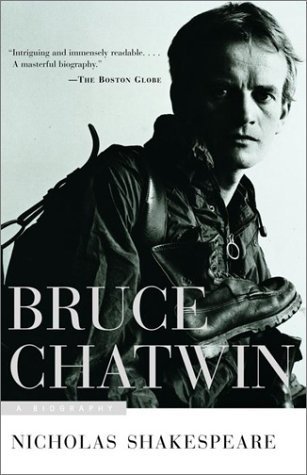
Bruce Chatwin
Award-winning novelist Nicholas Shakespeare has written the definitive biography of one of the most influential literary figures of our Bruce Chatwin, whose works’ strangely compelling combination of research, first-hand experience, myth, and mystification may have been the real substance of his seemingly contradictory life.
Chatwin’s first book, In Patagonia , became an international bestseller, revived the art of travel writing, and inspired a generation to set out in search of adventure. Chatwin became a celebrity, while remaining a conundrum. With little formal education, he had become a director of Sotheby’s. An avid collector, he eschewed material things and revered the nomadic life. Married for twenty-three years, he had male lovers throughout the world. And only at his death did his personal myth fail him. Nicholas Shakespeare, who was given unrestricted access to his papers, spent eight years retracing Chatwin’s steps and interviewing the people who knew him. The result is a biography that is at once sympathetic and revelatory.
Chatwin’s first book, In Patagonia , became an international bestseller, revived the art of travel writing, and inspired a generation to set out in search of adventure. Chatwin became a celebrity, while remaining a conundrum. With little formal education, he had become a director of Sotheby’s. An avid collector, he eschewed material things and revered the nomadic life. Married for twenty-three years, he had male lovers throughout the world. And only at his death did his personal myth fail him. Nicholas Shakespeare, who was given unrestricted access to his papers, spent eight years retracing Chatwin’s steps and interviewing the people who knew him. The result is a biography that is at once sympathetic and revelatory.
672 pages, Paperback
First published January 1, 1993
About the author
Nicholas Shakespeare
42 books117 followersNicholas William Richmond Shakespeare is a English novelist and biographer.
Born to a diplomat, Nicholas Shakespeare grew up in the Far East and in South America. He was educated at the Dragon School preparatory school in Oxford, then at Winchester College and at Magdalene College, Cambridge. He worked as a journalist for BBC television and then on The Times as assistant arts and literary editor. From 1988 to 1991 he was literary editor of The Daily Telegraph and The Sunday Telegraph.
Since 2000, Shakespeare has been Patron of the Anita Goulden Trust, helping children in the Peruvian city of Piura. The UK-based charity was set up following an article that Shakespeare wrote for the Daily Telegraph magazine, which raised more than £350,000.
He is a fellow of the Royal Society of Literature. He is married with two small boys and currently lives in Oxford.
Born to a diplomat, Nicholas Shakespeare grew up in the Far East and in South America. He was educated at the Dragon School preparatory school in Oxford, then at Winchester College and at Magdalene College, Cambridge. He worked as a journalist for BBC television and then on The Times as assistant arts and literary editor. From 1988 to 1991 he was literary editor of The Daily Telegraph and The Sunday Telegraph.
Since 2000, Shakespeare has been Patron of the Anita Goulden Trust, helping children in the Peruvian city of Piura. The UK-based charity was set up following an article that Shakespeare wrote for the Daily Telegraph magazine, which raised more than £350,000.
He is a fellow of the Royal Society of Literature. He is married with two small boys and currently lives in Oxford.
Ratings & Reviews
Friends & Following
Create a free account to discover what your friends think of this book!
Community Reviews
Displaying 1 - 30 of 63 reviews

May 31, 2023
Whatever your opinion of Bruce Chatwin (and you will certainly have one after reading this biography), Nicholas Shakespeare’s tour de force is nothing short of revelatory. This is an absolute model of analysis, craftsmanship and detective work in tracking down the deeply troubled, elusive chameleon whose work continues to beguile each new generation.
Shakespeare’s expose of his subject may be too devastating for some, yet his gaze is clear, compassionate and always completely readable throughout. A masterpiece.
Shakespeare’s expose of his subject may be too devastating for some, yet his gaze is clear, compassionate and always completely readable throughout. A masterpiece.

April 1, 2011
A superb biography of a unique individual. Bruce Chatwin was a superb British travel writer -- though he would contest being called that. He was uncomfortable with his Britishness, and he hated being classified as a travel writer.
What distinguished him from travel writers is that he deliberately (and artistically) took liberties with the facts and embroidered them to suit his own views. So if you were to use, say, In Patagonia as a guidebook, you would probably run into some angry individuals who were mightily ticked off at Bruce's lack of respect for the story they told him. And yet, he put many places in Patagonia, such as Gaiman near Trelew, on the map. Of course, many readers still persist in using him as a travel guide -- at their peril.
When I travel to Patagonia in November 2011, I will re-read the book -- not for its facts -- but for its essential truths.
When Chatwin died of AIDS in the Eighties, I think the world lost a great writer.
What distinguished him from travel writers is that he deliberately (and artistically) took liberties with the facts and embroidered them to suit his own views. So if you were to use, say, In Patagonia as a guidebook, you would probably run into some angry individuals who were mightily ticked off at Bruce's lack of respect for the story they told him. And yet, he put many places in Patagonia, such as Gaiman near Trelew, on the map. Of course, many readers still persist in using him as a travel guide -- at their peril.
When I travel to Patagonia in November 2011, I will re-read the book -- not for its facts -- but for its essential truths.
When Chatwin died of AIDS in the Eighties, I think the world lost a great writer.

July 14, 2007
Nicholas Shakespeare's biography of Bruce Chatwin, praised as "one of the most beautifully written, painstakingly researched and cleverly constructed biographies written this decade".
I agree about the pain.
It is incredibly detailed. Too detailed, if you ask me. But that's not why I stopped reading it half way through. Shakespeare, purely by describing, makes me hate Bruce Chatwin. He portrays Chatwin as a man who pretended to be something he wasn't, who lost himself in a made-up reality. He had the ability to draw people into this reality, to fascinate them, but it seems as if it was all a great lie, as if had they seen him for what he was, they wouldn't have been fascinated. I don't know anything about Chatwin, except his books and his photographies. He could very well have been the man Shakespeare describes him as, but I don't care if he was. And I don't want to know. I'd rather not know him at all. That's why I didn't finish the biography, because I feared that if I did, his books would lose their magic for me.
Which, if you think about it, is a great compliment for Shakespeare'ss abilities as a biograpy writer. He made me almost hate the man he writes about, that's how much Chatwin becomes alive in this book. Maybe I'll finish it one day, but I doubt it.
I agree about the pain.
It is incredibly detailed. Too detailed, if you ask me. But that's not why I stopped reading it half way through. Shakespeare, purely by describing, makes me hate Bruce Chatwin. He portrays Chatwin as a man who pretended to be something he wasn't, who lost himself in a made-up reality. He had the ability to draw people into this reality, to fascinate them, but it seems as if it was all a great lie, as if had they seen him for what he was, they wouldn't have been fascinated. I don't know anything about Chatwin, except his books and his photographies. He could very well have been the man Shakespeare describes him as, but I don't care if he was. And I don't want to know. I'd rather not know him at all. That's why I didn't finish the biography, because I feared that if I did, his books would lose their magic for me.
Which, if you think about it, is a great compliment for Shakespeare'ss abilities as a biograpy writer. He made me almost hate the man he writes about, that's how much Chatwin becomes alive in this book. Maybe I'll finish it one day, but I doubt it.
October 12, 2013
I have mixed views. This is a stunning biography - absolutely thorough, incredibly well researched, and very interesting, particularly the way Shakespare situates Chatwin's writing within the context of his life. He also talks about the process of Chatwin's writing (which seems to have involved cadging homes from friends all over the world, then overstaying his welcome, being very demanding and self-involved, then flying off somewhere else.) Perhaps you can tell that I ended up absolutely detesting Bruce Chatwin as a person. He seemed to have no personal growth, and a peculiar blankness at the centre. Maybe explained by his discomfort with his sexuality. That said, I persisted through the 600 pages, alternately interested (how does his wife put up with all these lovers? How could he advance so quickly at Sotheby's? Did he really not connect with any aborigines before writing Songlines - just a bunch of Westerners?) He has lots of famous friends, and travels, for example, with Salman Rushdie to Ayer's Rock in Australia. He is scattered, intellectually and personally. He treats his friends, lovers, and family very poorly, He makes things up. I get a real sense he was larger than life, and had a horrible death. So - kudos to Shakespeare for a truly great biography - but I've never walked away from a bio with less admiration for the subject....

September 8, 2018
great portrait of an amazing guy and talented travel writer.
July 28, 2015
I really enjoyed this incredibly long and detailed book! I know a friend of mine who reads copiously but could not cope with it's huge detail and put it down half way through because she thought Bruce was just too hideous a person. I was entranced though.
Bruce Chatwin was indeed a very unique person, very good looking and very interesting but not always very likable and certainly devoid of morals and respect for his extraordinary patient and loving American wife Elizabeth. He was an utterly selfish individual who seems to have thought only about himself and his wants 90% of the time. Yet, I liked him a lot - he was entirely eccentric and I think if he'd had children he would have been a great father if he could have behaved himself. Most people could never get through life like he did! He was very fortunate to find a wife like Elizabeth and her American mother. He is lucky he had the charm he seems to have possessed or he would have ended life a very sad and unloved man!
Some of the chapters in this book are intensely fascinating - those about how Sotheby's works and the descriptions of the Hunt Museum in Limerick and the revelations about Derek Hill in Co. Donegal and the goings on of the 'British elite' living in estates in Ireland, also the Brits living elsewhere like in Patagonia. Wow!!
The descriptions of Mapplethorples in the UK are outrageous - they will stick chillingly in my mind forever! And the little girl being raped in Africa but Bruce's reaction is rather strange but then I suppose his drug habits probably affected his reactions to situations. He was such a unique character that this biography had to be written and it is wonderfully written. When I finally got to the end (I'm sure it took me about a month to get through it) I turned to page 1 and started reading it all over again! Then I read every book that Bruce wrote and those published after his death by his wife and Shakespeare.
A must read book even if only for its insight into the mind of utter selfishness! I don't read a lot of books, but Chatwin fascinates. He is rather like he was born several decades too early. I will never forget this book and feel like starting reading it all over again having written this.
Bruce Chatwin was indeed a very unique person, very good looking and very interesting but not always very likable and certainly devoid of morals and respect for his extraordinary patient and loving American wife Elizabeth. He was an utterly selfish individual who seems to have thought only about himself and his wants 90% of the time. Yet, I liked him a lot - he was entirely eccentric and I think if he'd had children he would have been a great father if he could have behaved himself. Most people could never get through life like he did! He was very fortunate to find a wife like Elizabeth and her American mother. He is lucky he had the charm he seems to have possessed or he would have ended life a very sad and unloved man!
Some of the chapters in this book are intensely fascinating - those about how Sotheby's works and the descriptions of the Hunt Museum in Limerick and the revelations about Derek Hill in Co. Donegal and the goings on of the 'British elite' living in estates in Ireland, also the Brits living elsewhere like in Patagonia. Wow!!
The descriptions of Mapplethorples in the UK are outrageous - they will stick chillingly in my mind forever! And the little girl being raped in Africa but Bruce's reaction is rather strange but then I suppose his drug habits probably affected his reactions to situations. He was such a unique character that this biography had to be written and it is wonderfully written. When I finally got to the end (I'm sure it took me about a month to get through it) I turned to page 1 and started reading it all over again! Then I read every book that Bruce wrote and those published after his death by his wife and Shakespeare.
A must read book even if only for its insight into the mind of utter selfishness! I don't read a lot of books, but Chatwin fascinates. He is rather like he was born several decades too early. I will never forget this book and feel like starting reading it all over again having written this.

August 10, 2012
Shakespeare has used his substantial material with some skill to weave what feels like an eminently fair portrayal of a man who, gifted with a great deal of charismatic charm, was doubtless destined to burn himself out at an early age.
After read this beguiling biography (that once started I couldn't put down), I was able to appreciate how Chatwin used his considerable energy and sheer zest for living - and ‘exploring’- to live out a short, but charmed life. By sheer stint of application Chatwin combined his talents with a formidable discipline to write some remarkable books.
Despite a suspicion that Shakespeare almost hero-worshipped his subject this is a thorough, well researched book that pulls no punches. I didn’t like Chatwin by the end of this book, but I did admire him. He wasted nothing.
After read this beguiling biography (that once started I couldn't put down), I was able to appreciate how Chatwin used his considerable energy and sheer zest for living - and ‘exploring’- to live out a short, but charmed life. By sheer stint of application Chatwin combined his talents with a formidable discipline to write some remarkable books.
Despite a suspicion that Shakespeare almost hero-worshipped his subject this is a thorough, well researched book that pulls no punches. I didn’t like Chatwin by the end of this book, but I did admire him. He wasted nothing.

March 29, 2020
I remember liking the 2 Bruce Chatwin books I've read. I came to On the Black Hill earliest but especially liked The Songlines, even if I was unsure whether it's a novel or a travelogue. (Chatwin insisted it's a novel.) I never knew much about him, though, other than he was a wide traveler and had died young. So I came to Nicholas Shakespeare's biography open to new ideas and appreciations. I found Chatwin the man and writer less interesting than I'd expected. Even The Songlines is mitigated, as Shakespeare explains, because Chatwin didn't have a complete understanding of their significance in Aborigine society and knew it. The realism of On the Black Hill becomes for me his most notable book.
Though Shakespeare brings Chatwin down from the rarefied high ground to breathe the same air as more unremarkable writers, his is a generous and accomplished biography. If Chatwin is less compelling than I'd thought, at least Shakespeare tells his story well. I enjoyed reading it.
Though Shakespeare brings Chatwin down from the rarefied high ground to breathe the same air as more unremarkable writers, his is a generous and accomplished biography. If Chatwin is less compelling than I'd thought, at least Shakespeare tells his story well. I enjoyed reading it.

June 17, 2022
Nicholas Shakespeare consegue agarrar e descrever com detalhe a vida de Chatwin desde a infância até à sua morte, pouco antes dos cinquenta anos. Trata-se de uma biografia autorizada, pelo que teve acesso a memórias de infância, conversas com a mulher e amigos, bem como intervenção do próprio. Poderia ser um trabalho algo entediante, considerando que é muito minucioso, correndo o risco de se perder nos detalhes. Mas Shakespeare nunca perde o foco e vai seguindo pela vida de Chatwin, com uma escrita objectiva, em que mistura bem os elementos de confidência com uma análise mais isenta dos acontecimentos e do modo como o seu biografado se vai movendo pela vida. E mover é a palavra de ordem de Bruce Chatwin. Trabalhou na Sotheby’s (lendária leiloeira inglesa), viajou pelo mundo todo (incluindo sítios que se adivinham algo inóspitos como o Afeganistão e o Benim), foi jornalista, estudante de arqueologia e, já mais tarde, descobriu-se escritor. Embora a sua existência possa parecer dividida em múltiplos retalhos (o que não é em si mesmo, nem bom, nem mau), acabamos por encontrar um fio condutor, por onde passou a inesgotável curiosidade de Chatwin e que se materializa nos livros que nos deixou. Na Patagónia, Anatomia da Errância, Utz, Os gémeos de Black Hill, O Vice-Rei de Ajudá, O que faço eu aqui?, são títulos que maravilham pela combinação de erudição e boa escrita que trazem.
Há a realçar, para além da minúcia do trabalho de investigação subjacente à biografia, a capacidade de manter a distância crítica. Um dos aspectos mais interessantes desta biografia é não esconder o longo processo de maturação do escritor Chatwin, as suas idiossincrasias, as dificuldades que foi sentindo e como gradualmente as conseguiu ultrapassar. Outro ponto que considerei de leitura particularmente atraente foi a interpretação de algumas das obras do autor à luz de acontecimentos da sua vida. É um tema sempre polémico, como sabemos, pois, muitos escritores recusam a presença de elementos autobiográficos nas suas obras. Mas Nicholas Shakespeare (ele próprio escritor de ficção) ensaia alguns esforços hermenêuticos nesse campo. O que diria Chatwin deles é coisa que, infelizmente, nunca saberemos.
A vida do escritor em si mesmo é extraordinária, não só pelas aventuras que viveu, mas pela longa lista de pessoas que conheceu. Inteligente, caprichoso, centrado em si mesmo, mas também talentoso, cheio de curiosidade e com um sentido ético que o levou a (por exemplo) deixar o mundo da compra e venda de antiguidades, o biografado é notável e o biógrafo consegue demonstrar, quer a sua dimensão intelectual, quer a vertente humana. Para o final, fica o “efeito Chatwin”, expressão que o próprio acharia maravilhoso, estou em crer.
Há a realçar, para além da minúcia do trabalho de investigação subjacente à biografia, a capacidade de manter a distância crítica. Um dos aspectos mais interessantes desta biografia é não esconder o longo processo de maturação do escritor Chatwin, as suas idiossincrasias, as dificuldades que foi sentindo e como gradualmente as conseguiu ultrapassar. Outro ponto que considerei de leitura particularmente atraente foi a interpretação de algumas das obras do autor à luz de acontecimentos da sua vida. É um tema sempre polémico, como sabemos, pois, muitos escritores recusam a presença de elementos autobiográficos nas suas obras. Mas Nicholas Shakespeare (ele próprio escritor de ficção) ensaia alguns esforços hermenêuticos nesse campo. O que diria Chatwin deles é coisa que, infelizmente, nunca saberemos.
A vida do escritor em si mesmo é extraordinária, não só pelas aventuras que viveu, mas pela longa lista de pessoas que conheceu. Inteligente, caprichoso, centrado em si mesmo, mas também talentoso, cheio de curiosidade e com um sentido ético que o levou a (por exemplo) deixar o mundo da compra e venda de antiguidades, o biografado é notável e o biógrafo consegue demonstrar, quer a sua dimensão intelectual, quer a vertente humana. Para o final, fica o “efeito Chatwin”, expressão que o próprio acharia maravilhoso, estou em crer.
June 15, 2015
A big book about a big character. A man of very many parts, Chatwin was essentially a wanderer, as he's best remembered I guess – wandering around the world. From a professional middle class background he attended a fairly modest public school. He was his own person from an early age and had an instinctive sense, even in his early teens, for what was collectable in the world of art and antiques. As a schoolboy he was something of an entrepreneur buying an item for 6d and selling it on for halfacrown.
It was this ability which Sothebys would find very useful in Bruce as a teenager, together with his charm and photographic memory. He did his bit to help put the firm on the map. At the time of his joining Sothebys they were very much a poor relation of the other auction house, Christie's. That would change in the few years that Bruce was with them. He did very well, very quickly but became bored and disillusioned and left to read Archaeology at Edinburgh University.
Here he would make an impression too, catching the attention of his professor and fellow students. He would not stay the course though, once boredom kicked in again; but his time there was not wasted and would stand him in good stead when travelling and exploring and ultimately writing.
Whilst at Sothebys Bruce married his colleague, Elizabeth. Immensely loyal, not to say long suffering, she gave him a pretty free rein to wander... and not just travelling. Some of his love affairs on the road were more furtive than others.
Bruce was intense, even reading about him (I had to have a break from him over Christmas) was taxing! His energy was phenomenal, right up to the end of his short but very full life. I felt to age just reading about him, not to mention feelings of inadequacy in the presence of this gifted individual.
A very successful writer, especially towards the end of his life, becoming rich when it was almost too late. Brave in the throes of his harrowing illness the immensity of his character was both a strength and a weakness. As his Aids related dementia took hold his plans and schemes became evermore grandiose and bizarre; his nearest and dearest therefore had a real struggle on their hands.
Self absorbed though he undoubtedly was he could be selfless in helping others, particularly up and coming writers.
Read it for yourself. Enriching but exhausting too!
It was this ability which Sothebys would find very useful in Bruce as a teenager, together with his charm and photographic memory. He did his bit to help put the firm on the map. At the time of his joining Sothebys they were very much a poor relation of the other auction house, Christie's. That would change in the few years that Bruce was with them. He did very well, very quickly but became bored and disillusioned and left to read Archaeology at Edinburgh University.
Here he would make an impression too, catching the attention of his professor and fellow students. He would not stay the course though, once boredom kicked in again; but his time there was not wasted and would stand him in good stead when travelling and exploring and ultimately writing.
Whilst at Sothebys Bruce married his colleague, Elizabeth. Immensely loyal, not to say long suffering, she gave him a pretty free rein to wander... and not just travelling. Some of his love affairs on the road were more furtive than others.
Bruce was intense, even reading about him (I had to have a break from him over Christmas) was taxing! His energy was phenomenal, right up to the end of his short but very full life. I felt to age just reading about him, not to mention feelings of inadequacy in the presence of this gifted individual.
A very successful writer, especially towards the end of his life, becoming rich when it was almost too late. Brave in the throes of his harrowing illness the immensity of his character was both a strength and a weakness. As his Aids related dementia took hold his plans and schemes became evermore grandiose and bizarre; his nearest and dearest therefore had a real struggle on their hands.
Self absorbed though he undoubtedly was he could be selfless in helping others, particularly up and coming writers.
Read it for yourself. Enriching but exhausting too!
December 12, 2007
An absolute must companion read to any fan of Bruce Chatwin's books most of which are on my shelves. Deeply misunderstood and a manic depressive he seemed to spend an awful lot of his painfully short life trying to find out who he was. All of his books are difficult to read but ultimately enormously uplifting in their perception and writing. Have to admit to being biased as I was at school with the author although he was one year ahead of me

February 12, 2010
Very detailed and thorough... and enjoyable. Doesn't shy away from Chatwin's faults either. My only criticism would be that Shakespeare dwells a bit too much on BC's illness towards the end. I'd rather have read more about his life than dwelling on his death. But this is minor. 'Bruce Chatwin' is an great biography and I will definitely re-visit it at some point in the future... but more importantly it's inspired me to go back to BC's own writings again.

July 13, 2007
A generous, if unsparing look at the life of nomadic storyteller Bruce Chatwin. Shakespeare catches all the contradictions of the man — his charm, beauty and exquisite brilliance as well as his narcissism, deceit and obsessive mania. All-too-human, dying of AIDS at 48, Chatwin was also surely one of the luckiest writers to have ever written, blessed with an inalienable magic.

January 16, 2016
Top rate biography and it's about Chatwin, the enigmatic character. I found the writing interesting, the characters that appear on stage to be fascinating as they are names which I have encountered before. The insight into parts of the Sixties/Seventies British culture (the excesses of the Sunday Times Magazine) are amazingly told.
June 14, 2008
A truly excellent biography of one of the best of the last century's writers - my only criticism was that the bio too easily slipped into hero-worship of Chatwin towards the end. He was a good writer, but also a bastard!

February 12, 2008
As is sometimes the case, I enjoyed this account of the author more than some of his actual books.
December 27, 2015
Fundamental para entender la obra de Chatwin.
Read
July 12, 2020I read In Patagonia, On Black Hill and Songlines soon after they came out. In Patagonia was initially recommended to me as breaking the mould and being by this groovy new British author. I did struggle with Song lines but overall I tended to agree. I gradually found out that Chatwin blurred boundaries between fact and fiction but I didn't hold that against him.
I remember being sad at hearing of his premature death and then only a year later of Freddie Mercury''s. Two of the best of modern arts being struck down. One an insider who wanted to be an outsider and the other an outsider who wanted to be an insider.
I read this biography recently. It is well written and researched with incredible detail. Shakespeare combines a broad chronological framework whilst also exploring themes not tied to a particular time. It held my attention well. I learnt a lot. I learnt that Chatwin was not such a nice groovy guy in many respects.
However discovery of his blemishes have not stopped me wanting to have another go at the Song lines and also reading his other three books. I will now do this over next year.
I remember being sad at hearing of his premature death and then only a year later of Freddie Mercury''s. Two of the best of modern arts being struck down. One an insider who wanted to be an outsider and the other an outsider who wanted to be an insider.
I read this biography recently. It is well written and researched with incredible detail. Shakespeare combines a broad chronological framework whilst also exploring themes not tied to a particular time. It held my attention well. I learnt a lot. I learnt that Chatwin was not such a nice groovy guy in many respects.
However discovery of his blemishes have not stopped me wanting to have another go at the Song lines and also reading his other three books. I will now do this over next year.
January 28, 2025
A deeply personal and often moving tour de force (that's French for very thick book) by a brilliant biographer about a singular writer whose work (and aura) I've admired (and envied) for a very long time. Spoiler alert: If you've read these five books by Bruce Chatwin – Songlines, What am I doing here, Viceroy of Ouidah, Utz, and On the Black Hill – you're sure to enjoy this biography even more than I did; I've only read three.

November 10, 2022
Excellent biography of the English author and fascinating personality, Bruce Chatwin by Nicholas Shakespeare. Very well done.
I will add that there were a fair number of words that I had to look up, place names dropped that I did know and quotes in French that were not translated. Part of the Chatwin mystique, how did he know all this stuff is continued in this biography of him. But a great deal of light is shed on how and why Chatwin the writer evolved is presented.
And, if ever a writers personal life matched or exceeded in interest that of his writing, Chatwin's would be one. He called himself bisexual and was married to a woman, but he certainly had many male lovers and male sex partners. It's sad that he was so closeted about it, even when it was so evident.
I will add that there were a fair number of words that I had to look up, place names dropped that I did know and quotes in French that were not translated. Part of the Chatwin mystique, how did he know all this stuff is continued in this biography of him. But a great deal of light is shed on how and why Chatwin the writer evolved is presented.
And, if ever a writers personal life matched or exceeded in interest that of his writing, Chatwin's would be one. He called himself bisexual and was married to a woman, but he certainly had many male lovers and male sex partners. It's sad that he was so closeted about it, even when it was so evident.
August 8, 2018
Bruce Chatwin was born in Sheffield England. He wrote odd stories that were not travel pieces, although that is how they have been marketed. Instead of writing a strict accounting of his travels like Paul Theroux, Chatwin would blend fact and fiction:
Michael Ignatieff Where in your work is the division between fiction and non-fiction?
BC: I don't think there is one.
I started reading this biography because I was trying to read In Patagonia and could not figure out what it was. It seemed to ramble all over the place. I typed "Bruce Chatwin" into the Goodreads search because that was part of the name of the collection and turned up this well written, well structured, incredibly well researched biography. I felt that if I learned a little more about Chatwin, maybe I could try to read his work.
Nicholas Shakespeare (what a name!) goes to a great deal of effort to delineate where the books by Chatwin succeed and where they fall short. Chatwin's vision of the world and himself are distorted in certain ways. In Patagonia, his first success, is meant to be, as Chatwin says, a tale of wonder and more cubist in its approach. It is not a travelogue. I enjoy reading Theroux because you are with him for every step of the journey -- you see through his eyes, you meet the people he meets, you can smell their feet and inhabit their rooms. Chatwin says that In Patagonia was meant to be a tale of wonders starting with the hairy piece of skin he thought was a brontosaurus to his own discovery. The style is "cubist"? Whatever. Each novel is minutely described and explained so now I can try again to read the pieces and see if they make sense to me.
But this book is also a wonderful description of an amazing person. Chatwin worked for Sothebys and the scandals surrounding that place at that time are satisfactorily dished. In every way Chatwin did not fit in. He hated being settled and considered himself like a nomad, but he loved having a home to come back to. He was a self-described bisexual -- a friend said, 70 percent sexually interested in men but 30 percent sexually interested in women. He loved his wife to the bitter end but had numerous male lovers as well. He was also a lover of African and Australian women. But he was universally described as incredibly lonely. He is also both socially uncouth and extremely popular with famous people and common people. He both fit in with writers and had a great deal of difficulty writing. He loved people and tried to find secluded monastic cells to write in. He could not stay in the same place for more than six months at a time.
He was simply a fascinating guy. Just reading this book was entertaining even though I haven't read any of his work. In the end, he died of AIDS. He was involved in the very active gay scene of Mapplethorpe and Edmund White in NYC and at the same time, he was friends with Jackie O. Just an amazing person. It is clear that Nicholas Shakespeare was very fond of him and this is a very loving portrayal although he is also fairly clear eyed about Chatwin's faults.
After reading this book, I am going to give In Patagonia another go along with the Viceroy of Ouidah and Songlines, but I think that my best bet will be The Black Hill. The Black Hill is the one novel he wrote that was first of all explicitly a novel and not a fact/fiction mishmosh but also something he knew intimately about --life in a small farming community where he spent a great deal of time getting to know everyone. It sounds like my best bet and it won the Whitbread First Novel of the Year award.
Michael Ignatieff Where in your work is the division between fiction and non-fiction?
BC: I don't think there is one.
I started reading this biography because I was trying to read In Patagonia and could not figure out what it was. It seemed to ramble all over the place. I typed "Bruce Chatwin" into the Goodreads search because that was part of the name of the collection and turned up this well written, well structured, incredibly well researched biography. I felt that if I learned a little more about Chatwin, maybe I could try to read his work.
Nicholas Shakespeare (what a name!) goes to a great deal of effort to delineate where the books by Chatwin succeed and where they fall short. Chatwin's vision of the world and himself are distorted in certain ways. In Patagonia, his first success, is meant to be, as Chatwin says, a tale of wonder and more cubist in its approach. It is not a travelogue. I enjoy reading Theroux because you are with him for every step of the journey -- you see through his eyes, you meet the people he meets, you can smell their feet and inhabit their rooms. Chatwin says that In Patagonia was meant to be a tale of wonders starting with the hairy piece of skin he thought was a brontosaurus to his own discovery. The style is "cubist"? Whatever. Each novel is minutely described and explained so now I can try again to read the pieces and see if they make sense to me.
But this book is also a wonderful description of an amazing person. Chatwin worked for Sothebys and the scandals surrounding that place at that time are satisfactorily dished. In every way Chatwin did not fit in. He hated being settled and considered himself like a nomad, but he loved having a home to come back to. He was a self-described bisexual -- a friend said, 70 percent sexually interested in men but 30 percent sexually interested in women. He loved his wife to the bitter end but had numerous male lovers as well. He was also a lover of African and Australian women. But he was universally described as incredibly lonely. He is also both socially uncouth and extremely popular with famous people and common people. He both fit in with writers and had a great deal of difficulty writing. He loved people and tried to find secluded monastic cells to write in. He could not stay in the same place for more than six months at a time.
He was simply a fascinating guy. Just reading this book was entertaining even though I haven't read any of his work. In the end, he died of AIDS. He was involved in the very active gay scene of Mapplethorpe and Edmund White in NYC and at the same time, he was friends with Jackie O. Just an amazing person. It is clear that Nicholas Shakespeare was very fond of him and this is a very loving portrayal although he is also fairly clear eyed about Chatwin's faults.
After reading this book, I am going to give In Patagonia another go along with the Viceroy of Ouidah and Songlines, but I think that my best bet will be The Black Hill. The Black Hill is the one novel he wrote that was first of all explicitly a novel and not a fact/fiction mishmosh but also something he knew intimately about --life in a small farming community where he spent a great deal of time getting to know everyone. It sounds like my best bet and it won the Whitbread First Novel of the Year award.

September 29, 2016
I've been on a bit of Chatwin binge recently. Since all of his work is in some sense autobiographical, and all of it is more or less fiction, obscuring as much as it reveals, it helps to have a book like this to connect the dots.
This is an exhaustively well-researched biography. That is only in part a euphemism for it being very long, although long it undoubtedly is (at over 600 pages, it is quite a bit longer than Chatwin's most famous books — In Pantagonia and The Songlines — combined).
Shakespeare is sympathetic without ever being sentimental or uncritical. A lot of people said the book's unflinching look at its subject made them hate Chatwin. Perhaps it's a matter of expectations, but I didn't end up hating him in the slightest. I went in thinking that he was a mythomaniac self-publicist who sometimes treated people appallingly, most especially in the case of his long-suffering wife. I believe Elizabeth Chatwin is still alive, but when she dies, Shakespare's biography could provide most of the material for the advocatus Dei . She emerges as a woman of astonishing kindness and faithfulness to a husband who was often quite faithless. One gets sometimes indications that she is a more complicated character than that, but in this book she exists largely as a foil to Bruce. That is appropriate, for this is a book about Bruce and only very incidentally about other people he met.
This can lead to asides of spectacularly Chatwinesque exoticism. One such case is when Shakespeare mentions that, in his last days, Bruce was treated by a French AIDS specialist recommended by the Aga Khan's wife, who swore that he had cured her hairdresser. Now, the reader (or at least this reader) will naturally be curious to know more about the Aga Khan's (now ex-)wife, her connection to Bruce, and the case of her hairdresser's mysteriously cured AIDS. But Shakespare leaves this interest unfulfilled. I'm not sure whether or not this is a deliberate stylistic choice, but is a fitting one: alluding to a very improbable story, which is then never mentioned again is a classic Chatwin trick.
Shakespeare's book confirms Chatwin's flaws, but it also does something remarkable — it manages to convey something of his charm and the fascination he exerted on others throughout his adult life. Chatwin was and remains an easy person to like, even if he was clearly not always easy to know. In the end, Shakespeare's Chatwin strikes me as an appealing, if flawed character. Indeed, he is rather more interesting than Chatwin's own authorial persona, which was deliberately superhuman.
Chatwin was always looking for a solution to the problem of his life, whether that was being an art dealer at Sotheby’s, an archaeology student at Edinburgh, a nomad, or a collector. Towards the very end he declared his intention to become Greek Orthodox and indeed to seek ordination in that church, receiving religious instruction from Kallistos Ware (it was typical of Chatwin to go straight to a leading expert even in this). One wonders what would have come of this. In all likelihood, very little, but it is a fascinating insight into the desperation that drove his every action. In the end, Shakespeare portrays Chatwin as a man who could be admired and condemned and — especially by the end — pitied.
This is an exhaustively well-researched biography. That is only in part a euphemism for it being very long, although long it undoubtedly is (at over 600 pages, it is quite a bit longer than Chatwin's most famous books — In Pantagonia and The Songlines — combined).
Shakespeare is sympathetic without ever being sentimental or uncritical. A lot of people said the book's unflinching look at its subject made them hate Chatwin. Perhaps it's a matter of expectations, but I didn't end up hating him in the slightest. I went in thinking that he was a mythomaniac self-publicist who sometimes treated people appallingly, most especially in the case of his long-suffering wife. I believe Elizabeth Chatwin is still alive, but when she dies, Shakespare's biography could provide most of the material for the advocatus Dei . She emerges as a woman of astonishing kindness and faithfulness to a husband who was often quite faithless. One gets sometimes indications that she is a more complicated character than that, but in this book she exists largely as a foil to Bruce. That is appropriate, for this is a book about Bruce and only very incidentally about other people he met.
This can lead to asides of spectacularly Chatwinesque exoticism. One such case is when Shakespeare mentions that, in his last days, Bruce was treated by a French AIDS specialist recommended by the Aga Khan's wife, who swore that he had cured her hairdresser. Now, the reader (or at least this reader) will naturally be curious to know more about the Aga Khan's (now ex-)wife, her connection to Bruce, and the case of her hairdresser's mysteriously cured AIDS. But Shakespare leaves this interest unfulfilled. I'm not sure whether or not this is a deliberate stylistic choice, but is a fitting one: alluding to a very improbable story, which is then never mentioned again is a classic Chatwin trick.
Shakespeare's book confirms Chatwin's flaws, but it also does something remarkable — it manages to convey something of his charm and the fascination he exerted on others throughout his adult life. Chatwin was and remains an easy person to like, even if he was clearly not always easy to know. In the end, Shakespeare's Chatwin strikes me as an appealing, if flawed character. Indeed, he is rather more interesting than Chatwin's own authorial persona, which was deliberately superhuman.
Chatwin was always looking for a solution to the problem of his life, whether that was being an art dealer at Sotheby’s, an archaeology student at Edinburgh, a nomad, or a collector. Towards the very end he declared his intention to become Greek Orthodox and indeed to seek ordination in that church, receiving religious instruction from Kallistos Ware (it was typical of Chatwin to go straight to a leading expert even in this). One wonders what would have come of this. In all likelihood, very little, but it is a fascinating insight into the desperation that drove his every action. In the end, Shakespeare portrays Chatwin as a man who could be admired and condemned and — especially by the end — pitied.

May 29, 2016
This is a biography of a fascinating man who would have driven me crazy. In what is evidently a painstakingly researched book, which reads like an exciting voyage of discovery, Shakespeare reveals Bruce Chatwin as an exasperating, charming, secretive and self-absorbed man. From childhood, when he started his long walks and bike rides and fascination with curious objects, through his meteoric career at Sotheby's, the self-imposed drudgery of a university course in archeology at Edinburgh to the restless travelling and hard slog of becoming a writer, he is shown from many perspectives and one really gets to know him.
Shakespeare handles Bruce's marriage to Elizabeth delicately, perhaps playing down the difficulties of this relationship. Certainly Elizabeth comes across as a devoted wife, perhaps almost too understanding to be credible, in what must have been a difficult relationship with a charming bisexual whose homosexual drives became more pronounced, or definitely more open, as time passed. Yet she is the rock to whom he returns, who nurses him at the end and for whom he goes on the wild spree to establish the Homer Collection.
The nomadic life is shown to be a key to Bruce's own, not only in his long struggle to develop an academic thesis on this, which eventually evolves into The Songlines - perhaps the book which comes closest to explaining his philosophy of life, but also underlying his own perpetual restlessness. His other books are also carefully analysed by Shakespeare from their genesis to their reception.
Finally we come to understand Bruce's own terror of his illness which he cannot face up to as AIDS (not as well understood in the 1980s as it is today) and the cruelty of his suffering and diminishment just when literary success had been achieved and Bruce was finally comfortable as a writer.
Shakespeare handles Bruce's marriage to Elizabeth delicately, perhaps playing down the difficulties of this relationship. Certainly Elizabeth comes across as a devoted wife, perhaps almost too understanding to be credible, in what must have been a difficult relationship with a charming bisexual whose homosexual drives became more pronounced, or definitely more open, as time passed. Yet she is the rock to whom he returns, who nurses him at the end and for whom he goes on the wild spree to establish the Homer Collection.
The nomadic life is shown to be a key to Bruce's own, not only in his long struggle to develop an academic thesis on this, which eventually evolves into The Songlines - perhaps the book which comes closest to explaining his philosophy of life, but also underlying his own perpetual restlessness. His other books are also carefully analysed by Shakespeare from their genesis to their reception.
Finally we come to understand Bruce's own terror of his illness which he cannot face up to as AIDS (not as well understood in the 1980s as it is today) and the cruelty of his suffering and diminishment just when literary success had been achieved and Bruce was finally comfortable as a writer.

March 19, 2015
I don't read many biographies, but the depth and insight of this book took my breath away. It was no easy read - the content is intense and I could not get through more than a few page at a time. It's a long book too, and I think it took about 3 weeks for me to get through.
Chatwin was an enigmatic character and I have to confess I'd never heard of him until a close friend gave it to me (she is a friend of the family, who lived just a few doors away as a child).
It makes me aware of the struggle that 'literary authors' may have when writing. I attempt to be a thriller writer - I guess my work is more pulp fiction (though the stories are good ;-)) and I don't find it a struggle to write.
Chatwin though seemed to want to convey much more than a story - he wanted to convey a philosophy (actually a range of philosophies) and struggled for 17 years to finally get one of them into a book he was at least half happy with.
Nicholas Shakepeare did a superb job with this, and I have no idea how he managed to weld all the facts and life history together with the hundreds of quotes he collected.
Thoroughly recommended.
That's the biography done, now I shall have to hunt out and read a few of Bruce Chatwin's books!
Chatwin was an enigmatic character and I have to confess I'd never heard of him until a close friend gave it to me (she is a friend of the family, who lived just a few doors away as a child).
It makes me aware of the struggle that 'literary authors' may have when writing. I attempt to be a thriller writer - I guess my work is more pulp fiction (though the stories are good ;-)) and I don't find it a struggle to write.
Chatwin though seemed to want to convey much more than a story - he wanted to convey a philosophy (actually a range of philosophies) and struggled for 17 years to finally get one of them into a book he was at least half happy with.
Nicholas Shakepeare did a superb job with this, and I have no idea how he managed to weld all the facts and life history together with the hundreds of quotes he collected.
Thoroughly recommended.
That's the biography done, now I shall have to hunt out and read a few of Bruce Chatwin's books!

September 26, 2017
biografia maniacale nella raccolta dei dettagli ma un po' sordido l'approccio, si legge in filigrana una sorta di invidia e di retropensiero, del tipo "ti sta bene quel che ti è capitato".
Descrive Bruce col sadismo di un entomologo, incapace di coglierne l'anima, l'essenza. Che sono le qualità che più colpiscono quando si legge BC.
Un libro e un autore estremamente irritanti, e forse Elizabeth - la moglie di BC - lo ha scelto per questo, sapendo che Bruce sicuramente lo avrebbe mal sopportato.
La biografia è veramente pessima, ma credo che sia la giusta mercede per noi chatwiniani, puniti per non esserci accontentati dei suoi libri, e per aver voluto intrufolare il naso nella sua vita (scoprendo così cose fondamentali, come lo scoreggiare senza ritegno, e farsi dieci uomini per notte quando aveva le scalmane).
Descrive Bruce col sadismo di un entomologo, incapace di coglierne l'anima, l'essenza. Che sono le qualità che più colpiscono quando si legge BC.
Un libro e un autore estremamente irritanti, e forse Elizabeth - la moglie di BC - lo ha scelto per questo, sapendo che Bruce sicuramente lo avrebbe mal sopportato.
La biografia è veramente pessima, ma credo che sia la giusta mercede per noi chatwiniani, puniti per non esserci accontentati dei suoi libri, e per aver voluto intrufolare il naso nella sua vita (scoprendo così cose fondamentali, come lo scoreggiare senza ritegno, e farsi dieci uomini per notte quando aveva le scalmane).

July 26, 2019
This is an incredibly detailed biography and seems well balanced. Perhaps many of Bruce Chatwin's readership don't realise how fictional (factional?) his travel writing was although there's an obvious disconnect with reality. Shakespeare manages to create a "warts-and-all" narrative without detracting from Chatwin's obvious talent and amazing idiosyncratic drive. His charm and intelligence are balanced by his narcissistic and escapist streaks and there's an unwitting portrayal of the self-seeking and self-aggrandisement of much of the US/UK financial and cultural elite. It has a political sub-text and from time to time at least touches on the colonial narrative implicit in Chatwin's work. I think that's pretty brave given that any biographer has to maintain currency with the contacts without whom the narrative could never be woven. Thoroughly recommended.

April 27, 2015
A wonderful biography of a fascinating person. Shakespeare writes with great admiration for his subject yet renders Chatwin Bruce as a fully-formed, dynamic person. One finishes with a great understanding of the writer, his motives, and his challenges.
I am eager to read more from Nicholas Shakespeare, starting with In Tasmania
I would recommend this book for any who have been inspired by Chatwin's writings and would like to know more about the man.
I am eager to read more from Nicholas Shakespeare, starting with In Tasmania
I would recommend this book for any who have been inspired by Chatwin's writings and would like to know more about the man.
May 16, 2020
This is a carefully researched and balanced biography of a man who, like his books, defied categorisation. Before reading this, I knew about Bruce Chatwin only from his own writing and had formed a perception of who he was and felt a kind of envy for a man who seemed to live on his own terms as a kind of rolling adventure which he documented in sparkling prose. This biography, like all good biographies, shows that behind the talented writer-wanderer, there was a complex character and that his life and his art reflected a need to work out the contradictions which tormented him and the parts of himself that he could not accept or admit to. The final chapters describing his illness and death are handled sensitively and movingly.
March 18, 2018
His erratic behaviour is explained by his feelings about his bisexuality but are they? Today he would be called bipolar: depressions allayed by travel and new starts, easily bored by detail, his interests and plans are “nine-day wonders”, the grandiosity of the scope covered in his book on nomads. James Ivory on Chatwins ideas for films “it never occurred to me that he wasn’t being entertaining in his letters with preposterous plots and characters”.
Losing himself in rabbit holes, his book about nomadism was not successful.
But with In Patagonia he did succeed at transforming the nature of travel writing.
Losing himself in rabbit holes, his book about nomadism was not successful.
But with In Patagonia he did succeed at transforming the nature of travel writing.
August 9, 2019
As an adoring Bruce Chatwin fan, this book, so well researched, made you feel as though you personally knew Bruce in all his warts and glory. If you don't know Chatwin's work, please go read them immediately. Start with In Patagonia, The Viceroy of Ouidah, The Songlines, On The Black Hill and Utz...in that order. These are some of my favorite books. Now that I read this amazing biography, I must reread them all. If ever there were someone who you would want to have dinner with, it would be Bruce Chatwin. Having read his books, but before the biography, I was enchanted. Something magical about this man and so his biography proves it. Not many like him pass this way.
Displaying 1 - 30 of 63 reviews