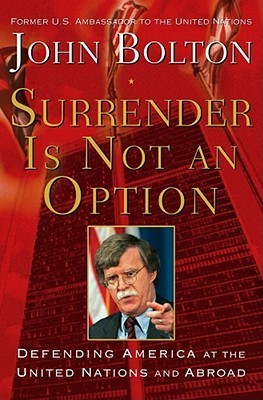
It’s obvious that Bolton is a patriot of the U.S. and a great intelligentsia whose intelligence is superior to any Chinese politicians and bureaucrats of today. However, his misfortune is that he’s always wrongly depicted as a warmonger. In this book, his decision-making and thoughts behind his actions are rational to whom has common sense and a patriotic view.
First, I have to mention one grave ideological issue about Hong Kong related to Bolton or his American patriotism. In short, the true guarantee of the safety of Hong Kong citizens lies in the fact that the majority of Hong Kong citizens are friendly to the West. This is why the U.S. still regards Hongkongers as pro-Americans or at least pro-Westerners, who are not any target of crippling sanctions. Yes, the U.S. establishment doesn’t recognize the Hong Kong population as Syrians, Iranians, Venezuelans or Cubans, which is fortunate. And this is the true guarantee of the political safety of this city until today. Hence, the true guarantor of the safety of this city is not any national security laws but the Western-friendly citizens of this city. In this view, the opposition has a vast advantage in the diplomacy of this city to protect it from the hostility of any Western political forces.
However, the HKSARG is eradicating the legacy of the pro-Western population by narrow-mindedly importing mainlanders to replace increasingly large portions of the population. This will change the Western attitude to the Hong Kong population. In the end, when the safe guarantee of a pro-Western attitude of most of the population disappears, it will turn into a hostile political confrontation between the West and this city, while jingoism, corporatism, authoritarian elitism, transnational repression, and grotesque nationalism are antagonizing the Hong Kong working class and the pro-Democracy majority of the population. That’s the worst scenario in terms of the true aspect of the safety of this city. Therefore, any anti-Americanism or anti-Westernism is fatally wrong and unfit for the great benefit of the population. This is why any political shift to anti-Americanism or anti-Westernism is disastrous to its population. What I mentioned here is a total blind spot that subsided because of the growing grotesque nationalism at the cost of the traditional safety of this city. One of the reasons for this grotesqueness is that Marxism strongly opposes any kind of nationalism as it essentially forces on people, a class-collaborationist attitude which is a disadvantage for workers. Thus, CCP totally forgets that Marxism is not nationalism, nationalism is not Marxism. This is one of their serious internal contradictions. Therefore, what we are witnessing in Chinese Marxism is Marxism in decay. Besides, it also seems to think that becoming the most brutal or pure neoliberalism to defeat capitalism. On the contrary, it is not the self-negation of capitalism but the self-negation of Marxism itself, because it will totally evaporate the remnant of social trust of workers in the ideology at the end of this extremism. It could only be completion of capitalism, not negation of it.
There are several points in this book.
1. What is the UN like? This means how ambassadors and staff work in it as representatives of their original nations and the UN as a whole. Does the UN simply represent a collective will or somebody else’s will? What problems untaught in schools or media occur in the system? Bolton points out several of them to readers.
2. How do the UN reps interact with each other? Human conversations between UN ambassadors, explicitly, Chinese ambassador and CCP staff talk normally and humanly, not just mechanically read bureaucratic statements like in front of us. The human talks in the UN between UN ambassadors are fresh and lively to readers who are only subject to daily mechanical bureaucratic statements of Chinese officials who don’t see citizens as counterparts of any equal dialogue. This is one big feature of this book written and read by Bolton.
3. How does the U.S. see the UN? The attitude of the U.S. to the UN is from hegemonism or simple patriotism of rational thinking? This is perfectly answered and explained by Bolton classically in the book.
4. What are the bureaucratic issues in the U.S. establishment itself?
These four points are the essence of this book. I cite the relevant part from the book to recommend readers to further read in detail.