

What do you think?
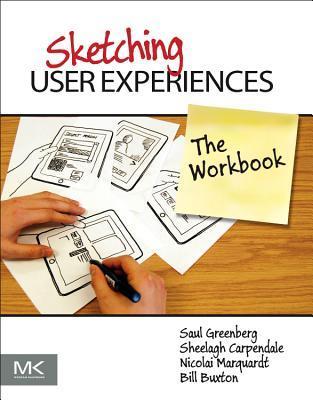
Sketching User Experiences: The Workbook
Sketching Working Experience: The Workbook provides information about the step-by-step process of the different sketching techniques. It offers methods called design thinking, as a way to think as a user, and sketching, a way to think as a designer. User-experience designers are designers who sketch based on their actions, interactions, and experiences. The book discusses the differences between the normal ways to sketch and sketching used by user-experience designers. It also describes some motivation on why a person should sketch and introduces the sketchbook. The book reviews the different sketching methods and the modules that contain a particular sketching method. It also explains how the sketching methods are used. Readers who are interested in learning, understanding, practicing, and teaching experience design, information design, interface design, and information architecture will find this book relevant.
272 pages, Paperback
First published November 1, 2010
Ratings & Reviews
Friends & Following
Create a free account to discover what your friends think of this book!
Community Reviews
Displaying 1 - 15 of 15 reviews

September 5, 2020
I read this as a supplemental book for a design class but sadly I can’t say it was that helpful. First, like many books related to technology, it’s sadly quite dated even though the publication date is not that far in the past. It has references to Nokia phones and instructions for creating animations using Adobe Flash. I was hoping for more concrete tips for improving my crappy sketching skills and there were none to be found. Bummer.

September 17, 2017
I get excited by any book with "workbook" in its title (also, "Teach Yourself"). This one is satisfyingly hands-on, with a lot of encouragement to experiment and sketch from the start. It is attractively laid out and fun to flip through. I read this for a course on "Web Usability", and the assignment where we got to sketch a possible re-design of a website, using techniques in this book, was one of the most enjoyable parts of the entire class. Fun! I found section 4.4 on "The Narrative Storyboard") to be very useful.
Other than that, however, the book really seems most useful to someone who does design and prototyping for a living. I gave it three stars because most of it wasn't useful to me - but others might get more out of it.
Other than that, however, the book really seems most useful to someone who does design and prototyping for a living. I gave it three stars because most of it wasn't useful to me - but others might get more out of it.
September 1, 2018
Fantastic overview of UX
While this book was required reading for a class, it was very helpful for constructing both a group project and an individual UX prototype for a Mobile app I am working on.
While this book was required reading for a class, it was very helpful for constructing both a group project and an individual UX prototype for a Mobile app I am working on.

February 27, 2017
Disappointed by how little of this book actually had to do with sketching.

December 8, 2017
The book was nice and gave good advice for people, who don't draw. For those who do on a regular basis - I'm not sure if it's that useful.

March 4, 2019
Very good breadth (OK depth) of topics in interaction design
Very visual and friendly
Good references to existing practices and literature
Recommended for Product/Design people :-)
Very visual and friendly
Good references to existing practices and literature
Recommended for Product/Design people :-)

February 13, 2016
Sketching Working Experience: The Workbook provides information about the step-by-step process of the different sketching techniques. It offers methods called design thinking, as a way to think as a user, and sketching, a way to think as a designer. User-experience designers are designers who sketch based on their actions, interactions, and experiences.
The book discusses the differences between the normal ways to sketch and sketching used by user-experience designers. It also describes some motivation on why a person should sketch and introduces the sketchbook. The book reviews the different sketching methods and the modules that contain a particular sketching method. It also explains how the sketching methods are used.
Readers who are interested in learning, understanding, practicing, and teaching experience design, information design, interface design, and information architecture will find this book relevant.
Features standalone modules detailing methods and exercises for practitioners who want to learn and develop their sketching skills
Extremely practical, with illustrated examples detailing all steps on how to do a method
Excellent for individual learning, for classrooms, and for a team that wants to develop a culture of design practice
Perfect complement to Buxton’s Sketching User Experience or any UX text
Author-maintained companion website at
http://grouplab.cpsc.ucalgary.ca/sket...
The book discusses the differences between the normal ways to sketch and sketching used by user-experience designers. It also describes some motivation on why a person should sketch and introduces the sketchbook. The book reviews the different sketching methods and the modules that contain a particular sketching method. It also explains how the sketching methods are used.
Readers who are interested in learning, understanding, practicing, and teaching experience design, information design, interface design, and information architecture will find this book relevant.
Features standalone modules detailing methods and exercises for practitioners who want to learn and develop their sketching skills
Extremely practical, with illustrated examples detailing all steps on how to do a method
Excellent for individual learning, for classrooms, and for a team that wants to develop a culture of design practice
Perfect complement to Buxton’s Sketching User Experience or any UX text
Author-maintained companion website at
http://grouplab.cpsc.ucalgary.ca/sket...

January 7, 2013
(writing the review in 2025, 13 years after publishing date)
Expect to find great resources for pen and paper prototyping and sketching interactions (because it's not just sketching and doodling).
The Design Funnel approach is great and still very valid.
Obviously, some examples are very dated, but it is a great foundation material for teaching or learning about sketching interactions.
Expect to find great resources for pen and paper prototyping and sketching interactions (because it's not just sketching and doodling).
The Design Funnel approach is great and still very valid.
Obviously, some examples are very dated, but it is a great foundation material for teaching or learning about sketching interactions.

Read
July 21, 2013Good overview of UI sketching techniques. Lots of exercises included. I found the pen+paper chapters most valuable ��� the advanced tools part felt a little outdated. Great if you're an UI designer and want to improve your sketching skills.

August 20, 2015
A must-have for any user experience designers who want to learn or improve sketching skills. Methods such as 10-plus-10, hybrid sketches, storyboard are visually illustrated and guided step-by-step, making the book very easy to follow.

June 11, 2012
Ok book teaching you how to document user interaction.
May 10, 2013
A bit too basic and shallow. Plus: easy and quick to read/scan.

Read
November 23, 2013Great book with lots of visuals and practical exercises.

December 3, 2013
Starter book for interaction design

April 6, 2014
Some useful tips about sketching and the tools. A good intro book for graphic designer who wants to learn ux, and ux designer who wants to learn sketch.
Displaying 1 - 15 of 15 reviews