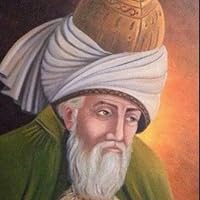
Nasir al-Din Tusi, the renowned Shi'i scholar of the 13th century, produced a wide range of writings in different fields of learning under Ismaili patronage and later under the Mongols. His work brought him great acclaim and, as a result of his changing affiliations in the course of a brilliant scholastic career, he is claimed by both Twelver Shi'i and Ismaili traditions. Contemplation and Action is Tusi's spiritual autobiography in which he recounts details of his early education, his search for knowledge and his eventual conversion to the Ismaili faith. Translated for the first time into English, it is published here with the full Persian text and a substantial introductory essay on Tusi's life and thought.
Muhammad ibn Muhammad ibn al-Hasan al-Tūsī, better known as Nasir al-Din Tusi, was a Persian polymath, architect, philosopher, physician, scientist, and theologian. One of the greatest scientists of medieval Islam, he is often considered the creator of trigonometry as a mathematical discipline in its own right.
This short work has recently been attributed to the 13th century Iranian polymath Nasir al-din al-Tusi and translated into English from Persian. If you do not know Tusi, he was among the great defenders of Avicennan philosophy, a master astronomer who developed some of the mathematics used by Copernicus, and an intellectual hero for both Twelver and Ismaili Shiism. Here Tusi recounts the circumstances of his conversion to Ismaili Shiism, then explains the philosophical considerations involved. Let me summarise and comment upon the latter. The narrative is essentially presented as an ascent from unthinking popular religion to the spiritual and inner heart of the tradition. The journey involves recognition of a reality deeper than outward religious forms, of the limits of unaided reason, and the necessity of spiritual mediation in the knowledge of God.
1. In the first place, Tusi explains that the ‘theologians’, ie the Mutakallimun, learn the ‘exoteric’ (zhahir) or literal word of religion but are ignorant of its ‘esoteric’ (batin) meaning. As such, Tusi was driven to search beyond the confines of dogmatic theology. No doubt the tendency Tusi observed has worsened with the influence of Protestant scriptural literalism, felt upon the Islamic world as well, and the dominance of a linear ‘historical’ sense of time, at odds with the cyclical and eternal time inhabited by mankind in the age of myth. “God guides to His light whom He wills, and God sets forth parables for mankind”.
2. Tusi then turned to philosophy (falsafa), whereupon he found some satisfaction with the use of reason to question and explain many of the assumptions which the theologians took for granted. However, his spiritual quest could not rest here either, because reason is itself a limited tool. Here we encounter the first of Tusi’s philosophical arguments. Let’s recall Aristotle’s distinction in De Anima (On the Soul), Book III.4-5, between the potential intellect (nous pathetikos) and the active intellect (nous poietikos). The human intellect remains a bare potential to receive intelligible forms unless brought into act by an intelligence which is itself fully active. It was famously unclear whether Aristotle’s active intellect refers to a merely human capacity, ie a dimension inherent within each of our intellects, or, as the late ancient interpreter Alexander of Aphrodisias suggested, whether it is identical to the divine intellect of which Aristotle says that its ‘substance is activity’, ie God Himself (cf. Arist. Met. Λ ch.7&9). With this background left implicit, Tusi claims that the ordinary human intellect must be brought into act by an intellect which is already actual, an instructor or mu’allim, who it appears will ultimately be identified not as God but as a Prophet or Imam. It was this argument which allegedly convinced Tusi that unaided reason is without the power to comprehend Truth, leading him away from the sect of philosophers to the doctrine of the Ismailis, the people of ta’lim. I must note that I find this argument unpersuasive, though interesting and perhaps noble in aspiration, but we have better things to discuss.
3. Tusi then wonders what the perfect knowledge of the first instructor (mu’allim) must be like; he who shall teach us Divine Truth. Here he takes further issue with the doctrines of the falasifa, according to whom the most certain form of knowledge is either (i) the direct first-personal knowledge that a mind has of itself (think Avicenna’s Flying Man or Descartes’ cogito) or (ii) the knowledge of an effect through its cause. When it comes to the knowledge of God we certainly cannot possess the latter, as God is uncaused, and nor do the philosophers post the former as a means of knowing Him. As such, they block the path to His knowledge entirely. But they are ignorant of having done this.
4. Tusi takes the argument above to refute the philosophers’ conception of the First Effect, that Being which is closest to God and most able to know Him. The philosophers call this First Effect the First Intellect. Tusi argues that, since the knowledge of the True One is veiled from the First Intellect which the philosophers describe, there must be something prior to it, an intermediary between God and itself, which is the Divine Word (kalima) or Command (amr) of classical Ismaili philosophy. Tusi adds another argument for this claim. It is difficult but interesting. The idea, from what I can gather, is that the ‘rule of one’, ie that only one effect can proceed directly from the Unified cause (ie God), implies that the First Intellect, which is necessarily dual in its two aspects, being at once subject of thought and object of thought, must be preceded by something which has only one aspect, ie the Divine Word. (cf. Shahrastani, Mafatih, ed. Adharshab, pp.276-277.) A Peripatetic philosopher like Avicenna would perhaps object that this being, which has but one aspect, must itself be God, not any created effect. This seems eminently reasonable , however, Tusi’s Ismaili position does not, in the final analysis, predicate unity of God. God, who lies beyond all opposites, is neither one nor many. Of course, this would appear to undermine the entire basis of the rule of one in the first place, but I digress.
5. From here we reach the apex of theological brilliance in this work. In a brief and riddling passage, Tusi places God beyond the very conceptual binaries which make rational philosophy possible: God cannot be attributed with “cause or effect, existence or non-existence, temporality or eternity, necessity or contingency, nor any other kinds of opposition, contradiction, or association. He is beyond any attribute by which something could be qualified, whether it be non-existent or existent, negative or positive, relative or absolute, verbal or entitative. He is beyond this and beyond the beyond and so forth” (p.37, my modified translation).
6. A reflective reader will perceive the Divine Transcendence (tanzih) through this self-negating apophatic discourse. Before God tongues fall silent and reason’s ink runs dry. The mind is crushed by the weight of His Throne. “Glory to thy Lord, the Lord of Might, above what they describe.” (Q.37:180)
7. The following point cannot be explained in a review of this sort, but Tusi’s apophaticism completes the Ismaili doctrine of double negation which Abu Yaqub al-Sijistani began; the latter’s conception was lacking in various respects, particularly through its reliance on the doctrine that spiritual substances are defined through negation. So too with Hamid al-Din al-Kirmani. There is more power in Tusi’s simple self-refuting claim that God is beyond all this and beyond the beyond.
8. Tusi then proposes another idea of great significance for Shiite religious epistemology. God, in His transcendence, cannot be known by any propositional or inferential means. The one who knows God through God, without concept or mediation, by virtue of his high station, and is the manifestation of the Divine Command, for all spiritual realities are manifest upon the earth, is the only way to our knowing God. A mediator becomes necessary and must exist in each age. This is the Prophet and then the Imam. In this respect the Ismailis surely have more in common with Christians than Sunnis. It would be interesting to compare the doctrine of certain Sunni Sufis.
9. Tusi argues as follows: a thing is known through it’s name; God is known through the Prophet or Imam; the Prophet or Imam is thus like the name of God; the name and the thing named are referred to by the same terms, as we call Zayd ‘Zayd’ and also call his spoken or written name’Zayd’; hence we may call God our Lord and call Muhammad and Ali Lord as well. This conception of monotheism diverges sharply from what we might expect of Islam, given the usual dominance of Sunni assumptions.
10. Finally, the text contains a doctrine of spiritual union with the soul of one’s teacher, who is united with the soul of his teacher in turn, presumably terminating with the union of all souls with the soul of the first teacher, who knows God through God. All souls therefore return to Him. It also contains a fascinating claim about the relativity of religious doctrine: all religious opinions are branches of one root; all of them are false; they come from one source; they were all true in their own time and place.
I make no final comment on the truth of these claims. May God be our guide.
Clear, readable translation of al-Tusi's autobiography; I found it of great interest for its description of the distinguishing characteristics of Nizari Isma'ili beliefs regarding the Imamate during the Alamut period.