

What do you think?
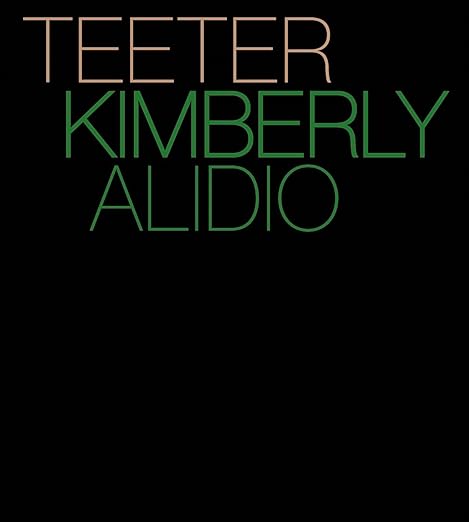
Teeter
An autohistoriography of felt time that arises from subversive hearing practices and the emotional prosody of a mother tongue one does not understand but activates in another poetic language. Comprised of three long poems, Teeter knows experimental forms can be as intimate as mothering; knows we can understand languages we do not speak. From “Hearing”'s intensities of attention, to “Ambient Mom”’s familial Filipino immigrant soundscapes, to “Histories”'s careful scrutiny of the socially-sanctioned narratives and trajectories to which we are meant to aspire, Teeter’s lessons in listening reverberate across career retrospectives and heritage languages, colonial histories and domestic intimacies, reattuning us to what we’ve neglected to notice in our efforts to create a life we can understand.
128 pages, Paperback
Published August 15, 2023
Ratings & Reviews
Friends & Following
Create a free account to discover what your friends think of this book!
Community Reviews
Displaying 1 - 6 of 6 reviews

September 14, 2023
‘The cold intimacies of indexical, context-specific epistolary speech trying to pin down a time & place of meaning were so touching I was repulsed. I'm forever haunted by the air-conditioned intimacies of colonial, archival deixis. To document is to read, to record is to listen, to photograph is to see. Once accountability is directed away from safeguarding & extracting the qualities you believe you've come to acquire by customary right, then to account for positionality seems to exhaust so many people they forget to account for the way the world feels different afterwards.’
so damn good
so damn good

May 15, 2024
What is the world but a chaos. What is writing but an attempt to mark a center to that chaos. Or what is writing but an acquiescence to centering, and Alidio is going to expose this ongoing mistruth. Or is it possible to expose it? Does any writing, even writing that wants to evade a center, or critique the center by removing it, actually keep orbiting around a center, or trending towards a center? Isn’t an alternative center still a center? In Alidio, that tension between rejecting the center and realizing it, sometimes even following with the acquiescence to it, that tension is the engine for her book. Especially with the series of poems titled “Autohistoriography of Arrival at a River.” History can be poetry can be chronicle can be expose can be everything you want writing to be, to do, to acknowledge. All of these operating in synthesis and productive paradox.
Alidio’s book is dense and theoretical. It is intimate and personable. Like there is a way Alidio makes clear her book’s intention to unsettle conventions that exist around the poetic speaker. And then as the poet accepts that these conventions deserve to be unsettled, the poems find a personal angle that complicates this theoretical space. To blur the depersonalized with the intimately personal. To devise a self positioned around the poet who can pretend to an order, even as her theory theory wills any order as an artificial construct. Oh, delicious paradox. Wisteria in spring. So much fragrance coming out of this tangle of vines. So many directions tangling everywhere.
But how does a poem or a book of poems express non order, when the poems must be put in an order. And poems aware that even ending a poem is a statement on order, because chaos is a continuousness without end. A poem expressing the world’s chaos would be “A sentence never want[ing] to end.” The majority of Alidio’s thoery might be in the book’s final section, but even from the opening and its sound work, there is a commentary on poems and their speaking centers centered on something that wasn’t all self, or the presumption that a writing subject would need to be self. The opening is like an ode to documenting the sounds generated while living in the world. Almost like if people were songbirds, making sounds the poet considers something like a song of humanity. But the song’s “language” can’t be how readers would normally connect “song” and “language” and “poetic sense.”
The book is assuredly involved in constructedness and the artificiality of construction in many ways. Registering the between-ness of translation. How loud the voice seems sometimes. Like that was just one more way to immerse into the work.
Alidio’s book is dense and theoretical. It is intimate and personable. Like there is a way Alidio makes clear her book’s intention to unsettle conventions that exist around the poetic speaker. And then as the poet accepts that these conventions deserve to be unsettled, the poems find a personal angle that complicates this theoretical space. To blur the depersonalized with the intimately personal. To devise a self positioned around the poet who can pretend to an order, even as her theory theory wills any order as an artificial construct. Oh, delicious paradox. Wisteria in spring. So much fragrance coming out of this tangle of vines. So many directions tangling everywhere.
But how does a poem or a book of poems express non order, when the poems must be put in an order. And poems aware that even ending a poem is a statement on order, because chaos is a continuousness without end. A poem expressing the world’s chaos would be “A sentence never want[ing] to end.” The majority of Alidio’s thoery might be in the book’s final section, but even from the opening and its sound work, there is a commentary on poems and their speaking centers centered on something that wasn’t all self, or the presumption that a writing subject would need to be self. The opening is like an ode to documenting the sounds generated while living in the world. Almost like if people were songbirds, making sounds the poet considers something like a song of humanity. But the song’s “language” can’t be how readers would normally connect “song” and “language” and “poetic sense.”
The book is assuredly involved in constructedness and the artificiality of construction in many ways. Registering the between-ness of translation. How loud the voice seems sometimes. Like that was just one more way to immerse into the work.

December 6, 2024
Kimberly Alidio is a poet to try out. Despite being a difficult book to get into, Teeter impresses. It’s about language and being surrounded by language in its different forms.
Kimberly Alidio is a queer poet who grew up with her parents speaking Tagalog and another Filipino language. They sometimes they’d mix English with their own languages. There are over 120 languages spoken in the Philippines. Even though Kimberly doesn’t speak them, she has loved working with their sounds visually and auditory. In this sense it is fascinating to see how intricately she depicts language.
Kimberly Alidio wants readers to look at poetry more deeply. I am not sure how exactly but her book will help me again sometime. I have a paperback copy and it comes in a large square size.
Here is something about her language poetics from a Nightboat Books interview: “Language poetry, a movement whose avant-garde poetics have been dismissed by some as apolitical, academic, willfully opaque, and white.”
Nightboat is the publisher of Teeter. She was the winner the Lambda Award for Poetry in 2024 for Teeter.
“Kimberly Alidio is the author of why letter ellipses; : once teeth bones coral : ; a cell of falls; and after projects the resound. With her partner, the poet Stacy Szymaszek, she lives on unceded Musee and Muhheaconneok/Mohican lands, otherwise known as New York’s Upper Hudson Valley.”
Kimberly Alidio is a queer poet who grew up with her parents speaking Tagalog and another Filipino language. They sometimes they’d mix English with their own languages. There are over 120 languages spoken in the Philippines. Even though Kimberly doesn’t speak them, she has loved working with their sounds visually and auditory. In this sense it is fascinating to see how intricately she depicts language.
Kimberly Alidio wants readers to look at poetry more deeply. I am not sure how exactly but her book will help me again sometime. I have a paperback copy and it comes in a large square size.
Here is something about her language poetics from a Nightboat Books interview: “Language poetry, a movement whose avant-garde poetics have been dismissed by some as apolitical, academic, willfully opaque, and white.”
Nightboat is the publisher of Teeter. She was the winner the Lambda Award for Poetry in 2024 for Teeter.
“Kimberly Alidio is the author of why letter ellipses; : once teeth bones coral : ; a cell of falls; and after projects the resound. With her partner, the poet Stacy Szymaszek, she lives on unceded Musee and Muhheaconneok/Mohican lands, otherwise known as New York’s Upper Hudson Valley.”
August 4, 2025
My native language is noise
I am looking up bird poems on the internet when
I have bookshelves crammed with poetry behind me
They heard about all this cracking & breaking away on the news & then
they began to search over the internet for information on what was going on
I am looking up language on the internet when
I have melody contours in my head
in the speech of uncles who've been asking after me
these decades I've stayed away
I am proposing new collabs with forty-four phonemes
in their performances as two hundred fifty graphemes
Tiniest units glittering in the proximity & prosody cosmos
of a one-sided phone call (27)
I am looking up bird poems on the internet when
I have bookshelves crammed with poetry behind me
They heard about all this cracking & breaking away on the news & then
they began to search over the internet for information on what was going on
I am looking up language on the internet when
I have melody contours in my head
in the speech of uncles who've been asking after me
these decades I've stayed away
I am proposing new collabs with forty-four phonemes
in their performances as two hundred fifty graphemes
Tiniest units glittering in the proximity & prosody cosmos
of a one-sided phone call (27)

August 26, 2025
Wildly inventive. The xenoglossic verse, especially in the second suite "Ambient Mom," reminded me of Latasha N. Nevada Diggs's TwERK.
From "Hearings: [To name the language & the place]":
Our
grandmother was the most fluent in this language, the one
before the one for survival
When the languages moving through language refuse
sense & reference
From "Hearings: [To name the language & the place]":
Our
grandmother was the most fluent in this language, the one
before the one for survival
When the languages moving through language refuse
sense & reference

Read
January 22, 2025Here’s the thing, I understood every word (and non-word) the poet chose….just not in the order they chose to put them in.
Someone a lot smarter than me is going to have to help me out on this one because if there was a message or meaning? Completely missed it.
Someone a lot smarter than me is going to have to help me out on this one because if there was a message or meaning? Completely missed it.
Displaying 1 - 6 of 6 reviews