

What do you think?

Pink Noise
A book of prismatic, lyrical poems that enhance and disrupt the pastoral tradition to consider organic and mineral worlds, queer desire and experience, the mathematical and the spiritual; struggle and resistance.
Pink Noise orbits in spaces of memory, longing, violence, solidarity, the ecological, and the mystical. Experimental in its forms and lexicon, in poems ranging widely in style and scale, it moves through layers of musical intensity as it reworks the visual space of the page to generate sensations of presence and revelation. Simultaneously lucid and syntactically disjunctive, these poems are queer and radical not only in their content, but in their grammar.
Pink Noise orbits in spaces of memory, longing, violence, solidarity, the ecological, and the mystical. Experimental in its forms and lexicon, in poems ranging widely in style and scale, it moves through layers of musical intensity as it reworks the visual space of the page to generate sensations of presence and revelation. Simultaneously lucid and syntactically disjunctive, these poems are queer and radical not only in their content, but in their grammar.
- GenresPoetry
112 pages, Paperback
Published April 18, 2023
Ratings & Reviews
Friends & Following
Create a free account to discover what your friends think of this book!
Community Reviews
Displaying 1 - 3 of 3 reviews
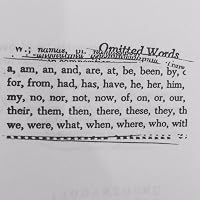
July 24, 2024
mica
that would a
creek drank
or certainty through
& objects contracting
vertices of xs
a hardwood to shower
his
rippling
& tender that would be
& go up the cliff
lone pine atop it
that would be a lilac bush
him running past you
turning into lilacs (1)
halcyon
you'd say a long time & the motion perpetual
parahelix for a day break a
rebus a rhombus a tisket a tasket
head of Orpheus in a wicker basket (45)
styrax
a curve into the backlot a snowdrift
anthracite green partitioned uptaking
or cruciform asphodel in circular sunlight
witness to a crime in that emptylot
chainlinkfence & glinting brokenglass
late at night & a moving frame
hustler or john sideshifting in the shadows
move off that to a forest & recombine
in a vision of different men
lined up from the past, each
under a different tree
& the fountain or reflecting pool or rose garden
isotope of brain & a field of silvergreen sheen
at the circle of the pondcells & blades of grass
aligned & repeating in a cubed or bordered array
dashes & circuitry accumulating in muted gleams
& holding hands they make their way across that waterway
up jaw arrow arch & flowered stone (50)
from helix
harmonies under light matrix
in a vibrating membrane or tetrahedral glass
that would be a tree of microchips
shattering & clacking in the wind
two men on the horizon or in a room
any ray of light backing into corners
one shadow on a radius of ice
he reaches across a small space
to hold his hand
*
or his cock in his throat thrusting full
of lilies, lilacs, all amounts of muscle
and fluids, salt and sugar, in his face
*
ending some kind of line, a linden or something
billowing gusts or curls of it
ingreening that afterward
I could take the birdcage or the trellis or vines
signal of honeysuckle
at the end of a curve (54)
tunnel
Sometimes
a simulation
of rain, sometimes
a dim
metallic backlash
of what
you could call
your memory
if something
like that
could be said to exist
in this barn.
Our projects and days
were eaten
by the moths
fluttering in circles
of art over us.
The barn is as empty
as a bundle
of arrows.
The project
I'm told
isn't real
never was,
and the ice crystals
and garbage
and pink slips
and time capsules
are strewn in heaps
against
the horizon,
in bulges
of sex,
in cages,
in cedar forests.
There is no stop
to the dripping.
Bye workers, bye patterns.
By spit
of the supervisor
that flies
through the wind
like blue commas.
There is no need
for the barn,
we are so advanced
in weather and war. (85)
from glinting
says there is a word no one can pronounce
but every word in the language rhymes with it (90)
that would a
creek drank
or certainty through
& objects contracting
vertices of xs
a hardwood to shower
his
rippling
& tender that would be
& go up the cliff
lone pine atop it
that would be a lilac bush
him running past you
turning into lilacs (1)
halcyon
you'd say a long time & the motion perpetual
parahelix for a day break a
rebus a rhombus a tisket a tasket
head of Orpheus in a wicker basket (45)
styrax
a curve into the backlot a snowdrift
anthracite green partitioned uptaking
or cruciform asphodel in circular sunlight
witness to a crime in that emptylot
chainlinkfence & glinting brokenglass
late at night & a moving frame
hustler or john sideshifting in the shadows
move off that to a forest & recombine
in a vision of different men
lined up from the past, each
under a different tree
& the fountain or reflecting pool or rose garden
isotope of brain & a field of silvergreen sheen
at the circle of the pondcells & blades of grass
aligned & repeating in a cubed or bordered array
dashes & circuitry accumulating in muted gleams
& holding hands they make their way across that waterway
up jaw arrow arch & flowered stone (50)
from helix
harmonies under light matrix
in a vibrating membrane or tetrahedral glass
that would be a tree of microchips
shattering & clacking in the wind
two men on the horizon or in a room
any ray of light backing into corners
one shadow on a radius of ice
he reaches across a small space
to hold his hand
*
or his cock in his throat thrusting full
of lilies, lilacs, all amounts of muscle
and fluids, salt and sugar, in his face
*
ending some kind of line, a linden or something
billowing gusts or curls of it
ingreening that afterward
I could take the birdcage or the trellis or vines
signal of honeysuckle
at the end of a curve (54)
tunnel
Sometimes
a simulation
of rain, sometimes
a dim
metallic backlash
of what
you could call
your memory
if something
like that
could be said to exist
in this barn.
Our projects and days
were eaten
by the moths
fluttering in circles
of art over us.
The barn is as empty
as a bundle
of arrows.
The project
I'm told
isn't real
never was,
and the ice crystals
and garbage
and pink slips
and time capsules
are strewn in heaps
against
the horizon,
in bulges
of sex,
in cages,
in cedar forests.
There is no stop
to the dripping.
Bye workers, bye patterns.
By spit
of the supervisor
that flies
through the wind
like blue commas.
There is no need
for the barn,
we are so advanced
in weather and war. (85)
from glinting
says there is a word no one can pronounce
but every word in the language rhymes with it (90)

Read
September 8, 2024idk how to rate this...it's like being back in my college statistics class where i felt like i was doing god's math and every time i left that classroom i felt like nothing and everything was real all at the same time and none of it mattered and it all, always, mattered.
or, gay metal computer god porn poetry??? plus pink & so much green
or, gay metal computer god porn poetry??? plus pink & so much green

August 1, 2024
Holden's poems are like chaos in the city. But the city is a box, or a barn, or it’s the sum-total of people who were employed to be in the city, or the geometrical shape that is a city. There are people in his poems. People as the ones to mark a city’s boundaries or to dictate a geometric lifestyle. Or writing style. “Work,” like how you would hear it in a song, or in slang. Holden’s poems are like that. Mainly fragmented. But fragmentation like a boat that’s been tied to the pier. How the boat sometimes pulls the rope taut, and sometimes the rope remains slack. That’s the fragmentation in Holden’s book.
Reading the book’s first section, there is a thorough consideration of chaos. But chaos more as geometry. It feels like when you come out of a club, and the city has an opinion about whether you should have come out of that club when you did. You feel something in your chest. You have an instinct for what a city tells you. Because you know a city doesn’t actually speak, no matter what you think you’re hearing. And it’s not that the men in this section would necessarily be singling you out as a target for the city. The city is open arms, even if those open arms are also an enclosure for keeping people where they are. A technological enclosure, that is.
Perhaps my review is vague. Holden’s book is vague. And it took me some time to understand what might be at the center of all that vagueness. It’s not difficult to feel like a center exists in Holden’s book. The city concern, and men concerns, and sex concerns are all there. And on book-level, I keep trying to use “city” as a descriptive analogy for the book, but in the sense that “city,” for Holden’s book, is about the people populating it, interacting with one another, and the poet, as witness and target of the various attentions all that city population might pay him. That feels like the overriding concern.
For me, the book’s poems often fluctuate between the individual and the social. Like it was nodding to Adorno’s “On Lyric Poetry and Society,” but not beholden to it. Because of the poet’s commitment to socializing himself, but also the exaggerated, warped perspective he has when he’s looking around himself. And it’s at the “polytopes” section, especially, where I start to feel a key for the book overall. The section constitutes a series of jeweled-container poems the poet has been housed in. Perhaps constructed from tinted glass. It makes the world a prismed, faceted, jarred-fragmentary experience.
Like the poet is apart from the world as much as he’s immersed in the world, but the immersion is qualified by this jeweled perspective. What he sees is what he feels, and it’s not immediately evident how a poem like that translates over into language. It makes me think of the moment when he proposes the book have a frontispiece of fur, so the reader would have something to touch, something that would resemble the live creature the fur came from. All those textures and vitalities that are implicit to feeling something that was so alive. How is that language? That’s what a book of poems (or even a portion of the book that proposes this as the medium for the poet’s thinking) has to reckon with. Like that image of Superman’s parents in a pane of glass, but make the pane of glass a jeweled vase you found at a garage sale.
Reading the book’s first section, there is a thorough consideration of chaos. But chaos more as geometry. It feels like when you come out of a club, and the city has an opinion about whether you should have come out of that club when you did. You feel something in your chest. You have an instinct for what a city tells you. Because you know a city doesn’t actually speak, no matter what you think you’re hearing. And it’s not that the men in this section would necessarily be singling you out as a target for the city. The city is open arms, even if those open arms are also an enclosure for keeping people where they are. A technological enclosure, that is.
Perhaps my review is vague. Holden’s book is vague. And it took me some time to understand what might be at the center of all that vagueness. It’s not difficult to feel like a center exists in Holden’s book. The city concern, and men concerns, and sex concerns are all there. And on book-level, I keep trying to use “city” as a descriptive analogy for the book, but in the sense that “city,” for Holden’s book, is about the people populating it, interacting with one another, and the poet, as witness and target of the various attentions all that city population might pay him. That feels like the overriding concern.
For me, the book’s poems often fluctuate between the individual and the social. Like it was nodding to Adorno’s “On Lyric Poetry and Society,” but not beholden to it. Because of the poet’s commitment to socializing himself, but also the exaggerated, warped perspective he has when he’s looking around himself. And it’s at the “polytopes” section, especially, where I start to feel a key for the book overall. The section constitutes a series of jeweled-container poems the poet has been housed in. Perhaps constructed from tinted glass. It makes the world a prismed, faceted, jarred-fragmentary experience.
Like the poet is apart from the world as much as he’s immersed in the world, but the immersion is qualified by this jeweled perspective. What he sees is what he feels, and it’s not immediately evident how a poem like that translates over into language. It makes me think of the moment when he proposes the book have a frontispiece of fur, so the reader would have something to touch, something that would resemble the live creature the fur came from. All those textures and vitalities that are implicit to feeling something that was so alive. How is that language? That’s what a book of poems (or even a portion of the book that proposes this as the medium for the poet’s thinking) has to reckon with. Like that image of Superman’s parents in a pane of glass, but make the pane of glass a jeweled vase you found at a garage sale.
Displaying 1 - 3 of 3 reviews