Jump to ratings and reviews

Win a free print copy of this book!

12 days and 17:48:41

10 copies available
U.S. only
Rate this book

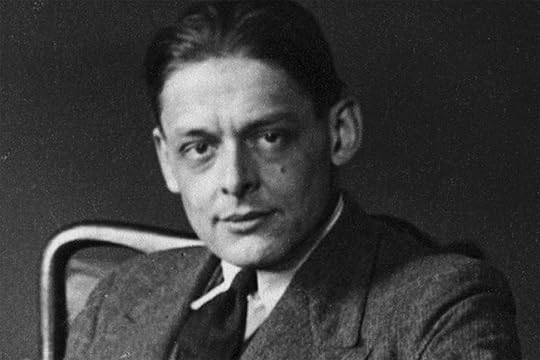
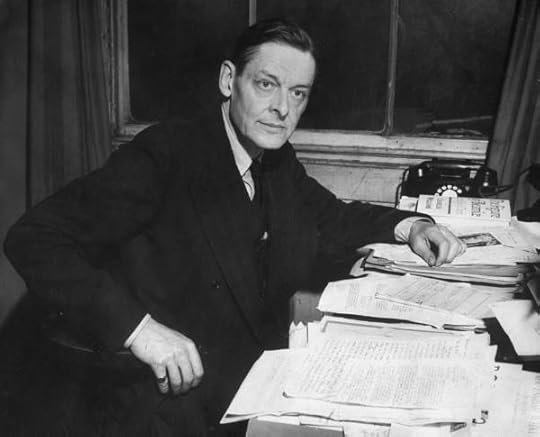
T. S. Eliot: An Imperfect Life

Win a free print copy of this book!

12 days and 17:48:41

10 copies available
U.S. only
Rate this book
Lyndall Gordon's biographical work on T. S. Eliot has won many dramatic accolades. In this "nuanced, discerning account of a life famously flawed in its search for perfection" ( The New Yorker ), Gordon captures Eliot's "complex spiritual and artistic history . . . with tact, diligence, and subtlety" ( Boston Globe ). Drawing on recently discovered letters, she addresses in full the issue of Eliot's anti-Semitism as well as the less-noted issue of his misogyny. Her account "rescues both the poet and the man from the simplifying abstractions that have always been applied to him" ( The New York Times ), and is "definitive but not dogmatic, sympathetic without taking sides. . . . Its voice rings with authority" ( Baltimore Sun ). Praised by Cynthia Ozick as "daring, strong, psychologically brilliant," Gordon's study remains true to the mysteries of art as she chronicles the poet's "insistent search for salvation."

756 pages, Paperback

First published January 1, 1998

24 people are currently reading
3531 people want to read

About the author

Lyndall Gordon

19 books116 followers
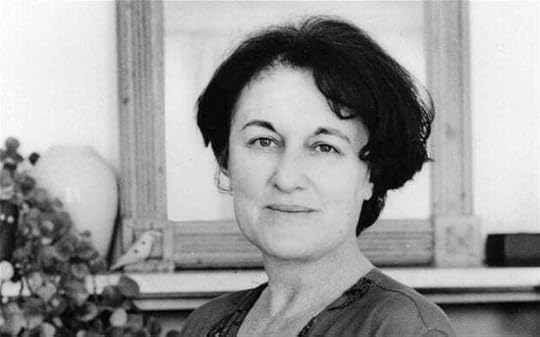
Lyndall Gordon (born 4 November 1941) is a British-based writer and academic, known for her literary biographies. She is a Senior Research Fellow at St Hilda's College, Oxford.

Born in Cape Town, she was an undergraduate at the University of Cape Town, then a doctoral student at Columbia University in New York City. She married the pathologist Siamon Gordon; they have two daughters.

Gordon is the author of Eliot's Early Years (1977), which won the British Academy's Rose Mary Crawshay Prize; Virginia Woolf: A Writer's Life (1984), which won the James Tait Black Memorial Prize; Charlotte Brontë: A Passionate Life (1994), winner of the Cheltenham Prize for Literature; and Vindication: A Life of Mary Wollstonecraft, shortlisted for the BBC Four Samuel Johnson Prize. Her most recent publication is Lives Like Loaded Guns: Emily Dickinson and her Family's Feuds (2010), which has overturned the established assumptions about the poet's life.

(from Wikipedia)

Ratings & Reviews

What do you think?
Rate this book

Friends & Following

Create a free account to discover what your friends think of this book!

Community Reviews

5 stars
59 (28%)
4 stars
84 (40%)
3 stars
58 (27%)
2 stars
8 (3%)
1 star
1 (<1%)
Displaying 1 - 30 of 31 reviews
Profile Image for Paul Bryant.
2,413 reviews12.6k followers
February 13, 2018
Interviewer : why did you want to read about this nasty old man anyway?

PB : I was feeling more ignorant than usual. He's mentioned perpetually by all manner of people. Possibly the problem is that I can't understand any of the arsey abstract folderol in Four Quartets and also he was supposed to be a rightwing antisemitic creep. Why isn't he already on the scrapheap of literary history, a giant embarrassment like his fascist friend Pound?

Interviewer : Do you talk like this all the time?

PB : No.


***

Later that same decade :

It gets worse. On p 105 the author is telling us that Eliot's vicious antisemitism should not make us overlook his equally vile misogyny. That's the author speaking - I assume she's something of a fan. She points out that this antisemitic misogynist set himself up as a moral authority and, indeed, was taken seriously by the great and the good. Is this disgusting? Well, in MY little universe, yes I think it is. On the plus side, you also get airyfairy witterings about nothing which comprise Eliot's mystical Christian musings.

THE VERY POOR SEX LIFE OF THE FAMOUS ANTISEMITE

It turns out that the course of modern poetry would probably have fundamentally changed if Eliot hadn't married Vivienne Haigh-Wood. The minute they got married she had an affair with Bertrand Russell, that silver-tongued devil, and liked him a lot more than TS. Oops, she married the wrong guy. After that was over she spent ten years in the grip of one mystery ailment after another (it didn't stop her joining the British Fascist Party), culminating in such deranged behaviour in private and in public that Eliot left the house and spent many years simply avoiding her.

He would wear clown gear and paint his face orange and stick on a big red nose and he would unicycle past her as she was battering at the marital door yelling "Come out you highbrowed bastard, I'll gut ye from stem to stern, I'll wear your entrails with pride so help me Bob". She tried everything to track him down, including putting an advert in The Times!

HAVE YOU SEEN THIS MAN? Writes inscrutable poems and is thought to be in hiding from ME.

It's funny, but it's really sad. Eventually her brother had her committed to an asylum. In all of this horribleness Eliot wrote much allegedly - no allright, really - importantly miserable poetry. Now consider what would have happened if he'd married a major babe like Rebecca West and enjoyed a ten year shagtastic bonkfest with venturesome trips to discreet nudist colonies in Montserrat. No Waste Land! No Four Quartets! Bliss!

IN THE END LEAVES FALL FROM GUTTERS LIKE AN ETHERISED BADGER ON AN OPERATING TABLE

Sad conclusion: once again I'll have to admit defeat. There's a long section devoted to Four Quartets, and I thought Lyle Gordon would be able to at least show me the way into this clearly great poem, but at the beginning of this interpretation she says:

"Eliot sets himself the question : how do we live in time so as to conquer time?"

What does that even mean? Later on:

"So Eliot set himself to negate the senses and all worldly notions of success in order to become a vacuum for grace to fill."

Well, this is where I check out. None of these terms mean anything to me - conquer time? negate the senses? grace? Might mean something to the Archbishop of Canterbury but it cuts no ice in Devonshire Road, Sherwood, Nottingham.

So farewell, TSE, back to the attic you go, I could say it was nice knowing you, but you know something, it wasn't.

DVD EXTRA :

CELEBRITY DEATH MATCH # 3 : ANDREA DWORKIN VERSUS T S ELIOT

The 6 foot 4 Eliot, confident of victory, gazes down at his 5 foot 2 and grotesquely obese opponent and begins by sneering and quoting Jew-hating Early Church Fathers like Origen, Eusebius and John Chrysostotum. Dworkin kicks his feet away, he crumples like a flimsy argument, she smashes him in the mouth and stomps on his head, putting an end to his repulsiveness within 25 seconds. Man, that was quick. A huge fight breaks out in the crowd between those who say that the personality and life of the author are irrelevant where great art is concerned and those who want to call a guy a big fat antisemite if he is one and relegate his works thereby to a lesser status. They flail at each other using copies of Ted Hughes' collected works and reproductions of Picasso. The police are called, they pile in with riot shields, each one bearing a large portrait of Jean Genet. Over in the ring, Dworkin using power tools has sliced Eliot's corpse up into four quartets.

Profile Image for James Hartley.
Author 10 books146 followers
March 19, 2020
Interesting, dense life of Eliot - which I read to know a bit more about the poet, not being an expert by any means. I found sections fascinating and other sections slightly repetitive and long-winded but the book is nothing if not thorough - probably best as a reader's companion piece, to dip in and out of, than a straight-through cover-to-cover read if you're not an Eliot fan. The detail is impressive, though, as is the interpretation and judicious empathy given to Eliot's life.
Profile Image for David James.
Author 9 books10 followers
December 15, 2016
Gordon, Lyndall. The Imperfect Life of TS Eliot

The revised edition of Lyndall Gordon’s biography (2012) is a comprehensive account of Eliot’s life, dealing mainly with his life in England, and including five appendices plus a profusion of Notes. It is however a fascinating insight into the mind and art of Eliot, his many masks and his difficulties with women, especially those whom he served badly. The book reads rather like a mystery-thriller, the ‘real’ Eliot being kept under wraps until the end. The ‘Imperfect’ of the title reflects on Eliot’s conception of himself and the world he lived in, especially his ‘Waste Land’ experience of London as a young man.

Eliot preserved for the outside world a smooth and cultured exterior, behind which, however, raged a tormented soul, steeped in New England Puritanism. Gordon relates his early life in Boston and Havard to his adoption of England as the only civilised place to live. Early on she introduces us to Emily Hale, a major player in Eliot’s life until suddenly, after years of close friendship in England and the States she becomes for Eliot a non-person. Eliot, who fell in love with Emily as a fellow student and continued covertly to visit her in Chipping Campden, then dropped her completely. She had served her purpose as a loving companion, but closer ontact was damnation for Eliot, whose exacting moral code embraced chastity, austerity, humility and sanctity. Something similar happened to his decade of friendship with Mary Trevelyan, an independent English woman who became his confidante in his frantic marriage with Vivienne Haigh-Wood. Eliot was afraid of women, Gordon asserts, and only at the very end of his life did he find happiness - with his former secretary, Valerie.

For those interested in Eliot’s crises of conscience and for addicts of English writers, such as Auden, Spender, and the Woolfs, not to mention Americans like Lowell, Hawthorne, Emerson and Ezra Pound this book is a gold-mine. Hence one who despised biography (and forbade any during his life) has, thanks to this informed and lively tome, posthumously provided material for an insightful book you’ll not easily put down.

Profile Image for John.
226 reviews130 followers
April 21, 2008
Lyndall Gordon is among my very favorite biographers, and she is able to bring any of her subjects back to life, as it were. In this case, T.S. Eliot, not among my favorite persons by any stretch, but I was entirely engrossed in Gordon's biography, which has every thing I look for in a literary biography - how and why and individual writes.
Profile Image for Evan.
295 reviews13 followers
October 15, 2021
Boring, and hard to read without having read most of his corpus. Sometimes felt like I was learning more about the women in his life than himself. But it might be the product of his own reservedness. also, would've appreciated a better treatment of his religion. But either way, I have learned a lot about him now.
Profile Image for S.L. Myers.
Author 1 book5 followers
March 22, 2022
What a weird, complicated, rather unlikable man! But, I do like his poetry. Good bio overall.
Profile Image for Tiggs Benoit.
1 review24 followers
February 3, 2021
I love him. I will not judge his private life under any pretext. There are some here that letting themselves be picked up and carried aloft by the Zeitgeist rail in faulty Sarcasm and Disdain, the patois everyone thinks they can master so well, and thrust and slash and .. veins in their teeth, and all that. Anti-Semitic? His business. Misogynistic? Could care less. Nothing like Four Quartets has been written, and now that England, and is a good thing he is not here to see it, has passed on..it will forever remain as the optimal literary effort embodying that place, and that time.
Profile Image for Justin Evans.
1,716 reviews1,139 followers
January 24, 2020
I'm very surprised by the positive reviews, and just a bit dismayed by the critical ones. Dear readers, if you're going to be shocked that people were anti-semitic before the war, or that men raised in basically Victorian values wouldn't be progressive feminists, you might like to restrict yourself to reading about people who are still alive. If they're anti-semitic and misogynistic, they deserve your scorn. Gordon does a good job of the "these opinions are odious; they don't negate everything Eliot ever did" tap-dance, but even she somehow overstates his misogyny and understates his own sense of shame at his anti-semitism. There must be some safe middle ground between this and the ludicrously exculpatory last volume of Moody's Pound biography.

But enough; there are plenty of us who are interested in reading about people who are 'imperfect,' or even quite revolting. For those people, this is still not the right biography. By the time she wrote this, Gordon had already written multiple books about Eliot's life, so the new discoveries take on an outsized importance. I now know a surprising amount about Emily Hale's amateur theatrical career, but this book tells you almost nothing about, say, Ezra Pound. In terms of research, that makes sense, because the Hale stuff was new (and I believe there's more coming). In terms of a book written for the public, it does not make sense.

One day, someone will be able to write a biography of Eliot that combines the strengths of this book (the tap-dancing, mostly) with a more coherent biographical narrative. That, I assume, wasn't Gordon's intent here. Of course the publishers have sold it like that, though, because lots of us want to read biographies of famous, important, good poets. Not many people want to read archival material on the same.
Profile Image for Matt.
156 reviews
December 30, 2012
My new gold standard for biography - insightful but ruthless, appreciative but not idolizing. This was the perfect book at the perfect time, stripping away layers of Eliot's impersonality and obfuscation while leaving the central mysteries intact. Yes, he could be a terrible human being: certainly not a personality anyone would want to model themselves after. But Gordon treats the art as art and allows the poet to speak for himself through his work, illuminating how his life and his works intertwined without reducing to the lowest common denominator. Eliot's work is foundational for my spirituality and my writing, and if nothing else this book proves how right that decision was. The word is not the Word, but the word is how I will get there.
Profile Image for Stella Ottewill.
116 reviews3 followers
Read
November 12, 2021
In this biography Lyndall Gordon manages, with skill and sensitivity, the difficult task of representing both the desperate humanity and the unpleasant ideologies of her subject. Whilst she does not shy away from exploring his anti-Semetism or his misogyny, she also allows Eliot to sit before us as a man who struggled, throughout his life, for the virtues he held in such high regard, and for the 'silence' he found only once or twice in his seventy six years.

The chapter on Four Quartets is amongst the most wonderful literary exploration I have ever read; the dedicated chapter on Emily Hale is absolutely heartbreaking; and throughout, Gordon places the man beside his work, not exactly drawing conclusions from the writing to apply to the man, but allowing us to see and feel the parallels. Indeed, what most engaged me is that in a world obsessed with intellectual and accurate detail, this biography also revels in true human feeling.
Profile Image for Peter Spaulding.
226 reviews6 followers
November 1, 2018
Gordon does a really good job of making a poet whose biography is so important more approachable to regular readers. It's a little annoying to me that Eliot writes so that if you don't know his biography his poetry isn't as amazing as it otherwise is... but Gordon does a really good job of showing the the genius of the poems by contextualizing them in certain biographical features to his poems, especially ones as enigmatic yet emotional as "Marina." This whole book is worth reading if for nothing else than just to better understand that one, tiny poem.

Sooooo good, Gordon. So good. You're the best.
680 reviews3 followers
January 25, 2017
I will not lie. I skipped quite a lot. It's as much or more about his writing as his private life. I've learnt a lot and shall go back to his poetry. I'm glad he found love, even though late in life.
Profile Image for Bob Peru.
1,247 reviews50 followers
October 17, 2022
furnishes a more nuanced reading of the poems and plays.
Profile Image for Ci.
960 reviews6 followers
July 23, 2016
This book comprised of two segments of T.S. Eliot's life: the first half up the final ending of his first marriage, then the rest. The first half is much more engaging as it deals with arguably the most fertile period of the poet's life as well as the tortuous marriage with Vivienne. At half way, TSE was already an artist formed in his intelligence and his spirituality, if not quite certain what to do with his disturbed and disturbing first wife.

The author has a highly accomplished literary style yet marred by repetitions. But the following sentence (page 4) captured the essence of TSE's journey: … "the plot laid down in Exodus: an exit from civilization followed by an long trial in a waste place, followed by entry in the promised land:". Since youth, TSE tried to aim for a perfect life combining "the greatest intellectual activities and the greatest receptivity to the divine around us." (page 32). His life has a pattern, a self-determined path toward his spiritual objective. The relationships around him served as spurs or hurdles, but he marched on in his devotion to his vision of achieving a perfect "order" in life. His poetry is his legacy and biography, while other statistics and data are superfluous.

One feels deep horror and pity for his first marriage when Vivianne is "a bag of ferrets" (per Virginia Woolf) living a life of tremendous suffering and disorder, but one does feel that TSE had done his best to sustain an interior life while suffering through nearly two decades of enervating domestic chaos.

In the end, TSE had left a slim collection of poetry marking the highest achieved point in 20th century English literature: Prufrock, the Waste Land, Hollow Men, Ash-Wednesday, and his final triumphant Four Quartets. He may not have achieved a perfect life by his original aim, but he had achieved the sublimity to a form of life to fit an ideal order, despite all the damages accidental and unavoidable along his path.

The writer of this literacy biography deserves all the awards she received for the intelligence and artistry of her own right.
Profile Image for Laura.
466 reviews44 followers
March 12, 2017
Lyndall Gordon obviously had an enormous amount of material to sift through and make sense of in order to compose this dense biography. I admire her efforts in such a daunting challenge. Her presentation of the material and her own personal insights shed light remarkably well on all aspects of a man otherwise obscured by many masks.

However, the organization of this volume is somewhat jumbled and required consistent concentration to follow. Also, her poetical examinations are scattered haphazardly throughout the volume and rely solely upon biographical data. Footnotes to clarify the constant flow of randomly quoted lines would have been most beneficial. Reading this biography in its entirety required no small amount of dedication. In the end I am glad that I did, but I recommend it only to those with a large amount of free time before them and no pressing deadlines.

I rate it 3.5 stars.
Profile Image for Abby.
60 reviews
February 7, 2011
Gordon is a stellar biographer: meticulous, curious, witty, and even-handed -- here at times to a fault. Eliot is far from a likeable character, but Gordon goes to pains to give context, colour, and the benefit of the doubt to all of his bad behaviour. She spends at least as much time on his work as on his life and has a breath-taking command of both. Despite her best efforts, it's difficult to enjoy the book simply because Eliot is so unsympathetic. If that's genius, God save me from it.
Profile Image for Michael.
123 reviews1 follower
September 5, 2012
Thomas Stearns Eliot was a Nobel Prize winning poet and literary critic best known for The Waste Land, and other works. Gordon's work is a tediously-researched and equally-tediously written analysis of two earlier biographies of the man's life and writings which some apparently find psychologically titillating. It was too tedious for my enjoyment, although, sans all the psychological speculation, it would have been much shorter and much more readable.
Profile Image for Noah.
23 reviews6 followers
May 3, 2007
At this point, probably the definitive biography of Eliot. Gordon transitions often and well between the biographical and the critical, a la Richard Ellmann, though there is little original in the literary analysis. Much more central to this account of Eliot's life than Ackroyd's is the figure of Emily Hale.
Profile Image for DoctorM.
842 reviews2 followers
October 1, 2010
Now--- rather a good biography. But at this particular instant, what I'm seeing in my mind's eye is Willem Dafoe in a straw boater singing a Gilbert & Sullivan-y song that goes---

My name is Tom Eliot,
I am a Modernist poet.
My first wife was a lunatic,
And I am an anti-semite...


I...can't...stop...hearing...the...song.
Profile Image for Walker.
88 reviews1 follower
November 19, 2007
This is no straightforward biography; you've got to be familiar with the scope and sequence of Eliot's poems and plays to get the full benefit of this extensive work. It's formidable, but satisfactory.
Profile Image for Lauren Albert.
1,834 reviews191 followers
September 16, 2013
I don't know what to make of this. Gordon gives the reader in-depth looks at certain key figures in Eliot's life but gives short shrift to others (Pound, for instance). She constantly draws analogies from the literature of Hawthorne, James, etc. It felt like a mish mash to me.
Profile Image for Duncan M Simpson.
Author 3 books1 follower
August 3, 2016
A well written biography, not afraid to link the story of his life with his poetry. Used to be a very unfashionable approach which I am pleased to see is fading away. Poet's are people and their poetry links to the life they led.
Profile Image for Jon.
697 reviews5 followers
September 12, 2016
A well written and insightful (if slightly repetitive) biography of one of the most important artists of the 20th Century. I have a particular obsession with Eliot, but I would still recommend to most everyone.
Profile Image for Michael.
135 reviews17 followers
July 9, 2007
A bit hostile to Eliot, but also very perceptive about his spiritual life.
3 reviews
August 11, 2008
Even if TS Eliot is not exactly on the brain, this book is so well and smartly written you'll enjoy reading it...as good as good fiction.
Profile Image for Amanda.
893 reviews
August 11, 2014
He was a strange guy, that T.S. Eliot. I think Gordon was a little forgiving of him but generally writes a very interesting biography of a hard to understand character.
Displaying 1 - 30 of 31 reviews

Can't find what you're looking for?

Get help and learn more about the design.