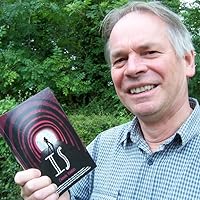
Cool, clear-eyed, and bluntly cynical, the young narrator of The Society of Others embarks on a journey without a destination. He hitchhikes through Europe only to find himself in a mystifying country where terrorists are inexplicably after him, and so is a sinister government. In a surreal landscape where people are shot to death without reason and social control runs deep, he must learn who to trust–and what to stand for. Fast paced and provocative, a gripping philosophical thriller, The Society of Others is an ingenious meditation on the nature of contemporary innocence and identity.
William Nicholson was born in 1948, and grew up in Sussex and Gloucestershire. His plays for television include Shadowlands and Life Story , both of which won the BAFTA Best Television Drama award in their year; other award-winners were Sweet As You Are and The March . In 1988 he received the Royal Television Society's Writer's Award. His first play, an adaptation of Shadowlands for the stage, was Evening Standard Best Play of 1990, and went on to a Tony Award winning run on Broadway. He was nominated for an Oscar for the screenplay of the film version, which was directed by Richard Attenborough and starred Anthony Hopkins and Debra Winger.
Since then he has written more films - Sarafina, Nell, First Knight, Grey Owl , and Gladiator (as co-writer), for which he received a second Oscar nomination. He has written and directed his own film, Firelight ; and three further stage plays, Map of the Heart , Katherine Howard and The Retreat from Moscow , which ran for five months on Broadway and received three Tony Award nominations.
His novel for older children, The Wind Singer, won the Smarties Prize Gold Award on publication in 2000, and the Blue Peter Book of the Year Award in 2001. Its sequel, Slaves of the Mastery , was published in May 2001, and the final volume in the trilogy, Firesong , in May 2002. The trilogy has been sold in every major foreign market, from the US to China.
He is now at work on a new sequence of novels for older children, called The Noble Warriors . The first book, Seeker , was published in the UK in September 2005.The second book, Jango, in 2006 and the third book NOMAN, will be published in September 2007.
His novels for adults are The Society of Others (April 2004) and The Trial of True Love (April 2005).
He lives in Sussex with his wife Virginia and their three children.
It had taken me two reads to completely understand this story. Or to believe that I understand it. Understanding what the hell happens in the end was especially hard.
The Society of Others takes you on a journey through philosophy, art, literature, music and the human state. On my second reading, I picked up on references of old master paintings that Nicholson inserted into his scenes (the most obvious one being the theorbo playing in girl in the brothel; the painting is A Young Woman Playing a Theorbo to Two Men by a Dutch 16th century painter Gerard Ter Borch.I plan to go back and find others) which made the book into a hunt. I found that enjoyable. This book makes you work, and if you put in the effort, you will be rewarded (although, many people don't like that). This might be the reason why this novel would work better as a screen play (as some reviews mention), since things like music and language (which is also an important element) are easily expressed. There is a lot of content packed into 200-something pages. It is thrown at the reader quickly and it is easy to just pass it by.
Here come the spoilers. I think the most problematic thing about this novel for people is the ending. First, I was also quite disappointed and confused by it. However, when I went back to the book the second time, I read it somewhat differently. That land, that unknown, uncharted territory, is the character's mind. All of the people, places, problems, are his mind's projection, and that is explained at the end (although various clues are dropped from the beginning). He is God of that world, and when he does realize that he can do whatever he pleases, he is left alone (although even when that happens, he still doesn't know that he is, ultimately, in control). He is being chased by himself - a lonely, cynical man.
That part was easy to work out. My question was, how did he get there? What happened between "the real world" and his mind's world? That part is not answered. My theory, however, is that he kills himself right at the beginning, just like he does at the end, at the table in the room lined by books. He is the executioner. Chapter 2 ends with "Before you know it I'll be gone." He decides to go on a journey with no destination, into an unknown land. Chapter 3 begins with him at the service station by the motorway, crossing the boundaries of the two worlds. Whatever happens between chapter 2 and 3, brings him to purgatory, where the rest of the book is spent, until he understands what has happened. For him to move on, he needed to have realized what he was, what he had and what he had missed. In the end, he is apologetic but not the people who are being killed in the concert hall, but to the ones who had loved him in life and those he had abandoned and hurt by his actions. The Concert; the final bow; "It's not over until the thin guy sings." That scene is full of imagery of death and moving on (the swelling and falling of music, his feeling of floating). The concert was his death. Or rather, his passing from purgatory to whatever lies beyond.
Of course, this theory might be wrong. The last paragraph of the book in which he talks about going home might be interpreted as him actually going back home to England. But, I don't think so.
There is a strong moral in the story. It's up to the reader to decide what it is. There are also other questions the books poses. Such as, "Who really are the 'good guys'?" It also examines the nature of totalitarian, oppressed societies. But all that is only the background for the story of the man (that can be read as "man", general, since he states right at the beginning that it could be any of us). Sure, that might be a singular, slightly vain way of looking at it, but everything about his existence in that world was self-centered (all of the characters did care about England quite a lot).
This books is definitely worth the read and the time. I won't call it brilliant, but it is multi-layered, captivating, thought-provoking, and in parts quite beautiful.
I have loved William Nicholson's writing since I was about 11 and first read the Wing Singer Trilogy. It has influenced me and my art in many ways. But it wasn't until last year - eight years later - that I read The Society of Others. I was not let down, especially after rereading it and pausing to appreciate all of the allusions and work that seems to have been put into it (but more appropriately, crammed into it). My rating of this book went up from 4 stars to 5.
This entire review has been hidden because of spoilers.
I bought this advance reading copy of “The Society of Others” at the thrift store for 50 cents. I’d seen it on the shelf often, but always ignored it. Finally, I decided to buy it believing there was a reason it kept jumping out at me. It was a good purchase.
A young Englishman, probably in his early to mid 20s, narrates “The Society of Others.” His father is a successful writer, his mother is an art historian, and his sister is just a sister. The family is financially well-off. His father has met and married another woman and has a child with her; however, father is still loved and accepted by his ex-wife and children. There is love in the family but a lack of understanding of this love on the part of the narrator. The narrator loathes his life and life in general. His idea of living is sleeping the days and nights away in his room watching the TV with the volume turned off. He has no ambition and doesn’t care about anything. That’s what we learn in the first two chapters.
Upon graduation from college, the narrator’s father gives him money and tells him to do whatever he likes with it. He decides to leave home, so he hits the road and hitches a ride with a philosophical trucker. The narrator has no destination in mind, but the trucker does. He’s smuggling books into another country (we never know what country). After crashing through the border crossing, the trucker is caught and killed, while the narrator escapes. He then gets caught up with a group of terrorists, the state and secret police, a peasant family, a school teacher, and a cello-playing priest, among others. It’s a sad country, everyone’s sad. There’s a war between the totalitarian state and the terrorists, and the narrator is in the middle and will play a key role in the outcome.
Throughout the novel, we never learn the narrator’s name or the name of the country. We can assume it’s an East European country. The narrator does not know what country he is in and cannot understand the language. In fact, the author does a good job keeping this information from the reader.
“The Society of Others” is a philosophical thriller that reads like a fable. It calls attention to concepts like loyalty, innocence, and identity. It’s a little over 200 pages, which is a quick read. However, the ending will have you going back and trying to piece together the philosophical puzzle that is this book.
After and during reading this book, I asked myself: What is it? What was the author's intent?
It's not quite modern novel, not quite a parable or a fantasy novel. It could be a simple political novel -- if they just named the country. But they don't name the country. So the narrator and the setting remain nameless -- though not generic. What does it all mean in the end? I have a few vague ideas. A post-modern nihilist discovering all the joys of our present by going through a kind of philosophical journey of sorts. A kind of bizarro Wizard of Oz for discontented youths...maybe...
Perhaps someone who has such a poor grasp of the novel shouldn't be rating it. But, I looked at some of the Goodread reviews and it seems like others are also struggling to make head or toes of it.
My rating, a generally positive one, has much to do with the dramatic tension of the book and how easy it was to read. Even if the meaning of the book is confusing, I can't fault it for its dramatic tension.
An unusual novel- an un-named narrator decides to find himself on a trip to Eastern Europe. He accidentally gets embroiled in the county's political instability, interacting with the violent state police, the terrorists/freedom fighters, and the mysterious society of others.
It feels a little pretentious to begin with, and even after re-reading the final chapter, I still can't work out what happened at the end. However, there is real beauty in this book- in both the form of poetry scattered throughout its pages, and the side characters who selflessly help the narrator in his quest to escape the country.
Hmm. Nem tudom mire számítottam, de nem erre. Furán indult, fogalmam sem volt, hova akarja vezetni a szerző a főszereplőt, akinek semmi életcélja. Persze kerekedett az egészből egy önkereső történet, de annak kissé extrém, és a végén igazából nem tudtam eldönteni, mi is történt, mi is igaz mindebből ? Kicsit túlbonyolított spirituális utazás, amit egy közép-kelet-európai ország (?!) borzalmas rendőrállamába helyeznek el. Nem tartottam annyira klasszikusan "jónak" ezt a könyvet, mint mások, nem okozott katarzist, viszont azt meg kell hagyni, hogy végig birizgált, érdekelt, és ha egy kicsit kevesebbet coelhozik (hála, szeretet, útkeresés, anya-gyerek kapcsolat, Jézus és Isten alakja, hit stb.), és konkrétabb véget kap, akkor nagyon szerettem volna. Így is egyedi és különleges hangulatú, bár ez a különleges hangulat hoz azért rengeteg feszültséget, gyomorgörcsöt, frusztrációt is magával... talán azért, mert pont ilyen elkezdeni élni, egy vegetálás után ? Hmm-hmm.
Well, damn. I have had this book on my 'currently-reading' list since June. I just finished it today. And. I. Don't. Get. It.
Which is NOT to say I did not enjoy the book. An angsty youth. A dystopian society somewhere in Europe. Three factions going head-to-head. Fahrenheit 451-esqueness with the ban on books and learning. Starts out slow and then by page 40, things start to spiral into insanity. I appreciated the Vicino quotes. And other views of the book which made you think about your own life experience. Exempli gratia:
"You are life." "I am life." This seems to me an odd formulation. "Don't we usually say, I am alive?" He shrugs, not interested in my semantics. "You are life. You live. You contain all existence within yourself. You are God." "So if I'm God, I can have what I want." "Of course. If you know what you want."
In the midst of aches in the joints, anxiety over the payment of bills, concern for the safety of those you love, envy of the rich, fear of robbers, dog-weariness at the end of a long day, and the unacceptable slipping away of youth, there does occasionally appear, like a ray of light piercing the clouds, a moment of joy. Perhaps you have entered the house and sat down before removing your boots. A friend has pressed a drink into your hands, and is telling you the latest news. You see from his face that he's glad you've come in; and you are glad too. Glad to be sitting down, glad of the warming glow of the dirnk, glad of your friend's furrowed brow and eager speech. For this moment, nothing more is required. It is in its way unimprovable. This is what I mean by the Great Enough.
They have given me the purist gift known to mankind, which is to care for a stranger in need. My part is to receive the gift, and when my turn comes, to pass it on.
I should have known it'd be something philosophical. Philosophy, my nonsensical arch-nemesis, speaking in riddles- which may as well be speaking in tongues as far as my ability to comprehend goes. Ever since my freshman Philo class with a czar of a TA, Katya, and some argument about two boats (an old boat is taken apart at dock and a new boat is built with it, same wood screws and all) being intrinsically the same. Oh the debate, the utter chaos of varying opinions.
Was the man he killed himself? If he killed himself, how the hell did he walk out of the room. Why was everything familiar to him? What was it with Vicino? What in the world WAS that ending???
So I have trudged through 224 pages (doesn't sound like a lot, but the print was slightly small, and the line height....) and here I am at a ending that totally perplexes me. Time for me to pen an angry letter to Mister William Nicholson.
This entire review has been hidden because of spoilers.
At first, I liked this brisk fable. I even enjoyed the maladapted, casually apathetic protagonist. As the story barreled along and twists showed themselves, I even enjoyed the Kafkaesque-indebted world-building.
Then the end showed its face, and this novel became another one of those overly-satisfied with itself reads, something which turns in on itself and becomes an ingrown hangnail and leaves nothing settled or even worth pondering.
Which is really too bad. This had a lot of promise. I feel like the author wrote it and, somewhere in the middle-third, realized he didn't know where he was going with it and tacked on an obvious, meta-ending.
This is something I just do not care for in an author's bag of tricks. I was so unhappy with the resolution (or lack thereof) that I pushed the book away from me and had to go outside for a breath of fresh air.
The nutshell: long on Kafka, short on delivery. Oh well.
A strange book. A well-off, cynical 20-something chooses to escape his lazy life and family and hitch a ride to anywhere. He ends up in a (never specified) repressive Eastern European regime where the lorry he hitches in is stopped by men with guns and the driver murdered. And then he goes on the run. Clear and straightforward prose with some arresting images makes this very readable. Although, some of the adjectives make you sit up and take notice. But this is not a straightforward thriller. There are elements of dystopia and Kafka along with some articulate musings, as his experiences changes his mind about life in general and his in particular.
I enjoyed the story immensely, though I can agree with the detractors. The ending was a bit confusing, and abrupt, however, the nameless character has such a journey and changes throughout, only to suggest no real change at all. A refreshing change to the "traditional" coming-of-age story. Mr. Nicholson has no problem providing uncomfortable themes and actions without being gratuitous. GREAT READ and THOUGHT PROVOKING.
my sister, who never reads, is reading this book on her travels in South America. I am flabbergasted and ecstatic that she's taking the time to read at all, and I must have this book finished by the time she gets back.
update: Welp, I'm really sad to have to take a break from Against the Day, but it must be done. This book looks like a quick read, tho, so hopefully I won't forget too much of Pynchon while I'm sidetracked.
update the second Ok, so I admit that I wasn't exactly expecting to love this book. Sis aside, I am generally an unapologetic book snob, and my interests were not piqued by this one. And I wasn't wrong, really, Society of Others definitely wasn't that good. See, I mean, it starts real shitty, with this very overdone illustration of a totally disaffected, misanthropic, angry twenty-something guy. A lot of 'My parents want me to be happy, but isn't that a lot to ask? I mean, they don't actually want me to be happy, they want my happiness to make them feel like they're validated in how they raised me...' That sort of thing. Dude just hanging out alone in his bedroom, being pissed off that his dad gave him a bunch of money to go on a post-college vacation. Oh poor baby.
So that's the beginning. Then the middle actually picked up and was rather good. Dude begrudgingly goes on said vacation, but by hitchhiking, and not asking the trucker who picks him up where they're going. So then it switches to a different thing. After driving for days, they're about to cross a serious border, and the trucker asks dude to just hide an envelope in his pocket when they cross, and then of course they come to a roadblock manned by guys with guns, dude has to jump out of the car and run into the forest, while the baddies kill the trucker and set fire to his truck. So now dude is alone & scared in a foreign country, he doesn't know where he is & doesn't speak the language. It's a super-restrictive totalitarian society & everyone's scared & repressed, and he goes along, being picked up by various resistance organizations and the like. There's a lot of philosophy, a lot of nice scenes, good intrigue, great characters, and I actually thought I was going to wind up being pleasantly surprised by how good of a book it was.
But no.
Because that's the middle. The end, which you sense is approaching with some trepidation, that dread-in-the-stomach feeling that shit is going to be bad, was awful. Total, seriously disappointing cop-out. Suddenly this book, which has been about tangible, interesting things, becomes this dreadful metaphorical nonsense. Total 'twist' ending, but horribly unjustified. Leaving a real bad taste in your mouth. A real bad why-did-I-bother-with-this-crap taste.
I initially thought the ending was underwhelming given that amazing build-up, but upon reflection I thought – how else could it have ended? This novel is written by dramatist William Nicholson, who also co-wrote the script for Gladiator. You could clearly see the talent in the language. The plot is comparable to The Catcher in the Rye, only our Holden Caulfield in this story chooses to remain nameless, and experiences danger so real and so disconnected from his life that it has the power to either scar him permanently, or change his worldview for the better. Our world-weary protagonist is a young man living in England who would rather lock himself in his room than deal with the hypocrisies of society:
“My friend Mac is going to be an aid worker in Nepal. This is hilarious because all the aid they need in Nepal is getting out from under all the people like Mac who’ve gone there to find meaning in their lives. They’ve sucked all the available meaning up and now there’s none left for the Nepalese, who have nothing to do except carry explorers’ bags up mountains and sell them drugs. Mac says he doesn’t care, at least he’ll see the mountains. I tell him the thing about a mountain is when you’re on it you don’t see it. You need to be far away to see a mountain. Like at home, looking at a postcard. Mac says you stand on one mountain and look at the next mountain. I say, Then what? Mac says, You’re a real wanker, you know that? Yes, Mac, I’m a real wanker. The genuine article. A simple pleasure that does no harm to man or beast. Be grateful.”
…
”It’s like fish. Fish swim about all day finding food to give them energy to swim about all day. It makes me laugh. These people who hurry about all day making money to sell each other things. Anyone with eyes to see could tell them their lives are meaningless and they aren’t getting any happier.”
He is angry, but I also sensed a deep-seated unhappiness, a disillusionment: ”When I was small I thought the world was like my parents, only bigger. I thought it watched me and clapped when I danced. This is not so. The world is not watching and will never clap.” Well, then. His father introduces an addition to the family: a baby with a younger woman. This is the straw that breaks the camel’s back. Next thing we know our young protagonist is hitchhiking in an unnamed European city, and ends up in the midst of dystopia. The driver of the vehicle he rides in breaks through a checkpoint, and he runs away. From where he hides, he sees the man being tortured. Later he learns that the contraband material the driver is sneaking through the border isn’t drugs, or porn, but books. Why?
From here on the novel reads like a thriller. Every now and then the protagonist finds himself debating with other characters about philosophy, and ideology, and faith, and poetry, but the action moves forward. Forward and fast. The narrative has a dreamlike quality that I love.
Set in a seemingly normal world the narrator describes his adventure of hitchhiking throughout Europe with no set destination. It doesn't take long for him to end up in a backwards terror filled country. People are executed by the government for nothing. This crooked leadership drives its people with fear. The narrator is forced to choose sides and fight for what's right not knowing who to trust or to fear. Reading this book makes you think about what to believe and what not to believe about what the government tells you. Driving the readers into a deep paranoia all questions about life are pondered. The action and suspense caused by this surreal landscape makes it a high paced philosophical thriller making you fear that maybe you're being hunted by the government too. This book was written amazingly really putting you into the narrator's shoes as he fights for his life. Although it wasn't my favorite mystery thriller I found myself sucked into the world and became an easy page turner,
A recommended audience is fans of anti-government conspiracy theories or suspenseful action mysteries. I wouldn't recommend to kids or extremely gullible people like me. I didn’t like this book mostly because anti-government stories kinda scare me into thinking my life is in danger. It is a very well written book using imagery and suspense it is just not one of my favourites.
Unnamed British youth, having completed his education, slouches about his bedroom, believing the world has nothing to offer him, and everything is pointless anyway. Roused by his parents to do something he hitchhikes to an unnamed totalitarian eastern European country where the government and outlawed opposition seem to wish to outdo each other in brutality. Our 'hero' eventually falls in with a third non-violent intellectual group, based around a philosophical book written by their leader, 'A Society of Others', a book within a book. Through a number of dramatic and often violent encounters our British traveller 'finds himself' and learns the meaning of love, human values, etc. The book sometimes has a dream-like quality, as if he is developing from slouching nihilist to caring human being through dreams rather than real events; it is somewhat surrealistic. However the transformation is too sudden and trite to be believable; a deep subject covered in a superficial manner. Enjoyable, interesting and thought provoking enough when reading it, but it left no lasting impression.
A young boy trying to figure out what he is going to do with his life and on a whim leaves his house only to end up in an unknown country. Crazy stuff happens and he is force to try and stay alive. I really want my brother to read this because he has no idea where to go from his current spot. I really like the book because with every horrible thing that happens you learn something that will surprise you. I didn't know a book could give me so many realizations until I read this book.
This book had some sort of otherworldly feel throughout, constantly keeping the reader wondering what is truly going on. Nicholson takes you for a ride, and once you've gotten off, you can still feel the adrenaline coursing through your veins and are left wondering exactly what happened and where. I don't like to give spoilers, so I'll leave it at that.
Quite an incredible book. The story of a sulky teenage boy running away or a deep tract of philosophy - the meaning of life and the existence of God. All in one book. It is both easy to read and yet challenging. I loved it.
Het begin is een 7, daarna al snel een 10, dan zakt het af naar 5 en het eindigt in een 1. Toch heb ik het niet weggelegd, een pageturner, in de hoop op een geweldig einde….
The blurb on the back that referred to this book as a Kafkain fable was right. I kept expecting the ending to be one of those Fight Club moments where you find everything was a dream, or a schizophrenic hallucination. I am not sure who the other author they referenced was and as it is early and the coffee is still kicking in I am not going to rummage through my pile of used books to sell to find it. Doesn't matter anyways because I disagree with their second pick. I would say that its a Kafka fable mixed with Camus' Stranger or perhaps what the novel the Alchemist would be like if it was written by Camus (a whole lot better for one thing). The novel starts of straight enough, the main character is a sardonic little fucker, smug and satisfied in his belief that nothing matters and the actions of human beings are silly (and he is right, in some sense) of course, anyone living with mommy and daddy in their tight little corner of the world (or the same city they grew up in for that matter, or any place that is safe, comfortable and presents a whole lot of routine) can easily come to a similar conclusion, though it doesn't mean much because they haven't really seen anything of the world. A classic Cambell hero's tale trajectory actually, now that I think about, the safe, semi-spoiled, negative character gets bored with his existence--he's intelligent, who wouldn't get bored with any kind of routine existence if they were intelligent, perhaps that is the very nature of human intelligence, boredom with routine mixed with a healthy dose of obsession with the safety that routines present (hell isn't other people, hell is trying to straighten out the contradictions of consciousness and make them linear, well, hell is other people a good portion-say 35 percent of the time as well, at least for those of us who like solitude). So then he sets off on an adventure, but because nothing matters there is no reason to make a plan or direct a path and he just flys out of his home country willy-nilly and very quickly finds himself in the upside down Alice and Wonderland world, or perhaps a fictional eastern European soviet block country, readers choice on that one and his subjected to a series of increasingly intense interactions with a reality he has never been subjected to which have the effect, essentially of ripping open his consciousness. Did I mention its good. Its all the good stuff: disturbing scenes that will make you ponder the usual human elements of terror and psychotic regimes, questions about God, the universe and the self, other stuff too and it doesn't even get lost on one of those hum-drum cliche love affairs that are the archetypal aside of the modern philosophical novel...yes its philosophy as fiction and Kafka meets Camus makes the Alchemist readable for the population that actually reads books. You should read it.
"Life is hard and then you die." -The Society Of Others, William Nicholson
I've never seen this book here on Bookstagram so I guess it's good to start showing it by making a review😄
This book is quite confusing. An unnamed, alienated guy who doesn't find the real meaning and essence of life hitchhikes without a known and planned destination. When he finally land to somewhere far from his own land, he met people without knowing that the country he landed in—like him, unnamed—was totalitarian, wherein most of the people are terrorist and freedom-fighter. He doesn't know about it at first, until he met this driver who let him had a ride on his truck and a group of people who changed his path throughout his destination.
Why is it confusing? I can't understand the flow of the story. Every part was too hard to extrapolate, especially the ending. But there's still something I love about this book. It talks more about Philosophy, which is I love the most.
Overall, this book left me discombobulate. Do I love this? Honestly, no. Should I recommend this? Maybe, especially when you're a fan of Kafkaesque writings. Do I want it to reread someday? Yes. Maybe I can understand it more if I do that. 😆
I am not a fan of this story. It makes out it is about a deadbeat guy and I was prepared for that. But then out of the blue it ends up being this Kafkaesque story about self. The main character ends up travelling to this new land where he is a fish out of water and a “foreigner” but he recognises the place and us welcomed by residents; where resistance to change is strong and represented as thuggish police in a totalitarian state. I was guessing that he may be in a mental hospital and the “friendly people” represented his returning sanity. Earlier on (when he enters the land) there is a lot of violence and he is involuntarily so (his hand is shooting a gun which is initially outside of his awareness). This would seem to align with a growing descent into madness. My issue with the book is that there is no link between the start and the rest of the book. So there was no indication of mental illness - he was a deadbeat and happy about it. So it’s like a dark “wizard of oz”story without the delight of having red sparkly shoes.
Couldn't put it down. As much about psychology of the self and philosophy on the meaning of life as it is a thriller.
Incredible character development, from depressed self-centred narcissism through to profound meditation on the human condition.
Well-written; Nicholson paints a vivid world throughout, populated with believable characters.
Only reason I haven't given 5 stars is because the ending seems to suddenly jump to the purely symbolic/metaphorical at the end and it felt s bit jarring for me. Maybe I'll keep thinking about it for a few weeks and come back and change my rating to 5 stars 😆 Still would say it's one of my fave books I've read and up there in the top fiction I've read (and I usually don't go for thrillers/stories about Kafkaesque violence in police states!).
The story started out as the diary of a disillusioned young adult and soon turned into an uneven parable. Even though, I enjoyed bits and pieces from the book, it handled almost every question asked superficially. The politics of a totalitarian government and its people were mostly one dimensional and were used as plot devices, big philosophical questions were reduced to hackneyed dialogue and cynicism was showed as an angsty teenage phase. The book harbored a lot of potential that was wasted by going too many directions all at once and as a result contradicted its own message. Yet it was an enjoyable read with great thought provoking insight.
3.5 stars- need to read this one again to fully understand it. Some have said it’s a philosophical book paced like a thriller. The main character is on a journey to find himself and in the end feels love, and thanks towards those he has wronged…great resolution. I love how fast paced it was and it quickly grabbed my attention within the first few pages. Nicholson knew how to get it done in 225 pages and I’m all about it. I do feel that much of this book was over my head and there is a great deal to dissect that I just don’t want to… but overall enjoyed this one.
Loved it. It has a terrific narrator one can really believe in as the whole story becomes kafkaesque and totally involving. I'd only rad one William Nicholson before (The Lovers of Amherst) which I thought was terrific. This is totally different, beautifully written and well worth a read. Such a versatile writer - search him out!
Terrific. Begins like a Greene/Ambler thriller and looks as if it might turn into a Hitchcockian adventure before veering off into something more ambiguous and mysterious. An existential thriller, perhaps.
¿Cuál es el sentido de la existencia? La eterna pregunta del mundo occidental... ¿será correcta la pregunta? El viaje del protagonista hacía otro país desconocido es trama de este libro. ¿obtendrá él la respuesta? ¿Nosotros?...
Een start van een psychologisch portret: de protagonist is een passieve cynische nihilist. Dan schiet hij in gang en trekt de wereld in. Totaal onverwachts zit je plots in een volbloed actiethriller, een erg bruuske beperking, een ongeloofwaardige stijlbreuk die mijn interesse de nek omwrong.
🌟3.5🌟 The character development and the setting were very intriguing, but I’m too stupid to understand some of the philosophical stuff at the end 😭 I loved all of the twists and turns throughout this though