

What do you think?

Una settimana di bontà
I romanzi dove « le sirene si mettono a
cantare » – e che solo Ernst, fra i surrealisti,
seppe scrivere.
Con il romanzo, com’è noto, i surrealisti non ebbero fortuna. Sicché, alla distanza,
i più rapinosi potrebbero rivelarsi proprio quei romanzi per immagini che Max Ernst
elaborò fra il 1929 e il 1934 ritagliando illustrazioni di feuilleton dell’Ottocento e
dei primi del Novecento, e assemblandole poi in collage a cui aggiungeva didascalie
di sua mano, destinate a essere, scrive Giuseppe Montesano, « segnali devianti e
pervertimenti del senso comune ». Sono immagini folte di fanciulle sensuali e innocenti
insidiate da tenebrosi allievi di Sade, e di messieurs in abito nero e ghette
che nascondono manie vergognose, mentre sullo sfondo freme « la città piena di
sogni » di Baudelaire e ancora « lo spettro adesca il passante in pieno giorno ». Un
allestimento onirico ereditato dai romanzi d’appendice, dunque, ma che Ernst –
con il suo montaggio fatto di accostamenti misteriosi e tagli oscuri, di esaltazione
del caso e di ebbrezza dell’analogia, con il suo cinema al ralenti e il suo graphic novel
per soli adulti bambini – ha saputo trasformare, non senza un tocco di germanico
unheimlich, in vessillo della sommossa perenne del desiderio. Si installa così in
queste pagine perturbanti il più cupo e luminoso erotismo mai evocato dai surrealisti,
dove un seno è un giocattolo e una capigliatura un sesso palpitante, dove i
fantasmi del piacere hanno scollature abissali e le ossessioni si mutano in animali
da preda, dove un lenzuolo su un corpo nudo è una cascata letterale e i rivoltosi
dell’amore volano dalle nestre degli abbaini.
Il volume, edito da Adelphi nel 2007, raduna i tre romanzi per immagini pubblicati
da Max Ernst (1891-1976): La donna 100 teste (1929), Sogno di una ragazzina che volle
entrare al Carmelo (1930) e Una settimana di bontà (1934).
cantare » – e che solo Ernst, fra i surrealisti,
seppe scrivere.
Con il romanzo, com’è noto, i surrealisti non ebbero fortuna. Sicché, alla distanza,
i più rapinosi potrebbero rivelarsi proprio quei romanzi per immagini che Max Ernst
elaborò fra il 1929 e il 1934 ritagliando illustrazioni di feuilleton dell’Ottocento e
dei primi del Novecento, e assemblandole poi in collage a cui aggiungeva didascalie
di sua mano, destinate a essere, scrive Giuseppe Montesano, « segnali devianti e
pervertimenti del senso comune ». Sono immagini folte di fanciulle sensuali e innocenti
insidiate da tenebrosi allievi di Sade, e di messieurs in abito nero e ghette
che nascondono manie vergognose, mentre sullo sfondo freme « la città piena di
sogni » di Baudelaire e ancora « lo spettro adesca il passante in pieno giorno ». Un
allestimento onirico ereditato dai romanzi d’appendice, dunque, ma che Ernst –
con il suo montaggio fatto di accostamenti misteriosi e tagli oscuri, di esaltazione
del caso e di ebbrezza dell’analogia, con il suo cinema al ralenti e il suo graphic novel
per soli adulti bambini – ha saputo trasformare, non senza un tocco di germanico
unheimlich, in vessillo della sommossa perenne del desiderio. Si installa così in
queste pagine perturbanti il più cupo e luminoso erotismo mai evocato dai surrealisti,
dove un seno è un giocattolo e una capigliatura un sesso palpitante, dove i
fantasmi del piacere hanno scollature abissali e le ossessioni si mutano in animali
da preda, dove un lenzuolo su un corpo nudo è una cascata letterale e i rivoltosi
dell’amore volano dalle nestre degli abbaini.
Il volume, edito da Adelphi nel 2007, raduna i tre romanzi per immagini pubblicati
da Max Ernst (1891-1976): La donna 100 teste (1929), Sogno di una ragazzina che volle
entrare al Carmelo (1930) e Una settimana di bontà (1934).
498 pages, Paperback
First published January 1, 1934
About the author
Max Ernst
146 books98 followersMax Ernst was a German painter, sculptor, graphic artist, and poet, considered one of the chief representatives of Dadaism and Surrealism.
Ratings & Reviews
Friends & Following
Create a free account to discover what your friends think of this book!
Community Reviews
Displaying 1 - 30 of 98 reviews

January 25, 2017
Very interesting look at surrealistic expression: let me with a feeling of disquiet mixed with confusion - which is exactly what the images are crafted to do. It is amazing to me how Surrealism has become so integrated into everyday existence; I am sure the mothers and fathers of Surrealism would have found that surreal in and of itself!

December 30, 2021
fulfilling my 2021 goal to read one book each month by an author i have never read despite owning more than one of their books.

review to come!
review to come!

March 22, 2009
Max Ernst presents an early graphic novel. It's a cross between the Terry Gilliam "Monty Python" animations, William Burroughs, and that dream you can't quite remember from when you had the flu. Highly recommended.

July 26, 2015
A 1934 classic by one of the central figures in surrealism, a collage novel making use of images from Victorian encyclopedias and pulp paintings, pasting images (usually animal heads) on them and creating some sort of continuity through dreams and erotic fantasies. I would have first read it decades ago and found it then strange and wonderful and bizarre, and reading it again, felt similarly, though I may have "understood" it differently, maybe "better".
This text now reads to me like a very Freudian study of dream images, with lots of animals, sex, some violence, always bizarre. Divided up in seven sections, each for a day of the week, it features epigraphs by other surrealists with of course little obvious connection to the visual art. 182 images. One section is described as a "visual poem" but it feels like all of it could maybe be described that way.
This is an art collection and a graphic novel, a commentary on Victorian life and what is repressed beneath carefully constructed images of gentility and upper class style. A novel because he calls it a novel. A constant theme is women (never men, for Ernst) in distress, so that part of it is occasionally disturbing, which may also be a commentary on violence against women under all the Victorian affectation, or maybe Ernst's own fantasies, but I really think it is the former here, it is critique.
Ernst was denounced (as were others in Germany in the thirties, of course, and many surrealists and dadaists and expressionists) by the Nazis as decadent, and he put this work together as if in part to say: So? And Hitler liked art and opera and read and classic German arts in general. What was lurking beneath the gentile artsy surface of all his and his partners in Holocaust? It's interesting stuff, collage as art to explore the unconscious, power and privilege. A commentary on maybe both Victorian and Nazi society, but on society, surely.
This text now reads to me like a very Freudian study of dream images, with lots of animals, sex, some violence, always bizarre. Divided up in seven sections, each for a day of the week, it features epigraphs by other surrealists with of course little obvious connection to the visual art. 182 images. One section is described as a "visual poem" but it feels like all of it could maybe be described that way.
This is an art collection and a graphic novel, a commentary on Victorian life and what is repressed beneath carefully constructed images of gentility and upper class style. A novel because he calls it a novel. A constant theme is women (never men, for Ernst) in distress, so that part of it is occasionally disturbing, which may also be a commentary on violence against women under all the Victorian affectation, or maybe Ernst's own fantasies, but I really think it is the former here, it is critique.
Ernst was denounced (as were others in Germany in the thirties, of course, and many surrealists and dadaists and expressionists) by the Nazis as decadent, and he put this work together as if in part to say: So? And Hitler liked art and opera and read and classic German arts in general. What was lurking beneath the gentile artsy surface of all his and his partners in Holocaust? It's interesting stuff, collage as art to explore the unconscious, power and privilege. A commentary on maybe both Victorian and Nazi society, but on society, surely.

August 22, 2011
-Lion-headed men in military garb scribble mysterious edits. Victorian women sprouting dragon wings engage in secret trysts. Sparrow-headed creatures carry off a trussed-up young girl. A woman falls asleep and soon her room is filled with turbulent waters; onlookers pull a series of drowned corpses from the riptide of her dreams.
-Max Ernst seamlessly collaged together these surreal fantasias from 19th century engraved illustrations. A sort of cut-and-paste alchemy. Like all graphic novels, the story happens in the margins between the images. Though in this case, you may find the margins unusually wide.
-"And I object to the love of readymade images in place of images to be made." -Paul Eluard
-If you're a cinephile, this was an inspiration for Georges Franju's "Judex," especially the party scene where everyone wears bird masks.
-Available as a handsome and inexpensive paperback, do yourself a solid and grab this before it becomes a pricey rarity like the other Ernst collage novels.
-Max Ernst seamlessly collaged together these surreal fantasias from 19th century engraved illustrations. A sort of cut-and-paste alchemy. Like all graphic novels, the story happens in the margins between the images. Though in this case, you may find the margins unusually wide.
-"And I object to the love of readymade images in place of images to be made." -Paul Eluard
-If you're a cinephile, this was an inspiration for Georges Franju's "Judex," especially the party scene where everyone wears bird masks.
-Available as a handsome and inexpensive paperback, do yourself a solid and grab this before it becomes a pricey rarity like the other Ernst collage novels.
January 24, 2021
Year of New Authors
Une Semaine De Bonté (or A Week of Kindness) is a wordless 'novel' comprised of collages torn from illustrations of 19th century penny dreadfuls.
Surrealistic, but with some notable seasoning of Ernst's background in Dadaism, the book is divided into themed chapters, each section labelled after the '7 deadly elements', only two of which were ever classified as so (Mud, Water, Fire, Blood, Blackness, Sight, Unknown), along with an assigned day of the week and an example of whatever the hell Ernst thinks he's on about, e.g:
Along with a quote from various surrealist personalities, such as Paul Eluard or Alfred Jarry, and the Publisher's note, this is the only text you get in the book, and you're thrown the rest of the pages with no context and a presumbly snotty and unspoken reminder that a picture is supposed to be worth a thousand words.
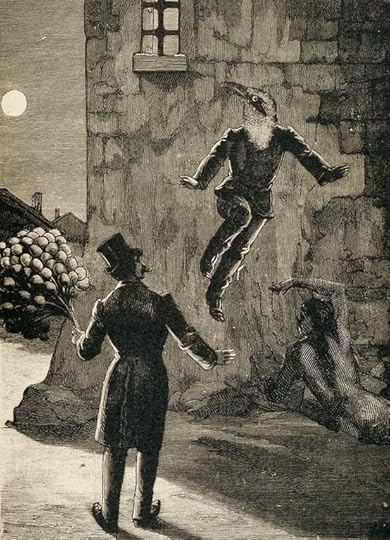
The works themselves are interesting, often fun little art pieces and closer inspection will usually reveal smaller edits, such as changed portraits, so the images are worth re-examining. The melodramatic prints stolen from 'low literature' and the gorgeous works of Gustave Doré are transformed by Ernst to contain cat people, pet dragons, flooded rooms, human-flower hybrids with over-sized stamens, people and monsters beating the snot out of each other in parlors and many, many women with their boobs and bum out.

Some collages are quite seamless too, and I wouldn’t have noticed the edit if I had seen the image in isolation:

But what does it all mean? What is the story, the manifesto, the argument silently told through these fantastical mutations of macabre Victorian illustrations?
I highly suspect naff all, despite the claim of being a 'novel'. It's an I Am the Walrus book, pieced together by sound and theme, rather than any deeper substance. Which is fine, honestly, I enjoy attaching my own story to paintings, and Ernst offers much to ponder in these mesmerisingly grotesque images.

(A startled Londoner desperately ignoring a forward Northerner asking if this is the train to Whitby)
The book is certainly a fertile breeding ground for interpretation, and the sheer Freudianism presented in the book's monstrosities (lion headed sexual predators, demon bewinged lovers, violence in isolated rooms and the worrying level of sexual violence in general) would have old Sigmund requiring a bucket of cocaine to get through the first chapter alone.
And maybe that is the point, this is a book designed to effect you, hinted by the weekdays assigned each section. It's an invitation to study a chapter on that given day and let your dreams be transformed by the horrors, your nightmares haunted by the cast of Bojack Horseman leading you to a guillotine operated by two nude and smiling nuns, while your weeping and bewinged wife, who looks like Rachel Weisz with one boob out, is beating naked, baby-oil slick Henry Cavill clones with an inappropriately shaped vegeatable, or maybe that was just me.
Une Semaine De Bonté (or A Week of Kindness) is a wordless 'novel' comprised of collages torn from illustrations of 19th century penny dreadfuls.
Surrealistic, but with some notable seasoning of Ernst's background in Dadaism, the book is divided into themed chapters, each section labelled after the '7 deadly elements', only two of which were ever classified as so (Mud, Water, Fire, Blood, Blackness, Sight, Unknown), along with an assigned day of the week and an example of whatever the hell Ernst thinks he's on about, e.g:
WednesdayOr, using considerably less of his imagination:
Element: Blood
Example: Oedipus
Monday
Element: Water
Example: Water
Along with a quote from various surrealist personalities, such as Paul Eluard or Alfred Jarry, and the Publisher's note, this is the only text you get in the book, and you're thrown the rest of the pages with no context and a presumbly snotty and unspoken reminder that a picture is supposed to be worth a thousand words.
The works themselves are interesting, often fun little art pieces and closer inspection will usually reveal smaller edits, such as changed portraits, so the images are worth re-examining. The melodramatic prints stolen from 'low literature' and the gorgeous works of Gustave Doré are transformed by Ernst to contain cat people, pet dragons, flooded rooms, human-flower hybrids with over-sized stamens, people and monsters beating the snot out of each other in parlors and many, many women with their boobs and bum out.
Some collages are quite seamless too, and I wouldn’t have noticed the edit if I had seen the image in isolation:
But what does it all mean? What is the story, the manifesto, the argument silently told through these fantastical mutations of macabre Victorian illustrations?
I highly suspect naff all, despite the claim of being a 'novel'. It's an I Am the Walrus book, pieced together by sound and theme, rather than any deeper substance. Which is fine, honestly, I enjoy attaching my own story to paintings, and Ernst offers much to ponder in these mesmerisingly grotesque images.
(A startled Londoner desperately ignoring a forward Northerner asking if this is the train to Whitby)
The book is certainly a fertile breeding ground for interpretation, and the sheer Freudianism presented in the book's monstrosities (lion headed sexual predators, demon bewinged lovers, violence in isolated rooms and the worrying level of sexual violence in general) would have old Sigmund requiring a bucket of cocaine to get through the first chapter alone.
And maybe that is the point, this is a book designed to effect you, hinted by the weekdays assigned each section. It's an invitation to study a chapter on that given day and let your dreams be transformed by the horrors, your nightmares haunted by the cast of Bojack Horseman leading you to a guillotine operated by two nude and smiling nuns, while your weeping and bewinged wife, who looks like Rachel Weisz with one boob out, is beating naked, baby-oil slick Henry Cavill clones with an inappropriately shaped vegeatable, or maybe that was just me.

read-in-2010
October 15, 2010Where are you going ibis-headed girls? Do not slumber too deeply on these shores where waves lick the very edge of the bed-covers, and half-seen figures spin stilettos in the articulated anatomical-manual rib cages.
(I have a love of Max Ernst's simplicity and image-burning power that allows this collage-novel to transcend my utter bafflement at most of its contents. I shall mull it over, then, and over, and over, this lovely perplexing surrealist coffee-table comic-book.)
(I have a love of Max Ernst's simplicity and image-burning power that allows this collage-novel to transcend my utter bafflement at most of its contents. I shall mull it over, then, and over, and over, this lovely perplexing surrealist coffee-table comic-book.)
May 4, 2007
Bizarre series of collages, divided into sections for each day of the week, with corresponding elements. Most sections have some sort of narrative, kinda, if you squint. In "Understanding Comics" Scott McCloud calls it an early experimental comic. Aside from all that, there are some haunting and beautiful images here. I especially like Monday (water).

December 27, 2017
Disturbing, confusing and beautiful. This
Is the first time that A Week of Kindness as been collected into a single volume, at last! The collages are a delight to the eye, Max Ernst is definately at his peak here.
Highly recommended.
Is the first time that A Week of Kindness as been collected into a single volume, at last! The collages are a delight to the eye, Max Ernst is definately at his peak here.
Highly recommended.

March 18, 2023
Dunque, questa può essere la spesa più ignorante che abbia mai fatto, dato che questo tomo costa 26 euri e non ho abbastanza alcol in casa per capirlo, ma ha un suo perché. In qualche modo incomprensibile.
Mi è piaciuto molto l’indice sui romanzi-collage e la visione di Max Ernst. Riesce a dare un lieve senso a tutto quello che il lettore si è sorbito prima.
In realtà alcuni messaggi li ho recepiti, anche se erano uno sbaffo alla società del tempo e nemmeno troppo carini a dire il vero. Ma ehi, stiamo pur parlando di dadaismo e surrealismo.
In compenso, le stampe sono davvero particolari e grottesche, ma allo stesso tempo ben strutturate e idealizzate. Hanno quel tocco di esoterico che sfocia nel satanico, con note di dramma e tragedia greca che viste le storie che ci stanno dietro sono più che comprensibili.
Quindi sì, se amate l’arte e queste correnti ve lo consiglio.
Ve lo consiglio anche se amate strafarvi e ubriacarvi, perché potrebbe essere une sperimento fin troppo divertente. Un po’ come i ragni sotto LSD.
Ma se non volete spendere un rene per un libro che si legge in un’ora… avete tutta la mia comprensione e stima.
Mi è piaciuto molto l’indice sui romanzi-collage e la visione di Max Ernst. Riesce a dare un lieve senso a tutto quello che il lettore si è sorbito prima.
In realtà alcuni messaggi li ho recepiti, anche se erano uno sbaffo alla società del tempo e nemmeno troppo carini a dire il vero. Ma ehi, stiamo pur parlando di dadaismo e surrealismo.
In compenso, le stampe sono davvero particolari e grottesche, ma allo stesso tempo ben strutturate e idealizzate. Hanno quel tocco di esoterico che sfocia nel satanico, con note di dramma e tragedia greca che viste le storie che ci stanno dietro sono più che comprensibili.
Quindi sì, se amate l’arte e queste correnti ve lo consiglio.
Ve lo consiglio anche se amate strafarvi e ubriacarvi, perché potrebbe essere une sperimento fin troppo divertente. Un po’ come i ragni sotto LSD.
Ma se non volete spendere un rene per un libro che si legge in un’ora… avete tutta la mia comprensione e stima.

June 28, 2010
Kind of reminded me of why bellocq's pictures are more important becaues the women's heads are scratched out. It has an external violence to it, a perpetrating subconcious that is instigating an uncalled for violence. That's pretty much what this book is, a symbol laden clusterfuck, heavy on the fuck.

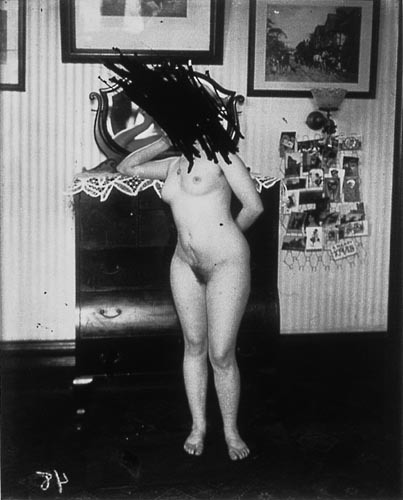
this one is Bellocq

this one is Bellocq

March 27, 2020
Takes Victorian images and turns them into surreal dreams. Wish there was some crunked-up classical music soundtrack to go with it. Ernst was a rebellious weirdo.

September 6, 2020
Kolaj sanatının, Max Ernst'in ve hatta sürrealizmin başyapıtlarından biri. Tuhaf bir rüya havasında, tekinsiz, bazen büyülü bazen de ürkütücü sahnelerden oluşan bir gerçeküstü anlatı - ya da Ernst'in belirlediği terimle, bir "kolaj-roman".

March 16, 2008
Just the idea of a "Surrealistic Novel in Collage" is enuf for me. Add Ernst's delicate touch & it's even better. Ultimately, though, I have to admit to getting a little bored by the technical uniformity of the prints used - even w/ Ernst's careful recycling.

April 17, 2018
Individually the collage images are great fuel for thought or dreams. Taken all together, they are less interesting. Still, brilliant for its era.

November 10, 2025
sick! (in the head)

July 23, 2022
Near indecipherable, just the way I like it. Might have to loot this for art inspiration later, it's super great.

August 12, 2018
I can't really review this book as it is a collection of surreal images with no definite plot structure or clear content.
There are some vague themes, water, darkness and a somewhat consistent aesthetic. The drawings are mostly taken from late 19th and early 20th century pulp novels and catalogues featuring lavish backgrounds. Collaged on top our elaborate and dramatic individuals, often with their heads replaced by a lion, a bird, an Easter Island statue. In almost every page there is a scene with something odd or dramatic added, batwings on a elegant lady. Occasionally a half clad woman will be draped across the scene or a body will hang from a noose, but often it is just a person imposed on the scene in an embrace, a look of surprise or so on.
The surrealist effect of the entire affair is carried off, suggesting suppressed desires and fantasies taking physical form, but I don't detect any deep message or insight. The surreal and lurid epigrams help set a mood, but do not really clarify anything. If you are interested in this sort of exercise just look up a a few images on-line and decide if it is of interest.
The Dover edition is sturdy a good size and not a bad way to get a handle on this work and can work as a coffee table book or conversation piece. The introduction gives the basic background to the creation of this collection and the translations English are clear and set against the original French text so one gets a sense of the original.
There are some vague themes, water, darkness and a somewhat consistent aesthetic. The drawings are mostly taken from late 19th and early 20th century pulp novels and catalogues featuring lavish backgrounds. Collaged on top our elaborate and dramatic individuals, often with their heads replaced by a lion, a bird, an Easter Island statue. In almost every page there is a scene with something odd or dramatic added, batwings on a elegant lady. Occasionally a half clad woman will be draped across the scene or a body will hang from a noose, but often it is just a person imposed on the scene in an embrace, a look of surprise or so on.
The surrealist effect of the entire affair is carried off, suggesting suppressed desires and fantasies taking physical form, but I don't detect any deep message or insight. The surreal and lurid epigrams help set a mood, but do not really clarify anything. If you are interested in this sort of exercise just look up a a few images on-line and decide if it is of interest.
The Dover edition is sturdy a good size and not a bad way to get a handle on this work and can work as a coffee table book or conversation piece. The introduction gives the basic background to the creation of this collection and the translations English are clear and set against the original French text so one gets a sense of the original.

July 1, 2007
aggressively dreamlike, with a strong sense of theme -- creepy, romantic, and bittersweet.

July 8, 2007
Why don't I own a copy of this yet?

July 12, 2007
Definitley one of the most delightful and bizarre reading (?) experiences I've had in a while. Collage + people with bird heads is always a winning combination if you ask me.
August 30, 2007
A source of Terry Gilliam's genius, this is simply a book of collages, surreal in nature that make poignant observations on things we take too seriously.
September 4, 2007
absolutely positively fascinating.

April 29, 2008
Sky bought this for me a few weeks ago - lovely Surrealist collage story by Max Ernst

May 28, 2008
THIS IS ALL UP ON MY COFFEE TABLE SO HARD YOU WOULDN'T EVEN BELIEVE IT

July 14, 2008
was not exactly light summer reading but i could not put it down
March 24, 2009
If I had a budget, this would be my breakout experimental film. Great stuff!

August 8, 2025
great kind of proto-graphic novel

January 6, 2020
Третий его графический текст совсем прям гениальный. По воздействию вполне сопоставимо с действием картины Флавицкого "Княжна Тараканова" на детский неокрепший ум.

February 16, 2014
I love that I can buy a book like this so cheaply - thanks, Dover.
Works like this tend to fall out of art history: artworks that can't easily be displayed in a gallery or in an art book. Because it's a whole book in itself.
The book is a collection of collages, originally published by the artist as a series, with a print-run of 1000 copies each. Most of the collages are based on illustrations cut from racy French novels, some of which look like they'd be a lot of fun to read. Onto these illustrations are seamlessly pasted images from elsewhere, to create unique new images. Weird, fantastical, uncanny images full of beauty and violence. The most common device is the replacement of human heads with animal and bird heads, and in one sequence with Easter Island statues. Dragons, snakes, flatworms and roosters accompany human and human-esque figures in Victorian era outfits and rooms. Bedroom floors become oceans, or oceans become bedroom floors.
Ernst's original French text is present, along with an English translation. But there are very few words, only the title pages of the original instalments. There is also an informative introduction, in English.
I read -- no, I looked at -- this book just before going to sleep, on about 10 occasions over the past few weeks. It seemed to make my dreams much stranger and more intense, though they had nothing to do with the images in the book. A couple of times my dreams even made sense as exciting stories, which doesn't often happen for me. The book seemed to unlock something in my unconscious.
Works like this tend to fall out of art history: artworks that can't easily be displayed in a gallery or in an art book. Because it's a whole book in itself.
The book is a collection of collages, originally published by the artist as a series, with a print-run of 1000 copies each. Most of the collages are based on illustrations cut from racy French novels, some of which look like they'd be a lot of fun to read. Onto these illustrations are seamlessly pasted images from elsewhere, to create unique new images. Weird, fantastical, uncanny images full of beauty and violence. The most common device is the replacement of human heads with animal and bird heads, and in one sequence with Easter Island statues. Dragons, snakes, flatworms and roosters accompany human and human-esque figures in Victorian era outfits and rooms. Bedroom floors become oceans, or oceans become bedroom floors.
Ernst's original French text is present, along with an English translation. But there are very few words, only the title pages of the original instalments. There is also an informative introduction, in English.
I read -- no, I looked at -- this book just before going to sleep, on about 10 occasions over the past few weeks. It seemed to make my dreams much stranger and more intense, though they had nothing to do with the images in the book. A couple of times my dreams even made sense as exciting stories, which doesn't often happen for me. The book seemed to unlock something in my unconscious.
Displaying 1 - 30 of 98 reviews