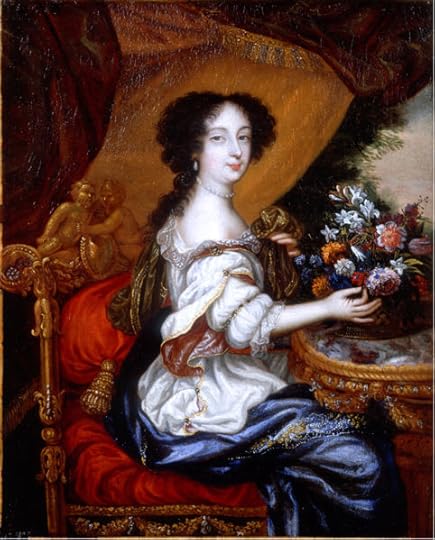
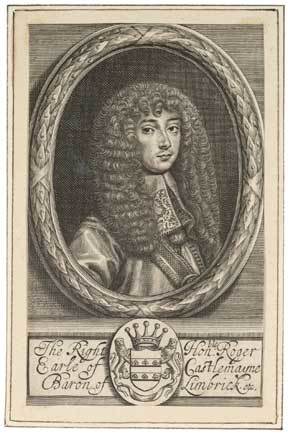
London, 1660: Ready to throw off a generation of Puritan rule, all England rejoices when Charles Stuart returns to reclaim the throne.
Among those welcoming him is young Barbara Villiers Palmer, a breathtaking Royalist beauty whose sensuality and clever wit instantly captivate the handsome, jaded king. Though each is promised to another, Barbara soon becomes Charles's mistress and closest friend, and the uncrowned queen of his bawdy Restoration court.
Rewarded with titles, land, and jewels, she is the most envied and desired woman in England--and the most powerful. But the role of royal mistress is a precarious one, and Barbara's enemies and rivals are everywhere in the palace.
Susan Holloway Scott is the author of over fifty historical novels and historical romances. Writing under several pen names, she has received numerous awards and honors for her bestselling books. With more than three million copies of her books in print, she has been published in nineteen foreign countries around the world and translated into fourteen different languages.
Susan has also written as half of the Two Nerdy History Girls (twonerdyhistorygirls.com), a popular book & history blog with a worldwide following. Follow her on Instagram (https://www.instagram.com/susan_hollo...) and Twitter (https://twitter.com/2nerdyhistgirls). She is a graduate of Brown University, and lives with her family outside of Philadelphia, PA.
Barbara's story begins with a "prequel" to her story and her first meeting with the exiled King Charles II. As she is the only one who can deliver to him letters of great support and promises of money destined for the royal pockets, she risks being damned a spy and tried for treason or worse convicted and executed. After constant nagging from her husband Roger ( he more concerned of the Villers name and a better future) Barbara embarks on a mission that will change her life forever, as well as those around her. From her first affair with a "no-gooder" lord, to being involved with a group of supporters to put the King back on the throne. Then comes her first meeting to a King in exile, that turns into a wild passionate affair. Barbara captivates the young jaded King as well as creates enemies and rivals everywhere in the palace. The "uncrowned Queen" uses her sensuality and wit and becomes the most envied and desired woman in England. I've always been curious about this woman that history has painted as the "harlot and villain" self-serving and with a temper to boot. While reading of her and her story, you will either love/hate her for her ambitious climb for a place among her peers. But I found I admired her for her using her brains ( yes she used her body as well) but she was smart about how she got there and how she handled situations and made the best of them. I found I liked this independent strong willed woman, despite her "loose morals." Be warned this book has generous servings of detailed sex scenes and may bother some readers as Barbara entered into such a life at age 15. Also a great book about the restoration of England in the reign of King Charles II. The history of this time is more a "backdrop" to the story and to me focused more on Barbara's story and her "climb" (more along the lines of Forever Amber which Barbara played a major role in that book) I'd have to say this read more like a "historical-fiction romance", but still gives the reader some "history" of the time period. A good story that never "lagged" for me and kept me in till the end. I look forward to more of this author and her other books.
A very readable historical fiction account of the relationship between King Charles II and his famous long-term mistress, Barbara Villiers, by whom he had several acknowledged children.
Barbara was reputed to be the most beautiful woman in England, with a powerful charisma that attracted all eyes to her whenever she was in the room. But due to her power and influence with the king, her Catholic faith, and her open adultery, she was reviled by many and termed 'harlot' and other similar epithets. As one can well imagine, the queen, who was unable to have any children herself, absolutely hated her.
The Barbara Villiers depicted in this book was not a particularly likeable person. Adulterous, promiscuous, a self-promoter. Yet she was also intelligent and a loyal supporter of Charles as king. She is depicted as being a good friend to the king as well as lover, and a loving mother to their children. The relationship lasted for more than ten years, before the king moved on to other mistresses, and the by-then rich and powerful Barbara moved to live in France.
So, a fascinating woman who lived her life at the centre of highly complex times - the Restoration of the throne of England, the plague of 1666, the Great Fire of London, the war with the Dutch. She has many descendants today through her royal children, including Diana, Princess of Wales, who clearly had some of the charisma of her famous ancestress.
So overall a well-written and interesting read about a fascinating if not likeable woman and the times she lived in.
I always say that actors in films "do a good job" when they play a mean character I am supposed to hate and I indeed "hate" them while watching a movie. In the same respect, we are generally meant to hate Barbara Villiers, the famous greedy and sex-crazed mistress of Charles II. Susan Holloway Scott allowed her character to play a Oscar-winning performance because frankly: I hate this mistress (okay, granted I am a fan of Nell Gwynne).
A wonderfully saturated book including the sexual craving and power ambitions of this long-standing mistress while feeding you with some insight into her personal reasoning. We may never know how the mistress actually felt and thought in "real life" but Scott provides a rather close depiction.
Love her or hate her, this is one mistress who will grab your attentions either way.
For me personally, what makes a historical fiction book fantastic is one that tells me so much about the period that is it written in, that I want to get straight onto Google and search for more information. Susan Holloway Scott truly brought these historical figures to life and left me wanting more. As with any good author she explains in her notes at the back of the book why she wrote the story the way she did and why she portrayed Barbara the way she did. I have to say that this is a very raunchy novel, so if you don't like reading about sexual exploits then this book is not for you. However, I thoroughly enjoyed it and whilst it was raunchy I learned a lot about this period of history that I didn't know.
No doubt Barbara Villiers was a harlot, in all senses. Barbara was up for anything to climb the social ladder. She was King Charles II mistress (he had many) but she was the first and most important one when he returned to the throne of England. She had more influence at court than his queen and she was called the curse of the nation by her haters. She worked the system in every way to secure her future. If you want to read and learn about this time in history (when England was Republic and lost and regained it's monarchy) this will give you Charles II side. I enjoyed googling Barbara and seeing her famous paintings by Peter Lely. This book is saucy, be warned.
The first introduction I had to Barbara Villiers was in my first ever Jean Plaidy novels, A Health Unto His Majesty, and The Pleasures of Love. Plaidy portrayed her as a villain you love to hate. She was calculating and vindictive and I rooted for the queen who just couldn’t compete for Charles II’s attention. Coming into this book, I tried to set aside my existing views of Barbara and be more open minded about her motives and actions.
The book begins with Barbara’s journey to Antwerp on a secret Royalist mission to meet Charles Stuart, son of the executed English king Charles I, while he’s still in exile. As soon as the two meet, Scott takes us back in time to fifteen year old Barbara’s arrival in London to live with her mother and stepfather. Her mother plans on polishing away Barbara’s country attitudes and behaviours in order to prepare her for a good marriage. However, Barbara is stubborn and follows her own heart. This leads her into the arms of Philip, the Earl of Chesterfield and a notorious womanizer. Though Barbara isn’t faithful to Philip, or anyone for that matter, Philip’s treatment of her hardens Barbara.
Once she meets Charles, the story really gets interesting. Not only does Barbara realize her interest in power, but she also feels like she’s found a match in the king (not that this stops her from dallying with other men). Having children pushes Barbara’s power-seeking to a new level as she collects titles, positions, income, and jewels from the king. The book follows the ups and downs of her relationship with Charles, including Barbara’s succession of lovers during this time. Scott ends the book with the end of Barbara and Charles’ relationship. The author’s note provides a good summary the rest of Barbara’s life as well as the other main players in the novel.
Political and religious issues of the Restoration were skillfully weaved into the story and Scott was able to show how these issues affected the king and his relationship with his mistress. I wish Scott had gone into a bit more depth with Barbara’s involvement with international relations – she mentions a few times how the French and Spanish ambassadors woo Barbara with jewels because they believe she can influence Charles in their favour but beyond the jewel-flaunting. Scott does a good job of bringing out the flavor of the Protectorate and especially the Restoration. I’m a sucker for good description and I enjoyed Scott’s descriptions of Barbara’s jewels and gowns.
At the beginning of the story, Barbara wasn’t seeking anything beyond her own immediate pleasure and I found her quite shallow. Her extreme vanity is ever-present, and she constantly dresses and poses in provocative ways. I found this exhausting at times – yes, you’re unbelievably gorgeous, we get it. Her dominating concern for her beauty and to secure her status as fairest of them all is troubling for her as she ages. Her power is in her beauty, and Barbara recognizes that.
I respected Barbara’s desire for freedom and doing what her heart desired – going against social expectations – I just couldn’t sympathize with her character, at least at first. She could be so very cruel and vindictive, especially to the queen. By the end of the story, I did feel sympathetic towards her as she recognized that her “glory days” at court were finished. Barbara comes across as very self-aware, and is quite intelligent financially. In a day when women were considered the weaker sex and expected to follow strict social rules, Barbara effectively works the system to her and her children’s advantage while she can (meaning, while her beauty lasts).
While Plaidy glossed over Barbara’s bawdy thoughts and romantic “dalliances”, Scott puts them all out there on the table for all to see. I guess I shouldn’t be surprised when the title of the book is Royal Harlot, and it’s the story of Lady Castlemaine, the famous mistress of the famously randy king, Charles II. Barbara was unashamed of her sexuality and sexual appetites and Scott really brings this out. I’m sure I blushed while reading this.
Overall, an enjoyable read. For more Restoration-era court romance and adventure, I recommend Plaidy’s trilogy of Charles II (The Wandering Prince, A Health Unto His Majesty, and Here Lies Our Sovereign Lord) and Rose Tremain’s Restoration.
I seem to be a serial reader. When I find an author I like - especially one that writes of a time period that I am exceedingly fond of - I seem to try to read every book written by them! This same propensity holds true for Susan Holloway Scott - whose novels never cease to please me. Her books transport me and I am always sad when I come to the end of one of her books. That's high praise from mew and is, perhaps, why I go on the hunt for the next title right away.
Since I generally read so much about the Tudors I have thoroughly enjoyed reading about the reign of King Charles II, the "merry" king. "Royal Harlot" follows the life of Mistress Barbara Villiers, later Lady Castlemaine, as she becomes Charles' II maitress-en-titre - better know as Charles' "head honcha" mistress. Barbara Villier's family, the second Earl and Countess of Anglesea had been staunch Royalists during the reign of Charles' father, Charles I, but after the government was overthrown ,and Charles I beheaded, the family fortunes had turned. Necessity brought the young and beautiful Barbara to an an arranged marriage to Roger Palmer, the Earl of Castlemaine. Barbara become Charles' mistress while she still married to her Palmer, but ultimately he was, it is believed, paid off in one manner or another leaving free Barbara to devote her energies to Charles alone.
The story chronicles the many flirtations and mistresses that Charles had during his relationship with Barbara. She gave the King five children that he acknowledged as well as a sixth girl who Charles adopted as his own but who most likely was a product of Barbara's own affair with the dashing military officer John Churchill (who ultimately married Sarah Jennings - the topic of the book I am currently reading be Ms. Holloway).
What I enjoyed the most about this book is that it effectively takes you the the Court of Charles II. One can so easily 'feel' the pique and jealousy of Barbara as Charles wends his way through affair after affair. One glimpses the life of Charles' wife as well - the tolerant and lonely Catherine of Braganza who, it seems, was unable to provide the King and England with an heir.
In the end, Barbara leaves the English Court and Charles. By this time Charles has taken Louise de Kerouelle, Duchess of Portsmouth, as his maitress-en-titre. Barbara moved to France in 1676 and returned to England only in 1679 to attend the marriage of heir son, Henry to Lady Isabella Bennett. Surprisingly, while she lived in France she became reconciled with her former husband, Roger Palmer and they maintained a friendly relationship hereafter. Charles died at an early age, 55, of a presumed stroke. Barbara lived to a relatively ripe old age of 68, dying of edema (dropsy) in 1704.
Susan Holloway's books about the many mistresses of Charles II are all, in my opinion, exceeding well done, highly entertaining and well worth reading. I am currently reading another of her "mistress" books, "Duchess, A Novel of Sarah Churchill" which is also a terrific read! I have already read her two other "mistress" books - "The King's Favorite : A novel of Nell Gwynn (a must read I think!) as well as "The French Mistress" (about Louise de Kerouelle). I don't think any of the excellent titles would disappoint in any way !
The novel built up the compelling relationship between Barbara and Charles II and at its peak; it was a definite page-turner. It lost its spark towards the end and fizzled out rather drastically.
This one starts with young Barbara Villiers's hook-up with the gifted seducer Phillip, the Earl of Chesterfield. But Chessy (Cheesy?) wasn't in the marriage market at the time, so in the end she married Roger Palmer.
Poor Rog probably knew he hadn't married a virgin, but still, could he have realized what he was getting into?
Eventually Barbara found her way to the exiled and impoverished court of Charles II. She's beautiful; he's a Stuart. Inevitably, Babs and Chuck became lovers and this is about as much of an LTR as anyone could expect.
The rest of the book revolves around court intrigues and Barbara's ability to pull herself out of various political potholes. The one time we see Barbara actually meet Nell Gwynn is a bit anticlimactic, when, in The King's Favorite, we're told about times when Barbara encountered Nelly's rapier wit and at least appeared to enjoy it.
This one gets 4 stars. The story doesn't grab me and drag me into any real conflict, but hey, it's history, and it's about a woman. Nice girls never did make history.
I picked this book up after I read Forever Amber. The book is about Barbara Palmer, Lady Castlemaine, ancestress to the late Princess Diana AND Camilla Parker Bowles. Barbara Palmer was a prominant character in Forever Amber. She was one of the famous mistresses of King Charles II in bawdy restoration England.
Basically, there is nothing likeable about Barbara Palmer. She is conceited, promiscuous, and self-absorbed. While this novel did not portray Barbara as the shrewish woman, as she was portrayed in Forever Amber (and as contemporary rumors portrayed her), even this sympathetic author has little respect for her. In essence, it is a story of greed and corruption. While Barbara had power, nobody respected her.
This book was also overly sexual for my tastes. While it was historically accurate, it read too much like a harlequin romance. Because the main character was so repugnant, it was hard for me to get past that.
No weekend would be complete without some sweeping saga of historical fiction I can tear through in one day. Frankly, this is the kindest portrait of Barbara Villiers Palmer I've ever read. She is a character whose reputation proceeds her in history, and her legacy has not been kind to her. Scott, however, seems to strike an effective balance between championing the infamous Countess of Castlemaine (and Duchess of Cleveland) and acknowledging her very well-documented faults: jealousy, temper, pettiness, and ... how should I put this ... an extremely ribald lifestyle.
To me, the hallmark of a good historical novel that features an actual figure from the past is the book's ability to engross a reader without requiring a background in history. I think Scott's book does an admirable job; even a reader with no clue about Restoration England will be engrossed, and even better, informed. I'd recommend this to any (fellow) fan of scandalous historical fiction.
Royal Harlot is told by the most famous and longstanding mistress of King Charles II. It is a story of her life, and of his return to the throne. I thought this book was very well written. The story was well told and historically accurate, and even better - so much fun to read! Scott's portrayal of Barbara Villiers is much more sympathetic than most historians, and I appreciate her more feminist view. A warning for those that are looking for G rated material...Like most historical fiction, Royal Harlot is full of sex. However, I didn't think it was overdone. I thoroughly enjoyed this one, and am currently reading Duchess.
This is a novel about Barbara Palmer, the Countess of Castlemaine, who was one of the main mistresses of King Charles II, during the period of Restoration England. Historically, she was known to have been a great influence on King Charles, so much so that people would call her the Uncrowned Queen. She was known to be promiscuous and extravagant, leading her to have left a rather negative view of herself throughout the centuries.
Royal Harlot is not a novel that seeks to bring “another side” to the story of Barbara Palmer (at least, I did not get that impression). She is presented just as negatively, I think, in this novel as in history. It is a straightforward story about Barbara’s life as King Charles II’s mistress, beginning from when Oliver Cromwell’s government was still in power. 15 year old Barbara is stunningly gorgeous, but is not the “proper lady” that her mother would have liked her to be. Barbara is spirited and cheerful, but also self centered, calculating and very good at stringing men along by their noses. She’s terribly unfaithful to her husband, Roger, and has all sorts of sexual relations with men. Her biggest catch of all is, of course, the king himself.
Barbara and Charles begin a not-so-secret relationship. Barbara is pleased to be the center of Charles’ life and enjoys being at court, throwing parties, showing off, and accepting lavish gifts from all sorts of people hoping she can wave some of her influence over the king. Barbara has the most power over Charles and she knows it. She is perfectly happy to use her relationship with Charles to her advantage.
If liking the main character, who is in a first person voice, is very important to you, then you may struggle a bit with Royal Harlot. Barbara is not easily likeable in this book. As mentioned earlier, she is self centered and enjoys playing the role of a poor little victimized woman. She remembers all the slights and insults people have done to her and is perfectly willing to wait patiently, even for years, to get her revenge. Even her moments of generosity seemed fake to me; to me, every time she was nice, she did it just to look nice. Barbara was every bit the vixen in this novel. I don’t even think she truly loved the king — certainly she liked him and thought he was attractive and had a great personality. However, from what I can tell from this book, Barbara was more attracted to the fact that he was king and had all this wealth and power. She also didn’t seem to care that he had other mistresses as long as she didn’t have to run into them, and she wasn’t above taking other lovers as well.
Normally such a petty character would annoy me, but I think because Barbara was the first person narrator, it was tolerable. She explained her rationale and reasoning for why she did certain things, so that it made some sort of sense, rather than leaving the reader to conclude that she’s being a bitch “just because she can”. No, I didn’t agree with everything she did, sometimes it was downright childish. For example, there was a scene where she decided to basically brag to Charles’ queen how Charles always visits her in the night and they have all these lovely children, while the queen hasn’t been able to give Charles a single baby. I remember thinking, “Oh come on … she’s the queen and Charles’ wife! Stop being so immature!” (Though I do have to admit, one could argue that the queen is the “other woman” since Charles and Barbara met and hooked up way before he even married his queen).
Even though Barbara is not a very nice character in this book and all that, I was still engrossed in the story. Partly, this has to do with the fact that I haven’t read very many (if any … can’t remember) books having to do with the Stuarts of Britain, so all these stories regarding this part of British royalty history is new to me. With a character like Barbara, you can surely expect lots of court drama. I never felt a dull moment in this book! So yes, I did actually enjoy reading this book a lot, even if I wasn’t particularly crazy about Barbara, heh. The strange thing is, this book made me feel incredible pity for Charles’ queen, Catherine, even though she was mostly a peripheral character, and now I want to read more about her!
One of the most notorious things about King Charles II of England is his long line of famous mistresses. Author Susan Holloway Scott has found a gold mine to write about in Barbara Palmer, Nell Gwyn, and Renee de Kerouelle. In Royal Harlot, Scott takes a spin around the court with Barbara Palmer, the Countess of Castlemaine.
This book was not my first outing with Charles II. I have previously read a Jean Plaidy book called The Merry Monarch’s Wife about Catherine of Braganza (you can check out my review here) – with all those mistresses, who can imagine he had time for a wife! Obviously as that book was from the perspective of the wife, Barbara was not portrayed in the most flattering of lights. I have to say, that I very much enjoyed Barbara in Royal Harlot. Yes she was “bad” and most mothers would wish for their daughters to not turn out the way Barbara did – but she was a woman who knew how to get what she wanted, hold onto that power, and yet also know how to bow out on her own terms.
To quote the author in an email conversation we had, “Bad Barb was a LOT of fun to write about. She was every bit the libertine as any man of her time, and completely unrepentant. While I can understand why most writers (both historians and novelists) choose to paint her in an unflattering way, I enjoyed getting to "know" her. I imagine she would have been pretty entertaining company, and it's easy to see why Charles was so beguiled.” I could not agree more! Even though Barbara had loose morals, I enjoyed getting wrapped up in her escapades. Scott definitely knows how to tell a story.
Barbara was the mistress of Charles II for quite awhile – she was there before his wife, during Nell Gwyn and Renee de Kerouelle, and even with those other women she still managed to hold his attention. They had several children, 3 of which were definitely the king’s children – but she had many affairs and flings along the way too.
One of the things that I like about this novel is there is a thread that connects this book with Scott’s 3 other historical fiction novels. Renee and Nell were obvious (his other mistresses), but I had to take a second look to realize that a passing character in the novel would become Sarah Churchill, the lead character of her book Duchess. This was just an interesting side note. Also, as easy as it was to get wrapped up in Barbara’s life, it was refreshing to see that she was conscious of the way she was viewed by the people – she didn’t live in a bubble.
This was a wonderful, quick read. I raced through the pages caught up in the escapades of the court. There are many sexual references, but not overly graphic – it was well done and appropriate for the type of person that Barbara was. I felt that it was very important to understanding the character and her motives. I hope to proceed with another one of her books soon as I really enjoyed this one.
This book was received for review from the author - I was not compensated for my opinions and the above is my honest review.
As a general rule, anything related to the Stuarts isn’t an immediate draw, for one reason or another. Though I read and enjoyed Kathleen Winsor’s seminal Forever Amber, I tend to find the risqué happenings of the Restoration era to be somewhat tedious. So with that in mind, Royal Harlot didn’t scream my name while reading, but I was able to find it entertaining and often interesting all the same.
Barbara Palmer is not a well-liked woman by really anyone, especially by a modern audience. But in writing this, Scott seems to be attempting to color the notorious Countess of Castlemaine in a more human light, as I doubt she could entirely pull off casting Barbara as a likable protagonist. The end result is a book where Lady Castlemaine tells the reader quite a lot about herself and her motivations. Barbara tells us she cares deeply for her children, for instance, though we never see her interact with them on the page beyond their births. I felt that the author was attempting to put a positive spin on events, but couldn’t quite commit to that portrayal.
But don’t get me wrong, I didn’t dislike how Scott dealt with Barbara Palmer’s difficult character. It was simply that I couldn’t exactly discern what angle the author was going for, as sometimes the reader was presented with imcomplete or conflicting ideas. This didn’t really affect my enjoyment of Royal Harlot, but it did bring up some questions about the author’s bias.
Writing-wise, Royal Harlot is well-done, though I think the sex scenes (and there were several, given the protagonist) were overly purple-prosey. Scott had many euphemisms and metaphors that, rather than evoking a passionate encounter between two people, made me laugh.
One area where I was especially disappointed was how Scott seemed to cheat the book out of it’s end. We spend a lot of time with the build-up to Barbara’s first encounter with Charles II, and then a good portion of the book with the years of their relationship. But then all of a sudden, in one chapter, it was over, and then I was reading the author’s afterword. I felt like things had been rushed and not given proper time to develop.
Even with all these things considered, Royal Harlot was still an informative, entertaining historical novel. Scott did a good job of trying to give such a notorious character as Barbara Palmer a balanced portrayal. I think more could have been done with her character, but overall, I was satisfied with the way this book approached history.
By now, I've been starting to rack up a good number of Susan Holloway Scott reads. I'm at a grand total of 3 now, and I'm eager to keep that number growing. Thus far, though, Scott's Royal Harlot is by far the best book in her library.
Scott has firmly positioned herself as a historical resource on the bawdy pre-Restoration Court of Charles II, having explored no less than three of his mistresses in her novels. In Royal Harlot, she takes on Barbara Villiers, the Countess of Castlemaine, who, it appears, was one of Charles' first mistresses after he was restored to the British throne, and one of his longest. Barbara is a low-born citizen who manages to make her way to court, where she catches the eye of Robert Palmer, whom she soon marries. But things are unsteady in the highly-Puritan government of Lord Protector Oliver Cromwell, especially among the nobility. After Cromwell dies, many of the Royalist nobility move to restore the Stuart line to the British throne. Thus, through her husband's Royalist leanings, Barbara meets Charles II, who, it seems, has always had a soft spot for beautiful women. It's not long until Barbara, a free spirit, becomes his mistress and begins to grow her power. Even after Charles marries, Barbara is the unspoken queen of court and, through her relationship with Charles, she gains incredible power, wealth and other prestige that women of the period could never imagine. But, as a mistress rather than a wife, Charles could cast her off at any moment without consequence.
I feel like Scott has really found her writing zen here. The writing style is completely comfortable and flows very easily (as in, it's a joy to read). The novel is well-paced and intriguing from the very beginning to the very end. It doesn't hurt that Barbara is an unknown and incredibly compelling historical figure. Scott depicts her as a free spirit with intelligence, beauty and a hint of wantonness that helps her use the gifts she has to get further than any woman could in the period. I was completely enthralled with Barbara's story and cheered for her as she overcame obstacles and found her place in politics and power (not to mention the Restoration-period setting is a welcome change from the absurd amount of Tudor fiction out there right now).
Highly recommended to anyone who enjoys reading historical fiction, especially about scandalous women, women in power or women who rose above their place despite the society of the time and did something amazing with their lives.
Barbara Villiers Palmer, labeled the Great Harlot of Charles II, proudly claims her successes at the king’s side, rising in rank and power. Barbara never proclaims to be anything other than what she is, politically astute, honest and unimpeded by public outrage & social conventions. A great read about a woman I had heard of, but knew very little about, the story of Barbara's life from age 15 to 31. A fascinating blend of history, colour, sexual tension and drama. A really good character study and portrayal of one of history's infamous women.
Too bad; it was going so well, too. The author tiptoed over the acts themselves with silken descriptions and then dipped into grammatical hell when she used a couple of raunchy low-class terms. ugh. Those words weren't even used back then; ruined the book. Shame.
Forever Amber, by Kathleen Winsor, (about the gal who kicked Barbara to the curb) was so much better; same king, same time period.
Well..."Harlot" really is the best word for the main character of this book. I actually couldn't finish it. It's opening promised deep political intrigue, but what I got was cheap titillation and a girl whose sole purpose in life was to see how many men she could sleep with- all the while constantly reminding you of how beautiful she is. I managed to get about 100 pages into it before I simply couldn't take it anymore.
Barbara Castlemaine has come down through history with a rather unsavory reputation. The author here has decided to delve into the story, and gives a good background on as to why a woman would choose to be a king's mistress. It's entertaining and well-written and I came away with actually liking her a bit.
This book is very well written - so much that I started to feel sympathy for this character, who was really an awful human being in real life. Can it be too well written? I'd say that it was quite slow to start out with - I started the book multiple times, and the end was a bit vague as to why the Countess really stopped being the official bed warmer, but such is life.
This is a really entertaining, well-researched book about a sexy, immoral and, not altogether particularly nice woman, who was widely hated by society in the 17th century, and remains so. I really enjoyed reading this one.
It was just ok. Barbara Villiers, (married) mistress to King Charles is not a likable character to me. At least, not in this story. I liked the author's "Duchess" much more.
Interesting reading about who was the promiscuous and main royal mistress of King Charles II, Barbara Palmer Villiers. The Countess of Castlemaine had a great influence over the King Charles II. While the Queen Catherine of Braganza couldn't give him heirs, Barbara did. And by that and also by her seductive/bold personality she won a lot over the King, even being called as "The Uncrowned Queen". Thru the reading we learn that she was dominant and bad tempered, but still she got the admiration, love and respect from Charles and all their five children were acknowledged by the King. Of course, they were never totally faithful to each other, and they had many others affairs. But they had a strong relationship, which cause lots disapproval at the court. I just don't agree much on the reading, about Frances Stuart and not even how the relationship between the King Charles and Queen Catherine is portrayed here. The Queen Catherine was constantly mocked by the court and seeing with negativity because of her impossibility to give heirs. But Charles always dismissed to seek divorce. He respected his Queen and because of this attitude she was faithful to him, and "accepted" his licentious life style. Now about Frances Stuart, it is still debated if she became Charles mistress or not. From another book I had an opportunity to read, she doesn't look like a silly girl who would share Barbara's bed and enjoy sexual games. She was a rival to Barbara and even more respectful person. But she definitely had her charm over the King or she wouldn't be "the girl on the golden coin": the face of Britannia England's coin. Besides those two things, it's a good reading about the "Restoration" and the "Merry" King Charles II.
Barbara Villiers Palmer was a nineteen-year old newlywed when her husband, Roger Palmier and his group of fellow-conspirators sent her to Brussels with a message to the king-in-waiting, Charles Stuart, and a fortune of gold coin sewn into the hem of her dress. Witty and reckless and a renowned beauty, she immediately caught the eye of the much older king, and it was mutual attraction immediately. She became his mistress and held that position for a turbulent decade.
The Puritan regime of Cromwell was fading fast, and most of Britain was ready for something different, the bawdy Restoration Court. And then there was the question of religion. There were Cromwell’s Puritans, most of the court connected with the official Anglican church, and the hidden adherents to the Catholic church, including Barbara and Charles himself. And there was plague to contend with, the Great Fire that destroyed much of London, and a slip-shod war with the Dutch, thought to be an easy way to maintain trading routes and turning out to be anything but.
Of nearly equal concern to the British court, there was no successor to the throne, despite the marriage of Charles to the Spanish princess. Charles and Barbara, of course, had four children together, but none of them could be considered. At least Charles had one brother left, James.
The plot of Royal Harlot is complicated indeed, but the sense of the period is very well done, and one never loses sight of the multiple players. This was a period of British history that was previously not that well known to me, but Scott has put paid to that. And Barbara is a fearless and commanding heroine.
I normally really like Historical fiction. I honestly hated this one.
I didn't hate the main character because of her sleeping around. She can sleep with whoever she wants and has however many kids she wants with whoever. I'm never going to shame a person for that.
What I hated was how she was constantly telling the reader how beautiful she was. All the male characters, also telling you how beautiful she was. There was no other female character in this book that could be as beautiful as she was. It was ridiculous.
Not only that, she was a spoiled brat. She wanted everything for herself. Her children didn't matter, what she did was for herself and no one else. I couldn't stand how selfish and childish she was.
I honestly have no idea how many people rated this book so highly. I couldn't stand the characters in this book at all.
I love historical novels, the best of which combine details about period that fascinate me with romance and drama and sometimes, comedy...this book did all that, and more. I learned more about the Restoration period of English history and some of the key players surrounding the shaky throne that Charles II came back home to, after years abroad in exile, waiting for his revenge on the peers who had condemned his father, Charles I, to death by regecide. Ms. Scott has done a lot of research on the period, and it shows. I knew who Barbara Palmer, Countess of Castlemaine, was, but had never read anything that really treated on her relationship with the King, and I learned a good bit more than I had before, with this book. Well done, for this genre, and I thoroughly enjoyed it.
It was a decent read, however, I am a bit baffled by the fact that it was written as if you are reading Barbara Castlemaine's diary or journal of some sort. With that I don't believe she truly revealed her feelings/emotions enough at least in truth and as hard as I tried I couldn't connect to her nor truly believe in her feelings towards Charles II. The book also seemed very rushed at the end. I have read other books on her and this is a complete 180 on her character, much toned down and having her more refined. I thought I might be disappointed by that but in fact it was a bit refreshing to see a different take on this interesting woman.