

What do you think?

Afrofuturism: A History of Black Futures
This timely and gorgeously illustrated companion book to a Smithsonian exhibition explores the power of Afrofuturism to reclaim the past and reimagine Black futures
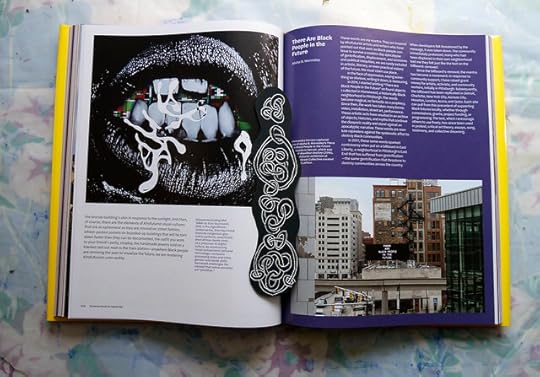
A History of Black Futures explores the evolving and exhilarating concept of Afrofuturism, a lens used to imagine a more empowering future for the Black community through music, art, and speculative fiction. Sumptuous, beautifully designed spreads feature 100 gorgeous illustrations of objects and images that reflect Black identity, agency, creativity, and hope, T’Challa’s suit from Black Panther, Octavia Butler’s typewriter, Uhura’s outfit from Star Trek, Sun Ra’s space harp, costumes from Broadway’s The Wiz, handwritten lyrics by Jimi Hendrix, and Janelle Monae’s ArchAndroid dress.
Chapters include essays from a diverse group of scholars who reflect on themes such as legacy, alienation, and activism, with profiles on influential people and
Foreword & Introduction: Provides background on Afrofuturism Chapter 1 - Space is the Place: Reflects on space and its defining connection to Afrofuturism and its African cultural legacy Chapter 2 - Speculative Worlds: Explores short stories, Black speculative fiction and sci-fi, comics, and Black superheroes as bastions of Afrofuturist expression Chapter 3 - Visualizing Afrofuturism: Analyzes the vast visual culture of Afrofuturism Chapter 4 - Musical Futures: Explores Afrofuturism and music Afterword Afrofuturism offers a framework of radical potential to envision Black liberation and alternatives to oppressive structures like white supremacy. Afrofuturism comes at a time of increasing visibility for the concept, both in scholarship and in pop culture, and is a compelling ode to the revolutionary power of Black imagination.
CONTRIBUTORS: Reynaldo Anderson, Tiffany E. Barber, Herb Boyd, Ariana Curtis,Eve L. Ewing, Tuliza Fleming, Nona Hendryx, N. K. Jemisin, JohnJennings, Steven Lewis, Mark Anthony Neal, Alondra Nelson, DeNichols, Elaine Nichols, William S. Pretzer, Vernon Reid, MatthewShindell, Kevin M. Strait, Angela Tate, Michelle Wilkinson, Ytasha L.Womack, Alisha B. Wormsley, and Kevin Young
A History of Black Futures explores the evolving and exhilarating concept of Afrofuturism, a lens used to imagine a more empowering future for the Black community through music, art, and speculative fiction. Sumptuous, beautifully designed spreads feature 100 gorgeous illustrations of objects and images that reflect Black identity, agency, creativity, and hope, T’Challa’s suit from Black Panther, Octavia Butler’s typewriter, Uhura’s outfit from Star Trek, Sun Ra’s space harp, costumes from Broadway’s The Wiz, handwritten lyrics by Jimi Hendrix, and Janelle Monae’s ArchAndroid dress.
Chapters include essays from a diverse group of scholars who reflect on themes such as legacy, alienation, and activism, with profiles on influential people and
Foreword & Introduction: Provides background on Afrofuturism Chapter 1 - Space is the Place: Reflects on space and its defining connection to Afrofuturism and its African cultural legacy Chapter 2 - Speculative Worlds: Explores short stories, Black speculative fiction and sci-fi, comics, and Black superheroes as bastions of Afrofuturist expression Chapter 3 - Visualizing Afrofuturism: Analyzes the vast visual culture of Afrofuturism Chapter 4 - Musical Futures: Explores Afrofuturism and music Afterword Afrofuturism offers a framework of radical potential to envision Black liberation and alternatives to oppressive structures like white supremacy. Afrofuturism comes at a time of increasing visibility for the concept, both in scholarship and in pop culture, and is a compelling ode to the revolutionary power of Black imagination.
CONTRIBUTORS: Reynaldo Anderson, Tiffany E. Barber, Herb Boyd, Ariana Curtis,Eve L. Ewing, Tuliza Fleming, Nona Hendryx, N. K. Jemisin, JohnJennings, Steven Lewis, Mark Anthony Neal, Alondra Nelson, DeNichols, Elaine Nichols, William S. Pretzer, Vernon Reid, MatthewShindell, Kevin M. Strait, Angela Tate, Michelle Wilkinson, Ytasha L.Womack, Alisha B. Wormsley, and Kevin Young
216 pages, Hardcover
First published March 21, 2023
Ratings & Reviews
Friends & Following
Create a free account to discover what your friends think of this book!
Community Reviews
Displaying 1 - 23 of 23 reviews

May 22, 2023
While academics will likely find the essays collected in Afrofuturism: A History of Black Futures to contain familiar ideas, the rich visual images here combined with accessible prose for those readers new to Afrofuturism make this an easy book to recommend. Afrofuturism is an art book as much as it is an anthology.

August 10, 2025
The other day I was visiting the bookmobile during its once per week visit to my community, when the spine of a tall bright yellow book jumped out at me from the tiny non-fiction shelf. Always interested in science fictional topics such as the subgenre of Afrofuturism, I snapped it up.
This book is not confined to literature, as Afrofuturism is a much wider topic. It is large (8.5 x 11 inches), with many full-page photographs and other art. It was published by Smithsonian Books, and features many items on display at the National Museum of African American History & Culture. The text of the book consists of over twenty essays by different scholars giving their own interpretation of Afrofuturism in their respective fields, be it science fiction, fantasy, comics, film, jazz, pop music, fashion, etc. Consequently, the essays are each introductory and somewhat redundant. One recurring symbol is Sankofa, a bird looking backward while moving forward, which allows a tie-in of almost everything about African American cultural history to the future. I was left with more of a fragmented sampling on the topic, than a concise description.
Of interest to people involved in written science fiction, are two of the essays –
“There’s a Reason” by N.K.Jemisin. This too-short essay gives hope that the current systematic suppression will ultimately result in an explosion of creativity.
“Dialogues in Space: Octavia Butler and Samuel Delany” by Herb Boyd. This essay reviews highlights of a panel discussion at MIT in 1998, about science fiction and modern culture with the two greatest then-living black science fiction writers.
I will definitely be looking to read W.E.B. Du Bois’ 1920 short story “The Comet”, which appears in the Dark Matter: A Century of Speculative Fiction from the African Diaspora anthology.
I read the entire book, although I suspect a cover-to-cover read is not the intent. A few of the essays, such as the ones dealing with fashion or pop music, I just gazed at the photos and art, skimming the text. So I’m glad to have read it, but it goes back to the bookmobile next week.
This book is not confined to literature, as Afrofuturism is a much wider topic. It is large (8.5 x 11 inches), with many full-page photographs and other art. It was published by Smithsonian Books, and features many items on display at the National Museum of African American History & Culture. The text of the book consists of over twenty essays by different scholars giving their own interpretation of Afrofuturism in their respective fields, be it science fiction, fantasy, comics, film, jazz, pop music, fashion, etc. Consequently, the essays are each introductory and somewhat redundant. One recurring symbol is Sankofa, a bird looking backward while moving forward, which allows a tie-in of almost everything about African American cultural history to the future. I was left with more of a fragmented sampling on the topic, than a concise description.
Of interest to people involved in written science fiction, are two of the essays –
“There’s a Reason” by N.K.Jemisin. This too-short essay gives hope that the current systematic suppression will ultimately result in an explosion of creativity.
“Dialogues in Space: Octavia Butler and Samuel Delany” by Herb Boyd. This essay reviews highlights of a panel discussion at MIT in 1998, about science fiction and modern culture with the two greatest then-living black science fiction writers.
I will definitely be looking to read W.E.B. Du Bois’ 1920 short story “The Comet”, which appears in the Dark Matter: A Century of Speculative Fiction from the African Diaspora anthology.
I read the entire book, although I suspect a cover-to-cover read is not the intent. A few of the essays, such as the ones dealing with fashion or pop music, I just gazed at the photos and art, skimming the text. So I’m glad to have read it, but it goes back to the bookmobile next week.

September 4, 2023
The vast cultural spaces and history of Afrofuturism come alive in this collection of essays and artwork about this beautiful and thought-provoking movement. The contributors discuss Afrofuturism’s pre-modern history in rediscovered works from the 1800s and describe its works in written, audio ans visual forma of all types. I only wish this book came with a digital companion of soundtracks and clips to allow a deeper view of Afrofuturistic music, movies, and live art forma. I highly recommend the book to all readers who enjoy sci-fi, modern art, socially impactful art or Black American history and culture.

January 14, 2024
This is such a good cultural overview of Afrofuturism. A perfect entry level reading for someone who doesn't know a lot about the genre and is looking for a general history of the beginning to current times. Looking at all mediums of media and art, I think it touches on a lot of different interest areas. If you have more knowledge of the genre, I think it is still worth reading with beautiful illustrations, artwork and photography, but also a lot of care given to specific figures and important works in afrofuturism. This was a wonderful read and supplied a lot of reference to other works to continue reading.

April 1, 2024
I WOULD NOT SAY I ACTUALLY READ THIS FULLY BUT I READ A FEW ESSAYS. very intresting insight into afrofuturism and I wanna write spec fic now

February 22, 2026
What is afrofuturism? This book details the history, meaning, and future of this complex, nuanced subject. Afrofuturism is perhaps best represented by both Parliament-Funkadelic’s Mothership and the sankofa symbol: facing forward while looking back. Most of all, afrofuturism inspires people to celebrate and shape Black identity beyond earthly systems of racism, bias, and oppression.
Published by the National Museum of African American History and Culture, this book is a compilation of essays and visually stunning pieces. I highly recommend combining this reading with a visit to the museum to see pieces like George Clinton’s costumes and P-Funk’s mothership in-person.
Published by the National Museum of African American History and Culture, this book is a compilation of essays and visually stunning pieces. I highly recommend combining this reading with a visit to the museum to see pieces like George Clinton’s costumes and P-Funk’s mothership in-person.

June 17, 2023
A wonderful companion piece to the current exhibition running at the Smithsonian, featuring the words and art of many amazing scholars and thinkers that helps the reader see beyond the often diluted definitions of Afrofuturism that float around.

August 22, 2023
Exceptional read. This is a book to own so you can come back to it again and again. The concept of Afrofuturism is fascinating. Our cultural leaders and social change activist have led the charge for us to look back and understand our history as Black people to imagine a life and a future beyond what we could ever know. The writing and visuals in this book are superb.

May 12, 2023
I'm primarily familiar with Afrofuturism through Black Panther and Janelle Monae, s0 I really appreciate being able to learn about all these other influential Black artists that I've never even heard of.

October 22, 2024
Important and compelling overview of Afrofuturism, explored with eye-catching graphic design and a range of art forms.

January 13, 2024
What a cool book. This provides an introduction to
Afrofuturism with a survey of items from the Smithsonian National Museum of African American History and Culture. Indeed, this slim volume could have been double the length by showcasing even more of the treasures within the museum’s collection. I have been doing some reading in this genre lately, and this book makes me all the more excited to explore the art, music, fashion, and design of the movement. Most importantly, it highlights the constant interactions between past, present, and future. Like the Sankofa bird, we are constantly looking back so we can find the way forward.
Afrofuturism with a survey of items from the Smithsonian National Museum of African American History and Culture. Indeed, this slim volume could have been double the length by showcasing even more of the treasures within the museum’s collection. I have been doing some reading in this genre lately, and this book makes me all the more excited to explore the art, music, fashion, and design of the movement. Most importantly, it highlights the constant interactions between past, present, and future. Like the Sankofa bird, we are constantly looking back so we can find the way forward.


Read
July 22, 2023Beautifully produced book heavy on photos, filled with references, and just a great celebration.
I'm a huge George Clinton fan so I especially appreciated all the tributes to him sprinkled throughout the book.
Mention of an Afrofuturistic room at the Met prompted me to look it up online. Really nice virtual tour available at https://www.metmuseum.org/perspective...
I also enjoyed watching Pumzi, which got an honorable mention in the book and is available to stream for free at https://youtu.be/iPD-mvR6C-M
I'm a huge George Clinton fan so I especially appreciated all the tributes to him sprinkled throughout the book.
Mention of an Afrofuturistic room at the Met prompted me to look it up online. Really nice virtual tour available at https://www.metmuseum.org/perspective...
I also enjoyed watching Pumzi, which got an honorable mention in the book and is available to stream for free at https://youtu.be/iPD-mvR6C-M

July 6, 2023
Excellent companion book to the excellent exhibit in the National Museum of African American History and Culture.
N.K. Jemisin wrote one of the essays. Excellent bits on Nichelle Nichols, Octavia E. Butler, and Samuel R. Delany.
N.K. Jemisin wrote one of the essays. Excellent bits on Nichelle Nichols, Octavia E. Butler, and Samuel R. Delany.
June 29, 2026
I wanted to like this. I watched the Earth Wind and Fire documentary and then remembered the Fela Kuti musical and then fell down the Afrofuturism rabbit hole. This book is the catalogue for the Smithsonian Institution exhibit. The pictures of the pieces are gorgeous but the accompanying text is a bit too “art speak mumbo jumbo”. If you are well versed in Afrofuturism history and nuance, you will love it. I was looking for more of a primer on the history of the movement.

August 31, 2025
A great book and summary of the recent exceptional special exhibit on Afrofuturism at the National Museum of African American History and Culture.
The Smithsonian supports a broad vision of excellence that highlights historically accurate, uplifting, and inclusive portrayals of America’s heritage.
The Smithsonian supports a broad vision of excellence that highlights historically accurate, uplifting, and inclusive portrayals of America’s heritage.

September 5, 2023
A great primer on the subject, that's thoughtful and should provide you with a number of creators to check out!

October 13, 2023
Absolutely gorgeous book with very dry essays.

January 5, 2024
lovely, though I wish they had written a bit about Outkast and afrofuturism. I need to see this exhibit before it leaves in August

April 27, 2024
An incredible book. Visually stunning and powerful writing. I savoured every page.

August 11, 2023
It an interview about his book “For the Love of Mars”, the August selection of the Planetary Society book club, Matthew Shindell recommended Afrofuturism for insight on how to approach the future with hope. How can people who once were enslaved and long marginalized be optimistic? It is a worldview we all need to explore.

December 14, 2023
Oh, what a woefully underrated book this is. It oh so wonderfully captured not just the essence and meaning but the true power of what Afrofuturism is in all its Black glory. Amazing pictures, very detailed presentation. Absolute perfection.

February 22, 2024
Fantastic collection, great essays
Displaying 1 - 23 of 23 reviews