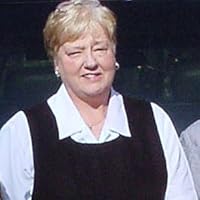
- Pat Cunningham Devoto's most recent novel, Out of the Night That Covers Me (0-446-52751-3, Warner hard-cover, 1/01), has over 60,000 copies in combined print and was highly praised in the New York Times Book Review and Washington Post Book World, among other publications. - My Last Days as Roy Rogers (0-446-52388-7, Warner hardcover, 1/99). Devoto's notable debut, received widespread praise in the Denver Post, Cleveland Plain Dealer, and Kirkus Reviews, among other publications. - Born and raised in North Alabama, Pat Cunningham Devoto taps into her personal experiences and memories of growing up in the changing South to infuse The Summer We Got Saved with astonishing honesty and poignancy.
This is a historic fiction novel about a variety of people living during in the South in the 1960s. It is a story about the civil rights movement, the difficulty of change, and families and friends finding their own way amid the tumult. It also serves as a stark reminder of how things once were and just how far we have come because of the efforts of all those involved in that movement. It is realistic and well researched. The characters are believeable and portray the gamut of emotions and ideas that came with those times. "There aren't even any buses here for them to sit in the front of. "We're going as fast as we can and still maintain some kind of sanity. There are limits and we're doing the best that we can given the circumstances." Tina and Tab are members of a southern family whose ancestors had plantations and fought in the Civil War. One of their ancestors was a founding member of the KKK. They are caught between the ideologies they have always known, and the waves of change shown them by the liberal aunt who moved from the south years ago, Eugenia. "I'll never diown the family that died for me. I won't forget, even if Yankee Aunt Eugenia does." She lies to the girls' parents, and takes them out on the road to an area of Tennessee where integration has a foothold. Added to the mix is Maudie, a young "colored" woman. She was afflicted with polio and because of her race has spent years in a sanitorium to heal. Through pure determination, she gains an education and becomes involved in the fight for equality by teaching classes to would-be African American voters. The prose is marvelous with many phrases that cause the reader to pause for a moment and remember those times. "Why are people always wanting to come down here and help us our? The last time they wanted to change how we do things, half the south ended up being burned down." "Miss Viola picked up her cards. 'And you think you gonna get me out to vote in amongst them crazy white folks? You ain't friends with no fool." "People are planning ways to integrate their towns when they go back home. You have the power to do whatever it is you want to do. Oh, and it's the new thing to say 'black man' instead of 'colored'. It is the pitiful white heritage that caused the whole thing." "But integration is against the law because.... because it is. I didn't make the laws. They were here before I was born."
I am fascinated by this subject matter and I truly wanted to love this book. I did like it for the most part (which is a 3-star rating, by definition), but it had some shortcomings that really detracted from its overall quality, in my opinion. The author, who is a native of the region, is courageous in turning a rather unflinching eye on the racism that was rampant and embedded in the culture at that pivotal time and she tries to convey a “winds of change” atmosphere. Clearly, the reader is meant to see a positive transformation in the characters’ attitudes toward race through their own personal experiences, but I thought the evidence was rather scanty that the characters had truly grown to internalize the fallacy of racism. I’m not convinced that this recognition had actually sunk in on anything but a superficial level. I felt that Aunt Eugenia was a little stereotypical, almost cartoonish, as an enlightened former Southerner-turned-Californian. I was not convinced that the lessons learned at Highland Folk School actually “took” on Tab and Tina. I was encouraged by Charles, who worked hard to campaign for a candidate opposing the extremely racist George Wallace, and it was very interesting how the author wove in the sad tale of the actual Wallace opponent being killed in a plane crash. The author also does a decent job of portraying the fear and resistance that some blacks felt about integration – it was a surprise to me to discover that many would have preferred leaving things separate. However, this is entirely consistent with human nature – many people simply fear and abhor change. I found the ending unsatisfactory – it felt unfinished, somehow, like it’s crying out for a sequel – and it was sometimes difficult to switch between the two or three separate story lines. I was hoping for a more graceful convergence of the stories, but it really never happened for me. I would have loved to see a reunion between Maudie and Tab, who knew each other at a much earlier point in their lives, but it didn’t happen. Another troubling issue was the inexplicable marriage between Jessie and his wife, Carlie. They were married but never interacted, and Jessie (the dad) seemed to have full charge of their son, JD. And he fell in love with Maudie. The whole time I’m thinking,“What the hell? Isn’t this guy married to Carlie?” That needed more explanation, in my opinion. All of this being said, though, I did enjoy reading it for the historical perspective – learning about that election and the Highland Folk School, if nothing else.
This entire review has been hidden because of spoilers.
I found this to be a good read. In our current political climate I find myself reading books that pertain to racism in the USA whether they be non-fiction or non- fiction. This book added to my knowledge as a person who was raised in the Northeast as the battle for civil rights raged. I was neither bored nor confused. Given the racial tension and segregation of the time, it made sense that people of different races would be living parallel lives within proximity of each other and yet never meet except by chance. I liked the book and wish I had read "My Last Days As Roy Rogers" first and been introduced to Tab and Maudie before Audie got polio.
The Summer We Got Saved by Pat Cunningham Devoto is set in the turbulent 1960s South. Tab and Tina are teenagers from a prominent white family. Their father struggles to maintain the family plantation while navigating racial tensions.
Aunt Eugenia arrives during the summer, as she does every year, and decides to take Tab and Tina on a trip to broaden their horizons. Tab and Tina's parents think Eugenia is taking the sisters to Eugenia's friend for a visit, but in fact takes them to a place in the Tennessee mountains where blacks and whites live, work and play together. Tab and Tina react to the experience differently than expected and the results are more than either anticipated.
Did I mention that one of Tab and Tina's cousins is a founding member of the KKK?
Running parallel with Tab and Tina's story is the story of Maudie who as a child contracts polio and is sent to a hospital for black polio patients. Maudie and Tab were friends as children. Maudie is released from the hospital, receives an education and is settled in a church to teach black people in the area about their right to vote. She meets people who will shape who she becomes.
There is so much to love about this book. The stories, the writing, the attention to language, the history and, of course the location descriptions. I felt as though I was sitting in the room, the car or anywhere the characters were - that is how vivid the experience.
This book is not part of a series, per se, but it is helpful to read the author's books in order of publication. My suggestion: Read My Last Days as Roy Rogers, Out of the Night that Covers Me and then The Sumer We Got Saved. It's not critical, and they can easily be read as standalones.
It's not something I'd usually read at all, but was lent to me by someone at work, so out of courtesy, I had to read it. The cover suggested it was a book-club staple about the impact of the civil rights movement on small Sourthern communities in the 60s, and that pretty much sums it all up. I liked most of the characters even if a lot of them were pretty one-dimensional. The framing device was pretty unnecessary too. That said, I was invested by the end, although the death of a certain character was more frustrating (and sadly typical of white lit about race) than tragic.
PS Obsessed with the names of all the people who've logged / reviewed it on here. Special shout-out to the girlies, AKA Phyllis, Frances, Ginny, Priscilla, Gail, Mallory and (of course) Karen... Slay!
The prose is clear and workmanlike. I never really believed the authenticity of the characters, though. Some of them were interesting and not "stock" ones. It is the story of two sheltered Southern white girls secretly taken to a "freedom camp" by their free thinking aunt. Girls do the usual coming of age thing, finding out personally about racism and its effects. The other plotline had a young black woman, recovering from polio, come to a small black community to conduct a voting school. Interesting character dynamics in this plot, but still not enthralling. A decent book, but not highly recommended.
I enjoyed this book...it was written by a local author (we went to school with her brother and sister) and the setting is a fictional version of my hometown. Also, it dealt with so many of the issues that I dealt with growing up in a time of great change in this country. It was interesting to look back on it from this perspective.
I loved this book.The setting is in Bainbridge, Alabama during the 1950's.It was about segregation and how it effected people from different backgrounds. I'm from North Alabama.I'm to young to remember segregation.However, the generation before me, has past their stories of segregation onto me. Pat Cunningham Devoto made me feel those stories.
This book is a sequel to an earlier work by Pat Cunningham Devoto: My Last Days as Roy Rogers. I read that book 25 years ago and loved it. Two of its main characters, Tab(short for Tabitha, a white 5th grader) and her Black friend Maudie, slightly older, have a number of adventures in a small Alabama town pre0-Cicil RIghts Era and polio vaccines. At the end of the sotry Maudie contacts polio and is sent to Tuskegee for treatment, since there are no facilities to treat Black polio victims in her part of the state.
This book picks up in 1960, as the Civil Rights Era begins to establish itself. Tab and Maudie reappear, as do members of their families. Tab's family is old-line southern, with a cousin in their history who helped found a local Klan chapter and a variety of attitudes covering the full range of attitude toward the developing movement. Maudie is released from her treatment facility and takes a job in her hometown as a "voting school" teacher, preparing Blacks to register to vote. The two story lines overlap geographically but run parallel and do not really interact. Both are interesting and well-presented, representing the full range of emotions and attitudes in the South in this era. I liked the book but felt that at some points it lost focus, trying to do too much in handling a very complex set of issues.
The Summer We Got Saved takes place in Alabama and Tennessee, amidst the tensions of the Civil Rights movement.
The beginning was flowing well. There are a few different storylines to follow, so you're essentially going back and forth each chapter. I don't mind this usually. However, I was struggling to see how some of these characters and stories fit together. I feel like there's too much going on. I would have been happy with one or two storylines that included more background on the main characters then seeing where it all ties together but we don't get that. Also I couldn't connect with any of the characters. Except maybe Maudie.
I do appreciate that Devoto puts a microscope on things that were very relevant to the time and that were happening to people of color. It's eye opening and heartbreaking but I understand that it's important for people to tell their stories and not to forget because this was history. This senseless stuff happened!
It was an alright book and I did learn a couple things I never knew happened. I still feel it's not finished. I would have liked more of Maudie, Tab, and Tina, maybe a reunion towards the end.
(Finished a couple of months ago, and a lot of details a are now fuzzy.) Two White sisters, a pre-teen and a teenager, in the deep South in the 1950's are kind of tricked by their California aunt into going to a workshop/camp at Highlander Folk School, an institution where social justice activists were trained. Also in attendance are Black teenagers and the sisters learn and experience in teenagerish ways. Highlander is raided by police, and they have to leave in a hurry. They meet some racists on the way home and are threatened because of something the aunt did. "Saving" in the book's title refers to their escape from this situation. Another featured character is a Black girl who spends months (years?) in an iron lung. Also, a rich, Jewish introvert who is drawn into supporting a moderate gubernatorial candidate in ways that don't work for him. Devoto brings the era alive, also the iron-lung experience. (Spoiler alert> I end up bothered that the White girls have fun, learn, and emerge unscathed, but not so the Black girl and the Jewish man.
When I started this book, I was like, "Great. Another book of Southern cliches." And I almost put it aside. I'm glad I didn't. I am Southern, and old enough to remember when these events took place, even though I wasn't involved; just remember hearing the news and listening to the grown-ups talk. As the author pointed out, she played a bit fast and loose with the timeline here; these events took place over a series of years, not all in one summer. I had never really thought about it from the perspective of Black people; we all (white people) take our privilege for granted. It's hard in this day and age to think of people not being allowed to vote simply because of the color of their skin, and of course all the other injustices... If you're interested in seeing a bit of what the South was like in the sixties, this is a good introduction.
1960s integration story set in Bainbridge, Alabama and The Highlander Folk School in Tennessee. Tab and her sister go with their aunt to stay at a school where volunteers are trained in peaceful protesting.
Story about the south and voting rights. People who want to help and those who want to stop it. Sometimes it for some reason, money position or to keep people ignorant. Said that some people lose their lives because of it.
I do think Pat Cunningham Devoto weaves a good story and I did enjoy the book but I felt that sometimes it dragged on and I had to really focus and push on thorough those parts.
Ok. I didn’t read all of it; I skipped the last 20 pages because it was so unbelievably mind numbing I couldn’t keep my eyes open to read it. But I’m counting it anyways.
really a 4 1/2 star book-the South in the Civil Rights Era of the '60's-it will make you cringe, smile and cry. It is historically based and needs to be read by everyone
I was alive during this time period & although I was in FL, I knew about the struggle black people went through. This book tells a really good, personal look into some of that time. Very well done.
Quite simply, one of the best books I've ever read. Exquisite writing.
Set around 1960, the three main characters are front-row spectators to the Civil Rights movement. Charles, a middle-aged man whose family roots run deep into the segregated and bigoted soil of the traditional South, knows change is afoot and welcomes it. He becomes involved in the campaign of a man running for governor against Wallace, a man whose supporters hope will become the first New South governor of Alabama.
His young teen daughter, Tab, is spirited away by her aunt, who has removed herself from the South and lives in California, taking Tab and her older sister Tina on a road trip to the Highlander Folk School in the hills of central Tennessee, a training ground for social justice. Tab's aunt hopes to broaden the horizons and experiences of her nieces and open their eyes to the failings of their family's ancestry, among whom is a founding member of the Ku Klux Klan.
And Maudie, a young black woman, is just grateful to escape the confines of a polio ward in a Tuskegee hospital, even if that means training at Highlander and then being sent to a backwater community church in Alabama to establish a voting school for members of the Word of Truth Missionary Baptist Church.
The way DeVoto braids the storylines of these three characters together is masterful and compelling. It's wonderful storytelling told through beautiful writing. One reviewer likened it to To Kill a Mockingbird.
The Summer We Got Saved by Pat Cunningham Devoto is a solid book. It does a great job capturing the positive and negative attributes of the American South in the 1960s. The author imbues the work with a certain authenticity. The reader can easily see that the author is a native of the region and cares deeply about its people, despite some of their flaws. The characters are very well-developed and readers can feel sympathy for Maudie, Tab, and Charles. The book's structure could have been a little clearer. Telling three stories at once is a great means of showing the complexity of the Civil Rights Movement in the 1960s. However, the execution was a little off-balance. It seemed as if the stories stopped and started too much without gaining momentum. Additionally, the writing did not have some of the poetry of the great southern writers like Faulkner, Harper Lee, and Robert Penn Warren. While the story did not really require that poetry, it is one of the things that makes Southern fiction really stand out.
Life in the South at the beginning of the Civil Rights Movement was a time of enlightenment, fear, suspicion, unwelcome change, stubbornness and confusion. Through a series of events two young sisters, a young black woman affected by polio and the father of the sisters become involved in the beginnings of the Civil Rights Movement. The father finds himself questioning the bigoted stand of the people around them and sees a better future for the South if leaders are elected who support integration. The young Black woman finds herself teaching voting registration classes to hesitant members of a small church. The sisters are taken on an eye opening adventure by their progressive thinking aunt. What they all experience and witness change lives, eyes are opened by tragedies and the seeds are planted for the civil rights movement to advance. I loved the characters in this book. It was well written and blended fact with the fiction to the point you could believe these characters were real people.
Although I love stories about the South, for some odd reason I couldn’t get into this story for the better part of the book. There was something about the writing that kept me from being drawn in. I truly tried to empathize with the story and characters, but I couldn’t fully warm up to them, nor in the events they found themselves in. Normally I don't have a problem with various storylines running parallel to each other, but here it was rather confusing. I do however admire the author for bringing this theme of ordinary people having a significant role in the civil right movement; people like Maudie for instance, teaching at a voting school for blacks. It was also the first time I read about the Highlander Folk School. Overall, the concept of the book is noteworthy and could have been great, if only I'd been grabbed by the author’s style and approach to the story.
This is the sotry of two white girls living in the segregated south. They spend a summer with their "liberal Berkeley-based" aunt at an integrated camp where the de-segregation movement is flourishing. I found the way this book was written to be confusing, as well as slow. Just as soon as I plodded through the dryness of one section and was starting to involve myself with that sotryline, it was torn away and I found myself having to get through another storyline. In the end, we see how all of the stories are related, but for me it was too late. I was disappointed because I typically love historical fiction from this era...but his novel just did not grab me. I think it did have a lot of potential to be a great story, it just need fewer characters so that each one could achieve some amount of depth.
While others read the author's first two titles about young women coming of age in the South during the 1960's, this is the first title I have read. It is based partially on actual places and incidents. The polio epidemics, Tuskegee, trying to integrate communities and The Highlander Folk School were all interesting parts of the storyline---told from both black and white sides. It is a great reminder that when we decide what is "good for all" may not seem that way to many folks besides the "do-gooder" and that a whole lot of work and discussion will have to be undertaken.