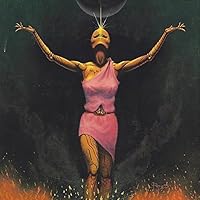
Arthur is a retired bank manager - conservative, upright, law-abiding. His decision following his wife's death to sell up and move to live near his favourite fishing river opens up a fresh and happier future which is symbolised by a climatic battle with a great trout soon after his arrival. But it is not long before Arthur's bright new world crumbles about him. When confronted by a legislative invasion of his new-found tranquility he takes a stand, and the ensuing battle not only puts to the test his own courage and beliefs but also brings into action the heavy, remorseless hand of the state.
There’s an odd sort of syndrome that seems to afflict some of the more affluent members of society. This is where they start to believe that they disproportionately suffer under the yokes of societies that are in fact set up to disproportionately benefit them. Just recently, for example, we had the spectacle of Elon Musk complaining online about the high rate of taxes he pays while conveniently eliding the fact that his various companies not only siphon off huge resources from the state but also pay essentially no taxes while they do. I think at some level these beliefs are not cynical for them. Ideology, as Žižek is fond of reminding us, is the framework of our lives that makes reality bearable and coherent. I’m sure that insulating oneself from the implications of what so much wealth-accumulation means in terms of exploitation and dispersed misery must require some serious twists of logic to justify. It’s no surprise really that figures like Musk seem to live in a reality far from our own.
Bob Jones, who died in 2025 as one of Aotearoa New Zealand’s ten richest people, seems like Musk to have lived much of his life driven by an acute sense of imagined persecution. For Jones, the target of his contempt is often the perceived overreach of the state into the lives of individual members of society. Jones is a libertarian in short. And he feels, as he makes clear in this very book’s brief introduction, that it is no longer accepted in the mid 1980s society “that we (i.e. individuals) know best how we should live our lives” and that the individual expression of selfishness has now been “branded” by politicians as a rejection of the innate goodness of people and their social responsibility. Much of Jones’s personal persona is a rejection of the “nanny state” that he took to be lionised by politicians on both sides of the aisle. In short, Jones reaches back to a recapitulation of Nietzsche’s idea of ressentiment in its crudest possible formation. The more overtly political expression of his beliefs would come in 1984 with the formation and leadership of the short-lived New Zealand Party. But that wasn’t the only way that he tried to get his message across. In fact, in that very same year he also published The Permit, ushering in a strange sort of idle part-time life of letters that he would maintain until he was up in his eighties.
One key thing to note about Jones as a satirist in particular is that he is actually quite smart and isn’t actually exactly an unfunny person either. Sure, he’s mean-spirited and seems unable to resist the most obvious punchline each time. But this suits him well when he’s writing light entertainment for The Evening Post or when sending out some suspiciously polished letters that would later find their way into print. Jones has three talents in particular: first, he has an eye for the absurd linguistic tangles that people can get themselves into when they try to justify more-or-less unjustifiable actions. He loves to balance his own straight-shooting persona against the slimy, wiggling politicos who just won’t front up with an unpalatable truth. Second, he has a just staggering sense of self-importance. Jones just wants you to know that he’s figured everything out and seems to have no filter sharing his opinions regardless of who he might offend. Third, he is absolutely unapologetic. Sure, this might be based in part that through his wealth and connections he’s basically immune from the consequences of his actions. For example, famously, after being charged $1000 dollars for an assault on a reporter, he offered to pay double the charge for a chance to do it again. That blithe unapologetic flaunting of the rule-of-law can indeed be very funny if handled in the right way. However, if The Permit is anything to go on, his comedic abilities can’t really sustain themselves over a longer-length text at all. You can accuse Jones of being a lot of things, but he isn’t typically either bland, derivative, or boring. This debut work of his very unfortunately is.
The Permit itself features the colourless ex-banker Arthur Thompson. The one time head of New Zealand’s largest bank has now been retired for three years but also been unable to enjoy himself due to his wife's inconvenient illness. When she finally passes on, Arthur is liberated from a pale existence of “mooch[ing] around the house functioning as both nurse and housekeeper” but also finds that he now lacks any real sense of purpose. On the advice of his daughter Cynthia, Arthur ultimately decides to move from the city to a small cottage on what is quite obviously the Tongoriro River to live out his remaining days in comfort fishing for trout.
Generically, then, The Permit takes the frame of a pastoral. Though, it soon becomes clear that the overt form of the narrative is in fact just the vehicle for a satire in the Juvenalian mode. Arthur’s retreat to the bucolic lake is immediately disturbed by the arrival of a certain Mrs Jukes, a bland functionary from the post-office, who insists that he sign an innocuous official permit that will record his change of address on an official registry. For reasons not entirely clear either to us or himself, Arthur refuses to sign the documentation. Instead, he takes the Bartleby route of a simple but firm refusal to comply. This is enough to absolutely bewilder Mrs Jukes. Despite the threat of fines and the involvement of first the district postmaster and then the Postmaster-General’s office in turn, he goes on refusing. This ultimately lands him in court where the judge, while sympathetic, nonetheless assigns him further fines that Arthur asserts he is determined not to pay. Since Arthur himself is an otherwise respectable person, this makes his mild protest all the more potent. And after a bit of unexpected publicity, the prime minister himself gets involved in the situation. This all leads to a televised debate on the National Affairs programme with the Postmaster-General himself where Arthur fails to articulate his point in a way acceptable to the herd. Arthur returns to his cottage, licking his wounds, only to find even his ability to resist taken out of his hands and one last nasty trick the state’s got in the way of revenge.
As what Lukacs would call a type, Arthur embodies the bland and conservative urban ‘labour aristocracy’ that seemed to be arriving at a new ascendancy in the mid-eighties in New Zealand. The post-war expansion of higher-education had transformed universities from small elite institutions to far larger places that had become far more integrated into meeting the needs of the economy. A Keynesian model for funding meanwhile ensured that tuitions were kept low and student grants became available to ensure a wider range of society would have access to the sort of educational opportunities previously impossible for anyone without means. People like Arthur consequently owed their position in society to something like their ‘merit’ as opposed to the gentleman connections needed of old. It’s worth noting too that the labour aristocracy of this kind has often been identified as a block to real revolutionary action. Though they still are forced to sell their labour on the open-market, they are aligned with the bourgeoisie through their disavowal of their true class position. Thus it might seem somewhat odd that Jones selects such a type to serve as his ‘revolutionary hero’. Jones himself in other writings has certainly displayed a certain consistent contempt for the real life equivalents of Arthur despite (or maybe because) he came so close to being one himself before turning towards rabid entrepreneurialism. Does Jones see true revolutionary potential in this class? It seems odd.
All of which brings us to a stuffed fish and the object-cause of desire. In probably the best single scene of the book, Arthur heads out into the lake and manages after a mock heroic struggle to draw in his first ever brown trout. The thing is thirteen and a half pounds, apparently a pretty big example of its kind, and Arthur has it mounted, jaws-closed, on a varnished oblong board that he puts up in his lounge. These sort of ‘objects of desire’, as Lacan points out, tend to be less desirable as objects in themself but in the fantastic role they play in maintaining the illusion of a lost completion of the desirer themselves. In Arthur, the stuffed fish seems to reconcile his ideal ego to the image of the pākehā settler. He declares “To hell with tea and toast” in its wake in favour of more robust breakfast fare and is soon dreaming about the self-reliance and self-sufficiency so characteristically attributed to men in this country, making plans, for example, to “tackle the garden and prepare a vegetable plot.” With this success, he starts to feel “like a youth on the threshold of life making a fresh discovery on which his future would be built.” All this offers some insight into the overall theme of the book, which, rather disappointingly returns us to the same dull pastoral motifs: The city is bad, enervating, and feminising while the country is all of the opposites and the antidote to all that. Indeed, Arthur’s rebellion and rejection of the state seems in its way motivated by this false-image of himself as a sudden rebirth of his pioneer spirit. So, in the end, Arthur's revolt against the state is more based in nostalgia than in any real urge for utopia and thus flawed.
Indeed, his enjoyment of this new sense of himself is excessive and overly passive. After having the trout placed on the wall, he “averag[es] at least an hour daily, sitting and contemplating it.” This makes his new sense of selfhood vulnerable, of course, and when the agents of the state return to his cottage at the end of the novel seeking rebate for the minor fine he’s incurred and are thwarted initially by Arthur’s clever financial dealings (everything he once owned is in a family trust to avoid taxes), they settle on the fish as a just compensation for their time. This theft of his enjoyment leaves Arthur beaten down and abject, broken in spirit. A failure.
So then, what to make of this book? Has Bob Jones, the Bob Jones, actually written a novel that cleverly satires the impotency of a libertarian viewpoint? I’d have to say no. As a political thinker, Jones is unfortunately about as deep as a puddle. It’s perhaps a tribute to his own short-comings as an author that in a book he wrote himself the strawman case made by Postmaster-General in this novel is actually more compelling than that which Arthur makes in his own turn. Frankly, you’d have to already be the most devout kind of libertarian to actually agree with the point that Jones seems to be trying to make with this novel. Perhaps the major challenge for Jones really is that he’s probably not actually opposed to people gathering data about people; he’s just opposed to it being the state that’s the one doing it. As such, it feels like such a case of emphasising the particular over the universal. Jones, I suspect, is more a contrarian rather than an original political thinker and this limits his chance to carry through a proper satirical thought. Over time, contrarians become tedious and unfunny, and Jones reveals himself by the end of the novel as the very worst kind of contrarian.
A quick read. The strong moral behind the story is one of governmental control over citizens rights. When everyone thought he was mad and not conforming in refusing to sign the simple form which was his permit to relocate residence, Arthur stuck to his guns.