

What do you think?
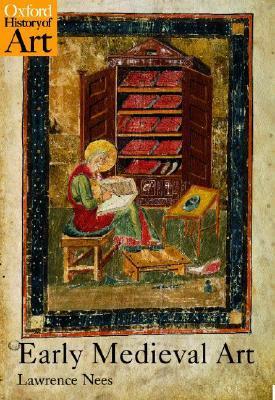
Early Medieval Art
In the first millennium, a rich and distinctive artistic tradition emerged in Europe. Early Medieval Art explores this tradition and tracks its development from c. 300 AD through c. 1000 AD, revealing forms of artistic expression ranging from brilliant illuminated manuscripts to decorative chairs, rich embroidery, and precious metalwork.
Nees explores issues of artist patronage, craftsmanship, holy men and women, monasteries, secular courts, and the expressive and educational roles of artistic creation. Instead of treating early Christian art in the late Roman tradition and the arts of the newly established kingdoms of northern Europe as opposites, he adopts a more holistic view, treating them as different aspects of a larger historical situation. This approach reveals the onset of an exciting new visual relationship between the church and the populace throughout medieval Europe. Moreover, it restores a previously marginalized subject to a central status in our artistic and cultural heritage.
Nees explores issues of artist patronage, craftsmanship, holy men and women, monasteries, secular courts, and the expressive and educational roles of artistic creation. Instead of treating early Christian art in the late Roman tradition and the arts of the newly established kingdoms of northern Europe as opposites, he adopts a more holistic view, treating them as different aspects of a larger historical situation. This approach reveals the onset of an exciting new visual relationship between the church and the populace throughout medieval Europe. Moreover, it restores a previously marginalized subject to a central status in our artistic and cultural heritage.
274 pages, Paperback
First published July 18, 2002
Ratings & Reviews
Friends & Following
Create a free account to discover what your friends think of this book!
Community Reviews
Displaying 1 - 6 of 6 reviews

September 15, 2013
A great introduction to late antiquity early Middle Ages art and history. Well written and although it is broken down by subject it is still relatively chronological and very comparative. Elements of very early Christian art were fascinating as was the later intersection of Christianity and late roman manuscripts that gave us the gift of insular manuscripts. Does not delve deeply in any one area but specific enough to give a nice overview of the art in this period. Although it covers nearly a thousand years it was a nice change from 10 pound books that cover the entire Middle Ages. Portable and sufficient as a starter.

February 7, 2012
An interesting, accessible book, but as I was using it for research and revision I did notice quite a few errors in the index, either giving page numbers a few pages off from where something was mentioned, or even omitting some pages with information about an indexed subject... just a little annoying!

March 9, 2024
Probably something I should have read in conjunction with the Early Medieval Architecture... Besides obviously covering the same periods, they complement each other very well. I often found myself referring back to the architecture book. The focus here is heavily related to Christian imagery, which is fair given that it's the majority of what survives from this period. I particularly enjoyed the discussion of Carolingian art and its renaissance (or correction as Nees prefers) as a precursor to the Renaissance.

August 27, 2011
c2002. This was not quite what I was expecting - certainly far more academic than I was looking for. The illustrations were also not what I was particularly looking for. However in saying that, it contained some very interesting nuggets of information. I, for one did not realise that early Christianity first placed a ban on any illustrations containing an image of Christ and this was only overturned a couple of hundred years after the CE started. I love the idea of a single lost sheep representing God's love for each and every human soul. As art was so important as a method of comuunication, teaching, political treatise etc, it is natural that history becomes an important part of the story of medieval art. Not being a history scholar, I found some of these stories absolutely fascinating especially the one surrounding the Susanna Crystal. I certainly did not realise that Henry VIII was not the first king to petition the Church for a divorce because of childlessness and an enticing mistress - now I have to look to King Lothair II of the Franks way back in 857. Well written with a lovely turn of phrase. Recommended but this is not a light read but I don't think it was ever intended to be.

May 14, 2021
As someone who knows very little about art history, especially early Medieval art, I found this book helpful and interesting. The glossy pictures are beautiful and keep the reader engaged, leaving little to the imagination and consistently referring back to techniques or concepts reflected on previous pages with a simple reference system. I appreciate the variety of art included, rather than just paintings, it includes jewelry, clothing, furniture, architecture, and even dinnerware. As such, I find it comprehensive and informative!
Want to Read
October 1, 2020I'm a college student attending OUT, is there anyone out there who has a PDF or any version you can send me. In dire need. Thanks.
Displaying 1 - 6 of 6 reviews