My Four Years in the Nazi Underworld of America - The Amazing Revelation of How Axis Agents and Our Enemies Within Are Now Plotting To Destroy the United States
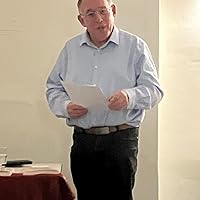
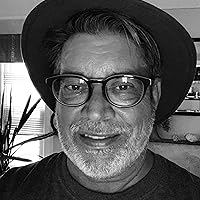
one of the many pen names of journalist Avedis Boghos Derounian.
Derounian wrote for the Armenian Mirror-Spectator, Fortune Magazine, the Council Against Intolerance and the Friends of Democracy.
He was a witness against American Bund leader Fritz Kuhn in 1949
In the 1950s he founded and managed the Armenian Information Service, which made a number of publications. His exposé writing has been the subject of lawsuits.
Derounian is also notable for editing the controversial manifesto of Armenia's first prime minister, Hovhannes Katchaznouni.
Imagine for a moment that in America there are millions of people who don’t like foreigners or people of colour, who are often fundamentalist Christians, who label all their opponents “Marxists” and who have made friends with the KKK. Imagine that those people also support a foreign policy based on America sticking up for its own interests — which they proudly call “America First”. Sound familiar?
I am describing, of course, the world inhabited by pioneering investigative journalist John Roy Carlson. The year is 1943 and this book, Carlson’s first, is a runaway best-seller. Over the course of four-and-a-half years, Carlson infiltrated the American far Right — organisations like the German American Bund, the America First Committee, the Christian Front and more. He got close to the followers of the notorious Catholic priest Charles Coughlin and the pioneering aviator (and Nazi sympathiser) Charles Lindbergh, as well as many others who are long forgotten.
I first read this wonderful book many years ago, as it had been owned by my father, but in re-reading it now, with a proud proponent of “America First” in the White House, with Nazis and Klansmen hailed as “good people”, the book has a special resonance. Too bad it’s not currently in print, except in some libraries and — if you get lucky — a used copy.
“Indeed, a 1943 national bestseller entitled Under Cover by the pseudonymous John Roy Carlson suggested that numerous prominent Republicans were fascist supporters of Hitler, and that book received enormous coverage in mainstream media outlets, heavily amplified by FDR’s supporters and allies.” -Ron Unz, “McCarthyism Part II”
Publisher's Weekly's best-selling nonfiction book of 1943 is a work of its era. I can see how it sold so well back then and also why it does not live on as some sort of classic now. Imagine, if you will, a book about Islamic terrorist in the United States, a book that names names, tells of white-bred American citizens who are plotting with Muslims to place the country under Sharia law and of a few politicians who are out to help them. Very juicy . . . except this book is about American Nazis in the lead up to and during World War II. And most of those Americans are no longer famous, if they ever were. Hence, not so juicy now.
Carlson's name is a pseudonym for a man who uses an assumed name when investigating these various right-wing groups. The man himself is an Armenian who came over to the United States as a youngster, having suffered, with his parents, the prejudice of peoples in the Old World. One Christmas in New York, a couple of men assassinate the bishop of their Armenian church. These men claim ties to a right-wing group. And thus Carlson's mission is born: to penetrate such groups and find out how they are working in the United States.
What follows are accounts of Carlson, posing as an Italian American, visiting various right-wing organizations and becoming, at times, a pseudo-member. He starts low, helping to sell right-wing newspapers (but mostly destroying them and claiming he sold them) and attending meetings of various right-wing groups. Eventually, he starts his own paper, which he distributes only to people who are already of a right-wing persuasion. This gives him credibility that he's able, from then on, to use a door to various "American First" or "America for America" groups.
Many of these groups are anti-Semitic. Many believe in using democracy to spread their doctrines and then ending democracy once they come to power. Many take Germany's side in the war or are antiwar. Many probably are dangerous. Carlson goes to cities all over America to get the scoop: New York (including black Harlem, where there are African American Nazi sympathizers), Chicago, Salt Lake City, and Boston. Carlson tracks down various politicians who given an ear to some of the people in these groups. And Carlson gives out addresses and phone numbers too!
And yet, I couldn't help but feel that some of the people mixed up in these groups were, besides those who were clearly racists or national socialists and those who were crackpots at best, probably simply antiwar. Carlson writes frequently of those who are appeasers or defeatists, those who don't want to fight this war, slotting them in with outright traitors. And in that, it seems, there can be a danger, as there has been at other times of war. I'm reminded of a conservative talk show host who once asked, "How can you be a Democrat and call yourself an American?" Or of another such host who said that Congress's lone nay voter with regard to handing George Bush vast power after 9/11 should be kicked out. When did our country become a one-party state? Isn't that what exists under dictatorships?
Carlson claims to have wanted to investigate Communists as well but to have been unable to get past the screeners. His main problem, as he notes, is not with opposing parties (he likes middle-of-the-road Democrats and Republicans) but with the right and left extremes. In that regard, he's probably like most of us Americans.
Some interesting figures did pop up in the book. Senators Gerald Nye and Benjamin Wheeler seem like intriguing figures to read more about, given their ties to some of these organizations. Likewise, a priest named Father Coughlin who hosted an anti-Roosevelt (pro-Nazi?) radio show, until he was kicked off the air in the middle of the war, is a very interesting figure that I'll probably want to read a book about at some point in the future.
An unusual true spy story, in that Mr Carlson was working undercover in Nazi and other Fascist groups in the U.S. in the late 30s and early 40s. I was aware that there were some supporters of Hitler in this country prior to America's entry into WWII, but I had no idea of the extent of the Fascist movement. Mr. Carlson "tells all" of his adventures gathering evidence against the leaders. Sadly, many of the groups he investigated have similar descendents today in the Neo-Nazis and other hate groups, so the story still has relevance.
Young Armenian immigrant John Roy Carlson went under cover in New York’s Nazi fascist community in 1939, where he participated and gathered information under an assumed identity for four years. He then immediately wrote Under Cover – it was revealing and important when written – and it’s still vital and relevant to understanding threats to the republic today. Carlson was an original American anti-fascist, and his weapon was the pen.
This book was such an impactful read. Having listened to Rachel Maddow’s Ultra podcast, I was already somewhat familiar with the history of the Nazi movement in America. This book expands upon the topics in Rachel Maddow’s podcast and her subsequent book, Prequel: An American Fight Against Fascism (I highly recommend both). In the 1930s and 1940s, fascism was on the rise. Not just in Europe, but in our own backyard. The American Nazi movement captured everyone—wealthy elites, academics, politicians, and journalists. Under Cover, published in 1943, is an exposé of the Nazi underworld of the 1930s and 1940s. The author, John Roy Carlson, went undercover as a Nazi to understand the American Nazi movement. He wanted to understand how the people in the Nazi movement thought. What kinds of media were they consuming? What were their goals? These are all questions the author tries to answer, at great risk to himself. What is really eye-opening is how the fascist talking points used by the Nazis of the 1930s and 1940s aren’t much different than the talking points fascists use today. While fascist talking points are re-packaged differently in 2025, the underlying mechanisms of the messaging and the target audience has not changed.
“Discontented, frustrated, resentful, idle men were material for fascism—and the fascist agents knew it.”
“Ignorance of the true nature of Nazism and the multiple nativist forms it takes; the prejudices and hates it feeds on; the reason-blinding power of its sugary appeals, which to capital promises the suppression of labor, and to labor the suppression of capital; ignorance of its drug-like strategy which works best while Americans suspect it the least—against all these manifestations of political ignorance, truth is our most potent weapon.”
Unfortunately, this book has been out of print for decades. I hope this changes, as I think this book is a useful tool to combat fascism. If you can find a copy on eBay or a used bookstore, I highly recommend this book! 5/5
A good example of investigative journalism. John Roy Carlson is the pen name of Arthur Derounian, who went undercover for four years in the American fascist and Navi supporter world in the U.S. in the late '30s and early '40s. He wasn't working for any publication, but went out on his own to expose the threat and to report his findings to the authorities (and to write this book). It was published in 1943, so it was literally ripped from the headlines. It is extremely detailed and includes reference to dozens of people in the movement. He provides info and does some analysis, and makes connections among various groups. Chilling in its implication then, it still resonates today. It is dense and a little hard to follow, but full of information.
I think this would have meant more to me had I lived in the time period and had heard of more of the people involved. It did impress upon me more of how prevalent the Nazi movement in the US was and how sometimes well meaning people seemed to get swept up in the propaganda. Certain things about it also makes it feel like history is repeating itself now.
While he brought up some important things about the sedition going on in the United States at the time, he also spent a lot of time being a very petty jerk anytime someone didn't agree with his beliefs. There are people that he "outed" just because they said they didn't believe that we needed to be in Europe even though they weren't part of any of the fascist groups he was part of, so he promptly listed their private addresses and families just because he believed "it's the United State's responsibility to be there."
Entertaining read although the author is extremely preachy and judgemental. He also tends to lump in the more moderate anti-war activists with the radical fringe elements.