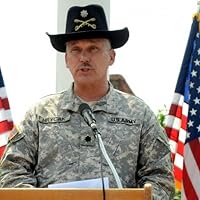
The riveting account of how one brigade turned Iraq's most violent city into a model of stability Colonel Sean MacFarland's brigade arrived in Iraq's deadliest city with simple pacify Ramadi without destroying it. The odds were against him from the start. In fact, few thought he would succeed. Ramadi had been going steadily downhill. By 2006, insurgents roamed freely in many parts of the city in open defiance of Iraq's U.S.-backed government. Al-Qaeda had boldly declared Ramadi its capital. Even the U.S. military acknowledged the province would be the last to be pacified. A lanky officer with a boyish face, MacFarland was no Patton. But his soft voice masked an iron will and a willingness to take risks. While most of the American military was focused on taming Baghdad, MacFarland laid out a bold plan for Ramadi. His soldiers would take on the insurgents in their own backyard. He set up combat outposts in the city's most dangerous neighborhoods. Snipers roamed the dark streets, killing al-Qaeda leaders and terrorist cells. U.S. tanks rumbled down the streets, firing point blank into buildings occupied by insurgents. MacFarland's brigade engaged in some of the bloodiest street fighting of the war. Casualties on both sides mounted. Al-Qaeda wasn't going to give up easily. Ramadi was too important. MacFarland wasn't going to back down either. The two sides had fought to a stalemate. At least until Sheik Abdul Sattar Bezia al-Rishawi emerged. A minor tribal leader, Sheik Sattar had earned his reputation as a smuggler. He carried a large six-shooter on his hip and had a taste for whiskey. But he hated al-Qaeda and was watching MacFarland's brigade as they battled militants toe-to-toe. This was a different group of Americans, Sattar thought. Sattar approached MacFarland and said he was ready to join with the Americans and fight al-Qaeda. Other officers might have kept their distance. MacFarland didn't hesitate. He promised Sattar his support. What followed was one of history's unlikeliest -- and most successful -- partnerships. Together, the Americans and Sattar's growing band of fighters drove al-Qaeda from Ramadi. A Chance in Hell is compelling tale of combat leadership and how a handful of men turned the tide of war at a time when it looked most hopeless.
It is refreshing to read about an occasion where our military improved the situation in Iraq. So much of what is out there is how we failed or how we let down the people of Iraq. It is nice to see that there are commanders out there that are willing to risk their careers and do something unconventional.
This book covered the time my Combat Medic son spent in Ramadi. He told us stories about being in such a dangerous place, and I wanted to understand what he had endured. I'm thankful to have a detailed description of the significant advances that were made by the men who served there.
Jim Michaels' contribution to the growing collection of contemporary novels factually chronicling the successes of our Soldiers should be read by anyone that is heading to Iraq or Afghanistan as well as any military enthusiast that wants to see what right looks like. Colonel Sean MacFarland and his Battalion Commanders created their own solution in the "Wild West" of An Anbar Province. My colleague and fellow Armor officer, Lieutenant Colonel Tony Deane ran into me just before we both went North of the berm into Iraq. I served in the next province to the South, Najaf. To our South, the British command was the model in April, 2006, while Tony went North into Hell. As Jim Michaels describes, however, the situation changed dramatically in September, 2006. We had just handed over our Forward Operating Base to our Iraqi counterparts, just as the Brits did down South - and then the security situation took a turn for the worse. It was during this time that the First Brigade, First Armored Division took the lead and started turning things around. It is no surprise that what they did became the blue print for all contentious areas. Jim accurately describes their command relationships, those who supported them and those who were skeptical, as well as Tony Deane's portrayal of cultural awareness consisted of briefs noting that you don't show Iraqis the soles of your feet - and they developed their own Tactics, Techniques and Procedures resulting in mission success. It was truly amazing, bold and audacious, the personification of Armor - Combat Arm of Decision. Readers will get a chance to see how this plan was developed and successfully executed - along with the pain involved. You will feel how it was to be on the ground in a real-time/real world situation with minimal guidance and doctrine to follow. History in the making - anyone who wants to learn about contemporary military operations must read this.
I didn't actually read the whole book. I bought it because it has a whole chapter and a half about my neice's husbnad, Travis Patriquin, who was killed in Iraq in Dec. 06. Travis was instrumental in bringing about the Anbar Awakening which turned the tide of the war. He made friends with Shiek Sattar who led a group of Sunni sheiks who turned against Al Queda and befriended us. Travis was actually adopted into their tribe and was re-named Wisam. It is thrilling to see him recognized "in writing" these days. It makes me very proud. He is also the subject of another book "A Soldier's Dream: Capt. Travis Patriquin and the Anbar Awakening" (336 pages)available at Amazon (to be released in June). The book cover refers to Travis as America's T.E.Lawrence (as in Lawrence of Arabia). Can't wait to read that one!
Although the information I got about the pacification of Anbar Province was very interesting, it was poorly presented and confusing. Was it the story of the Marine brigade, its commander or the sheiks of the Awakening in Anbar province? The roles of all were interestingly intertwined. However, sometimes I wasn't sure what year the author was currently talking about. He sometimes digressed and sometimes repeated information.
A true story of the heroes behind the anbar uprising. Unfortunately itvwas so poorly edited that i had a hard time enjoying it. How many times can you refer to a sheik as looking like something out of hollywood. Still itvwas worth reading. Proabably more suitable for a lengthly magazine article.
Demonstrates how taking chances with a potentially dangerous ally helped the military stablize a key city in Iraq. Interesting takeaways with respect to ongoing strategy in Afgahnistan.