

What do you think?
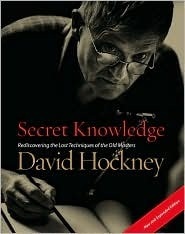
Secret Knowledge: Rediscovering the Lost Techniques of the Old Masters
Join one of the most influential artists of our time as he investigates the painting techniques of the Old Masters. Hockney’s extensive research led him to conclude that artists such as Caravaggio, Velázquez, da Vinci, and other hyperrealists actually used optics and lenses to create their masterpieces. In this passionate yet pithy book, Hockney takes readers on a journey of discovery as he builds a case that mirrors and lenses were used by the great masters to create their highly detailed and realistic paintings and drawings. Hundreds of the best-known and best-loved paintings are reproduced alongside his straightforward analysis. Hockney also includes his own photographs and drawings to illustrate techniques used to capture such accurate likenesses. Extracts from historical and modern documents and correspondence with experts from around the world further illuminate this thought-provoking book that will forever change how the world looks at art. Secret Knowledge will open your eyes to how we perceive the world and how we choose to represent it.
336 pages, Paperback
First published January 1, 2001
About the author
David Hockney
211 books158 followersDavid Hockney (9 July 1937 - 11 June 2026) was a renowned English painter, draughtsman, printmaker, stage designer, and photographer.
He loved books and was interested in art from an early age, admiring Picasso, Matisse and Fragonard. His parents encouraged their son’s artistic exploration, and gave him the freedom to doodle and daydream.
Hockney attended the Bradford College of Art from 1953 to 1957. Then, because he was a conscientious objector to military service, he spent two years working in hospitals to fulfill his national service requirement. In 1959, he entered graduate school at the Royal College of Art in London alongside other young artists such as Peter Blake and Allen Jones, and he experimented with different forms, including abstract expressionism. He did well as a student, and his paintings won prizes and were purchased for private collections.
Hockney’s early paintings incorporated his literary leanings, and he used fragments of poems and quotations from Walt Whitman in his work. This practice, and paintings such as We Two Boys Clinging Together, which he created in 1961, were the first nods to his homosexuality in his art.
Because he frequently went to the movies with his father as a child, Hockney once quipped that he was raised in both Bradford and Hollywood. He was drawn to the light and the heat of California, and first visited Los Angeles in 1963. He officially moved there in 1966. The swimming pools of L.A. were one of his favorite subjects, and he became known for large, iconic works such as A Bigger Splash. His expressionistic style evolved, and by the 1970s, he was considered more of a realist.
In addition to pools, Hockney painted the interiors and exteriors of California homes. In 1970, this led to the creation of his first “joiner,” an assemblage of Polaroid photos laid out in a grid. Although this medium would become one his claims to fame, he stumbled upon it by accident. While working on a painting of a Los Angeles living room, he took a series of photos for his own reference, and fixed them together so he could paint from the image. When he finished, however, he recognized the collage as an art form unto itself, and began to create more.
Hockney was an adept photographer, and he began working with photography more extensively. By the mid 1970s, he had all but abandoned painting in favor of projects involving photography, lithographs, and set and costume design for the ballet, opera and theater.
In the late 1980s, Hockney returned to painting, primarily painting seascapes, flowers and portraits of loved ones. He also began incorporating technology in his art, creating his first homemade prints on a photocopier in 1986. The marriage of art and technology became an ongoing fascination—he used laser fax machines and laser printers in 1990, and in 2009 he started using the Brushes app on iPhones and iPads to create paintings. A 2011 exhibit at the Royal Museum of Ontario showcased 100 of these paintings.
In a 2011 poll of more than 1,000 British artists, Hockney was voted the most influential British artist of all time. He continued to paint and exhibit, and advocated for funding for the arts.
source: http://www.biography.com/people/david...
He loved books and was interested in art from an early age, admiring Picasso, Matisse and Fragonard. His parents encouraged their son’s artistic exploration, and gave him the freedom to doodle and daydream.
Hockney attended the Bradford College of Art from 1953 to 1957. Then, because he was a conscientious objector to military service, he spent two years working in hospitals to fulfill his national service requirement. In 1959, he entered graduate school at the Royal College of Art in London alongside other young artists such as Peter Blake and Allen Jones, and he experimented with different forms, including abstract expressionism. He did well as a student, and his paintings won prizes and were purchased for private collections.
Hockney’s early paintings incorporated his literary leanings, and he used fragments of poems and quotations from Walt Whitman in his work. This practice, and paintings such as We Two Boys Clinging Together, which he created in 1961, were the first nods to his homosexuality in his art.
Because he frequently went to the movies with his father as a child, Hockney once quipped that he was raised in both Bradford and Hollywood. He was drawn to the light and the heat of California, and first visited Los Angeles in 1963. He officially moved there in 1966. The swimming pools of L.A. were one of his favorite subjects, and he became known for large, iconic works such as A Bigger Splash. His expressionistic style evolved, and by the 1970s, he was considered more of a realist.
In addition to pools, Hockney painted the interiors and exteriors of California homes. In 1970, this led to the creation of his first “joiner,” an assemblage of Polaroid photos laid out in a grid. Although this medium would become one his claims to fame, he stumbled upon it by accident. While working on a painting of a Los Angeles living room, he took a series of photos for his own reference, and fixed them together so he could paint from the image. When he finished, however, he recognized the collage as an art form unto itself, and began to create more.
Hockney was an adept photographer, and he began working with photography more extensively. By the mid 1970s, he had all but abandoned painting in favor of projects involving photography, lithographs, and set and costume design for the ballet, opera and theater.
In the late 1980s, Hockney returned to painting, primarily painting seascapes, flowers and portraits of loved ones. He also began incorporating technology in his art, creating his first homemade prints on a photocopier in 1986. The marriage of art and technology became an ongoing fascination—he used laser fax machines and laser printers in 1990, and in 2009 he started using the Brushes app on iPhones and iPads to create paintings. A 2011 exhibit at the Royal Museum of Ontario showcased 100 of these paintings.
In a 2011 poll of more than 1,000 British artists, Hockney was voted the most influential British artist of all time. He continued to paint and exhibit, and advocated for funding for the arts.
source: http://www.biography.com/people/david...
Ratings & Reviews
Friends & Following
Create a free account to discover what your friends think of this book!
Community Reviews
Displaying 1 - 30 of 125 reviews

October 17, 2014
I came to this via the film Tim's Vermeer and the excellence of my county library.
Well, this is certainly not a book one could read on a Kindle. Hockney works a compelling example of "show, don't tell", though to be fair he does both. The book opens with a long section of large-format and well-reproduced pictures of paintings, essential to and the foundation of his arguments, goes on to a section of select quotes from historical documents about the uses of mirrors and lenses from Roman times onward (the quote from Seneca had me giggling, in this age of internet porn -- indeed, there is no new thing under the sun), and concludes with Hockney's correspondence with various colleagues that tracks the development of his theses and this very book, recursively.
This last, again, allows the reader to see the ideas taking shape. As a kind of early e-mail, Hockney and friends evidently conducted a lot of their exchanges via faxed letter, speaking of the effect of technology on, well, everything. It is not only due to the fact that most of the participants were trained older academics that the letters are so polished and coherent and camera-ready. If the same correspondence were conducted after e-mail, the exchanges might well have been more colloquial, cut-up, and fluid. I am put in mind of the shift between mail and e-mail with one of my own overseas correspondents. Our paper letters went easily into a later article; I don't think one could do that with our later e-mails, or at least, they'd take a hellalot more editing. I also saw my own experience of kicking half-formed ideas around with friends paving their way for later, more public utterances, all part of the process. Hockney lets you see the sausages being made. (It also sped up the production of the book, I expect, for a busy artist who likely wanted to get back to painting by then.)
The news to Hockney, passed on by his tame optical physicist, that concave mirrors could produce projections seemed as much news to me as to him, until I reflected on telescopes, and all those articles I'd read, for example, about the 200-inch Palomar mirror being ground. But I never made the last connections either. Made me feel quite Ivanish.
In my prior exposures to art history, the material mostly rolled off me; this, I think, will stick.
Ta, L.

April 22, 2014
Remarkable! Hockney convincingly demonstrates that, starting around 1430, artists used optical devices to capture figures and landscapes realistically. This accounts for distortions in perspective and Caravagio-like shadows because of the strong light needed to use lenses.
Impressionists and post-impressionists wanted to do something new and so became post-lens artists. This is a subject that has profound implications for the translation of three dimensional reality into two dimensions as is done in representational painting and has huge relevance to our era of photographic, video, and film images. The binocular eye and the single-eyed camera see things differently.
Impressionists and post-impressionists wanted to do something new and so became post-lens artists. This is a subject that has profound implications for the translation of three dimensional reality into two dimensions as is done in representational painting and has huge relevance to our era of photographic, video, and film images. The binocular eye and the single-eyed camera see things differently.
June 3, 2007
the controversial theory Hockney puts forth about Renaissance painters in this book is actually beyond the controversy. historians and theorists have been fighting about this and tearing him (and each other) apart since this book came out, but it doesn't have anything to do with them. as a painter, this book speaks to me as exactly what he purports it to be: secret knowledge that has been lost to modernity. theorists might have to deny it in order to maintain the legitimacy of the old masters; i, and other artists like me, will never doubt those masters. i am as interested in learning about Renaissance tools and artistic shorthand as Hockney himself was when he started his research. his theory seems sound, and his exploration of it in this book is profoundly interesting.

June 29, 2011
This handsome publication sets down for the record David Hockney's long and detailed exploration of the techniques and technologies that may have been used by the great masters of European painting. He concentrates on the 500 year period from the beginning of the fifteenth century to the end of the nineteenth century. In the process one is led to a complete re-evaluation and re-appreciation of their work.
The journey was not simple or straightforward. It began with a close examination of Ingres, and a questioning of the techniques used for certain qualities found in his work. Hockney suspected that certain optical devices were necessary for the artist to achieve some of the effects produced. By examining the changing styles of the the great masters during this 500 year period, Hockney came to the conclusion that the techniques used were kept secret, for good reasons — economic ones for starters, but also social ones, and the strong presence of mediaeval beliefs that preferred to believe in satanic influence rather than a purely mechanical device dealing with optics meant that being too open about the 'magical' qualities achievable by various types of mirrors and eventually lenses could have dangerous and deadly consequences. Roger Bacon, for one, suffered by being accused of a non-salutary reliance on 'diabolic' contraptions capable of creating 'magic'. Hockney began collecting earlier (12th and 13th century) texts which, from today's perspective, are highly suggestive that special optical devices were familiar to those 'in the know'.
A result of all these mindsets was that artists effectively remained protective and secretive about the devices and techniques they might have use for their works. This further resulted in later admirers of their works developing the Romantic concept that these artists were solitary geniuses who had the gift and talent to achieve astonishing effects simply through the acuity and accuracy of their visual and manual techniques. It is perhaps this latter view that proved most difficult for Hockney to counter. People even today feel that using optical devices for effects somehow implies 'cheating' on the part of the artists. Hockney takes pains to point out that that this is simply a misunderstanding: it still requires wonderful skill and expertise to produce masterpieces — the use of optical devices does not make this less of an achievement.
The book is presented in three parts. The first part consists essentially of exquisitely reproduced paintings and drawings and their details — all a joy in themselves. The second part is a collection of historical documentation which suggest that special techniques were known to certain people and that they could and were used to great effect. The third part of the book presents notes, correspondence, faxes, etc. between Hockney and various experts in the fields of art, art historians and experts in the field of optics. It reads much like a detective story. The discovery in particular that a 6 cm concave mirror acts precisely like a lens (it projects pictures in the right light conditions) was a break-through moment.
Hockney has presented his arguments in this format to show that in his opinion not only did the artists of the day use whatever deceive they could lay their hand on to help them inter endeavours, but also that it is 'obvious' when one realises this fact. He also opines that Photography (late 19th century) and nowadays digital imaging (late 20th century) will also provide a new lease of life for painting in ways yet to be imagined.
This book makes you look again with renewed insight and excitement into the world of the great European artists — one will never again be able to view their works in quite the same way again — but this is not to be taken in a negative way: far from it — we see these wonderful works in anew light that is both revelatory and stimulating.
The journey was not simple or straightforward. It began with a close examination of Ingres, and a questioning of the techniques used for certain qualities found in his work. Hockney suspected that certain optical devices were necessary for the artist to achieve some of the effects produced. By examining the changing styles of the the great masters during this 500 year period, Hockney came to the conclusion that the techniques used were kept secret, for good reasons — economic ones for starters, but also social ones, and the strong presence of mediaeval beliefs that preferred to believe in satanic influence rather than a purely mechanical device dealing with optics meant that being too open about the 'magical' qualities achievable by various types of mirrors and eventually lenses could have dangerous and deadly consequences. Roger Bacon, for one, suffered by being accused of a non-salutary reliance on 'diabolic' contraptions capable of creating 'magic'. Hockney began collecting earlier (12th and 13th century) texts which, from today's perspective, are highly suggestive that special optical devices were familiar to those 'in the know'.
A result of all these mindsets was that artists effectively remained protective and secretive about the devices and techniques they might have use for their works. This further resulted in later admirers of their works developing the Romantic concept that these artists were solitary geniuses who had the gift and talent to achieve astonishing effects simply through the acuity and accuracy of their visual and manual techniques. It is perhaps this latter view that proved most difficult for Hockney to counter. People even today feel that using optical devices for effects somehow implies 'cheating' on the part of the artists. Hockney takes pains to point out that that this is simply a misunderstanding: it still requires wonderful skill and expertise to produce masterpieces — the use of optical devices does not make this less of an achievement.
The book is presented in three parts. The first part consists essentially of exquisitely reproduced paintings and drawings and their details — all a joy in themselves. The second part is a collection of historical documentation which suggest that special techniques were known to certain people and that they could and were used to great effect. The third part of the book presents notes, correspondence, faxes, etc. between Hockney and various experts in the fields of art, art historians and experts in the field of optics. It reads much like a detective story. The discovery in particular that a 6 cm concave mirror acts precisely like a lens (it projects pictures in the right light conditions) was a break-through moment.
Hockney has presented his arguments in this format to show that in his opinion not only did the artists of the day use whatever deceive they could lay their hand on to help them inter endeavours, but also that it is 'obvious' when one realises this fact. He also opines that Photography (late 19th century) and nowadays digital imaging (late 20th century) will also provide a new lease of life for painting in ways yet to be imagined.
This book makes you look again with renewed insight and excitement into the world of the great European artists — one will never again be able to view their works in quite the same way again — but this is not to be taken in a negative way: far from it — we see these wonderful works in anew light that is both revelatory and stimulating.
September 5, 2021
This book is full of misinformation. Any artist with traditional training will tell you that. The amount of such artists existing is astonishing. Of course, some of the old masters might have been using camera obscura, but nearly not as many as the author has stated here. Good photographic reproduction of the paintings is the only useful information I find in this book.
July 15, 2026
I was recently at an event where someone ( as an icebreaker) was asked to share who they would like to have dinner with. Had I been called on, my choice would have been David Hockney. He presents a fascinating thesis that the near photographic quality of some Renaissance paintings was due to the use of optical aids including the camera obscura or concave mirror lenses. He tested these technologies in his own artwork with convincing results. I of course would want to debate whether optics or notebooks had a greater influence on Western art.

August 5, 2018
Interesting study into some of the techniques of the old masters. It turns most of them were probably more entrepreneurial than artistic. In the early 1400s there is a sudden rise of photo-realism in Flemish painting -- Hockney posits that this is b/c of the use of lenses and mirrors. He goes on to explain how medieval artisans essentially embraced automation by obviating the need of sketching the subject they were going to paint. In the past, this was a painstaking task of eyeballing where the artist would have to employ their best draftsmanship skills to jot down their subject, which was extra difficult if it subject was live of moving. Through the use of mirrors and lenses, the subject is projected onto the artists canvas where they can simply trace the outline and make quick annotations. This was revolutionary on two fronts: it drastically speed up the painting process and drastically improved the photo-realism of paintings, especially of human subjects. This allowed artists and their studios to churn out a lot more commissions. However, this "shortcut" also comes w/ tell-tale side-effects which Hockney uses to expose them: artists we revere from Van Eyck, all the way down to Rembrandt and Caravaggio. Notable exceptions to the lens crazy that took over renaissance Europe was Michelangelo and Rubens who stayed "purists". #respect
I would also be wanton if I didn't highlight one of Hockney's main sentiments throughout his expose: "the artist makes the marks, not the lens". He is very clear in that he loses no respect for the old masters, in that at the end of the day they still have to compose the piece and execute it.
It was also interesting to see Caravaggio's hallmark style that is romanticized as Chiaroscuro, which spread throughout the world, is just a technical side-effect of the heavy use of optics!
I would end this review with the little bit of latin I learned from the Rushmore movie:
Nihilo sanctum estne?
I would also be wanton if I didn't highlight one of Hockney's main sentiments throughout his expose: "the artist makes the marks, not the lens". He is very clear in that he loses no respect for the old masters, in that at the end of the day they still have to compose the piece and execute it.
It was also interesting to see Caravaggio's hallmark style that is romanticized as Chiaroscuro, which spread throughout the world, is just a technical side-effect of the heavy use of optics!
I would end this review with the little bit of latin I learned from the Rushmore movie:
Nihilo sanctum estne?
January 10, 2009
Great book.
I love controversy especially when it targets the art world, when it stirs up the way we perceive and look at great masterful works of art; when it throws a whole new massive spanner into the works.
Optics or eyeballed?
That is the question.
I thoroughly enjoyed reading this book, I savoured it because of the artwork and the new light shining on them. (I still find myself today picking it up to satisfy a looming question, checking out uncertainties.)
The author has written a good book without long and technically soporific dissertations but with, beautifully illustrated examples and to the point explanations.
I found it thrilling in its controversy and inspiring through the art portayed.
Interesting questions are raised, convincing points of view given.
We (the reader, the artist) are pushed to draw our own conclusions.
A good read to open your mind to the shadows lurking behind the art world, more than a theory on how great art could have been created.
Intrigued, you should be, I know I was!
I love controversy especially when it targets the art world, when it stirs up the way we perceive and look at great masterful works of art; when it throws a whole new massive spanner into the works.
Optics or eyeballed?
That is the question.
I thoroughly enjoyed reading this book, I savoured it because of the artwork and the new light shining on them. (I still find myself today picking it up to satisfy a looming question, checking out uncertainties.)
The author has written a good book without long and technically soporific dissertations but with, beautifully illustrated examples and to the point explanations.
I found it thrilling in its controversy and inspiring through the art portayed.
Interesting questions are raised, convincing points of view given.
We (the reader, the artist) are pushed to draw our own conclusions.
A good read to open your mind to the shadows lurking behind the art world, more than a theory on how great art could have been created.
Intrigued, you should be, I know I was!

March 7, 2015
An interesting read, bad photoshop art has a long history.
The controversy is fun reading, see Wikipedia for details. On that note many of the paintings in the book are located near where I live and having inspected them after reading this book I can see optical distortion caused by the use of simple lenses, based on my image processing and optical design experience. Critics of the theory will have to explain how a 15th century artist "faked" that look. Unless of course the actual paintings don't count, which is an argument that is used!
James Cahill's "The Painter's Practice" is another book along these lines.
The controversy is fun reading, see Wikipedia for details. On that note many of the paintings in the book are located near where I live and having inspected them after reading this book I can see optical distortion caused by the use of simple lenses, based on my image processing and optical design experience. Critics of the theory will have to explain how a 15th century artist "faked" that look. Unless of course the actual paintings don't count, which is an argument that is used!
James Cahill's "The Painter's Practice" is another book along these lines.

March 2, 2018
Velmi zajímavá kniha o tom, jak ve skutečnosti někteří významní umělci namalovali svá díla. Používali různé nástroje, které jim pomáhali k namalování různých detailů, že pak obrazy vypadaly téměř jako fotografie.
Nicméně tyto optické pomůcky nevytvářejí výraz - vytvářejí jen obrazy a jsou prostředkem měření. Umělec zůstává odpovědný za celkové pojetí a musí být velmi dovedný, aby se vyrovnal s technickými obtížemi a přetvořil odraz v malbu.
Díky knize začnete objevovat překvapující podobnosti mezi umělci, které byste normálně nijak nespojovali. Takže pro milovníky umění je to velmi poučná kniha.
Nicméně tyto optické pomůcky nevytvářejí výraz - vytvářejí jen obrazy a jsou prostředkem měření. Umělec zůstává odpovědný za celkové pojetí a musí být velmi dovedný, aby se vyrovnal s technickými obtížemi a přetvořil odraz v malbu.
Díky knize začnete objevovat překvapující podobnosti mezi umělci, které byste normálně nijak nespojovali. Takže pro milovníky umění je to velmi poučná kniha.
February 23, 2021
Utterly life changing in the theories it presents. While the theories are difficult to prove, Hockney makes about as compelling a case as one can imagine. I will never look at art history the same way.
April 18, 2021
Intriguing, but not quite as mysterious as intimated. The book caused a stir at the time and the hype carried forward a not exactly detailed thesis.

December 20, 2024
SUPER good. This is a physical/ebook must since the pictures inside are SUPERB and audiobook won’t be the same. Plus, you have to be able to look at the images to see how the author got to his belief that around mid-15th century (if my memory serves me) artists started using mirrors and lenses to draw/paint better. Fascinating thesis and one I 100% believe.

August 21, 2018
If you are at all interested in looking at paintings, this book is THE MUST. It will totally change your outlook. The crucial book on painting.
January 10, 2023
A strong technical thesis without losing the skill of the artist.

March 8, 2010
The secret knowledge is een fantastisch boek van de hand van een van mijn favoriete hedendaagse kunstenaars, David Hockney. Een paar jaar geleden haalde ik het al eens uit de bib, geprikkeld als ik was door de titel. Vandaag heb ik het voor de tweede keer uitgelezen en uitgekeken en niet begrepen hoe het kan dat ik dit nooit te horen kreeg in de vele uren kunstgeschiedenis.
Dit boek is opgehangen aan het vermoeden van Hockney dat veel schilders sinds het midden van de 15de eeuw optische hulpmiddelen (camera obscura en camera lucida, projecties met concave en gewone spiegels) gebruikten waardoor de schilderkunst op een paar jaar tijd drastisch veranderde. Aan de hand van ongelooflijk veel beeldmateriaal en experimenten die hij zelf deed, laat hij zien dat het inderdaad wel heel waarschijnlijk is dat mannen als Campin, Van Eyck, Raphaël, Da Vinci, Hals, Holbein, Rembrandt, Carravagio, Velázquez en Ingres dankzij die geheime technieken erin slaagde om meer naturalisme op het doek te brengen.
Als je denkt dat je iets van de klassieke schilderkunst kent, wel, dan moet je dit boek eens bekijken. 't Is ongelooflijk om vast te stellen hoeveel je niet ziet (en hoe anders een kunstenaar als Hockney naar schilderijen en tekeningen kijkt). Bonus daarbij is, voor Hockneyliefhebbers als mezelve, dat je plots ook snapt waar hij met zijn agentenreeks en de fotocollagereeks naar toe wil. De man is geniaal.
Dit boek is opgehangen aan het vermoeden van Hockney dat veel schilders sinds het midden van de 15de eeuw optische hulpmiddelen (camera obscura en camera lucida, projecties met concave en gewone spiegels) gebruikten waardoor de schilderkunst op een paar jaar tijd drastisch veranderde. Aan de hand van ongelooflijk veel beeldmateriaal en experimenten die hij zelf deed, laat hij zien dat het inderdaad wel heel waarschijnlijk is dat mannen als Campin, Van Eyck, Raphaël, Da Vinci, Hals, Holbein, Rembrandt, Carravagio, Velázquez en Ingres dankzij die geheime technieken erin slaagde om meer naturalisme op het doek te brengen.
Als je denkt dat je iets van de klassieke schilderkunst kent, wel, dan moet je dit boek eens bekijken. 't Is ongelooflijk om vast te stellen hoeveel je niet ziet (en hoe anders een kunstenaar als Hockney naar schilderijen en tekeningen kijkt). Bonus daarbij is, voor Hockneyliefhebbers als mezelve, dat je plots ook snapt waar hij met zijn agentenreeks en de fotocollagereeks naar toe wil. De man is geniaal.

February 25, 2013
This is one of the most remarkable books I can recall ever reading about any subject. It is so iconoclastic and written with such authority by a person so accomplished as a practitioner in the field he examines that the experience it provides is unique and the euphoria it induces is real.
Beginning with Van Eyck and heading forward through most every painter of note - Caravaggio, Velazquez and Vermeer most of all - they all used optics, lenses specifically, to accomplish the miracles they created. This technology explains the bounding forward that painting did in the Renaissance and afterwards. It explains how masters like Caravaggio did what they did with no drawing - and Caravaggio's sudden depiction of deep shadows, laughing faces and left-hand-dominant subjects. It explains the multiple vanishing points, weird bodies and white-tablecloths-over-patterned-tablecloths one finds in Velazquez. And it explains, perhaps best of all, the mask and chandelier in Vermeer's Art of Painting.
This book is remarkable for the creative thinking it inspires about optics, technology and the creative process itself.
Beginning with Van Eyck and heading forward through most every painter of note - Caravaggio, Velazquez and Vermeer most of all - they all used optics, lenses specifically, to accomplish the miracles they created. This technology explains the bounding forward that painting did in the Renaissance and afterwards. It explains how masters like Caravaggio did what they did with no drawing - and Caravaggio's sudden depiction of deep shadows, laughing faces and left-hand-dominant subjects. It explains the multiple vanishing points, weird bodies and white-tablecloths-over-patterned-tablecloths one finds in Velazquez. And it explains, perhaps best of all, the mask and chandelier in Vermeer's Art of Painting.
This book is remarkable for the creative thinking it inspires about optics, technology and the creative process itself.

June 7, 2011
One of the best books about art, because there is a specific theory directly tied to how artwork is created and then many illustrations are deployed to prove the theory. Topics like biography, motivation, symbolism, etc are put to the side to focus on how artists see. The discussion on drawing with camera lucida is interesting, as Hockney brings up the concept that certain lines look more confident, but also he can see duration of time in lines (which lines were drawn at certain speeds). Hockney has a good writing voice, but he only uses the necessary amount of text, relying more on the paintings themselves to show, not tell. The theory reframes art history, the last 1000 years is the optical era and what we consider "modern" art (Cezanne, Van Gogh, cubism) is actually reverting to the pre-optic view of the world. Essential reading for photographers.

September 6, 2010
Researched and written by British artist David Hockney, this is a compelling book which explores the "how" of painting historically. Hockney's thesis is that artists — particularly those working in the Dutch and Flemish heyday like Van Eyck or Rembrandt — were aided by lenses, optics, and mirrors to help them craft realistic artworks.
In this visual essay, Hockney proposes that these high-tech methods date back hundreds of years further back than the common conception among art historians. The book reads as if you stumbled into a college lecture and witnessed an incredibly moving account of history by a person so enthralled by a topic that you couldn't help but feel enthralled too.
Recommended for art history and museum-going nerds.
In this visual essay, Hockney proposes that these high-tech methods date back hundreds of years further back than the common conception among art historians. The book reads as if you stumbled into a college lecture and witnessed an incredibly moving account of history by a person so enthralled by a topic that you couldn't help but feel enthralled too.
Recommended for art history and museum-going nerds.
January 9, 2008
Pointed out some necessary things for a painter to realize. I sort of understood in general terms that old masters used particular techniques to produce some of the most realistic looking paintings ever made, but this told of those on the specific level when and why they used them and most importantly how. Optics played an important role in the development of old masters techniques and how those really shaped the reasoning and purpose of painting from the 17th century of painting to now. Hockney does an excellent job of piecing together a chronology of the historical use of optics for art-making, most specifically in pre-impressionistic painting.

September 17, 2013
This was a very interesting book. Hockney's evidence that painters used optical devices to create almost photographic images on canvas is compelling. At the same time, there are artists that can do this by "eyeballing." Some of their work is in Aaron Brothers in the " How to Draw _______" section. I have no doubt that Hockney is correct. This is the most interesting art history book I have read. I enjoyed reading the way Hockney meticulously described and duplicated the processes used by master paintings.
February 15, 2017
His ideas on the Camera Obscura are fascinating but I'm doubtful that all of them use that technique. Hockney should realize, Art which in Ancient Greek means skill of hand. One can also read the works on Leonardo da Vinci and come to the conclusion that most masters had mastered the seeing process and were utilizing a plethora of techniques to invoke the seeing process and depending less on the camera Obscura.

August 17, 2010
This is an incredible case for the use of optics by artists since the Renaissance!

October 2, 2010
This is Hockneys odd technical exploration of ye olde drawing aids, wonkly machines to help with perspective. I draw entirely by eye, so I cant use this at all.

Read
August 13, 2012I return to this book a lot. I keep it next to my bed. AMazing!

February 17, 2024
A stunning coffee table book, that is, a large format art book with thick, high gloss paper and oodles of color photographs of paintings and drawings. The text was written by David Hockney. It's about his two years researching and learning to use optical lenses (lenses made of curved mirrors that reflect, focus, and project light from 3 dimensional real world objects onto 2 dimensional paper so that an artist can "trace" images that may be difficult to draw free-hand). I had heard of the "camera obscura," but not of the "camera lucida." And I knew that the science of optics was an early and important aspect of the scientific revolution that occurred during the Renaissance. Also helped in the development of and understanding of perspective. Hockney explains much, although this is in now way a highly technical scientific treatise. It's quite readable, and with many examples from well-known and not so well-known artists. Optical tools were in use in studios from the early 15th century until the mid-nineteenth century. Hockney claims that these tools were responsible in large part for the apparently sudden improvement in the quality of portrait painting in the 15th and 16th century--the almost photographic realism before the invention of photography. Optical lenses were used to paint complex fabric designs across folds and pleats--think about paintings from this period showing highly decorated embroidered folded rugs or filigreed sleeves, or paintings of spherical objects with complex arrangements of decorative features or reflections or a globe displaying a map. They helped artists draw/paint radically foreshortened limbs (hands), and because of the way these devices work they also promoted the development of chiaroscuro style in the Italian Renaissance and may be responsible for the shift from light backgrounds to much darker backgrounds, feature of painting that is generally associated with the shift from medieval to Renaissance styles. Who knew?
Projection lenses for artists were developed at about the same time as spectacles, and the telescope (another curved lens device--one that produced much church trouble for Galileo because through his telescope he could see the “imperfection” of the moon’s surface). Optics involve among other things the geometry of curved surfaces and reflections of light--really complicated stuff when you get down to the nitty gritty. Hockney’s aim is to re-introduce artists to the use of lenses to speed up and improve the accuracy of their drawings from life (models don't hold still). Inexpensive portable cameras lucida are available today over the web. They're not particularly easy to use, and should not be viewed as “cheating,” says Hockney, explaining both how to use them, and why they're not "cheating." Finally he goes to great length to help readers recognize the tell-tale marks of a painting made with assistance of lenses, even if they have no interest in making drawings themselves. I very much enjoyed this peek behind the curtain.
Projection lenses for artists were developed at about the same time as spectacles, and the telescope (another curved lens device--one that produced much church trouble for Galileo because through his telescope he could see the “imperfection” of the moon’s surface). Optics involve among other things the geometry of curved surfaces and reflections of light--really complicated stuff when you get down to the nitty gritty. Hockney’s aim is to re-introduce artists to the use of lenses to speed up and improve the accuracy of their drawings from life (models don't hold still). Inexpensive portable cameras lucida are available today over the web. They're not particularly easy to use, and should not be viewed as “cheating,” says Hockney, explaining both how to use them, and why they're not "cheating." Finally he goes to great length to help readers recognize the tell-tale marks of a painting made with assistance of lenses, even if they have no interest in making drawings themselves. I very much enjoyed this peek behind the curtain.

July 2, 2021
Secret Knowledge Retrieval Lessons - This reviewer learned about Hockney's "Secret Knowledge" a few years ago, but was unable to get a copy until recently (the one I managed to find as a library copy).
Coincidentally, the film "Tim's Vermeer" had just come out (2013) and the two are wonderful accounts of "research" into the hypothesis that many artists from the 1400's until the invention of the camera utilized optics, i.e. lenses and mirrors, in the creation of their masterpieces. However, the ways these artists worked and included such aids has remained "secret knowledge."
The film (produced by the magicians Penn and Teller) traces Tim Jenison's 4 year quest to "paint" a Vermeer. It recounts Jenison's building a replication of the master's studio, his making of paints and equipment, his recreation of the Vermeer's painting "The Music Lesson" by re-discovering what seem to be the optical methods used. Remarkable! I mention this film because David Hockney is in the documentary and it seems to confirm his earlier assertions in "Secret Knowledge."
As captivating and revealing as the film is, Hockney's book is a welcome companion as this format provides greater breadth and depth. It provides background for these journeys of discovery, the approach taken, and offers detailed evidence in the form of pictures of the art works themselves and explanation. It not only covers Vermeer, but many artists that range from Campin, Van Eyck, Holbein, and Caravaggio to "Modern Art" and beyond.
One of this reviewer's favorite parts of the book is where the author explains how he made xerographic copies of many of the famous works of art from before 1300 to the latter 1800's attaching them by time period on 70 feet of wall space. This chronological display helped Hockney see apparently when and how optical aided art emerged and changed. What was so delightful to this reviewer was that the author included photographs of the walls with all of the pictures in color as fold out pictures in the book.
Another reviewer favorite is Hockney's graph of "optics aided" and "eye balled" art (on pages 184-185) that shows key artists, dates and how these approaches parallel and intersect until the invention of the photographic image in 1839. The graph continues to the divergence of impressionism from photography in the late 1800's, and then the intermixing of styles with the advent of computer manipulated images in the late 20th century.
There are also other interesting insights such as ways the Italians included mathematic perspective, the Dutch introduced optics, and Asians such as the Chinese and Japanese took a different path with their unfolding scrolls than the "window" perspective of the Europeans.
Retrieve Hockney's book for some first rate lessons on "secret knowledge" retrieval.
Coincidentally, the film "Tim's Vermeer" had just come out (2013) and the two are wonderful accounts of "research" into the hypothesis that many artists from the 1400's until the invention of the camera utilized optics, i.e. lenses and mirrors, in the creation of their masterpieces. However, the ways these artists worked and included such aids has remained "secret knowledge."
The film (produced by the magicians Penn and Teller) traces Tim Jenison's 4 year quest to "paint" a Vermeer. It recounts Jenison's building a replication of the master's studio, his making of paints and equipment, his recreation of the Vermeer's painting "The Music Lesson" by re-discovering what seem to be the optical methods used. Remarkable! I mention this film because David Hockney is in the documentary and it seems to confirm his earlier assertions in "Secret Knowledge."
As captivating and revealing as the film is, Hockney's book is a welcome companion as this format provides greater breadth and depth. It provides background for these journeys of discovery, the approach taken, and offers detailed evidence in the form of pictures of the art works themselves and explanation. It not only covers Vermeer, but many artists that range from Campin, Van Eyck, Holbein, and Caravaggio to "Modern Art" and beyond.
One of this reviewer's favorite parts of the book is where the author explains how he made xerographic copies of many of the famous works of art from before 1300 to the latter 1800's attaching them by time period on 70 feet of wall space. This chronological display helped Hockney see apparently when and how optical aided art emerged and changed. What was so delightful to this reviewer was that the author included photographs of the walls with all of the pictures in color as fold out pictures in the book.
Another reviewer favorite is Hockney's graph of "optics aided" and "eye balled" art (on pages 184-185) that shows key artists, dates and how these approaches parallel and intersect until the invention of the photographic image in 1839. The graph continues to the divergence of impressionism from photography in the late 1800's, and then the intermixing of styles with the advent of computer manipulated images in the late 20th century.
There are also other interesting insights such as ways the Italians included mathematic perspective, the Dutch introduced optics, and Asians such as the Chinese and Japanese took a different path with their unfolding scrolls than the "window" perspective of the Europeans.
Retrieve Hockney's book for some first rate lessons on "secret knowledge" retrieval.

June 6, 2018
Before you go to another art gallery with European painting from between 1400 to the impressionists, read "Secret Knowledge". This book will literally give you an entirely new lens for seeing and appreciating what is happening. This book mounts a compelling argument that lenses and particularly mirrors were used to aide artists in composition from near the dawn of perspective drawing.
As a result of reading this book, you will understand the improvements in renderings of the facial proportion, fabrics and armors, still-life, and other items. It clearly explains strange optical artifacts in paintings, such as changes in vanishing points, losses of focus, and shifts in viewpoint caused by rendering different aspects of a scene each head-on instead of from a point. It explains stylistic choices, such as deep shadows and the use of shelf-like structures such as being seated behind tables, as artifacts of projecting images into a darkened area. Finally, as photography is supplanting the commercial aspects of realistic rendering, you will see how artists came to react to the view produced from these techniques, particularly how Cezanne used a non-lens perspective to achieve new results in the perception of space.
The narrative of the book is clear and well-developed, and a limited knowledge of art history will not get in the way of enjoying the book. The book is composed into three sections:
1. one on visual evidence which shows the development of these techniques, all that I describe above.
2. one on textual evidence for these hypotheses, including a greater explanation of the optical technology, historical texts alluding to optical tools, and general descriptions of practices of secrecy in the arts and guild institutions in general.
3. the correspondence through which Hockney and others developed these ideas.
I would say 2 and 3 are really for completionists and historians, and the part on visual evidence is sufficient.
This is also a great book for those interested in Hockney's work. The "Secret Knowledge" period comes after the photo-collages which start to break with the lens-like perspective of the earlier California pools and portraits, but prior to the Bridlington-area landscapes including the multi-perspective video collages and "Bigger Trees Near Warter", which used Hockney's own "secret knowledge" to generate a cohesive outdoor painting of massive size. Here, you'll see how concerns about perspective reform into one of the artist's most exciting periods.
Overall, this book will give you a new way to look, which has always been one of art's best goals.
As a result of reading this book, you will understand the improvements in renderings of the facial proportion, fabrics and armors, still-life, and other items. It clearly explains strange optical artifacts in paintings, such as changes in vanishing points, losses of focus, and shifts in viewpoint caused by rendering different aspects of a scene each head-on instead of from a point. It explains stylistic choices, such as deep shadows and the use of shelf-like structures such as being seated behind tables, as artifacts of projecting images into a darkened area. Finally, as photography is supplanting the commercial aspects of realistic rendering, you will see how artists came to react to the view produced from these techniques, particularly how Cezanne used a non-lens perspective to achieve new results in the perception of space.
The narrative of the book is clear and well-developed, and a limited knowledge of art history will not get in the way of enjoying the book. The book is composed into three sections:
1. one on visual evidence which shows the development of these techniques, all that I describe above.
2. one on textual evidence for these hypotheses, including a greater explanation of the optical technology, historical texts alluding to optical tools, and general descriptions of practices of secrecy in the arts and guild institutions in general.
3. the correspondence through which Hockney and others developed these ideas.
I would say 2 and 3 are really for completionists and historians, and the part on visual evidence is sufficient.
This is also a great book for those interested in Hockney's work. The "Secret Knowledge" period comes after the photo-collages which start to break with the lens-like perspective of the earlier California pools and portraits, but prior to the Bridlington-area landscapes including the multi-perspective video collages and "Bigger Trees Near Warter", which used Hockney's own "secret knowledge" to generate a cohesive outdoor painting of massive size. Here, you'll see how concerns about perspective reform into one of the artist's most exciting periods.
Overall, this book will give you a new way to look, which has always been one of art's best goals.

May 27, 2025
This book came to me through sheer persistence. A friend of mine had been urging me to watch a documentary about David Hockney for years—literally years. He sent me the link five times at least. But I never got around to watching it. Then, he switched tactics: he just bought me the book, knowing my odds of reading a book far outweigh my odds of watching a video.
From the very first page, I was fascinated. It's not the idea itself—that a ton of masterpieces was made with the help of projections—its the process, the exploration, the way he pieces everything together whay was the most inspiring to me.
Beyond the inspiration, the book served as an eye-opener. I’ve never been especially drawn to classical oil paintings. Museums filled with portraits from that era just felt repetitive and, frankly, boring. But after reading Hockney’s take, I see them differently now. Those paintings weren’t just paintings; they were, in a sense, photographs. That insight alone made me eager to revisit these works with fresh eyes. I now understand why they look the way they do, and I can even appreciate the historical value: for people at the time, this ability to replicate reality was revolutionary.
Still, while I can now appreciate those paintings, I don’t think I’d ever be the kind of artist who strives to replicate what the eye sees with photographic precision. On that note, one of the most powerful ideas Hockney explores is how the invention of lenses and cameras fundamentally changed our visual culture. Today, most of the images we consume are based on the flat, two-dimensional interpretation of the world that a camera sees. Reading this was a call to action for me. A reminder that we need more representations of the world through human eyes, not just camera lenses.
I haven’t finished the entire book yet—I’ve made it through the "Visual Evidence" section, which is the largest and most compelling part for me. The rest includes correspondence and additional proves of the claims Hockney makes, which I’ll return to at my own pace.
From the very first page, I was fascinated. It's not the idea itself—that a ton of masterpieces was made with the help of projections—its the process, the exploration, the way he pieces everything together whay was the most inspiring to me.
Beyond the inspiration, the book served as an eye-opener. I’ve never been especially drawn to classical oil paintings. Museums filled with portraits from that era just felt repetitive and, frankly, boring. But after reading Hockney’s take, I see them differently now. Those paintings weren’t just paintings; they were, in a sense, photographs. That insight alone made me eager to revisit these works with fresh eyes. I now understand why they look the way they do, and I can even appreciate the historical value: for people at the time, this ability to replicate reality was revolutionary.
Still, while I can now appreciate those paintings, I don’t think I’d ever be the kind of artist who strives to replicate what the eye sees with photographic precision. On that note, one of the most powerful ideas Hockney explores is how the invention of lenses and cameras fundamentally changed our visual culture. Today, most of the images we consume are based on the flat, two-dimensional interpretation of the world that a camera sees. Reading this was a call to action for me. A reminder that we need more representations of the world through human eyes, not just camera lenses.
I haven’t finished the entire book yet—I’ve made it through the "Visual Evidence" section, which is the largest and most compelling part for me. The rest includes correspondence and additional proves of the claims Hockney makes, which I’ll return to at my own pace.

March 8, 2020
I've finished the "visual evidence" section, and I've gotta say that I'm pretty convinced. Like many others, I was brought here by the doc "Tim's Vermeer" - but I was delightfully surprised that Vermeer wasn't the only focus of Hockney's book. If anything, Caravaggio seems like one of the main targets.
As an artist myself (amateur), I find Hockney's ideas oddly comforting, since it means that the great masters so many of us admire were just as likely to resort to clever tricks as the rest of us. I'm not above gridding out a portrait or working from a photo, and it certainly seems like past artists similarly used the resources available to them!
I expect I'll look back over this book with some questions in mind. For instance, I still have a bit of a hard time believing that such skilled artists would have left behind so many visual clues. But I guess there are even more works that have the "optical look" whose creators knew how to combat some of the distortions evident when using lenses. But I'm excited to reread sections of this great book, and see for myself some of the extensive evidence in favor of Hockney's main thesis.
I still have to skim through the textual evidence and correspondence, but the main argument has both fascinated and convinced me. This is a really great and highly accessible (in the sense that it can be read by non art historians, that it), and I highly recommend it.
As an artist myself (amateur), I find Hockney's ideas oddly comforting, since it means that the great masters so many of us admire were just as likely to resort to clever tricks as the rest of us. I'm not above gridding out a portrait or working from a photo, and it certainly seems like past artists similarly used the resources available to them!
I expect I'll look back over this book with some questions in mind. For instance, I still have a bit of a hard time believing that such skilled artists would have left behind so many visual clues. But I guess there are even more works that have the "optical look" whose creators knew how to combat some of the distortions evident when using lenses. But I'm excited to reread sections of this great book, and see for myself some of the extensive evidence in favor of Hockney's main thesis.
I still have to skim through the textual evidence and correspondence, but the main argument has both fascinated and convinced me. This is a really great and highly accessible (in the sense that it can be read by non art historians, that it), and I highly recommend it.
Displaying 1 - 30 of 125 reviews