

What do you think?

Joseph Cornell's Theater of the Mind: Selected Diaries, Letters, and Files
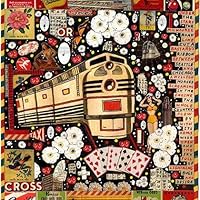
Joseph Cornell is a legendary yet living presence in American art. His famous boxes, with their ineffably perfect choice of elements -- the stuffed birds, the buttons and toys, the fragments of old theatrical posters, the poignant allusions to the worlds of the nineteenth-century ballet and opera -- are some of the most recognizable signatures in all of twentieth-century art.From this extended selection of his diaries and other written material, Cornell emerges as a deeply dedicated and conscious artist, though one whose personality was every bit as unusual as many had perceived. Cornell used his diaries as he used his boxes, to capture and preserve his passing feelings, his momentary urges, and his anguished hesitations. He was an incessant and brilliant recorder of his thoughts as he considered his art or traveled to New York to haunt the antiquarian bookstores and shops where he collected material for his boxes.We see here his deep immersion in French symbolist poetry and his intense interest in his surrealist contemporaries. We see also his plangent yearning for les sylphides, the fairies of the ballet world who seemed to be reincarnated for him in the form of waitresses, dancers, actresses, and shop girls in his own world. Cornell corresponded with an astonishing range of people including Parker Tyler, Marianne Moore, Tony Curtis, Robert Motherwell, and Susan Sontag. His letters were often sent in the form of collages, and several of them are reproduced in this book.
496 pages, Paperback
First published October 1, 1992
About the author
Mary Ann Caws
179 books63 followersMary Ann Caws is an American author, translator, art historian and literary critic.
She is Distinguished Professor Emerita in Comparative Literature, English, and French at the Graduate School of the City University of New York, and on the film faculty. She is an expert on Surrealism and modern English and French literature, having written biographies of Marcel Proust, Virginia Woolf, and Henry James. She works on the interrelations of visual art and literary texts, has written biographies of Pablo Picasso and Salvador Dalí, and edited the diaries, letters, and source material of Joseph Cornell. She has also written on André Breton, Robert Desnos, René Char, Yves Bonnefoy, Robert Motherwell, and Edmond Jabès. She served as the senior editor for the HarperCollins World Reader, and edited anthologies including Manifesto: A Century of Isms, Surrealism, and the Yale Anthology of 20th-Century French Poetry. Among others, she has translated Stéphane Mallarmé, Tristan Tzara, Pierre Reverdy, André Breton, Paul Éluard, Robert Desnos, and René Char.
Among the positions she has held are President, Association for Study of Dada and Surrealism, 1971–75 and President, Modern Language Association of America, 1983, Academy of Literary Studies, 1984–85, and the American Comparative Literature Association, 1989-91.
She is a Fellow of the American Academy of Arts and Sciences, a Life Member of Clare Hall, Cambridge University, and a Fellow of the New York Institute for the Humanities.
In October 2004, she published her autobiography, To the Boathouse: a Memoir (University Alabama Press), and in November 2008, a cookbook memoir: Provençal Cooking: Savoring the Simple Life in France (Pegasus Books).
She was married to Peter Caws and is the mother of Hilary Caws-Elwitt and of Matthew Caws, lead singer of the band Nada Surf. She is married to Dr. Boyce Bennett; they live in New York City.
She is Distinguished Professor Emerita in Comparative Literature, English, and French at the Graduate School of the City University of New York, and on the film faculty. She is an expert on Surrealism and modern English and French literature, having written biographies of Marcel Proust, Virginia Woolf, and Henry James. She works on the interrelations of visual art and literary texts, has written biographies of Pablo Picasso and Salvador Dalí, and edited the diaries, letters, and source material of Joseph Cornell. She has also written on André Breton, Robert Desnos, René Char, Yves Bonnefoy, Robert Motherwell, and Edmond Jabès. She served as the senior editor for the HarperCollins World Reader, and edited anthologies including Manifesto: A Century of Isms, Surrealism, and the Yale Anthology of 20th-Century French Poetry. Among others, she has translated Stéphane Mallarmé, Tristan Tzara, Pierre Reverdy, André Breton, Paul Éluard, Robert Desnos, and René Char.
Among the positions she has held are President, Association for Study of Dada and Surrealism, 1971–75 and President, Modern Language Association of America, 1983, Academy of Literary Studies, 1984–85, and the American Comparative Literature Association, 1989-91.
She is a Fellow of the American Academy of Arts and Sciences, a Life Member of Clare Hall, Cambridge University, and a Fellow of the New York Institute for the Humanities.
In October 2004, she published her autobiography, To the Boathouse: a Memoir (University Alabama Press), and in November 2008, a cookbook memoir: Provençal Cooking: Savoring the Simple Life in France (Pegasus Books).
She was married to Peter Caws and is the mother of Hilary Caws-Elwitt and of Matthew Caws, lead singer of the band Nada Surf. She is married to Dr. Boyce Bennett; they live in New York City.
Ratings & Reviews
Friends & Following
Create a free account to discover what your friends think of this book!
Community Reviews
Displaying 1 - 10 of 10 reviews

May 16, 2017
Cornell is an artist and individual who I cycle back to constantly, with chance crossings—an online image, an article, a citation—sending me down the rabbit hole of research jags. I find not only his unique art work fascinating, but his creative process and idiosyncratic approach to life endlessly generative and inspiring.
He's been on my mind the last few days, and this morning I pulled this copy back off my shelf, realizing after looking at the time stamp that I've now had it out from the library for nearly six years (I'll return it...someday). I dip in and out of this compendium fairly constantly and for a variety of reasons; sometimes as a stimulant and model for my own personal journal-keeping, sometimes to cross-reference his impressive network of friends and correspondents for my academic research, and other times just, to baldly appropriate a Vashti Bunyan lyric, "walk around in [the] mind" of one of the 20th century's most intriguing individuals.
Through his singular sensibility, the quotidian becomes exalted.
"So far uneventful but rest of day picked up that kind of richness in which a revelling in detail becomes such a feast of experience--" [Jan 24, 1947]
He's been on my mind the last few days, and this morning I pulled this copy back off my shelf, realizing after looking at the time stamp that I've now had it out from the library for nearly six years (I'll return it...someday). I dip in and out of this compendium fairly constantly and for a variety of reasons; sometimes as a stimulant and model for my own personal journal-keeping, sometimes to cross-reference his impressive network of friends and correspondents for my academic research, and other times just, to baldly appropriate a Vashti Bunyan lyric, "walk around in [the] mind" of one of the 20th century's most intriguing individuals.
Through his singular sensibility, the quotidian becomes exalted.
"So far uneventful but rest of day picked up that kind of richness in which a revelling in detail becomes such a feast of experience--" [Jan 24, 1947]

Read
February 3, 2025I can't rate this book, given its content.
Joseph Cornell was a genius, and his work is beautiful. It has a quality that anyone of any sensitivity at all must respond to, and people have and will. He wouldn't or couldn't have made any other sort of work, but he also had to be of his time to make it. Where it came from, only god or Joe's ghost knows. Based on reading these diaries his influences included everything from the Surrealists to some bird or word or girl he saw once and never stopped obsessing over. He remembered details of daily life poignantly and compulsively reiterated the remembrances his entire adult life covered in these entries. In the same way, he worked and re-worked his constructions and collages over the years. He also kept massive files of objects and images on shelves in the cellar of his house on Utopia Ave in Queens.
The book is mostly diary entries with a few letters scattered throughout. This is no typical diary. I was assuming a typical diary when I requested the book, and encouraged by two forewords, one from John Ashbery and the other from Robert Motherwell. Both knew Cornell, as did many other notables of his day, but all found him unfathomable but also loveable. His genius didn't go by unnoticed. Almost as soon as he put his work out into the world it was recognized and appreciated by a wide audience.
Cornell kept a tidy routine--going into the city to search through dime stores and used bookstores, eating in automats, cafeterias and diners, falling head over heels over shop girls, actresses, ballerinas, some of whom knew it and some didn't. Making elaborate tributes to art and beauty and these dream girls in his work in the cellar on Utopia Ave in Queens, where he lived until the mid-1960s with his mother and severely handicapped younger brother, who he tended devotedly. Up until their deaths within a year of each other, as well as the death (by murder) of a shopgirl he'd obsessed over for years, Cornell kept it together, and the diary, clearly meant for no one's eyes and understanding but his own, at least makes some sense, but after that it goes to pieces. His work continued to hold him together, but even he recognizes he is losing the ability to make connections or to maintain even a vestige of equilibrium. After 40o+ pages he himself says "mania and depression," underlining them, the words I've been thinking since the beginning of the book.
It's very difficult to read the diary after those deaths, not just because it is even less coherent, but also because it's painful to observe this uniquely gifted and sensitive artist fall apart.
Cornell's archives, containing these diaries, a lot of letters, quite a lot of his work, are at the Smithsonian. I don't wish I hadn't read these diaries, but I'm not sure what I gain from them--I guess, primarily admiration that he kept on keeping on. I think as I did with Emily Dickinson's private papers (aside from the poems) it's not right to read them. Also I think the editor did a lousy job of helping us to understand them. If she wasn't going to at least try, why did she excerpt and publish them? She includes a scattershot list of people mentioned in the writings, and she inserts little commentaries occasionally within the entries that don't illuminate them in anyway. It's not scholarly; I actually think she should be ashamed of what she's done here. I wish I'd read a more conventional and well-researched biography instead, or just looked at the work (very little of which is reproduced in this book, and over all the reproductions are bad).
A couple of other notes--the art world of the 1930s to early 1970s when Cornell died was a very different proposition from today. Also, Cornell ate pastries and cake and buns and donuts constantly. I wonder if he'd had real food if he would have felt better. BUT--one thing I appreciate about his writing and his life--he didn't, and as far as I can tell no one else tried either, to make any attempt to be "better" or "different" from who he was. He suffered terribly, but his strange and really in many ways aberrant life (I didn't even get into his sincere devotion to Christian Science and Mary Baker Eddy!!!) was part and parcel of the creative firestorm.
Joseph Cornell was a genius, and his work is beautiful. It has a quality that anyone of any sensitivity at all must respond to, and people have and will. He wouldn't or couldn't have made any other sort of work, but he also had to be of his time to make it. Where it came from, only god or Joe's ghost knows. Based on reading these diaries his influences included everything from the Surrealists to some bird or word or girl he saw once and never stopped obsessing over. He remembered details of daily life poignantly and compulsively reiterated the remembrances his entire adult life covered in these entries. In the same way, he worked and re-worked his constructions and collages over the years. He also kept massive files of objects and images on shelves in the cellar of his house on Utopia Ave in Queens.
The book is mostly diary entries with a few letters scattered throughout. This is no typical diary. I was assuming a typical diary when I requested the book, and encouraged by two forewords, one from John Ashbery and the other from Robert Motherwell. Both knew Cornell, as did many other notables of his day, but all found him unfathomable but also loveable. His genius didn't go by unnoticed. Almost as soon as he put his work out into the world it was recognized and appreciated by a wide audience.
Cornell kept a tidy routine--going into the city to search through dime stores and used bookstores, eating in automats, cafeterias and diners, falling head over heels over shop girls, actresses, ballerinas, some of whom knew it and some didn't. Making elaborate tributes to art and beauty and these dream girls in his work in the cellar on Utopia Ave in Queens, where he lived until the mid-1960s with his mother and severely handicapped younger brother, who he tended devotedly. Up until their deaths within a year of each other, as well as the death (by murder) of a shopgirl he'd obsessed over for years, Cornell kept it together, and the diary, clearly meant for no one's eyes and understanding but his own, at least makes some sense, but after that it goes to pieces. His work continued to hold him together, but even he recognizes he is losing the ability to make connections or to maintain even a vestige of equilibrium. After 40o+ pages he himself says "mania and depression," underlining them, the words I've been thinking since the beginning of the book.
It's very difficult to read the diary after those deaths, not just because it is even less coherent, but also because it's painful to observe this uniquely gifted and sensitive artist fall apart.
Cornell's archives, containing these diaries, a lot of letters, quite a lot of his work, are at the Smithsonian. I don't wish I hadn't read these diaries, but I'm not sure what I gain from them--I guess, primarily admiration that he kept on keeping on. I think as I did with Emily Dickinson's private papers (aside from the poems) it's not right to read them. Also I think the editor did a lousy job of helping us to understand them. If she wasn't going to at least try, why did she excerpt and publish them? She includes a scattershot list of people mentioned in the writings, and she inserts little commentaries occasionally within the entries that don't illuminate them in anyway. It's not scholarly; I actually think she should be ashamed of what she's done here. I wish I'd read a more conventional and well-researched biography instead, or just looked at the work (very little of which is reproduced in this book, and over all the reproductions are bad).
A couple of other notes--the art world of the 1930s to early 1970s when Cornell died was a very different proposition from today. Also, Cornell ate pastries and cake and buns and donuts constantly. I wonder if he'd had real food if he would have felt better. BUT--one thing I appreciate about his writing and his life--he didn't, and as far as I can tell no one else tried either, to make any attempt to be "better" or "different" from who he was. He suffered terribly, but his strange and really in many ways aberrant life (I didn't even get into his sincere devotion to Christian Science and Mary Baker Eddy!!!) was part and parcel of the creative firestorm.
November 26, 2018
What you realize is that his 30-year diary is a work of assemblage in itself. He had even entertained the notion that he would someday publish it. It's not only published; it's also officially archived:
https://americanart.si.edu/research/c...
https://americanart.si.edu/research/c...

February 4, 2022
Stellar. Absolutely love Cornell

August 26, 2008
Noran you know so many books it boggles my mind.
-June'11 Because this book contains Cornell's diaries and letters Waldman cites it a lot in her book, JOSEPH CORNELL Master of Dreams, this is my next foray into the life and times of Joseph Cornell.
July 28, 2011
Poetic ramblings, connections, observations, analysis, letters to friends and things that made Cornell tick. He was deep and had unusual thoughts, was romantic, obscure and loving at the same time.
I enjoyed references to neighborhoods in Queens that I don't know personally and got a kick out of recognizing record stores where he shopped, radio stations he listened to and an occasional TV program mention. He was a huge classical music lover, experienced it deeply as well as the world around him. Though many of the restaurants he frequented were closed by the time I was old enough to be going to restaurants on my own, I remember a few.
Throughout the diary writers, artists and books are noted. He was well read and a Francophile, often writing bits in French, often free associating punning and rhyming, mostly in notes to the daughters of his friends.
I think my original; skepticism of Solomon's biography may have been well founded. His diary mentions none of his resentment for his mother. He had many beautiful female friends. He had many, many friends indeed! He worked for several publishers and had plenty of creative energy.
I love Union Square. Bryant Park and the poetic films he left.
I was surprised how little world events were recorded in his diary. Bobby Kennedy's murder did touch him as he mentioned his concern for the world but I'm surprised none of the 60s political movement entered his writings.
-June'11 Because this book contains Cornell's diaries and letters Waldman cites it a lot in her book, JOSEPH CORNELL Master of Dreams, this is my next foray into the life and times of Joseph Cornell.
July 28, 2011
Poetic ramblings, connections, observations, analysis, letters to friends and things that made Cornell tick. He was deep and had unusual thoughts, was romantic, obscure and loving at the same time.
I enjoyed references to neighborhoods in Queens that I don't know personally and got a kick out of recognizing record stores where he shopped, radio stations he listened to and an occasional TV program mention. He was a huge classical music lover, experienced it deeply as well as the world around him. Though many of the restaurants he frequented were closed by the time I was old enough to be going to restaurants on my own, I remember a few.
Throughout the diary writers, artists and books are noted. He was well read and a Francophile, often writing bits in French, often free associating punning and rhyming, mostly in notes to the daughters of his friends.
I think my original; skepticism of Solomon's biography may have been well founded. His diary mentions none of his resentment for his mother. He had many beautiful female friends. He had many, many friends indeed! He worked for several publishers and had plenty of creative energy.
I love Union Square. Bryant Park and the poetic films he left.
I was surprised how little world events were recorded in his diary. Bobby Kennedy's murder did touch him as he mentioned his concern for the world but I'm surprised none of the 60s political movement entered his writings.
January 9, 2008
found this beaut curiously resting on the poetry shelf of a tiny bookstore in wichita. fate has found: collaged letters, diary entries on the automat, essays and other beautiful wonders and whathaveyous by (and on) joe cornell.
December 17, 2007
It was brilliant to see inside Cornell's mind although I couldn't quite follow at times. It was like an assemblage piece.

January 25, 2008
Fascinating glimpse into the mind of noted eccentric artist, Joseph Cornell.

February 6, 2010
Magical and inspiring!
April 30, 2012
This was 99% writing, which was interesting. But I really wanted to look at pics of his art.
Displaying 1 - 10 of 10 reviews