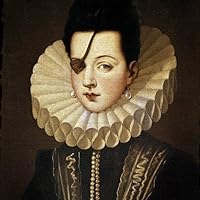
The beautiful Queen Eleanor of Aquitaine ruled France until she left her husband for Henry, the great-grandson of William the Conqueror. When Henry II took the English throne, Eleanor quickly discovered the darker side of politics.
Librarian Note: There is more than one author in the GoodReads database with this name.
Alison Weir is an English writer of history books for the general public, mostly in the form of biographies about British kings and queens, and of historical fiction. Before becoming an author, Weir worked as a teacher of children with special needs. She received her formal training in history at teacher training college. She currently lives in Surrey, England, with her two children.
3 "mostly entertaining, somewhat inconsistent, good enough" stars !!!
A few months ago I read this author's historical biography Eleanor of Aquitane: A Life and found it to be very good indeed (3.5 stars). In it, I was immersed into 12th century England and France and had the privilege of meeting and learning about a most formidable, vain and fascinating duchess and queen. Yes I met Queen Eleanor and became a reluctant fanboy. I will not go over the details of her life but touch on them in that review.
I was eager to read a more dramatic historical fiction account and was much looking forward to this book as Ms. Weir had gathered so much knowledge of this royal personage. I thought to myself that she could do one of three things with this novel
a. a work of serious historical fiction b. a soapy romantic melodrama between herself and King Henry II c. a deep psychological portrait of Queen Eleanor herself
Ms. Weir attempts all three with various levels of success ...
In a straightforward and clear fashion she outlines the main series of historical events through Eleanor's eyes in a sequential and somewhat interesting fashion and this reader was sometimes and somewhat immersed in the politics and sociology of the time period...a pretty good retelling but at times felt so very rushed....
The romance is particularly well done and I enjoyed the antics, betrayals and sexcapades between the King and Queen. I wish she had fully taken this route as I found it to be the most effective. A lot of scandal and carnal shenanigans. Unfortunately when it is contrasted with straight historical retelling or getting into the psyche of Eleanor...these passages seem almost silly and adolescent...but taken on their own were the most effective.
The psyche of Queen Eleanor left me the most wanting....this did not seem terribly cohesive or consistent. It was difficult for this reader to understand this queen's journey from selfish narcissism to wise old dowager...did not seem particularly believable to me and thus took away from the overall experience of this book.
Ms. Weir is clearly a hardworking and passionate popular historian but overall her writing although passable lacks literary finesse and panache.
All in all, a good and interesting read and I enjoyed my year of spending some time with Queen El !
The book begins with Eleanor's divorce from King Louis of France. It is known that she was quite the unfaithful wife and was not at all physically attracted to him. She did her duty twice to breed an heir only to give birth to two daughters. Louis, regardless of her behavior, was actually quite in love with Eleanor, but eventually acquiesced to her wishes. Upon separation she reclaimed her duchy of Aquitaine. Soon after she married King Henry of England, a man who also could meet her marital expectations. But GOOD LORD!!! Can they just stop having sex for a minute????? I never knew Alison Weir wrote this sort of book. What happened to the history? She has turned one of the most notorious, powerful queens of medieval England into a frivolous, vapid, horny piece of fluff.
2017 Reading Challenge: author from a country I've never visited
In this novel on the life of the indomitable Eleanor of Aquitaine, Alison Weir tells the story of a queen with a strong sexual passion for her husband, Henry, even as her marriage to him begins to disintegrate. We are first introduced to Eleanor lasciviously recollecting her sexual experiences with three previous lovers while one of them, Geoffrey of Anjou, with his eighteen year old son Henry beside him, is paying homage to her current husband, Louis VII of France. Eleanor conceives a sudden passion for young Henry, the future King of England. Her marriage to Louis is sexually unsatisfying, so she is ripe for Henry's bed. That same night, and for two nights after, the lovers have the "freedom" to satisfy their desire in her bedchamber and pledge to wed.
The first half of the novel, where Eleanor gives birth to ten children in fourteen years concluding with the birth of Prince John, the novel is dominated by their sexual antics and their marital arguments. Indeed, you can't read more than ten pages (often fewer) without a sexual act or some sexual reference. This part of Eleanor's life is neither titillating nor interesting, only tedious. In my opinion, Weir's sex-driven Eleanor only serves to trivialize her because sex is what drives Eleanor and ultimately what drives this half of the novel, without sufficiently exploring Eleanor's other qualities, real or imagined. Worse is that many, if not most, of Henry's and Eleanor's conversations occur in their bedchamber. Assuming Eleanor has tasks, duties, and pleasures outside of her castles, I would like to have seen more of the action and dialogue occurring outside their private chamber.
And then there's the inclusion of Eleanor's sister, Petronilla, who joins the royal household as companion to Eleanor on her marriage. Yet Petronilla hardly gets a mention until fourteen years later at the birth of Prince John, (supposedly after serving as the queen's companion all this time), where we are for some reason treated to her point of view for a paragraph or two, and then she promptly dies of drink! This character, who had the potential to play an important and intimate role beside the queen, is never fully realized and begs the reader to ask why she is included at all.
After the birth of Prince John, weary (finally!) from childbearing, unhappy with Henry's multiple infidelities, Eleanor distances herself from him - and the book begins to breathe! Suddenly, the dialogue is less awkward and slightly less melodramatic, the plot has a stronger historical foundation and is less sex-driven, and Eleanor and Henry become a little more nuanced as they separate, age, and come together, while their children fight and betray their father. Miss Weir handles the time of Eleanor's imprisonment skillfully enough, managing to tell the story of their turbulent marriage against a background fraught with familial conflict that criss-cross two countries. This half is better. It is good. If the first half had been, at the very least, its equal, I might have given "The Captive Queen" three stars.
Definitely not one of my favorite types in book😑 بیشتر شبیه رمانای ابکی نودهشتادیاست. همونقدر بی محتوا و شخصیت های رومخ. با عرض پوزش از نویسنده ای که مدت هاست از کتاباش تعریف میشنیدم دراپش میکنم🚶
While I am used to Weir's work on the Tudors and Henry VIII, this was an excellent piece of work on a much earlier Henry (II) and his wife, Eleanor of Aquitaine. While I was not sure how much I would like it after the first little bit, as I kept reading, I got into the book and found myself really interested to learn more about these unknown monarchs (to me).
I can see (and perhaps Weir aids) the parallels between Henry II and VIII. Womanising, scheming, and jailing those he was said to love because they would not do what he wanted them to do. This painful realisation goes to show that life in those days differs so very much from what we have these days.
Eleanor surely put up with many crazy happenings and had her fair share of trouble caused by her own actions. I can only hope that Weir keeps writing and teaching us about some of the lesser known women who played key roles in the European monarchy. She has surely set herself apart from Erickson and Gregory novels and is very well done.
Many reviewers have made such a big deal about Eleanor's sexuality in Captive Queen, but I frankly have no problem with it. Eleanor did, after all, leave her first husband King Louis of France, for a younger, handsomer man (and therefore a more promising partner in the bedroom department), he who would later become King Henry II of England. And Eleanor was not so righteous a woman as to divorce the King of France simply because she truly feared God's retribution (Louis was a distant relative of Eleanor's, and their marriage had required a special dispensation from the Pope that declared their union non-incestuous. These accusations of incest were the very same grounds they used to attain their divorce). Had that been the case, she would not have sought comfort and a second marriage in the arms of one who was of an even closer familial relation (Eleanor and Henry were third cousins). So, Weir asserts that Eleanor was an adventurous woman who sought a new life with an equally rebellious mate; that Eleanor's famous utterance about her first husband, "I thought I had married a king, but find that I have married a monk!" does in fact ring true. She left Louis because she was bored; she was a young woman trapped in a sham marriage with a man who would not even touch her, and she being the most beautiful woman in Christendom, felt her beauty and youth were wasted on a man who had far greater interest in the celestial than he did in earthly pleasures.
The sex scenes are not graphic and are handled delicately enough that the reader can imagine for him/herself what is going on under the bed sheets...Weir does not spell it out for you, as other Eleanor novels from the past year have done. And I still wouldn't even consider this book a tried and true "romance", although there is plenty of that within its pages. But a two star rating on Amazon, mostly because the Eleanor Weir has created is, as some reviewers refer to her, "oversexed"?! This is Eleanor of Aquitaine we are talking about here! The high priestess of The Courts of Love and a master of the art of flirtation! So what if Eleanor enjoyed her time in the boudoir in this book? I'd be shocked if she didn't - it would be like an author depriving Aphrodite of her sexuality. I am definitely not one for a bodice ripper, but the heavy criticism this book has been receiving is without due. People, quit being such prudes and enjoy this book for what it is: a well-imagined, informative and entertaining portrayal of one of history's most fabled queens. If you're looking for a "strictly the facts, ma'am" version, I suggest you read Weir's nonfiction take on Eleanor.
Now, that being said...I did have other issues with this book. The language, for example. I found it much too modern. Granted, I don't expect any 21st century medieval fiction novel to revert back to Ye Olde English, but certain turns of phrase and analogies struck me as glaringly anachronistic. The pacing of the book also could have been improved upon, but this is often an issue with historians-turned-fiction-authors, as most historians strive to include as many historical details as possible. This type of writing is typically desirable to me, but some of the smaller details could have been briefly worked in with the rest of the story rather than having their own chapters. Weir throws into the mix each and every Eleanor rumor that's been passed down through time, whether it be true in nature or false speculation. This, too, perhaps slowed down the pacing, where the author could have chosen a less scattered story line to flesh out the characters a bit more. The later two thirds of Captive Queen is pretty much sex-free, and included my favorite part of Henry and Eleanor's story, the conflict with Thomas Becket.
I really liked this book overall, despite some flaws that could be improved upon. My favorite of Weir's historical fiction novels remains Innocent Traitor, and I don't think this one was as good as The Lady Elizabeth, either. But I enjoyed the time I spent reading it becoming wrapped up in Eleanor's world. These were the times of troubadours and Robin Hood, and she was a real-life Guinevere, patron of the arts and beloved mother to her people. She founded a new society of women who embodied all that legend and myth imagined a woman to be, emulating the queens of fairy tales and reveling in their femininity. This book makes me eager to read more about this fascinating woman.
Alison Weir’s fiction and her non-fiction is normally exceptional—this book didn’t quite hit the mark her work normally reaches. It was good, just not great.
I think Eleanor of Aquitaine is one of the most interesting women in history. She was married to two different kings, and the mother of more. She quite likely had an affair with the father of her second husband before meeting and falling in love with his son. She almost certainly had other extramarital affairs. She inherited and ruled a huge amount of land. She felt betrayed by her second husband Henry, and in turn betrayed him in favor of her children—and was imprisoned by him for years and years. Despite being 11 years older than Henry, she outlived him by 15 years (and outlived most of her children—she had either 10 or 11 children in total). She was passionate and outgoing, an equestrienne and a patron of the arts, and both loyal and scheming.
Alison Weir’s version starts when Eleanor’s marriage to King Louis of France is crumbling. Eleanor has wanted to annul it for some time, and after becoming lovestruck by Henry, she convinces Abbot Bernard that Louis needs to annul the union so he can remarry and have sons. She claims that she and Louis are too closely related, and this is why they have only 2 daughters and no sons. She immediately remarries Henry, despite him being even more closely related, lol. Most of the book covers the period of their tempestuous marriage.
I thoroughly enjoyed the beginning and middle of this book, but it dragged a bit after Henry starts clashing with Eleanor and their sons, and while Eleanor is imprisoned. But maybe I just don’t find that part of Eleanor’s life as exciting as some of the others…
I recommend to anyone who is a fan of Eleanor of Aquitaine, or anyone who enjoys historical fiction, or who liked Weir’s non-fiction books about Eleanor.
I'm fine with the trashier aspects of this book (though they're grossly inflated by outraged maiden-aunt reviews -- y'all need to unclutch those pearls, else you'll do yourselves an injury). What I can't forgive is the trifecta o' boredom:
1) 'As you know, Bob...' (Yeah, SO MUCH of that.) 2) Time gaps. Great honkin' ones. 3) Inflation of minutiae at the expense of Important Things happening offscreen -- stuff like attacking castles, illness, pregnancies, wenching, etc. (But why bother with those when we can have elegant, forward-thinking Eleanor hammer yet another I Am Woman speech at her clueless, brutish husband? YAY!!)
I've read worse. But the author needs to trim her index card infodumps & focus on telling a good story, as opposed to a thesis on Eleanor's life & times. There's plenty of nonfiction re: this era. I want a PLOT. I want ENTERTAINING INCIDENTS, not endless conversations.
Having read the reviews of this novel about this year's "It" girl in historical fiction, Eleanor of Aquitaine, I fully expected to hate this book. Instead, I found myself rather liking it.
The Captive Queen follows Eleanor from her marriage to Henry II to his death, with an epilogue that breezes through Eleanor's last years. As the title implies, much of the novel takes place after Eleanor, having helped her sons to rebel against their father, is imprisoned by a furious Henry.
There are some things I didn't care for about this novel. I could have done without Eleanor's flings with her uncle Raymond, Geoffrey of Anjou, and a troubadour, although as Weir notes, these affairs have been the subject of historical conjecture. The flings, however, are past history by the time the novel opens, and they aren't presented in such a way that they make Eleanor appear to be wildly promiscuous; rather, her infidelity is the outgrowth of loneliness, sexual frustration, and even immaturity. Louis, Eleanor's first husband, appears only briefly in the novel in person, but Weir gives him a certain dignity; he's not the butt of contempt he often is in historical fiction.
On the same note, a number of readers have complained about the sex in this novel. This is largely a matter of individual taste, of course. I'm of the "less is more" school, yet I can't say I found the sex here excessive or overly graphic as compared to that in other mainstream historical novels; I certainly never got the impression I was reading a romance novel in disguise. I did find the novel's opening scenes, where Eleanor and Henry jump into bed, then decide to marry, after having barely become acquainted, to be rather improbable, but the novel was far from the bonkfest I'd expected.
There was some awkward expository dialogue here, especially the scene where a nurse is made to tell Eleanor, solely for the reader's benefit, that one of Eleanor's sons is three years old. An equally groan-inducing scene comes when an abbess tells Eleanor, "King Stephen still lives." (How dim do these people think poor Eleanor is?) Fortunately, this type of dialogue becomes less frequent as the book progresses.
Eleanor is the main viewpoint character here, though we sometimes see the action from Henry's point of view as well. This can be rather frustrating, since we're left to guess at what characters like Thomas Becket and Eleanor's sons might be thinking. Those who want a novel on the scale of those of Sharon Penman's, in which we see the action through the eyes of many characters, won't find such a book here.
So why did I like this novel nonetheless? Mainly because Weir succeeded in making me like Eleanor. I'm no expert on the historical Eleanor, but I seldom find myself liking her in historical novels, chiefly, I think, because authors--even good authors--turn her into a feminist icon, the Strong Woman to end all Strong Women. They're so in awe of her, they forget to make her human, and I usually find myself itching to see her taken down a peg. I didn't have that problem here. Eleanor makes mistakes, gets the worse of arguments, says and does things she regrets. For once, I found myself on her side, and I ended the novel wishing I could spend some more time in her company.
Eleanor of Aquitaine was first married to King Louis of France, but he was more interested spending his time in prayers than with his wife. She’s not happy and extremely bored and when it’s suggested that Louis finds a new wife to get much needed male heir she’s not resisting. Then she meets young Henry FitzEmpress and it’s insta-lust from the start. After Eleanor gets her divorce from Louis she and Henry marries without permission.
I’m still wondering why I ever started this book and how I managed to finish it. I haven’t been huge fan of her fiction books but this sure was something.
The sex scenes weren’t so bad than I thought and not as graphic but I don’t need sex scenes from the start. At page 2 she’s remembering her hot night with her future husband’s father and it’s downhill from there. But then she sees Henry for the first time and forgets Geoffrey just like that and after just few hours after their first meeting Eleanor and Henry are having sex. She’s supposed to have had an affair with this troubadour guy too, and of course with her uncle. Because if there’s some ugly rumour ever spoken of Eleanor you can trust to find it in here. As I said the sex wasn’t that graphic but it also wasn’t good and got very repetitive very soon. And I’m wondering how she managed to do all this without her servants knowing?
At page 22 we get this wonderful peace of information
Henry was surprised to find his father’s muscles iron-hard – not bad for an old man of thirty-eight, he thought. He had glimpsed too Geoffrey’s impressive manhood, and wondered seriously for the first time if his father had indeed been speaking the truth about knowing Eleanor carnally, and if he had, whether he had satisfied her as well as he, Henry, had done.
Like any normal father-son day, right?
Somehow Weir manages to turn this strong and intelligent woman into weak, childish, sex-addicted woman. And her portrayal of Henry isn’t that better. Where is this powerful man who’s spectacular rages made men fear? Instead we get someone who spends most of his time drinking, swiving random women at closets and other random places and stamping his foot when everything won’t go as he planned. There’s some fighting between Eleanor and Henry but unfortunately it sounds like a 3 year old is having a tantrum.
And if this all wasn’t enough she had to make Beckett to be in love with Henry. Like seriously?
I wasn’t fan of the writing itself which was the biggest reason why I hated this. But towards the end something happens and the writing get better and the characters started coming to life. We actually get one moving scene between Eleanor and Henry regarding Rosamund. Speaking of writing, at some point after she has given birth she’s thinking about how queen’s can’t raise their kids and breastfeed them by themselves and then few pages after she puts the baby to her breast. Ouch!
I think this is time to stop reading her fiction books and not even try her next book!
Let me start by saying this is not a book for everyone.
Being familiar with Ms Weir's previous novels, both the historical and the historical fiction, "Captive Queen" takes on the subject of a woman who lived a very interesting life. Trying to condense everything that happened to Eleanor of Aquitaine and keep it interesting was a very large task.
This is a fictional account, using what knowledge there is from surviving reports of the actual period of Eleanor's life, but that still leaves gaps. The author even says so at the end of the book. Instead of being sensationalist and basing things on conjecture and rumors (much like the "historical" novels by Philippa Gregory) Ms Weir does her best to fill the gaps with events/emotions/ideals that fit and keep well within what *might* have happened.
I came to this book knowing virtually nothing about Eleanor of Aquitaine or Henry II. In some ways that made this novel very riveting for me. At other times the pace crawled so slowly that even though I wanted to know what was going to happen I ended up having to put it down and walk away for a while before continuing. There was a lot to cover in terms of subject matter, when you're trying to account for the 37 years of marriage and all that went on during them.
Yes, there's a lot of sexual scenes in this book. At first it was rather overwhelming but that was what truly bound Eleanor and Henry from the first: their lust for one another. The sex scenes were pretty tame (especially compared to Philippa Gregory's books) and their inclusion was important to truly understand their union.
As I said, this book is not for everyone. I would suggest either of Ms Weir's other two historical fiction novels, "Innocent Traitor" or "Lady Elizabeth", to start with to see if you enjoy Ms Weir's take on historical persons. "Captive Queen" could very much overwhelm you, especially if you're not remotely familiar with the subject matter/historical period and its sheer size (nearly 500 pages in paperback) can at times feel like it will never end.
I enjoyed the book. Eleanor of Aquitaine was certainly one of those rare women in history that held her own in a world of men. Even when she was subjected to imprisonment by her own husband, it did not kill her spirit. Her story, along with the story of Henry II and their children, made me more interested in reading other books about the long line of English kings. I'm most familiar with the Tudors but have increasingly begun to branch out to those that came before them.
If I had to chose between Ms Weir and Philippa Gregory, I would easily go with Ms Weir, as she seems to be more intuitive when it comes to historical fiction and doesn't rely on unfounded claptrap and sensationalism.
I don't think I have ever stopped reading a book so quickly before, and the only reason I got as far as I did was because I was stuck on the busride to swimming lessons with my class, and needed something to do to pass the time! I kept hoping if I continued reading it would begin to get better, as I was interested in finding out more about the passionate yet volatile relationship between King Henry the II and Eleanor of Aquitaine. The first quality that annoyed me about this book was that it read sort of like a steamy medieval Harlequin romance. I have no problem with intimate scenes in novels, but the historical novels I have previously read expressed the scenes with language that indicated passion, etc. but didn't sound so 20th-century smutty. I almost snorted out loud a couple times at the ridiculous phrases! Which leads me to my second criticism - the language was almost too contemporary with medieval characters using modern day slang like "So...you're hot for the queen, huh?" I highly doubt noblemen of the day used words like "hot for" to describe lusting after a woman! It completely destroyed any ability to take the novel seriously - and it certainly didn't transport the reader back to medieval Europe. The last issue I had with this book is the tendency of the author to spell out everything for the reader, often using her characters to directly verbalize the things that a good author would allow the reader to infer, or would at least connect the dots more subtlely for the reader. Within their first moments alone, Henry and Eleanor don't just talk like new lovers, but also expound on how fortunate it would be for Henry to marry her and that would make him the most powerful man in Europe, because she is the heiress to lands here, there and everywhere etc, - which not only sounds too "explanatory" for a sophisticated novel, but also doesn't seem like credible dialogue between 2 people who have just spent themselves in the throes of passion. Way to much telling instead of showing. I was deeply disappointed in this novel as I had heard so many good things about the writing of Alison Weir. Perhaps her actual historical writing (about the Wars of the Roses and the Princes in the Tower) is better because she wouldn't have to add in stupid dialogue and depth-less characterization. So in all, I would say to avoid this book (unless you want some cheap laughs at the cheesy love scenes - ha! ha!).
I love Alison Weir but I have to say, her fiction did *not* do it for me. This was the first novel I have read from her...I think she would do best to stick with straight up historical/scholarly research and biographies. About a chapter in, I found myself wondering what Harlequin romance I just stepped into. And yes, I totally understand that Eleanor and Henry had a passionate, combustible romance that eventually collapsed. But really, every other page had these cliched, overwrought descriptions of their sexual escapades. I guess in a world where everyone is reading 50 Shades of Gray, perhaps this would satisfy the crowd that prefers their sex medieval-style. But for me, it was unsatisfying. Eleanor and Henry were complex people who spawned a dynasty. Did they take a roll together often? Sure. But that part of their relationship is far less fascinating to me than her desires and attempts to rule as an equal to her formidable husband.
Sorry, Alison - I think you're terrific, but I won't be reading more of your historical romance novels.
Very horny for Alison weir lol listening to Rosalind Nandor narrate sex scenes was a first for me. Idk I get why people don’t like how Weir wrote about Eleanor’s sexual passions driving her, but I wonder if weir thought it would make the book more interesting.
This is again in the same vein as weirs other historical fictions, I read this in high school I remember, so I did the audio book. Again if you don’t like how Weir does fiction, you won’t like this, but if you are looking for a fictionalized overview of the majority of Eleanor’s life I thought it was perfectly fine.
Eleanor’s life is insane. She lived into her 80s in the freaking 1100s after bearing 11 kids into her 40s. Crazy. And outlived almost all of them. I think modern people can learn from her - it seemed liked she never stopped moving, thinking, being active. Granted back then did not guarantee a long life, but she was a force.
This novel about Eleanor of Aquitaine (1122-1204), a Queen of both France and England is the subject of Alison Weir’s third historical novel. Ms Weir has previously written a biography of Eleanor (first published in 1999) and I was interested in how she would approach the same subject from a fictional perspective.
Eleanor of Aquitaine had a fascinating life. As the sole heir to the Duchy of Aquitaine, she was married to Louis in 1137 just before he became King Louis VII. She was divorced from Louis VII in 1152 on the dubious grounds of consanguinity (they had two daughters, but no sons) and shortly afterwards married Henry, son of Count Geoffrey of Anjou.
The novel opens in 1152, and is mostly focussed on Eleanor’s marriage to Henry. A marriage which, apparently, was based on mutual physical attraction and lust, as is amply demonstrated in the pages of the novel. Between them, Henry and Eleanor ruled over Anjou, Maine, Brittany, Normandy, England and Aquitaine and they had nine children: six sons and three daughters.
So what went wrong? Because despite all that they shared, Henry ended up keeping Eleanor in some form of captivity for seventeen years because she supported her sons (especially Young Henry and Richard) in defying his authority. Eleanor outlives Henry, sees her favourite son Richard (the Lionheart) rule and dies aged about 82 part way through the reign of her youngest son John.
A long and fascinating life to be sure, but I don’t think that this novel does it justice. The focus on interpersonal relationships largely excludes any deeper appreciation of the political realities or of Henry II’s troubled relationship with the church which lead to the murder of Thomas Becket. Eleanor may well have been headstrong and beautiful, but surely she wasn’t quite so naïve?
I went into this open minded. I knew the reviews were bad and everyone said this was full of sex. Maybe that's why it intrigued me, but it was just cheesy. Not even the unrealistic version of Eleanor, but the writing as well. I simply wasn't interested in going any further.
This is still an exceptional historical read by Alison Weir. it's as good to read , as it was the first time I read it. I've always found Eleanor of Aquitaine a fascinating and strong women to be admired and respected .
I do not recommend this book. It is a trashy paperback in disguise. The characters are shallow, stereotypical, and boring. The cover is beautiful, but it hides the mess inside
I'm going to say right off the bat that I have mixed feelings on Alison Weir. On the one hand, her biographies range from good to "Hold on, what." Her credentials are... debatable. I can't really judge, as she's done a lot of her research... But lacks the degree, and that troubles me whenever I'm reading one of her non-fiction books. On a scale of Retha Warnicke to Antonia Fraser, she's somewhere in between. The bias always shows through--oh, gee, I wonder if she favors Anne Boleyn or Catherine of Aragon--and she tends to cash in on scandalous rumors, as seen in her book about the fall of Queen Anne. However, she can write, and I enjoyed "The Lady Elizabeth" as a guilty pleasure. She knows about the period, and makes sure to play to that cardinal rule of giving an author's note that explains the authenticity of the information. So she dodges that pet peeve.
I don't know why "Captive Queen" was so difficult to enjoy. After reading "The Lady Elizabeth", I wasn't expecting incredible accuracy or revolutionary storytelling. But this... It read like a bodice-ripper so much of the time. Don't get me wrong; I'm not a book snob, and am very open to bodice-rippers. However, I dislike it when books hide behind one image when they're actually another, which is what "Captive Queen" is guilty of. Another problem is that Eleanor of Aquitaine really deserves better than to spend most of her book worrying about her husband and whether or not they're having sex. Yes, she had affairs, and yes, she was sexually voracious. If you know anything about Eleanor, you're aware of that. However, Weir knows that there is more to her and she doesn't show it. It's not incredibly offensive, as it was in "The Borgia Bride"--it's irritating.
What about Eleanor's strategy, her confidence? What about her control in the relationship, rather than Henry's? There was something around an eleven year age difference between the two, in Eleanor's advantage. Surely she lent wisdom and had something of a controlling factor at first. Henry wasn't nearly as motivated to take the throne until he hooked up with Eleanor. Why didn't Weir exploit that? What could have been a novel about a defiant and courageous woman turns Eleanor into a sexy battered wife. (She also suffers from historical fiction heroine syndrome, again: so beautiful, even when she's in her sixties in an age without cosmetics or anti-aging remedies.)
I also felt that, in a third-person, multi-perspective novel, Weir could have spent less time on Eleanor's more mundane thoughts and Henry's sexual adventuries, and more on the development of their sons. Where was Richard's conflict, for instance, over his sexuality? We don't know.
It's not that the book is terrible. It's just... not enough, and far less than what the author is capable of.
DNF: not really the author's fault. too depressing to read about another "great man" who is utterly unfaithful.
I LOVE Alison Weir's historical fiction. I love it!! First the author writes nonfiction biographies of important historical characters. Her nonfiction work is amazing, but way too detailed and scholarly for my objective: enjoyment. So when Weir writes a novel, she really "knows" her characters.
I can't blame the author for what these characters do, as they were real people. But I hated Henry of Anjou so much for his affairs, and for the hypocrisy he perpetrates that his wife must be faithful. I've been reading through decades of English kings, and every one had at least one, but usually many mistresses. Im too sad for anymore cheating.
The real world is not pretty. I need to go back to romance books,.. :)
Skip this and read . It is Alison Weir's finest novel.
Weir examines the very earthy relationship Eleanor and Henry had - the book is just about their marriage, so most of the events around the 2nd and 3rd crusade are skipped over, but the book is long enough as is.
Its a little awkward when occasionally Character A will say to Character B "let me tell you all about Event X that is common knowledge in the 12th century but very unknown in the 21st."
But still, a lot of the events are made very real with a real sense of how and why they might have happened.
طبق معمول کتابای الیسون ویر با ترجمه طاهره صدیقیان، خیلی لذت بردم یه رمان تاریخی متعهد به حقایق از زندگی یه ملکه خیلی قشنگ و جذاب نوشته شده، و سخت میشه از خوندنش دل کند و قطعا ترجمه روون یکی از دلایلشه
Alison Weir, must have been flabbergasted, this wave upon wave of hatred, reviewer after reviewer pouring their vitriol...How could Weir have had the temerity to write that Eleanor de Aquitaine enjoyed sex and liked sleeping with Henry II her husband?
But we run ahead... We begin at the very beginning and take a good look at Eleanor de Aquitaine, a Queen in her own right. Eleanor of Aquitaine, one of the most powerful and influential figures of the Middle Ages, inherited a vast territory at the age of fifteen, making her the most sought-after bride of her generation. She would eventually become the Queen of France, the Queen of England and lead a crusade to the Holy Land. W.L. Warren in his biography of Henry II calls Eleanor a 'black-eyed beauty...’ Desmond Seward in ‘Eleanor of Aquitaine the Mother Queen: 'She was a beauty, tall, with a superb figure that she kept into old age, lustrous eyes and fine features.’ Eleanor was an extrovert, lively, intelligent, and strong-willed.
The Duchy of Aquitaine was the largest and richest province of France. Poitou, where Eleanor spent most of her childhood together with Aquitaine make up almost one-third of what can now be called ‘modern France’. She was so rich that her father William X feared for her safety and it is true that she was once abducted. On the death of her Father, William the X, King Louis VI of France was appointed her legal guardian. King Louis VI of France must have rubbed his hands in glee, here was the most beautiful and the richest heiress thrown into his lap. However, King Louis VI of France himself was very ill dying of dysentery, so within a few days, Eleanor’s guardian King Louis VI had arranged her marriage to his son Louis VII.
Louis VII was must have been astounded at the turn his fortunes had taken, he was deeply besotted by his worldly new bride but she left him confused. Eleanor however, was much less impressed with her new life. After growing up in her father’s dazzling court, she found Paris to be an uncultured hole and Louis VII a pious bore. What was the granddaughter of ‘Le Dangereux’, her Grandmother supposed to do with a boy raised by monks? Not much we gather, judging by the extreme slowness with which they produced heirs.
Eleanor was rich, beautiful, young and full of life. Not surprisingly, she wanted a husband who loved life, loved sex and behaved much like a King should, instead she got Louis V II, who loved her passionately but was devoid of any passion himself. Eleanor was flamboyant, worldly, and not very shy expressing her desires; Louis on the other hand was quiet, submissive and in awe of his firebrand wife.
Review upon review criticizes extremely harshly the way Weir has portrayed Eleanor’s sex life. Strange that it comes as such a shock to so many reviewers that Weir uses passionate language to describe love scenes. Now dip yourself into a situation such as this one; Year after year Eleanor sleeps in another room far away from her husband or when she sleeps next to him, he does not touch her and never has sex with her. She the most beautiful woman, she the most flamboyant Queen of the Medieval Ages, she who loved life with a passion... What torture it must have been...
And then one fine day, into the French Court steps a full blooded, tall and handsome red haired man and that was Henry, Duke of Normandy and future king of England. What is Eleanor to think? Weir expresses what any woman who has not had sex for a long time would have thought. ‘Look at that Hunk, how I would love to...’ Why are we so very surprised? But Weir does not have her saying all this aloud, Eleanor does not speak her thoughts aloud, she just thinks... And I am sure all of us must had similar thoughts running through our minds at some point or other in our lives, Weir just puts these ‘thoughts’ in Eleanor’s mind...Eleanor does not say any of this aloud. Now, if such ‘thoughts’ had not crossed Eleanor’s mind, it just would not have been Eleanor, would it? Sex was a huge part of Henry’s and Eleanor’s marriage or how else would she beget eight children. They enjoyed their lovemaking...
The Captive Queen is not only about Eleanor’s life but is also the life of King Henry II.
What were Henry II's greatest accomplishments as a king? Determined to assert his rights in all his lands, Henry II reasserted the centralized power of his grandfather Henry I in England. He issued the Constitutions of Clarendon, which restricted ecclesiastical privileges and curbed the power of Church Courts. Changing the relationship between church and monarchy had always been on Henry's agenda, it still continued to be a huge issue even during the reign of Henry VIII. Henry II, introduced his own courts and magistrates, roles traditionally played by the church. He often rejected any Papal influence in order to enhance his own royal authority over the church. The Constitution of Claredon’s primary goal was to deal with the controversial issue of ‘criminous clerks’, or clergy who had been accused of committing a serious secular crime but were tried in ecclesiastical courts by ‘benefit of clergy’. Unlike royal courts, these ecclesiastical courts were strictly limited when it came to punishments in particular ‘spilling of blood’ was prohibited An ecclesiastical case of murder often ended with the defendant being defrocked, dismissed from the priesthood. In a Royal Court, murder was often punished with mutilation or death.
Thomas Becket, the Archbishop of Canterbury (1162–1170), resisted the Constitutions, especially the clause concerning ‘criminous clerks’. As a result, Henry put Becket on trial at Northampton. Becket fled into exile with his family. Bishops were in agreement over the articles until the Pope disapproved it and then Becket repudiated his arguments. The controversy turned very bitter and as an offshoot, Becket was murdered on 29 December 1170. After this Henry felt compelled to revoke the two controversial clauses, which went against canon law. However, the rest stayed in effect as Law of the Land.
In her book Weir talks about King Henry and Becket at great length, she gets into their friendship much before Becket became the Archbishop of Canterbury, she talks about King Henry’s sadness and confusion and his attempts to understand the ‘new Becket’, for the ‘old Becket was a friend more of a brother. The new Becket was a stranger, an obdurate and unyielding stranger. Oh how King Henry tried to revive his old relationship with Becket, Becket's betrayal was what aged King Henry, for he never expected Becket to turn out the way he did.
Weir, writes with much compassion and painstaking research everything that has transpired in the lives of Eleanor as well as Henry the Second and Thomas Becket, there are no omissions, she recounts everything. Sadly her only fault was to talk of sex openly…Weir never knew that Sex would be her undoing...
Eleanor, Eleanor, Eleanor. This is her year for novels. A rare treat is to have one penned by historian Alison Weir, so I relished the chance to read this novel on the famous Queen who had shrugged off the title of Queen of France in hopes of being Queen of England. Most importantly, Eleanor was proud of being Eleanor of Aquitaine. I had read several novels that have endeared me to the rebellious Eleanor, such as the spectacular Plantagenet trilogy by Sharon Kay Penman and Pamela Kaufman's The Book of Eleanor. Most recently, I read The Queen's Pawn by Christy English which focuses on a snippet of Eleanor's life, which is barely touched on in Weir's telling. I have yet to immerse myself in a non-fiction read of Eleanor, therefore I do not have a strict stance on some of the rumors that surround Eleanor such as her possible infidelity to her first husband King Louis. Right away, Weir sets the tone for this novel as it dives into Eleanor's lustful ways, and therefore, less than faithful ones. This will be a huge turn off to Eleanor fans, but I chose to accept it for its fictional power only. And I am not entirely sure the excessive amount of sexual encounters and sexual thoughts really had to be included here; it is a significant drawback to the rest of the novel as it takes away from the already incredible story of Eleanor's life which doesn't merit the need to spice it up with as much sex as Weir does here. Thankfully, this occurs only for the first half of this novel on Eleanor, as eventually she does lose her sexual power over her husband as she is kept captive away from her family for many years. Eleanor was famous for being the Queen of the Courts of Love where Aquitaine was proud of its troubadours and courtly flirtations, and England took awhile to accept the ways of these troubadours.
Alison Weir's new novel of Eleanor begins when Eleanor is unhappily married to the very pious but respectful Louis VII, after she has given him two daughters but no heir to the French throne. She works on his advisers to persuade Louis to denounce their marriage due to the ever present fortunate escape route of consanguinity, and Eleanor is gleefully free to sow her wild oats away from the French courts and their disapproving eyes. As mentioned, I was a bit shocked at the immediate sexual nature that was displayed, as the Angevin devils otherwise known as the future Henry II and his father Geoffrey V of Anjou appear at court and Eleanor is deep in lust for them. Immediately Eleanor plots her fate and is successful at ridding herself of King Louis and within months she marries the nineteen year old Henry Fitzempress. The prospect of the merging of the lands of Henry's and Eleanor's together is a great one, and propels Henry on a course to succeed King Stephen as the next King.
Eleanor and Henry's marriage is the one major focus in the novel, as well as how the relationship develops and then flounders over the years. The power that Eleanor wants to maintain as a sovereign over Aquitaine is a thorn in Henry's side, but in the beginning of the marriage, their confrontations were smoothed over with another romp in bed. Eleanor is shown as putting up with her husband to keep the peace as much as possible. Thus the title of the novel, Captive Queen, becomes understood as we watch Eleanor struggle to maintain her Queenly stature and to continue to be revered as the beautiful yet intelligent Queen that she was. She is also shown as a loving mother to their children, especially after she walks away from her daughters that she had with Louis previously. How this separation affected her in reality we will never know, but I cannot think of it being so simple as it is glazed over in many Eleanor books, simply because there is not much to tell. It is brought up a few more times as Weir demonstrates Eleanor's motherly nature with her and Henry's children well, and helps to endear us to Eleanor. All of the children are featured but not as prominent as other novels such as Penman's books; this is truly focused on Eleanor and her personal travails.
The novel moves forward as the conflicts with the chancellor Thomas Becket appear, and Eleanor and Henry are beginning to not get past their marital problems and Henry's infidelity with the "Fair Rosamund" who Henry really loved. Becket is portrayed as a man who was enamored of Henry, and probably a bit in love with him, and vice versa. Henry valued Becket's camaraderie and knowledge, and may have seen him either as a father or a brotherly figure. Eleanor and Thomas each recognized a silent rivalry for Henry's ear with each other and Weir demonstrates this threatening undercurrent several times.
The second half of the novel was much better in my opinion (probably because of the way that Eleanor was not given the opportunity to have sex that often), therefore it was focused on the turmoil within her family and how it affected Eleanor. The sons were causing trouble and strife as they fought for more power in the lands they inherited, but Henry II had troubles relinquishing much power to his boys due to their untrustworthiness. I had begun to dislike Henry and his controlling ways, but with the way that Weir wrote his story towards the end I was sympathetic by how Weir demonstrated how Henry was defeated during his last days. Richard the Lionheart was not featured as much but was more of an enigma to the reader; was he great, was he knightly, was he passionate?... it was hard to decipher with this telling. He seemed focused on destruction at one point in the novel which gave him a bit of a forbidding persona.
Overall, the novel is an intriguing look at the life of Eleanor of Aquitaine as she marries Henry II, but Penman is still the queen of that fictionalized story in my eyes. If Weir used a bit more grace and less bawdy tales from the start, she may have matched Penman's novels Time and Chance, or Devil's Brood. For those readers who have not yet read those Penman novels, this would be an interesting read if you can tolerate the multiple sexual references. And for those who have read the William Marshal novels by Elizabeth Chadwick, I think this novel would be a great tie in to those as well. The story was focused on Eleanor and how she may have felt during most of her life, as opposed to much of the politics of the time; and it was done in a plausible, understandable and intriguing way. I am happy to have read Weir's entertaining story of Eleanor for myself, and perhaps you will too, as I believe the novel did Eleanor justice overall.
I thoroughly enjoyed this book. Alison Weir is the historical fiction queen! Instead of learning facts from a book about history, you get to see what emotional struggle the Queen went through. You get to know her secrets, her thoughts, what she really thought about what went on at court, or what her husband did, or how he treated their children. And as the book progressed you felt as though you were Eleanor of Aquataine. I was enraged by Henry when he didn't treat his children and wife fairly. I was furious at the accusations that were made at court and the way she was talked to. I was in despair when she was locked in the tour as a punishment, I felt shame when she was discarded by her lover that she bedded to get back at Henry.
This booked sucked me in and I wanted to know more, I stayed up late at night just to keep reading to find out what Henry would say about something or what he would do next etc.
This story of Eleanor of Aquitaine was at times interesting and at others quite a chore to read. I quite enjoyed the early part of the book, and found Alison Weir's take on Eleanor and Henry's early relationship entertaining. I didn't have the issues with the sexualized Eleanor that others have had (but let's not forget, I read and highly enjoyed The Rain Maiden). Later on though, the book became quite tedius. It doesn't help that the subject matter, including Henry and Thomas Beckett's fall out, the rebellion of their sons and Eleanor's imprisonment are ALL rather tedius subjects (at least for me at this point in my reading). But what really bothered me at the end was the one-sidedness of Alison's view - Eleanor could do no wrong and Henry was awful awful awful. (Of course, I do think Henry was rather terrible, but that's beside the point.) I got tired of reading how Eleanor learned from every bit of adversity, growing more intelligent and benevelent with each passing year and trial. Ho hum.
Probably the most cringeworthy, embarrassing book I've ever made myself finish. I have always admired Alison Weir for her detailed, academic biographies so I was delighted to be able to see her when she came to Kingston to promote this new novel. I quickly bought a signed copy, then as soon as she began to read an extract I knew I'd been premature with the purchase..
This feels like it's been written by some trashy chick-lit novelist rather than an intelligent academic. Worst of all are the dreadful sex scenes!! Embarrassing and naff!
Sadly, I should have stuck with her biographical account of Eleanor of Aquitaine, I'm sure I would have enjoyed that.



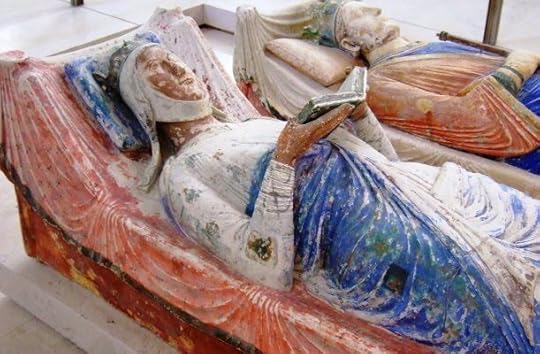
 . It is Alison Weir's finest novel.