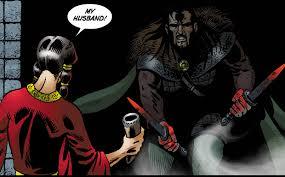
Witches, murder, ghosts, and madness — one of Shakespeare’s finest tragedies is also a perfect fit for the graphic novel format. This compelling adaptation depicts every blood-curdling scene in easy-to-follow illustrations, accompanied by Shakespeare’s original text. An illustrated cast of characters reminds readers who’s who, and fascinating background information on Shakespeare and the real Macbeth adds historical context.
I'm a professional writer. I've had 3 novels published, with another due out in September 2009 and two more being written. I've written 2 screenplays - one of which won the IndieProducer Screenwriter Award in Los Angeles in 2009. I've also 'ghosted' books for media celebs, politicians and business-people. I've scripted award-winning TV drama and graphic novels and I've written stage plays which have been performed in London and Paris.
Numerous comics adaptations exist of classic literature.
Problem: Teachers want young people to be exposed to and appreciate some of the great stories in classic literature.
Problem: Teachers want them to appreciate these stories in the full unabridged glory of their originals, in the original language.
Problem: Students (well, an increasing number of people, not just students) struggle with understanding the story in the original language, thus possibly causing the classics appreciation goal to backfire, causing some students to be permanently turned off to Great Works.
Solution?: Never compromise; if you water these classics down, you cheat readers. Make them read the works in the original only.
Solution: Help struggling readers visualize (and thus better understand) the play's action via film and graphic novels, necessarily adaptations of the original. Help struggling readers with glossaries and modern English translations that one can read alongside the originals.
This series, Classical Comics, has three different versions of the classics, in this case Macbeth: The original text, a "plain" text (translated into modern English), and an even more simplified "quick" text that reduces the original to a kind of shell, and illustrates the story, that makes the plot a kind of shell, a useful shell for the lost and wandering (shooting spitballs in the back of the room, let's say).
As a reader and lover of Macbeth I didn't love the quick text, as a lover of comics I thought the artwork was just straightforward, nothing special, but as a teacher who wants to draw i more and more people in continuing generations to Macbeth, I liked it pretty well, and admit its usefulness. I appreciate the effort to work at the task of classics love from a variety of perspectives.
Having seen various stage & screen productions of Macbeth, listened to audio versions & of course read the play itself I've found yet another way to enjoy Shakespeare's classic play-the graphic novel. On the whole the artwork is pretty good & this version (of three available) uses Shakespeare's original text. My only gripe is that the opening of each scene has a note in modern English. For example...."Act Three. Scene Four. In the King's Palace, the banquet is about to commence." Some readers may not mind this, but for me it was quite annoying. Apart from that it was a new way to enjoy one of my favourite reads once again.
A nice idea. Shakespeare's “Macbeth” shown through a graphic novel. I find Shakespeare's language ponderous reading but I respect the Bard so I think this is a great read for somebody who wants more of a visual medium in understanding one of the classic works. The artwork was pretty but nothing but straight forward.
WHEN READ: mid February 2012; OVERALL GRADE: B minus to B.
The story was great. It is based on true story. The illustrations made the book even better. It's like a comic.
The story is that Macbeth was a leader in the king's army. He won many wars so the king made him the Thane of Cawdor but he became greedy and killed the king. So he became the king and things got worse in Scotland.
I only read this to finish the Reading Rush challenges. If you want to know what Macbeth is about without reading the play alone, then this book is for you!
The art style, however, isn't what I normally go for. But everyone's preference is different.
Acı üstüne acı, kan üstüne kan, kayna kazanım kayna, yan ateşim yan!
Klasikleri çizgi roman olarak yeniden okumak öyle keyifli ki.. Kitabın sonundaki tarihi açıklamalar ve kitabın hazırlanışı ile ilgili ek bilgiler de ayrı güzel olmuş.
Gerçekte, İskoçya'nın Moray bölgesi lordu Kelt kökenli Macbeth (Mac Bethad = Hayatın Oğlu), zalim ve zayıf biri olan kuzenini öldürerek,1040 yılında İskoçya kralı olmuş ve halkını refah ve huzur içinde 17 yıl yönetmiştir. Bazı kuzenleriyle işbirliği yapan İngilizlerin İskoçya'yı istila etmesine karşı savaşırken 1057 yılında savaş alanında öldürülmüştür. ( https://en.m.wikipedia.org/wiki/Macbe... )
Bu gerçeklerin tam tersine olarak Shakespeare'in oyunu, İngiliz istilasına karşı ülkesini korumaya çalışan akıllı ve iyi bir Kelt kökenli İskoç kralını, zalimliğiyle çok kısa sürede ayaklanmalara yol açan birisi olarak göstermekte, istilacı İngilizlere işbirlikçilik yapanları ise olumlamaktadır.
***
İlüstrasyonlar harikulâde.
***
Kuşların en küçüğü, minicik çalıkuşu bile yavrularını korumak için baykuşla dövüşür.
Dünya, kötülük etmenin beğenildiği ve iyiliğin tehlikeli bir hata olabileceği yer.
En uzun gece, şafağı olmayan gecedir.
Kehanet, en büyük düşmanıdır insanların.
Zavallı ülkemin boyunduruk altında battığını görüyorum, iyi adamlar bu zulmü durdurmazsa zorbalık yerleşir, zalimin kuvveti doğrulanıp herkes korkunca, suçlarını açıkça işleyebilir.
Sorumlu ruhlar, cinsiyetimin yumuşaklığını alın, beni baştan aşağı zulmün en kötüsüyle doldurun! Kanımı koyultun, merhameti yok edin, kadınca duyguların yoluma çıkmasına izin vermeyin.
Masum uyku... Her günün dertlerinin sonunda kaygılarımızı alan uyku, ağır işin rahatlatıcısı, incinmiş zihinlerin merhemi, doğanın ikinci şansı, hayat şöleninin ana yemeği...
Zihni tedavi edemiyor, kötü hatıralardan kurtaramıyor, beyni dinlendiremiyor yani kalpteki bütün dertleri temizleyemiyorsa, tıbbı al, köpeklere at, eksik olsun.
Acı üstüne acı, kan üstüne kan, kayna kazanım kayna, yan ateşim yan.
If you are teaching Macbeth, I can recommend having a look at this graphic novel and possibly incorporating some of it into your lessons. The pictures really make the story come alive. They also have a couple of other Shakespeare plays as graphic novels.
Koca klasiği çizgi romandan okudum ilk Allah affetsin. Sonda Shakespeare’in nerden ve nasıl feyz aldığının, eserin hangi zamanda yazıldığının açıklandığı kısımlar bayağı bilgilendirici
These graphic novel treatments of Shakespeare are a marvel. Not everyone falls in love with the Bard aged sixteen, reading Hamlet or King Lear, so these gorgeously illustrated texts prick the preciousness of Shakey by giving younger people a way in. I found this comic strip as moving and dramatic and stormy as the stage version. The text is really brought screaming to life by John McDonald and Jon Haward. I wish the whole canon could be adapted like this. For life's but a walking shadow, a poor player that struts and frets his hour upon the stage...
Macbeth and Lady Macbeth assassinate King Duncan and Banquo so Mabeth himself can be crowned as king of Scotland. Later, the assassinations come back to haunt the two of them and start make them uneasy about the killings. Both, Macbeth, and Lady Macbeth feel the guilt of the assassinations and start to hallucinate. As they start to lose their state of thought, they start being suspected by the people.
The original text of Macbeth, with gorgeous, vivid illustrations which not only make the reading more enjoyable, but actually also help with comprehensibility.
Added imagery was always going to convey additional information, and the artists took their time with the characters, and the action pieces, and the lighting and mood of the piece.
Does one thing lead to another ? Yes one thing leads to another because in Act One Scene Three the witch sisters went to find Macbeth and each said "All hail Macbeth hail to you, Thane of Glams!" "All Hail Macbeth! Hail to you, thane of Cawdor!" "All hail Macbeth! You will be king hereafter." Macbeth questioned why he would become king. He than has Nobleman of Scotland go up to him to escort him to the king for his fearless rampage. Macbeth ends up having Banquo killed, and he himself starts seeing the Ghost of Banquo and Lady Macbeth tries to calm him down. In the end of act three scene four he says to Lady Macbeth "come lets go to bed. This strange self doubt is just a beginners stage fright. We need to get used to this--we're new to this kind of killing." One thing lead to another because he all of a sudden wants to get used to "this kind of killing" so he can become king.
A very interesting story and Shakespeare is just a genius. Had to read it in Canada in English which is not my mother tongue. But I still was able to understand it. Tells a lot about ambition, evil and guilt.
Does it make sense? In Macbeth act 1 scene 3, it kind of doesnt make sense why the witches give Macbeth information about their future. they tell them a small part of their fortune and disappear out of nowhere. Macbeth tells them to tell him more before they leave, but they didnt wait for him to finish.
Muy entretenida y amena de leer para los que queremos practicar y aprender inglés. Además, es una forma sencilla de introducirse en las historias de Shakespeare y también comprender un poco más de historia gracias a los anexos con contexto histórico. Genial el apartado de glosario para cuando aparece una palabra inusual.
In Macbeth, There is always something going on and brewing, just getting ready to happen. With the witches in Macbeth that share their views/vision of the future they make the other characters that have stumbled upon them feel wise like they know all that will come and they are confident in the witches words so they act out thinking that since they know they will not lose. once they have that sort of insight the book turns into one big domino effect. Once one thing happens something is ready to follow to continue on the story and the actions. No matter what act you're in, there will always be room for more to happen and it probably will.
do we understand why they are doing certain things?
I think that Macbeth by classic comics is a very interesting book. The book includes many situations that creates suspense for the readers. For example when the three witches were manipulating Macbeth to tell him his future. At first, the readers didn't understand what the witches were trying to get out of it. At the end of the book, we find out that bringing Macbeth to know his future actually brings peace to everyone.
The action escalated throughout the book. It first started off with Macbeth meeting with the witches and them trying tell him he wouldn't be king and he would make somebody else king. After the witches tell that to Macbeth he starts trying to kill others so he can become king and not get killed himself. This part of the play is intense because its either Macbeth makes his move or he gets killed so he really has no option .
For struggling readers or ELL students, or just to make a Shakespeare Unit easier to maneuver through, this comic is excellent. There are three versions of the comic – the actual text, a direct translation or plain text, and quick text. This enables the teacher to choose the difficulty level he or she wants the students to have while reading the novel. The version I read was the quick text, and I will say it is the most enjoyable experience I've had with Shakespeare.
The graphics are fun and colorful. The style kind of reminds of the “classic” action novel. The artwork actually coincides with the play, so the acts can be followed through the pictures. I think this is very helpful as opposed to a graphic novel that has it's own spin off of a story (ex. Romeo and Juliet elves and dwarves).
As it promises on the back cover, it was a fast easy read in Quick text. In the back of the book, it shows the comparison of the text when it is in the Original and when it is in Plain text. If a school is open minded, I would teach Macbeth using the Original version.They still get the same exact texts as they would in play form . The only problem is that the students won't get the actual layout of the play, but this can be solved with a few mini-lessons. Overall this is a very helpful graphic novel and since there are three versions, the possibilities with it are endless.
I am really glad that I finally managed to read through one of Shakespeare’s plays. Reading in graphical novel made it possible. I admit the language was very difficult for me as a non-native English speaker, so I didn’t fully understand many dialogues, however, thanks to the entertaining graphics, at least I managed to read through and not to give up. But I am going to buy the Plain-text version for other Shakespeare plays, and not the original-text version, which was just too heavy for me.
The last few pages of book talk about the true story of Macbeth and the connections to the play. And also how the play was influenced by the circumstances of Shakespeare’s time. I found those information useful and interesting.
Macbeth is a tragic masterpiece that you can’t put down until you are finished.
The graphic novel version of the tragedy “Macbeth” is a classic that I would recommend to everyone. By using an interesting plot and characters, it shows how guilt can affect your well being, how no evil deed goes unpunished. This is a short but powerful story.
Macbeth, a war hero had an unexpected event happen to him in the forest one day. Evil witches tell him of his future, causing him to murder anyone who gets in his way. Madness leads him to his death.
Banquo, Macbeth’s friend who helped lead Scotland to victory has quite a role in the story. The witches turn Macbeth against him and his sons with their twisted fortune. Who will prevail in this classic struggle?
The graphic novel of Macbeth has very vivid drawings; it is like the play is happening before your very eyes. It’s organized by acts, and has many different scenes. It is trying to project a play onto paper and is very effective. This format makes the play much more exciting and palatable to the reader.
Macbeth has a very powerful message: no evil deed shall go unpunished. Greed and desire for power can lead to one's demise. It also has a secondary message: don’t listen to crazy witches in the forest trying to manipulate you!
This series of graphic novels is offered in three versions: the original text, a simplified text, and the quick text. For struggling or developing readers, the quick text version provides them access to what is otherwise very difficult language. The language used is simple and direct. Our low-level readers were able to read and understand the story and discuss theme without much difficulty. The simplified text looks like it would be appropriate for students who struggle with the original text but are still capable of understanding complex, figurative, and nuanced language. For students who would do fine with the original text, that version of this graphic novel would serve to provide visual assistance when reading trickier parts and help students visualize the story. The graphics of this book were easy to follow from cell to cell for the most part, but some characters look very similar and in other scenes, a character's face isn't visible and it can be a challenge for students to identify them.
I feel like something is missing. Perhaps it is the poetic language of Shakespeare. This graphic novel is an interesting take on the play. It adapts the Shakespearean language into more contemporary prose. The art is fine. The main moments of the play are here. It might be a useful supplemental text for a class studying the play. Perhaps a substitute text for a student on an IEP. What stood out to me was the supplemental material at the end. I liked the summary and the family tree of the real Macbeth. I think they would be useful for teachers. I also like the link map of the characters in the play. The glossary, on the other hand, isn't all that useful. It defines words that the students should already know (such as army, bang, bubble, enemy, and stupid). Very few of the woods in the glossary are of the more unusual and difficult nature usually found in Shakespearean language. Overall, I think this could be useful in teaching, but it loses the thing that makes Shakespeare come alive.
This is my first introduction to Macbeth and what a memorable introduction it was. It is perhaps one of the most brilliant adaptations in the Classics Illustrated series with highly powerful illustrations to match. Brilliantly uses original dialogue while moving along the narrative clearly and at just the right pace. The visual images of Macbeth, Lady Macbeth, the Three Witches and various other characters as drawn here have stayed with me. The visions and phantoms that appear to the murdering husband and wife and Lady Macbeth's night wanderings while endeavoring to clean her hands of blood are hauntingly portrayed. As are the witches huddled around their cauldron making their ominous prophecies. Utterly brilliant! Played a big role in cementing my admiration for Shakespeare and my devotion to classics.
The Scottish play is my favourite, both favourite Shakespeare and favourite play. I mean, it has murder, daggers, ghosts, Scotland, and witchcraft - what else can you possibly wish for??
And thus I am incredibly saddened by the comic version. I am a fan of comic books, however the classic comic style in my opinion best works in black and white or in superhero stories - or maybe that’s just my annoyed opinion as none of the characters resembled the way I’ve pictured them in my head for over ten years. Why is Macbeth so buff when all the others are like sticks??? Why do Lenox and Seyton look like brothers? Why in the name of Hecate are lady Macduff and lady Macbeth’s maid dressed in the same goddamn outfit????? Why is Fleance’s hair like that????!
I get the idea of having comic versions of classics but they’re not my cup of tea.