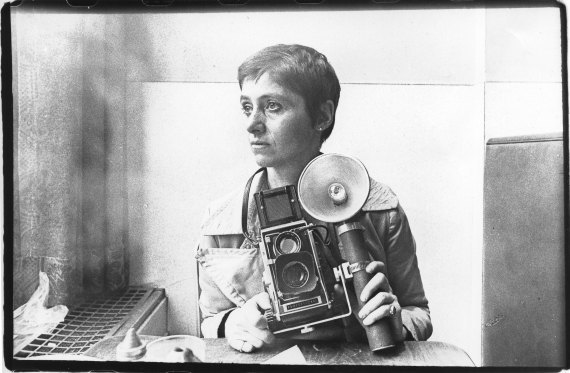
Artiste et reporter-photographe, Rena Greenblatt rejoint à Florence son père Simon et sa belle-mère Ingrid pour une semaine de promenades parmi les splendeurs de la Renaissance. Mais l'idylle n'est pas au rendez-vous. Naguère scientifique brillant, Simon est désormais un homme fatigué à l'élocution hésitante, et sa femme - solide nature batave - semble peu réceptive aux chefs-d'œuvre toscans. Le couple parental traîne la patte. Et Rena, toute au regret de Paris et de son jeune amant Aziz, s'impatiente. Alors lui viennent quantité de souvenirs, fantasmes et pensées secrètes qu'elle ne peut partager qu'avec Subra, son « amie spéciale », son double, son invisible confidente. Seule Subra sait à quels infrarouges réagit Rena : désir et déchirements de la maternité, beauté et liberté du sexe, émotion devant les corps masculins débarrassés de leurs oripeaux machistes, et que Rena adore photographier dans l'abandon de la jouissance... Des chapitres vifs et brefs mêlent présent et passé, révoltes en banlieue parisienne (on est en octobre 2005) et insurrection intime, retours du refoulé - l'enfance émerveillée et endolorie, l'adolescence saccagée - et mirages de la clairvoyance. Ainsi, infrarouge raconte deux voyages : celui, désopilant, de vacances ratées, et celui, plus sombre et passionné, qui explore les liens et les conflits familiaux, les codes féminin et masculin, les archétypes trompeurs et les vérités inavouées.
(from Wikipedia) Huston lived in Calgary until age fifteen, at which time her family moved to Wilton, New Hampshire, USA. She studied at Sarah Lawrence College in New York, where she was given the opportunity to spend a year of her studies in Paris. Arriving in Paris in 1973, Huston obtained a Master's Degree from the École des Hautes Études en Sciences Sociales, writing a thesis on swear words under the supervision of Roland Barthes.
(Actes Sud) Née à Calgary (Canada), Nancy Huston, qui vit à Paris, a publié de nombreux romans et essais chez Actes Sud et chez Leméac, parmi lesquels Instruments des ténèbres (1996, prix Goncourt des lycéens et prix du livre Inter), L'empreinte de l'ange (1998, grand prix des lectrices de ElleJ et Lignes de faille (2006, prix Femina).
When I initially finished Infrared I thought it was simply OK. But then I spent some time thinking about the book. Infrared is a novel that needs to sit with you and stir in your gut.
The story involves a 45-year-old woman, Rena Greenblatt, as she takes her father and stepmother on a trip to Florence, Italy. Rena, a photographer specializing in infrared photography of damaged subjects, takes along her camera not so much to take pictures, but to stave off her anxiety about the trip.
Soon the reader realizes that Rena also carries a lot of emotional baggage, and has brought her alter ego/imaginary friend, Subra along for the trip. The invention of Subra allows Rena to have internal conversations about concerns, memories and events. It is a bit of an unsettling technique: It does underline Rena’s mental stability, or lack thereof. “Subra” is an anagram for “Arbus”, Diana Arbus, a Jewish-American photographer of the unusual. By the end of the novel, Rena comments: “What had she endured as a little girl, growing up in New York in that wealthy Jewish family whose privileges she detested? What evil had she been forced to construe as good, as irrevocably that she would spend the rest of her life blurring the nuances between the two?” (257). Change “New York” to “Montreal” and the same comment could be said about Rena.
Also mentioned is Lee Miller, who, at seven, was raped by a family friend and contracted gonorrhoea. Her vagina and uterus were subjected to acid baths for treatment. Miller went on to be a model for Man Ray and later a noted photographer of the Holocaust.
The stories of two female photographers are complemented by the fact that Rena’s paternal side of the family were almost entirely annihilated by the Holocaust. Her Grandmother Rena “sank into a permanent stupor” (45) after she saw the photographs of the camps. The damage becomes inherited.
Of course, Rena is a photographer of difficult subjects. It seems the inspiration for the novel comes from a wondering about what drives seemingly privileged female photographers to choose horrors and freaks as their subjects.
And there’s the sex. Oh yes, the sex. What happened to Lee Miller is a hint of what happened to Rena. There’s enough titillation in the book to get you started and keep you going.
One of the difficulties I had with the book is liking Rena. Her proud promiscuity is a turn off, and it’s also distancing to have a narrator who admits to making things up. Ultimately, I felt sorry for Rena; it’s painful to watch her self-destruct. The graphic aspects of this book will be difficult for some readers. For myself, I think I had wanted and expected a sunny story because it was set in Tuscany. This book is not that. It is gritty, disturbing, and unstable.
What I liked about the book wasn’t so much the characters and the story (why is Rena on this trip, anyway?) but where the novelist directed me to look: at artists and their art. It’s helpful to look at the art work or research the artists that Huston mentions in Infrared. However, that said, the references could take the reader away from the novel and to look at what perhaps inspired it.
Infrared is about layers, illusions, and emotional resonance, both for the characters and the reader. It needs to be re-read with an infrared “lens”. Rena uses this technique when photographing her subjects to strip away the surface and see the pain underneath. Rena wants to see other’s pain because it’s what she feels so much. Rena is stripped of everything by the end of the book: job, boyfriend, and father. She is left as vulnerable as she was as a child.
I encourage you after reading this book to let it settle. Then take the time to peel back the layers, examine the novel’s references on the internet, and cross-fertilize the information that has been presented to you.
Rena Greenblatt, the fortyish protagonist of Nancy Huston's sensual and disturbing new novel, spends much of the book in mental dialogue with a special friend whom she names Subra. It is not hard to see that this is a backwards homage to Diane Arbus (1923–71), the American photographer of people on the fringes of everyday society.
For Rena too is a photographer, whose shows include "Whore Sons and Daughters," "N[o]us," and "Misteries." Their subjects reveal how Rena's mind works, which is the main interest in the book. The first show is just as it says, the families of sex workers. The second is a series of sleeping nudes (the French title is a pun between "nudes" and "ourselves"), "bodies of all ages, colours and sexes, obese and scrawny, smooth and wrinkly, hairless and hirsute […] every one of them beautiful." The third shows "close-ups of young men's faces twisted with hatred. Moving in… closer and closer […] passing through layer after layer of memory all the way to childhood. It's overwhelming when that starts to show up in the revealing bath."
The revealing bath image might also serve as a description of Huston's narrative method. The frame is Rena's week-long holiday with her aging father and stepmother in Florence and Tuscany. Rena (or Huston herself) has a magnificent eye, and her encounters with artworks, famous or otherwise, sent me repeatedly to Google Images to check her observations for myself. But the main substance of the book lies in the reflections they trigger and layers of memory that are gradually peeled back. José Saramago does something similar in his Manual of Painting and Calligraphy; it is also the basic principle of W. G. Sebald's novels, though neither has Huston's sensuality. However, while Huston's observations are as rich as those of either author, her technique soon becomes excessively transparent. Before long, the ostensible story virtually disappears, as Rena darts back in time at the slightest pretext—a fleeting thought followed by "Tell me, says Subra," or linkages so blatant as to be almost absurd: "Again the toilet flushes and a heavy-built man comes out of the bathroom, zipping up his fly. Rena thinks of all the flies she has undone in the course of her long love life…".
Rena may pay homage to Diane Arbus by reversing her name as Subra, but the surname of the other huge influence on Huston's writing is irreversible: Anaïs Nin. I don't think I have every read a book in which a woman is so frank about sex; Rena's current project is to photograph the faces of her lovers in infrared as they climax. Her verbal descriptions too are explicit, sensual, and above all joyous. In addition to her many lovers, Rena has had four husbands, all Francophone, all of other races (Haitian, Cambodian, Senegalese, and Algerian), and all loved passionately at least for a while. But as the layers of memory peel away, we become aware of events in Rena's childhood that are more than titillatingly precocious but clearly traumatic; the book darkens considerably as it goes on. Meanwhile, the 2005 race riots are breaking out in the Paris suburb where Rena lives, a distant outcome of the anger recorded in her "Misteries." Nancy Huston (who wrote the book originally in French, then made her own translation), brings the threads together into a climax of sorts, but leaves most of them untied. However, this is not a novel you read for the story, but for the vision of its central character, and that really is extraordinary.
Rena Greenblatt is shepherding her septuagenarian father Simon and stepmother Ingrid through a vacation in Florence, Italy, but grows increasingly frustrated that they aren't appreciating the masterpieces of the Renaissance as much as she thinks they should. Meanwhile, her job as a photojournalist and her lover/colleague Aziz are calling her back to Paris. Paris is burning and they demand that she come back at once to document the conflagration.
Rena Greenblatt is a name that only a Gastroenterologist could love, and I also found it difficult to warm up to her. Though I titled my review 'renal failure' by no means was that meant to imply that the book was a failure. Rather, I meant that the protagonist, Rena, was failing to enjoy her vacation and also failing to just let her father and stepmother be themselves. She was a total snob, and it was shackling her to her own, self made, ring of hell, one that Dante never conceived of. I kept waiting for her to have some kind of epiphany.
That being said, I did enjoy the book, in spite, or perhaps because, Rena was such a pretentious snob. What was that line in T.S. Eliot's poem, "The Love Song of J. Alfred Prufrock"?
"In the room the women come and go Talking of Michelangelo"?
Much of Infrared took place in that room, except the room was an interior monologue in Rena's head, where she also had an imaginary friend that she talked to, one that never tired of hearing her tell the same stories over and over again, Subra. The friend, a sister she'd always longed for, appeared in a photo by Diane Arbus. She was named Subra because that is Arbus spelled backwards. There were also sidebars to discuss the work of Araki, his Lucky Hole photographs, and the Sentimental Journey series. This led to revelations that her camera, a Canon, was a homophone for Kannon, the Buddhist goddess of mercy. Perhaps the Japanese company had even named it that on purpose. At one point, she invokes not only the name of Arbus, but also Plath and Russian poet Marina Tsvetaeva. All three women had apparently committed suicide. Oh no. I can see where this is going. Or maybe not. Don't want to spoil the ending.
I admit that I hadn't heard of Tsvetaeva and had to look it up. So typical of Rena Greenblatt's snobbery (or is it author Nancy Huston's) that she name drops a rather obscure poet expecting you to know it. She also showed off her command of foreign languages, much to my chagrin. Even though I hadn't heard of Tsvetaeva I didn't really mind the author's or protagonist's indulgences. Hey, thanks for pulling my coat to this poetess, she looks worthy of further study.
All in all I enjoyed this excursion through Italy almost as much as Simon Greenblatt and Ingrid did, in spite of Rena's frustration. There were also a lot of dark and passionate memories stirred up that led to some rather disturbing revelations. Indeed, there are so many skeletons in Rena's closet that I'm surprised she has room to hang her coat there.
Nancy Huston is one of those enigmatic writers who manage to flourish inside of a strict frame of her own devising,even as it is covered over with a rich profussion of images and profound insights that rearrange the facts. As an ex-patriot canadian long residing in France,her work is not widely or readily available here in canada, nor,the states I suppose. Of course I snatched this new-to-me volume from the library shelves, and decided to give myself the pleasure of reading it before I tackled the formidable Murakami.And I needed something quick to excorcise the ghost of Anja Creed from the Rogue Angel series that so bothered me with its poor writing and stuck together plot.
I still admire NH's ouevre, and acknowledge her edgy brilliance,but my infatuation has definately been curtailed by this sorry mish mash of a novel. Theres interesting bits and even some good bits, but the flimsy plot cannot sustain any of the really interesting ideas floated in these pages.
SPOILER ALERT: There is nothing especially objectionable to the plotline, it just doesnt compute. A sophisticated, independent and competent photographer takes a weeks prearranged holiday with her aging Lothario of a father and her stepmother, with whom she is extemely bored. We get a cute look at Florence,framed by symbolism,and some insight into Rena's character development,her husbands and lovers and preferences, her imaginary companion,and her devotion to the man she left behind.So why in the world did she not cut her boring vacation short and rise to the collective need when he asked?
Ghosts of Anja and that false self-righteousness,the glamourized contemporary heroine who can never seem to rest.By all means,seek out and read NH but this one,not a priority.
I've never been a fan of ekphrasis because it's rarely done well, and Huston's effort in INFRARED is no exception. It's like she started with the Florentine works of art as an organizing idea and then loosely hung some shreds of some characters' flesh on the structure to try to make a book out of it. The book's description and blurbs lead us to believe we are going to find something very powerful and real in these pages—or at least something titillating and erotic—but I found myself more than once thinking "Oh, ho, hum...." The secrets? Predictable. The revelations? Predictable. The sex, the lushness of language and insight? Uneven and poorly integrated at best.
Subra's repeated "Tell me" is at first a guiding light through Rena's sea of self-deception, but by the end of the book it has become a contrivance (along with the rest of them) that has worn out its welcome. The title's metaphor held a great deal of promise, but Huston did not manage to extend and explore it to the degree she could have.
If I was supposed to feel sympathetic toward the main character, I did not; Rena comes across as shallow, selfish, and immature. Why EVER would a reader care about her? (If this was Huston's point, what was the point?) If I was supposed to feel elevated by insight or understanding, I was not; the characters were too cardboard for me to care. I found Huston's use of the abuse scenes somehow offensive, but not because of the content: Really, would someone who had been through that and the rest of what was alluded to in these pages have grown up to be such a princess?
The only thing remotely authentic about this book, to me, is what happens in the last eight pages. (Aziz, in the end, tells it like it is. And Rena's still clueless.) Had the first 255 pages of INFRARED been better, I would not have ended the book feeling like I'd wasted my time reading it. I can see that Huston is capable of some fine writing when she isn't leaning on the crutches of her devices; this book, however, was not the best way for me to discover her work. I give it three stars only because I think she's a writer worth watching.
I've read a few books from Nancy Huston, liked them all and this one was a big disappointment. I don't mind disturbing characters, they can be quite interesting, but I found Rena impossible to like. I can understand her difficult past (actually, abusive might be more appropriate), but that does not allow her to be so judgmental, cynical, unforgiving,and her total lack of compassion. She seems so arrogant, understanding all these great painters, and despising all those "stupid tourists" around her, including her parents. The paintings she so loves (Italian Renaissance) are also the ones I absolutely dislike, finding them quite disturbing, so this does not help either (reminded me of some paintings I really would like to forget...). In the end, why does she even go to Italy with her parents, this does not make any sense, knowing her personality. I would hope that a smart woman in her 40s would be wiser that she is, more tolerant with the people around her.
Interesting way of approaching memoir, mixing first and third voice in fascinating ways, through the use of an inner voice who both listens to and rebukes Rena (oh, don't we all have one of those). I would like to submit this novel for consideration of how to write sex scenes. Not awkward at all, but since we are dealing with a dishonest narrator, I did find myself wondering how many of these intimate encounters were actual experiences and how many were pure fantasy - an important distinction when we consider awkward erotic writing. Still, that might have been Huston's point, with a flawed middle-aged woman, to still show her sexuality, her damage and how often we are daydreaming about one time or place when we are in another.
Mon second Nancy Houston. Il y est beaucoup question de sexe et ce de la plus crue des manières; ce qui ne m’est pas particulièrement agréable. Si vous avez du mal à gérer votre libido et que votre relation avec votre père est intense vous trouverez un écho dans le comportement de la protagoniste. Pas un roman incroyable mais l’écriture de Nancy Houston est quand même très agréable à lire.
“Les hommes qui manquent de confiance en eux - et ils sont légion, Gérard était bien placé pour le savoir - sont prêts à payer extrêmement cher pour éjaculer. Ils se disent que plus ils payent, plus ils valent. A Washington, Moscou, Paris ou Tokyo, les très grands messieurs tout petits à l'intérieur peuvent dépenser jusqu'à dix mille dollars pour un seul coït avec une call-girl de luxe : ils sont sûrs de jouir alors, tant leur dépense a été forte.”
On suit Rena, photographe de 45 ans, qui part en voyage en Toscane avec son père et sa belle-mère. Le sujet du voyage en famille est extrêmement bien traité. Pendant le séjour, les émeutes de 2005 explosent à Paris, et Rena ne peut que les suivre à distance. J’ai aussi beaucoup aimé les allers-retours entre le voyage des trois personnages, les références à l’art italien de la Renaissance et les souvenirs de Rena qui ressurgissent de manière très réaliste pendant le voyage.
Les allers-retours entre les pensées de Rena et le voyage, ainsi que la multiplication des références culturelles pourraient perdre le lecteur, mais finalement j’ai beaucoup aimé le résultat, et je me suis bien plongée dans l’introspection du personnage principal.
Il y a des choses intéressantes dans ce roman, l'Italie, bien sûr, et le fait que le personnage principal soit photographe. L'amie imaginaire m'agaçait un peu, à mon avis, il y aurait eu d'autres façons d'amener le personnage à raconter les différentes périodes de sa vie. Ça traine un peu au milieu.
Frère tyran qui l’a violé, père qui l’a rend complice de son adultère, soumise aux fantasmes de son psy...infrarouge : clichés qu’elle prend de ses amants après l’amour
This entire review has been hidden because of spoilers.
Rena Greenblatt is a 45-year old photographer on holiday with her father and stepmother. Rena’s medium is infrared photography; the reasons for her choice are beautifully explained in the above excerpt. Accompanying the often uncomfortable trio is Subra, Rena’s imaginary alter ego, a sister in her mind who has been with her since adolescence. At home in Paris is Aziz, Rena’s young lover, who is dealing with race riots and national emergencies. Rena’s stepmother is annoying. Rena’s father is aging, perhaps dying. And Rena is in the middle of it all, getting by — behind a camera lens, between the sheets of strange beds, and in conversation with Subra.
This is a complex tale. Rena is a woman who knows the redemptive powers of both art and sex, two forces that have destroyed as often as they have elevated. More impressive, Rena has managed to harness both of those things after a childhood filled with loneliness and trauma, including sexual and mental abuse at the hands of a family member. Many, perhaps even most, authors would have taken such a past and told a story filled with guilt, suffering, cliches, and — eventually — triumph. And we’d have read it all before, likely seen it all before, and we’d be bored.
It is to Huston’s credit that she does not take any of these shortcuts. Instead, she offers a protagonist who is strong, flawed, and deeply honest. It is easy to feel along with Rena; even when her decisions didn’t seem to make any sense, I understood why she felt compelled to make them. When the narrative turned to the past, even the most shocking admissions didn’t evoke sympathy, not exactly. Instead, they created a study in facets — these are the things that made her. These are the things she internalized, and fought through, and learned to express with her camera and, sometimes, with her body.
Speaking of bodies, Huston writes sex with true sensuality. She knows how it feels and how Rena feels when she’s in that moment, without resorting to porn language, purple prose, or adolescent euphemisms. Huston writes the flesh as well as she writes the mind, and her sex scenes add a corporeal layer to a very intellectual story. The combination is erotic and intimate, a master stroke in more ways than one.
Infrared is not a simple book. The story is complicated and fraught with emotion, but Huston tells it all in language that manages to be both simple and poetic (some readers might be turned off by the often lyrical turns her prose takes, but I loved it — it made scenes into characters in their own right, more often than not). The narrative is presented in an almost objective voice that will suddenly turn raw, or tender, or terrified, almost before you realize it. This book gave me moments where I literally didn’t realize I was holding my breath until I realized that I had to breathe. I don’t know many authors who can do that.
This is a somewhat rambling description of a 1 week Tuscan holiday to which the main character-Rena Greenblatt, a photographer in her 40's, originally a Montrealer, but living in Paris-treats her father Simon & stepmother Ingrid. Rena's experiments with infrared photography to explore the hidden inner aspects of her subjects & views herself as an infrared sensitive film capturing hidden events. As the trip unfolds, it is apparent that Rena hates it, because she dislikes her dull conventional stepmother, and also has a lot of hangups stemming from abuse by her brother as a child(he is a gay jazz violinist), and her neglect by her mother-a lawyer defending prostitutes-who dies in a car accident when Rena is a child. Rena is a sensualist who has had a great deal of varied sexual experience which she describes in explicit detail. She has travelled all over the world and has had a host of lovers in every place, but her current lover Aziz, an Algerian whom she adores, works for the same publication. He contacts her several times to return to Paris to do the photos for newscoverage of riots in the poor NE suburbs stemming from the electrocution of 2 adolescents who fleeing from the police, sought refuge in a transformer. She refuses his appeals&those of her employer, and ends up losing her job&her lover. She also gets her backpack stolen with her camera, wallet, credit cards... The holiday is disappointing, in that they miss many major sites, due to Simon&Ingrid's indolence&frequent need for food. At the end of the book Simon trips on a curb hitting his head& is assessed in hospital, where the injury is found to be innocuous, but he is found to have a malignant brain tumor-Rena facing the loss of a parent along with her other losses. A fairly good read, and very well written.
so subversive, sexy and smart. a fast moving novel, a week in the life of Rena (and her "imaginary friend" Subra, to whom she talks to incessantly, because either rena doesn't want to talk to anybody else, or no one wants to listen to her? no sure, but i know how she feels) visiting tuscany with her old man and stepmother. so sure, rena is a famous globe trotting photographer who uses infrared, and yes, she has been horribly abused as a little girl and she is trying to still be a good mother, lover, daughter, and artist and deal with all that too. the eroticism, day and night dreams, and reminisces are fantastic here, but still the story itself seems "thin". too bad nancy huston couldn't be merged into Blau Drinking Closer to Home , goldberg Bee Season, nina-marie I'm Not This Girl, and lydia millet Oh Pure and Radiant Heart , now THAT would blow the male reading world's head off. but i guess i can wait for that.
Claude just finished it and it sounds yummy. It's about time I read something French again, and something fictional after New Yorker investigations and now The Shallows, which is good with some new info that I hadn't actually already read in MacLuhan, New Yorker science and media articles, and wherever else I roam. Starting this one may slow that one down, but mostly it's work does that.
End of March: This one has taken a while, because it's still a busy time and I do read articles between the evening pillow reads. I was irked at some aspects (that I talked to Claude about), but am often irked these days, so am not certain it's the book, really. Intriguing are the Italian contexts that create her flights of memory with her ''friend'' or more logical alter ego, and I sympathized with the irritations with her father and mother-in-law. I also appreciate how they come out as more positive and loving in the end, which might bode well for the uncertain ending as she returns to Paris. There's room for more thought and the style seemed fine for the task, but it's still not my language, sadly, so I shan't venture an opinion there.
I am a fan of Nancy Huston, having read probably close to 10 of her books (Fault lines being the best). I therefore picked up Infrared without checking the story nor the reviews. It is a very disturbing novel to say the least, all the most if you know that N Huston is a highly respected novelist. Disturbing as the main story (trip with her dad and step mother) is slow, frustrating and never really explained - why did Rena decided to organise it in the first place. The minute she arrives, she is ready to leave. Disturbing because the 2nd story (her life or rather the abuses she had to endure) is fast paced, horrifying in many aspects but also beautifully written, well analyzed. I read that the book was awarded the Bad Sex Award (2012)- apart front the rape scene, I found the erotism quite beautiful. Disturbing as one never quite understand who Rena is -obviously not a balanced person in the traditional sense of it but quite complete in light of what she has gone through. She still goes to her brother's 49 bday, she sticks to a trip she hates having committed to it. She still believes in love
L'histoire d'une photographe canadienne basée à Paris qui rejoint à contrecoeur son père et sa belle-mère en Toscane pour une semaine de balade parmi les merveilles artistiques de la Renaissance au moment où le sort veut que se déchaînent les banlieues de la région parisienne: nous sommes en 2005. La narratrice est accompagnée de sa confidente imaginée avec qui elle partage souvenirs et pensées secrètes; les conversations de ce duo de choc donnent au livre un ton d'une grande liberté, où se livrent sans tabous les conflits et déchirures de la famille comme les relations amoureuses et maternelles qui ont forgé la forte personnalité de la narratrice. Une relation intime et riche du désir côté féminin, une narration au ton toujours très juste, qui ne renonce pas à l'humour et s'achève sur une note d'infinie douleur et de renaissance tout à la fois.
A Paris-based photographer visits Tuscany with her aging father and stepmother. I think this kind of book is known as a "beach read." I don't like beaches, and I don't like this book.
Huston writes well- her prose flows smoothly, her dialogue carries you along, and her description of Florence and the surrounding area is well-wrought- but she's shallow. As the book builds towards its denouement of self-awareness the threads of her ideas start looking pretty bare and trite. Finally, using Subra (Arbus spelled backwards) to turn the internal monologue into dialogue got to be highly annoying.
Read this book if you're at the beach and you've gotten all you can out of the skywriting.
Photographer Rena is a raw character. When we meet her she is touring Florence with her 70-year-old father and her stepmother. Her frustration with the older couple brings to mind teenage rebellion. Rena worships and yet often despises men. She delights in sex and yet slowly reveals less-than-thrilling past experiences. Her narration is not entirely reliable as her invisible friend reminds her occasionally. She prefers to view the world through the lens of a camera and tourism with all the guidebook details. Compelling, revealing and at times riveting, this book asks and answers questions about life. Huston is an original.
Het boek geeft herkenning, nieuwe beelden voor onontwarbare gevoelens, bijv. Bld. 242.:'Dringende en onbelangrijke, mooie en spannende zaken, alles door elkaar, onontwarbaar, slangen van Laocoön, een voortdurend kort oplichten van het verleden dat een schuldgevoel geeft en elke toekomst in de weg staat.'
Ik heb het uit. In de vakantie met haar vader en zijn vrouw denkt de dochter terug aan de belangrijkste gebeurtenissen in haar leven. Prachtig verteld en geschreven.
Sur une trame somme toute assez simple (des vacances en famille), Nancy Huston arrive à dire de très belle choses sur les femmes, les hommes, les relations familiales, amoureuses, sexuelles, l’art, la photographie, les choix que l’on fait et qui auront une influence capitale sur nos vies... Infrarouge atteint le juste équilibre entre sensibilité et intellect, gravité et humour, c’est magistral et c’est un bonheur à lire. Je vous le recommande chaudement.
4 stars because it is so well written. 3 stars because I didn't enjoy it as much as I hoped I would. Too much angst, pretentiousness, stuff I know nothing, or very little about and unresolved feelings. As a survivor of Catholicism, sexual abuse, male-dominated upbringing and life in the 50's, I understand all to well how childhood, family, culture and gender impact our lives and the lives of our children. This Huston covers well, but unfortunately without resolution.
The Quill & Quire gave Infrared a starred review, writing, "Huston uses a number of different methods of portraying dialogue. The way she controls the pace so firmly, while varying it frequently, creates a rhythm that draws the reader inexorably along."
I proved to myself once again that literary fiction and I rarely make good bedfellows. The plodding storyline coupled with the use of an imaginary friend to a 45 year old woman irked me after awhile.
Ce livre ne vous laisse pas indifférent. Toujours le style et la finesse qui caractérise Nancy Huston mais cette lecture m'a parfois mise mal à l'aise.
I hoped this would be better than it was,, having won the GG for fiction. Despite its Tuscan setting, I found it pretentious and disliked the protagonist intensely.