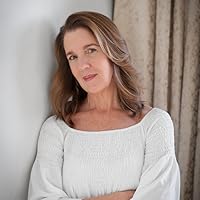
Best-selling author Mary-Beth Hughes delivers a seductive, deeply human, and sophisticated collection about the universal need to be loved, and the complicated imperfections that jeopardize the ties that bind us.
The stories in Double Happiness are extraordinary portrayals of the ordinariness of life. By pinpointing those moments of discord when personal needs and morality clash with circumstances beyond our control, Hughes challenges our concepts of responsibility, trust, resilience, and betrayal. In “Pelican Song,” a thirty-year-old modern dancer who moonlights as a movie–ticket taker visits her parent’s picturesque home to discover that her stepfather has begun mistreating her too-accommodating mother; “Horse” follows maladjusted honeymooners in Atlantic City whose romantic weekend is saved from emotional catastrophe by a horse that refuses to dive from its pedestal into the ocean; and a holiday in New York City turns from shopping sprees to a young girl’s sharp discovery of her father’s secret life in “Rome.”
With an elegant blend of humor and pathos, Hughes captures the turning points in relationships that make us wonder how well we really know those we love. Double Happiness is a revealing meditation on the fragility of contentment and the lengths we must go to in order to sustain it.
Loved the first couple of stories, then the rest were hard to read, meaning I found her prose difficult to follow. The use of no quotation marks is something I've employed as well, but you have to be very careful with this device. Hughes uses it throughout, and it can get very confusing as to who is saying what. There were flashes of wonderful passages, but as a whole, I found myself skimming to the end. I would check out her novel, however.
Reading Hughes' stories I felt like I was eating a thick, juicy steak after days of too many salads. There is something Heminwayesque about Hughes' writing. The sentences are short. They contain few high falutin words. As I read I felt I was skimming on the top of the abrupt sentences then as meanings began to open up I sank into the meat of the words. Emotionally it felt like ok let's move along folks, there's nothing to see here then red lights are burning your eyes, the blue lights come on too and finally a whooping siren chimes in. These stories are sad but they also have hope especially the last one. "Double Happiness" is about living with and getting through grief.
Hughes dances right on the edge of misogyny. Why would anyone care about a woman? It's ok to hate women or use them. Hughes is reflecting what many people think. Which leads me back to comparing her to Hemingway, one of the biggest woman dismissing writers? I think Hughes adapts his style consciously maybe even to highlight just this point. You can however, see through her lace like words to the deeper truth of women loving and taking care of one another. It's amazing how her seemingly unemotional style is so emotive.
I read most of this. That counts right? Despite some beautiful language ("she laughed three notes like a doorbell ") I found myself confused, if not bored, by some of the stories. Some were better, easier to follow, but then would just...end. Some of the storylines would go here and there, bringing new people and when I didn't know the main ones, and it was hard to picture a lot of the stories in my head. For me, they just didn't flow. I read all the stories except for three, the last I didn't even bother to start - I'd had enough by that point - and two others I read halfway through and skipped to the next. I'm not saying the book was bad, per se, but for me it just wasn't working.
I really really liked some of the stories, but found some to be too boring to hold my attention right now. Please keep in mind that this may be just about me and my current attention-span and not in anyway about the stories.
These are short stories but each packed a punch. Most are about the dynamics between people - lovers, siblings, parents/kids - but they're very intricately plotted, going forward and backward in time, and sometimes hard to follow but most were really interesting. They're the kind of stories where once you finish one - or even midway through - you feel the need to flip back to the beginning and revisit what transpired before you got from there to here.
The spare on details with punches of flashback or -forward shock writing style started feeling formulaic after the first couple of stories. I was sure it was just going to get worse. Then, the last story in the book, the one for which the book is named, changed my mind. The style was meant for that story.
I did not like these stories. She seems a talented writer but while she covered dark themes, her characters were nasty and strange and the author had no ability to sweeten their edges just enough to soften them. Nothing like Alice Munro or Lorrie Moore sadly who deal with poignant and devastating details.
yawn. It's not that the writing isn't good, they're all good. but I've been reading a lot of short story/literary fiction books lately and they all feel and sound the same. I get tired of the subtle "men lead lives of quiet desperation" theme that seems to run throughout every story I read.
I couldn't finish this book of short stories. I didn't have a single emotional connection to any of the characters in the first several stories. The writing is sparse and cold, but hey, the New Yorker loves it so what do I know.
Some of the stories just aren't very captivating. Consequently I have to skip them. I expected to be emotionally moved but the blurb sets up more expectation that the book can offer.