Jesus, Prophet of Islam, by Muhammad 'Ata Ur-Rahim, examines Jesus as a prophet teaching the unity of God. The author sketches the dramatic picture of the original followers of Jesus who affirmed Unity. What emerges is that "Christianity" is the fiction that replaced their truth. The book presents an incontrovertible challenge to any Christian reader, as well as providing an illuminating perspective for understanding the wave of new scholarship among Christian theologians that rejects the "official" interpretation of Jesus and his mission.
For any Christian, the following views may appear too-challenging. Discomforting. Maybe.
"Jesus: Prophet of Islam shows us how the "true" Christian teaching was diverted, or one might say de-railed, by the powerful Pauline explosion."
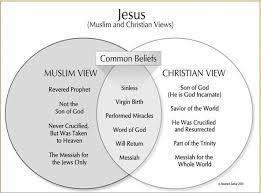
I have recently watched a reportage by ITV on ”The Muslim Jesus”. Basically (through interviews, Ahmad Thomson was part of, mostly in the London area), you’re led to consider that: (1) most of Muslims do believe in Jesus; he’s mentioned in the Koran at least 154 times. (2) But in some instances of the life of Jesus there’s a different account/narrative on the person throughout his life: birth, family, crucifixion etc. That is, some think that “Christian communities changed the [true] narrative”.
"The second important element in this book is its profound statement of how the ´fiction´ of Christianity was invented".
Many agree he was a simple man, possessing nothing that relevant, but a “robe, a bowl and a comb”. Stories even tell that he gave away both the comb and the bowl.
"Lentulus, a Roman official, described Jesus as follows: He has nut brown hair that is smoothed down to the ears, forming soft curis and flowing onto his shoulders in luxuriant locks, with a parting in the centre of his head after the fashion of the Nazarenes. A smooth clear brow and a reddish face without spots and wrinkles.Nose and mouth are flawless. He bears a full luxurious beard which is the same colour as his hair and is parted in the middle. He has blue-grey eyes with an unusually varied capacity for expression. He is of medium height, fifteen and a half fists tall. He is cheerful in seriousness. Sometimes he weeps but no one has ever seen him laugh. A Muslim Tradition, however, paints a slightly different picture. According to this source: He was a ruddy man inclined to white. He did not have long hair. He never anointed his head. Jesus used to walk barefoot, and he took no house, nor adornment, nor goods, nor clothes, nor provisions, except his day's food. His head was dishevelled and his face was small. He was an ascetic in this world, longing for the next world and eager for the worship of God. (Ath-Tha'labi).
The Imam of north London Central Mosque, Ahmed Saad, reiterates that Jesus/Issa was the son of Mary.
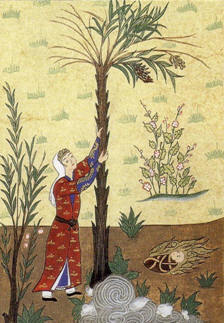
On the divergence side, though Mary had an immaculate conception of Jesus and Gabriel announced the birth to her, there was no role for Joseph, and no manger, no stable. Rather: the birth occurred under a tree in the desert.
“The angel blew into Mary and she conceived”
Mary (a symbol of purity) was alone but comforted thereafter by the appearance of a rivulet in the birth spot. The angel imposed her silence. Jesus as a baby talked very prematurely: that was his very 1st miracle. He could also transform clay into flying birds.
Surely the similarity of Jesus with God is like the similarity of Adam. - He created him from dust, and then said to him: 'Be!' and he is. (Qur'an 3.59).
Another difference: the crucifixion. Some say that “he was not killed and crucified”. Judas, instead, took his place on the cross; angels took Jesus to heaven. So, in this vein, he didn’t resurrect.
The Muslim “true” narrative continues: He will come as a prophet at the end of times. There will be a time of oppression, of the Anti-Christ, the “impostor”, the deceiver, who, upon seeing Jesus, will “dissolve”.
Curiously and finally, not good news for entrenched Christians. Ultimately, they will have to convert to Islam. It was said in the interview that near the tomb of the prophet (Mohamed) there’s an empty space reserved to Jesus.
“If you want to follow me you’ll have to follow Mohamed”.
If the Last Day comes upon you when you are planting a tree-finish planting it.
This is the book where I learned the intricacies of the history of Christianity especially after the departure of Jesus. Some of the individuals mentioned in the book include Michael Servetus and John Milton who affirmed Divine Unity, which if looked closely, greatly resembles the Islamic belief in One God. I recommend complementary reading alongside MA Youssef's, The Dead Sea Scrolls, The Gospel Of Barnabas, And The New Testament.
Utterly psuedo-historical work; didn't finish it for this reason. The historical mistakes that are made are very flagrant, too many to count. He makes many extraordinary claims, sometimes without citations. For a very bad example, I was astounded that he seemed to pass the psuedographical work 'the Gospel of Barnabas' as one of his sources on the early Christians, when it is the most obvious Muslim forgery to exist. He seems to confuse the epistle of psuedo-barnabas with the Gospel of Barnabas. Really? Among his many blunders is his utterly unfounded assertion that Paul was in love with a daughter of a high-priest who was latter married to a high ranking roman official, leading him in a rage to defect from his high office as a Jew. Really? I have found absolutely zero references to this supposedly notable event anywhere, let alone in the NT. He also makes the (Muslim, all too Muslim) assertion that when Jesus Christ was arrested, that 'in the scuffle in the darkness they mistakenly arrested Judas' (paraphrase). Really? As if the high priests would not recognize the most notorious 'blasphemer' of Jerusalem... I understand that the arguments of this book are solely motivated by the quran's outrageous claims about Christ's life, but this book is truly is beyond parody. I don't know who he thinks later FAMOUSLY hung himself if it was Judas who was crucified. In any case, do not go into this book expecting a serious academic defense of Islamic claims about the crucifixion (which they insist is a cruci-fiction), but a prodigal play of insane unfounded claims. It is no surprise that a search of the author's name does not turn up any scholarly credentials. In my opinion this book's main value is to witness the insane intellectual loop-de-loops that Muslims must do to throw out Christianity. That I would not consider myself well-read in scholarly debates on early Christianity and could easily see the holes in his arguments is quite telling. Islam is not sending their best. I am glad I bought this for very cheap at a used book store, otherwise the cost would not outweigh the benefits.
Nabi Isa A. S. yang turut dikenali sebagai Jesus Christ (terutamanya di kalangan penganut agama Kristian) merupakan seorang nabi yang ditimpa fitnah yang terbesar iaitu dianggap sebagai tuhan! Ini melalui konsep Trinity yang mendakwa bahawa Tuhan itu wujud dalam tiga bentuk; The Father (Tuhan itu sendiri),The Son (Jesus Christ),dan Holy Spirit. Buku ini bukanlah sebuah buku yang memfokuskan kepada siapakah Jesus Christ menurut perspektif Islam sahaja semata-mata. Tetapi,turut membincangkan sejarah ajaran dan pengikut Nabi Isa selepas baginda diangkat ke langit. Nabi Isa tidak pernah mendakwa dirinya adalah sesuatu yang patut disembah. Malahan,konsep atau doktrin Triniti tidak wujud di dalam Bible atau kitab Injil. Triniti merupakan sebuah doktrin yang terhasil dari campur aduk agama dan falsafah Greek yang berpegang kepada konsep banyak tuhan dengan ajaran agama Kristian yang asal. Inilah ajaran sebenar Nabi Isa; iaitu penyembahan kepada Tuhan yang satu. Triniti diperkenalkan oleh Paul of Tarsus dalam usahanya untuk menarik minat orang bukan Yahudi untuk memeluk agama Kristian. Jadi,kompromi atau lebih tepat lagi,pencemaran agama telah dilakukan dengan mengangkat Jesus Christ sebagai tuhan. Melaluinya,dosa manusia diampunkan apabila baginda disalib dan tidak lagi perlu mengikuti peraturan dan larangan agama. Konsep triniti ini bertambah kuat selepas Persidangan Nicaea tahun 325 dan hubungannya yang kuat dengan Empayar Rom menyebabkan ajaran triniti ini dikenali sebagai Holy Roman Church dan Kristian Katolik. Namun demikian,ajaran asal yang disebarkan oleh Nabi Isa tetap terus hidup dan diamalkan,walaupun mendapat cabaran yang besar dari Kristian Katolik. Mazhab ini dikenali sebagai Unitarianism. Doktrinnya tidak ubah seperti agama Islam. Para penganutnya percaya kepada hanya satu Tuhan dan menganggap Jesus Christ sebagai manusia biasa tetapi mempunyai kedudukan yang istimewa sebagai utusan Tuhan. Kisah sejarah dan biografi beberapa tokoh yang berpegang kepada ajaran asal Jesus Christ ini turut dibincangkan oleh penulis buku ini. Ini sebuah buku ilmiah yang sangat bagus untuk dibaca,terutamanya kepada orang Islam. Kristian yang ada pada masa ini bukanlah hasil ajaran Nabi Isa. Kristian merupakan sebuah agama yang telah korup sifatnya. Konsep triniti adalah sesuatu yang amat tidak boleh diterima oleh Islam dan agama Yahudi kerana telah melanggar konsep 'Satu Tuhan' yang dipegang oleh kedua-dua agama sejak sekian lama.
I thought this book was primarily about Jesus, however, it is much more than that in my opinion. It provides a history of the origins of Christianity.
The author is very scholarly and some of the terms, times and people involved are hard for a regular reader to follow. He also neglects some of the full references and it is difficult to relate his points to the source.
Provided you can ignore some of his biases, this is a very thought-provoking book that should cause you to do even more research. The Lost Gospel: The Book of Q and Christian Origins by Burton Mack would also be an alternate book to compare with
kitap, Hristiyanlık tarihi üzerinden Hristiyanlıktaki teslisçi bölünme ve tevhidci ekolün tasfiyesini irdeliyor. Hristiyanlık tarihini öğrenmek için iyi bir destek olabilir.
Brain Overload. Cannot Compute. Too Much. Information.
A must read for every Christian. Deep dive into a lot of Christian and church history with many important events, people, and scholars with context to a lot of councils, killings and burning of gospels etc. Interesting how every Christian from Jesus عليه السلام to 400AD would be a heretic today.
If you are Christian, definitely read this to learn about the development of your faith. Far more government intervention and political roots to the religion than I could have ever imagined. If you remain Christian ask yourself, “How much of Christ am I truly following?”, “Am I a follower of Jesus عليه السلام or a follower of Paul?”
As someone who was raised Catholic, this book turned my world upside-down. While I can't say I completely agree or believe every claim made in this book, I definitely commend the author for the detailed history of the Christian Faith and the Unitarian and Trinitarian movements which he provides and which he also uses to further his very thought-provoking arguments.
Quick note on the edition of the book: Don't get the MWH London Publisher edition. At least judging off the one I read, it has tons of typos and printing errors. It's just not well made.
Kur'an metnini bir tarih vesikası ve objektif bilgi kaynağı olarak gören bir karşılaştırmalı dinler tarihi kitabı. Karşılaştırmalı dinler tarihi metinleri aslında din çarpıştırmalarından ibaret. Objektiflikse elbette modern bir palavra. Çagdas dönemde müslümanlarin ve müslüman yazarlarin öteki dinlere bakisi: dinlerin batil inançlarinda akilci, akli övdükleri yerlerde aklin sinirlari & kalp vurgusu mevcut. Whatever.
Recommended by a friend. What I didn't like about the book is just that, for me, the first 3/4 was lessons I already knew -- which leads me to think it would be much more enjoyed by other readers. Those earlier chapters are in part an unraveiling of the standard "ideas" people have about Jesus that are wrong, issues regarding who he was (historically speaking), how he was understood and interpreted in various problematic (and in some ways, un-"Biblical") ways, and so forth. Only near the end of the book do we really see the meat of the argument, Jesus as an Islamic figure, what he means there. That, indeed, was material to think on...
Its a great book that not only serves its purpose of shedding light on the Historical life of Jesus, but also serves as a foundation for anyone looking to learn about the early christianity, which I was intrigued about as a Muslim. The book also mentions the denominations and the events that laid the path to modern christian theology. It's full of information and I would highly suggest picking this one up.
Beautifully written book explains the truth of Prophet Jesus (as), this is a must-read for Christians who want to understand the correct path of Prophet Jesus (as).
Some believe he was a man, others that he was God, and others simply consider it a myth, but who really was Jesus (peace be upon him)?
This book is a study of the life of Jesus according to Christian and Islamic sources. It is also a study of the origin of Christianity, examining the evidence with thoroughness and care, for the sole purpose of distinguishing the reality from the myths about the person and mission of Jesus.
The revised English edition of Jesus, Prophet of Islam published by International Islamic Publishing House (hardcover, 2008) is not only more fascinating but also more accessible than the first edition.
Only at Chapt 3 but cannot put it down... started slowly but definitely want to catch up this weekend. A must read for any person who wishes to gain insight into the life of Isa (A.S) and the complexities of the Christian faith.
'O People of the Book, do not emphasise anything other than the truth in your religion, and do not follow the desires of people who certainly went astray in the past, and who led many astray, and who went astray from the right way.' (Qur'an 5: 77).