

What do you think?
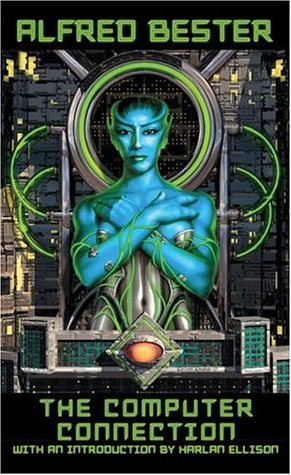
The Computer Connection
A band of immortals recruit a new member, the brilliant Cherokee physicist Sequoya Guess. Dr. Guess, with the group's help, gains control of Extro, the super-computer that controls all mechanical activity on Earth. They plan to rid Earth of political repression and to further Guess's researches-which may lead to a great leap in human evolution to produce a race of supermen. But Extro takes over Guess instead and turns malevolent. The task of the merry band suddenly becomes a fight in deadly earnest for the future of Earth.
272 pages, Kindle Edition
First published May 1, 1975
About the author
Alfred Bester
371 books984 followersAlfred Bester was an American science fiction author, TV and radio scriptwriter, magazine editor and scripter for comic strips and comic books.
Though successful in all these fields, he is best remembered for his science fiction, including The Demolished Man, winner of the inaugural Hugo Award in 1953, a story about murder in a future society where the police are telepathic, and The Stars My Destination, a 1956 SF classic about a man bent on revenge in a world where people can teleport, that inspired numerous authors in the genre and is considered an early precursor to the cyberpunk movement in the 1980s.
AKA:
Άλφρεντ Μπέστερ (Greek)
Though successful in all these fields, he is best remembered for his science fiction, including The Demolished Man, winner of the inaugural Hugo Award in 1953, a story about murder in a future society where the police are telepathic, and The Stars My Destination, a 1956 SF classic about a man bent on revenge in a world where people can teleport, that inspired numerous authors in the genre and is considered an early precursor to the cyberpunk movement in the 1980s.
AKA:
Άλφρεντ Μπέστερ (Greek)
Ratings & Reviews
Friends & Following
Create a free account to discover what your friends think of this book!
Community Reviews
Displaying 1 - 30 of 101 reviews

February 8, 2014
This is a strange little book, and far from Bester's best. But it was nominated for a Hugo, and so I read it, and it's weird. With some redeeming moments. And a lot of vaguely uncomfortable but yet vaguely progressive gender and racial politics. I don't quite know how to wrap my head around it. I guess that's what this review is here to do.
Note: The rest of this review has been withheld due to the changes in Goodreads policy and enforcement. You can read why I came to this decision here.
In the meantime, you can read the entire review at Smorgasbook
Note: The rest of this review has been withheld due to the changes in Goodreads policy and enforcement. You can read why I came to this decision here.
In the meantime, you can read the entire review at Smorgasbook
September 18, 2013
Alfred Bester wrote The Stars My Destination and The Demolished Man, two must-reads for any serious fan of science fiction literature. They are classics worthy of study, as well as just good books.
Then, he stopped writing novels for many years. Sadly, he returned to writing in order to write this book.
Having loved Bester's classic works, I was surprised to stumble across this book in a book sale. I didn't recognize the title or remember the premise, so I figured, "How bad could it be? It's written by Bester." I then spent an hour stumbling through the prose. Written after a long layoff from writing novels, Bester seems to have been trying to write a trendy, New Wave science fiction novel of the kind that Michael Moorcock and his friends were writing at the time. Unfortunately, this style is not well-matched to Bester's, and the result was painful.
Supposedly, in a little over 100 years, a frankly insulting blend of Spanish and African American English [which seems to be based on slang and accents from 1940s movies, so it comes out with things like "gemmun" for "gentlemen"] has replaced standard English, and the remaining Caucasian part of the population has inbred to imbecility. No reason, just because. Repeatedly through the story Bester's dates and numbers wander into weirdness. As an example, within the story the Cherokee people apparently have gone through 20 generations in 250 years. You may pause to think about what this means.
There's also a very sexualized 13-year-old in the story, who was apparently born in the 5th row of Graumann's Chinese theater and keeps hoping to have sex with every adult male character in the story. That got creepy right away, and stayed creepy, even though they turn her down.
Then, there's the actual story. It is based on the idea that a sufficient trauma near death can sometimes scare your body out of ever dying. So, yes, he really went there...that's why and how Jesus came back, along with a weird variety of other characters.
There's also time travel and other weirdness, but all in support of this concept and related ones.
I very rarely give up on a book without finishing it. I don't think I can finish this one. The time I've already spent has felt like too much of a waste of my time.
Then, he stopped writing novels for many years. Sadly, he returned to writing in order to write this book.
Having loved Bester's classic works, I was surprised to stumble across this book in a book sale. I didn't recognize the title or remember the premise, so I figured, "How bad could it be? It's written by Bester." I then spent an hour stumbling through the prose. Written after a long layoff from writing novels, Bester seems to have been trying to write a trendy, New Wave science fiction novel of the kind that Michael Moorcock and his friends were writing at the time. Unfortunately, this style is not well-matched to Bester's, and the result was painful.
Supposedly, in a little over 100 years, a frankly insulting blend of Spanish and African American English [which seems to be based on slang and accents from 1940s movies, so it comes out with things like "gemmun" for "gentlemen"] has replaced standard English, and the remaining Caucasian part of the population has inbred to imbecility. No reason, just because. Repeatedly through the story Bester's dates and numbers wander into weirdness. As an example, within the story the Cherokee people apparently have gone through 20 generations in 250 years. You may pause to think about what this means.
There's also a very sexualized 13-year-old in the story, who was apparently born in the 5th row of Graumann's Chinese theater and keeps hoping to have sex with every adult male character in the story. That got creepy right away, and stayed creepy, even though they turn her down.
Then, there's the actual story. It is based on the idea that a sufficient trauma near death can sometimes scare your body out of ever dying. So, yes, he really went there...that's why and how Jesus came back, along with a weird variety of other characters.
There's also time travel and other weirdness, but all in support of this concept and related ones.
I very rarely give up on a book without finishing it. I don't think I can finish this one. The time I've already spent has felt like too much of a waste of my time.

October 19, 2025
This is an SF novel first published in 1975, by the SF writer who won the first-ever Hugo in 1953, The Demolished Man, Alfred Bester. I read it as a part of the monthly reading for October 2025 at Hugo & Nebula Awards: Best Novels group. The novel was nominated for both Hugo and Nebula in 1976, losing to The Forever War. Quite possibly, the nomination was not because of the merits of the novel per se, but to support an old SF author (ok, not that old, 63 back then), after all, the number of nominations for Hugo was second lowest (outperforming only The Stochastic Man). This edition has a preface by SF enfant terrible, Harlan Ellison, where the main idea is: hey, new generation of readers, read old masters, they are so worth it!
The story starts in a New Wave manner mixed with an old man grumbling in line with The Marching Morons: a near future, environmental problems, and youth more interested in protests and sex than studying something serious. The first paragraph of the book is a great example of the style:
I tore down the Continental Shelf off the Bogue Bank while the pogo made periscope hops trying to track me. Endless plains of salt flats like the steppes of Central Russia (music by Borodin here); mounds of salts where the new breed of prospector was sieving for rare earths; towers of venomous vapors on the eastern horizon where the pumping stations were sucking up more of the Atlantic and extracting deuterium for energy transfer. Most of the fossil fuels were gone; the sea level had been lowered by two feet; progress.
It turns out that the protagonist is a member of Molemen, which hints at their underground status, but more just a short for Molecular (wo)Men, a group of eternals. Each had a shock of their life, which halted the aging of their bodies and gave them limited regeneration. For example, the protagonist was at Krakatoa during its famous eruption of 1883. Now, one of their goals is to help a talented person to have a similar transformation, for while eternal, they are quite ordinary. The group is quite diverse, on the one hand stressing that their names are just allusions (the protagonist is I try to recruit him (or her) for the Group by killing them horribly, which is why they call me Grand Guignol. There is Borgia, HG Wells, Cpt. Nemo, and Jesus Christ, even if the latter is supposedly real). There are superhero vibes, as well as gimmicks to make an interesting twist and disregard later, like a time machine, which is used and the start but not later…
The group selects a brilliant Cherokee physicist named Sequoya Guess (related to the famous Sequoya after whom the tree species is named, who created the Cherokee writing system), and tries to turn him immortal. They succeed, but with a ‘light’ twist, which is in the title of the novel.
It is a-ok story, well written but unspectacular.
The audio for this book is AI-generated, and while it sounds ok, there are things that make it unreliable, from newly invented future words to the degree sign that it reads as 'small zero'
The story starts in a New Wave manner mixed with an old man grumbling in line with The Marching Morons: a near future, environmental problems, and youth more interested in protests and sex than studying something serious. The first paragraph of the book is a great example of the style:
I tore down the Continental Shelf off the Bogue Bank while the pogo made periscope hops trying to track me. Endless plains of salt flats like the steppes of Central Russia (music by Borodin here); mounds of salts where the new breed of prospector was sieving for rare earths; towers of venomous vapors on the eastern horizon where the pumping stations were sucking up more of the Atlantic and extracting deuterium for energy transfer. Most of the fossil fuels were gone; the sea level had been lowered by two feet; progress.
It turns out that the protagonist is a member of Molemen, which hints at their underground status, but more just a short for Molecular (wo)Men, a group of eternals. Each had a shock of their life, which halted the aging of their bodies and gave them limited regeneration. For example, the protagonist was at Krakatoa during its famous eruption of 1883. Now, one of their goals is to help a talented person to have a similar transformation, for while eternal, they are quite ordinary. The group is quite diverse, on the one hand stressing that their names are just allusions (the protagonist is I try to recruit him (or her) for the Group by killing them horribly, which is why they call me Grand Guignol. There is Borgia, HG Wells, Cpt. Nemo, and Jesus Christ, even if the latter is supposedly real). There are superhero vibes, as well as gimmicks to make an interesting twist and disregard later, like a time machine, which is used and the start but not later…
The group selects a brilliant Cherokee physicist named Sequoya Guess (related to the famous Sequoya after whom the tree species is named, who created the Cherokee writing system), and tries to turn him immortal. They succeed, but with a ‘light’ twist, which is in the title of the novel.
It is a-ok story, well written but unspectacular.
The audio for this book is AI-generated, and while it sounds ok, there are things that make it unreliable, from newly invented future words to the degree sign that it reads as 'small zero'

December 20, 2016
-La New Wave daba coletazos.-
Género. Ciencia ficción.
Lo que nos cuenta. Un grupo de inmortales mantienen cierta amistad y contacto. Cuando uno de ellos conoce a un candidato potencial, un físico de origen cherokee, busca la manera de reclutarlo mientras les comienza a llamar la atención un proyecto científico para crear un superordenador que puede controlar cualquier función mecánica.
¿Quiere saber más de este libro, sin spoilers? Visite:
http://librosdeolethros.blogspot.com/...
Género. Ciencia ficción.
Lo que nos cuenta. Un grupo de inmortales mantienen cierta amistad y contacto. Cuando uno de ellos conoce a un candidato potencial, un físico de origen cherokee, busca la manera de reclutarlo mientras les comienza a llamar la atención un proyecto científico para crear un superordenador que puede controlar cualquier función mecánica.
¿Quiere saber más de este libro, sin spoilers? Visite:
http://librosdeolethros.blogspot.com/...

December 3, 2013
Stopped around page 120.
Officially the first book in my life that I have stopped reading because of its sheer awfulness. What the hell were you thinking, Alfred? This is bad and you should feel bad.
Officially the first book in my life that I have stopped reading because of its sheer awfulness. What the hell were you thinking, Alfred? This is bad and you should feel bad.

September 15, 2012
Alfred Bester was a very creative writer. In the 1950's, he wrote two classic SF novel: "The Demolished Man" (which won a Hugo) and "Tiger Tiger" aka "The Stars are my Destination" which is considered one of - if not the - best SF novel of the 1950's. He also wrote several excellent short stories throughout his life-time.
One can tell a Bester work just from looking at the text. It is common practice these days, but back then (in the fifties), he liked doing odd graphic things with
the letters
of his
type
...
And he tended to add drawings within the text. I imagine that this was a headache to publishers and typesetters of the day. This visual elements might have something to do with the fact that the majority of his work was in television and comic books.
After a quarter of century hiatus of the SF novel writing, in 1974, he published "The Computer Connection" aka "Indian Giver (Uggh!) aka "Extro" in Britain (which is the most apt title). Though this novel has all the elements of a bonafide Bester work - incorporating all of his personal unique touches, unfortunately it has its short comings. Perhaps he tried too hard with this one: the "hip" lingo, the unconventional pros, the odd plotting and so on... it just didn't quite work as a whole. He himself said, during an interview with Charles Platt: "...my first experiment was a disaster... That confounded book. There is something vitally wrong with that book, and I knew it when I finished it, and couldn't patch it then, and to this day (Sept. 1979) I think about it, because there's no point in making a mistake unless you understand the mistake so that you don't make it again. I don't understand it, so I can't profit by it. It's infuriating."
Even though Bester seems a little out of touch on this one, I still consider the man a genius.
One can tell a Bester work just from looking at the text. It is common practice these days, but back then (in the fifties), he liked doing odd graphic things with
the letters
of his
type
...
And he tended to add drawings within the text. I imagine that this was a headache to publishers and typesetters of the day. This visual elements might have something to do with the fact that the majority of his work was in television and comic books.
After a quarter of century hiatus of the SF novel writing, in 1974, he published "The Computer Connection" aka "Indian Giver (Uggh!) aka "Extro" in Britain (which is the most apt title). Though this novel has all the elements of a bonafide Bester work - incorporating all of his personal unique touches, unfortunately it has its short comings. Perhaps he tried too hard with this one: the "hip" lingo, the unconventional pros, the odd plotting and so on... it just didn't quite work as a whole. He himself said, during an interview with Charles Platt: "...my first experiment was a disaster... That confounded book. There is something vitally wrong with that book, and I knew it when I finished it, and couldn't patch it then, and to this day (Sept. 1979) I think about it, because there's no point in making a mistake unless you understand the mistake so that you don't make it again. I don't understand it, so I can't profit by it. It's infuriating."
Even though Bester seems a little out of touch on this one, I still consider the man a genius.

April 12, 2016
This book got better as it went on. The first few pages were almost incomprehensible in it's amount of slang that is unexplained.
E.g., the first sentence:
I tore down the Continental Shelf off the Bogue Bank while the pogo made periscope hops trying to track me.
What??
But as I read through the book it actually began to make more and more sense, and by the middle I was actually invested in the characters and story.
Something about this book made me want to read it at break-neck speed, I don't have the energy to dissect Bester's writing, but it lent itself to speed-reading.
3.5/5 stars, If you got it in the Humble Bundle like I did, feel free to jump in. I wouldn't recommend going out and buying it though.
E.g., the first sentence:
I tore down the Continental Shelf off the Bogue Bank while the pogo made periscope hops trying to track me.
What??
But as I read through the book it actually began to make more and more sense, and by the middle I was actually invested in the characters and story.
Something about this book made me want to read it at break-neck speed, I don't have the energy to dissect Bester's writing, but it lent itself to speed-reading.
3.5/5 stars, If you got it in the Humble Bundle like I did, feel free to jump in. I wouldn't recommend going out and buying it though.

April 20, 2009
Alfred Bester was one of the grandmaster class of science fiction writers. The Demolished Man and Stars my Destination are widely considered among the best of the genre. In the first one it was peepers and murder in a crimeless society; in the second it was the new human technology of jaunting and a rollicking revenge plot based on the Count of Monte Cristo. In the Computer Connection, Bester tackles a Group of immortals, or molecule men. We meet Guest, a.k.a. the Chief, a.k.a. Sequoia, a native american physicist, who may be prime material to join the Group, if he survives of course, heh heh heh. Enter an evil computer and a possible renegade immortal to the mix as Bester gives the pot one stir after another. This is far from a bad novel even if you can usually "Guess" what's coming. He's still got a few Besterisms up his sleeve and some linguistic trickery and fun. I suppose writers with a few masterpieces under their belts get a little bored of painting you the picture and filling in details and characterization. It becomes more of a sketch for a comic book, where you fill in the panels with your imagination, and don't complain that it's not bulked out with Dickensian description. That stuff is always nice, but in genre novels, it's really beside the point. One knows the premise, the settings and the basic character types, and what we're clamoring for is STORY. The ending sort of piffles out, but he does manage to tie this whole thing into a kind of bow.

November 5, 2015
Storyline: 1/5
Characters: 1/5
Writing Style: 1/5
World: 1/5
I can imagine a group of science fiction junkies meeting weekly and passing around drafts of what they've been working on. They'd bellow in amusement and playfully jibe one another. That it got some laughs in-group and generated some conversation amongst friends shouldn't have been enough to get it published, however.
There is a perfect descriptive and evaluative word for this book: brash. This work makes it to the top ten of my worst books list.
Characters: 1/5
Writing Style: 1/5
World: 1/5
I can imagine a group of science fiction junkies meeting weekly and passing around drafts of what they've been working on. They'd bellow in amusement and playfully jibe one another. That it got some laughs in-group and generated some conversation amongst friends shouldn't have been enough to get it published, however.
There is a perfect descriptive and evaluative word for this book: brash. This work makes it to the top ten of my worst books list.

November 23, 2017
There was a strain of exuberant writing in the late 1960s and early 1970s and this is solidly in that vein. It ranged from Hunter S. Thompson to Richard Brautigan and beyond. This is solidly in that micro-tradition.
Let go and join the flow. Don't try to figure out the science or the slang or any of those things you are used to digging into in an SF novel. This is a wild ride with fireworks at every turn.
Let go and join the flow. Don't try to figure out the science or the slang or any of those things you are used to digging into in an SF novel. This is a wild ride with fireworks at every turn.

August 31, 2017
It's weird, and a little wacko, but actually not that hard to follow. I'm not sure it wasn't excellent, but I'm not sure it was, either. So I'll split the difference.
If you like Zelazney, Dick and other surreal authors, try this. It's not like Bester's other works at all, and very out there.
If you like Zelazney, Dick and other surreal authors, try this. It's not like Bester's other works at all, and very out there.

December 21, 2012
Although somewhat dated now, this is still a very good Alfred Bester novel, which means it is a very good story.

June 3, 2018
Wow, that is one serious pile of New Wave, thick with the style of the time and almost dizzying to hack through.

August 19, 2020
It’s been seven years since I last read anything by Alfred Bester. Unsurprisingly, this return to his work was satisfying, superb, somewhat sensational. The Computer Connection was written in 1974 and in many ways feels prophetic, from its slang to its characterization of humanity’s computer-dependence. Neither of these is what the story is about, but they’re important elements. It's not as magnificent as Bester's triumphant masterpiece The Stars My Destination, or as thrilling and complex as his outstanding The Demolished Man, but it's every bit as inventive, and very good.
This book looks to be underrated, with many reviewers blowing up and getting lost in its relatively tiny shortcomings (like the learning curve associated with the prose) and minimizing its excellent qualities (like its masterful invention and wild concepts and cool story and neat characters -- and after reading for only a few pages it becomes clear that the prose is not a shortcoming but a good quality).
It’s a story starring a bunch of people who’ve experienced horrific, traumatic deaths, and who also happen to be epileptic, which seems to be a unifying trait. These traumatic deaths occur in such a way that their cells are shocked from the extreme nerve-firing, and the shock eliminates the cellular secretions responsible for aging. Thus, these people achieve a limited form of immortality, unable to die of natural causes, able to eat, drink, or breathe anything they wish without suffering the consequences, but still able to be killed by old fashioned violent means. Those who have achieved this sort of immortality have banded together over time and become known loosely as the Group. This is just setting the scene.
As one might expect from those who cannot die and have lived, in some cases, for centuries or even millennia, most of the Group have mastered certain crafts, excelled at particular disciplines or knowledge or developed their expertises quite far. While there is a sense of loyalty to one another, there is no formal code or base, these people are spread across the planet, across the solar system even.
The real story is about how the Group deals with an emerging threat shortly after a physicist becomes the latest member of the collective, caused by an extremely unexpected discovery concerning the occupants of a spacecraft he’s had flying through space for the last few months. I won’t give away the details.
The book is dense with incredible and highly developed ideas concerning even the finest details of culture, the mutated borders between nations, states, and cities, the PKD-like computer-controlled transportation, entertainment, communication, and monetary systems, to the more astronomical concepts of space travel, colonies on outer moons, alien life, and the wonderfully outrageous personalities, quirks, abilities, and knowledge of the various members of the Group.
All of these come together seamlessly, supporting a quickly evolving plot, with a writing style different from Bester’s past work, in a blend of clear, smooth narration with shorthand and slang that seems weirdly intuitive and immersive, despite never being explained. It looks like a lot of readers had trouble with this book, primarily for the prose. I can understand, but I can’t sympathize with anyone who gave up on it before finishing, because it’s not tricky and it's not long. It's imaginative, substantial, even stylish without feeling forced or tacky, and really enjoyable.
It’s like reading William Gibson if William Gibson was better. I had minor trouble for the first few pages, had to reread sentences or paragraphs a couple times to capture the pacing, and the flow felt off, a little jilted. I was worried this was going to read like Neuromancer. But it only took a few more pages before I caught on and could enjoy the prose, pick up on its finely tuned structure and nuances, and followed the fascinating plot as it unraveled into nifty shapes. The prose quickly felt natural. It wasn’t like Neuromancer, which never took off, never leveled out or fell into place, never became interesting, never had tolerable prose. The Computer Connection is an example of an almost Gibson-Thompson-Burroughs-like prose, but done in a good way, with a good story to tell, and a hell of a lot more creativity behind its content. In Neuromancer, even if you get past the glitched and eye-rolling prose, you meet up with an uninteresting story that isn't worth reading. With the Computer Connection, you have a fantastic story that's colored by its writing.
Some small, creative aspects of the language transformation Bester uses are surprisingly identical to the way younger generations talk today, almost 50 years later. It also feels original and unique, apart from this eerie similarity, and the further along we go, the more we notice about this manner of speaking, we pick up on its rules and its grammar and syntax as if exposure is all we need to learn it. I like this sort of attention to detail, because it lends the world credibility, a sense of realism that puts you more firmly in the story.
At this point it’s amusing to read some of the short-sighted criticisms leveled at Bester for this form of speech, since this aspect of his fiction has literally become reality. The funny thing about speculative fiction is that readers hardly balk at the technological musings of authors, readily accepting that virtually any sort of technological or scientific advancement is plausible or at least acceptable to write about. But as soon as writers start offering additional changes and evolutions in the form of culture, language, ideology, social interaction, then people get weird about it, confused about it, unsure what to make of it. Sometimes it's as though they perceive it as an attack on their model of reality through which they've come to understand things, and they are incapable of viewing this creative element the same way they view other creative elements in fiction. I've noticed a trend in how readers respond to this kind of thing. It's as if they expect these "nonscientific" forms of creativity to align with some familiar perception they already have, and if it does not then it is regarded as absurd or even a problem, but if it does, then it is regarded as heroic and visionary. See the Left Hand of Darkness as an example of the latter, and this book as an example of the former. Except, unlike the Left Hand of Darkness, The Computer Connection had a serious amount of thought and development put into these aspects. I suspect there are interesting psychological reasons for this perception oddity on the part of readers, but we won't get into that speculation here.
Ultimately none of this should matter, because predicting the future is not the point of sci-fi. It's speculative, it's imaginative, this is the realm of invention and creation, not the realm of trying-to-make-an-accurate-prediction-of-the-future. Scifi is no more about making accurate predictions about the future than fantasy is about accurately portraying the past. It's just really neat when a scifi author invents something that ends up being startlingly accurate
The book starts fast, throwing us immediately into the action, and treats the reader as a peer, a fellow traveler, one who doesn’t need anything explained, unless it’s something fantastic. And there is no shortage of the fantastic. If other reviews are any indication, a large number of readers preferred to have their hands held and are bitter about Alfred overestimating their level of reading comprehension.
Predicted also is the modern day enslavement to computers, which itself is not such a radical prediction, but the details and implications of this enslavement are alarmingly accurate. These are just neat side notes against the bigger picture, which is a plot of doom and destruction and mystery that stretches across planets and moons and countries. The characters are great, the writing is complex and exciting, the story is inventive and surprising, it’s got character and atmosphere that continue to expand until the end. Lovely stuff.
This book looks to be underrated, with many reviewers blowing up and getting lost in its relatively tiny shortcomings (like the learning curve associated with the prose) and minimizing its excellent qualities (like its masterful invention and wild concepts and cool story and neat characters -- and after reading for only a few pages it becomes clear that the prose is not a shortcoming but a good quality).
It’s a story starring a bunch of people who’ve experienced horrific, traumatic deaths, and who also happen to be epileptic, which seems to be a unifying trait. These traumatic deaths occur in such a way that their cells are shocked from the extreme nerve-firing, and the shock eliminates the cellular secretions responsible for aging. Thus, these people achieve a limited form of immortality, unable to die of natural causes, able to eat, drink, or breathe anything they wish without suffering the consequences, but still able to be killed by old fashioned violent means. Those who have achieved this sort of immortality have banded together over time and become known loosely as the Group. This is just setting the scene.
As one might expect from those who cannot die and have lived, in some cases, for centuries or even millennia, most of the Group have mastered certain crafts, excelled at particular disciplines or knowledge or developed their expertises quite far. While there is a sense of loyalty to one another, there is no formal code or base, these people are spread across the planet, across the solar system even.
The real story is about how the Group deals with an emerging threat shortly after a physicist becomes the latest member of the collective, caused by an extremely unexpected discovery concerning the occupants of a spacecraft he’s had flying through space for the last few months. I won’t give away the details.
The book is dense with incredible and highly developed ideas concerning even the finest details of culture, the mutated borders between nations, states, and cities, the PKD-like computer-controlled transportation, entertainment, communication, and monetary systems, to the more astronomical concepts of space travel, colonies on outer moons, alien life, and the wonderfully outrageous personalities, quirks, abilities, and knowledge of the various members of the Group.
All of these come together seamlessly, supporting a quickly evolving plot, with a writing style different from Bester’s past work, in a blend of clear, smooth narration with shorthand and slang that seems weirdly intuitive and immersive, despite never being explained. It looks like a lot of readers had trouble with this book, primarily for the prose. I can understand, but I can’t sympathize with anyone who gave up on it before finishing, because it’s not tricky and it's not long. It's imaginative, substantial, even stylish without feeling forced or tacky, and really enjoyable.
It’s like reading William Gibson if William Gibson was better. I had minor trouble for the first few pages, had to reread sentences or paragraphs a couple times to capture the pacing, and the flow felt off, a little jilted. I was worried this was going to read like Neuromancer. But it only took a few more pages before I caught on and could enjoy the prose, pick up on its finely tuned structure and nuances, and followed the fascinating plot as it unraveled into nifty shapes. The prose quickly felt natural. It wasn’t like Neuromancer, which never took off, never leveled out or fell into place, never became interesting, never had tolerable prose. The Computer Connection is an example of an almost Gibson-Thompson-Burroughs-like prose, but done in a good way, with a good story to tell, and a hell of a lot more creativity behind its content. In Neuromancer, even if you get past the glitched and eye-rolling prose, you meet up with an uninteresting story that isn't worth reading. With the Computer Connection, you have a fantastic story that's colored by its writing.
Some small, creative aspects of the language transformation Bester uses are surprisingly identical to the way younger generations talk today, almost 50 years later. It also feels original and unique, apart from this eerie similarity, and the further along we go, the more we notice about this manner of speaking, we pick up on its rules and its grammar and syntax as if exposure is all we need to learn it. I like this sort of attention to detail, because it lends the world credibility, a sense of realism that puts you more firmly in the story.
At this point it’s amusing to read some of the short-sighted criticisms leveled at Bester for this form of speech, since this aspect of his fiction has literally become reality. The funny thing about speculative fiction is that readers hardly balk at the technological musings of authors, readily accepting that virtually any sort of technological or scientific advancement is plausible or at least acceptable to write about. But as soon as writers start offering additional changes and evolutions in the form of culture, language, ideology, social interaction, then people get weird about it, confused about it, unsure what to make of it. Sometimes it's as though they perceive it as an attack on their model of reality through which they've come to understand things, and they are incapable of viewing this creative element the same way they view other creative elements in fiction. I've noticed a trend in how readers respond to this kind of thing. It's as if they expect these "nonscientific" forms of creativity to align with some familiar perception they already have, and if it does not then it is regarded as absurd or even a problem, but if it does, then it is regarded as heroic and visionary. See the Left Hand of Darkness as an example of the latter, and this book as an example of the former. Except, unlike the Left Hand of Darkness, The Computer Connection had a serious amount of thought and development put into these aspects. I suspect there are interesting psychological reasons for this perception oddity on the part of readers, but we won't get into that speculation here.
Ultimately none of this should matter, because predicting the future is not the point of sci-fi. It's speculative, it's imaginative, this is the realm of invention and creation, not the realm of trying-to-make-an-accurate-prediction-of-the-future. Scifi is no more about making accurate predictions about the future than fantasy is about accurately portraying the past. It's just really neat when a scifi author invents something that ends up being startlingly accurate
The book starts fast, throwing us immediately into the action, and treats the reader as a peer, a fellow traveler, one who doesn’t need anything explained, unless it’s something fantastic. And there is no shortage of the fantastic. If other reviews are any indication, a large number of readers preferred to have their hands held and are bitter about Alfred overestimating their level of reading comprehension.
Predicted also is the modern day enslavement to computers, which itself is not such a radical prediction, but the details and implications of this enslavement are alarmingly accurate. These are just neat side notes against the bigger picture, which is a plot of doom and destruction and mystery that stretches across planets and moons and countries. The characters are great, the writing is complex and exciting, the story is inventive and surprising, it’s got character and atmosphere that continue to expand until the end. Lovely stuff.

February 19, 2023
A very weird book, when reading, one must remember the time it was written in. I had to re-start it a couple of times, getting use to the slang. Once you get past that, it got going. Early though, he introduced a Cherokee as a character, which, while nice, the main protagonist referred to him by, in my mind as a Native American, a bit insulting name-calling. that is on me, but I personally dislike being referred to as 'chief' (I am not one, haven't done enough to deserve that title) or other famous Native Americans. My name is Marc, that character's name is 'Guess', how hard is it to call me by 'Marc' and him by 'Guess', both single syllables, not difficult to remember... And how he described how Cherokees expect Cherokee women to behave was just 100% wrong.
But as a story, it was kinda interesting, and again, one should remember how old this book is. Wonder if Highlander (there can be only one) took some inspiration from this book. But not really Bester's best work. Demolished man was a better story.
But as a story, it was kinda interesting, and again, one should remember how old this book is. Wonder if Highlander (there can be only one) took some inspiration from this book. But not really Bester's best work. Demolished man was a better story.

October 10, 2021
Not really my favourite type of story. Its certainly weird all right but the overall impression was confused with too many characters to keep track of and a plot so convoluted I was forever loosing track. The use of multicultural references with avante-guard nonsense was ok but ultimately it just made no sense and left me unsatisfied. There were some great ideas but I'm afraid it wasn't enough for me.

November 12, 2025
Bester nos sumerge en una historia de superhéroes extravagantes combatiendo una omnipresenre computadora, derrochando ritmo e imaginación por partes iguales y sin detenerse a dar explicaciones, se convierte un desafío surfear la ola de este mundo vertiginoso, más moderno que sus anteriores y más conocidas creaciones.
El estilo agresivo y desenfadado que propone es realmente único.
El estilo agresivo y desenfadado que propone es realmente único.

November 11, 2018
Fascinating and incredibly complicated

February 12, 2013
Alfred Bester is unquestionably one of the greatest sci-fi writers of all time. The Stars My Destination and The Demolished Man are absolute classics.
This book is not of the same caliber.
It's not entirely without merit - Bester does do some interesting things with language, similar to his other works. And it has some genuinely funny slapstick moments.
But for the most part it's just not very good. It moves too quickly, the gags (linguistic or otherwise) don't always work, and it all falls flat.
I'm glad I read it...but I wouldn't recommend others do the same. Read his celebrated works. Skip this one.
This book is not of the same caliber.
It's not entirely without merit - Bester does do some interesting things with language, similar to his other works. And it has some genuinely funny slapstick moments.
But for the most part it's just not very good. It moves too quickly, the gags (linguistic or otherwise) don't always work, and it all falls flat.
I'm glad I read it...but I wouldn't recommend others do the same. Read his celebrated works. Skip this one.

May 7, 2016
D.N.F. If cryology recycles ontogeny, then freeze this piece of crap for 100 days in space and maybe it will do us all a favor and reverse its own existence.
Reads like an old-fashioned douche is trying to be hip with the kids by doing EDGY stuff, but all he can do is stir up a lot of anti-PC nonplots because that's so EDGY and funny and not just a big, steaming pile of stale and unoriginal gags that don't even make sense to sane people. BORING AND DUMB. I should have known when I saw (and promptly skipped) the Ellison foreword that looked (as usual) defensive and hyperbolic. The only other novel I DNF'd in the past three years was Heinlein's Time Enough for Love so, you know, given all the vintage SF I read, statistics show I'm pretty persistent and forgiving (and probably dead inside).
Reads like an old-fashioned douche is trying to be hip with the kids by doing EDGY stuff, but all he can do is stir up a lot of anti-PC nonplots because that's so EDGY and funny and not just a big, steaming pile of stale and unoriginal gags that don't even make sense to sane people. BORING AND DUMB. I should have known when I saw (and promptly skipped) the Ellison foreword that looked (as usual) defensive and hyperbolic. The only other novel I DNF'd in the past three years was Heinlein's Time Enough for Love so, you know, given all the vintage SF I read, statistics show I'm pretty persistent and forgiving (and probably dead inside).

October 10, 2007
i just re-read this. disclaimer: bester is one of my favorite authors of all time--i think his writing style is just incredible. but this book starts strong and then gets less and less interesting as it continues. the style is almost as neat as in 'the stars my destination' and 'demolished man', but then the plot loses its oOmph and the story doesn't seem very tight and the characters aren't as witty as you want them to be and... blah. suddenly it's over and you're left feeling that something was lacking.
HOWEVER! the book's jacket, which states that 'the stars my destination' is considered by many to be the greatest science fiction novel of all time, made the re-read worth it :D hooray!
HOWEVER! the book's jacket, which states that 'the stars my destination' is considered by many to be the greatest science fiction novel of all time, made the re-read worth it :D hooray!

November 12, 2017
Crazy stuff
I loved Demolished Man and Stars My Destination. This book though is just plain nuts. A demented combination of late Heinlein, Phil Farmer, and William S Burroughs, the story is a little difficult to follow. It involves some immortals, an evil computer, and the end of the world, but that doesn't really do it justice. The language, known as XX (for 20th century), takes a while to get used to. Some political incorrectiveness (including every slang term for Native American) as well as outmoded computer "dialog" has not aged well. Nevertheless both themes of the book (immortality and AI) have relevance today. Not sure the author wasn't on drugs when he wrote this however.
I loved Demolished Man and Stars My Destination. This book though is just plain nuts. A demented combination of late Heinlein, Phil Farmer, and William S Burroughs, the story is a little difficult to follow. It involves some immortals, an evil computer, and the end of the world, but that doesn't really do it justice. The language, known as XX (for 20th century), takes a while to get used to. Some political incorrectiveness (including every slang term for Native American) as well as outmoded computer "dialog" has not aged well. Nevertheless both themes of the book (immortality and AI) have relevance today. Not sure the author wasn't on drugs when he wrote this however.

August 9, 2012
if i could give in 0/5 i would, this was terrible and i finally gave up on page 163 from 216.
Its seems to be a story of some kind where and indian man dies and comes back to life merged, in mind only, with the super computer Extro with a massive amount of nonsense filling the rest of the book.
i couldnt read anymore and had to give up. Complete rubbish, do not read.
Its seems to be a story of some kind where and indian man dies and comes back to life merged, in mind only, with the super computer Extro with a massive amount of nonsense filling the rest of the book.
i couldnt read anymore and had to give up. Complete rubbish, do not read.

September 26, 2014
It was like a very ugly person - you can't take you eye off him/her, because of the ugliness.
The ideas, by themselves, are nice, but the story is weird and quite badly written and executed. But hey, I didn't drop it in the middle.
The ideas, by themselves, are nice, but the story is weird and quite badly written and executed. But hey, I didn't drop it in the middle.

April 19, 2011
Bester's comeback novel after a 19-year layoff was packed with ideas, slang and sly jokes. Perhaps too packed, though.

March 4, 2015
A couple interesting concepts, but on the whole not an engaging novel. Maybe don't mention this one when recommending people Bester.

January 2, 2019
Like a few others on here, I really liked other Alfred Bester books but this one was all over the place. For Bester completists only.

September 4, 2025
La acción tiene lugar un par de siglos en el futuro.
El protagonista es parte de un grupo de inmortales. La forma en la que alcanzan la inmortalidad es por un evento traumático durante la muerte, algo que sucede rara y ocasionalmente, sin que se le dé una explicación clara.
Al comienzo de la historia han conocido a un brillante científico que querrían en su grupo y debaten como "matarlo" para hacerlo inmortal, pero esto ocurre igualmente de forma casual. Sin embargo, en el proceso este personaje se liga a una gran computadora que lo controla y se vuelve antagonista del grupo.
La novela es caótica. Los eventos se suceden sin coherencia clara. Las situaciones complicadas no lo son, porque siempre hay un miembro del grupo que es experto en algo. Además, todos son ricos, nunca hay ninguna limitación a nada.
La acción viaja a distintas ciudades y hasta a Ceres, pero los viajes son casi instantáneos: en un párrafo deciden ir, en el siguiente ya están, y allí rara vez hay nada que identifique al escenario como tal; Ceres podría ser un hotel cualquiera ya que ahí se limitan a hablar con lo que podrían ser conserjes. Otros escenarios ni siquiera se detallan tanto.
Se trata, pues, de una sucesión de eventos incoherentes que no dibujan una trama y que tienen lugar en lugares que se nombran pero no se describen ni significan nada.
[+] Reseña completa en Alt+64 wiki: https://alt64.org/wiki/index.php?titl...
El protagonista es parte de un grupo de inmortales. La forma en la que alcanzan la inmortalidad es por un evento traumático durante la muerte, algo que sucede rara y ocasionalmente, sin que se le dé una explicación clara.
Al comienzo de la historia han conocido a un brillante científico que querrían en su grupo y debaten como "matarlo" para hacerlo inmortal, pero esto ocurre igualmente de forma casual. Sin embargo, en el proceso este personaje se liga a una gran computadora que lo controla y se vuelve antagonista del grupo.
La novela es caótica. Los eventos se suceden sin coherencia clara. Las situaciones complicadas no lo son, porque siempre hay un miembro del grupo que es experto en algo. Además, todos son ricos, nunca hay ninguna limitación a nada.
La acción viaja a distintas ciudades y hasta a Ceres, pero los viajes son casi instantáneos: en un párrafo deciden ir, en el siguiente ya están, y allí rara vez hay nada que identifique al escenario como tal; Ceres podría ser un hotel cualquiera ya que ahí se limitan a hablar con lo que podrían ser conserjes. Otros escenarios ni siquiera se detallan tanto.
Se trata, pues, de una sucesión de eventos incoherentes que no dibujan una trama y que tienen lugar en lugares que se nombran pero no se describen ni significan nada.
[+] Reseña completa en Alt+64 wiki: https://alt64.org/wiki/index.php?titl...
August 15, 2017
I'm hard pressed to say if my uncertainties about this book relate to the age of it, or simply to the general style. With 'The Stars My Destination' I didn't have any sense of age, but then that was perhaps a more typical sci-fi story, whereas 'The Computer Connection' is more grounded in modern day Earth, which naturally leads to more things feeling off given the age of the book.
But I think the comedic nature of the story might be the bigger issue, and this was something I only really picked up on after I finished it and read the foreword. I liked the incidental irreverent humour in 'The Stars My Destination', but over the course of this book I found it more dated and sometimes needlessly insensitive. Attitudes towards women aren't great, and the main character's habit of referring to a Native American as Geronimo, Sitting Bull, Hiawatha and similar rather than just using their name in an allegedly future scenario is rather grating.
Overall I found the book a little disjointed, lacking a strong central plot line, and not that compelling. There are some moments of inventiveness and fun, but nothing that really makes you think. I expect anyone who gels with Bester's humour would find it a far more enjoyable read, but it left me fairly cold.
But I think the comedic nature of the story might be the bigger issue, and this was something I only really picked up on after I finished it and read the foreword. I liked the incidental irreverent humour in 'The Stars My Destination', but over the course of this book I found it more dated and sometimes needlessly insensitive. Attitudes towards women aren't great, and the main character's habit of referring to a Native American as Geronimo, Sitting Bull, Hiawatha and similar rather than just using their name in an allegedly future scenario is rather grating.
Overall I found the book a little disjointed, lacking a strong central plot line, and not that compelling. There are some moments of inventiveness and fun, but nothing that really makes you think. I expect anyone who gels with Bester's humour would find it a far more enjoyable read, but it left me fairly cold.
December 28, 2019
https://nwhyte.livejournal.com/3287464.html
Very much in the shadow of Bester's better-known The Demolished Man (winner of the first Hugo for Best Novel) and The Stars My Destination, this was his first novel for almost 20 years when it came out in 1974. Critical reaction then was disappointed; Bester had perhaps laid the path for the New Wave writers of the intervening period but was now behind the curve. Forty years on, I must say I enjoyed it a lot; the plot concerns a group of immortals in the very near future, who are dealing with a supercomputer that has acquired human intelligence, and the style remains pyrotechnical - and yet I never lost track of what was going on, or why we should care about these characters. Bester's reading of Native American traditions would not really pass muster today, but in fact he uses the perspective of his Cherokee characters to make some statements about American society in general and to an extent also about gender politics. I came away feeling that his has been underrated and might be due a reappraisal.
Very much in the shadow of Bester's better-known The Demolished Man (winner of the first Hugo for Best Novel) and The Stars My Destination, this was his first novel for almost 20 years when it came out in 1974. Critical reaction then was disappointed; Bester had perhaps laid the path for the New Wave writers of the intervening period but was now behind the curve. Forty years on, I must say I enjoyed it a lot; the plot concerns a group of immortals in the very near future, who are dealing with a supercomputer that has acquired human intelligence, and the style remains pyrotechnical - and yet I never lost track of what was going on, or why we should care about these characters. Bester's reading of Native American traditions would not really pass muster today, but in fact he uses the perspective of his Cherokee characters to make some statements about American society in general and to an extent also about gender politics. I came away feeling that his has been underrated and might be due a reappraisal.
Displaying 1 - 30 of 101 reviews