

What do you think?

Shantyboat: A River Way of Life
Shantyboat is the story of a leisurely journey down the Ohio and Mississippi rivers to New Orleans. For most people such a journey is the stuff that dreams are made of, but for Harlan and Anna Hubbard it became a cherished reality. In the fall of 1944 they built a houseboat, small but neatly accommodated to their needs, on the bank of the Ohio near Cincinnati, and in it after a pause of two years they set out to drift down the river.
In their small craft, the Hubbards became one with the flow of the river and its changing weathers. An artist by profession, Harlan Hubbard records with graceful ease the many facets of their life on the river-the panorama of fields and woods, summer gardening, foraging expeditions for nuts and berries, dangers from storms and treacherous currents, the quiet solitude of the mists of early morning. Their life is sustained by the provender of bank and stream, useful things made and found, and mutual aid and wisdom from people met along the journey. It is a life marked by simplicity and independence, strenuous at times, but joyous, with leisure for painting and music, for observation and contemplation.
In their small craft, the Hubbards became one with the flow of the river and its changing weathers. An artist by profession, Harlan Hubbard records with graceful ease the many facets of their life on the river-the panorama of fields and woods, summer gardening, foraging expeditions for nuts and berries, dangers from storms and treacherous currents, the quiet solitude of the mists of early morning. Their life is sustained by the provender of bank and stream, useful things made and found, and mutual aid and wisdom from people met along the journey. It is a life marked by simplicity and independence, strenuous at times, but joyous, with leisure for painting and music, for observation and contemplation.
368 pages, Paperback
First published December 31, 1977
Ratings & Reviews
Friends & Following
Create a free account to discover what your friends think of this book!
Community Reviews
Displaying 1 - 28 of 28 reviews

October 21, 2019
Cruising Down the River on a Sunday Afternoon
This book was more like the song, “On a Slow Boat to China,” because while it is interesting at times, it is really a very slow read.
A couple back in the late 1940 decide to built a houseboat, that they call a shantyboat for some reason. Then they fill it with provisions and a female dog named Skipper, who while on the trip has puppies. Before pushing off they even add a beehive. In the way they would have honey. I was somewhat concerned about this, but all went well.
So, after chapters and chapters on preparations, they leave on the Ohio River heading for the Mississippi, stopping to dock their boat at different areas, people’s property. Ah, the good old days when you could park anywhere and not get a ticket or run off. I would have loved it all. I once heard a joke, one that didn’t seem like a joke: It was about some peoplethat got out of their car to take a photo of Mount Rushmore and were given a ticket for doing so, because the camera would destroy the carvings, even from the road.. Such are the laws anymore that it wouldn’t put it past the government to do this.
Another intersecting thing about this book, and I can sum it up to “interesting” instead of an exciting trip, is that wherever they docked his boat, if it was summertime, they would make a vegetable garden near the shore. And they met people would traded milk, eggs and other items with them for the fish that they could catch, which I didn’t quite understand since the farmers could catch their own fish. They also allowed them to pick fruit from their old fruit trees, and so there was a lot of food to can, which they managed to do in such a small space. They were meeting people and inviting them over for dinners, etc. But you never learned much about the people. There are no conversations in this book. Still, most of the people were friendly and helpful. I would have liked to have learned more about the people, though.
Skipper, after the boat docket, would also run into the woods or over the land looking for rabbits to chase. These various critters that she chased became their dinners, except for the rat that they skinned and cooked just for her.
And then we come to Fried Mush:
When I looked up a recipe for Fried Mush, I only found one on Fried Cornmeal Mush. Well, I have never make this, but my own family used to make it this way, and that is, without cornmeal: You place cooked oatmeal or Cream of Wheat in a bowl to chill overnight, and then the next day you slice it and fry in oil, then sprinkle with salt. Yum. Tis is far better tasting than oatmeal or Cream of Wheat covered with milk and sugar.
So, if you wish for a low read that is also somewhat of an adventure, you may enjoy this book. It took me back to a time that was similar and therefore more enjoyable.
This book was more like the song, “On a Slow Boat to China,” because while it is interesting at times, it is really a very slow read.
A couple back in the late 1940 decide to built a houseboat, that they call a shantyboat for some reason. Then they fill it with provisions and a female dog named Skipper, who while on the trip has puppies. Before pushing off they even add a beehive. In the way they would have honey. I was somewhat concerned about this, but all went well.
So, after chapters and chapters on preparations, they leave on the Ohio River heading for the Mississippi, stopping to dock their boat at different areas, people’s property. Ah, the good old days when you could park anywhere and not get a ticket or run off. I would have loved it all. I once heard a joke, one that didn’t seem like a joke: It was about some peoplethat got out of their car to take a photo of Mount Rushmore and were given a ticket for doing so, because the camera would destroy the carvings, even from the road.. Such are the laws anymore that it wouldn’t put it past the government to do this.
Another intersecting thing about this book, and I can sum it up to “interesting” instead of an exciting trip, is that wherever they docked his boat, if it was summertime, they would make a vegetable garden near the shore. And they met people would traded milk, eggs and other items with them for the fish that they could catch, which I didn’t quite understand since the farmers could catch their own fish. They also allowed them to pick fruit from their old fruit trees, and so there was a lot of food to can, which they managed to do in such a small space. They were meeting people and inviting them over for dinners, etc. But you never learned much about the people. There are no conversations in this book. Still, most of the people were friendly and helpful. I would have liked to have learned more about the people, though.
Skipper, after the boat docket, would also run into the woods or over the land looking for rabbits to chase. These various critters that she chased became their dinners, except for the rat that they skinned and cooked just for her.
And then we come to Fried Mush:
When I looked up a recipe for Fried Mush, I only found one on Fried Cornmeal Mush. Well, I have never make this, but my own family used to make it this way, and that is, without cornmeal: You place cooked oatmeal or Cream of Wheat in a bowl to chill overnight, and then the next day you slice it and fry in oil, then sprinkle with salt. Yum. Tis is far better tasting than oatmeal or Cream of Wheat covered with milk and sugar.
So, if you wish for a low read that is also somewhat of an adventure, you may enjoy this book. It took me back to a time that was similar and therefore more enjoyable.
April 17, 2012
How come it took me more than four decades to discover this book? Seriously, when people saw that my favorite books were Kon Tiki and Never Cry Wolf and Huck Finn and Henry David T. and a hundred other real-life and fictional adventures, someone should have said, "Okay, stop. Read this."
I feel like anything I could say about Harlan Hubbard has already been said. Yes, he's the real deal, authentic, remarkable, unbowed, all those things. But something I didn't hear said about Shantyboat and Harlan Hubbard is how remarkable the normalcy of it all is.
Harlan Hubbard is not some riverboat fella who picked up a pen. He was an artist, a painter, who brought his many talents to the task of creating a unique life. And he brings his artist's vision to what he sees and what he writes. He was a societal dropout in the late 40s and early 50s, a hippy -- as they were meant to be -- before there were hippies.
Before Shantyboat even begins, Harlan is sloughing off complicated societal expectations for a simpler and more direct life. He built a house with a separate artist's studio, and then rented out the house and lived in the studio. And when the artist's life in small town Kentucky didn't provide the adventure and simplicity they wanted, Harlan and his new wife, Anna, built a Shantyboat, a homemade house boat, from recycled materials along the shores of the Ohio. He and Anna lived in it for the next five years, floating down the Ohio to the Mississippi, homesteading over the summers in peaceful river valleys, down to New Orleans where they slipped into the Louisiana bayous for another year.
To say merely that Harlan Hubbard and Anna dropped out of society doesn't begin to describe the amount of energetic work they put into making a meaningful life. He and Anna casually did things that have been lost for a generation or more. Beekeeping, preparing wild game, food preservation, boatbuilding. And in the hours in between, they played duets on their viola and cello, painted and sketched.
And though this is a workingman's autobiography from the 50s, there is nothing of the usual dry mire of details. In his beautiful and accessible writing, Harlan sees as an artist and paints with words a gorgeous portrait of the river, of its people, and of the life he and Anna lived.
Imagine Thoreau, not as a college-educated, well-connected dilettante who experiments for a few seasons with living in the woods. Instead we have Harlan Hubbard, an artist and worker who commits completely to a beautiful vision of living his life simply, directly, and on his own terms.
I feel like anything I could say about Harlan Hubbard has already been said. Yes, he's the real deal, authentic, remarkable, unbowed, all those things. But something I didn't hear said about Shantyboat and Harlan Hubbard is how remarkable the normalcy of it all is.
Harlan Hubbard is not some riverboat fella who picked up a pen. He was an artist, a painter, who brought his many talents to the task of creating a unique life. And he brings his artist's vision to what he sees and what he writes. He was a societal dropout in the late 40s and early 50s, a hippy -- as they were meant to be -- before there were hippies.
Before Shantyboat even begins, Harlan is sloughing off complicated societal expectations for a simpler and more direct life. He built a house with a separate artist's studio, and then rented out the house and lived in the studio. And when the artist's life in small town Kentucky didn't provide the adventure and simplicity they wanted, Harlan and his new wife, Anna, built a Shantyboat, a homemade house boat, from recycled materials along the shores of the Ohio. He and Anna lived in it for the next five years, floating down the Ohio to the Mississippi, homesteading over the summers in peaceful river valleys, down to New Orleans where they slipped into the Louisiana bayous for another year.
To say merely that Harlan Hubbard and Anna dropped out of society doesn't begin to describe the amount of energetic work they put into making a meaningful life. He and Anna casually did things that have been lost for a generation or more. Beekeeping, preparing wild game, food preservation, boatbuilding. And in the hours in between, they played duets on their viola and cello, painted and sketched.
And though this is a workingman's autobiography from the 50s, there is nothing of the usual dry mire of details. In his beautiful and accessible writing, Harlan sees as an artist and paints with words a gorgeous portrait of the river, of its people, and of the life he and Anna lived.
Imagine Thoreau, not as a college-educated, well-connected dilettante who experiments for a few seasons with living in the woods. Instead we have Harlan Hubbard, an artist and worker who commits completely to a beautiful vision of living his life simply, directly, and on his own terms.

February 24, 2008
Harlan Hubbard lived the life I wish I could've lived. At age 40 he built a boat of driftwood and set out with his wife to travel the Mississippi River from Ohio to New Orleans. Winters they floated; spring and summer they tied up along the banks, sustaining themselves on whatever they grew, fished, or bartered through his paintings. How cool is that? No permit, no license, no insurance. All you needed was a good idea and the wits to pull it off. Apparently, there was a whole subculture of shantyboaters along the river, dodging barges, trading, and living a truly authentic life. Hubbard religiously kept a journal throughout this time, recording his observances along the way. This book recounts the simple life made by his own hands, in union with nature. A fascinating story of a remarkable journey.

March 16, 2016
This has taken me over a month to read which is an astoundingly long time for me! But given the journey it describes takes pleases over several years and is a drifting shantyboat down the Rivers Ohio and Mississippi, then it would seem so wrong to rush it. This is a book that needs to be savoured. It is a relaxing read taken at that pace.
It is the prequel to Payne's Hollow which I read earlier and totally loved. This book has a similar lovely style and is as well written, but sometimes the scenery is a bit tiresome and I found some stretches of the river a little tedious and repetitive. Also the book was written in the early 1950s in the American Deep South and the descriptions of "negroes" - however well they subsequently got on - was hard to swallow as they are described as if they are a species apart. Each time I came upon it, it rubbed and made me uncomfortable. For this, it definitely lost a star.
It is the prequel to Payne's Hollow which I read earlier and totally loved. This book has a similar lovely style and is as well written, but sometimes the scenery is a bit tiresome and I found some stretches of the river a little tedious and repetitive. Also the book was written in the early 1950s in the American Deep South and the descriptions of "negroes" - however well they subsequently got on - was hard to swallow as they are described as if they are a species apart. Each time I came upon it, it rubbed and made me uncomfortable. For this, it definitely lost a star.

December 23, 2022
What a fantastic journey.
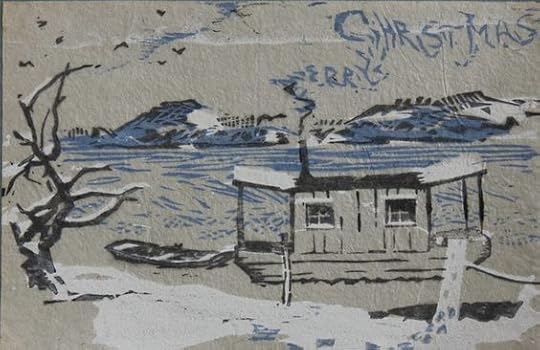
Harlan has a dream of drifting downriver on a shantyboat all the way to the sea.
For those of you who don't know (I didn't), this was not an unusual thing, in fact, for some it was a way of life.
So Harlan & Anna build themselves a shantyboat, then spend 2 years preparing and getting the hang of the thing, learning from their shantyboat neighbours, and gradually disengaging themselves from a land-life. They set off adrifting and I found it so interesting - the life, yes, but also H & A themselves - they were not ordinary people, he an artist/musician/handyman, she a former librarian, also a musician and overall possessor of many skills and certainly up for adventure.
So they drift. No motor, just some paddles and a johnny-boat. Some days they get a dozen miles in, some days more - depending on the river and the weather. They search for a spot out of the wind to shelter for the night, or to ride out bad weather. Wherever they land, they look for driftwood for their stove, and for food - berries, local farmers with which they can trade the fish they've caught for milk and eggs, whatever they can rustle up.
During summers they search out a likely spot along the shoreline and ask the landowner for permission to use a portion to grow a garden. They spend the season planting and harvesting - getting to know the neighbours - having family and friends for visits, and laying up food for the winter. By the time the summer ended they had stuffed the boat with food.
There is so much to tell, but one of the things that stood out to me was how in spite of the fact that they are constantly moving and never anywhere for long, they meet and make friends with so many people and never seem to lack for community.
And no wonder. I wanted to spend time with them too. Playing duets together in the evenings, reading aloud to each other - in different languages, no less - Anna with her canning and cooking, Harlan with his painting and woodcuts. (Harlan's art is superb.) Both of them full of appreciation for the countryside which unfurls around them.
A wonderful book. It doesn't surprise me that their life appeals to Wendell Berry - I even wondered if they were an influence on "Jayber Crow". That book was so much about the river. And although they're very different, somehow the work by Ben Lucien Burman in "Steamboat Round the Bend", and "Look Down That Winding River" came to mind over and over while I was reading.
Lovely books all.
"Each time, it was a thrill to shove out into the current, to feel the life and power of the river, whose beginnng and the end were so remote. We became a part of it, like the driftwood. Of not so simple and trusting a nature as driftwood we studies charts kept an eye on wind and weather, observed each feature of the passing shores. Yet the driftwood was the better navigator for at times we had to labor with our oars and sweeps to keep off a lee shore while the logs and snags went on their way unaffected by the wind."
From Wendell Berry's introduction:
"Harlan and Anna Hubbard 'lit out for the territory' in a sense, and for some of the same reasons as Huckleberry Finn. But Huck's contemplated flight was simple-minded and aimless: civilization, as it had showed itself to to him was narrow and corrupt, and he wanted to escape from it...The Hubbards wished 'to live close to the earth and free from entanglement with this modern urban world...' From the beginning, apparently, they have desired to 'get all our living by as direct means as possible, that we may be self-sufficient and avoid contributing to the ruthess mechanical system that is destroying the earth.'"
Harlan has a dream of drifting downriver on a shantyboat all the way to the sea.
For those of you who don't know (I didn't), this was not an unusual thing, in fact, for some it was a way of life.
So Harlan & Anna build themselves a shantyboat, then spend 2 years preparing and getting the hang of the thing, learning from their shantyboat neighbours, and gradually disengaging themselves from a land-life. They set off adrifting and I found it so interesting - the life, yes, but also H & A themselves - they were not ordinary people, he an artist/musician/handyman, she a former librarian, also a musician and overall possessor of many skills and certainly up for adventure.
So they drift. No motor, just some paddles and a johnny-boat. Some days they get a dozen miles in, some days more - depending on the river and the weather. They search for a spot out of the wind to shelter for the night, or to ride out bad weather. Wherever they land, they look for driftwood for their stove, and for food - berries, local farmers with which they can trade the fish they've caught for milk and eggs, whatever they can rustle up.
During summers they search out a likely spot along the shoreline and ask the landowner for permission to use a portion to grow a garden. They spend the season planting and harvesting - getting to know the neighbours - having family and friends for visits, and laying up food for the winter. By the time the summer ended they had stuffed the boat with food.
There is so much to tell, but one of the things that stood out to me was how in spite of the fact that they are constantly moving and never anywhere for long, they meet and make friends with so many people and never seem to lack for community.
And no wonder. I wanted to spend time with them too. Playing duets together in the evenings, reading aloud to each other - in different languages, no less - Anna with her canning and cooking, Harlan with his painting and woodcuts. (Harlan's art is superb.) Both of them full of appreciation for the countryside which unfurls around them.
A wonderful book. It doesn't surprise me that their life appeals to Wendell Berry - I even wondered if they were an influence on "Jayber Crow". That book was so much about the river. And although they're very different, somehow the work by Ben Lucien Burman in "Steamboat Round the Bend", and "Look Down That Winding River" came to mind over and over while I was reading.
Lovely books all.
"Each time, it was a thrill to shove out into the current, to feel the life and power of the river, whose beginnng and the end were so remote. We became a part of it, like the driftwood. Of not so simple and trusting a nature as driftwood we studies charts kept an eye on wind and weather, observed each feature of the passing shores. Yet the driftwood was the better navigator for at times we had to labor with our oars and sweeps to keep off a lee shore while the logs and snags went on their way unaffected by the wind."
From Wendell Berry's introduction:
"Harlan and Anna Hubbard 'lit out for the territory' in a sense, and for some of the same reasons as Huckleberry Finn. But Huck's contemplated flight was simple-minded and aimless: civilization, as it had showed itself to to him was narrow and corrupt, and he wanted to escape from it...The Hubbards wished 'to live close to the earth and free from entanglement with this modern urban world...' From the beginning, apparently, they have desired to 'get all our living by as direct means as possible, that we may be self-sufficient and avoid contributing to the ruthess mechanical system that is destroying the earth.'"

March 15, 2012
Re-reading this little-known treasure, which is one of my central touchstones of ecological and sociological wisdom, I'm reminded of why it's not on high school or college reading lists. If more idealistic young people came across a story like this in their formative years, perhaps fewer of them would continue their formal education with its virtually irrevocable indoctrination into the dominant paradigm and treadmill of individualistic consumer society.
My hope lies with the constructive dropouts, not with the innovators, protesters or revolutionaries. For young idealists, the Hubbards' story provides a joyous alternative to the nihilistic rantings of cult celebrities Chris Hedges and Derrick Jensen.
My hope lies with the constructive dropouts, not with the innovators, protesters or revolutionaries. For young idealists, the Hubbards' story provides a joyous alternative to the nihilistic rantings of cult celebrities Chris Hedges and Derrick Jensen.
January 8, 2019
A fun adventure book. You have to admire Hubbard & his wife for their courage & resourcefulness in moving their lives - lock, stock & barrel - to a smallish, homemade (mostly out of discards), unpowered (except by the Hubbard's muscle power) - houseboat which they call as shantyboat They drift on the Ohio & Mississippi Rivers during winter months & find suitable places to set up housekeeping on shore during the rest of each year of their journey. They live by their wits (mostly), practice music & their regular crafts (painting for Hubbard, music for both), read, learn, make friends, fish, grow crops, & adopt various pets & non-human helpers & passengers. They face & overcome certain dangers but not as many or as dire as one might expect & arrive finally by drifting at New Orleans where they finally leave the river & end the story. All this took place in the early 1950's. Of course, the rivers still flow & human powered boats haven't changed much but one wonders what it would be like to attempt the same adventure today. If someone is to do it, it'll have to be someone else, not me!

October 29, 2017
Generally speaking, this is an interesting account of many years spent building then living and drifting down the Ohio and Mississippi Rivers on what we might call a "houseboat" in the mid to late 40's. Any complaint would be the very repetitive descriptions of the Mississippi as the Hubbards drew closer to the gulf.

December 14, 2015
What an important primary resource for Indiana and Kentucky life in the 1940s living on the river. Harlan and Anna are great pioneers for living off the land and river. It is a journey to experience.

December 15, 2013
anna and harlan hubbard. it's like if thoreau had been married and ventured down the ohio and mississippi rivers.
October 20, 2018
A beautiful life.
July 6, 2024
I loved this book! I read it with an atlas by my side so I could follow their journey. Very interesting.
June 3, 2023
Earlier this year, I read Rinker Buck's book about taking a motorized flatboat down the Ohio and Mississippi Rivers. He would often compare his trip with the trip taken by Harlan and Anna Hubbard from near Cincinnati to New Orleans on a non-motorized shanty boat over 7 years from 1944 to 1950. Harlan was an artist and many of his ink drawings are interspersed through the text. They mainly "drifted" in the winter months and would stop from 2 to 9 months in the warmer months, living in abandoned houses, and set up a garden to replenish their food supplies. They learned to live very simply in their home made shanty boat on the river or as they lived off the land at their longer stops. A very enjoyable book that I doubt could be recreated now.

December 13, 2022
Rinker Buck put me onto this book in his “Mississippi Adventure”. This is a peek into the life of a couple that chose a simple way of life not because they didn’t want to work but because they loved to work. It is an enjoyable read that gives me a glimpse of my ancestors way of lives in what they ate and how they did things.
July 23, 2023
A feel good book about life on the river
This is a great read. I felt like I was right on the shantyboat with Harlan and Anna Hubbard. These two cheerful, creative and increasingly skilled people have readers a true nature series of small and thrilling adventures.
Ya
This is a great read. I felt like I was right on the shantyboat with Harlan and Anna Hubbard. These two cheerful, creative and increasingly skilled people have readers a true nature series of small and thrilling adventures.
Ya
Read
September 29, 2022Interesting

August 27, 2023
The topic is interesting, about a simpler way of life. However, it reads more like a journal or diary than a travel or adventure. As others note, it moves at a very slow pace.
July 13, 2008
tells magic spells of an ohio river i have never known and never will, a river i can only dream of after putting this fine book down each night. and not very long ago atall, but seems to be just in time. yes, i have friends who've spent summers as water parades of sorts along the mississippi in junk boats of their own design. but to slink along the ohio at a pace accomodating to actually living of the river and its shores, that is something magic. today these channels are so terribly toxic i dont know if its still possible to squat the ohio river in the gorgeous manner that harlan and anna were able to. certainly the fishing wold be different. finding bits of temporarily abandon land to plant summer vegetable gardens would be more difficult, what with pollution and the privitization of my left foot, not to mention the popularity of house-boats and marinas among the suburban riche. gathering edible weeds is surely still possible if you dont mind a pinch of toxicity in yer food, but with less wilds still different. i guess i just long for that impossibility--to know the ohio that harlan writes of.

March 12, 2016
I loved this book! A fully Thureauesque dismissal of the modern world is a radical proposition. Those who manage it always fascinate us, and seem to quietly admonish the pace, the disconnect from nature, and the sheer grinding labor of contemporary life. This travelogue does just that, telling the tale of a husband and wife in a years-long drift down the Ohio and Mississippi rivers in a homemade shantyboat. You'll feel like you were along for the ride, and wish you had the guts to drop it all and head out to the wilderness, permanently. I cant recommend this highly enough. For a little more on the Hubbards, check out the documentary film, Wonder: The Lives of Anna and Harlan Hubbard, or just Google "Harlan Hubbard Paintings" to see what he was about.

August 1, 2012
A fascinating story of a bygone time....I've read this book many times and never tire of the fascinating journey of Harlan and Anna Hubbard. My favorite passage: "The voyage often begins near headwaters, or on one of the river's tributaries. At one place after another the hopeful boatman lays over for a spell, until disillusioned, he lets his craft be caught up again by the river's current, to be carried like the driftwood, farther downstream. At last he beaches out for good somewhere in the south, where his children pass for natives."
October 29, 2012
This is a wonderful book of a fearless, really interesting couple. They are a very educated couple who in the 1940's who happen to love the river, so they build a shantyboat our of scrap wood, move in and float from Cincinnati to New Orleans over several years. He's an excellent writer and the amount of skill it takes to avoid ice flows, tricky currents and barges while drifting are amazing. Their ability to improvise and make friends with people along the way while stopping to raise summer gardens on borrowed land, etc. are just enjoyable to read about.

September 10, 2009
Being that I'm not terribly interested in American commentary, wilderness narratives, or journal-type writings, this was absolutely not the book for me (I had to read it, though). It felt excruciatingly long with no real plot, very little dialogue, and a scattered cast of barely-described characters--right on par for what is essentially a published journal. If this is your thing, this is a great example of travel narratives from the 50s.
January 16, 2016
I love how reading one book often leads me to another. And so I was led to Shantyboat in a roundabout way. Harlan and Anna Hubbard drift down the Ohio and Mississippi rivers over a period of years starting in the 40s, gardening, fishing, bartering and meeting people along the way. I was utterly fascinated with this true story and sorry to come to the end. I now look forward to their following account of settling down in Payne's Hollow.
December 28, 2014
I sure as hell would have liked to have had a beer with this guy.Really cool drawings and a start to finish treatise on shantyboats and the hard times that made them. This was one of my first "on the water" reads and it has drifted downriver at the lead of almost all others.
March 1, 2016
It's very easy to become merged into the story and their life aboard and about their boat. Even if you don't desire to float the river as they did it's an enticing and thoroughly enjoyable read. Inspiring in many ways!

April 17, 2009
This is a book sent to me by Al Parker about a couple who builds a shantyboat and lives aboard for about 7 years on the Ohio river.
April 6, 2013
reading as meditation

June 7, 2013
wish it had more about his thoughts and feelings, not just a list of day to day activities.
Displaying 1 - 28 of 28 reviews