Jump to ratings and reviews
Rate this book

Into Their Labours #2

Joue-moi quelque chose

Rate this book
Berger's modern classic updated with glorious photos.

John Berger has spent a lifetime experimenting with new ways of storytelling, often using both words and images as in books such as Another Way of Telling and A Fortunate Man, where he worked with photographer Jean Mohr, and in his world-renowned Ways of Seeing. Now, together with artist-photographer Patricia MacDonald, the beautiful love story found in his earlier collection, Once in Europa, is retold, in an emotionally and visually stunning combination. Macdonald's powerful images, made from the air and close to the ground, and containing many layers of meaning, create a landscape and a weather for this contemporary classic.

Mass Market Paperback

First published February 12, 1987

21 people are currently reading
972 people want to read

About the author

John Berger

241 books2,616 followers
John Peter Berger was an English art critic, novelist, painter and author. His novel G. won the 1972 Booker Prize, and his essay on art criticism Ways of Seeing, written as an accompaniment to a BBC series, is often used as a college text.

Later he was self exiled to continental Europe, living between the french Alps in summer and the suburbs of Paris in winter. Since then, his production has increased considerably, including a variety of genres, from novel to social essay, or poetry. One of the most common themes that appears on his books is the dialectics established between modernity and memory and loss,

Another of his most remarkable works has been the trilogy titled Into Their Labours, that includes the books Pig Earth (1979), Once In Europa (1983) Lilac And Flag (1990). With those books, Berger makes a meditation about the way of the peasant, that changes one poverty for another in the city. This theme is also observed in his novel King, but there his focus is more in the rural diaspora and the bitter side of the urban way of life.

Ratings & Reviews

What do you think?
Rate this book

Friends & Following

Create a free account to discover what your friends think of this book!

Community Reviews

5 stars
245 (41%)
4 stars
248 (41%)
3 stars
88 (14%)
2 stars
14 (2%)
1 star
2 (<1%)
Displaying 1 - 30 of 60 reviews
Profile Image for Orsodimondo.
2,458 reviews2,431 followers
December 1, 2025
LA MISURA DI UN SORRISO


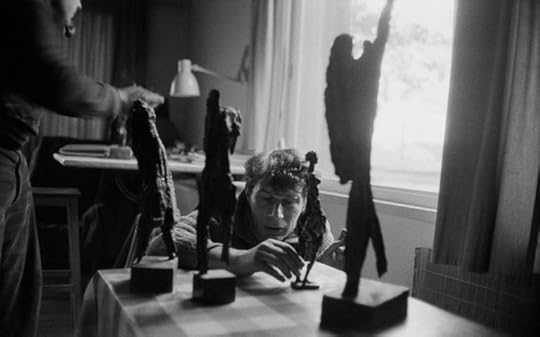
Ginevra: John Berger nello studio dello scultore Henri Presset.

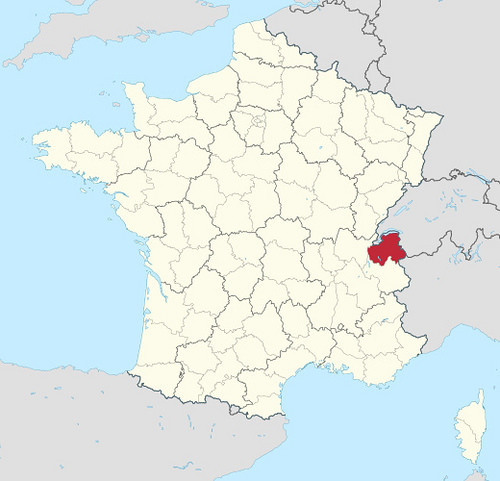
Un Berger targato 1983, cinque racconti scritti dopo che si era trasferito a vivere sul versante francese delle Alpi (Alta Savoia, scelta come nuova residenza intorno alla metà degli anni Settanta), un luogo fatto di villaggi, contadini, pastori, piccoli allevatori, natura a tutto tondo, un mondo ancestrale di cui Berger sembra voler prolungare la permanenza diventandone l’aedo.

description
L'Alta Savoia (Haute-Savoie, in francoprovenzale Savouè d'Amont o Hiôta-Savouè) è un dipartimento francese della regione Alvernia-Rodano-Alpi

A metà tra la fiction e la non fiction (il documentario?), Berger tramanda personaggi e situazioni che sembrano provenire da un altro mondo e un’altra vita, in realtà ben radicati nella seconda metà del secolo breve.

Un mondo che oggi può apparire alieno e quasi fantascientifico, ma che essendo impregnato di cultura contadina ci è prossimo e sicuramente coinvolge chi ci ha preceduto solo un paio di generazioni fa.

Un mondo in cui i borghesi sono marginali, mentre contadini e operai sono centrali e ben rappresentati.

description

Chi è costretto a lasciare la campagna o il villaggio per trasferirsi in città forse approderà a Troia e si dimenticherà da dove viene (Lillà e Bandiera l’ultimo volume di una trilogia chiamata Into Their Labours iniziata con Pig Earth e proseguita come capitolo centrale proprio con questa raccolta di racconti). Questi personaggi profondono dignità e forza d’animo, pur se sono degli sconfitti nella lotta con il destino, che è sempre incomprensibile: però, almeno per Odile, la protagonista di uno dei cinque racconti, quella che si chiede se ci può essere amore senza pietà, la sconfitta è a sua volta un inizio.

description
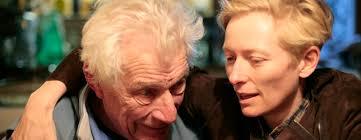
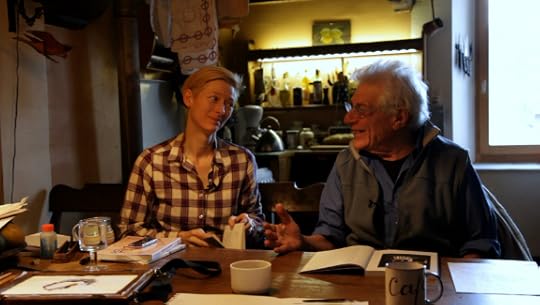
John Berger e Tilda Swinton

Pagine piene di grazia profusa anche nel raccontare un braccio immerso dentro una mucca per aiutarla a partorire, una morte violenta in fonderia, il sesso, lo sporco e la miseria. Pagine che sembrano raccontate ancor prima che messe su carta, in bilico tra oralità e scrittura.
Un Berger che possiede sia l’arte di raccontare che quella di ascoltare. Un Berger in piena forma che ci spiega come la misura di un sorriso sia semplicemente un bacio.

Serba le lacrime/amore mio/per la prosa.

description
John Berger con Tilda Swinton in The Seasons in Quincy: Four Portraits of John Berger del 2016. Quincy, il paese della Savoia dove Berger vive: quattro suoi amici lo vanno a trovare in differenti periodi dell'anno, ciascuno in una diversa stagione dell’anno. I quattro sono: l’attrice Tilda Swinton, il regista Christopher Roth, il musicista Simon Fisher Turner e lo scrittore Colin McCabe, Tutti insieme firmano la regia del documentario.
Profile Image for Vit Babenco.
1,784 reviews5,784 followers
March 26, 2021
When we are born we all are handed a one way ticket…
Perhaps they are right, those who pretend there are harps in heaven. Maybe flutes and violins too. But I’m sure there are no accordions, just as I’m sure there’s no green cowshit that smells of wild garlic. The accordion was made for life on this earth, the left hand marking the bass and the heartbeats, the arms and shoulders labouring to make breath, and the right hand fingering for hopes!

Behind every story there is a life… And behind every life there is a story of sorrow and joy… The only thing that is needed is to extract the story out of life… And John Berger seems to know the skill of extracting stories inside out.
If I’d been told as a child what the life of an adult is like, I wouldn’t have believed it. I’d never have believed it could be so unfinished. When young we lend so much authority and sureness to our elders.

Thus we proceed from infancy to childhood; from childhood to adolescence; from adolescence to adulthood…
Life goes on and we get older and “Hay in the barn cannot change back into grass.”
Profile Image for Argos.
1,260 reviews490 followers
June 7, 2020
Daha önce iki kitabını okuduğum “Onların Emekleri” üçlemesinin ortadaki ikinci kitabı. Yine köylülük ve köyler hakkında. Bu kitabında artık köylerde hafif kıpırdanmalar, köylülerde hafif huzursuzluklar başlıyor, şehirlere göçme olgusunun belirtileri görülüyor, tabii ki köylerin yok olması ve şehirlerin göçmenlerle tanışması da.
Okuduğum 1. (Domuz Toprak) ve 3. (Leylak ile Bayrak) kitaplara göre daha zayıf buldum bu kitabını, beş hikayeden oluşuyor, başında ve sonunda iki şiir ile tamamlanıyor. Berger’in mükemmel Alp köyleri tanımları için bile olsa okunur.
Profile Image for celia.
194 reviews38 followers
July 21, 2024
me han enganchado mucho las historias y me han recordado, si se me permite esta comparación, a la narrativa de irene solà, con su pueblo, los personajes extraños, lo bello y lo feo entrelazado...

pero tengo mi bone to pick. conforme iba leyendo las historias, el papel que las mujeres tienen en ellas me gustaba cada vez menos... incluso en la que da nombre al libro, Once in Europa, Odile (un nombre precioso, por cierto) acaba estructurando su vida alrededor de los hombres cuando todo apuntaba a que no sería así, porque la historia empieza con que la envían a estudiar fuera por inteligente. bueno. que al final tanto comentario sobre el binarismo hombre - mujer sí se me ha hecho un poco agotador. me ha gustado porque es que me gusta mucho john berger y como escribe, pero no pasa el test bechdel y no es una lectura muy feminista, que digamos.

al menos acaba con un versito precioso
(keep tears / my heart / for prose)
Profile Image for Diana Matei.
20 reviews1 follower
December 16, 2010
John Berger's writing bleeds invisibly. This is one of the first books that has made me cry in a very long time. It is simple and beautiful, unscathed by the presence of today's technology. It shows the death of culture and the pain industrialization and factories have brought society. The imagery is beautiful. Animals and different types of trees are significant and important.

Some of my favorite quotes:

"Men aren't beautiful. Nothing has to stay in them. Nothing has to be attracted by any peace they offer. So they're not beautiful. Men have been given another power. They burn. They give off light and warmth. Sometimes they turn night into day. Often they destroy everything. Ashes are men's stuff. Milk is ours."
"Do you know what hell is?
Do you?
Hell is where bottles have two holes and women have none"
"His face fitted into her breast like a gun into is case lined with velvet."
"He slept with his fist in his mouth and that night he dreamed."
"When the axe comes into the forest, the trees say: Look! The handle is one of us!"
Profile Image for Hulyacln.
987 reviews565 followers
March 1, 2022
‘Bazen tek bir cümleyi yalanlamak için bütün bir hayat hikayesi anlatmak gerekir.’
.
Tarlalardan fabrikalara, köylerden büyük şehirlere.
Bir Zamanlar Europa’da ‘Onların Emeklerine’ üçlemesinin ikinci kitabı, beş öykü ve iki şiirden oluşuyor.
Öykülerinde toplum dönüşümünü, ekip biçilen toprakların griye döndüğünü izliyoruz. Toplumsal etkiyi göçten, emek bölümünün değişiminden takip edebiliyoruz evet, peki bireysel farklılıklar nasıl ortaya çıkıyor?
Berger tam bu noktada gözlem gücünü devreye sokuyor. Maddi olgulardan bahsederken; kadınlığa, duyguların gittikçe sistematikleşmesine de arka planda değiniyor.
.
Özellikle kitaba ismini veren Bir Zamanlar Europa’da (kısa bir roman da denebilir) tadı damağımda kalan bir lezzet gibiydi. Konusu, işlenişi ve alt metinleriyle, ‘bir öykü nasıl olur?’a cevap niteliğinde de diyebiliriz.
Sadece bu öykü için bile üçlemeyi edinmenizi isterim!
.
Çeviride Murat Belge ve Taciser Belge yer alıyor. Kapak resmi ise Jean-François Millet’nin ‘Ekici’ adlı çalışması ~
Profile Image for Mohammed omran.
1,839 reviews189 followers
April 30, 2018
فقط نجمه واحده لا احبذ قصص الحب العاديه المكرره والرتيبه احب القصص الجديده
حدث في اوربا كتاب عادي جدا لايستحق تلك الضجه
لا اعلم ربما كان لكم راي اخر
4 reviews
February 13, 2021
Een boer die uit schrijnende eenzaamheid accordeon speelt voor zijn koeien, de openlijke affaire tussen een stadse blondine en een gierige herder of het bevreemdende liefdesverhaal van een piepjonge weduwe. In ‘Ver weg in Europa’ vertelt John Berger vijf verhalen over het harde boerenleven en de komst van modernere tijden in de Franse Alpen. 

De verhalen staan volledig los van elkaar, maar beschrijven allemaal de stroeve zoektocht naar liefde en geluk van het mysterieuze, primitieve bergvolkje. Berger hanteert een simpele maar pure schrijfstijl en de schoonheid van sommige zinnen is pretentieloos poëtisch. De personages en hun omgeving voelen vaak bevreemdend aan, maar wekken tegelijk een bizar soort empathie op. 

Berger is een meester observator. Hij leeft mee met zijn personages, raakt ze bij momenten bijna aan en houdt toch steeds de nodige afstand. Alle verhalen mogen dan het thema liefde behandelen, dit boek is wars van zeemzoetigheid en artificieel sentiment. Het leven doet namelijk zijn goesting en daar leg je je maar best bij neer. 
Profile Image for Gert De Bie.
487 reviews62 followers
August 15, 2021
Ok, het eerste deel van John Berger's unieke "De vrucht van hun arbeid"-trilogie beviel ons heel erg vanwege het unieke beeld dat hij schetste van het (verdwijnende) leven van kleine boeren aan de voet van de Alpen, een beeld vol empathie in een heldere, droge stijl neergeschreven.

In deel 2 'Ver weg in Europa' schrijft Berger over diezelfde gemeenschap maar treedt het liefdesleven in het dorp op de voorgrond. Met een typerende feitelijkheid, vertelt Berger over een eenzame boer die accordeon speelt voor zijn koeien, over bejaarde herders en hun liefde voor de karaktervolle jongedames uit het dorp, over dromers en over tragiek.

Omdat John Berger in dit tweede deel het liefdes- , en dus gevoelsleven van zijn medemens centraal stelt, krijgt het boek een universeel karakter, vol schone - eenvoudige - zinsnedes, rake bewoordingen en universele waarheden.

Indrukwekkend hoe ook hier tragiek passeert, net als in het leven, maar hoe schoon elke mens tegen de achtergrond van dat leven zelf blijft.
Die kunst om alle personages in hun waarde te laten, om mensen te portretteren zonder welk waardeoordeel dan ook, is wat de trilogie (of althans de eerste twee delen) van Berger zo waardevol en ontzagwekkend schoon maakt.

Indrukwekkend.
Profile Image for Cody.
988 reviews300 followers
October 3, 2023
Rather than take it in bits and pieces (Dave Clark Five), I decided to just do one cumulative review of the tritone in the allotted spot of the last book, Lilac and Flag .

Find it…there? No clue how to link anything.
Profile Image for Mirva.
21 reviews1 follower
June 17, 2013
I'll just focus on the story “Boris is buying horses” which comes from “Once in Europa” and it is the second part of the trilogy “Into Their Labors”. This is not easy reading, as it will challenge the reader to think about what it means to be an individual in a culture where tradition holds sway over every aspect of those living there. Berger considers himself a storyteller, not a novelist and the “Into Their Labors” trilogy does read more like a series of interconnected tales. “Boris is buying horses” is an attempt to refute a single sentence by telling a life story. Boris died like one of his own sheep: neglected and starving. “What he did to his cattle” the narrator tells us, “finally happened to him”. The narrator then counters this biographical assessment by retelling Boris' story from its beginning to its last moments with “his head thing back, him mouth open... (and) dogs, savagely bewailing.”
Profile Image for IGNACIO ROMERO.
285 reviews16 followers
January 24, 2021
¡Que hijo de puta! Digo cada vez que termino de leer algo de Berger. No importa que cosa, todo me encanta. Todo me mueve tanto que cuando escribo, quiero copiarlo (cómo antes quería copiar la pegada de Riquelme).

Este es el segundo tomo de la trilogía "De sus fatigas", y Berger, cómo hace siempre, escribe una historia central y varias historias más pequeñas que van completando la más grande, cómo si fuera una Mamushka.
Nunca estuve en un campo, pero después de este libro, me siento capacitado para hablar.
Profile Image for Isabelle.
Author 4 books30 followers
April 30, 2017
Een ongetrouwde boer is zo vereenzaamd dat hij accordeon speelt voor zijn koeien. Een herderin wordt in de armen van een Italiaan gedreven door een oude collega-herder die haar aanbidt. Een gierige boer geeft alles weg als hij zijn hart verliest aan een blondine. … De verhalen in Ver weg in Europa gaan over de liefde en zijn tegendeel: de existentiële eenzaamheid die overblijft als alles is verdwenen. Maar ook over het land waar ze zich afspelen: de Franse alpen, waar het boerenleven op zijn einde loopt en de industrie zijn ingang vindt. Boerenzonen moeten kiezen tussen eenzaamheid en fabrieksarbeid. Die eenzaamheid tekent Berger schrijnend teder, met pijnlijk mededogen - een woord waarvan hij me in zijn essay over de schilder Géricault (Stemverheffing, Bezige Bij, 1992) de schoonheid liet zien. Dat grote mededogen voor zijn personages deelt Berger met die andere literaire held van mij, David Grossman.
Berger schrijft met een verraderlijk eenvoudige stem, plaatst schijnbaar lukraak zinnen en anekdotes naast elkaar en lijkt geen moeite te doen ze met elkaar te verbinden, maar net zo creëert hij de ruimte waarbinnen zich een mysterie ontvouwt. Na enkele verhalen gelezen te hebben, heb je geleerd dat hij zijn verhaalelementen als op een schaakbord in stelling brengt om ze dan met een verrassende maar altijd subtiele zet tot een krachtig effect te brengen. Berger gaat diep. ‘Als aan elke gebeurtenis die zich voordeed een naam kon worden gegeven, waren er geen verhalen nodig.’, schrijft hij aan het begin van het verhaal De tijd van de kosmonauten. En dat is wat hij doet, verhalen vertellen om iets heel essentieels te zeggen waarvoor we geen woorden hebben. Prachtige uitgave ook, die nieuwe hardcovereditie in de reeks Kritische Klassieken van uitgeverij Schokland.
Profile Image for KC Cui.
117 reviews4 followers
February 14, 2021
There’s no one stunner like Lucie Cabrol in this but the stories are as a whole more abstract and more dreamlike than in the prior volume. I enjoyed them.
Profile Image for Rhys.
904 reviews138 followers
November 2, 2022
A joy. Like a sky inside. Starlit.
Profile Image for Sal Urb.
17 reviews
May 2, 2023
like a 3.5, the stories weren’t as impactful as pig earth was, I liked the first two stories but the thread of communism and industry overtaking peasants didn’t work for me like I had hoped
6 reviews
March 27, 2025
More than anything, you can tell that Berger thought and felt deeply about being alive, without resorting to empty sentiment. There are probably flaws to this work - Berger identified himself as a Marxist, and perhaps the full result of the Marxist ideology which sits in the background is not rendered in a full or complete way (I can imagine someone like Krasznahorkai taking him to task on the romantic treatment of the peasants he depicts) - but the sheer strength and dignity of the writing and the characters steamrolls any real attempt to quibble on an ideological basis. If Berger is a Marxist, he may be only in sense that he sees the austere dignity in the ordinary, in the work people do, thinks their lives are worth exultation and respect in a way that perhaps those who benefit from their labor do not earn or deserve. Many probably qualify as Marxists under that definition.

Berger would be the first to say that just because a work is beautiful, we should not absolve it of scrutiny. It is a means to an end. But the beauty of his writing seems to break this rule. His writing is inhabited by a soul, and justifies itself.

Between the two, Pig Earth was perhaps the more focused of these two works. This one seems more personal. Together they cohesively shine in a way that composite works of smaller stories rarely do.

All of these books in the into their labors trilogy are no longer in print. Lilac and flag is the rarest and most expensive. Saving it for now but will return someday when I can find a copy.
Profile Image for Frabe.
1,196 reviews56 followers
October 18, 2019
Racconti ambientati nelle Alpi francesi dove il londinese Berger prese dimora negli anni '70: non li ho apprezzati più di tanto – a differenza di altre opere importanti dell'autore, in primis “Abbi cara ogni cosa”.
Profile Image for Christopher.
1,440 reviews222 followers
November 5, 2007
In the 1970s the English novelist and art critic John Berger moved to a rural community in the French Alps. Berger wanted to see peasant society firsthad, and to take part in their work as to better understand the challenges they face and the traditions they maintain. While there, he began writing a trilogy called "Into Their Labours" ("Others have laboured and ye are entered into their labours" - John 4:38). PIG EARTH, published in 1979, was the first volume. ONCE IN EUROPA is the second.

While referred to as a novel, it is really a collection of several short stories and one novella. These share a similar setting but do not overlap in plot or characters. Unlike in the first volume, there are no poems interspersed between the stories, and there is no historical afterword at the end.

As in PIG EARTH, Berger's peasants are not jolly people wearing stainless national costumes and singing about how good life is. Rather, they are draw as people whose lives mix joy and sorrow evenly, and the conditions in which they live--packed in a room with livestock, urinating openly, drinking in abundance, butchering livestock--are straightfowardly presented. While Berger is generally known for his Marxist views, he thankfully injects no inflammatory rhetoric into his fiction, and in fact at one point it is suggested that Communism can only destroy peasant life.

The theme of this second volume of "Into Their Labours" is the confrontation between peasant life and modernity. In the first story, a man finds it impossible to marry because most of the young girls have moved away to the cities. In the second, a prominent village man is ruined because of his love for a con artist city woman. The longest story shows how factory work completely destroys peasant customs and breaks people off from their traditions, depriving them of community and turning them into machines.

All in all, I found this volume a disappointment. As a linguist who often visits rural areas in Europe for fieldwork, I enjoy reading about peasant societies in the modern world, but about halfway into the second volume of this series, I found Berger's writing style repetitive and dry. Anyone who has lived in a village could tell you that even a tiny community has a whole world of events and intrigues going on, but Berger sticks mainly to the same thematic material of relationships between men and women. At least the poetry is generally gone, though one poor poem is placed on the very last page. I doubt now that I would move on LILAC AND FLAG, the last book in the trilogy.
Profile Image for Justin Evans.
1,716 reviews1,133 followers
October 12, 2012
Slightly disappointing compared to the first volume, just because the stories here are much less varied in tone, style and theme. That said, the novella from which the collection takes its name is stunning, and I'm sure I'll be returning to it. It's hard to write love stories that I want to read, but with 'Once in Europa,' (the story), Berger succeeds.

Otherwise, I like the 'modernity comes to the country' focus here, particularly in the short, final story, which somehow combines references to Gramsci with a love story.
21 reviews
July 6, 2009
"A woman, she thought, washes herself quite differently from a man; a man washes his body like he washes down a wheelbarrow; it's not by washing himself that a man learns to caress."

Just one nugget from the best of the "Into Their Labour" trilogy.
Profile Image for Andrea  Taylor.
787 reviews45 followers
October 19, 2011

The Second book in his Into Their Labours trilogy. Berger brought about an illumination of God for me through his writing. The beauty in life lies in the living and no one describes it so well as this author. To read Berger is to read and fall in love with a way of life!
Profile Image for your brilliant friend.
121 reviews17 followers
November 16, 2025

If Every Event Which occurred could be given a name, there would be no need for stories. As things are here, life outstrips our vocabulary. A word is missing and so the story has to be told.
John Berger writes about peasants. There's all kinds of them, here. One—and he's my favourite—having lost his mother, and left alone now to tend to the affairs of the farm, … he was alone, alone to decide the risks, to cut the hay, to ted it, to turn it, to windrow it, to load it, to transport it, to unload it, to pack it, to level it, to quench his thirst, to prepare his own supper … goes back to playing the accordion, which he hasn't played at all for many years. It is, we're told, a diatonic accordion with twelve bass keys for the left hand, made by F. Dedents in the 1920s. The keys [have] pearly heads, its sides [are] blue decorated with yellow flowers, and the reeds [are] made of metal and leather. He learnt to play it seated, resting the right-hand keyboard on his left thigh and opening the accordion like a cascade falling towards the floor to the left of the chair. A cascade of sound. We discover him playing the accordion one night to himself and his cows thus:
There was the cow bedded down, and there was Félix seated on a stool, beneath the one dim electric light bulb, an accordion between his arms. For the rest I couldn’t believe my eyes. Lulu, you’re seeing things, I told myself. Félix was alone! Not another soul in the stable, playing to the fucking cows! He can play though, Félix can.

He has no wife, though he's in his fifties, and one of the characters memorably explains why it is now very difficult for Félix the accordion player to find himself a wife.
Suppose he finds an old maid—he’ll say to himself: there must be something the matter with her, nobody else wanted her. Suppose he finds a woman who’s divorced—he’ll say: she did wrong by one man, she may do the same to me. Suppose he finds a widow—he’ll say: she’s been a wife once, it’s my farm she’s after! … Suppose he finds a young woman, he’ll say to himself—and who knows? he might be right—he’ll say to himself: in a year or so she’s going to cuckold me as sure as day follows night.


It feels good to know that this is only one of three books just like it that John Berger has written about the lives of these mountain people. It feels good to know that Félix isn't really alone in his book, though he is alone in his farm. There's Boris, a scrupulous little man of great pride and great wealth, whose story fills one with laughter and also a little sadness … [he] liked to remain mysterious. He believed that the unsaid favoured him. And yet, despite himself, he dreamed of being understood … who believes that … Nobody is happy ... There are only happy moments. Like this one now with you. There's Danielle, the beautiful girl who gets entangled in a strange relationship with an old man he calls Granddad ... What … was the relation between the old shepherd Marius and the baby in Danielle’s womb when she left the village? Was he the child’s godfather? Hardly.
(A woman, she thought, washes herself quite differently from a man; a man washes his body like he washes down a wheelbarrow; it’s not by washing himself that a man learns to caress.)

If I cannot convince you, no matter how feeble my attempt, to read John Berger's banger of a book, perhaps this joke will.
What is it that men have and women don’t and which is hard and long?
Tell us! demanded the boys.
Military service!


Perhaps if I tell also show you how the book ends you'll be convinced even further.
Do you know what hell is?
Do you?
Hell is where bottles have two holes and women have none.


Perhaps you haven't been convinced, yet. Perhaps you wouldn't, if God himself told you It's good. But I, the future I, will be convinced by these quotations, and force me to go dig up the book where it will be buried, having ripened for a reread. Perhaps I won't find it, having lent it to one of my friends who never do return my books, and I will have to just remember and be wistful, and be content with that, since I will not ask for it. This will be I hope as good as a madeline to the palate of my memory.
Profile Image for Joyce.
32 reviews
January 15, 2018
The second book of Berger's Into their Labours trilogy, Once in Europa is a beautiful and harrowing collection of stories about a dying culture. It's not merely about peasant life but how these people dream, grieve and love. The environment these people are in comes alive and becomes a character in the book itself. Through Berger's simple yet vivid writing, every one of them beats - a personal favorite of which is the titular short story, one which I will remember for a long time.

Nobody can look up at the stars when they are so hard and bright and not think that they don't have something to say.
Profile Image for Leyla Zebda.
138 reviews4 followers
February 15, 2023
Trop besoin de les mi-etoiles qu’ils ont sur letterboxd mais whatever. Je ne sais pas si j’étais juste fatigué, malade, trop de paysage ou quoi mais parfois je me suis senti perdu. J’ai aimé tant l’histoire un europa, surtout les derniers quelques sentiments et peut-être aussi le premier histoire mais sauf ça je m’ennuyais un peu. Je ne sais pas si c’est aussi le fait que c’est tout en français du coup j’attache moins au l’histoire ou les personnages à cause de ce bizarre distance dans ma tête avec la langue. C’est moins perso … pas le pire truc que j’ai jamais lu de ma vie mais enfin, ça ne m’a ps changer la vie quoi
Displaying 1 - 30 of 60 reviews

Can't find what you're looking for?

Get help and learn more about the design.