Jump to ratings and reviews
Rate this book

The Book

The Book

Rate this book
It begins, “Don’t read The Book.” All information, past and present, is controlled by The Book, a handheld digital reading device that exists in a paperless, sustainable, dystopian future that looks shockingly similar to our own. Among the multitude of Book lovers, we find Holden Clifford, a simple sprinkler fitter who is content with his small life. Through his favorite story, The Catcher in the Rye, Holden discovers an inconsistency between the digital version and a rare paper page, preserved in the form of “recycled” wallpaper in the bathroom of his favorite Chicago bar, The Library. His quest for answers leads him quickly beyond the page to discover a secret library of books and a man named Winston who explains the subtle, potent censorship of every story ever written. Equipped with excerpts from unedited novels, alongside a group of like-minded readers called the Ex Libris, Holden dedicates himself to freeing the world from the grip of the Publishing House. His heroic mission draws him hastily into a dangerous scheme to overthrow the Editors of The Book and save the last remnant of printed words left on the earth. As his mission unfolds and a haunting reality about the government’s capacity to outwit the minds of the public begins to reveal itself, Holden is forced to accept that the only way to succeed may be to sacrifice himself and the one thing they love more than life – books.

390 pages, Kindle Edition

First published March 9, 2010

11 people are currently reading
1003 people want to read

About the author

M. Clifford

14 books64 followers
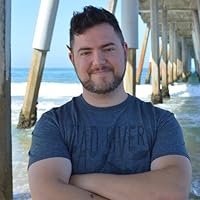
M. Clifford was born in 1978 in a suburb of Chicago. He grew up in a forest-encroached neighborhood called Northwoods, where the embers of his imagination were kindled during solitary treks through the wilderness. M. wrote his first book, 'The Bullet That Never Stopped', on his mother's rickety green typewriter at the prudent age of eight and three-quarters. While dating his wife in college, he wrote numerous stories, including novel-length additions to her favorite books, giving those beloved characters new adventures. In 2006, he began his career as an indie author. His debut novel, "The Book", is being taught in high schools as a companion to Bradbury's "Fahrenheit 451" and Orwell's "1984".

His multi-genre collection includes The Muse of Edouard Manet, The Book, Felinian, Fertile Crescent, Propaganda, The Dracula Index, and #WhoIsLerosy.

M. Clifford lives by the beach in Los Angeles with his wife and son.

Website - http://www.mclifford.pub
Facebook - http://www.facebook.com/m.clifford.au...
Twitter - https://twitter.com/MCliffordAuthor
Zazzle -
http://www.zazzle.com/mcliffordauthor

Ratings & Reviews

What do you think?
Rate this book

Friends & Following

Create a free account to discover what your friends think of this book!

Community Reviews

5 stars
65 (23%)
4 stars
104 (37%)
3 stars
70 (25%)
2 stars
22 (8%)
1 star
13 (4%)
Displaying 1 - 30 of 92 reviews
Profile Image for Becky.
1,672 reviews1,959 followers
January 5, 2014
Don't Read This Book.


*deep breath* I wanted to like this book. I really did. Clearly, as Captain Picard indicates, it was not to be.

But before we get to the angry rant portion of today's show, I'll list the things that I liked about it.

1) It was free.
2) It encourages reading.
3) See number one.

That's all I got. I consider it an accomplishment to have even finished this, considering how abysmally poorly it's written, and how non-existent the plot and characterizations are.

I don't even really know where to start, to be quite honest. There's just so much wrong with this book. And it pains me to be so disappointed with it, not only because I had expected to really like it, but because when I nominated it, it kicked off a big discussion as to whether self-published books should even be permitted for group reads in the group, and I defended them as not all being poorly written garbage. But then this book set out to prove me wrong, and it succeeded.

On my Nook, this book is 234 pages long. I made 157 notes & highlights. It would have been more, but I swear that my Nook was having trouble keeping up, and by the end, I was tired of constantly stopping, so I let some pass. Every time I started to get drawn into the story, I'd hit a brick wall of terrible sentence construction, an odd or completely wrong word choice, or misspellings. It was incredibly frustrating.

Let me share some of my highlights with you all.
Pg. 11: "Holden paid the woman and stepped into the irrelevant rain."
(No, the woman wasn't a hooker - just a cab driver.) Apparently, the rain is irrelevant, which requires a special acknowledgement. Especially considering that every single time the weather is mentioned throughout the book, it's either raining, or cloudy, or overcast, or gray... or "un-sunny". Un-sunny was used TWICE. ON THE SAME PAGE. (This is apparently a habit of Clifford's, to latch onto a word and use it repeatedly over several pages and then forget about it.)
Pg. 19: "There soon came a hollowness in his chest and Holden knew that none of what was happening would make sense until he could make sense of it all."
You don't say...
Pg. 31: "Through out the night Holden watched as the sun gently rose through the milky bay window in his living room[...]"
That's one hell of a sunrise.
Pg. 48: "In what sort of deep horror did he now found himself swimming?"
O_o
Pg. 68: "Her dreams had only increased the buoyancy of the building stress. Any calmness she exhibited had come from her enthusiasm over the details of the Pratt family estate."
Uhh... what?
Pg. 75: "Winston paused, unexpectedly emotional, and Marion stood to put an arm around him. Holden went to the closet off the kitchen, where he knew Winston kept his liquor, and returned with a bottle of twenty-year-old whiskey and three glasses.
'That must have been hard for you.'
'Yes, but not anymore,' Winston replied, taking the glass with thanks and sipping from it happily. He knew they were confused by the glisten in his eyes. 'I just miss my mother.'"
I'm confused by your whiplash emotions, too, Winston.
Pg. 80: "He turned the keys and dropped them into the grime-coated cup holder, reached for his duffle bag with satisfaction and closed the door to find Shane walking in a sprint toward his van, looking absurdly frightened."
Walking... in a sprint. Oddly, all I can picture right now is Shane Prancercizing up to Holden's van. Would that really be any less ridiculous than that sentence?
Pg. 82: "Holden felt a deepness of disparity."
Really. What's that like? Is it anything like despair?
Pg. 93: "[...]willfully engaging with an Unfortunate was like reasoning with an alley cat that wouldn't cover its stool[...]"
I just... WHAT?
Pg. 147: "'[...]Truth is you'll never know. In your wildest dreams you could never understand the depth of it.'
Now, faced with the dark visage of inevitability, the simple pipe-fitter was poetic."
And all this time, I thought I hated poetry.
Pg. 147: "Holden lowered himself to his daughter for the third time. She was shaking with dread."
Probably not the best word choice there. Even in context, these two sentences were squicky. Especially coming immediately after the "depth" line. =\
Pg. 151: "Before long he would be a different person. He would be one of The Book's foremost defenders. One of its abdicators, leading the cheering section for technology and convenience."


Yeah. That was only a handful of highlights. There were so many more. So many incorrect word choices ("abdicator", REALLY??) that I have become convinced that M. Clifford does not know, or care, what words actually mean. And considering the subject matter of this book, how it's drilled into our minds that "a single word can change the world"... This is just unforgivable. This book is nothing more than a diatribe against editing. Editing is not evil. Editing for censorship is not the same as not fucking editing your manuscript.

And on that note, also, ebooks are not evil. ANY book can be edited and changed. As proved with THIS book. (Is this supposed to be a parody?) There's a fucking addendum added to the end of what is supposed to be a paperbound book, which proves that the content even in those can be changed and redistributed. If a government is going to go to the lengths depicted here to control and censor book content, they'll do it whether it's printed or digital. The only reason it was digital only is because of the paper ban in favor of recycling.

And I don't even want to get started on that. Actually, I do. There's a false equivalency posited at the tail end of this book that someone who is pro-environment is also pro-censorship. That those who "reuse" a book, lend it to others, specifically, are "just as much to blame as those who would eventually destroy it". Are you fucking kidding me? With as many errors as can be found in this book, this shit should never have even seen the light of day, but because any Tom, Dick, or Harry can pay a fee and publish their book, we now have a pseudo-intellectual telling us that REAL readers consume new books and ONLY new books. But, oh yes, it's really a propaganda pamphlet (wink,wink - it's META!) put out by underground advocates for freedom of thought, so we shouldn't be overly critical of a couple errors here and there, right?

Fuck yes, we should. I'm going to share one last quote from this travesty before I carry on with my ranting in other directions. Here it is, from page 230: "As he studied the massive apparatus, he decided that what he was seeing was a single, manual printing press. They didn't work by scanning or ink jets like The Book had told him. Each letter was chosen very carefully and by a person that loved each word they spelled." I bolded that last part because OMFG ARE YOU KIDDING ME RIGHT NOW??! I can't even. I fucking can't.

Let's move on before I start bleeding from my eyes. I want to talk about the characterizations... or lack thereof. These characters made no sense. I can't even say that they were one-dimensional or flat, because that implies that they had a trait and stuck to it. Not so, these characters. (Maybe Moby, actually. But I'll get to him in a sec.) These characters, and here I'm thinking primarily about Holden, Marion, and Winston, were contradictory from start to end.

Holden lays the pipe... for sprinklers, not Marion, though not for lack of her trying, and just about every sentence talks about how he's just a simple guy... who happened to stumble onto a huge conspiracy and set about trying to do something about it. I have no idea why anyone would follow him (and apparently, neither do most of his followers), because he's pretty much as exciting as wet cardboard that was originally used as a doghouse. I didn't give a shit about him, I couldn't have cared less that his beloved favorite book had been edited, because in my opinion, that would only have improved The Catcher in the Rye. (Ooooh, blasphemy!)

But apparently he's "smart". He's the ONE. He's got something that nobody else had and apparently is inspirational. His reactions are ridiculous, he's completely predictable, and has less common sense than your average garden slug. Yet people follow him. I don't get it.

Also, there's Jane, Holden's daughter, who's a complete afterthought to the book AND her father. Apparently she's supposed to be important to him, but I can count on one hand the number of times he thinks about her in the book, and probably have fingers left over. But, you know, Best Dad EVAR!! He's #1!

Then there's Marion the Librarian. Yes, really. Clifford likes rhyming too. Holden's favorite people are Jane, and Shane (his best friend), and Marion the Librarian. I truly cannot even roll my eyes any harder.

Anyway, she's a bartender at "The Library" (her family's bar) and has got the hots for Holden (because apparently she's into the whole wet-dog-cardboard thing). Her bar is wall-papered with pages from books, but Marion is not a reader, and only values the pages as a covering for her bar walls. When Holden confronts her about one of the pages, she brushes off the concept of the book/ebook being different, and couldn't care less about it.

That is, until Holden learns that it might be dangerous should she go looking into the discrepancies. At which point he races back to find her frantically going through page by page and finding differences. OOOH DANGER! Now she's a "terrorist" (which is apparently a convenient label for anyone who goes against the norm) and on the run, and apparently is a complete bookwhore now.

Then there's Winston the wimp. He seeks out Holden to lay some pipe for him, and whoopsie-daisy, lets Holden discover that he has illegal books. He then goes on to educate Holden about the conspiracy to edit, and when Holden wants to do something about it, he says No! There's nothing you CAN do... just let it go. And get off my lawn! (OK, I added that last part.) Actually, Winston has zero personality at all. Holden pretty much advertises the fact that he's got books, along with Winston's address, volunteers Winston's house as a refugee camp, and starts moving people in without Winston's approval... but does he say anything about it? Nope. Winston's casa es su casa!

Finally, there's Moby. He's a whale. He's a whale. He's a whale. He's a whale. In case you didn't get the reference. He's described as Polynesian and covered in tattoos, and he's the only character in the book I actually remotely liked. He had more personality than anyone else in the book. So I found myself getting more and more pissed as every reference to him included a dig at his size. Whale-like. Huge. Enormous. And it was even more aggravating because not a single one of the off-hand sizeist comments were relevant in any way to the story, or the scene, or anything at all ever. But hey, he's big, so he can take it!

Fuck this book.

Profile Image for Chris  Haught.
594 reviews246 followers
January 6, 2014
Don't Read the Book

You know. I really shouldn't complain. It warned me - told me flat out not to read it. But I did it anyway. So it's my fault.

So this looked like a cross between Fahrenheit 451, The Matrix, and Fight Club. Except, that didn't turn out to be the case.

There was a good story here. It was implausible at times, but I can suspend belief and go with it. Except when I have to read it twice.

Yes, read it twice. On the average, I probably read every sentence twice. Often, they made no sense, so I had to go over them again. Even when they did make sense, I couldn't trust them and read them again to make sure that what I'd read was, in fact, what was there. And that it made sense.

Crap, my own sentences are starting to look like the ones in this book...

Early on, I stated in a status update that an editor was needed. But now I can see why that didn't happen.

The editor quit. Had to. There's no way anyone took that job and kept it. Who would? You'd have to edit everything, basically rewrite the book.

Now, with the story being what it is, that's surely ironic. Maybe it was intentional. Who knows?

Well, there were too many adverbs and adjectives. Too much describing. I mean, all descriptions were describably described by a describing describler.

Huh?

"There was a scratching. A shuffling. Then footsteps followed by the cracking sound of a plastic bag being whipped open in hollow, suspicious air."

Ummm...too much. Cracking and whipping of the bag, I can envision. But the hollow and suspicious air? Come on. What is that supposed to even be?
Also, this thing where he throws several sentences fragments. Together. With periods between. Ummm, commas are your friend.

"Holden struggled against their grip like an untamed tiger." As opposed to a tamed tiger.
"Under their sudden weight, while they grappled for a piece of Holden they could restrain, he turned to see..." Umm. He's standing. Are they on his shoulders? And if so, how could he turn?

See, often these sentences don't make sense. At the very least, they're so packed full of description, they're distracting. The writer is more visible than his story, and that makes suspension of belief impossible.

"'That man there, and the older couple sitting on the couch, those are two of Winston's neighbors,'" Hmmmm. One, two...three.

"Holden awoke at four o'clock in the morning. Exactly. He had left the fan on in the shower and when the curfew ended, it burst forth from its slumber to wake him from his. He sat in bed, staring at the white numbers on the face of his alarm clock."

Ok, see. This is typical. If you read it four or five times, you might get the visual that Clifford is trying to convey. But it takes you four or five times. If it takes more than once, it's a fail.
Fans don't burst, they spin. When I saw that, I thought water was bursting forth to wake him up from the shower head. That makes sense, at four a.m. But then he's in bed. Looking at the face of the clock, rather than behind it, for the time.

So how much time does this take up, when it should have been read in about two seconds?

The story was decent. The work required to get the story was painful. The feeling I walk away with after reading this isn't a good one.
Profile Image for Lori.
1,796 reviews55.6k followers
April 20, 2010
Don't read The Book.

Let me begin by saying that I don't mean This Book. You should definitely read This Book!

I mean The Book, the one that M.Clifford tells his story about. The Book that replaced all other books. The Book that is governed, updated, and edited by The Publishing House. The Book that is full of lies.

Imagine a world eerily like the one Bradbury introduced to us in Fahrenheit 451. A world where owning a copy of a paper book is illegal. A world where books are recycled - burned, destroyed. Except, THIS world is in the future. And everything is digital. The government demands that people begin to take care of their Mother Earth, to stop harming her, to stop ruthlessly cutting down her trees to make paper - a world where everything you ever need to read can be found within the electronic screen of The Book.

There was a Great Recycling. Everyone was urged to purge their homes of their paper books. If they turned in their paper books, they would receive a free copy of The Book - filled to the brim with every book they could ever dream of reading. Those that didn't cooperate were fined. And eventually jailed. Until the government, The Publishing House, felt certain that all paper books had been recycled.

There were those who concealed their collections, those who saved and protected their books for sentimental reasons, hid them in fear of being found out and punished... but the world was obsessed with The Book. The world would wait with bated breath as the Editors interrupted their reading with endless Updates. Rather than using a stylus to navigate it's many options, The Book readers began to sharpen the nail on their pointer finger. The mark of a true reader.

Holden Clifford was a true reader. Holden believed in The Book. Holden was not alive during the Great Recycling, and had never read from a paper book before. Until the night that Holden met Shane at The Library - a bar that was run by Marion, the daughter of bar's owner. A bar that featured pages from books plastered all over the walls, as if it was used for wallpaper. Marion's father's way of "recycling".

Holden pushed his way into the bathroom that night, urgently needing to use the bathroom. Only a stall was available. As Holden leaned in to release his bladder, his eyes happened across a page from the wall that belonged to his favorite novel "The Catcher in the Rye". He read the page. And then re-read it. And then read it a third time before admitting that something was not right. The words he was reading on that page were not in the digital version of The Book. He was certain of it.

He left The Library, and returned home to check himself. Pouring over the pages, before and after the one he read on the wall, Holden discovered a horrifying truth. The Editors of The Book had changed the story. This revelation leads Holden on a journey to uncover the truth. A truth that The Publishing House and The Editors will do ANYTHING to keep a secret.

Do not read The Book.

M. Clifford creates a frighteningly realistic digital future. One that I can certainly see coming to pass if we are not careful. A world where we blindly believe the information we are fed. A world where people control what we read, what is available to us, and what we are allowed to think.

Imagine - no books. No bookshelves, no libraries, no journals. No ink. No writing.
Imagine - everyone carrying around one government owned eBook instead of newspapers, magazines, and novels.

M.Clifford takes our current digital world and cranks the dial way up. A warning? Perhaps. A vision of what we might become? Maybe.

Read his book!
Highly Highly Highly recommended!
Profile Image for Brad.
Author 2 books1,925 followers
February 14, 2011
I am a much bigger cynic than M. Clifford. He believes that change is possible, much like his protagonist, Holden. He believes that his imaginary dystopia is avoidable. I don’t.

I believe that his dystopia is already upon us and growing stronger every day. I believe there is no way to overthrow it or change its direction. I believe we’re fucked. But like I said, I am a cynic.

M. Clifford isn’t. His book, The Book is about a “near future” dystopia where the state sponsored media and the powers that be -– embodied by the “Department of Homeland Preservation and Restoration” -- alter every book in existence or delete them completely from the record. It all begins with The Great Recycling, a morally satisfying environmental moment wherein the world trades their paper books for a one-size-fits-all government issue digital reader. All books are outlawed and easily corrupted digitization becomes the norm.

There are those who discover the truth, however. A pipe fitter who loves books discovers that the stories he thought he knew and loved have been changed. Some subtly and others drastically. His moment of discovery gives birth to a movement that eventually offers the hope of freedom to a world in the grip of digital mind control. M. Clifford’s The Book believes in this hope, the human desire for truth and the indefatigability of the human spirit. Maybe he’s right.

But a couple of things have happened this month that give me pause. In fact, they’ve disheartened me to the point of undermining what little faith I had in the human thirst for truth.

First, there is the “Twain-scholar” sanctioned editing of “nigger” from the New South Press’s edition of The Adventures of Huckleberry Finn. Dr. Alan Gribben of Auburn University Montgomery has had difficulty reading the word aloud for some time now (presumably due to discomfort), and he’s sad that Huckleberry Finn has been removed from so many school reading lists, so his answer is to avoid what he calls “pre-emptive school board” censorship by offering his own pre-emptively censored edition of the great American classic:
NewSouth publisher Suzanne La Rosa said. "We were very persuaded by Dr. Gribben’s point of view of what he called the amount of ‘preemptive censorship’ going on at the school level. It pained him personally to see ... the way that Twain’s novels were being de-listed from curricula across the nation. It became difficult for teachers to engage in discussion about the text when the kids were so uncomfortable, particularly with the n-word.
Interestingly, the negative reaction to this about to be published edition has been negligible. We’re told in the few stories written about this development that the Mark Twain guild, populated by Gribben’s fellow Twain scholars, is mostly disapproving, but the rest of the response is as wishy washy as correspondent Michael Tomasky’s blog piece in the Guardian. And even those who are not sympathetic with the motivations behind the editing changes (which Tomasky is, even though he wouldn't go so far as to censor the work himself) seem to be of the opinion that since this is merely one edition, and that faithful editions that keep Twain’s language intact will still be available, this really isn’t such a big deal. Where’s the outrage? Where’s the debate? Where’s the discussion? It is nearly impossible to find. So tacit acceptance of censorship wins the day.

It’s a step towards M. Clifford’s dystopia, and it hasn’t even required the guilty propaganda of his Great Recycling.

Then there’s the second event. We’re reading Dan SimmonsHyperion in the Sci-Fi and Fantasy Book Club this month, and one of our members, Lara Amber, uncovered this error while reading her Kindle edition:
[C]ould everyone do me a favor? Go to the Kindle version on Amazon and click on "report poor quality and formatting" under the Feedback box. / Then politely tell the publisher that Jesus is the Son of God, not the Son of Cod, and to stop using COD every single time.
Luckily, Lara Amber heard right back from, of all people, Dan Simmons’ literary agent, and then from Dan Simmons himself:
I want to thank you for contacting me re: the low quality of transfer from hardcopy prose to e-text for your Kindle edition of Hyperion. As someone who works endless days and nights proofreading and re-proofreading text, the news made me sick. ("Oh my Cod! Cod damn it!" Ridiculous.

By now you've heard from my NY agent, Richard Curtis, who's one of the most respected agents in the business. Richard contacted the highest people at Bantam Books immediately and they admit to such errors in their "earlier editions" and have already begun a special RTF file check to correct Hyperion. (What it takes, of course, is an alert human eye and brain, such as yours.) When the top Bantam people asked Richard -- "Should we re-check the other three books in the Hyperion Cantos?" -- his answer was "Absolutely!" Such errors -- such absolute sloppiness -- damage the spell being cast by any novel and simply can't be tolerated.

Thank you again for writing to me promptly about this outrage.

Best,
Dan Simmons
Now that’s a pretty damn cool response from Simmons. But it’s also scary that he even needs to respond. A seemingly small error, probably a slip up that was repeated “innocently” throughout the book (although “c”and “g” aren’t really close enough on a key board that they could be a typo, are they?), but it gets out there in a digital version and requires direct action from the author to rectify. What if the author happened to be dead? What if there were no printed version to compare it to? What if the “mistake” became the norm? Would anyone realize or care? Well, those “what ifs” are precisely what M. Clifford’s The Book is about, but here and now those mistakes are happening without conscious action by any big controlling body, and I have to wonder how many e-copies of other books are error laden without anyone fixing them up.

It makes Clifford’s vision for our digital future even scarier.

But I am still nowhere near as hopeful as he is. I see that dystopia coming, and I see no hope for a revolutionary group like Holden’s Ex Libris coming to keep “truth” alive. In fact, I find myself more in line with the feelings of Holden’s mentor, Winston Pratt (or at least the way he felt mid-book)
Over time, despite how depressing reality is, that fact remains true. There is nothing we can do to spot [the Recyclers]. You must bear your fate and enjoy what life you have left. Enjoy this world. Enjoy each other. This is a harsh reality, but it is the one we were born into. Accept it. We do not have a choice.
I don’t believe that the fight in The Book is a fight that anyone could win because I don’t believe anyone would actually engage in the fight. But I’d sure love to believe it is possible, and if M. Clifford’s inspired work of “near future” dystopia contributes to making the fight possible, then it will take its place alongside other great dystopian books that Clifford clearly venerates (like 1984 and Fahrenheit 451).

The cover of the The Book says Don’t Read The Book.

Do though. Really.

Do.
Profile Image for Petra X.
2,460 reviews35.8k followers
Read
May 6, 2015
Does anyone know of any other books in this genre - particularly dealing with the death of paper and the misuse of ebooks?

This book looks like it fits with Fahrenheit 451, the The Hitchhiker's Guide to the Galaxy and Kindle's rented books with the clause that they can change anything. All we need is a 1984 or Brave New World government and history will be writ according to how Amazon and the government see fit.

It won't be long now. Or is it happening already by degrees?

What can we do to forstall this 'Utopian' world where everything will be written for our good? We can ensure that all books are printed on paper and put into national libraries that stand separate from governments. Additionally, we can insist that all books and newspapers have a microfiche record. But what happens when the last book has been printed and we are a paperless society and the no one hear's the leaves rustling in the abandoned woods except the animals that have reclaimed it? We will see.


I want to read this book.
Profile Image for Lisa.
73 reviews20 followers
May 14, 2010
Four simple words begin the narrative of M. Clifford's The Book: "Don't Read The Book".

What bibliophile can resist a challenge such as that? With a slight smirk I eagerly defied those words and plunged onward into the world of Holden Clifford - an intriguing dystopia in which environmental laws have banned paper and all literature and news media are conveniently conveyed to audiences via digital hand-held devices, portable and personal, each one called The Book. Holden, like his Salinger namesake, is a character caught existing rather than truly living and right from the start - as I, too, used a novel to shroud myself from a daily Chicago commute - I found myself empathizing with him and silently hoping for whatever would break him from his mundane life.

Holden's awakening comes in a Chicago bar called The Library, a tribute to the recycled book pages that wallpaper the venue. Upon seeing his name on an antique page from his favorite book, Holden's eyes are opened, not only to the powerful mystique of the printed word, but to the alterations from the original text that exist in the digital version he read his whole life.

M. Clifford's writing style is fresh and unique. The gripping story proves him to be an expert storyteller, beautifully weaving together political intrigue, suspenseful action, intricate relationships, and philosophical discussion. His descriptive techniques encourage the reader to engage with the writing - to enjoy the language as much as the story. It is a novel to be both savored and devoured. There are books which are meant to be read, respected, and reshelved, but The Book is one which lingers in my mind after the final pages have been viewed. It is a conversation starter as much as a story, drawing on themes such as the benefits and pitfalls of technology. Clifford's work sheds light on new thoughts and raises unanswerable questions but it could just be that the resolution is not nearly as valuable as the inquiry.
Profile Image for Stacey.
266 reviews539 followers
February 7, 2011
Reading is good, and ebooks are good for readers. They're smaller, cheaper, conserve natural resources. They're accessible to all. Ereaders make it easier on the eyes and hands. Bad eyesight? Use text-to-speech and other audio devices. Or instantly make any book a large-print version. Ride the bus? Now you have a whole library in your pocket. It's wonderful!

I do believe that, wholeheartedly, and have embraced digital reading, along with millions of other avid readers. I love the digital community, the easy to use devices, and above all, the access. I'm pleased that I've reduced clutter, that (if I maintain my equipment,) I'm leaving less of an environmental footprint. Instead of buying 75,000 pages a year, I'm paying for the ethereal – story in pixel.

Technology has its price. In the real world, we have not only an ongoing fight against net neutrality, and access freedom, but also against censorship. Think it's not happening in the “Land of the Free?” Think again.

“Whitewash washes white not only its target but, over time, any memory of the target. That is the purpose of whitewash.” ~ Ron Powers, CNN Opinion Special, speaking of the sanitizing of Huck Finn.

Boyce Watkins, also a CNN Opinon correspondent, labels it thus: “Making a more appropriate version of Mark Twain's novel available...” He says that NOT editing offensive material is “disconnected from reality.”

Fahrenheit 451, by Ray Bradbury, was quietly censored for over 13 years, and replaced in schools with the mutilated version.

Bradbury's tale has become an iconic tale of censorship, (although he has always maintained that he wrote it to highlight how television destroys our desire for literature.) In 451, it was only after most people stopped reading that the Firemen began to burn the books. In a twist of greatest irony, Ballantine, in 1967, began sanitizing the novel. In all, 75 sections were edited in the school and library version issued by this imprint. Bradbury learned of the “mutilation,” around 1979, and a restored version was released in 1980, and Bradbury issued an incredibly important essay called Coda.

In The Book, we have a society of readers and non-readers, presumably in similar proportions to our current reality, but they read everything on a government edited electronic book. Under the influence of environmental crisis, and a highly effective reduce/reuse/recycle program, books gradually came to be seen as a “wrong” choice, then they became unavailable, and finally illegal even to possess.

The Book showcases some of these concerns, and it does it in a wonderfully well-written, compelling, and believable story of a man who has just discovered how circumscribed his access to thought, controversy, growth and challenge has become. Intention at the highest level has been to make these edits for the greater good. Erase even the memory of conflict, and peace is preserved. It's the uniform presentation of the same interpretations that erases the ideological loggerheads of their past.

Without the print versions to compare, edits, both large and small, became very easy to issue, via daily update transmissions. Digital information being highly mutable, is used to “protect” the citizenry from unpleasantness, maintain political correctness, avoid giving offense, expunge inflammatory ideas, and to eventually bring about peace through uniformity.

It's happening now. Some of the participants at ereading forums refer to printed books as DTBs – short for Dead Tree Book. This is very subtle but it is, nevertheless, shaming language. Printed books are gradually being accepted as wasteful, with digital versions the “environmental” response. And with digital versions, we are faced with a blessing and a curse. Find a typo? Fix it. Terminology becomes offensive? Change it. Maybe we should rename 1984 to 2084? Easy as pie, with just a few keystrokes. Want to add a “stronger female character” to Heinlein's brilliant Puppetmasters? All it takes is a few sentences inserted here and there. Voilá, political correctness. It's good, right?

It's a chilling fiction that is all too real. Burn all, burn everything. Fire is bright and fire is clean.


Profile Image for Anne  (Booklady) Molinarolo.
620 reviews188 followers
March 5, 2016
In this dystopian world of Chicago, IL everything is paperless.

Don't read the Book.

So begins the story of Holden Clifford. Holden loves his uncomplicated life. He is divorced. He is a father. He is a sprinkler fitter. Above all, he is an voracious reader. He reads all materials - newspapers, magazines, and books on a hand held device called THE BOOK. But when he discovers a recycled page of his favorite novel, The Catcher in the Rye, on the men's bathroom wall his world and his belief system shatter. He rushes back to his apartment and his suspicions are confirmed. The novel has been altered. And his quest to find out how, by whom, and why the books on THE BOOK have been changed.

In this time, anyone who questions THE PUBLISHING HOUSE material on THE BOOK simply disappear. They are recycled. In his quest to learn the truth and fight the government controlled PUBLISHING HOUSE, Holden puts several people at risk for being "recycled."He also tries to make this right too. He knows where to start his quest. an old man who Holden suspects of having an illegal library of real books. Together with Winston, Marion, and a few liked minded people, Holden becomes the leader of the "terrorist" group, Ex Libris, dedicated to free the entire world from the subtle mind control of THE PUBLISHING HOUSE. His mission becomes more and more dangerous as he realizes that he and Ex Libris must race to save the last of the printed books in the world. And Holden understands that saving the books in the Library of Congress and taking on on the Editors of THE BOOK will mean the ultimate sacrifice of what he loves most - books. Each member of Ex Libris understands that if they fail, they will be "recycled and the world government will have everyone on Earth reading and believing what the Government wants them to because the books, historical documents, and all of the information of past will be gone.

The Book is told by an unnamed narrator. This narrator is finally revealed at the very end. I was genuinely surprised at the narrator's identity as well as the narrator's relationship to Holden Clifford. I must warn you that there is only 1 chapter and an Addendum. I thought this was weird until I reached the very end of the novel. The book structure made sense and M. Clifford's use of it was pure genius. And Clifford will keep you readers wound tight in Holden's story until the very last word. The narrative slowly builds to keep the action going then explodes. I found myself turning the pages as fast as I could.
Profile Image for Dawn.
329 reviews109 followers
January 14, 2014
This book... This book.

I just don't get it! After suffering through the whole thing I took a look at some of the reviews here on Goodreads and was blown away. Well written? WELL WRITTEN?

Let me start out by explaining something.. I am not what you would call a discerning reader. I'm not good with words. I'm not even sure that "discerning reader" means what I think it means. I'm not the sharpest reader in a box full of readers. I avoided classes that involved reading and writing in college, I'm a math chick all the way. But hey... That's fine. I'm not trying to write a book, I'm just trying to read one. And if I were going to write a book? I'd need a whole fleet of editors. This is a fact that I am unashamed to admit.

That's what this book was missing... An editor. Or two. Or three. It's so hard to believe that people actually read it and thought it was well done. Example...

And as he continued singing, Holden noticed a wooden plaque above the door that had been locked against them, that barred them from a freedom that the man in the green, exit-sign world continued to strive toward without success.

Even I can see the mistakes in that.. And there was so much more like that. This book was not well written, it was carelessly written and poorly (if at all) edited.

I could keep going, but instead I'll point you to a few other reviews I happen to agree with:

Becky's Review
Chris's Review

I'm rating this 2 stars as opposed to 1 just because there were some good points. The concept was interesting, and the story was good in theory. It just wasn't well executed. And to be blunt.. It may have filled me with frustration to be reading it, but I've read books that I disliked much much more.

I won't say not to read this book.. Maybe you'll like it. But read at your own risk, and don't say that you weren't warned.
Profile Image for Kathy.
399 reviews100 followers
October 25, 2011
I loved this book! This story is set in our future where there is only one ereader and it is called The Book. The Book is controlled by the U.S. Government. Everyone, believe it or not, is encouraged to read. The Book is even given away for free. Years before actual paperbound books are deemed illegal and banned. This is due to environmental reasons. However, an average guy, Holden Clifford, accidently comes across a single page of his favorite story, CATCHER IN THE RYE, and realizes that he's never seen that scene before. Has the story been edited in some way? Have other stories been edited? And who is doing the editing?

This book will make you think as FAHRENHEIT 451 AND 1984 (Just to name a few) did. I highly recommend this book! Ironically, I read this book on my Kindle. I couldn't help but look at my Kindle as if it were The Book. Well, I don't plan on getting rid of my Kindle any time soon, but it did make me look at it a little differently.
Profile Image for Grace.
733 reviews1 follower
June 26, 2010
M. Clifford's thought provoking and original novel, "The Book", will one day rest comfortably next to books like Orwell's "1984", Huxley's "Brave New World", and Rand's "Atlas Shrugged" as one of the books that challenges the status quo and the way we see the world.

"The Book" is set in a futuristic United States of America in which the use of paper is banned in an effort to save the environment. The mantra 'reduce, reuse, recycle' takes on a whole new meaning in the future when all paper is gathered up and recycled and new laws are established that ban the use of paper and owning books.

Instead of becoming an illiterate society latched on to televisions and video games, America is a land of readers, people hunched over "The Book", a digital e-reader devised and sold by the US government. The tell tale sign of a reader in this futuristic society is the sharpened to a point fingernail on the pointer finger, used to control the touch screen of the device.

Holden Clifford is one of the readers. In every spare moment, his face is illuminated with the green glow of the screen as his sharpened pointer finger turns the virtual pages of his favorite books. By day, he is a pipe fitter. He is a man who works with his hands and he is probably not the type to be such an avid reader. Until he discovers a page of his favorite book used as wallpaper in his favorite bar and realizes that the words on the wall are unfamiliar to him.

From here, Holden's mind races as he tries to comprehend what it could possibly mean if The Book is different from the paper texts. What ensues is a race against time and a fight against a government that uses propaganda and the incessant updating of The Book to keep the country and the world in line with the theme of recycling.

This was a great book and I thoroughly enjoyed reading it. It will definitely make you think about recycling in a whole new way when you are finished with it.
Profile Image for Liz.
198 reviews68 followers
December 14, 2016
UPDATE:
I read this 2 months ago & still think about it often. That's really saying something for this book! I am more & more wary of e-books now, & whenever I think about getting one, this book comes to mind, & I shudder.

ORIGINAL REVIEW:
This was a very interesting look into what our future could be like with environmentalism - reduce, reuse, recycle - taken to the extreme. Although this is a fictitious dystopian novel, the outcome of a paper-free world was depicted in a very plausible way by Clifford. This book confirmed my love of the written word & books in their paper form. I really enjoyed this!

Profile Image for Jenny (Reading Envy).
3,876 reviews3,719 followers
August 11, 2010
This was an entertaining read of an imagined dystopia where using environmentalism is the newest form of governmental control - paper is illegal and everyone reads on The Book, which can be "updated" at any time.

"Stop falling in love with paper."

Profile Image for Ashley.
1,697 reviews148 followers
August 2, 2010
See the original post on my blog, Books from Bleh to Basically Amazing.
And, click HERE to read a guest post by the author, M. Clifford!

Prior to reading The Book, every dystopian society I've come across in literature has been the result of a major apocalypse, huge earth changing war or a major catastrophe. It is then relatively easy for this "utopian" government to step in and take over because anarchy reigns and the people are in desperate need of some order. Even a highly controlling government sounds great when faced with the absolute lack of one. This gives most dystopian literature a feeling of separation from reality. We can see the similarities to our culture and society and hopefully avoid that future, but we breathe easier because we know it can't reach that level of atrocity without that apocalyptic moment. And, if we are faced with the apocalypse, we probably have other things on our minds. The major disaster that destroys most of the world keeps us at a disconnect that allows me to sleep comfortably at night knowing my government is solid, even though it isn't perfect. M. Clifford refuses to allow me that small comfort. The government who orchestrated the introduction and infiltration of this insidious electronic reading device is my own United States Government, still bound by the amazingly brilliant United States Constitution. This adds a new element of fear to his book. With all other works of dystopian literature, I am able to take comfort in the knowledge that my government would never be reduced to those extremes, and that I can take comfort in the protections, securities and liberties written into and guaranteed by the Constitution. Clifford takes that away from me, and instead shows me a world where my government is responsible for the systematic destruction of the printed word and ultimately our freedom of speech, the press and expression. I shudder. I cringe. But, it forces me to think.

Aside from uniquely blaming our current government on the horrific situation our hero finds himself in, the best part about this book was the love of literature that simply flowed from the pages. This book is one that truly speaks to lovers of the written (and printed) word. The way Clifford drafts his character's discussion, description and handling of books is reverent, almost sacred. The imagery he uses to describe these character's first experiences with an actual printed book gave me goosebumps. There were numerous allusions, both blatant and indirect to a wide variety of literature. He quoted multiple sources ranging from popular fiction to fairy tales to classics. He used them as inspiration for parts of his story, but managed to do it in a way that doesn't feel as if he is 'borrowing' their ideas in substitute for his own. His written voice is unique enough, even when directly quoting sources, that the words almost felt like entirely new ideas. If you take away nothing else from this book, remember that books are important and have the ability to transform your world and your life. Love them, treasure them, but most importantly, read them.

In this novel, M. Clifford has gifted the reader with both the horrors of a nightmare and the majestic beauty of a dream. His book begins with the words "Don't read the book". But it's more than that. If you read between the lines and apply it to right now, we can instead say, Don't let others think for you. Don't follow blindly. Question everything.
Profile Image for William Chinda.
20 reviews1 follower
March 13, 2011
While it has the lofty pretentions (and near constant references) of great dystopian novels like 1984 or Fahrenheit 451, The Book ultimately falls flat. For starters, the premise of the story is ridiculous: in this future society, all paper books have been destroyed in the "Great Recycling" and replaced with e-readers that the government controls and feeds content to. This radically pro-environmentalist society is somehow founded on the belief that paper (a renewable resource that is easily recycled) is more dangerous to the environment than e-readers (made from all manner of non-renewable metals that are extremely damaging to the environment to extract, not to mention the environmental cost of the electricity needed to power them). Really? This highly implausible future seems to be fueled by the author's own anti-environmental ideology, something that I honestly wouldn't have a problem with had it been handled with a little more energy and conviction (think Robert A. Heinlein). The two main protagonists bond over the fact that they don't care about the environment - but why? This seems like a fairly key element to understanding their motivation for rebelling against their society, but it's just glossed over.

The feeling of "glossing over" is a by-product of the author's writing style. The author spends an inordinate amount of time describing things rather than showing them to the reader. Almost nothing we learn about the protagonist (Holden) comes through his actions or his interactions with other characters - all of his background comes in dull expository dumps. We learn, for instance, that Holden grows in confidence as he moves along in his journey, ultimately becoming the leader of his little group. But rather than show us this growth to interpret for ourselves, the author just tells us this and moves along.

As for the plot itself, it's not nearly as terrible. Holden learns of the shenanigans of the Book and the how the government uses it to observe and control its population. He rebels, finds allies, and gets punished by said government. With such uninteresting characters, it's hard to really care at all what happens to them, but the various twists and turns at least provided some engagement in this dull book.

My biggest problem, however, is that The Book espouses the simpleminded idea that the trustworthiness of a work is determined by its medium of delivery - simply because a printed work is less easily changed, it cannot be controlled or manipulated. I'm guessing the author has never walked into a paper bookstore and seen a "revised and updated" edition, because paper can be changed as well! If anything, technology in publishing (from the printing press to the PC) has nearly always been a source of democratization.

Whether you prefer a printed book or a digital one is ultimately an issue of personal preference, not an issue of validity.
Profile Image for Ami Blackwelder.
Author 74 books381 followers
June 24, 2010


Clifford meet George Orwell..., June 17, 2010
By ami reader (fl) - See all my reviews


This review is from: The Book (Kindle Edition)
Clifford's novel The Book reminds me of George Orwell's futuristic tone of 'big brother is watching you'. It is a fiction that sets up a time in the future when paper and books are no longer utilized -ever. The dependency on the electronic forms of reading and gathering information have become so intense, that the government uses it to perpetuate its own truths and manipulate the news.

The reader is taken on a journey of 'what would happen if government controls and electronically based information co-existed.'

I loved the main character and thought the depressive state he endured was a necessary addition to the story, adding flavor.

It was a story surpassing my expectations. It is dark and original and genuinely a good read.

I recommend it to fans of science fiction, futuristic novels, George Orwell fans, and those who question government.

Book Clubs might enjoy this novel too!

Reviewed by Ami Blackwelder
June 17th
253 reviews7 followers
October 15, 2017
I really wanted to love this book. A dystopian novel about massive censorship in the era of electronic books. Following on from the Great Recycling (the destruction of paper books and their replacement with a government-controlled electronic version called The Book), the general public is unaware that the frequent updates have led to the erosion of words, sentences, characters, entire books. When Holden meets Winston, he is introduced to the truth. His friends, Marion and Shane, and his daughter, Jane, become involved. And he makes new friends, not least Moby who has his own revolutionary ideas.
There are a bunch of imperfections in this book, even though the premise is interesting. The parallels with classics like 1984 and Fahrenheit 451 had me excited, but nothing is developed indepth - not the plotlines, not the characters, not the writing style.

**spoiler** And the appendum just felt odd. I feel like I'm supposed to devine Moses's character based on his name alone? The heroes (Holden and Moses) both turn up when other people have done the hard work. I have no problem with imperfect protagonists, but Holden just didn't feel like a leader or a particularly worthy person. He waited for Marion to fall unconscious to respond to her declaration of love, he wouldn't commit to living at Winston's, he was forgetting his daughter long before any real problems kicked off.
Overall, I was never not going to finish it and I'm glad I did. But it just wasn't great.
Profile Image for Nyssa.
909 reviews73 followers
June 12, 2022
I wanted to give this book a chance even though everyone else who attempted it for our group read hated it.
It's now been five years, and I'm not going back, so I'm removing it from the "back burner" and putting it out of its misery.
The fact that it isn't even available (in Kindle format) on Amazon anymore helped make the final decision.
Profile Image for Sam.
3,469 reviews265 followers
October 12, 2010
The Book begins with the one phrase that every bibliophile the world over immediately ignores; ‘Don’t Read This Book’ pulls the reader into a dystopian world that combines Orwell’s Big Brother with Bradbury’s bookless society. In ignoring the opening four words the reader enters the society of the future where paper and thus books have been outlawed on environmental grounds follow the exponential rise of the e-reader and the development of the government funded The Book. In this world we meet Holden Clifford, a sprinkler fitter for General Fire Protection, who enjoys reading his Book until he stubbles upon a page of his favourite book, The Catcher in the Rye, on the wall of his favourite bar, which he doesn’t recognise or find in the version on his Book. Intrigued by this he seeks out Winston, a rich gentleman he worked for some time previous, who shows him the truth and the extent of the truth. Thus begins an epic adventure of the little guy fighting back against an organisation whose size and power is unknown and who are willing to do whatever they can to maintain the society they have created.

This is a gripping intense story that will terrify all lovers of the written word as those in power desecrate the many wonderful books, essays and writings that have become part of everyday life. Clifford’s words are descriptive and engaging and draw you in deeper and deeper until you’re on the edge of seat, willing Holden and his friends to success. The details included within throughout the story make it all the more believable and all the more terrifying because of that. The characters themselves have their roots in classic and modern literature, the names alone attest to that, and the inclusion of real books and real quotes adds to the drama and excitement of the work, especially when they are ones you have read and remember reading and enjoying. Holden is the typical anti-hero with his role being thrust upon him as the movement to save and rekindle the written word gains strength.

Just imagine a world where there are no books or libraries, no paper, pens or pencils, no ink…no written words, where everything is sent direct to your own personal Book, updated regularly by The Publishing House. Clifford has taken the recent popularity of the many e-readers available and has let his imagination go wild, a word of warning perhaps, let’s hope it is heeded as his new world order is terrifying to say the least. A superb book, a must read for a book lovers and an absolute must must MUST read for ‘real’ book fans the world over.
Profile Image for Jessica Haider.
2,211 reviews328 followers
August 26, 2010
The Book by M. Clifford
My rating: 4 of 5 stars

Steps to freak yourself out:
1) Buy a Kindle or other e-book device. 2)Purchase and download the novel The Book by M. Clifford. 3)Consider yourself freaked out.

One of my book clubs selected the novel “The Book” as our monthly suggestion. I had never heard of this book until fellow bookclubber Joanie added it to her to-read list on goodreads. It sounded like just the sort of book I would enjoy reading (think dystopian novel where books are controlled by “the man”).

“The Book” is a self-published novel that was release earlier this year. It is set in the United States in the not too distant future at a time when everyone has an e-reader called “The Book”. The Book is distributed and automatically updated by The Publishing House. All books are read in electronic form as paper books are illegal due to environmental laws that have banned the use of paper.

The lead character, Holden Clifford loves to read. He looks forward to his ride home from work where he can take out his Book and continue reading. Holden has never read from anything other than The Book. When he stumbles across a single paper page from The Catcher in the Rye, Holden discovers that the text of his favorite novel is not the same in The Book as when it was originally published. This leads Holden down the path of figuring out why the contents of The Book were altered and just how many other works have been changed from their original version.

I highly enjoyed this book. M. Clifford did an excellent job evoking a nation where what people read and think is highly censored and controlled. It reminded me of some of my favorite dystopian reads such as Orwell’s 1984 and Bradbury’s Fahrenheit 451. If you were a fan of these classic dystopian novels I recommend that you read “The Book”. I also recommend this book if you love the act of cracking open a book and flipping through the pages…smelling that book scent. “The Book” will force you to think about how much we can trust what we read in an electronic medium.
Profile Image for Julie S..
465 reviews52 followers
January 15, 2011
I was excited to get this one finally after I had stared at it sitting on the bookshelf for a few months.

He's very quotable. I stopped several things to reread something just because I wanted to soak it in again.

As a book lover, it was pretty much a given that I would like this book with this concept: the story of a man who realizes the government-issued e-reader The Book censors stories of the past.

I also loved all the reader "inside jokes" that he had. Several of the characters had literary names (Holden, Winston, Moby, Lolita, etc) There were so many references to other books such as The Lion, the Witch, and the Wardrobe, 1984, Jurassic Park, Fahrenheit 451, Of Human Bondage, and many more.

The book that I felt the biggest connection was 1984. It felt like the author was paying tribute to Orwell. Page 186 started chapter 27 by saying, "It wasa bright, cold day in receycle and the icon was spinning thirteen." The opening line to 1984 says, "It was a bright cold day in April, and the clocks were striking thirteen." Then, when the three departments (Department of Reduction, Department of Reusage, and the Department of Recycling) were being discussed, it made think of when Orwell is explaining the Ministry of Truth, Ministry of Love, Ministry of Peace, and Ministry of Plenty.
Profile Image for Joanie.
1,392 reviews72 followers
August 30, 2010
This dystopian novel is part Fahrenheit 451 and part 1984. In the not so distant future, all paper (except money) has been outlawed and books are only available in a government controlled digital reading device called "The Book."

Holden Clifford is happy to spend his evenings reading "The Book" until the day he come across a paper page of his favorite book The Catcher in the Rye and realizes that his digital version of the book does not include this passage. He quickly begins to realize that all the books he loves to read have been altered by the government in some form or another. He quickly sets out to learn more, putting himself and those he loves in great danger in the process.

The Book will definitely make you stop and think about all the potential pitfalls we face as more and more things go digital. Suddenly all this progress and technology doesn't seem like such a great thing anymore.
Profile Image for Al.
1,347 reviews51 followers
June 26, 2010
"The Book" is set in the future where all reading is done on an electronic reading device - not unlike the Kindle I used to read it myself. Others have compared it to Orwell's "1984" and Bradbury's "Farenheit 451" (which figures into the plot). The comparisons are both obvious and apt because these two classics share some of the same themes of government control, censorship, and the importance of the written world.

Clifford's twists add the impact of today's technology like that e-reader mentioned above and embedded GPS receivers. He throws in new concerns such as the transient nature of digital storage and paints one possible picture of the future that is rather bleak. Hopefully Holden Clifford, the hero of our story, can change that. (Yes Stormy and Ansley, he was named after that other Holden.) Now if I could only figure out where the fish go in the winter.
Profile Image for Think.
243 reviews113 followers
January 4, 2015
The Book was extremely thought provoking. This was one of my favorite sections of the book from page 88. It is a conversation that takes place between Winston and Holden.

"Have you ever read a book like this before? From a bound stack of printed paper?"
"No, I haven't."
"Well, enjoy it. The experience is a unique one."

This rings so true to me. I don’t think I could ever enjoy a digital book as much a bound book of pages that I can physically flip through.

Overall, I really enjoyed this book. Although the ending, well the Addendum ending, confused me. What was so special about Moses? What did I miss there? Message me if you have an idea please!

12.16.11 - Lilabird provided me with a link that answered all my questions. Thanks to you!
Here it is: http://anewimpressionism.blogspot.com...
Profile Image for M. Clifford.
Author 14 books64 followers
Read
September 15, 2015
Original Reviews from the Amazon Breakthrough Novel Award competition :
#1 - Very well written. It is an interesting and novel satire around Kindle and other e-books taking over our lives. This excerpt contains a pending romance, confrontation with Freethinkers, and a hint of Big Brother operating through the e-book – which is really a very up-to-date slim computer.

#2 - This is beautifully written, it has a fast moving intriguing plot and well developed characters. The language is descriptive and pulls you into the story. It contains wonderfully unique ideas and if I came across this book in a store I would buy it immediately.
Profile Image for Donnie Light.
Author 23 books23 followers
September 17, 2010
I really enjoyed this book. It's one of those book that if someone tries to tell you what it's about, it won't do it justice.
The author makes the what might seem a fairly mundane topic into a thrilling read that gives you a lot to think about.
In the (near?) future, paper books do not exist. The only way people have to read, is electronically. If the whole world only reads electronically, who is in control of what version of the book exists? Would government censorship be possible? If so, would anyone know if the worlds greatest literary works have been censored?
Great characters, smooth writing and an exciting storyline.
Profile Image for Nadine Cardiff.
3 reviews
August 10, 2010
This is a book for anyone who loves to read. It has made me want to go back and reread Fahrenheit 451. It doesn't matter what genre you usually read, this book appeals to everyone. I am definitely going to read all of M.Clifford's books
Profile Image for David.
32 reviews10 followers
August 27, 2010
I have to say that I enjoyed this book more than I have any book I've read in the last couple of years. I couldn't put it down!
Profile Image for Cindy.
35 reviews2 followers
June 28, 2025
This book's first sentence is 'Don't read The Book". But I hope you do. 4.5*
It is not quite a sequel to Fahrenheit 451, but it might help to have read that first. Holden is a pipe fitter who likes to read his e-reader on the way home from work. The government mandated e-readers [The Book] are the only available formats for reading anything. Printed material is outlawed as environmentally irresponsible. The Book is controlled by The Publishing House [the government]. Holden is fairly content with his mundane life until an unplanned moment in his favorite bar [ironically named The Library] where he comes face to face with a quote from his favorite book: Catcher in the Rye. The walls of the bar, restrooms included, are papered with old pages of books. Early on in the recycle mania, this was an acceptable use for printed pages. Holden loves Catcher in the Rye, since he was named for the main character, and has read the story many times. He knows the story really well and can quote from it at will. Except, this quote on the wall isn't quite right. It doesn't match his memory, or what is in The Book.
And so starts Holden's journey.
This dystopian story is pertinent to what is going on today as it deals with the control of information.
Displaying 1 - 30 of 92 reviews

Can't find what you're looking for?

Get help and learn more about the design.