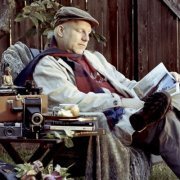
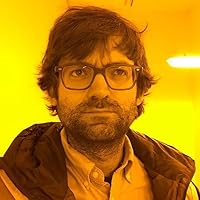
This Martin Parr (b.1952) retrospective is rich in the wit and colour for which Parr's work is well known, yet simultaneously offers the first ever serious assessment of the career of this major contemporary photographer.
Parr combines an urge to document with an attitude of incisive bemusement by social behaviour. Val Williams, distinguished writer and curator, considers Parr's later work - also his most famous - within the context of his full career. In so doing, she shows how Parr's subtle and striking photographs have highlighted political and social change over the last 30 years.
Although Parr began his career in Britain, he now has a wide international following. This book offers the overview that many have eagerly anticipated. It features fascinating previously unpublished early work, his startling and original 1974 installation 'Home Sweet Home', early black-and-white photographs of the people and places of Hebden Bridge, Yorkshire where he lived and worked in the 1970s, photographs from Ireland and Salford, and of course a selection of the very best images from all his published books including The Last Resort, The Cost of Living, Signs of the Times and Think of England (published by Phaidon).
With unlimited access to Parr's archives and drawing on extensive interviews, Val Williams charts Parr's life and career, revealing insights into his influences and attitudes and assessing his importance within the worlds of art and photography.
Martin Parr was born in Epsom, Surrey, UK in 1952. When he was a boy, his budding interest in the medium of photography was encouraged by his grandfather George Parr, himself a keen amateur photographer.
Parr studied photography at Manchester Polytechnic, from 1970-1973. Since that time, Martin Parr has worked on numerous photographic projects. He has developed an international reputation for his innovative imagery, his oblique approach to social documentary, and his input to photographic culture within the UK and abroad.
In 1994 he became a full member of Magnum Photographic Corporation. In recent years, he has developed an interest in filmmaking, and has started to use his photography within different conventions, such as fashion and advertising.
In 2002 the Barbican Art Gallery and the National Media Museum initiated a large retrospective of Parr's work. This show toured Europe for the next 5 years.
Parr was appointed Professor of Photography in 2004 at The University of Wales Newport campus. He was Guest Artistic Director for Rencontres D'Arles in 2004. In 2006 he was awarded the Erich Salomon Prize and the resulting Assorted Cocktail show opened at Photokina. In 2008 he was guest curator at the New York Photo Festival, curating the New Typologies exhibition. At PhotoEspana, 2008, he won the Baume et Mercier award in recognition of his professional career and contributions to contemporary photography.
This book is a treasure to me. I really really adore the photographs of Martin Parr. It's difficult to explain why. I think a lot of people will think by seeing his pictures:'I can do this also'. And indeed, they aren't beautiful photo's. It's like there no art. And though it is. They are of so great a originality and technical perfection. Take for example the composition. Parr knows were to cut the border of the photo or which close-ups to make it perfect.
He wants to laugh with the ordinariness and ugliness of live. His photo's capture this triviality. The first photo's he took were mostly monochrome, passages of the daily life of people in Yorkshire. Were these photo's still has some beauty in them, the latter don't. Take his photo's of the last resort. There's dirt and ugliness in each photo. From then on his ironical view of the world becomes dominant. He laughs with people' s lack of taste, mass consumerism and tourism and so on. He's photo's reflect the trivial world around us in art.
It's a beautiful and very complete book of his photographs. I can only love it.
I came across Martin Parr's retrospective in an online bookshop. It’s massive – more than 350 pages long and for only 30 euros it sounded like a ‘steal’. After receiving it in the post, I realized why it was priced so low. It was in French. Since I can’t read it, I’m not going to rate it.
But was the book worth it? Yes. Martin Parr is one of my favourite photographers and this retrospective contains images from many of his different projects through the years. Loved paging through the book, and at the end they have cover photos of the different photo books he produced. So now I’ve noted which of them I want to acquire if I get the chance.
I'd give this book 5 stars if it wasn't a selective retrospective that left me wanting more of each of Parr's projects. I had been only dimly aware of his work before in The Last Resort and Boring Postcards, and since the weekend papers are one element of middle-classness I have long left behind, I've not seen his work there either.
I'm not sure what I think to Val Williams commentary. It was certainly interesting and I am in no authoritative position to judge. Perhaps it is just that I am coming at this book 10 years later than publication which creates that slightly jarring sensation. She certainly made Parr's progression a fascinating one, from staid middle-class Methodist surburban upbringing (let no-one complain about the 'phrase banks' for modern school reports - Parr's teachers were certainly well-supplied with stock offerings) to successful, comfortably-off (one surmises from the Clifton home) but be-sandalled Magnum photographer.
I was particularly interested in what Williams had to say about his time in Hebden Bridge working with his wife on a project about a Methodist chapel, and the different paths each followed as a result of that experience.
The work itself made me ache, and made me want to get out there and start clicking myself. I don't see the work as unkind. I was prepared to be more repelled by the colour he works in and by ugliness. I liked that it felt as though my response was left up to me.
Massive retrospective of one of my favorite photographers, complete with essays and timeline and tons of archive stuff Parr himself provided. Got this second hand in Powells for a mere $20. The really early black and white pictures he took in Yorkshire of people living around Hebdon Bridge in the mid 1970s are stunning. Glad I went for a visit when I was over seeing my parents last summer and could put it all in perspective about how much and little it had changed.
Panoramica eccezionale sull'opera di un fotografo ironico e acuto che amo moltissimo. I testi sono chiari e non troppo prolissi, la selezione delle immagini sufficientemente ampia, il formato adeguato.