

What do you think?
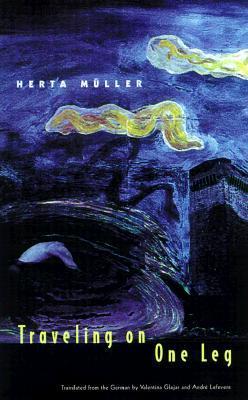
Traveling on One Leg
Winner, 2009 Nobel Prize in Literature
Irene is a fragile woman born to a German family in Romania, who has recently emigrated from her native country to West Germany. Politically and socially isolated, Irene moves within the orbit of three troubled men, while simultaneously embarking on an inner exploration of exile, homeland, and identity.
Irene is a fragile woman born to a German family in Romania, who has recently emigrated from her native country to West Germany. Politically and socially isolated, Irene moves within the orbit of three troubled men, while simultaneously embarking on an inner exploration of exile, homeland, and identity.
149 pages, Hardcover
First published January 1, 1989
About the author
Herta Müller
98 books1,273 followersHerta Müller was born in Niţchidorf, Timiş County, Romania, the daughter of Swabian farmers. Her family was part of Romania's German minority and her mother was deported to a labour camp in the Soviet Union after World War II.
She read German studies and Romanian literature at Timişoara University. In 1976, Müller began working as a translator for an engineering company, but in 1979 was dismissed for her refusal to cooperate with the Securitate, the Communist regime's secret police. Initially, she made a living by teaching kindergarten and giving private German lessons.
Her first book was published in Romania (in German) in 1982, and appeared only in a censored version, as with most publications of the time.
In 1987, Müller left for Germany with her husband, novelist Richard Wagner. Over the following years she received many lectureships at universities in Germany and abroad.
In 1995 Müller was awarded membership to the German Academy for Writing and Poetry, and other positions followed. In 1997 she withdrew from the PEN centre of Germany in protest of its merge with the former German Democratic Republic branch.
The Swedish Academy awarded the 2009 Nobel Prize in Literature to Müller, "who, with the concentration of poetry and the frankness of prose, depicts the landscape of the dispossessed".
She currently resides in Berlin, Germany.
She read German studies and Romanian literature at Timişoara University. In 1976, Müller began working as a translator for an engineering company, but in 1979 was dismissed for her refusal to cooperate with the Securitate, the Communist regime's secret police. Initially, she made a living by teaching kindergarten and giving private German lessons.
Her first book was published in Romania (in German) in 1982, and appeared only in a censored version, as with most publications of the time.
In 1987, Müller left for Germany with her husband, novelist Richard Wagner. Over the following years she received many lectureships at universities in Germany and abroad.
In 1995 Müller was awarded membership to the German Academy for Writing and Poetry, and other positions followed. In 1997 she withdrew from the PEN centre of Germany in protest of its merge with the former German Democratic Republic branch.
The Swedish Academy awarded the 2009 Nobel Prize in Literature to Müller, "who, with the concentration of poetry and the frankness of prose, depicts the landscape of the dispossessed".
She currently resides in Berlin, Germany.
Ratings & Reviews
Friends & Following
Create a free account to discover what your friends think of this book!
Community Reviews
Displaying 1 - 30 of 105 reviews

September 21, 2013
To say that Traveling on One Leg was a gloomy novel would definitely not be off the mark. But it is heavy in a good and honest way. It is rooted in the author's own life experiences and those of the Romanian citizens whom she depicts as also having transplanted themselves to other countries. Because truth is the foundation of this novel, it gives this work a heavy-hearted edge, that as a reader, is not all too easy to digest. The other Amazon reviewers, I agree, hit the mark with their assessments of this excellent novel, in essence, that it is extremely personal and that the evocative nature of loneness and disjointedness is thoroughly yet tangibly conveyed. More than a novel, the reader is almost transported into a nightmarish dream sequence, where life and living is the nightmare. It is a novel that is poetically written in a hardened verse format. The language of poetry is short, trenchant, having to pack a wallop with the fewest words available to the author; the writer has to be extremely selective in her word choice, and Herta Muller is selective, evinced by this novel that does thrust a forceful literary punch.
The story revolves around the female protagonist Irene, a transplant from the repressive country of Romania whose presidential figurehead is a ruthless, paranoid and self-absorbed dictator (Ceausescu) who espouses backward, socialist ideologies. Anyone who lives under the unfortunate umbrella of his leadership don't have much hope of living a life of freedom, individuality, prosperity and a go-at-it-alone work ethic. Hence, people try to defect, and Irene is one of those who does. Yet, her homeland is not the enemy; it is the victim. Irene is just an offshoot of the country, a tree branch connected to the trunk (the country). The disease is communism, and it is affecting every fiber of society. But when she emigrates to Germany (as Muller herself did in 1987), she is not greeted into a land of golden opportunity. She is a legalized émigré who has been uprooted from all that is familiar to her. And although she is free from the harm that communism carries, she can not relate to her new homeland, for there is no pride, no connection, nothing. She has her baggage-mentally and physically speaking-and her memories. And nothing else. She is like a newborn babe who has to start anew. However, the contaminated mother's milk of her homeland has infected her development in more ways than one. Being an isolated loner is just a tip of the iceberg.
While in Germany, she befriends three men Franz, Stefan and Thomas, all of whom seem mentally crippled in their own right. And as misery loves company, she is drawn to them for the individuality. And though their individuality is not one of an uplifting nature (individuality Irene never encountered in Romania), she is attracted to that characteristic in them regardless. As people are not automatons, for they are flesh and blood and capable of joys, sorrows and growth, she sticks with them and by them. But it is really pointless. She is like a ping pong ball going back and forth trying to find some measure of concreteness to firmly clasp onto. In a nutshell, it's hopeless with these three guys. She is in a void, a kind of limbo where all she can really do is reflect, remember and analyze: "If you would see the city from the inside, it would be different. Irene is a name of a faraway city, if you get close to it it becomes different. It's one city if you go by and don't enter it, and another if you get moved by it and don't leave it. It's one city if you come to it for the first time and another if you leave it, never to return. A different name for each." Pages 81-82. Irene escapes the daily nightmare of faux cultural, social and political assimilation when on page 144 she states: "Neither dead nor alive...It was almost joy." She literally has to be an empty vessel and not be beholden to anybody or anything in order to feel truly free. But that is next to impossible and only fleeting at best.
Traveling on One leg was a fascinating read whereby no core action (marriage, careerism, childbirth), as taken by Irene, could be specifically defined. The whole work, for me, seemed so dream-oriented. It was like a person was trying to keep the insanity that no one else (except Irene) could see or feel, at arm's length. I could almost visualize Irene waking up form a nightmare while living in Romania about what life in Germany could be like. Overall, the book was very powerful, maybe even more so than than The Appointment and The Land of Green Plums. In any event, it is a hard book that one will not easily forget. It is dreary, and yet, it makes me so grateful for my life and what I have in it. Mission accomplished!
The story revolves around the female protagonist Irene, a transplant from the repressive country of Romania whose presidential figurehead is a ruthless, paranoid and self-absorbed dictator (Ceausescu) who espouses backward, socialist ideologies. Anyone who lives under the unfortunate umbrella of his leadership don't have much hope of living a life of freedom, individuality, prosperity and a go-at-it-alone work ethic. Hence, people try to defect, and Irene is one of those who does. Yet, her homeland is not the enemy; it is the victim. Irene is just an offshoot of the country, a tree branch connected to the trunk (the country). The disease is communism, and it is affecting every fiber of society. But when she emigrates to Germany (as Muller herself did in 1987), she is not greeted into a land of golden opportunity. She is a legalized émigré who has been uprooted from all that is familiar to her. And although she is free from the harm that communism carries, she can not relate to her new homeland, for there is no pride, no connection, nothing. She has her baggage-mentally and physically speaking-and her memories. And nothing else. She is like a newborn babe who has to start anew. However, the contaminated mother's milk of her homeland has infected her development in more ways than one. Being an isolated loner is just a tip of the iceberg.
While in Germany, she befriends three men Franz, Stefan and Thomas, all of whom seem mentally crippled in their own right. And as misery loves company, she is drawn to them for the individuality. And though their individuality is not one of an uplifting nature (individuality Irene never encountered in Romania), she is attracted to that characteristic in them regardless. As people are not automatons, for they are flesh and blood and capable of joys, sorrows and growth, she sticks with them and by them. But it is really pointless. She is like a ping pong ball going back and forth trying to find some measure of concreteness to firmly clasp onto. In a nutshell, it's hopeless with these three guys. She is in a void, a kind of limbo where all she can really do is reflect, remember and analyze: "If you would see the city from the inside, it would be different. Irene is a name of a faraway city, if you get close to it it becomes different. It's one city if you go by and don't enter it, and another if you get moved by it and don't leave it. It's one city if you come to it for the first time and another if you leave it, never to return. A different name for each." Pages 81-82. Irene escapes the daily nightmare of faux cultural, social and political assimilation when on page 144 she states: "Neither dead nor alive...It was almost joy." She literally has to be an empty vessel and not be beholden to anybody or anything in order to feel truly free. But that is next to impossible and only fleeting at best.
Traveling on One leg was a fascinating read whereby no core action (marriage, careerism, childbirth), as taken by Irene, could be specifically defined. The whole work, for me, seemed so dream-oriented. It was like a person was trying to keep the insanity that no one else (except Irene) could see or feel, at arm's length. I could almost visualize Irene waking up form a nightmare while living in Romania about what life in Germany could be like. Overall, the book was very powerful, maybe even more so than than The Appointment and The Land of Green Plums. In any event, it is a hard book that one will not easily forget. It is dreary, and yet, it makes me so grateful for my life and what I have in it. Mission accomplished!
March 17, 2023
4.5/5
Herta Müller edebiyatını tek kelimeyle özetlemem gerekse “belirsizlik” derim. Bu kitapta da yine belirsizlik ve belirsizliğin kardeşi tekinsizlik had safhada. Diktatörlüğün hüküm sürdüğü Romanya’dan Almanya’ya göç eden bir kadın ve etkileşime girdiği erkekler, sanki büyük bir sisle sarılmışlar ve yaşamaya çalışıyorlar, biz de okuyucu olarak onların gözlemliyoruz. Arada büyük bir mesafe bırakıyor Müller. Onu aşmak, karakterlere dokunmak istiyoruz ama yapamıyoruz. Anlatım da buna izin vermiyor zaten. Bu yüzden tıpkı karakterler gibi hep diken üstündeyiz, hem uyanık olmak zorundayız. Karakterler kendilerine yabancılaşıp, mekanikleşirken (duygusuzlaşırken) biz de benzer bir süreci deneyimliyoruz. Karakterlerin yolculuğu okurun yolculuğuna dönüşüyor. Çok etkileyici, çok hayranlık uyandırıcı.
Herta Müller edebiyatını tek kelimeyle özetlemem gerekse “belirsizlik” derim. Bu kitapta da yine belirsizlik ve belirsizliğin kardeşi tekinsizlik had safhada. Diktatörlüğün hüküm sürdüğü Romanya’dan Almanya’ya göç eden bir kadın ve etkileşime girdiği erkekler, sanki büyük bir sisle sarılmışlar ve yaşamaya çalışıyorlar, biz de okuyucu olarak onların gözlemliyoruz. Arada büyük bir mesafe bırakıyor Müller. Onu aşmak, karakterlere dokunmak istiyoruz ama yapamıyoruz. Anlatım da buna izin vermiyor zaten. Bu yüzden tıpkı karakterler gibi hep diken üstündeyiz, hem uyanık olmak zorundayız. Karakterler kendilerine yabancılaşıp, mekanikleşirken (duygusuzlaşırken) biz de benzer bir süreci deneyimliyoruz. Karakterlerin yolculuğu okurun yolculuğuna dönüşüyor. Çok etkileyici, çok hayranlık uyandırıcı.

October 23, 2011
Nel 2009 riceve il Premio Nobel per la Letteratura, con la seguente motivazione: «Con la concentrazione della poesia e la franchezza della prosa ha rappresentato il mondo dei diseredati»
Non c’è un modo gentile per dirlo: questo libro non mi è piaciuto, anzi direi che è stato uno dei libri più noiosi che abbia mai letto. L’ho finito perché non mi piace abbandonare i libri e l’ho letto più per rispetto a questo principio che per interesse.
Per prima cosa, un’importante istruzione per l’uso: per poter cogliere il filo conduttore ed entrare nel mondo di Irene (la protagonista) è importante leggere questo libro (breve, per fortuna!) con continuità, invece io l’ho letto in modo frammentario. Di conseguenza ogni volta riprendere il filo, spezzato, dei pensieri di Irene mi costava grande fatica (e non appena avevo intuito qualcosa, dovevo subito interrompere.)
Forse più che un romanzo è una raccolta di poesie che si succedono senza soluzione di continuità e a me le poesie piacciono a piccolissime dosi: una ogni tanto e non troppe tutte insieme.
Il libro ci immerge nel mondo interiore di Irene, una donna rumena che ha lasciato la Romania di Ceauşescu e ha chiesto asilo politico nella Germania Federale. I pensieri di Irene ci comunicano la solitudine di chi ha lasciato il suo mondo per ritrovarsi straniera (anche se cittadina tedesca) in mezzo ad altre persone che, invece, sembrano avere chiaro qual è il loro posto nel mondo. La condizione degli esuli è quelle di
Viaggiatori - pensò Irene – viaggiatori con lo sguardo eccitato sulle città addormentate. Su desideri ormai scaduti. Dietro agli abitanti della città.
Viaggiatori su una gamba sola e sull’altra perduti. Viaggiatori che arrivano troppo tardi
Lo stato d’animo (disorientamento, ambivalenza nei confronti del paese abbandonato, tristezza) della protagonista più che dalle parole, secondo me, viene mediato dallo stile del romanzo:le frasi brevi, i periodi spezzati, il continuo ripetere il nome della protagonista. Però a livello emotivo non ho sentito nulla di tutto ciò, solo una forte senso di noia e, in alcuni casi, di aggressività verso l’atteggiamento passivo della protagonista:
In momenti del genere Irene capiva che la sua vita si era rappresa in un fascio di osservazioni. Le osservazioni la rendevano incapace di agire.
Quando Irene si imponeva di agire, non erano vere azioni. Rimanevano bloccate negli inizi. Erano inizia destinati a fallire. Nemmeno i singoli gesti restavano integri.
Così Irene non viveva nelle cose, ma nelle loro conseguenze. (pag. 142)
La parte che mi è piaciuta di più (forse perché è quella che ho capito) è quella in cui Irene racconta del difficile rapporto con il suo paese: a poco a poco si rende conto che prova , ma questo sentimento arriva alla sua consapevolezza gradatamente, facendosi strada tra le altre emozioni che scandiscono la sua quotidianità:
Irene ebbe anche un altro sospetto. Quello di mantenere in testa una nostalgia piccola e dispersa, per non doverla ammettere. Di tradire la nostalgia nel momento in cui saliva. E per soffocarla di costruire edifici di pensieri sopra i sentimenti. (pag. 66)

February 4, 2015
This is the third book I've read by Müller in the last week. This one is about a woman in early middle age who has emigrated to West Germany from "the other country" -- presumably Romania, though it is never specified. She lives alone and in isolation. The book, like the previous two, is written in a surreal style with reality and dreams blended so that one is never sure what is actually happening.
Now that I am somewhat accustomed to her style, I can't help comparing it to last year's Nobel prize winner, Le Clezio; there are definite similarities in their writing. Both write in an experimental, surreal style, with disjointed description rather than plot or movement; both can be (are are) described as "bleak", with characters who never form real relationships and whose lives are largely pointless; both are decidedly anti-urban, with images of walking around streets, going into stores without buying anything, etc; and both give the curious impression of being both intensely political and deliberately apolitical at the same time. Of the two, I think I somewhat prefer Müller -- her writing is more concentrated, and never becomes repetitious or boring, as Le Clezio is at times; she also does not have the vague religiousness and nostalgia for the primitive which annoyed me in Le Clezio. I can't help wondering whether this represents a common European style or if the Nobel prize committee is simply attracted to a particular kind of writing; I haven't read enough serious contemporary European fiction to judge.
Now that I am somewhat accustomed to her style, I can't help comparing it to last year's Nobel prize winner, Le Clezio; there are definite similarities in their writing. Both write in an experimental, surreal style, with disjointed description rather than plot or movement; both can be (are are) described as "bleak", with characters who never form real relationships and whose lives are largely pointless; both are decidedly anti-urban, with images of walking around streets, going into stores without buying anything, etc; and both give the curious impression of being both intensely political and deliberately apolitical at the same time. Of the two, I think I somewhat prefer Müller -- her writing is more concentrated, and never becomes repetitious or boring, as Le Clezio is at times; she also does not have the vague religiousness and nostalgia for the primitive which annoyed me in Le Clezio. I can't help wondering whether this represents a common European style or if the Nobel prize committee is simply attracted to a particular kind of writing; I haven't read enough serious contemporary European fiction to judge.

September 18, 2021
Die junge Herta Müller hat noch nicht zu ihrer Sprache gefunden und deswegen schwebt das Werk etwas in der Luft, auch wenn es bereits bemerkenswerte Ansättze zeigt. Ich fand interessanter, was sie in ihrer Autobiographie über die Entstehung dieses semi-autobiographischen Werkes geschrieben hat, als das Werk selbst.

April 24, 2010
Müller is never an easy read, but I find her spare prose and bizarre vision of the world both impressive and deeply disturbing. Some reviewers have described this as a book about madness. Perhaps. The madness, if one can properly call it that, results from political dislocation and alienation. Irene, a Romanian German has fled her homeland to take up residence in West Germany, much like Müller herself. She becomes involved with three different men, none of whom seem particularly fond of her, and she wanders lost in her new, rather barren landscape. But for me it is always Müller's peculiar verbal style that engages. Passages like these appear on every page:
"The distance was in the eyes, too. And also later, when the refugees weren't walking in Flottenstrasse anymore. When they went to the post office, or talked too loudly on the phone from a rough neighborhood. And wrote signs of life on cards to another country" (p. 21).
"Thomas knew this boy with the peaked cap. He lived in every city. He was one of the many you lose track of while they are still alive" (p. 62).
"She opened her mouth as if to yawn. She didn't yawn. It was her way to line up the words in her mouth before she spoke" (p. 65).
Müller is a writer who sends me back to my German textbooks. Is there a greater compliment a reader can pay a writer than to want to read her in the original language?
"The distance was in the eyes, too. And also later, when the refugees weren't walking in Flottenstrasse anymore. When they went to the post office, or talked too loudly on the phone from a rough neighborhood. And wrote signs of life on cards to another country" (p. 21).
"Thomas knew this boy with the peaked cap. He lived in every city. He was one of the many you lose track of while they are still alive" (p. 62).
"She opened her mouth as if to yawn. She didn't yawn. It was her way to line up the words in her mouth before she spoke" (p. 65).
Müller is a writer who sends me back to my German textbooks. Is there a greater compliment a reader can pay a writer than to want to read her in the original language?
April 29, 2015
These two poor stars do not probably reflect the literary quality of the book, but rather my own reaction to it, which was almost nonexistent. Now, to mark so low a Nobel prize winner makes you always feel "somehow" ignorant. I probably did not understand it and most certainly it required a second level in-depth reading I did not gave. Perhaps I should even read it again, it is short after all. But I like books where all this is not necessary, where feelings, emotions, resemblances and reflections of our experiences are immediate and not hidden behind beautiful words (because I have to admit some sentences were real poetry). I do myself live abroad, I do myself miss my country, for personal reasons and not because I was forced to, yet I could not share Irene's nostalgia, alienation, apathy feelings. I must be a more positive person, or better said, I guess life let me be positive so far. Two Herta Muller's books after, it seems that I still have an internal debate about this writer, on whether I don't understand it as I should, or I do understand everything there is to understand, but I simply do not like her.
(This is my first review in English - please forgive my mistakes if any)
(This is my first review in English - please forgive my mistakes if any)
February 14, 2023
Her kitabın bir dili olduğu gibi aynı zamanda bir rengi de var Peki Tek Bacaklı Yolcu kitabı ne renk? Vereceğim cevap gri ve bana hissettirdiği duygu üşümek. Evet üşümek çünkü donuk, soğuk ve bulanik bir metin Tek Bacaklı Yolcu. Bir kadın, üç erkek , yolculuklar, kokler ve arkadan gelen geçmiş. Flu mekanlarda kişilerin kendine , topluma yabancilasmasi. Hislerin yitirilisi. Yeni topraklarda kendinden kaçmak isteyip kacamayis. Tıpkı yazarımız Muller'in hayatı gibi. Zıt görüşlere sahip anne ile babanın çocuğu olan Muller, Cavusesku döneminin baskıcı yönetimini yaşamış ve Romanya 'dan Almanya'ya göç etmiştir. Kitapta geçen diğer ülke aslında Romanya'dir. Kitapta tekinsiz, tedirgin edici bir atmosfer var . Bu atmosfer Keşke Bugün Kendimle Karsilasmasaydim isimli kitabında da vardı. Ve oradaki tedirginliği bize en iyi hissettiren cumleler , karakterin sorgulama esnasinda surekli gömleğinin düğmeleri ile oynadığı kısımlardi. İnsan nereye giderse gitsin kendinden ve geçmişinden kaçamaz. Yaşadıklarımız bizim sadık dostlarımızdir. Bu kitabı bitirdiğimde aklima Kavafis'in " başka bir deniz bulamazsin. Bu şehir arkandan gelecektir dediği Şehir isimli şiiri geldi. Ve ardından kulaklarımda Ezginin Günlüğü'nun melodisi . Okuyunuz efendim . İyi okumalar.

January 14, 2021
3,5
A fost prima mea întâlnire cu Herta, una destul de pretențioasă pentru gusturile mele lumesti. E multă alienare in calatoria asta care se anunta a fi intr-un picior si care nu pare sa se termine vreodata, multa neliniste, multe secvente ireale, mult lirism. Orase mohorate, personaje fara de contur, destinatii la care n-ajungi niciodata, conversatii incepute si neterminate, replici improbabile, un joc nesfarsit de-a scrisul de scrisori, de-a telefonatului, de-a dedublatului. Si multe lipsuri.
Nu m-a deranjat nimic din toate astea, doar ca o asemenea scriitura nu ma poate tine in text prea mult. Nu de putine ori m-am surprins alergand pe strazile Berlinul in timp ce paragrafele se citeau absent.
Auf wiedersehen Herta. Ne mai vedem noi, cel mai probabil tot in cealalta tara.
A fost prima mea întâlnire cu Herta, una destul de pretențioasă pentru gusturile mele lumesti. E multă alienare in calatoria asta care se anunta a fi intr-un picior si care nu pare sa se termine vreodata, multa neliniste, multe secvente ireale, mult lirism. Orase mohorate, personaje fara de contur, destinatii la care n-ajungi niciodata, conversatii incepute si neterminate, replici improbabile, un joc nesfarsit de-a scrisul de scrisori, de-a telefonatului, de-a dedublatului. Si multe lipsuri.
Nu m-a deranjat nimic din toate astea, doar ca o asemenea scriitura nu ma poate tine in text prea mult. Nu de putine ori m-am surprins alergand pe strazile Berlinul in timp ce paragrafele se citeau absent.
Auf wiedersehen Herta. Ne mai vedem noi, cel mai probabil tot in cealalta tara.

April 26, 2022
Neke knjige imaju zanimljivu radnju, neke dobar stil, neke oboje, a neke niti jedno od toga.

March 10, 2018
“Boşluğa düşme tehlikesi”..Batıya gitmek,batıya gidince parçalanmışlığı yaşamak “hatta gülüşlerine doğuyu gizlemek”
İrene bir yolcu,kökleri olan ama bedeniyle köklerinin ait olduğu yerler aynı olmayan..
Herta Müller,taşlı yollardan çıkıp örülmüş duvarların arasına sızıyor..Ensesinde sürekli farklı nefesleri duyumsayan,bedenlerine yabancılık damgası vurulmuş bireylere ait kelimeler bunlar.Derin ve bir o kadar sessiz..
İrene bir yolcu,kökleri olan ama bedeniyle köklerinin ait olduğu yerler aynı olmayan..
Herta Müller,taşlı yollardan çıkıp örülmüş duvarların arasına sızıyor..Ensesinde sürekli farklı nefesleri duyumsayan,bedenlerine yabancılık damgası vurulmuş bireylere ait kelimeler bunlar.Derin ve bir o kadar sessiz..

February 8, 2025
Tek Bacaklı Yolcu: Yabancılaşmanın Ritmi
Herta Müller’in güçlü kalemi daha ilk sayfadan itibaren kendini hissettiriyor. Onun dilinde her kelime, her kırık cümle, her tekrar, hikâyenin ruhuna işlenmiş gibi. Tek Bacaklı Yolcu, okurun gelişigüzel okumasını kabul etmeyen, dikkat isteyen bir roman. Her satırda bir yabancılaşma var; ama her karakterin yabancılaşması farklı. Yoğun olarak kullanılan sembolizm konsantrasyon konusunda çok talepkar.
Ana karakter Irene, Ceaușescu Romanya’sından kaçıp Batı Berlin’de sığınma hakkı almış, ama bir ülkeyi geride bırakmakla o ülkenin içinden çıkmak arasındaki farkı yaşıyor. Kopuk cümleleri, parçalanmış dikkati her an hissettiği ait olmama duygusunu vurguluyor. Bir evin kapısının önünde olmakla birlikte kentin ortasında olduğunu fark ettiği o an, vatandaşlığa kabul edildiği gün yaşanıyor. Müller’in cümleleri, bu tür anlarda bütün ağırlığıyla vuruyor insana.
Kitap boyunca Irene’in ilişki içinde olduğu insanlar da benzer şekilde ‘yerleşememiş’ karakterler. Her biri farklı bir şekilde eksik, tam anlamıyla ‘yerinde’ değil. Ve bu karakterler, Irene’in kendi yabancılaşmasını anlamasına da yardımcı oluyor, kimsenin tam anlamıyla ‘ait’ olmadığı bir dünya kuruyor.
Sonlara doğru Irene, sokaktaki insanlarla daha çok iletişime geçmeye başlıyor, dış dünyayı daha farklı görüyor. Ama bu bir ‘çözüm’ değil. Yabancılaşma hissi tamamen kaybolmuyor, sadece dönüşüyor. Kitabın sonunda en vurucu olan da bu zaten: Yabancılaşma bir noktada bitecek bir şey değil, ama insan onunla yaşamayı öğrenebilir.
Çağlar Tanyeri’nin çevirisi bazı yerlerde Müller’in dil oyunlarının yeterince iyi yansıtılmadığını düşündürüyor. Kelime oyunları tam olarak orijinaldeki hissi vermiyor olabilir. Özellikle "Heimat" gibi çok katmanlı kavramların aktarımında belirsizlikler var. Ayrıca bazı yerlerde de çevirinin özensiz yapıldığı hissediliyor. Belki arada birkaç "cevirenin notu" olsa daha iyi olabilirdi.
Sonuç olarak, Tek Bacaklı Yolcu, derinlikli bir iç yolculuk sunan belirsizlik duygusu uyandıran bir roman. Dili yoğun ve dikkat gerektiriyor. Herta Müller’in metnine tam anlamıyla girebilmek için kopuk cümleler, tekrar eden kelimeler ve çağrışımları içselleştirmek gerekiyor. Ama bunu yapınca ortaya çıkan şey, bir göçmenin, bir yabancının, bir başkasının hikâyesinden çok, insanın kendi varoluşunu sorgulamasına yol açan bir deneyim oluyor.
Herta Müller’in güçlü kalemi daha ilk sayfadan itibaren kendini hissettiriyor. Onun dilinde her kelime, her kırık cümle, her tekrar, hikâyenin ruhuna işlenmiş gibi. Tek Bacaklı Yolcu, okurun gelişigüzel okumasını kabul etmeyen, dikkat isteyen bir roman. Her satırda bir yabancılaşma var; ama her karakterin yabancılaşması farklı. Yoğun olarak kullanılan sembolizm konsantrasyon konusunda çok talepkar.
Ana karakter Irene, Ceaușescu Romanya’sından kaçıp Batı Berlin’de sığınma hakkı almış, ama bir ülkeyi geride bırakmakla o ülkenin içinden çıkmak arasındaki farkı yaşıyor. Kopuk cümleleri, parçalanmış dikkati her an hissettiği ait olmama duygusunu vurguluyor. Bir evin kapısının önünde olmakla birlikte kentin ortasında olduğunu fark ettiği o an, vatandaşlığa kabul edildiği gün yaşanıyor. Müller’in cümleleri, bu tür anlarda bütün ağırlığıyla vuruyor insana.
Kitap boyunca Irene’in ilişki içinde olduğu insanlar da benzer şekilde ‘yerleşememiş’ karakterler. Her biri farklı bir şekilde eksik, tam anlamıyla ‘yerinde’ değil. Ve bu karakterler, Irene’in kendi yabancılaşmasını anlamasına da yardımcı oluyor, kimsenin tam anlamıyla ‘ait’ olmadığı bir dünya kuruyor.
Sonlara doğru Irene, sokaktaki insanlarla daha çok iletişime geçmeye başlıyor, dış dünyayı daha farklı görüyor. Ama bu bir ‘çözüm’ değil. Yabancılaşma hissi tamamen kaybolmuyor, sadece dönüşüyor. Kitabın sonunda en vurucu olan da bu zaten: Yabancılaşma bir noktada bitecek bir şey değil, ama insan onunla yaşamayı öğrenebilir.
Çağlar Tanyeri’nin çevirisi bazı yerlerde Müller’in dil oyunlarının yeterince iyi yansıtılmadığını düşündürüyor. Kelime oyunları tam olarak orijinaldeki hissi vermiyor olabilir. Özellikle "Heimat" gibi çok katmanlı kavramların aktarımında belirsizlikler var. Ayrıca bazı yerlerde de çevirinin özensiz yapıldığı hissediliyor. Belki arada birkaç "cevirenin notu" olsa daha iyi olabilirdi.
Sonuç olarak, Tek Bacaklı Yolcu, derinlikli bir iç yolculuk sunan belirsizlik duygusu uyandıran bir roman. Dili yoğun ve dikkat gerektiriyor. Herta Müller’in metnine tam anlamıyla girebilmek için kopuk cümleler, tekrar eden kelimeler ve çağrışımları içselleştirmek gerekiyor. Ama bunu yapınca ortaya çıkan şey, bir göçmenin, bir yabancının, bir başkasının hikâyesinden çok, insanın kendi varoluşunu sorgulamasına yol açan bir deneyim oluyor.

May 30, 2022
Nici nu știu cu ce să încep mai exact pentru că, având în vedere faptul că i-am oferit 3 stele, ar trebui să am ceva care mi-a plăcut.
Limbajul a fost unul complex și plin de sensuri ascunse, pe care cel mai probabil nu le-am descoperit, pentru că jumătate din toată cartea stăteam să mă întreb ce înseamnă diverse lucruri și ce relevanță au în desfășurarea acțiunii.
La finalul cărții mi-am dat seama că acest roman experimental nu are, de fapt, nicio acțiune și că poate, căutam ceva ce nu exista.
Pentru mine, este primul roman de acest gen și chiar dacă are Nobelul nu pot să spun că îl consider o capodoperă.
Îl recomand dacă citiți în general literatură experimentală.
Limbajul a fost unul complex și plin de sensuri ascunse, pe care cel mai probabil nu le-am descoperit, pentru că jumătate din toată cartea stăteam să mă întreb ce înseamnă diverse lucruri și ce relevanță au în desfășurarea acțiunii.
La finalul cărții mi-am dat seama că acest roman experimental nu are, de fapt, nicio acțiune și că poate, căutam ceva ce nu exista.
Pentru mine, este primul roman de acest gen și chiar dacă are Nobelul nu pot să spun că îl consider o capodoperă.
Îl recomand dacă citiți în general literatură experimentală.

November 4, 2011
Viaggiatori su una gamba sola e sull'altra perduti. Viaggiatori che arrivano troppo tardi.
Di fronte a questo libro, commentare diventa un onere che si confonde in maniera ineluttabile con l'esperienza, la mia, di aver visto Berlino e il Muro; di aver visto tanti viaggiatori su una gamba sola che zoppicano per ritrovare un'identità geografica e culturale che hanno perso quando la cortina ha diviso cielo e terra mettendo da una parte l'Est e dall'altra l'Ovest come solo l'Onnipotente da millenni a questa parte si era permesso di fare.
I viaggiatori che vanno su una gamba sola, e vanno a stento, e vanno col peso nel cuore di non essere più nessuno non sono solo quelli che si trovavano di fronte al muro, ma sono quelli negli angoli che aspettano una cittadinanza, un posto nel mondo, un'appartenenza. Sentimenti lontani dalla mia culla di protezione che il mondo, le circostanze, la Storia in una congiunzione di coincidenze astrali favorevoli mi hanno offerto.. e che Herta Muller, scrittrice di fronte alla quale si può solo star zitti, atterriti, ed ascoltare, mi ha posto davanti senza mezzi termini.
Se c'era un modo crudo, disagevole di raccontarlo, Herta, donna Nobel, l'ha trovato e l'ha elargito per 169 pagine per raccontare la storia di Irene, che è poi la sua storia, donna che viaggia su una gamba sola dalla Romania alla Germania in cerca di se stessa. Di un perché. Di un amore da amare non di notte, non per soldi, non di sfuggita. Irene ha bisogno di legarsi, ed invece il mondo la tiene slegata, la storia, quella porzione di storia fredda ancora oggi così respirabile a Berlino, nell'Est, la tiene slegata dalla possibilità di un'identità propria.
Lo stile è tagliente. L'esperienza è tagliente. Il romanzo produce ferite che non si possono rimarginare e che, nonostante tutta la buona volontà, anziché avvicinare all'autrice, la rende ancora più lontana, più solitaria.
A Berlino hanno mantenuto in piedi kilometri di muro su cui dal 1989 in poi hanno dipinto murales mani provenienti da tutto il mondo che credono nella pace e hanno voglia di averla, ma in questa lunga fila c'è una breccia. Una breccia nel muro che ti permette di mettere la gamba ad Est, ed una gamba ad Ovest. L'ho fatto anche io, ovviamente. E mi sono sentita come se avessi una gamba sola. Ho sentito scendere su di me l'angoscia del non avere un'identità e di essere priva di un arto.
E se Herta Muller ha voluto scrivere un libro parlando di quanto si sta di merda ad andare da un posto all'altro con un bagaglio di coscienza troppo pesante e in più dovendosi poggiare su una gamba sola, io posso solo approvare la sua scelta mandandole un abbraccio che non riceverà mai. Perché chi si guarda allo specchio e non si vede, non riuscirà nemmeno mai a sentire gli altri.
In finis, grazie ad Herta per tutto il dolore che mi ha messo addosso, perché mi ha restituito ancora maggiore consapevolezza su quel pezzo di storia che sta ancora in piedi alla Est Gallery, e nella mia incancellabile memoria.
Di fronte a questo libro, commentare diventa un onere che si confonde in maniera ineluttabile con l'esperienza, la mia, di aver visto Berlino e il Muro; di aver visto tanti viaggiatori su una gamba sola che zoppicano per ritrovare un'identità geografica e culturale che hanno perso quando la cortina ha diviso cielo e terra mettendo da una parte l'Est e dall'altra l'Ovest come solo l'Onnipotente da millenni a questa parte si era permesso di fare.
I viaggiatori che vanno su una gamba sola, e vanno a stento, e vanno col peso nel cuore di non essere più nessuno non sono solo quelli che si trovavano di fronte al muro, ma sono quelli negli angoli che aspettano una cittadinanza, un posto nel mondo, un'appartenenza. Sentimenti lontani dalla mia culla di protezione che il mondo, le circostanze, la Storia in una congiunzione di coincidenze astrali favorevoli mi hanno offerto.. e che Herta Muller, scrittrice di fronte alla quale si può solo star zitti, atterriti, ed ascoltare, mi ha posto davanti senza mezzi termini.
Se c'era un modo crudo, disagevole di raccontarlo, Herta, donna Nobel, l'ha trovato e l'ha elargito per 169 pagine per raccontare la storia di Irene, che è poi la sua storia, donna che viaggia su una gamba sola dalla Romania alla Germania in cerca di se stessa. Di un perché. Di un amore da amare non di notte, non per soldi, non di sfuggita. Irene ha bisogno di legarsi, ed invece il mondo la tiene slegata, la storia, quella porzione di storia fredda ancora oggi così respirabile a Berlino, nell'Est, la tiene slegata dalla possibilità di un'identità propria.
Lo stile è tagliente. L'esperienza è tagliente. Il romanzo produce ferite che non si possono rimarginare e che, nonostante tutta la buona volontà, anziché avvicinare all'autrice, la rende ancora più lontana, più solitaria.
A Berlino hanno mantenuto in piedi kilometri di muro su cui dal 1989 in poi hanno dipinto murales mani provenienti da tutto il mondo che credono nella pace e hanno voglia di averla, ma in questa lunga fila c'è una breccia. Una breccia nel muro che ti permette di mettere la gamba ad Est, ed una gamba ad Ovest. L'ho fatto anche io, ovviamente. E mi sono sentita come se avessi una gamba sola. Ho sentito scendere su di me l'angoscia del non avere un'identità e di essere priva di un arto.
E se Herta Muller ha voluto scrivere un libro parlando di quanto si sta di merda ad andare da un posto all'altro con un bagaglio di coscienza troppo pesante e in più dovendosi poggiare su una gamba sola, io posso solo approvare la sua scelta mandandole un abbraccio che non riceverà mai. Perché chi si guarda allo specchio e non si vede, non riuscirà nemmeno mai a sentire gli altri.
In finis, grazie ad Herta per tutto il dolore che mi ha messo addosso, perché mi ha restituito ancora maggiore consapevolezza su quel pezzo di storia che sta ancora in piedi alla Est Gallery, e nella mia incancellabile memoria.

April 3, 2025
frumos romanul ăsta care e chiar poezie pe alocuri. mi-a plăcut îndeosebi că Irene își dă seama că ea însăși e cealaltă înainte chiar de a-și percepe țara natală drept cealaltă țară. e o carte de citit dintr-o răsuflare, o răsuflare care mie mi-a luat vreo 4 ore și care chiar s-au simțit drept o pauză de respirație.

September 6, 2015
İrene isimli bir mültecinin Almanya'ya gidip orada çektiği yabancılaşmayı anlatıyor. Ama baskıdan mı çeviriden mi anlamadım kitapta birden başka konuya atlama, anlamsız cümleler vardı ve konuşma çizgileri yoktu. Nadine Gordimer'den sonra Herta Müller'de bitmiştir benim için.

September 7, 2026
𝐌𝐚𝐲𝐛𝐞 𝐡𝐨𝐦𝐞 𝐢𝐬 𝐭𝐡𝐞 𝐩𝐥𝐚𝐜𝐞 𝐲𝐨𝐮 𝐜𝐚𝐧 𝐧𝐞𝐯𝐞𝐫 𝐫𝐞𝐭𝐮𝐫𝐧 𝐭𝐨.
Herta Müller’s "Traveling on One Leg" is a strange, uncomfortable book about leaving a country and discovering that leaving does not mean escaping it.
Irene moves from Romania to Germany. She gets a new apartment. Meets new people. Tries to understand a new city. Even waits for German citizenship. Still something in her remains somewhere else. Her past follows her through photographs, letters, streets, strangers, beds, windows, weeds, feathers. Ordinary things suddenly feel unfamiliar.
What makes this book so fascinating is the way Müller writes exile. Irene does not simply say, “I miss home.” Her homesickness becomes physical. A strange feeling in her stomach. A memory triggered by a smell. A room that suddenly feels wrong. A bed that seems to remember another country. Her body understands something before her mind does.
The book quietly asks some difficult questions.
!What actually makes a place home?
!A passport? A language? Familiar streets? Memories?
!Can you become a new person without carrying the old one with you?
!What happens when you leave a country but the country refuses to leave you?
Irene also struggles with her own identity. She sees another woman behind her face. She sees herself in strangers. She cuts people out of photographs. Sometimes she cannot tell whether something happened or whether her loneliness created it. Reality starts feeling unstable.
Love does not rescue her either. Franz comes close yet there is always a distance between them. Irene wants to arrive together. Instead she realises she has arrived alone.
Even citizenship feels strangely empty. A government can give you papers. It cannot tell you where you belong.
That is what I loved most about this book. Müller takes tiny details and makes them enormous. A feather becomes disturbing. A window becomes a place of surveillance. A city becomes a person. A journey becomes an identity crisis.
This is not an easy book. It is fragmented, unsettling, sometimes almost dreamlike. But maybe that is exactly the point. Irene’s world feels fragmented because Irene herself is fragmented.
By the end the question is no longer whether Irene belongs somewhere. It is whether a person can ever feel completely at home inside their own life.
ミ★ 𝘔𝘢𝘺𝘣𝘦 𝘐𝘳𝘦𝘯𝘦 𝘪𝘴 𝘯𝘰𝘵 𝘵𝘳𝘢𝘷𝘦𝘭𝘭𝘪𝘯𝘨 𝘣𝘦𝘵𝘸𝘦𝘦𝘯 𝘤𝘰𝘶𝘯𝘵𝘳𝘪𝘦𝘴 𝘢𝘵 𝘢𝘭𝘭. 𝘔𝘢𝘺𝘣𝘦 𝘴𝘩𝘦 𝘪𝘴 𝘵𝘳𝘢𝘷𝘦𝘭𝘭𝘪𝘯𝘨 𝘣𝘦𝘵𝘸𝘦𝘦𝘯 𝘵𝘩𝘦 𝘥𝘪𝘧𝘧𝘦𝘳𝘦𝘯𝘵 𝘷𝘦𝘳𝘴𝘪𝘰𝘯𝘴 𝘰𝘧 𝘩𝘦𝘳𝘴𝘦𝘭𝘧. ★彡
Herta Müller’s "Traveling on One Leg" is a strange, uncomfortable book about leaving a country and discovering that leaving does not mean escaping it.
Irene moves from Romania to Germany. She gets a new apartment. Meets new people. Tries to understand a new city. Even waits for German citizenship. Still something in her remains somewhere else. Her past follows her through photographs, letters, streets, strangers, beds, windows, weeds, feathers. Ordinary things suddenly feel unfamiliar.
What makes this book so fascinating is the way Müller writes exile. Irene does not simply say, “I miss home.” Her homesickness becomes physical. A strange feeling in her stomach. A memory triggered by a smell. A room that suddenly feels wrong. A bed that seems to remember another country. Her body understands something before her mind does.
The book quietly asks some difficult questions.
!What actually makes a place home?
!A passport? A language? Familiar streets? Memories?
!Can you become a new person without carrying the old one with you?
!What happens when you leave a country but the country refuses to leave you?
Irene also struggles with her own identity. She sees another woman behind her face. She sees herself in strangers. She cuts people out of photographs. Sometimes she cannot tell whether something happened or whether her loneliness created it. Reality starts feeling unstable.
Love does not rescue her either. Franz comes close yet there is always a distance between them. Irene wants to arrive together. Instead she realises she has arrived alone.
Even citizenship feels strangely empty. A government can give you papers. It cannot tell you where you belong.
That is what I loved most about this book. Müller takes tiny details and makes them enormous. A feather becomes disturbing. A window becomes a place of surveillance. A city becomes a person. A journey becomes an identity crisis.
This is not an easy book. It is fragmented, unsettling, sometimes almost dreamlike. But maybe that is exactly the point. Irene’s world feels fragmented because Irene herself is fragmented.
By the end the question is no longer whether Irene belongs somewhere. It is whether a person can ever feel completely at home inside their own life.
ミ★ 𝘔𝘢𝘺𝘣𝘦 𝘐𝘳𝘦𝘯𝘦 𝘪𝘴 𝘯𝘰𝘵 𝘵𝘳𝘢𝘷𝘦𝘭𝘭𝘪𝘯𝘨 𝘣𝘦𝘵𝘸𝘦𝘦𝘯 𝘤𝘰𝘶𝘯𝘵𝘳𝘪𝘦𝘴 𝘢𝘵 𝘢𝘭𝘭. 𝘔𝘢𝘺𝘣𝘦 𝘴𝘩𝘦 𝘪𝘴 𝘵𝘳𝘢𝘷𝘦𝘭𝘭𝘪𝘯𝘨 𝘣𝘦𝘵𝘸𝘦𝘦𝘯 𝘵𝘩𝘦 𝘥𝘪𝘧𝘧𝘦𝘳𝘦𝘯𝘵 𝘷𝘦𝘳𝘴𝘪𝘰𝘯𝘴 𝘰𝘧 𝘩𝘦𝘳𝘴𝘦𝘭𝘧. ★彡

November 7, 2011
Dittature, paesi divisi e muri sono solo un pretesto per dire qualcos'altro. La vera protagonista di questo romanzo è l'alterità. L'abisso quasi insuperabile che circonda gli individui come un fossato, e li segue ovunque, naturale come un'ombra. Ci puoi mettere sopra un bel ponte, ma i ponti, col tempo, si deteriorano. L'abisso rimane lì.
È ingombrante e spietata, l'alterità, come una maledizione. Si insinua nella narrazione fratturandola, ci costringe a vedere la realtà come un insieme di stralci di quadro, una realtà che non scorre nel tempo ma nello sguardo della protagonista, a scatti come solo può procedere l'occhio umano, da un oggetto a un ricordo, da un ricordo a un uomo, da un uomo a un'aspettativa. Si traveste da divergenza di opinioni, di vedute, di orizzonti, da telefoni che squillano e vengono ignorati, da uomini che sbriciolano del pane per il solo gusto di farlo, mentre gli uccelli aspettano in disparte di poter banchettare, felici. Ma il suo travestimento più riuscito è quello da città. Relazionarsi con gli altri è sempre un viaggio. Richiede di sentire il freddo oltre i polpastrelli, come se toccassero la propria finitezza, impone di uscire dai propri limiti per cercare l'altro. Da una città familiare - per quanto anche la familiarità possa risultare odiosa - a un luogo sconosciuto. Quant'è bello il passo che precede la partenza: la città esiste già, ce la siamo inventati bene, dal suo nome abbiamo tratto sapori di frutta esotica e nomi di fiori mai visti. E poi, come la troviamo una volta arrivati? I giardini sono così profumati? I gesti e gli automatismi che guidano i passi dell'altro nella sua città diventeranno anche nostri o ci sarà sempre uno strappo tra noi e lui? Come sarà l'altro, una volta girato l'angolo? Come saremo noi?
Un sognatore vi dirà che sarà tutto bellissimo. Ma Herta Müller no, lei vi farà sentire che rumore fa il legno del ponte quando marcisce.
È ingombrante e spietata, l'alterità, come una maledizione. Si insinua nella narrazione fratturandola, ci costringe a vedere la realtà come un insieme di stralci di quadro, una realtà che non scorre nel tempo ma nello sguardo della protagonista, a scatti come solo può procedere l'occhio umano, da un oggetto a un ricordo, da un ricordo a un uomo, da un uomo a un'aspettativa. Si traveste da divergenza di opinioni, di vedute, di orizzonti, da telefoni che squillano e vengono ignorati, da uomini che sbriciolano del pane per il solo gusto di farlo, mentre gli uccelli aspettano in disparte di poter banchettare, felici. Ma il suo travestimento più riuscito è quello da città. Relazionarsi con gli altri è sempre un viaggio. Richiede di sentire il freddo oltre i polpastrelli, come se toccassero la propria finitezza, impone di uscire dai propri limiti per cercare l'altro. Da una città familiare - per quanto anche la familiarità possa risultare odiosa - a un luogo sconosciuto. Quant'è bello il passo che precede la partenza: la città esiste già, ce la siamo inventati bene, dal suo nome abbiamo tratto sapori di frutta esotica e nomi di fiori mai visti. E poi, come la troviamo una volta arrivati? I giardini sono così profumati? I gesti e gli automatismi che guidano i passi dell'altro nella sua città diventeranno anche nostri o ci sarà sempre uno strappo tra noi e lui? Come sarà l'altro, una volta girato l'angolo? Come saremo noi?
Un sognatore vi dirà che sarà tutto bellissimo. Ma Herta Müller no, lei vi farà sentire che rumore fa il legno del ponte quando marcisce.

January 22, 2013
Il linguaggio poetico mi affascina, ma non riesco a entrare nella storia. La mente scivola via come i pensieri di Irene, vagano nella città o nel silenzio di un cortile con un'impalcatura. Forse è così che deve essere, ma che fatica, però.
August 23, 2026
Frumusețea scrierilor Hertei Müller este o frumusețe atipică, nu este pentru toți cititorii. Trebuie să ai o afinitate deosebită pentru poezie, o sensibilitate asemănătoare cu a Hertei, pentru a pătrunde în lumea ei. Acesta este motivul pentru care opera ei este îndelung discutată, adorată de unii, greu de înțeles pentru alții. Proza poetică este un gen literar aparte, este o scriere pe cât de frumoasă, pe atât de copleșitoare, pentru un om ca mine, fan al prozei realiste. Faptul că o citesc pe Herta Müller se datorează atât dorinței de a-mi diversifica lectura (de parcă ar fi un meniu, dar hai să trecem peste asta), cât și dorinței de a-mi însuși calități poetice, pe care, în realitate, nu le am. Citim pentru a fi. Citim pentru a trăi, dar cu confortul de a nu trăi de fapt.
În această poveste o întâlnim pe Irene, confuză, pierdută în propriile gânduri și sentimente. Nu știu dacă acesta a fost scopul Hertei Müller încă de la început, acela de a crea confuzie, dar reușește pe deplin să creeze o stare, un sentiment cu care se confruntă toți cei care se mută într-o altă țară. Este acea înstrăinare care nu vrea să se lase cuprinsă, dar în carapacea căreia pătrunde treptat, fără acordul posesorului, cealaltă țară. O pierdere plină de găsire.
Oricât de enervante ar fi pasajele „ghiveci” din această carte, există câteva aspecte care îl fac pe cititor, mai ales pe cel cu Migrationshintergrund, să dea din cap în semn de aprobare și să se așeze lângă Irene la fereastră. Așa mă simt și eu! Așa m-am simțit și eu!
În această poveste o întâlnim pe Irene, confuză, pierdută în propriile gânduri și sentimente. Nu știu dacă acesta a fost scopul Hertei Müller încă de la început, acela de a crea confuzie, dar reușește pe deplin să creeze o stare, un sentiment cu care se confruntă toți cei care se mută într-o altă țară. Este acea înstrăinare care nu vrea să se lase cuprinsă, dar în carapacea căreia pătrunde treptat, fără acordul posesorului, cealaltă țară. O pierdere plină de găsire.
Oricât de enervante ar fi pasajele „ghiveci” din această carte, există câteva aspecte care îl fac pe cititor, mai ales pe cel cu Migrationshintergrund, să dea din cap în semn de aprobare și să se așeze lângă Irene la fereastră. Așa mă simt și eu! Așa m-am simțit și eu!

August 8, 2021
Molto doloroso e difficile questo libro autobiografico della Muller, costretta a lasciare la sua terra per un luogo straniero, per vivere una nuova vita. Ma non è e non fu per lei, come per altri dissidenti espulsi, così semplice questo trasferimento, questo “camminare su una gamba in un posto e l’altra in un altro”. Tutto diventa precario, confuso, inquieto, i pensieri si rincorrono e si sovrappongono alle immagini veloci, rapide, disordinate con cui la scrittrice vuole rendere il caos, il vortice della precarietà che avvolge la vita. Ma non è solo della sua vita, della sua situazione che si parla. Anche nelle nuove città, in tutti gli ambienti si muove uno stuolo di poveri, uomini, donne, giovani, vecchi confusi, insicuri, esclusi e rassegnati. Irene cerca un legame, che la faccia sentire viva e che le dia la possibilità di avere una identità solida. E questo inseguire, rincorrere, ripetere gesti e scene è resa nella scrittura con periodi spezzati, immagini disordinate in continuo e frenetico muoversi che rendono molto bene la precarietà e l’insicurezza di questa esperienza così drammatica.

Read
April 1, 2025mhm am inteles ideea cu romanul asta, dar nu-mi place… nu-mi place cum scrie Herta Muller, un pliant Lidl are mai mult entuziasm, nu-mi place ca tot globul nu stie altceva in afara de comunism despre Romania, nu-mi place acest existențialism contemporan si abundența de detalii care nu au legatura cu actiunea… Herta Muller e sigur baba care te ridica de pe scaun cand e autobuzul gol

November 24, 2014
It is terrible that I'm giving this only three stars, but I cannot say that I "really liked it" mostly because it was so difficult to read and comprehend. The book is about trauma told through the character Irene, a thirtysomething woman who can only perceive the world in fragments, dissolution, and dissociation. Thank goodness for my literature professor and his help in walking us through this book. There is a minimal plot if you hunt for it, about Irene moving out of Romania and to West Berlin. There she finds herself not only suffering from the trauma she experienced in Romania, but unable to form meaningful connections, even with the three men with whom she obliquely forms relationships.
The text is more poetry than prose, and it requires close reading and working through what a mind like Irene's might mean by her fragmented observations and figurative language. Her existence is in a present through which the past often intrudes. Sometimes she seems to observe someone that may not really be there, who may instead be a stand-in for herself, a self she also cannot seem to forge a connection with. Surreal images, imagination, and dreams also intrude into her fragmented reality.
There is no question that this book is depressing. Irene is a character who has suffered terribly. There are, I think, some brief glimpses of hope, but by design the effect of this book on the reader is one of disorientation, an attempt to get the reader to better understand how someone like Irene processes the world. For that, it is no wonder Herta Muller won the Nobel Prize in Literature; she truly tapped into a different way of telling a narrative, of providing point of view, of exploring the inner psyche of traumatized people. For that this is a book to value and to respect. This approach, however, doesn't make the experience all that pleasant. Instead, it reminds us that there are stories to be told that are not pleasant, by people damaged by fascism and violence, isolation and alienation, with little hope for their full recovery.
The text is more poetry than prose, and it requires close reading and working through what a mind like Irene's might mean by her fragmented observations and figurative language. Her existence is in a present through which the past often intrudes. Sometimes she seems to observe someone that may not really be there, who may instead be a stand-in for herself, a self she also cannot seem to forge a connection with. Surreal images, imagination, and dreams also intrude into her fragmented reality.
There is no question that this book is depressing. Irene is a character who has suffered terribly. There are, I think, some brief glimpses of hope, but by design the effect of this book on the reader is one of disorientation, an attempt to get the reader to better understand how someone like Irene processes the world. For that, it is no wonder Herta Muller won the Nobel Prize in Literature; she truly tapped into a different way of telling a narrative, of providing point of view, of exploring the inner psyche of traumatized people. For that this is a book to value and to respect. This approach, however, doesn't make the experience all that pleasant. Instead, it reminds us that there are stories to be told that are not pleasant, by people damaged by fascism and violence, isolation and alienation, with little hope for their full recovery.
November 3, 2012
when there is an author i'm interested in, i frequently FREQUENTLY make the mistake of ignoring the books that friends and the rest of the world recommend to me as his/her "best work" and feel some godawful obligation to go into his/her back catalogue and starting reading them from the earliest work onward - or, in this case, the earliest novel available in translation. what a disaster. this book took me much longer to force myself through than anything in recent memory. above all, i blame the translation. i think i would have had better luck putting the original text through google translate. from what i understand, Mueller writes in a clipped, lyrical, impressionistic/imagistic style that borders on prose poem, but this just felt like a boring nightmare. i'm pretty sure any nuances or double-resonances woven into the original German were completely abandoned here. the result is a a clunky, hideous, needlessly obtuse read. to be honest, i'm quite saddened, because i was really hoping to love the author. though i suppose there's still hope. at some point i'll get to The Land of Green Plums and The Hunger Angel, but i think i need a bit of distance from this slow trauma. note to self: just read the book that the rest of the world tells you to read first.
This entire review has been hidden because of spoilers.

August 26, 2018
Ciudatica si misterioasa, plina de subintelesuri si mesaje bine directionate, tipica Hertei Muller. Drama emigrantului roman care a scapat de comunism, dar nu si de umbra acestuia.
De la o relatie love&hate cu Herta Muller, am ajuns la a treia carte scrisa de ea si as zice ca am ajuns sa o citesc cu placere, trecand peste frustrarea maxima avuta la prima lectura.
De la o relatie love&hate cu Herta Muller, am ajuns la a treia carte scrisa de ea si as zice ca am ajuns sa o citesc cu placere, trecand peste frustrarea maxima avuta la prima lectura.

April 12, 2014
Hmph. I wanted to like this one more than I did. Muller clearly has a distinct voice, and I dug the minimalist style. Still, I wanted to feel a little more grounded in the narrative that Muller allowed us to. The stoic, distant tone makes us feel Irene's deep sense of alienation in her new home, but there's just not much else here besides that. I wanted more of Irene's world, more of her struggle, more of her romances. But by definition, minimalism doesn't tend to offer more, so perhaps this one just wasn't for me.

August 28, 2011
Schwerfällig, langweilig mit uninteressanten Protagonisten in einem Stil geschrieben, bei dem einem das Lesen wie Arbeit vorkommt. Nach knapp der Hälfte des Buches habe ich es zur Bibliothek zurückgebracht - bei der Buchbesprechung mit dem Lesekreis werde ich dann voraussichtlich fehlen. Für so etwas ist das Leben einfach zu kurz.

May 26, 2021
3.5* This was my first Herta Müller book and I have no idea how to feel about it (or her). I may need to reread it when I'm in a more peaceful state of mind and capable of devoting an entire day to it, because this book needs, in my opinion, to be read in one session and in a very serene environment that facilitates concentration (aka not in the subway, on the train and when exhausted, like I did).
This novel feels autobiographical, at least in part. It's the first one published by Müller after she left Romania and talks about a 30-something woman who, in turn, flees the dictatorial regime of the unnamed "other country" and moves to Germany - which, of course, parallels Müller's own experience. It's a book about nothing, and it's also a book about many things. Quite obscure, I know, but what I mean to say is that, although it is not plot-driven (literally nothing happens) or even character-driven, it concentrates many themes in a very small package and is an emotional roller-coaster.
It's a book about longing, about isolation, about the struggles to fit into a new society with different rules. I felt loneliness throughout the entire read, it was gloomy and completely nightmarish. In fact, the novel itself is a never-ending sequence of dream and waking state and at times it's hard to discern which is which. As a Romanian, we are taught that there is no word in any other language that can express what we mean by "dor" ("longing" doesn't even begin to describe the intensity of the feeling), and this is exactly what this book is - dor from start to finish. Irene may be free from the dictator, from repression, but she is not truly free, she still belongs to "the other country" in mind and soul, if not in body.
I have mixed feelings about this novel. I both loved and hated the writing style in equal amounts. The language is pure poetry, however I did not resonate with the abstractness of it all (or, as I said before, I was not in the proper state of mind, not concentrated enough in order to be able to become immersed in it). Everything is metaphoric but also told in an unexpectedly simple language; abstract and philosophical, on one side, and absurdly mundane on another, with Irene noticing every single detail around her as she tries to navigate and fit into her new world. The sheer improbability of the dialogues is what makes the cultural differences and Irene's isolation so poignant. She is stuck in an impossible to escape limbo, trying to cling to every small thing, to every person she meets, just to keep herself afloat.
This is definitely a very powerful book and I can understand why Herta Müller is such an acclaimed author. I love her use of words, the almost verse-like construction of the phrases. I will for sure read more of her books and I plan on rereading this one as well, when I'm in a more serene state of mind.
This novel feels autobiographical, at least in part. It's the first one published by Müller after she left Romania and talks about a 30-something woman who, in turn, flees the dictatorial regime of the unnamed "other country" and moves to Germany - which, of course, parallels Müller's own experience. It's a book about nothing, and it's also a book about many things. Quite obscure, I know, but what I mean to say is that, although it is not plot-driven (literally nothing happens) or even character-driven, it concentrates many themes in a very small package and is an emotional roller-coaster.
It's a book about longing, about isolation, about the struggles to fit into a new society with different rules. I felt loneliness throughout the entire read, it was gloomy and completely nightmarish. In fact, the novel itself is a never-ending sequence of dream and waking state and at times it's hard to discern which is which. As a Romanian, we are taught that there is no word in any other language that can express what we mean by "dor" ("longing" doesn't even begin to describe the intensity of the feeling), and this is exactly what this book is - dor from start to finish. Irene may be free from the dictator, from repression, but she is not truly free, she still belongs to "the other country" in mind and soul, if not in body.
I have mixed feelings about this novel. I both loved and hated the writing style in equal amounts. The language is pure poetry, however I did not resonate with the abstractness of it all (or, as I said before, I was not in the proper state of mind, not concentrated enough in order to be able to become immersed in it). Everything is metaphoric but also told in an unexpectedly simple language; abstract and philosophical, on one side, and absurdly mundane on another, with Irene noticing every single detail around her as she tries to navigate and fit into her new world. The sheer improbability of the dialogues is what makes the cultural differences and Irene's isolation so poignant. She is stuck in an impossible to escape limbo, trying to cling to every small thing, to every person she meets, just to keep herself afloat.
This is definitely a very powerful book and I can understand why Herta Müller is such an acclaimed author. I love her use of words, the almost verse-like construction of the phrases. I will for sure read more of her books and I plan on rereading this one as well, when I'm in a more serene state of mind.

September 3, 2024
"În lumina soarelui îmi dau seama că nu m-am ocupat prea mult de mine și am uitat mersul pe uscat. Sunt obosită, dar atât de trează în interior, încât nu pot ține ochii închiși. Mi-am scos ciorapii și pantofii: îmi privesc de departe degetele de la picioare. Aș fi vrut să nu fie ale mele.
Apoi Irene stătu în vârfurile degetelor, pe propria-i țeastă."
Read
March 27, 2020kendime not: ölmeden önce bir kere daha okumak zorundasın bunu.
Displaying 1 - 30 of 105 reviews