Jump to ratings and reviews
Rate this book

The Battle of Life

Rate this book
The Battle of Life is a book written by Charles Dickens. It is widely considered to be one of the top 100 greatest books of all time. This great novel will surely attract a whole new generation of readers. For many, The Battle of Life is required reading for various courses and curriculums. And for others who simply enjoy reading timeless pieces of classic literature, this gem by Charles Dickens is highly recommended. The Battle of Life would make an ideal gift and it should be a part of everyone's personal library.

-----------------------------------------------------------------
** Check Out More Great Titles From Penny Books **
-----------------------------------------------------------------
Simply click on "Penny Books (Editor)" under the title to see a full list of all of our great discounted books!!

New titles are being added daily, so be sure to check back often to find more great discounted books!!

**Check out PennyBooksPublishing.com to get more information about Penny Books, learn how to follow us on Twitter, and look at all of our great titles!!

112 pages, Kindle Edition

First published January 1, 1846

196 people are currently reading
1756 people want to read

About the author

Charles Dickens

12.8k books31.4k followers
Charles John Huffam Dickens (1812-1870) was a writer and social critic who created some of the world's best-known fictional characters and is regarded as the greatest novelist of the Victorian era. His works enjoyed unprecedented popularity during his lifetime, and by the twentieth century critics and scholars had recognised him as a literary genius. His novels and short stories enjoy lasting popularity.

Dickens left school to work in a factory when his father was incarcerated in a debtors' prison. Despite his lack of formal education, he edited a weekly journal for 20 years, wrote 15 novels, five novellas, hundreds of short stories and non-fiction articles, lectured and performed extensively, was an indefatigable letter writer, and campaigned vigorously for children's rights, education, and other social reforms.

Dickens was regarded as the literary colossus of his age. His 1843 novella, A Christmas Carol, remains popular and continues to inspire adaptations in every artistic genre. Oliver Twist and Great Expectations are also frequently adapted, and, like many of his novels, evoke images of early Victorian London. His 1859 novel, A Tale of Two Cities, set in London and Paris, is his best-known work of historical fiction. Dickens's creative genius has been praised by fellow writers—from Leo Tolstoy to George Orwell and G. K. Chesterton—for its realism, comedy, prose style, unique characterisations, and social criticism. On the other hand, Oscar Wilde, Henry James, and Virginia Woolf complained of a lack of psychological depth, loose writing, and a vein of saccharine sentimentalism. The term Dickensian is used to describe something that is reminiscent of Dickens and his writings, such as poor social conditions or comically repulsive characters.

On 8 June 1870, Dickens suffered another stroke at his home after a full day's work on Edwin Drood. He never regained consciousness, and the next day he died at Gad's Hill Place. Contrary to his wish to be buried at Rochester Cathedral "in an inexpensive, unostentatious, and strictly private manner," he was laid to rest in the Poets' Corner of Westminster Abbey. A printed epitaph circulated at the time of the funeral reads: "To the Memory of Charles Dickens (England's most popular author) who died at his residence, Higham, near Rochester, Kent, 9 June 1870, aged 58 years. He was a sympathiser with the poor, the suffering, and the oppressed; and by his death, one of England's greatest writers is lost to the world." His last words were: "On the ground", in response to his sister-in-law Georgina's request that he lie down.

(from Wikipedia)

Ratings & Reviews

What do you think?
Rate this book

Friends & Following

Create a free account to discover what your friends think of this book!

Community Reviews

5 stars
189 (10%)
4 stars
391 (22%)
3 stars
776 (44%)
2 stars
335 (19%)
1 star
57 (3%)
Displaying 1 - 30 of 253 reviews
Profile Image for Bionic Jean.
1,395 reviews1,580 followers
July 2, 2025
The Battle of Life: A Love Story is a novella by Charles Dickens, which was first published for the Christmas season in 1846. It is one of his most uplifting Christmas tales.

The first Christmas book, “A Christmas Carol” had been enormously successful when he published it in 1843, and continues to be so. All his subsequent Christmas books also sold well at the time they were first published, but none has enjoyed the staying power of “A Christmas Carol”. This one, for instance, has never since attained any high level of popularity, and is now comparatively unknown. Only the first three continue to be popular. Yet Dickens’s name had become so synonymous with Christmas, that when he died in 1870 a costermonger’s little girl in London asked, “Mr. Dickens dead? Then will Father Christmas die too?”

Throughout the rest of the 1840s, Dickens continued to produce a “Christmas Book” each year. The Battle of Life was published in time for the Christmas of 1846, a year which had seen Dickens and his family travel to Switzerland. In this year he had also published his autobiographical writings, “Pictures From Italy”, but perhaps uppermost in his mind at this point, was working on his great novel “Dombey and Son”. Dickens was partway into the serialisation of this novel, which he would not finish writing and publishing for another two years.

The Battle of Life: A Love Story is the fourth annual Christmas Story out of a total of five. It was preceded by “The Cricket on the Hearth” and followed by “The Haunted Man and the Ghost’s Bargain”. All are speculative fiction, designed to entertain as many people as possible, and repeating what he called “the Carol philosophy” striking “a sledgehammer blow” for the poor, uneducated, and repressed. All five stories have a strong underlying message, which is presented in various moods and tableaux. It has been said that “when he had a pill to offer he confected it expertly with spice and sugar”, and we see much evidence of this here. In The Battle of Life we see Dickens’s typical style, a mixture of humour and good cheer, interwoven with an intriguing mystery.

The start of the story surprises us, with a dark description of a battlefield. The blood shed had stained all Nature red, and people were to remember the savagery of such a futile massacre for many years hence, though “not a hundred people in that battle, knew what they fought for, or why”. This is portentous writing, which we will see developed in a future novel, “A Tale of Two Cities”. It fills us with foreboding, and we are not sure what its place is here, especially since “it matters little when, and ... it matters little where”. It seems to have a been a senseless atrocity. But we remember the subheading to The Battle of Life as simply, A Love Story, and the very first words have also reassured us that this is “Once upon a time”. This is Dickens, after all, with his optimism and happy endings, so we settle down to enjoy the story.

And indeed, the action soon shifts, and we see Dickens in his familiar lighthearted and whimsical mood. We are transported to an orchard “where, on a bright autumn morning, there were sounds of music and laughter”, and two girls, sisters Grace and Marion, dancing without, apparently a care in the world. We then meet a good-natured widower, Dr. Jeddler, who is their father. In fact so jovial is Dr. Jeddler, that his entire philosophy of life seem to be to treat life as a farce, as nothing is worth taking seriously, but,

“to look upon the world as a gigantic practical joke; as something too absurd to be considered seriously, by any rational man”

“The same contradictions prevail in everything. One must either laugh or cry at such stupendous inconsistencies; and I prefer to laugh.”


(Apparently Dickens was rather aggrieved when his publisher inadvertently called this character “Dr. Taddler”, although either name seems to fit!) Dr. Jeddler clearly adores both his daughters, and they are both devoted to him - and love each other dearly too - all three living happily together in this unnamed English village.

This happy trio have two servants, Clemency Newcome and Ben Britain. Dickens’s portrayal of Clemency is a joy,

“To say that she had two left legs, and somebody else’s arms, and that all four limbs seemed to be out of joint, and to start from perfectly wrong places when they were set in motion, is to offer the mildest outline of the reality”

and provides much of the humour in these early chapters. Clemency’s continuous repeated readings of the nutmeg grater and thimble, provide her with much to reflect on, and Dickens’s recurring references to Clemency’s elbows, which seem to be imbued with a life of their own, had me chortling out loud. Benjamin Britain (which surely also has to be a significant name) is a boastful sort, inclined to view himself as a great philosophiser on life, rather in the mould of the pub landlord John Willet in the earlier novel “Barnaby Rudge”. He is rather disdainful and condescending toward the good-natured Clemency, but she takes it in good part. In many way she seems an early template or working out of the character of Clara Peggotty, in “David Copperfield”, which Dickens was to write three years later.

The book is divided into three chapters, and in “Part the First”, we meet another character, Alfred Heathfield. Arthur is Dr. Jeddler’s ward, and is not only celebrating his birthday on this day, but also his coming of age. Also at the Jeddler’s party are two crabbed old lawyers, Snitchey and Craggs, who both seem to be either devious or untrustworthy in some way, as so often in Dickens’s tales. They are not as malevolently evil as Uriah Heep in “David Copperfield” but easily a match for Mr. Vholes - or perhaps early incarnations of Tulkinghorn - both in the later “Bleak House”. Snitchey continually refers to himself as “Self”, but this does not come across as modesty, but more as a detachment from any human feeling; not self-effacing but setting himself above people.

Nor do other lawyers in Dickens, such as the barristers Stryver (in “A Tale of Two Cities”) and the lawyer Jaggers, (in “Great Expectations”) have many admirable qualities, but seem to be full of deviousness. Dickens had no love of, and little respect for lawyers, and his portraits are drawn from life. At the age of 15. Dickens was studying law as an attorney’s apprentice. He worked hard to master shorthand, reading lengthy legal texts, and becoming very bored. Dickens loved language, and yearned to use it somehow. In 1829 he became a court reporter for the Court of Chancery, and what he learned there fuelled much of his writing, even to such minor characters as these two, Snitchey and Craggs, only ostensibly here at this point in the story to transfer the Trust Fund.

We learn that this celebratory dinner for Alfred is also a farewell meal for him. He is about to leave both Dr. Jeddler’s house and the village, in order to complete his studies. Alfred is apprenticed to the Doctor, but he also hopes to seek his fortune in the world, so that he will be able to propose to the younger sister, Marion. Marion also seems to be drawn to Alfred romantically, and Alfred leaves in the hope that although not officially betrothed, they have an understanding. He entrusts Marion to her older sister Grace’s care, promising to return to win Marion’s hand in marriage. The end of the first chapter sees Alfred setting off to leave the village by stagecoach.

We have come a long way from the initial darkness of the blood spilled on the battlefield. We realise that that such a battle must be a metaphor. “The Battle of Life” in another sense, then. A battle involves sacrifice and loss. We sense a shadow of gloom, and are apprehensive. What could destroy the idyllic peace and harmony we have witnessed in this little family? What difficulties are to befall this small group of characters, for whom we already have such an affection (although maybe not so much for the shifty lawyers)? We have learned that Marion’s own birthday is the same day as the great waste of life, the battle of long ago, and wonder if this is significant. Is it then Marion’s “Battle of life” we are to follow? And what part is Grace to play in this? She plays a maternal role, seeming almost to be a mother to Marion, despite only being four years her elder. We have had much description of her kindness and fortitude; her character seems to be aptly named as so often with Dickens. What is the mystery, the subtext here? There is bound to be one.

In Part Two we learn more of these slightly unpleasant, yet aptly named lawyers, Snitchey and Craggs. Their offices are “on the old Battle Grounds”. We also meet their delightfully warring wives who are always warning their respective husbands not to allow themselves to be taken in by their business partner. All these four seem to thoroughly deserve each other, and provide much amusement for the reader. We also become aware through these little spats, that nobody here is truly malicious, just life-long complainers.

A subplot is developing with a dislikeable scoundrel of a new character, Michael Warden, whose affairs are in a bad way. Or is this merely a subplot? Dickens has a well-known habit of introducing little asides which seem to be inconsequential, only to thrust them straight under the spotlight, whereupon we find they were essential to the main story all along.

We have two surprises which are the cause of much merriment in this section. The snow falls thick and fast, just as it should in a Christmas story, and both characters and readers wait in eager anticipation.

Despite catastrophic events, we hope for a good resolution, and Dickens seem to promise this at the beginning of the “Part the Third” section, which takes place six years later,

“The sun burst suddenly from among the clouds; and the old battleground, sparking brilliantly and cheerfully at sight of it in one green place, flashed a responsive welcome there, which spread along the country side as if a joyful beacon had been lighted up, and answered from a thousand stations.”

The day is Marion’s birthday and also happens to be the day of someone’s marriage. . A strange visitor in mourning arrives at “The Nutmeg Grater” Inn, one who seems uncannily familiar.


The Battle of Life: A Love Story is a “Christmas Book” only in a broadly thematic sense, and sometimes by indications of the time of year. It is not directly concerned with Christmas events. The setting of an English village standing on the site of an historic battle is drawn attention to by the characters themselves, who refer to the battle as a metaphor for the struggles of life, and we are aware of this fact right from the start, but not the details of how the lives depicted will be played out. In a letter to his friend and mentor, John Forster, Dickens hoped,

“to express both a love story in the common acceptation of the phrase, and also a story of love; with one or two other things of that sort”

and certainly the major events of this story comprise Dickens’s idea of the real battle of life: that of finding and winning the right partner, so that life will go ever onwards to the next generation. The story is similar to the previous one, “The Cricket on the Hearth” in its domestic rural setting, and also like this earlier one has a satisfying romantic twist at the end, though it is less of a social novel in its underlying theme. The Jeddler family and their acquaintances are all rather confused in their affections and intentions, and we are never quite sure who should end up with whom. There are sacrifices in love made, and “kindly cynical” Doctor Jeddler’s view of life is no longer that of a jester. We are drawn into the “battle” to make things all work towards the resolution; to the happy ending we expect from Dickens.

Unlike all Dickens’s other Christmas stories, there is no explicitly religious element, nor is there any supernatural content which so often aids the character’s change of heart. All Dickens’s Christmas books involve at least one character having a life-affirming change of heart, but this time it is without the aid of supernatural beings. There are no ghosts or spirits, although he does manage to create an ominous Gothic feel. There are many references to darkness, gloom and glimmers of light; mysterious strangers lurk in the shadows, things are not what they appear to be. Churchyards with phantoms and apparitions are in the mind of the characters, and much of the action seems to take place after dark. There is a sense of other-worldliness; a sense that one must not step over the threshold. There are unexplained noises, and disappearances, and questions which remain unresolved for many a year.

Dickens referred to his new story as,

“a pretty idea; and it is unlike the others ...”

and we see how a battlefield and site of hopeless brutality can be transformed over the years, becoming a place of healing and care; a place of families, and many different forms of love.

Some parts of this piece do now seem unfashionably melodramatic. Dickens loved his set pieces, and outright theatricality. These overly frantic histrionics seem a little self-indulgent for modern tastes, but were very popular with Victorian readers. Dickens had no reason at all to rein in his emotions at that time, and probably gave vent to quite a lot of inner impulses. It is perhaps not too much of a stretch to speculate on the significance of the initial “G” for Grace, which is also the initial letter of “Georgina” Hogarth, the sister-in-law who died so tragically young, and whom he so idolised. By the same token, “M” could well represent Mary, the other young sister, who was a much-loved and valued member of the Dickens household, and looked after his children.

The ending is a beautiful piece of writing, as Dickens steps back out of his picture, commenting that,

“Time—from whom I had the latter portion of this story, and with whom I have the pleasure of a personal acquaintance of some five-and-thirty years’ duration—informed me, leaning easily upon his scythe, that But, as I have observed that Time confuses facts occasionally, I hardly know what weight to give to his authority.”

An ending such as this is sure to make me smile. The Battle of Life; A Love Story may be the least popular of the Christmas books, and does not tackle any great Victorian social issues such as “The Chimes”. But it is a charming little story nevertheless. It has been said to be flawed, and Dickens himself felt frustrated that he was not able to develop it properly under the constraints of the Christmas book format, writing to a friend two years later,

“I was thoroughly wretched at having to use the idea for so short a story. I did not see its full capacity until it was too late to think of another subject; and I have always felt that I might have done a great deal with it, if I had taken it for the groundwork of a more extended book.”

But is seems to epitomise what Dickens described for the rest of his life as “the Carol Philosophy”. This philosophy continues to be relevant, cutting through the materialism of modern Christmas celebrations to get to the heart of Dickens’s message. For Dickens this time of year is,

“a good time: a kind, forgiving, charitable, pleasant time: the only time I know of in the long calendar of the year, when men and women seem by one consent to open their shut-up hearts freely, and to think of other people below them as if they really were fellow-passengers to the grave, and not another race of creatures bound on other journeys.”

Surprisingly for such a short piece, Dickens commissioned four different illustrators for the first edition of The Battle of Life: A Love Story. They were Daniel Maclise, Richard Doyle, John Leech, and Clarkson Stanfield. All four artists engraved their illustrations on wood, and all four worked more in the caricatured style of Phiz than later editions of Dickens’s works.

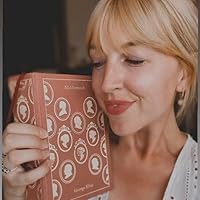
My review here is of the “Pears Anniversary Edition of the Christmas Stories” from 1912; the set comprising one cloth-bound volume for each of his five Christmas Books. They are a matching set, with different coloured bindings, but each with gold-tooled lettering and the Pears cameo inset on the cover. The Battle of Life: A Love Story has illustrations by Charles Green, which are monochromatic and surprisingly very naturalistic. In fact they almost look like photographs. It is certainly not quite how we usually envisage Dickens’s characters whether comic, grotesque or romantic. Phiz is a hard act to follow! What is so delightful about this particular edition, apart from the fact that the book is over 100 years old, and still lovely to hold with no page discoloration, is the sheer number of illustrations. It is interesting to speculate, given the shortness of these novellas, and the plethora of illustrations, whether he intended them as family reading, perhaps spoken or even acted out loud, around the cosy hearth of a family home.

My favourite quotation from this book? There are so many wonderful comic quips, but here is Dickens in a sage frame of mind,

“We count by changes and events within us. Not by years.”
Profile Image for Katie Lumsden.
Author 3 books3,795 followers
December 12, 2024
Not my favourite of Dickens's Christmas novellas, but still a sweet story that I really enjoy.
Profile Image for Jess the Shelf-Declared Bibliophile.
2,446 reviews926 followers
February 25, 2021
Blah. I never actually love Dickens' novellas, though I'm a huge fan of his novels. I don't get it. Maybe I'll reread it and try again someday. I gave 3 stars because I think I just wasn't in the mood for this type of novella.
Profile Image for Teresa.
Author 9 books1,035 followers
May 5, 2017
2.75

This will not go down as one of my favorite Dickens. While I liked the theme of the ‘battle of life’ being fought silently, some of the battle metaphors seemed overdone. There's nothing especially memorable about the characters, except for the servant Clemency, and the two sisters are annoying in their perfection. The debunking of the life-philosophies of the three older male characters was okay, except that much of the action happened 'off-stage'. The dialogue shines: I was happy –and relieved -- to be reading those exchanges, even that of the sisters.
Profile Image for Jason Pierce.
848 reviews102 followers
December 6, 2016
Why do I continue to write reviews for everything I read when nobody reads the bloody things?

Emily Baldwin Homecoming photo EmilyBaldwinHomecoming.jpg
"Just because there's nobody there is no reason not to carry on the conversation."

Well, I suppose you're right, Miss Emily. Thank you. This was read in this compilation: A Christmas Carol and Other Christmas Classics

This is not Dickens' best work. It's the fourth of his Christmas books, and doesn't live up to the expectations I set after reading the first three. It's considered a Christmas book because it came out at Christmastime, and not because there's a Christmas theme involved, though one small scene in the middle occurs during a Christmas gathering. It felt very loosely cobbled together, then chucked to the public. The battle of life part is a metaphor I didn't fully understand. Everything takes place on an ancient battleground that's long since grown over, and is nearly forgotten. Connections to it later in the story felt really forced. In fact, the first third of the book had me wondering what was going on, and where Dickens was going with it? I never really found out. I think he was just using the platform for a bit of social commentary that didn't have much to do with the rest of the story, but I could be missing something. I'm not going to reread it to find out.

Also, it's a love story, and a sappy one at that.

Delilah photo Delilah.jpg
"Awwwwwww!"

Gag me. You would think this was made for the Hallmark movie channel were it not for the fact that it was over a century ahead of its time.

I can't even say I enjoyed reading this one. Even Dickens' customary style of prose wasn't up to par. There were comic bits, and I liked the silly names of the lawyers (Snitchey and Craggs), and their pretentious mannerisms, and Clemency the simple housekeeper was silly enough, but all of it felt a little lacking. Most of his usual elements were there, but they didn't pack their usual punch.

Also, I don't recall any coincidences in this book. Is it possible it was written by someone else? A doppeldickens, maybe?

I'd suggest skipping this one unless you like sappy romance, and that's been ruined for you if you clicked on my spoiler.
Profile Image for Connie  G.
2,153 reviews711 followers
January 22, 2024
"The Battle of Life" was Charles Dickens' Christmas book for the 1846 holiday season. He wrote the novella while he was staying in Lausanne, Switzerland with his family.

The book has some gorgeous writing, humor, mystery, and interesting characters. The family home is set on the grounds where a violent battle was fought years ago. The battle motif continues as the characters have to make difficult emotional decisions in the battle of life. The themes of family love, caring friends, and sacrifice fit the Christmas season well. I liked the novella, but felt that the ending was sudden. The story could have been developed into a novel. However, Dickens probably had a deadline to finish a Christmas novella for his publisher.

"The Battle of Life" was an enjoyable holiday read with the Dickensian group.
Profile Image for Jersy.
1,208 reviews108 followers
April 30, 2021
It had the typical Dickens charme but the ending didn't work for me.
Other than being baffled by that, I thoroughly enjoyed myself.The whole book has you guessing because you know there will be some kind of twist and I'll always be amused by the way the author writes characters.
Profile Image for Kathleen.
Author 1 book268 followers
January 23, 2024
A very enjoyable story, the fourth of five of Dickens’ Christmastime publications, all of which deliver a moral message with humor and good cheer. The plot and characterization have some issues--one of the rare times you can tell Dickens is writing on deadline by the seat of his pants. But that only gave it more charm to me.

He shows us a family living happily on an old battlefield, and takes us through their own battles around love and honor and forgiveness. The messages are heavy-handed, and the character motivations a little confusing, but it was still so much fun, and left me with that Dickens “aw shucks” afterglow.

Recommended for Dickens fans.
Profile Image for Stephanie Martin.
27 reviews29 followers
January 14, 2012
Meh. The beginning was so promising, but the end was lame. It made me ultimately dislike all the characters but Clemency the ding dong servant. She was the most fully sketched, agreeable character. The teary young misses were total bores.
Profile Image for Shirley (stampartiste).
443 reviews67 followers
March 17, 2024
Charles Dickens opens his short story, The Battle of Life - A Love Story, with a graphic and poignant account of a hard-fought and fierce battle “once upon a time”. He goes on to describe the scene of the plain, “strewn with upturned faces that had once at mothers’ breasts sought mothers’ eyes, or slumbered happily.” Dickens then goes on to describe how time eventually erases all evidence that such a battle was ever fought there. It was a moving opening to a “love story.”

But then Dickens segues into a true love story that takes place many many years later on that field of battle. It concerns two lovely sisters, Grace and Marion Jeddler, and their friendship with Alfred Heathfield, their father’s ward. Even though the story involves several other wonderful characters, not the least the wonderful maid Clemency Newcome and the butler Benjamin Britain (“sometimes called Little Britain, to distinguish him from Great [Britain]” - ah, Dickens, you will have your fun), who provided comic relief, the story is really a complicated love triangle.

Many times, I would try to figure out what the opening battle scene and the romantic entanglements had to do with one another, but Dickens expertly tied the two together by showing how people have to make decisions sometimes that cause pain every day, but that in cheerfully enduring the daily and hourly pain of those decisions, “there were victories gained every day, in struggling hearts, to which these fields of battle were as nothing.” Dickens was not minimizing the pain soldiers experience on the field of battle; rather he wanted to recognize the nobility of self-sacrifice for the sake of someone else.

This was truly a beautiful, if at times complicated, story.
Profile Image for Laura.
7,136 reviews609 followers
April 17, 2025
Opening lines:
Once upon a time, it matters little when, and in stalwart England, it matters little where, a fierce battle was fought. It was fought upon a long summer day when the waving grass was green. Many a wild flower formed by the Almighty Hand to be a perfumed goblet for the dew, felt its enamelled cup filled high with blood that day, and shrinking dropped. Many an insect deriving its delicate colour from harmless leaves and herbs, was stained anew that day by dying men, and marked its frightened way with an unnatural track. The painted butterfly took blood into the air upon the edges of its wings. The stream ran red. The trodden ground became a quagmire, whence, from sullen pools collected in the prints of human feet and horses' hoofs, the one prevailing hue still lowered and glimmered at the sun.


Free download available at Gutenberg Project.
Profile Image for [ J o ].
1,823 reviews553 followers
January 7, 2017
Regularly Dickens. It had his humour in smatterings and his characterisations at length. His profound dialogue and his joy with words, but the story lacks fluidity unlike most other things Charlie wrote, and it is not quite a story of the heart as it might at first appear. Still excellently Dickens, though, if altogether too brief.


Blog | Instagram | Twitter | Pinterest | Shop | Etsy
Profile Image for Niki (nikilovestoread).
848 reviews86 followers
December 6, 2019
I have been meaning to read more Dickens this year and just have not gotten around to it. I'm reading along with a group of ladies for a Dickens Christmas composed of The Battle of Life: A Love Story and two others. Now, I am again asking myself why I have waited all year to read another of his books. He had such a way with words and I have truly loved everything I've read by him. The Battle of Life: A Love Story is a sweet, little tale of love and redemption. Like A Christmas Carol, I can see myself rereading this one many times over the years. Clemency Newcome and Mr. Britain were my favorite characters and added the touch of humor that I love in Dickens' work.
Profile Image for Matt.
4,858 reviews13.1k followers
December 19, 2025
Looking for some holiday reading that packs a punch, I turned to this novella by Charles Dickens, the fourth in his Christmas stories. Set in an English village, the story speaks of some battle. It is not clear what clash, but with love a central theme, one can presume it is one in which hearts are involved. There is much talk about various relationships between men and women, though its central themes are slightly opaque. While Dickens is known for his tangential pieces, this one pushes the limits for the reader, attentive or not.

Christmas is the ideal reading time, no matter what genre interests you. This piece by Charles Dickens was a unique experience, though not entirely in a good way. This story takes tangents and there is a randomness that I do not usually enjoy. This reading experience was one of them. The narrative meanders from the opening page, creating a setting that is sure to confuse the reader from the outset. Perhaps choosing the audiobook was not a good choice, as it allowed my attention to stray with greater ease. The reader will soon discover the central theme, love, seems to be the only things that can be plucked easily from the story’s foundation.

Characters are plentiful and presented throughout the piece. Dickens chooses vessels to offer their perspectives to the piece, adding emotion, seemingly to entertain the reader. Dickens seems eager to individualise those who grace the pages of the story, hoping the reader can pull from each of them. I was not sold by the characters and they did not add anything to the story for me.

Surprises emerge at various points of the story, keeping the reader wondering what’s to come, if they are still clinging on to care. Those who have a keen interest in Dickens will see his style and the way he leads the reader throughout the three sections, though I am not one of those who remains affixed to any twists on offer. I feel there is less a suspenseful nature to the piece than one where something is taking place, though that remains difficult without a clear map. I will allow my lack of affinity for classics be the reason this did not impact me, though I can be sure I would not love this as a modern publication.

Kudos, Mr. Dickens, for a meandering of love. I am having a hard time finding anything exciting or Christmas-themed about it.

Love/hate the review? An ever-growing collection of others appears at:
http://pecheyponderings.wordpress.com/
Profile Image for Melanie Garcia.
304 reviews25 followers
December 15, 2024
⭐️⭐️

I feel ashamed to be giving Dickens 2 stars but honestly this was quite torturous. I actually skim read the end 😳

A Christmas Carol is an all time favourite as well as Great Expectations and Oliver but this was just not enjoyable. It's actually put me off reading more of the Christmas Novellas as I haven't enjoyed any of them after A Christmas Carol. None of them are remotely festive either.

I'll try again next year, perhaps it's just me 😩
Profile Image for Roberta Cheadle.
Author 19 books126 followers
September 16, 2023
The Battle of Life is a love story by Charles Dickens that was first published in 1846. It is the fourth of Dickens’ five Christmas Books. It is the only story in the collection that does not have a supernatural element.

The story is set in an English village which many years earlier had been the scene of a horrific battle. Some of the characters in the story compare life’s struggles with that battle.

The outstanding part of this story for me was the introduction. Dickens’ description of the great battle was amazing and has stayed with me. This is the first paragraph:

“Once upon a time, it matters little when, and in stalwart England, it matters little where, a fierce battle was fought. It was fought upon a long summer day when the waving grass was green. Many a wild flower formed by the Almighty Hand to be a perfumed goblet for the dew, felt its enamelled cup fill high with blood that day, and shrinking dropped. Many an insect deriving its delicate color from harmless leaves and herbs, was stained anew that day by dying men, and marked its frightened way with an unnatural track. The painted butterfly took blood into the air upon the edges of its wings. The stream ran red. The trodden ground became a quagmire, whence, from sullen pools collected in the prints of human feet and horses’ hoofs, the one prevailing hue still lowered and glimmered at the sun.”

This scene is so vivid I have it in my mind to draw it with oil pastels. Sadly, true to my character, I now have so many art projects on the go (an elephant, a hippo, a dancing girl’s head, and an orchid), my plan has gone on a back burner.

Plot summary
Two sisters, Grace and Marion, live in a village built on the great battlefield. Their father, Dr Jeddler, a good natured widower, is rather an unusual character and lightens the problems in his own and his daughters lives with exaggerated humour and jest. Dr Jeddler is the guardian to Alfred Heathfield, a lovely young man who is engaged to Marion and who, at the beginning of the story, is leaving for London to complete his studies to become a doctor. When taking his leave of the family, Alfred entrusts the care of Marion to her older sister, Grace. It is clear from an early stage in the book that Grace is in love with Alfred but is prepared to sacrifice her love due to her loyalty and love for Marion. The family is tended to by two servants, Clemency Newcome and Ben Britain.

During the time that Alfred is away, Marion befriends another young man, Michael Warden. Michael has run through a lot of his inherited wealth due to ‘bad’ living and his two solicitors, Snitchey and Craggs, are helping him sort out his affairs. they have advised Michael to leave and be away for about six years. The two lawyers believe that Michael has talked Marion into eloping with him, but they make no comment to him in this regard. Clemency is also of the opinion that Marion is in love with Michael having seen her having a clandestine meeting with Michael late one evening. On the day Alfred is due to return, Marion disappears and it is assumed she has eloped with Michael Warden.

Six years pass and Clemency has married Ben and set up an tavern in the village.. Alfred has fallen in love with Grace and the pair have married and have a daughter called Marion. Michael Warden comes back to the village and is unmarried. He reveals that he asked Marion to marry him but she had said no and had gone away to live with her Aunt Martha. Marion knew that Grace loved Alfred far more than she did and had sacrificed her own love and life to enable Alfred to fall in love with Grace.

Marion returns to the village and is reunited with her family and with Michael Warden whom she ends up marrying.

For me, the storyline was a little unrealistic as I don’t believe young girls of Marion’s age make such huge personal sacrifices. They are too young to be so empathetic and selfless. However, it was still a good story and the beginning was superb.

Quotes from The Battle of Life, a love story
I believe, Mr. Snitchey,’ said Alfred, ‘there are quiet victories and struggles, great sacrifices of self, and noble acts of heroism, in it – even in many of its apparent lightnesses and contradictions – not the less difficult to achieve, because they have no earthly chronicle or audience – done every day in nooks and corners, and in little households, and in men’s and women’s hearts – any one of which might reconcile the sternest man to such a world, and fill him with belief and hope in it.”

“For a long time, no village girl would dress her hair or bosom with the sweetest flower from that field of death: and after many a year had come and gone, the berries growing there, were still believed to leave too deep a stain upon the hand that plucked them.”

“We part with tender relations stretching far behind us, that never can be exactly renewed, and with others dawning – yet before us.”
Profile Image for Tristram Shandy.
880 reviews267 followers
December 20, 2016
”It's a World Full of Hearts”!

With these words, Doctor Jeddler, a father of two daughters, who is given to the frivolous philosophy of regarding the world as a comédie humaine in which nothing really matters, finally rejects his superficial notions by realizing that even though the battles people fight do not seem to make a whole lot of sense when viewed from a distance, with a mere onlooker’s eyes, people themselves do have a heart and their feelings do matter to them and to those they love. What it took to make him change his view as to the seriousness and sacredness of life, is told in Dickens’s fourth Christmas Tale, The Battle of Life, which was written in 1846.

Unlike the well-known A Christmas Carol and the two Christmas novellas following in its wake, The Battle of Life has never achieved a high degree of popularity, which I find quite deplorable because it is a more adult tale than, for example, The Cricket on the Hearth with its excursions into silliness. Apart from that, it is more balanced than The Chimes, which left me with the impression that Dickens just wanted to cram too much social criticism into too short a story. It may well be that The Battle of Life fell short of popularity because Christmas does not play a major role in the plot – with only one fateful plot event coinciding with a Christmas party -, and neither are there any ghosts or supernatural entities at work.

Even though this may be the case, we still have impressively poetic passages in this tale, as for instance the description of the aftermath of a battle that took place “[o]nce upon a time, it matters little when”:

”It was fought upon a long summer day when the waving grass was green. Many a wild flower formed by the Almighty Hand to be a perfumed goblet for the dew, felt its enamelled cup filled high with blood that day, and shrinking dropped. Many an insect deriving its delicate colour from harmless leaves and herbs, was stained anew that day by dying men, and marked its frightened way with an unnatural track. The painted butterfly took blood into the air upon the edges of its wings. The stream ran red. The trodden ground became a quagmire, whence, from sullen pools collected in the prints of human feet and horses' hoofs, the one prevailing hue still lowered and glimmered at the sun.”


Despite such a grim beginning, The Battle of Life is an optimistic story and also contains a lot of humour, e.g. when it comes to the two lawyers Snitchey and Craggs and their nagging wives, or the good-humoured Clemency Newcome and the somewhat grumpy Benjamin Britain. If there is any criticism voiced by the narrator, it is apparently directed at people who think themselves so learned and endowed with reason that they fail to appreciate life for what it is worth. Not only Doctor Jeddler is an example of philosophy gone awry –

”A kind and generous man by nature, he had stumbled, by chance, over that common Philosopher's stone (much more easily discovered than the object of the alchemist’s researches), which sometimes trips up kind and generous men, and has the fatal property of turning gold to dross and every precious thing to poor account.”


but also Ben Britain preens himself on his astuteness and patronizes Clemency Newcome as someone who has not one genuine thought of her own in her head, which is quite ironic in that it is Clemency whose common sense will later on ensure his material success in life and his happiness as a family man.

The Battle of Life is also a story of self-sacrifice to an extent which seems unbelievable and pointless. So while the plot of The Battle of Life is not especially original and would not even stand a plausibility test (if there were such a thing), there is still the atmosphere, some of the characters (especially the comic relief ones) and the language that make Dickens’s fourth Christmas story worth reading and place it, in my humble opinion, above the Chimes and the Cricket.
Profile Image for Jim Dooley.
916 reviews70 followers
June 4, 2020
I did enjoy reading THE BATTLE OF LIFE, but I must admit that it was a very odd story. I have no idea what the opening description has to do with what happened afterward. As is common in a Charles Dickens story, coincidences can defy logic and there is a fair amount of moralizing. And the work is a reminder that certain themes would be used over again in different stories. (For example, the disappearance in THE BATTLE OF LIFE would happen again in DAVID COPPERFIELD.)

Once more, I also had difficulty with a couple of character motivations. The actions of the younger sister and the man who was seeking to break up her relationship were too “convenient,” as if the characters were being manipulated to serve the story rather than the other way around.

Despite these issues, it is quite a readable work and I looked forward to each reading session. It surprised me how much empathy I had for the two attorneys who became multi-dimensional characters. The close of the second section was also an emotional cliffhanger. And I was very curious as to how it would end.

This is the first of the “Christmas stories” that lacked charm for me. Still, there is an intriguing ... if difficult ... moral lesson that is worth pondering.
Profile Image for Donna.
343 reviews19 followers
February 15, 2023
3.5 Stars

" The Battle of Life" is one of Charles Dickens' lesser-known works but is well worth the short read (68 pages or 3 hrs, 20 min on audio). It's considered a Christmas book because it was released at Christmastime, but Christmas is far from the focus.

This novella takes place in an English village that stands on the site of an ancient historic battle. Dickens' trademark social commentary and vivid characterization are both undeniable. Themes of self-sacrifice and adversity are central, with the 'battle' serving as a metaphor for the struggles of life.

Although the book engaged me from start to finish, its significant shortcoming was the attempt to tell such an intricate tale in three condensed chapters. As might be expected with Dickens, the ending is cheerful, and the final paragraph brilliant!
Profile Image for giso0.
530 reviews143 followers
January 7, 2024

Thimbles and nutmeg graters instead of philosophy books, sounds intriguing at the very least!
Profile Image for Alexa.
523 reviews9 followers
December 21, 2021
No me gustó, pese a que en línea general me gusta Dickens. Esperaba algo más emocionante, que Marion tuviera motivos más profundos para lo que hizo, una enfermedad terminal, un secreto oscuro, etc.

Me confundió un poco la participación de Michael Warden, porque aparentemente no tuvo relación directa con la partida de Marion y sobre todo porque no saca de su error a Clemmency cuando ella cree que Marion ha muerto.
This entire review has been hidden because of spoilers.
Profile Image for Laura.
44 reviews
April 1, 2012
This book wasn't terrible. There were absolutely beautiful passages and nice scenes; however, I would never recommend this book unless nothing else to read and you needed a few hours to kill. There were parts in the beginning when I wanted to stop reading, but it started to flow better and was then a quick read.
Profile Image for John Anthony.
947 reviews170 followers
December 23, 2017
A good plot once you can get to it. The meanderings and surplus verbiage get in the way. Not sure when saccharine was first produced but this tale makes me think that Dickens might have patented it. He does have this tendency, especially when focusing on young women. Not the maestro at his best in my humble opinion.
Profile Image for Sara.
Author 1 book952 followers
December 9, 2017
A sweet little story from Mr. Dickens. I had a little chuckle because I had my boyfriend stolen by my younger sister when I was in my early twenties. I must admit that I did not take it with the same grace as Grace.
Profile Image for Sara J. (kefuwa).
531 reviews49 followers
September 13, 2017
I took ages to finish this one. My brain just didn't engage on it as it did with the other Christmas stories. That said, getting to the last third wasn't so bad and there are some really nice turns of words in there to be read.
Profile Image for Jon.
1,460 reviews
December 4, 2008
The least popular of Dickens' Christmas books, and justifiably so.
Profile Image for Marco Beneventi.
324 reviews8 followers
October 17, 2020
Sul terreno che fu luogo, in passato, di una sanguinosa battaglia sorge la casa del Dottor Jeddler, anziano filosofo che vede la vita come un colossale scherzo, assieme a lui vivono le sue due figlie, Grace, la maggiore e Marion, la più giovane, promessa sposa di Alfred, protetto del dottore e ora in partenza per un viaggio di apprendistato.
La promessa del giovane è quella di prenderla in sposa una volta ritornato a casa ma proprio la sera del suo rientro, sei anni dopo, una notizia tremenda sconvolgerà il clima festoso in cui tutti erano immersi.
La “battaglia della vita” farà sentire così i primi colpi di cannone.

“La battaglia della vita”, scritto da Dickens nel 1846 ed inserito, insieme ad altri quattro racconti, nella raccolta “Canti di Natale”, pur risultando il meno apprezzato dalla critica del tempo e il più lontano da quelle atmosfere “natalizie” che negli altri quattro risultano molto più evidenti, si rivela comunque un racconto estremamente poetico, dai toni “soffici” ma altrettanto capace di sferzate drammatiche, tutte emozioni sapientemente dosate da Dickens.
Il racconto, che riesce in maniera plastica a far apprezzare lo scorrere del tempo e le variazioni della vita dei vari protagonisti e coprotagonisti, risulta ben scritto e scorrevole, fra le sue pagine troviamo diversi dei personaggi che Dickens ha saputo molto spesso ben tratteggiare, i due avvocati Snitchey e Craggs (e le loro battute), le sorelle Marion e Grace con la loro devozione famigliare, l’innamorato respinto, la servitù che prima di servire è consigliera e amica e diversi altri personaggi capaci di dare uno spaccato realistico e dinamico del tempo.
Un breve racconto che riesce peró a condensare in poco spazio una storia d’altri tempi credibile ed emozionante come solo Dickens ci ha abituati.
671 reviews58 followers
May 4, 2024
Audible Plus 2 hours 50 min. Narrated by Donada Peter's (C)

The Battle of Life: A Love Story, a novella This was such a true Dicken's tale, right to the happy ending! It is included as one of Dicken's five Christmas short stories; however, Christmas just happens to be a time of year for one setting. I want to write about the significance of two sisters' love for each other, but my shoulder is bothering me. So I'll have to point you to Bionic Jean's brilliant review. I am so glad I persevered through the poor recording to finish this gem.
Profile Image for Denisse.
558 reviews304 followers
December 21, 2022
Although well constructed, with good use of metaphors about the battle described at the beginning of the story and our characters life, I didn't particularly enjoyed this novella. I guess is as good as any for a Christmas read, but sadly I know I won't remember it for long.


No se porque sigo leyendo estas novelas cortas de Dickens si no me están gustando. Bueno, si se, ya tengo el compilado y ya quiero regresarlo al librero. Tengo creo que 3 navidades avanzando con el y cada vez con menos ganas.

Supongo que la lectura esta bien para cualquier amante del escritor, yo la verdad nunca lo había leído hasta que compre el compilado con sus historias navideñas y solo Cuento de Navidad me ha gustado, creo que no son para mí. En fin, solo me falta uno, intentare que me den ganas de leerlo estos últimos días del 2022 para ya terminar mi tortura.
Displaying 1 - 30 of 253 reviews

Can't find what you're looking for?

Get help and learn more about the design.