

What do you think?

Beyond the Deep: The Deadly Descent into the World's Most Treacherous Cave
The Huautla in Mexico is the deepest cave in the Western Hemisphere, possibly the world. Shafts reach skyscraper-depths, caverns are stadium-sized, and sudden floods can drown divers in an instant. With a two-decade obsession, William Stone and his 44-member team entered the sinkhole at Sotano de San Augustin. The first camp settled 2,328 feet below ground in a cavern where headlamps couldn't even illuminate the walls and ceiling. The second camp teetered precariously above an underground canyon where two subterranean rivers collided. But beyond that lay the unknown territory -- a flooded corridor that had blocked all previous comers, claimed a diver's life, and drove the rest of the team back. Except for William Stone and Barbara am Ende, who forged on for 18 more days, with no hope of rescue, to set the record for the deepest cave dive in the Western Hemisphere.
368 pages, Hardcover
First published June 1, 2003
Ratings & Reviews
Friends & Following
Create a free account to discover what your friends think of this book!
Community Reviews
Displaying 1 - 30 of 55 reviews

April 21, 2024
Beyond the Deep is to diving and caving as Into Thin Air is to climbing and mountaineering.
The authors drop us in the Western Hemisphere, specifically the Huautla cave in Mexico, where a team of explorers gears up to find the deepest cave system in the world. 😮
The team of 44 lug ropes, carbide for lamps (this is in the 80’s), experimental diving equipment, camp gear, backup equipment, MREs, and a whole mess of courage on their backs, over 1,500 meters down.
Who do we follow for the journey?
The ring leader, Bill Stone, Barbara, and diving buddies Noel and Ian take the center of attention. Bill had initially set the record with traditional scuba gear in the 1970s but was limited by traditional diving technology. His buddy introduced him to a rebreather system that Navy Seals used to pass in and out of hostile waters with ease. It basically scrubs the carbon dioxide out of the air and replaces the tiny fraction of metabolized oxygen back into the system. For the next decade, he developed his own experimental version, which weighed 150+ pounds but did the trick. They would be able to dive deeper for longer periods of time.
What awaits them on their journey?
This book follows their attempt to regain the record, and it is hair-raising. There are mishaps, challenges with sleeping under waterfalls, lack of light, lack of sleep, and lack of help if anything goes wrong at each camp as they progress further and further down into the great unknown. At one point, I thought the team was going to encounter the Nautilus and wave to Captain Nemo.
Who is this for?
If you enjoy the thrill of adventure and the perseverance of a team that will pretty much push towards a goal regardless of their own health, this will be for you.
I would be remiss if I did not mention some things that did not work for me. Specifically, how much of an unlikeable person Bill is. The way in which he goads people into pushing when they clearly want to stop and surface rubbed me the wrong way. Also, the way he treats Barbara is no bueno. What does she see in him? I do appreciate the fact that the authors kept these qualities in the book, though. They could have easily just made him out to be a superhero.
Barbara is the star, I think. I mean, for starters, she has to put up with Bill. Secondly, she is gung-ho about seeing the mission through, carrying all the equipment, being the backbone of support, and always first with positivity. They seriously need a chapter of praise for her.
I feel like I did not do a good job explaining the expedition itself, but it was hair-raising and thrilling. I even had to take breaks reading the last few chapters. 😮
So. Who wants to go take diving lessons? I’m game.
🎵| Soundtrack |🎵
❖ John Denver – Country Roads
❖ Iron Maiden – The Great Unknown
⭐ | Rating | ⭐
❖ 4.5 out of 5 ❖
The authors drop us in the Western Hemisphere, specifically the Huautla cave in Mexico, where a team of explorers gears up to find the deepest cave system in the world. 😮
The team of 44 lug ropes, carbide for lamps (this is in the 80’s), experimental diving equipment, camp gear, backup equipment, MREs, and a whole mess of courage on their backs, over 1,500 meters down.
Who do we follow for the journey?
The ring leader, Bill Stone, Barbara, and diving buddies Noel and Ian take the center of attention. Bill had initially set the record with traditional scuba gear in the 1970s but was limited by traditional diving technology. His buddy introduced him to a rebreather system that Navy Seals used to pass in and out of hostile waters with ease. It basically scrubs the carbon dioxide out of the air and replaces the tiny fraction of metabolized oxygen back into the system. For the next decade, he developed his own experimental version, which weighed 150+ pounds but did the trick. They would be able to dive deeper for longer periods of time.
What awaits them on their journey?
This book follows their attempt to regain the record, and it is hair-raising. There are mishaps, challenges with sleeping under waterfalls, lack of light, lack of sleep, and lack of help if anything goes wrong at each camp as they progress further and further down into the great unknown. At one point, I thought the team was going to encounter the Nautilus and wave to Captain Nemo.
Who is this for?
If you enjoy the thrill of adventure and the perseverance of a team that will pretty much push towards a goal regardless of their own health, this will be for you.
I would be remiss if I did not mention some things that did not work for me. Specifically, how much of an unlikeable person Bill is. The way in which he goads people into pushing when they clearly want to stop and surface rubbed me the wrong way. Also, the way he treats Barbara is no bueno. What does she see in him? I do appreciate the fact that the authors kept these qualities in the book, though. They could have easily just made him out to be a superhero.
Barbara is the star, I think. I mean, for starters, she has to put up with Bill. Secondly, she is gung-ho about seeing the mission through, carrying all the equipment, being the backbone of support, and always first with positivity. They seriously need a chapter of praise for her.
I feel like I did not do a good job explaining the expedition itself, but it was hair-raising and thrilling. I even had to take breaks reading the last few chapters. 😮
So. Who wants to go take diving lessons? I’m game.
🎵| Soundtrack |🎵
❖ John Denver – Country Roads
❖ Iron Maiden – The Great Unknown
⭐ | Rating | ⭐
❖ 4.5 out of 5 ❖

March 20, 2018
If you enjoyed any of the more popular books on Everest, this is a must read!
I so thoroughly enjoyed reading this one. Much like the world of mountaineering, caving has its own language and lifestyle. I found this equally fascinating as I did when reading Into Thin Air by Jon Krakauer.
What truly amazed me about this book was picturing the explorers seeing all of these sights for the very first time, before any other human. The knowledge it took to explore as deep as they did and make to get as far as they did. While the book was well written, and my mind tried to piece together as much of the scenery as it could, I still had to look up some of the other expeditions on YouTube to get a true appreciation for the total environment.
Just a really awesome book and so glad that I checked it out!
I so thoroughly enjoyed reading this one. Much like the world of mountaineering, caving has its own language and lifestyle. I found this equally fascinating as I did when reading Into Thin Air by Jon Krakauer.
What truly amazed me about this book was picturing the explorers seeing all of these sights for the very first time, before any other human. The knowledge it took to explore as deep as they did and make to get as far as they did. While the book was well written, and my mind tried to piece together as much of the scenery as it could, I still had to look up some of the other expeditions on YouTube to get a true appreciation for the total environment.
Just a really awesome book and so glad that I checked it out!

January 25, 2011
“Wow! Would you look at that!” Barbara said, standing atop one of the truck-boulders. A towering stalagmite thrust up into the blackness, like a citadel guarding the gates of beyond. Its height made it a useful landmark in the massive chamber, which was 140 meters wide and more than thirty meters high. (p. 231, nookbook)
That is why I love to read these kinds of books. There's the thrill, the adrenaline rush. And I have just learned that cavers have their own cliche. Why do they continue searching for the bottom of the world? Because it's not there. Good twist on the mountaineers' line, "because it's there."
I had a love and hate relationship with the book though because of the attitude of William (Bill) Stone, the team leader.
Bill leaned back, rolled his eyes, and answered in English: “He says we have to get permission from three mayors and a god.” (p. 57, nookbook)
Cee: Um, Bill I don't think it's nice to roll your eyes at other people's beliefs.
“Mushrooms?” Bill laughed. “No way, man. (p. 57, nookbook)
Cee: Really, Bill...
Those predisposed not to like Bill sometimes found his extemporaneous lectures condescending. But Barbara had come to realize that it was just his way of showing his enthusiasm. (p. 52, nookbook)
Cee: That's enthusiasm? Oh-kay. What can you say about that, Kenny? You and Bill were together exploring Sistema Huautla, the deepest cave in the Americas.
“He has no freakin’ leadership skills,” Kenny blurted. “Everything upsets him. Even the kind of stuff that goes wrong on every big expedition. Like, he’s all shocked that his high-tech hydro turbine is fitzing out under these conditions? Like, he’s all rush-rush, hurry-hurry, everywhere we go. I know this expedition is important to him. I’m just tired of dealing with it.” (p. 123, nookbook)
Cee: Thanks for the honesty Kenny. Yeah, I got tired of it too. P.S. At least he provided a glossary of terms for us non-cavers. I found that helpful.
That is why I love to read these kinds of books. There's the thrill, the adrenaline rush. And I have just learned that cavers have their own cliche. Why do they continue searching for the bottom of the world? Because it's not there. Good twist on the mountaineers' line, "because it's there."
I had a love and hate relationship with the book though because of the attitude of William (Bill) Stone, the team leader.
Bill leaned back, rolled his eyes, and answered in English: “He says we have to get permission from three mayors and a god.” (p. 57, nookbook)
Cee: Um, Bill I don't think it's nice to roll your eyes at other people's beliefs.
“Mushrooms?” Bill laughed. “No way, man. (p. 57, nookbook)
Cee: Really, Bill...
Those predisposed not to like Bill sometimes found his extemporaneous lectures condescending. But Barbara had come to realize that it was just his way of showing his enthusiasm. (p. 52, nookbook)
Cee: That's enthusiasm? Oh-kay. What can you say about that, Kenny? You and Bill were together exploring Sistema Huautla, the deepest cave in the Americas.
“He has no freakin’ leadership skills,” Kenny blurted. “Everything upsets him. Even the kind of stuff that goes wrong on every big expedition. Like, he’s all shocked that his high-tech hydro turbine is fitzing out under these conditions? Like, he’s all rush-rush, hurry-hurry, everywhere we go. I know this expedition is important to him. I’m just tired of dealing with it.” (p. 123, nookbook)
Cee: Thanks for the honesty Kenny. Yeah, I got tired of it too. P.S. At least he provided a glossary of terms for us non-cavers. I found that helpful.

August 11, 2020
I enjoyed reading this book (the cover grabbed my attention, more than anything else). It moved at a fast pace; it was honest about sharing the good, the bad, and the ugly about the different team members (including the leader, Bill Stone). (I actually felt that Bill Stone was "presented 'worse'" (or came across worse) in Blind Descent than in this book.) It was interesting reading about the different character dynamics amongst the various team members.
I wish they had had more pictures of the sights they discovered during their underground explorations. What they discovered sounded absolutely amazing. They do include some photos, but it is what they don't show that I want to see.
It was a fun book. It was a sad book (there are some deaths). It was an interesting book. I am glad I took a chance and read it.
I wish they had had more pictures of the sights they discovered during their underground explorations. What they discovered sounded absolutely amazing. They do include some photos, but it is what they don't show that I want to see.
It was a fun book. It was a sad book (there are some deaths). It was an interesting book. I am glad I took a chance and read it.

February 2, 2020
I tend to go down rabbit holes in my reading patterns, so after reading "Into the Planet" pretty much at random, I picked up this "also recommended". Whereas with the other book I felt invited into the intimate experience of a woman's life in diving, this book felt dry, academic, and frankly kind of self-aggrandizing. Stone (who writes about himself in the third person, presumably to make the work feel more objective than it is) is the leader of a dive team pushing his divers, cavers, and friends to the breaking point, encouraging them to push past discomfort and fear, often to their detriment. After one death and several near-fatal accidents nearly every diver on his team has abandoned the effort when Stone, along with his girlfriend, makes one final attempt and manages to secure some kind of coveted record. The entire debacle is fueled by his ego and arrogance, and that shines through even when he's writing about himself and trying to paint his expedition and actions in the most forgiving light.

August 18, 2011
This is a non-fiction extreme story of extreme "Caver" Bill Stones descent into the Mexican cave, Huautla. The story is a breath-taking, emotional, and exciting tale of the world of these incredibly athletic divers and explorers. It makes "Into Thin Air" seem like a walk in the Park since these guys don't know what lays ahead - and it's done with limited vision. Is it a new route beyond the known? Is it death? Any small mistake can be extremely dangerous -- which often happens. Will they persevere and attain their goal of exploring new area's of the cave? Will the new technology work? If a mistake is made -- evacuation and rescue may be days in coming. Will the water rise and wash out their exit route? Will the gods of the ground be satisfied?
This is a readable and non-technical journey that held me spell bound. I have a hard time imagining any sport more challenging than the life of "caver" -- which is not the same as splunking -- believe me!
This is a readable and non-technical journey that held me spell bound. I have a hard time imagining any sport more challenging than the life of "caver" -- which is not the same as splunking -- believe me!

February 20, 2024
I finally picked up this book after it spent the last year and a half living in my duffel bag as I chased seagoing work, then on a shelf in my Los Angeles apartment (while I was mostly everywhere but LA), and finally making the journey in a moving truck from LA back to Austin, Texas, where I originally acquired it. Soon it will be deposited into a Little Free Library somewhere in Austin, so some other hapless soul can slog through its 350 pages of torturously repetitive sentence structures and endless discussions of “scooping booty” until they too want to dig out their eyeballs with a hot rotisserie fork.
You see, until very recently I worked for the author Bill Stone’s company in Austin—first as a remote “consultant” (this is a word companies often seem to use for people they don’t want to pay things like benefits for), then getting sucked further and further into something that, with the clarity only a surprise termination can bring, resembled more of a cult than a job. My first time at the Robot Ranch, where Stone’s tiny company sits on 30 acres of mesquite and prickly pear fields east of Austin, I was sitting at his dining table with him and another colleague, when he strode across the room to a bookshelf, then strode back to hand me a copy of this book. I admit that at the time I was slightly flattered that he would give me a gift, but I didn’t find the time to read the book until I was given the second (and far more generous) gift of unemployment. My only regret is not reading it earlier, as it might have saved me from making some terrible decisions. Instead, I got suckered into a full time position in Austin, with grandiose dreams of deploying robots in Antarctica and Mexico, picking up my life in California and moving to a state that I said I’d never live in (I’m a silly goose and women’s rights are important to me), only to be fired two months later for reasons that… well, you’re only getting my side of the story, but let’s say that they resemble a big steaming pile such as might be left in a mesquite field after a visit from a Texas Longhorn. (But don’t worry… OSHA took my concerns a bit more seriously than they did.)
So I picked up this book, still reeling and hoping it may offer some clues to figure out what the f*ck just happened to me, someone who had done nothing but spend months working myself to the point of severe burnout, working 80+ hour weeks in service of “the mission”, at one point working literally 40 hours straight in order to get some major funding proposals across the finish line (not with my name on them of course… as the book makes clear, only one name gets the credit ‘round these parts…), living in Stone’s house (work-provided housing) and not seeing my home or any of my friends for six months because I was so “needed” to be on site. Enticed to move with talk of how much I “fit in” and “belong” here (and the not-insignificant threat of being kicked out of aforementioned work-provided housing and told to find my own place in Austin while still paying rent on my place in LA and being required to be on site in Texas). So given all of that, it would be easy to accuse me of giving this book a 1-star review based on my own personal feelings towards the author, but I promise—it’s only because if I am subjected to reading the phrase “scooping booty” one more time I will actually snap, and will be found wandering Sixth Street in a robot-print muumuu having loud philosophical debates with the nearest cat.
But despite every page of this book being a slog through mediocre writing from start to finish, I finished it feeling like I’d just been clipped by a self-important bullet, grateful to have sustained only a flesh wound instead of a lethal one. Steve said it best, on p. 135: “He felt as though Bill was treating him and the other team members as pawns in some sort of a grand game, a race to the bottom of the world. He feared that like a pawn, he, too, might be expendable.” Well Steve, all I can say is, “ditto.”
A few pages later (p. 144), Kenny gave a succinct rant that neatly summarized the last 1.5 years of my life: “‘He has no freakin’ leadership skills,’ Kenny blurted. ‘Everything upsets him. Even the kind of stuff that goes wrong on every big expedition. Like he’s all shocked that his high-tech hydro turbine is fitzing out under these conditions? Like, he’s all rush-rush, hurry-hurry, everywhere we go. I know this expedition is important to him. I’m just tired of dealing with it.’” And the same sentiments echoed by Steve (pp. 145-146): “‘…this was supposed to be ten-day camp. After that, he promised we’d get a break. Now he wants us to keep pushing. He’s all push-push-push, with never a word of thanks.’” While I’ve never been on one of his caving expeditions, the exact same words could be said about every single engineering project—everything rush-rush, hurry-hurry, no time for the analysis, no time for a design review, just build something, we’re trailblazers, oh it didn’t work? well that’s okay, we’ll give a speech about how no one in the entire world has EVER done ANYTHING like this before, ground-breaking work doesn’t always work the first time. What’s that? Don’t you dare cite any literature from all the people who have done this before, we don’t hire PhD roboticists to tell us about the literature on what’s been done before, you say there’s an entire class of algorithms around solving this problem? Wrong, repeat after me: No. One. Has. Ever. Done. This. Before.
I suppose it’s one thing to take this approach to developing autonomous robotic systems, since the worst you’ll end up with is a half-assed system that barely works and a bunch of miserable, exhausted, burnt-out engineers (those guys are expendable pawns, anyway). Although this might be embarrassing to be associated with, and provide lots of comedic value for onlookers as your “high-tech” robot bumbles around bouncing off walls like a drunk toddler, it won’t be putting any human lives at risk. So, you can imagine my horror when I learned that the same constant-chaos approach that I’ve been dealing with on the autonomous systems side for years, was also taken in the design and testing of a life support system. Especially given that I was lured out to Austin to be the lead software engineer on… a new prototype life support system.
That sound you just heard was me screaming into my pillow in horror, wondering whether in another timeline I’d have been in the position of having human lives in the hands of a system I’d helped develop, and whether I’d have been pressured into putting that system into operation without sufficient time and resources for the rigorous testing I’d want any life support system to have. A blessing in disguise, the project was cancelled after a few weeks for reasons I still don’t fully understand, because the only constant here is chaos.
But seriously, I was utterly aghast when I read how little testing and dive training was done on the rebreathers before people were expected to dive on an experimental system as far from medical care as you can possibly get. There’s a difference between pushing boundaries as an explorer and being a rash, ego-driven asshole pushing your team past the breaking point and risking their lives, all for what? Scooping some freaking booty? (pardon me while I vomit) Exploration has risks, yes, and sometimes things go wrong, and sometimes tragedy happens. But there’s a huge difference between assuming and managing risks to discover something new, and being so full of hubris that you throw your team at the risks entirely unprepared.
I was sick to my stomach as I read through the pages and came across some of the “funny quips” that Bill had regaled us with countless times, sitting at the dinner table with a captive audience for the same stories about his accomplishments. Like page 170, where Rick Stanton says “Not a problem, mate, we do it every day…we’re firemen, remember?” I heard it in Bill’s forced British accent, since I’ve heard him repeat those words a hundred times before—I just never knew until reading this book that it was in the context of a BODY RECOVERY. Less of a funny quip to mention ‘round the dinner table with that context, isn’t it. Gross.
You know that thing where you’re writing an autobiographical account of something, but you soften the retelling a bit to make you look like less of an asshole? I suppose that still could have happened here, but if so, yikes. While the book is sharing the inner thoughts of the entire team, as team members are grieving their dead friend, across the Atlantic is a newly-widowed mother and three young kids without a dad, Bill’s inner thoughts are all focused on moping over the logistics of his expedition, how to get another dive team together after he’s pushed his first team well past the brink. Not humans, not friends, not teammates, not immensely hard-working people upon whose shoulders all of his success stands — just pawns, ready to be sacrificed at the expedition altar.
One last thing, because I take great pleasure in being petty — on page 247, where it describes Bill “racing through the job” (shocker), connecting a high-pressure hose to a low-pressure sensor, thus destroying the sensor — maybe a design review could have caught onto the need for different fittings for high- and low-pressure lines, so such a mistake wouldn’t be physically possible! But what do I know— I’m just an unemployed loser who has never been so happy to be fired in all my life.
If you’ve somehow made it all the way through this book review-cum-therapy session and still want to read this book about some truly fine human beings, you can find a signed copy floating around in a Little Free Library in Austin. I thought about burning it, but you know… the environment, plus burning books is a bad look. So instead, I will put this saga behind me by releasing the book into the wild, and then spending my days doing literally anything other than wasting my life being an expendable pawn in someone’s race to the bottom of the world.
You see, until very recently I worked for the author Bill Stone’s company in Austin—first as a remote “consultant” (this is a word companies often seem to use for people they don’t want to pay things like benefits for), then getting sucked further and further into something that, with the clarity only a surprise termination can bring, resembled more of a cult than a job. My first time at the Robot Ranch, where Stone’s tiny company sits on 30 acres of mesquite and prickly pear fields east of Austin, I was sitting at his dining table with him and another colleague, when he strode across the room to a bookshelf, then strode back to hand me a copy of this book. I admit that at the time I was slightly flattered that he would give me a gift, but I didn’t find the time to read the book until I was given the second (and far more generous) gift of unemployment. My only regret is not reading it earlier, as it might have saved me from making some terrible decisions. Instead, I got suckered into a full time position in Austin, with grandiose dreams of deploying robots in Antarctica and Mexico, picking up my life in California and moving to a state that I said I’d never live in (I’m a silly goose and women’s rights are important to me), only to be fired two months later for reasons that… well, you’re only getting my side of the story, but let’s say that they resemble a big steaming pile such as might be left in a mesquite field after a visit from a Texas Longhorn. (But don’t worry… OSHA took my concerns a bit more seriously than they did.)
So I picked up this book, still reeling and hoping it may offer some clues to figure out what the f*ck just happened to me, someone who had done nothing but spend months working myself to the point of severe burnout, working 80+ hour weeks in service of “the mission”, at one point working literally 40 hours straight in order to get some major funding proposals across the finish line (not with my name on them of course… as the book makes clear, only one name gets the credit ‘round these parts…), living in Stone’s house (work-provided housing) and not seeing my home or any of my friends for six months because I was so “needed” to be on site. Enticed to move with talk of how much I “fit in” and “belong” here (and the not-insignificant threat of being kicked out of aforementioned work-provided housing and told to find my own place in Austin while still paying rent on my place in LA and being required to be on site in Texas). So given all of that, it would be easy to accuse me of giving this book a 1-star review based on my own personal feelings towards the author, but I promise—it’s only because if I am subjected to reading the phrase “scooping booty” one more time I will actually snap, and will be found wandering Sixth Street in a robot-print muumuu having loud philosophical debates with the nearest cat.
But despite every page of this book being a slog through mediocre writing from start to finish, I finished it feeling like I’d just been clipped by a self-important bullet, grateful to have sustained only a flesh wound instead of a lethal one. Steve said it best, on p. 135: “He felt as though Bill was treating him and the other team members as pawns in some sort of a grand game, a race to the bottom of the world. He feared that like a pawn, he, too, might be expendable.” Well Steve, all I can say is, “ditto.”
A few pages later (p. 144), Kenny gave a succinct rant that neatly summarized the last 1.5 years of my life: “‘He has no freakin’ leadership skills,’ Kenny blurted. ‘Everything upsets him. Even the kind of stuff that goes wrong on every big expedition. Like he’s all shocked that his high-tech hydro turbine is fitzing out under these conditions? Like, he’s all rush-rush, hurry-hurry, everywhere we go. I know this expedition is important to him. I’m just tired of dealing with it.’” And the same sentiments echoed by Steve (pp. 145-146): “‘…this was supposed to be ten-day camp. After that, he promised we’d get a break. Now he wants us to keep pushing. He’s all push-push-push, with never a word of thanks.’” While I’ve never been on one of his caving expeditions, the exact same words could be said about every single engineering project—everything rush-rush, hurry-hurry, no time for the analysis, no time for a design review, just build something, we’re trailblazers, oh it didn’t work? well that’s okay, we’ll give a speech about how no one in the entire world has EVER done ANYTHING like this before, ground-breaking work doesn’t always work the first time. What’s that? Don’t you dare cite any literature from all the people who have done this before, we don’t hire PhD roboticists to tell us about the literature on what’s been done before, you say there’s an entire class of algorithms around solving this problem? Wrong, repeat after me: No. One. Has. Ever. Done. This. Before.
I suppose it’s one thing to take this approach to developing autonomous robotic systems, since the worst you’ll end up with is a half-assed system that barely works and a bunch of miserable, exhausted, burnt-out engineers (those guys are expendable pawns, anyway). Although this might be embarrassing to be associated with, and provide lots of comedic value for onlookers as your “high-tech” robot bumbles around bouncing off walls like a drunk toddler, it won’t be putting any human lives at risk. So, you can imagine my horror when I learned that the same constant-chaos approach that I’ve been dealing with on the autonomous systems side for years, was also taken in the design and testing of a life support system. Especially given that I was lured out to Austin to be the lead software engineer on… a new prototype life support system.
That sound you just heard was me screaming into my pillow in horror, wondering whether in another timeline I’d have been in the position of having human lives in the hands of a system I’d helped develop, and whether I’d have been pressured into putting that system into operation without sufficient time and resources for the rigorous testing I’d want any life support system to have. A blessing in disguise, the project was cancelled after a few weeks for reasons I still don’t fully understand, because the only constant here is chaos.
But seriously, I was utterly aghast when I read how little testing and dive training was done on the rebreathers before people were expected to dive on an experimental system as far from medical care as you can possibly get. There’s a difference between pushing boundaries as an explorer and being a rash, ego-driven asshole pushing your team past the breaking point and risking their lives, all for what? Scooping some freaking booty? (pardon me while I vomit) Exploration has risks, yes, and sometimes things go wrong, and sometimes tragedy happens. But there’s a huge difference between assuming and managing risks to discover something new, and being so full of hubris that you throw your team at the risks entirely unprepared.
I was sick to my stomach as I read through the pages and came across some of the “funny quips” that Bill had regaled us with countless times, sitting at the dinner table with a captive audience for the same stories about his accomplishments. Like page 170, where Rick Stanton says “Not a problem, mate, we do it every day…we’re firemen, remember?” I heard it in Bill’s forced British accent, since I’ve heard him repeat those words a hundred times before—I just never knew until reading this book that it was in the context of a BODY RECOVERY. Less of a funny quip to mention ‘round the dinner table with that context, isn’t it. Gross.
You know that thing where you’re writing an autobiographical account of something, but you soften the retelling a bit to make you look like less of an asshole? I suppose that still could have happened here, but if so, yikes. While the book is sharing the inner thoughts of the entire team, as team members are grieving their dead friend, across the Atlantic is a newly-widowed mother and three young kids without a dad, Bill’s inner thoughts are all focused on moping over the logistics of his expedition, how to get another dive team together after he’s pushed his first team well past the brink. Not humans, not friends, not teammates, not immensely hard-working people upon whose shoulders all of his success stands — just pawns, ready to be sacrificed at the expedition altar.
One last thing, because I take great pleasure in being petty — on page 247, where it describes Bill “racing through the job” (shocker), connecting a high-pressure hose to a low-pressure sensor, thus destroying the sensor — maybe a design review could have caught onto the need for different fittings for high- and low-pressure lines, so such a mistake wouldn’t be physically possible! But what do I know— I’m just an unemployed loser who has never been so happy to be fired in all my life.
If you’ve somehow made it all the way through this book review-cum-therapy session and still want to read this book about some truly fine human beings, you can find a signed copy floating around in a Little Free Library in Austin. I thought about burning it, but you know… the environment, plus burning books is a bad look. So instead, I will put this saga behind me by releasing the book into the wild, and then spending my days doing literally anything other than wasting my life being an expendable pawn in someone’s race to the bottom of the world.
This entire review has been hidden because of spoilers.
May 19, 2026
I read this book about 15 years ago. It was riveting. So much so that here, 15 years later, I am writing this review in order to save it for future re-read. I don't dive; I know my limits. But I sure do enjoy being taken along on an adventurous journey safely in a book.
June 18, 2026
An immensely immersive account of a caving expedition operating at the ragged edge of the available technology and gear. While the descriptions of the cave systems are amazing, looking up the photos from the expedition afterwards is truly mindblowing. It truly does look like another world.

April 8, 2015
For armchair adventurers like myself ( I have 3 kids, a husband and a mortgage, OK!) this is the perfect escape. The writing, while nothing spectacular nevertheless relays the various emotions of the expedition. There is Dr stone, highly driven and seemingly obsessed with 'cracking' the Hautla Sistema. His Girlfriend Barbara who's positivity is unyielding. The wisecracking duo made up of Kenny and Ian, amateur cavers who lend a hand hauling a tonne of equipment into the cave and various other people who make up the support system of such a demanding and grandiose expedition. All of these people leave a trail of admiration and respect and make such books a pleasurable read.

February 18, 2025
Where to start. First of all, Bill Stone seems like a tool. From his cultural disrespect of the Oaxacan people (although he does include some passages where he mocks their belief systems) to his grating personality and intolerance for the needs of others, he just all-around seems like a person I would not like to be outdoors with. Like not even remotely near.
He and Barbara wrote this book, which is unusual in that it is told in the third person. So Bill is describing himself as if doing so objectively, but he is writing from his perspective. Since I think this book is supposed to be non-fiction, but it is written as though narrated, you have to rely on he and Barbara's narrative as fact. It is a really strange way to write an adventure book, and I can't think of another time I've come across this style. Usually it is an outsider piecing the story together or the person telling their first-hand account of their own adventure. Weird stuff.
The technical details of the caving and diving sometimes lost me, as well as the descriptions of equipment repair and what went wrong. These parts are very hard to explain and I definitely did not understand them.
I found it infinitely annoying that the explorers referred to new regions as "scooping virgin booty". Why must you sexualize a cave? Where is the respect for nature? Why do you have to be gross?
They compare caving to mountaineerng and talk about mountaineers' preparation for "assault" on Everest. I really dislike these terms applied to mountains. Why do you have to assault anything?
It also sounds like they left trash behind in the caves (e.g. Ian's boots), which really defies the leave no trace ethics. I guess those ethics don't apply to Mexican areas, huh? I also don't agree with how they dealt with the death of Ian. The authors write about dragging his body out in brutal, disrespectful detail. There is a theme running through here. Arrogance and disrespect.
When I wasn't cringing at the mistreatment and disrespect of the locals, or cringing at the macho attitude with which these dudes (and one pretty mellow lady) got themselves into a heap of trouble clambering around in caves, it's a pretty good story. But I just can't look past the arrogance and disrespect. Bill made it clear in the book that he needed to recoup expenses from making his rebreather, and this book was likely a way to do so. I wouldn't be so proud of telling this story if I were him, it seems like something I would be embarrassed about with no lessons learned at the end.
He and Barbara wrote this book, which is unusual in that it is told in the third person. So Bill is describing himself as if doing so objectively, but he is writing from his perspective. Since I think this book is supposed to be non-fiction, but it is written as though narrated, you have to rely on he and Barbara's narrative as fact. It is a really strange way to write an adventure book, and I can't think of another time I've come across this style. Usually it is an outsider piecing the story together or the person telling their first-hand account of their own adventure. Weird stuff.
The technical details of the caving and diving sometimes lost me, as well as the descriptions of equipment repair and what went wrong. These parts are very hard to explain and I definitely did not understand them.
I found it infinitely annoying that the explorers referred to new regions as "scooping virgin booty". Why must you sexualize a cave? Where is the respect for nature? Why do you have to be gross?
They compare caving to mountaineerng and talk about mountaineers' preparation for "assault" on Everest. I really dislike these terms applied to mountains. Why do you have to assault anything?
It also sounds like they left trash behind in the caves (e.g. Ian's boots), which really defies the leave no trace ethics. I guess those ethics don't apply to Mexican areas, huh? I also don't agree with how they dealt with the death of Ian. The authors write about dragging his body out in brutal, disrespectful detail. There is a theme running through here. Arrogance and disrespect.
When I wasn't cringing at the mistreatment and disrespect of the locals, or cringing at the macho attitude with which these dudes (and one pretty mellow lady) got themselves into a heap of trouble clambering around in caves, it's a pretty good story. But I just can't look past the arrogance and disrespect. Bill made it clear in the book that he needed to recoup expenses from making his rebreather, and this book was likely a way to do so. I wouldn't be so proud of telling this story if I were him, it seems like something I would be embarrassed about with no lessons learned at the end.
This entire review has been hidden because of spoilers.

February 15, 2021
The book recounts a 1994 expedition into the Huautla cave system in Oaxaca, Mexico. It was lead by coauthor, caveman extraordinaire, and fascinating character of whom I'd never heard before, Bill Stone. While I've since learned that this expedition was one of several that Bill Stone has lead in that region over the years, 1994 was particularly eventful as it marked the first use there of his rebreather diving system, which allowed Stone to cross a previously unexploreable sump. .
I'm claustrophobic. I struggle with elevators sometimes, so cave diving is unimaginable. Which makes reading about it all the more fascinating. It was actually reading House of Leaves years and years ago that got me interested in caves but I'd never really followed up until now. Glad I did and glad I started here.
The cover compares Beyond the Deep to Into Thin Air: A Personal Account of the Mount Everest Disaster, which I think is fair. The writing's a step or two down from Krakaur but it's still an amazing story of an amazing accomplishment by amazing people. Which is why I'm surprised that it's out of print, never having made it to softcover, and relatively difficult to find.
I'm claustrophobic. I struggle with elevators sometimes, so cave diving is unimaginable. Which makes reading about it all the more fascinating. It was actually reading House of Leaves years and years ago that got me interested in caves but I'd never really followed up until now. Glad I did and glad I started here.
The cover compares Beyond the Deep to Into Thin Air: A Personal Account of the Mount Everest Disaster, which I think is fair. The writing's a step or two down from Krakaur but it's still an amazing story of an amazing accomplishment by amazing people. Which is why I'm surprised that it's out of print, never having made it to softcover, and relatively difficult to find.

July 11, 2018
A gritty retelling of the 1994 descent into one of the most dangerous flooded caves on Earth. Led by Bill Stone, the large cast is hard to follow at times, but also helps establish the scale of logistics, equipment, and training involved with teams searching for undiscovered cave "booty." Maps and personal journals help immerse the reader in the risks, suffering, euphoria, and interpersonal conflict. Those who like this book may also enjoy Blind Descent: The Quest to Discover the Deepest Place on Earth, which follows two caving teams (one again led by Bill Stone) in 2004 as they compete to find "the bottom of the world."

July 27, 2026
I first heard about Bill Stone in the context of cave diving horror stories, and among cavers, his name is frequently associated with risk-taking and chaos. He did an amazing interview with The Caving Podcast a few years ago, but he kind of gave early years Elon Musk vibes. He referred to the book several times in the interview, so I had to read it. I was shocked by how badly he came off, since he was the one writing it, but his character in the book matched what I expected. He's just so self-centered and focused on the goal above all else - which is probably what makes him successful. I liked all the technical details, but I also am familiar with expedition planning, rigging, and to a lesser extent, CCR diving.

April 23, 2019
***1/2. I enjoy the reading of the adventurous and unexplored areas our our earth. A more dangerous mission and very hard working type of adventure than I originally thought, I will leave this type of exploration to the "professionals". While I would love to take a quick trek into the Cave of Crystals (look up and view the amazing images!) in Mexico, I don't have any desire to search underground for the deepest cave system in our Earth. I'll take my chances with a visit to the Antarctica or northern Alaska, and maybe a mountain adventure. A good read, interesting read, although not my personal favorite for this type of adventure reading.

July 29, 2024
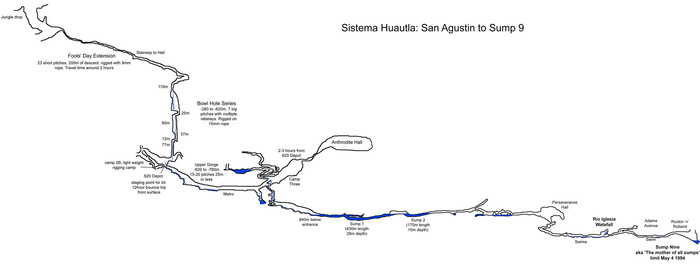
For a non-fiction book, this reads surprisingly almost like fiction in a way that makes me think it would make a good mockumentary. For someone who has read more about diving than spelunking, the logistical parts of cave exploration were somewhat challenging to wrap my head around because I couldn’t really picture them, but the maps and photos included were helpful. I also thought it was helpful to have input from most of the major team members to get the social dynamic element that might otherwise have been lost if it’d just been the authors’ POVs. I’d love another book on this subject if they ever get to explore Sump 9.

September 5, 2022
This is a better book for cavers than non-cavers. It includes a lot of technical detail that can be mind-numbing for people who don't have that background. It also doesn't provide much context for people who aren't coming to it with a lot background. That said, however, the events described are exciting in and of themselves and readers do get a strong sense of the risks deep diving in caves entails, if not truly of the feeling that inspires those who choose to do it.

February 16, 2026
I bought this book because I'm a diver and wanted to learn more about diving. Ironically, I'm also a novice vertical caver and ended up learning much more about vertical caving techniques than I did about diving, since I already knew many of the things about diving (though I did learn a lot about rebreathers). The descriptions of Huatla cave were stunning, and I absolutely loved the details about Mazatec culture and spirituality that the team ended up incorporating into the expedition.

October 7, 2018
Liked the book and all the details on their exploration of the cave system. Unfortunately the maps were always shown in the beginning of a chapter and were full of spoilers. I would have chosen to add more maps and show them after it was explained in text.
October 24, 2018
Nice read. Would have been better if the drawings came after the chapters. Often they contained spoilers. The drawings would show progress made and places where they ran in to trouble like "X fell from y and broke z". Other than that it was a nice read.

June 11, 2021
A Very Enjoyable Read
This is a great book for fans of exploration, caving, diving, climbing, etc. The authors paint an incredible portrait of the determination and the obsessive nature of individuals who explore worlds of the unknown.
This is a great book for fans of exploration, caving, diving, climbing, etc. The authors paint an incredible portrait of the determination and the obsessive nature of individuals who explore worlds of the unknown.

March 6, 2022
I don't really get the "scoop some booty" thing but this was a very compelling and entertaining man vs the elements adventure. If you've read "Shadow Divers" or "Into Thin Air" then you will be very satisfied with this story.

December 26, 2018
Entertaining and gripping, what more could you want?
OK, it does feel a bit clumsy in places (especially around the dialogue).
OK, it does feel a bit clumsy in places (especially around the dialogue).

February 16, 2019
I read this book on a giant kindle but I don't remember when.

May 12, 2022
Last 30% was exciting... initial parts dragged
May 13, 2022
Fascinating book about modern day exploration. I looked up the cave after reading this book and found that they still haven't reached the end. Great read!

August 31, 2023
Pretty interesting, but suffered from most of the people involved being quite irritating.
October 4, 2023
Informative book about large cave expeditions and cave diving

October 19, 2024
What an adventure! Well documented and thrilling to read. And always a more interesting read when you've worked and played softball with one of the authors.
June 17, 2026
So so good
Displaying 1 - 30 of 55 reviews