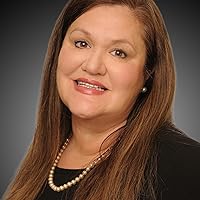
Locked inside a brain-injured head looking out at a challenging world is the premise of this extraordinary autobiography. Over My Head is an inspiring story of how one woman comes to terms with the loss of her identity and the courageous steps (and hilarious missteps) she takes while learning to rebuild her life. The author, a 45-year-old doctor and clinical professor of medicine, describes the aftermath of a brain injury eleven years ago which stripped her of her beloved profession. For years she was deprived of her intellectual companionship and the ability to handle the simplest undertakings like shopping for groceries or sorting the mail. Her progression from confusion, dysfunction, and alienation to a full, happy life is told with restraint, great style, and considerable humor.
As one who experienced a head injury in 1993, I was amazed at how well the author captured the confusion and frustration involved with TBI and the subsequent rehab. Letting go of the "old me" and accepting and loving the "new me" was a difficult process, but one that allowed me to experience great growth. This book is a great resource for those who have a friend or family member experiencing a head injury. There were few resources available to my family or myself and I am thankful that Dr. Osborn has shared her story. What a blessing. I pray it will be an encouragement to those who read it.
I LOVED this book. It's the first book I've read where I felt like the author knew exactly how I felt about losing my ability to practice law. I would love to meet this woman, I feel like we'd have so much in common - but more so, I'd love for everybody I know to read and understand this book. Though, realistically I know that won't work, because everybody will say that her injury was so much more severe than mine, her problems so much more complicated, and I didn't have anywhere near the same trouble she did etc etc. Of course, on many levels all that is true, but that's beside the point. No brain injury can ever be exactly like the next because no brain is exactly like the next. The point is that this woman, a physician, suffered a closed head injury and afterwards had to struggle tremendously with the fact the she could never go back to becoming the person - and doctor - she was before her injury. And she does a good job of describing how hard that was/is, what a loss that was, the grief, the loneliness, etc. In a way I wish I could've described it, and in a way I often feel I wish others would understand it. So thank you Claudia Osborne!
A painfully honest description of a doctor's experience with a traumatic head injury caused by a bicycle vs. auto accident. What stuck with me from this book is the overwhelming stress that it caused the author to do seemingly "simple" tasks like planning out the route to work. It definitely opened my eyes a bit to what a person with TBI might be experiencing "behind the scenes".
Dr. Osborn's story was one of loss, sorrow and hope. It is a very personal account of an internist's devastating auto-bike accident that left her with a tramautic brain injury. She shares the confusion she experiences on a moment-by-moment basis, discussing how she wakes up each morning shortly after the accident and has to check the notes she wrote the night before to remeber where she is and how to locate the bathroom. Her first weeks in the rehab program in New York are a frustrating tale of disorientation, forgetfulness and fatigue. She mentions the day that she attempted to get on a bus and discovered that she had given the last of her money to a homeless man. Upon returning to her friend's apartment for more change, she looks in the mirror and sees that she forgot to dry and comb her hair that morning. As she progresses through rehab, she is better able to handle the tasks of daily living by using strategies and props, but she has to struggle with the reality of what her new life with a head injury will become. She takes the reader through her sorrow as she understands that she will never again practice medicine as a clinician.
This book was moving, and I liked it for it's sincerity and insight. It's the first account I've seen from a person with a TBI, and the inside perspective was enlightening and painful to read at times. Dr. Osborn's account helped me step into her shoes and the shoes of others with TBI. It was extremely well written, and more than once I had to remind myself that it was authored by a person with a severe head injury. Her book is a great resource for people with TBI, their families and professionals that work with them.
This book is a must-read for professionals, friends, and family who care for persons with Traumatic Brain Injury.
Dr. Claudia Osborn was practicing medicine when she had a bicycle accident that resulted in a brain injury. This book is about strength, determination, and courage, even when it is impossible to "get back to normal."
I read this book because I heard Dr. Osborn speak at a conference. She talked about her life today. She is so well-spoken, it is hard to believe that the things I take for granted are a continual struggle for her.
I am sure this book could have taken a negative focus as she related times when people have not understood, or been unkind, but instead she focuses on the people who were there for her and did the difficult things in order to help her.
Enlightening story for anyone who has suffered a brain injury
I found myself saying "yes" to so many descriptions, symptoms and situations in this sad but ultimately triumphant story of a fellow brain injury survivor. I also learned that there are actual names for many of the symptoms I've had to deal with and wonder why, in my dealings with two renowned brain injury clinics, I wasn't I told these are normal. Thank God for the doctors at Johns Hopkins who have held my hand through this journey and been open to helping me find, assess and cope with the worst of the symptoms.
as a student clinician who provides cognitive rehabilitation to adults who experienced traumatic brain injuries, this was incredibly insightful to see the vast manifestations of damage in daily life. while i have objective understanding of how damage localized to specific regions of the brain can impede functional skills, and am aware of the emotional turmoil individuals with TBI’s experience, reading this book actualized living life with these impairments. i think this book would make a great recommendation for family and friends of people with TBI’s to help them gain awareness and understanding of the true breadth of challenges, emotions, and process of recovery and self-discovery that their loved one can be potentially experiencing!
This book reminds me a lot of Still Alice, that I recently read. This book, though, is about Dr. Osborn's, a doctor and professor, who suffers a traumatic brain injury (TBI) after being hit by a car while riding her bike. When she awakes after the accident, she has lost all executive function, is adynamic (apathetic, listless), and experiences frequent flooding, where she is awash in her emotions that cause her thought-processing to slow, and can severely impair thinking, language skills, and actions. She is sometimes aphasic (inable to comprehend and/or express language) and has impairments in thinking, reasoning, and her ability to learn. She struggles with memory, concentration, planning, problem solving, abstract reasoning, and long- and short-term memory. Watching her try to cope and create props (tape recorders, notebooks, lists, and alarms) to help her compensate really drives home are utterly devastating such an injury can be.
The first chapter chronicles Claudia trying to make it from her apartment in NYC to the Head Trauma Program and NYU Medical Center, where she will spend 5 months in their intensive rehab program. It was utterly exhausting just to read; she puts her shoes on before her pants. She forgets to blow dry her hair and has to walk in the cold March air. She forgets money for the bus fare. She returns to her apartment three times. Depsite making breakfast, she forgets to eat it.
We walk with Claudia as she forgets, remembers, and comes to terms with her new self, forever leaving behind the high-functioning doctor and lecturer she once was. Her relevations are heartbreaking, humorous, and heart-warming. While she eventually comes to understand and accept that she will never be back to her old self, she discovers new things about her new self - she loves to paint. Colors are more vivid. She can jumpstart her flagging emotions with music. She loves to write.
There were a few unanswered questions for me: Was she wearing a helmet at the time of the crash? What's the exact nature of her relationship with Marcia? She's referred to as a friend, but two live together as older adults and seem to share bills, hobbies, and friends. I suspect the two are in a relationship, but it's difficult to ascertain; I sense the author was purposely vague, which was slightly frustrating. I feel like knowing what their relationship was would have given additional meaning to how Marcia interacted with Claudia, especially after her injury.
The only real downside of the book, for me, was the excerpts from Claudia's journal interjected between the chapters. These vignettes were mostly written while she was undergoing treatment at HTP. Claudia mentions in the prologue that she cleaned them up and clarified her thoughts, so the reader wouldn't have to. It was a bit jarring, at times though, to feel so much compassion for Claudia's struggles in answering basic questions during HTP (i.e. How can you use your empathy in HTP? How can you use your empathy to help yourself?) only to turn the page and see deeply introspective writing that was elegant and probing. While I appreciate the author's desire to clearly express what she meant, I would have loved to have seen the unedited version. She included some excerpts of letters throughout to her grandmother, TuTu, and I wish the journal entries would have been more of that style.
Overall, a deep, engaging read that will give you insight into what it's like to live with a TBI. I definitely recommend.
The only way to understand brain injury is to have one, and since it is the brain that is injured, that "understanding" is fractured and piecemeal. Reading this book is as close as one can come to gaining that understanding from the outside.
It is an honest, insightful, revealing portrait of traumatic brain injury, and should be handed to the family members and friends of anyone diagnosed with a brain injury as required reading.
This was the first book I read 3 years after my TBI and it took me 6 weeks along with extensive note-taking to get through the 240+ pages.
It was worth the effort.
I've given copies to family members and those who've read it know me.
Both uplifting and insightful. A look into what life is like for someone after a moderate brain injury. Some of the reflections in here are amazing, especially when read as a health care provider. It's such a rare and personal glimpse into the mind of someone who has experienced such an injury and their struggle with the acceptance of it.
It's so devastating to read about her change in life roles, her inability to do things that so many of us take for granted, as well as how she feels when others try to minimize the impact of her injury.
A must read for people who work in cognitive rehabilitation.
What a great novel! I, too, went through almost an exact same scenario, but was fortunate enough to have recovered seemingly more fully than Claudia. A very introspective look at what is involved in a TBI recovery, and who is the most help. Many things she brought up I'd almost forgotten about, and certainly developed a better appreciation of family and friends that healed me through my ordeal. Her rehab center being set in Manhatten really upped the anti! I could't imagine being in that foreign of an environment while trying to complete my recovery.
I originally picked up this book to learn more about brain injury. Which I did, though not in the ways I was expecting. Over My Head isn't like a medical journal; it's a fascinating and intriguing personal story. Not only is it brilliantly written, but the story goes beyond the pain and confusion of a TBI to show some universal truths of life. Reading it taught me more than a few symptoms of injury to the brain stem; it really got me thinking about things like empathy for the injured and even the role of prayer in medicine. In short, this book is riveting and wonderful. Highly recommended.
My favorite brain injury book. Claudia is at once a no-nonsense and endearing character. I'd like to sit down and talk to her in person. This book is the closest I've come to understanding what someone with a traumatic brain injury actually thinks and feels as they struggle to recover physically, psychologically, and emotionally. Without seeking pity, Claudia tells it like it is. Her honesty, bravery and ability to educate others about brain injury make her a strong role model others.
An amazing insight to life after a TBI. Super interesting to see the influence of rehabilitation and integration of personal strategies and positive mindsets. Highly recommend!!
Claudia Osborn was a busy and respected doctor and professor of medicine when she was struck by a car while riding her bicycle in her neighborhood. She sustained a serious head injury that left her with severely diminished short-term memory, the inability to reason or make decisions, and a tendency to emotional "flooding." In practical terms, this means she could no longer function as a doctor -- or as an independent adult -- she could no longer do grocery shopping, ride a bus, read a book with any comprehension, or carry on the simplest of conversations. She forgot to eat, she could not get dressed without a list telling her what to do & in what order, she sat for hours staring into space, her mind totally blank.
Initially, Osborn seemed almost "ok" and expected, with time and rest, to go back to her former life. But gradually she came to understand the magnitude of her injury and the resultant loss. This book chronicles her gradual understanding of her TBI, her acceptance of her new self, and the long difficult process of rehabilitation. She moved from Michigan to New York in order at attend a special program for individuals with serious brain injuries, and spent over a year working with specialists to develop the skills necessary to cope with daily life.
I appreciated that way Osborn explained the clinical facts and also revealed the emotional impact of her injury . At first devastated by the loss of her medical work, she gradually, painfully, came to recognize some new talents: Prior to my injury, I was no more likely to paint than I was to sing Carmen at the Met. Just as I had no voice, I couldn’t draw a respectable stick figure. The injury didn’t change that, but while it numbed my response to almost all other stimuli, it intensified my perception of color. Certainly I had always enjoyed color. Now I could see hues and tones I had never seen before. Everywhere I turned, I saw a dazzling intensity and diversity of color.
Written with emotional honesty and gentle humor, this is a valuable book helping the reader to understand the long difficult journey a TBI patient must make.
Over My Head is by turns heartbreaking, inspiring, and ultimately the story of a doggedly determined woman who creates a new life for herself. Dr. Claudia Osborn is a 34-year-old internist in Detroit who goes biking with her roommate, and some careless driver makes an overly wide turn and hits her bike, throwing her on her head and giving her a major concussion. Most of the rest of the book concerns her rehabilitation, and how, after hoping she will return to her hospital job in a matter of months, she gradually learns she will never get to practice medicine again.
The sheer amount of courage and persistence that Osborn shows is remarkable. She moves to New York City and participates in a rehab group of 12 diverse head-trauma victims, all of them trying to relearn the basics they were robbed of by their accidents. She describes it beautifully: “Through disjointed, halting communications, and even more, through an osmosis of communal ache, we learned the intimacies of each other’s deficits, aspirations, and fears.”
The rehabilitation process is arduous and slow. Osborn finds she can’t concentrate on anything for any length of time, and trying to do so exhausts her and forces long naps.
By the book’s end, nine years after the accident, the author has learned strategies and procedures for living that allow her to develop her considerable talent in writing, and she looks forward to whatever new life she will create for herself.
It’s a journey not many of us could take.
This is an excellent book. Anyone who likes biography or memoir should read it—or really, everyone should read it.
Helped me understand more about emotional flooding and adynamia. I wish we all had a friend as remarkable as Marcia!
A couple of items I want to ponder further... P 168 Many problems have the same root causes. You didn't discover a new deficit. You just found a new implication of a deficit you already had...the deficit wasn't meaningful enough until you were active enough to try to use a former skill that is now limited by that deficit." Helping someone recognize this is a key step, but getting him or her to take action to find a compensation for this is challenging, P 180 "I didn't know who I was now, so how could I know where I was going?" Acceptance is a difficult journey, but necessary to move forward. Some things cannot be restored, but the discoveries of what still is within reach is valuable for rehabilitation and coming to grips with one's new reality.
I had hoped for a different ending, but that does not mean this one is not satisfying. It is a reality check with a good dose of optimism, patience and humor that caregivers of a TBI patient may find helpful.
I finished this book. This is remarkable, because the print was small, the information presented required my sustained attention, and it was about a traumatic brain injury, a topic I find upsetting, because I've had several. Reading Over My Head was a personal victory.
The book chronicles a young doctor's traumatic brain injury and treatment. I found the book to be informative, honest, and dated. It was published almost 20 years ago.
The author acknowledges how fortunate she is to be surrounded by caring people. Also, her excellent treatment is covered by insurance. While I empathized as the author described her experiences, I found her attitude toward others a tad arrogant. This may be a result of her injury. If the book were published in 2016, she would be told to check her white privilege.
One of the hardest things about having a brain injury is that, in many cases, your injury is invisible to others. Hearing "everyone forgets things" gets old fast. Over My Head is an excellent book for anyone who knows someone with a head injury. Her descriptions of symptoms are right on. She's a doctor.
I found this memoir written by a brain-injured doctor to be very moving. She did an excellent job of describing her life before, then after, being hit by a vehicle while riding a bike. It was fascinating to me to "watch" as the extent of her injury unfolded. It's understandable that she herself had such difficulty figuring out just how much she'd been damaged, considering how confusing everything was to her. But the people around her, and even her initial neurologist, seemed oblivious to the severity of her injury as well. I'm thankful the author finally decided to contact a different neurologist who had the wisdom to send her to an intense, full-time therapy program for 10 months. The author has a gift for storytelling. I was drawn into the story as she included just the right amount of information to get her point across, while still allowing the reader to feel captivated by what was happening. She is a true inspiration to brain-injured people who have to find, and accept, a new sense of self.
I wish books like this were available when a 1977 car accident left me with broken collarbone, 7 broken ribs next to my spine, broken pelvis & 3-week coma. 4-weeks of hospitalization followed by 3 weeks of speech, occupational & physical therapy set me on a yearlong road to early recovery. Miraculously little longterm evidence remains, although I recognize lapses in short term memory that are helped by lists & forgiveness. Moving forward is the best progress no matter the year brain injury occurs.
The narrative is compelling in describing the author's struggles as well as that of those who share her rehabilitation. Journal entries are reminders of the value of writing as a resource to struggle with conflict.
Her fine narrative writing shows how life changes in a flash moving the direction, but not the spirit!
This non-fiction book is an interesting look at a serious head injury which happens to the author, a doctor, and the tedious work and toil it takes to get herself back to a functioning level.
A person can look or even behave as if she has recovered, but inside the brain is still a jumble. Simple, everyday tasks that we do automatically can require many complicated steps one must plan deliberately. This saga is really amazing. Osborn takes us through her whole process and successfully reports her own jumbled confusion as she works through a tough process. Kudos to Osborn for all she has gone through and for sharing the journey with us.
This is a fantastic read detailing the author's experience with her traumatic brain injury. It is her personal story so it does not explain every brain-injured person's experience, but it provides helpful insight that can be useful when engaging with anyone with an injury.
My biggest takeaway from her story is applicable to every person, brain-injured or not. Experiences happen in our lives that we don't ask for and they change us in ways that keep us from being the people we thought we'd be. Often, to be truly healthy, we need to reconsider the ideological or preferred measuring stick to which we compare ourselves.
An excellent read for anyone close to someone who has experienced TBI (traumatic brain injury), whether that role be as a family member or as a rehabilitative professional. I'll carry this account with me into my career and likely revisit it.
I feel like great liberties were taken in editing and elaborating her journal entries and letters -- which she addresses at the onset. While her voice was captured wonderfully, I wish that her writing and communication throughout her progress had been more accurately preserved, at least occasionally.
Read in 2000. Having treated clients with brain injuries I was particularly interested in reading her memoir. dr Osborne suffered a closed head injury when a motor vehicle struck her and her bike. the first-hand account of the losses, the rehab, and the adaptions necessary to continue a fulfilling life are inspiring. It took her 7 years to complete this book with the help of her mother in organizing he notes. Today Dr Osborne provides education to other physicians through a lecture circuit and a light schedule of teaching about TBIs (traumatic brain injuries) in medical schools.
Really great story of a woman's experience with tbi. From a clinical perspective, it was really helpful to hear exactly what "goes on" in her brain that makes it difficult to perform her activities of daily living. She described her difficulties with attention, her adynamia, and her experiences with flooding in a way that helped understand what was happening to her, in order to get an idea of what it feels like to live with a brain injury. A great read, a great story, and very touching as well.
in this memoir, the author talks about her experience with traumatic brain injury and her rehabilitation process. after the injury, her identity changed. i think this was a great read for me because i work with a lot of people who have experienced traumatic brain injuries, but don’t know what it’s like to have one myself. this book gave me a deeper insight into the mind of someone who has experienced a traumatic brain injury. i’d recommend it to anyone looking for more information regarding personal experience on this subject.
I suffered a traumatic brain injury two years ago today. I was an English professor who acquired aphasia. Since September 2015 I've been in the Albany branch of the cognitive rehabilitation described in this book. I took me several weeks to read this book, working on my speech and cognitive deficits. I find hearing her experiences similar to mine deeply helpful, especially while I'm working on my own acceptance. Thank you, Dr. Osborn!
Great read about one woman’s rehabilitation, recovery and acceptance of the results of her brain injury. I know medical care, especially for brain injury, was different in the 80s, but almost all the parts of her early medical care post-injury gave me mini panic attacks. Otherwise, I really enjoyed an “insider’s” view of rehabilitation.
A very good book, though I have some conflicted feelings about it since my wife is six years into recovering from a not dissimilar injury. There are parts where I find myself aghast that someone with that level of brain trauma was left to fend for themselves in so many ways, but really that's not about the book or the telling it's what actually happened and the writing reflects that, so unlike a piece of fiction it's not something you can question. This book is about a thirty-something doctor who went out on a bicycle ride one summer evening, was hit a by a poorly driven car and ended up with a traumatic brain injury. The book details the surprising process of recognizing that a brain injury is present because in many cases the severity of a brain injury isn't immediately apparent or tested for. It then goes through trying to find a recovery program, dealing with living with a disability, the rehabilitation process and dealing with all the stresses and frustrations all told from the first hand point of view of the person going through it.