Jump to ratings and reviews
Rate this book

Capital, Volume One

Rate this book
Shortlisted for the Commonwealth Writers’ Prize Best First Book, Southeast Asia and South Pacific Region, Anthony Macris' highly-acclaimed debut novel Capital, Volume One takes the reader on an unforgettable journey through the overcrowded tube tunnels of London.

In a London Underground station during the build-up to peak hour: a penniless tourist, hefting an enormous backpack, is almost pushed off the crowded platform; an elderly woman craves a cigarette while staring at a government health warning; a pregnant mouse struggles to escape an oncoming train. In the tropical heat of suburban Brisbane: a lone schoolboy has a disconcerting experience while watching a film in a multiplex; three office workers mercilessly taunt a colleague; a father discusses with his young sons the morality of Stalin’s starvation of the peasantry.

Paperback

Published January 1, 1998

Loading...
Loading...

About the author

Anthony Macris

7 books2 followers

Ratings & Reviews

What do you think?
Rate this book

Friends & Following

Create a free account to discover what your friends think of this book!

Community Reviews

5 stars
0 (0%)
4 stars
7 (53%)
3 stars
3 (23%)
2 stars
2 (15%)
1 star
1 (7%)
Displaying 1 - 3 of 3 reviews
Profile Image for Ian "Marvin" Graye.
983 reviews2,924 followers
April 1, 2011
CRITIQUE:

In the City

There is a sense of hyper-realism at play in "Capital: Volume 1", even if it doesn't necessarily qualify as "hyper-real" in the Baudrillardian sense.

At the heart of the novel is a concern with life in the city (a capital city? a city of capital?) - well, actually, it's a tale of a town and a city, if not two cities: one Brisbane (1) (where I currently live), the other London, which I have only visited on holidays (three times, at the time of writing).

These cities have some similarities now, despite their profound differences. Until the end of the nineteen-seventies, Brisbane was still a country town (I remember when "Rolling Stone" was banned by the state government as a subversive magazine), but it managed to grow into a modern city in the nineteen-eighties. Its youth accomplished this, partly by modelling itself on British music, film and culture. It also revered New York and L.A. as archetypes, to which I'd add Detroit.

Escape from the City

The alternating Brisbane scenes in "Capital" (one of which is actually set in a second-hand record store in Sydney) seem to occur between the late nineteen-seventies and the late nineteen-eighties, when student life consisted of hippie share houses, vegetarian food, dope, sizable record collections (housed in makeshift timber cabinets or on the floor), and part time jobs (required to fund the rent, dope and record collections).

The London scenes in Macris' novel are set somewhere between 1991 (when Sergei Bodrov's 1989 film, "Freedom is Paradise", was released in London - Macris includes a capsule review by film critic Tony Rayns in "Time Out") and 1997 (when the book was published).

Brisbane (or Australia) is a place from which Macris' protagonist wants to escape, even if it is only for the purposes of a holiday and "overseas travel" (2). The city he wants to leave hasn't yet changed much from the small town of his childhood. After finishing university, he gets jobs at the Commonwealth Department of Finance (a nine week vacation job - it's all he could stomach), and the Pancake Manor (where some of my friends worked, if they couldn't get a job at Rocking Horse Records in Adelaide Street, or JoJo's upstairs on the corner of Queen and Albert Streets), so he can save money for his overseas travel.

Going "to the City, to See the Temples"

The protagonist's father frequently drives his two sons into "town" (or the city) to see "the temples" - Brisbane's only five or six remaining stately buildings. The rest of Brisbane, especially the suburbs of tin and timber houses, barely survived three or four decades. It lacked history and context.

London, on the other hand, was always an enormous magnet for Australians - we couldn't wait to get there, to see its temples, to experience what was left of the "swinging sixties", or to participate as musician, artist, writer or audience in the pub rock, punk, new wave, post-punk, synth-pop, or Britpop scenes that were promoted by New Musical Express ("NME"). (3) London venues were where you could find temples to these secular gods.

London is the home of the protagonist's particular hero, David Bowie. Through much of the novel, tracks from "Diamond Dogs" or the 1976 compilation album, "Changesonebowie", are playing.

Going Underground

Macris' protagonist (known only as "the man in the fawn trench coat") makes a fictional, almost Joycean journey on the London Underground between Russell Square and King's Cross stations. He's anxious to get out of the crowded train, so he can meet up with a friend at a pub, before going to see a film in Islington (perhaps, at the Everyman Screen on the Green). The protagonist consumes music and film like other people acquire retail goods.

Outside the train, on the platform, the station is a meta-real microcosm of modern capitalist society. There's a horde of commuter/ consumers standing impatiently on the platform, using their undesired waiting time to read the advertising on the hoardings attached to the station walls and the underground tunnels.

The commuter/consumers are surrounded by, and have to walk through, the indulgences, excesses and detritus of mundane capitalist consumption: "the discarded crisps and hamburger wrappers that skid along the tunnel floor; the advertisements for foot powder, eye drops, Israeli holidays and police force recruitment [that] adorn the tunnel and platform walls..."

An empty bottle of Lucozade is kicked around and rolls down the stairs, frustrating and tripping up an elderly woman with multiple plastic bags of shopping. Capital is valorised, objectified, exchanged and transferred around, all on the London Underground.

Time and Space Oddity

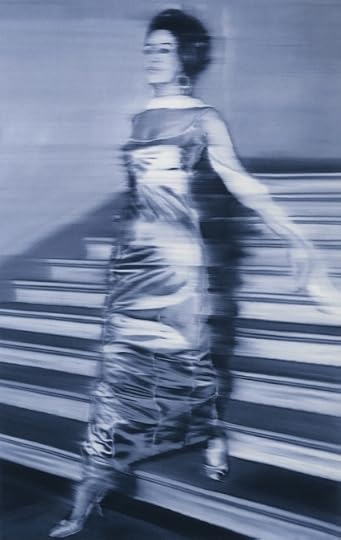
Several commuters are captured step by step, motion by motion, frame by frame, as they walk up or down the stairs into or out of the station. Like stop motion photography, repetition is fundamental to their individual and collective portrayal. Each one is a composite of their separate steps, motions, and frames, like Duchamp's "Nude Descending a Staircase" or Gerhard Richter's "Woman Descending the Staircase".

description
Marcel Duchamp - "Nude Descending a Staircase, No. 2"[Source:]

The winds of economic and cultural change blow through the tunnels of the station, anticipating how capitalism will change people's lives in the near future. The soundtrack is Bowie's dystopian album, "Diamond Dogs".

A female Japanese postgraduate student at London School of Economics listens to her husband's Walkman on her earphones -

"...sealing her off from the outside world, making her feel disoriented, as if she were listening to the soundtrack of a video or film that did not correspond to the events (or, perhaps more accurately, non-events) unfolding around her, making her feel partially absent from this mass transit continuum that she is not meant to inhabit any longer than the time needed to pass through it, her senses thrown back upon themselves..." (4)

People, commuters, consumers, the masses, all of us are disoriented in a mass transit continuum.

"A Split Second of Delirium"

The wind blows a speck of grit into the Japanese woman's eye, causing her temporary distress.

Fortunately, her husband is there to help remove it:

"...why has she been made to suffer so senselessly, so unfairly? Her husband puts his arms around her (the hard shape of the Walkman pressing against her) and, for a brief moment as they turn around to join the lane of exiting passengers, accidentally brushes his ears against hers, the sudden contact of his skin, so exquisitely warm and dry, sending her into a split second of delirium."
Macris seems to imply that his generation is still able to find intimacy, romance and love beneath, and in the underground of, capitalism, partly because of the soundtrack pop music and culture affords it.

description
Gerhard Richter - "Woman Descending the Staircase" [Source:]


FOOTNOTES:

(1) Disclosure: I knew the author's sister in the mid-eighties to the mid-nineties, and once met him at a party at her house in Highgate Hill/ Dutton Park. He hadn't written this novel at the time, although, remembering him, I bought my copy at a bookshop in Adelaide when it was first released in 1997.

(2) Likewise, the Go-Betweens (the most heavily careerist of Bris Angelean bands) couldn't wait to get out of Brisbane (to make it big - always their main concern [music was just a vehicle for achieving fame, like their idols, the Monkees]- in Melbourne, London, New York, or LA/Hollywood) in the early eighties, when the bravest act was to stay, rebel, create and play.

(3) In those days, NME was a weekly print newspaper/ magazine, that took three months to get to Australia, before it could get distributed by newsagents.

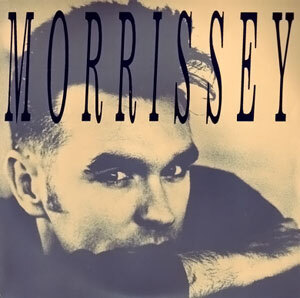
(4) She's listening to Morrissey's "Piccadilly Palare", a song about homosexual male prostitution. David Bowie and Morrissey are signposts to the underlying bi-sexual and homosexual sub-themes of the novel.

description
The cover of Morrissey's 1990 single, 'Piccadilly Palare'. Source:


SOUNDTRACK:
Profile Image for Jane.
Author 14 books144 followers
April 22, 2014
Amazing that this is a debut novel. Macris' interlinked vignettes - mostly either portions from one man's life, or scenes from the London Underground - reveal the exhausting dehumanisation of living in modern capitalist society, from being painfully and repeatedly hit with a heavy backpack while waiting for the train, to enduring ridiculously detailed job interviews for menial positions. Tiring and deeply satisfying.
Profile Image for Selby.
149 reviews
October 6, 2026
Not the worst book . . .
But oh my word.
Chapters 6 and 10????
But also, just not my thing. Not at all. If my professor didn’t have us reading this I probably would never have picked it up.
Displaying 1 - 3 of 3 reviews