

What do you think?
Enoch Soames: A Memory of the Eighteen-Nineties
It occurs to you that he was a fool? It didn't to me. I was young, and had not the clarity of judgment that Rothenstein already had. Soames was quite five or six years older than either of us. Also--he had written a book. It was wonderful to have written a book.
48 pages, Paperback
First published January 1, 1916
About the author
Max Beerbohm
329 books95 followersSir Henry Maximilian Beerbohm, as "Max," known British writ, apparently wrote
Caricatures of Twenty-five Gentlemen
in 1896.
Henry Maximilian Beerbohm served as an English essayist, parodist.
https://en.wikipedia.org/wiki/Max_Bee...
Henry Maximilian Beerbohm served as an English essayist, parodist.
https://en.wikipedia.org/wiki/Max_Bee...
Ratings & Reviews
Friends & Following
Create a free account to discover what your friends think of this book!
Community Reviews
Displaying 1 - 30 of 97 reviews
December 6, 2023
3.5 rounded up
Story 9/72 from Black Water 1 (The Anthology of Fantastic Literature) read together with The Short Story Club
I’ve discovered yet another author I’ve never heard of. All thanks to Black Water 1 anthology. Max Beerbohm was an English writer, parodist and caricaturist.
This story is part another of those cautionary tales how not to make deals with the devil, part time travel. It also a cautionary tale about pride and greed. Quite good.
Story 9/72 from Black Water 1 (The Anthology of Fantastic Literature) read together with The Short Story Club
I’ve discovered yet another author I’ve never heard of. All thanks to Black Water 1 anthology. Max Beerbohm was an English writer, parodist and caricaturist.
This story is part another of those cautionary tales how not to make deals with the devil, part time travel. It also a cautionary tale about pride and greed. Quite good.

November 8, 2023
This 1916 story was a big surprise in lots of ways. At first, it’s slow, with some painfully convoluted sentences, but the writing relaxes, and at the half-way mark, the story takes off in amusing and mind-warping ways, ending with an excellent quip. It was ahead of its time in many ways, which is apt.
Early metafiction
This relatively long short story opens with the narrator scouring a book of 1890s literature for mention of his old acquaintance, Enoch Soames. Almost from the start, the narrator is torn about the ethics of telling Soames’ story, but nevertheless, feel compelled to do so.
He recalls salon chatter with mutual friends, when they were in their twenties. He admired those, like Soames, who had been published. Is the act of creation its own reward, or does recognition matter? What would one give to achieve it?
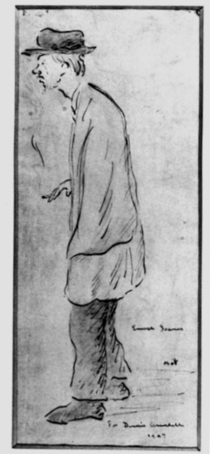
Image: Soames is not an inspiring figure: “How can one draw a man who doesn't exist?”, but Beerbohm did, here. (Source)
When they meet a far more intriguing figure, predatory and sinister, the story takes a fantastical and philosophical slant. There are stories within stories. Very clever.
“It iz a sumwot labud sattire, but not without vallu az showing hou seriusli the yung men ov th aiteen-ninetiz took themselvz. ”
Author’s circle
I had a vague impression of Max Beerbohm as an Edwardian caricaturist - in illustration and articles - as well as the author of Zuleika Dobson. He was also a prominent figure in literary and artistic circles of the time, and almost all the many names he drops (including himself, as narrator) are real writers and artists he knew.
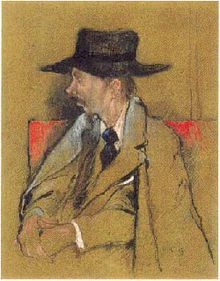
Image: “He had a thin, vague beard, or, rather, he had a chin on which a large number of hairs weakly curled and clustered to cover its retreat.” William Rothenstein, mentioned in the story, also drew Soames. (Source)
Quotes
• “Nor is there a counterpoise in the thought that if he had had some measure of success he might have passed, like those others, out of my mind, to return only at the historian's beck.”
• “Not my compassion, however, impels me to write of him.”
• “There, on that October evening - there, in that exuberant vista of gilding and crimson velvet set amidst all those opposing mirrors and upholding caryatids, with fumes of tobacco ever rising to the painted and pagan ceiling, and with the hum of presumably cynical conversation broken into so sharply now and again by the clatter of dominoes shuffled on marble tables, I drew a deep breath and…”
• “Soames's laugh was a short, single, and mirthless sound from the throat, unaccompanied by any movement of the face or brightening of the eyes.”
• “He had felt the breath of Fame against his cheek—so late, for such a little while; and at its withdrawal he gave in, gave up, gave out.”
• Catholic diabolists don’t worship the devil, “It's more a matter of trusting and encouraging”.
See also
• Any of Jorge Luis Borges’ Collected Fictions. See my review, HERE.
• The 1890 novella, The Picture of Dorian Gray, by his friend Oscar Wilde - whose name is curiously absent from Beerbohm’s story.
• Beerbohm asks, “Was there, I wondered, any substance at all? It did now occur to me: suppose Enoch Soames was a fool! Up cropped a rival hypothesis: suppose I was!” I recently felt similarly about Flann O’Brien’s At Swim-Two-Birds, which I reviewed HERE.
• HG Wells’ The Time Machine is mentioned, and if I had one, I’d go to the British Library Reading Room on 3 June 1997.
• Harland’s The Yellow Book: An Illustrated Quarterly is also mentioned.
Short story club
I read this in Black Water: The Anthology of Fantastic Literature, by Alberto Manguel, from which I’m reading one story a week with The Short Story Club, starting 4 September 2023.
You can read this story here.
You can join the group here.
Early metafiction
This relatively long short story opens with the narrator scouring a book of 1890s literature for mention of his old acquaintance, Enoch Soames. Almost from the start, the narrator is torn about the ethics of telling Soames’ story, but nevertheless, feel compelled to do so.
He recalls salon chatter with mutual friends, when they were in their twenties. He admired those, like Soames, who had been published. Is the act of creation its own reward, or does recognition matter? What would one give to achieve it?
Image: Soames is not an inspiring figure: “How can one draw a man who doesn't exist?”, but Beerbohm did, here. (Source)
When they meet a far more intriguing figure, predatory and sinister, the story takes a fantastical and philosophical slant. There are stories within stories. Very clever.
“It iz a sumwot labud sattire, but not without vallu az showing hou seriusli the yung men ov th aiteen-ninetiz took themselvz. ”
Author’s circle
I had a vague impression of Max Beerbohm as an Edwardian caricaturist - in illustration and articles - as well as the author of Zuleika Dobson. He was also a prominent figure in literary and artistic circles of the time, and almost all the many names he drops (including himself, as narrator) are real writers and artists he knew.
Image: “He had a thin, vague beard, or, rather, he had a chin on which a large number of hairs weakly curled and clustered to cover its retreat.” William Rothenstein, mentioned in the story, also drew Soames. (Source)
Quotes
• “Nor is there a counterpoise in the thought that if he had had some measure of success he might have passed, like those others, out of my mind, to return only at the historian's beck.”
• “Not my compassion, however, impels me to write of him.”
• “There, on that October evening - there, in that exuberant vista of gilding and crimson velvet set amidst all those opposing mirrors and upholding caryatids, with fumes of tobacco ever rising to the painted and pagan ceiling, and with the hum of presumably cynical conversation broken into so sharply now and again by the clatter of dominoes shuffled on marble tables, I drew a deep breath and…”
• “Soames's laugh was a short, single, and mirthless sound from the throat, unaccompanied by any movement of the face or brightening of the eyes.”
• “He had felt the breath of Fame against his cheek—so late, for such a little while; and at its withdrawal he gave in, gave up, gave out.”
• Catholic diabolists don’t worship the devil, “It's more a matter of trusting and encouraging”.
See also
• Any of Jorge Luis Borges’ Collected Fictions. See my review, HERE.
• The 1890 novella, The Picture of Dorian Gray, by his friend Oscar Wilde - whose name is curiously absent from Beerbohm’s story.
• Beerbohm asks, “Was there, I wondered, any substance at all? It did now occur to me: suppose Enoch Soames was a fool! Up cropped a rival hypothesis: suppose I was!” I recently felt similarly about Flann O’Brien’s At Swim-Two-Birds, which I reviewed HERE.
• HG Wells’ The Time Machine is mentioned, and if I had one, I’d go to the British Library Reading Room on 3 June 1997.
• Harland’s The Yellow Book: An Illustrated Quarterly is also mentioned.
Short story club
I read this in Black Water: The Anthology of Fantastic Literature, by Alberto Manguel, from which I’m reading one story a week with The Short Story Club, starting 4 September 2023.
You can read this story here.
You can join the group here.

August 21, 2020
I first came across this wonderful version of the Faust myth forty years ago and have reread it several times since, but when I looked it up on Wikipedia the other day I discovered some interesting things I hadn't known. Not only did Beerbohm really have a painter friend called Rotherstein, Rotherstein really created a pastel portrait of the hapless Soames, the one that "existed so much more than its subject".

Even more astonishingly, Soames did indeed turn up in the Reading Room of the British Museum in 1997. Some incurable sceptics will no doubt claim this was a stunt organised by an American magician called Teller who is known to admire Beerbohm's story, but nothing will convince these people, not even first-hand eyewitness reports. It is as plain as day that Beerbohm is just telling us the truth: Soames, who had always been convinced that he would sooner or later be recognised as the genius he knew himself to be, inadvisedly sold his soul to the Devil in exchange for five hours in the future and was cruelly disappointed. I cannot help thinking that a few self-published authors here on Goodreads might learn something from this incident.
Together with our Canberra friend Kirsten, another fan, I have put together a LARA version of Enoch Soames which you can find here; Kirsten has supplied the voice, and I have added French glosses to the words. Our little contribution towards Beerbohm's noble project of convincing the world that Soames really did exist.
__________________
[Update, Nov 16 2020]
Soames fans who don't already know about it (I didn't) should look at Enoch Soames: The Critical Heritage. Among other tantalizing details, four copies of Fungoids have (nearly) been located.
Even more astonishingly, Soames did indeed turn up in the Reading Room of the British Museum in 1997. Some incurable sceptics will no doubt claim this was a stunt organised by an American magician called Teller who is known to admire Beerbohm's story, but nothing will convince these people, not even first-hand eyewitness reports. It is as plain as day that Beerbohm is just telling us the truth: Soames, who had always been convinced that he would sooner or later be recognised as the genius he knew himself to be, inadvisedly sold his soul to the Devil in exchange for five hours in the future and was cruelly disappointed. I cannot help thinking that a few self-published authors here on Goodreads might learn something from this incident.
Together with our Canberra friend Kirsten, another fan, I have put together a LARA version of Enoch Soames which you can find here; Kirsten has supplied the voice, and I have added French glosses to the words. Our little contribution towards Beerbohm's noble project of convincing the world that Soames really did exist.
__________________
[Update, Nov 16 2020]
Soames fans who don't already know about it (I didn't) should look at Enoch Soames: The Critical Heritage. Among other tantalizing details, four copies of Fungoids have (nearly) been located.

September 6, 2020
“Όταν ένα βιβλίο για τη λογοτεχνία της δεκαετίας του '90 δόθηκε από τον κ. Χόλμπρουκ Τζάκσον στον κόσμο. Κοίταξα ανυπόμονα στο ευρετήριο του Σόουμς Ήνοχ Ήταν όπως φοβόμουν: δεν ήταν εκεί. Αλλά όλοι οι άλλοι ήταν. Πολλοί συγγραφείς τους οποίους είχα ξεχάσει, ή θυμήθηκα αλλά λιγάκι, έζησα ξανά για μένα, αυτοί και το έργο τους, στις σελίδες του κ. Holbrook Jackson. Το βιβλίο ήταν τόσο διεξοδικό όσο γράφτηκε λαμπρά. Και έτσι η παράλειψη που βρήκα ήταν όλα τα θανατηφόρα ρεκόρ της αποτυχίας του φτωχού Soames να εντυπωσιαστεί στη δεκαετία του. "
Η βιογραφία στην λογοτεχνική έκφανση της αναφορικά με τον Ήνοχ Σόουμς γραμμένη βιωματικά ίσως απο τον Μαξ Μπήρμπομ( 1872-1956) απέχει αιώνες χρονολογικά απο την το «Βιβλίο του Ενώχ», είναι ένα από τα πιο αξιοσημείωτα υπάρχοντα αποκρυφιστικά έργα της Βίβλου. Εκτιμάται ότι έχει γραφτεί γύρω στο 300 π.Χ., αυτό το αρχαίο εβραϊκό θρησκευτικό έργο αποδίδεται από την παράδοση στον Ενώχ, τον παππού του Νώε.
Πρωταγωνιστής εσαεί, απο καταβολής κόσμου και κατοπινά ο Διάβολος και τα υπαρξιακά του παιχνίδια με τα ανίκητα όπλα του που αψηφούν ή προσδιορίζουν τον χρόνο. Που χαρίζουν αιωνιότητα σε οτιδήποτε έχει να ανταλλάξει ποινές ή ψυχές μαζί του. Καθορίζει το υπερφυσικό και ο καθολικός διαβολισμός είναι ανίκητος στο Γκραν πρι της φόρμουλας « φαύλος κύκλος».
Το παρόν το παρελθόν και το μέλλον είναι τώρα, δυο βήματα μπρος ή δυο βήματα πίσω και ο χωροχρόνος τόσο αναξιόπιστα ευρήματα ανθρώπινης εξέλιξης που αυτοπυρπολείται κάθε φορά που το καλό πήρε το προνόμιο του θριάμβου για να το χάσει αμέσως μετά αφού ο κόσμος πρέπει να καταστραφεί.
Ο Max Beerbohm είναι ένας αρκετά δημοφιλής ποιητής, ωστόσο ο συνάδελφός του, Enoch Soames, δεν είναι δημοφιλής στο ελάχιστο. Ενώ ο Ήνοχ αισθάνεται ότι είναι λαμπρός και τα ποιήματά του είναι αριστουργήματα, μέχρι στιγμής όλα τα βιβλία του έχουν απαξιωθεί τρομερά. Ο Ήνοχ είναι πεπεισμένος ότι η ιδιοφυΐα του είναι απλά παρεξηγημένη στον πραγματικό χρόνο που ζει και ότι στο μέλλον θα μεγαλουργήσει η φήμη του.
Η υστεροφημία ήταν η αρρωστημένη του εμμονή. Καθώς έχει αυτήν τη συνομιλία με τον Max, ο Enoch λέει ότι θα πουλούσε την ψυχή του στον διάβολο για να περάσει εκατό χρόνια μπροστά στο μέλλον της αδιαμφισβήτητα λαμπρής υστεροφημίας του.
Και φυσικά ο Διάβολος μπαίνει στην συμφωνία του λογοτεχνικού χρονοντούλαπου.
Ραντεβού 100 χρόνια μετά στην εθνική βρετανική βιβλιοθήκη.
Ωστόσο, αυτό είναι εξαιρετικά παραπλανητικό. Οι πρώτες 15 σελίδες αφορούν τον Max ως συγγραφέα, μιλώντας με άλλους ποιητές και ο Enoch για ποιήματα, στη συνέχεια ο Μαx κατέρριψε μερικά ποιήματα του Ήνοχ για να προσπαθήσει να δει τι είναι τόσο υπέροχο γι 'αυτά… ώστε να μείνουν στην παγκόσμια κληρονομιά της τέχνης. Δεν βρήκε κάτι,εκτός απο ελεγειακό διαβολικό αισθητισμό στο λογοτεχνικό χρηματιστήριο όπου οι ήσσονος σημασίας καλλιτέχνες με πάθος πολεμούν πίσω απο ευφάνταστα σκηνικά για να κερδίσουν την απονομή καταξίωσης και την κατάργηση της βίας απο τους ανθρώπους των γραμμάτων στην λογοτεχνική ιστορία.
Τελικά την λύση σε αυτό το σατιρικό γοτθικό παραλλήρημα θα την δώσει η παρουσία και η δύναμη του διαβόλου, αργά, ακατανόητα και βασανιστικά σαν την κόλαση.
Αυτή η αργή, και περιττή αφήγηση ιστοριών μπορεί να είναι ένας παράγοντας της χρονικής περιόδου στην οποία γράφτηκε - χρονολογικά, πάνω απο εκατό χρόνια.
•Η πεζογραφία του Beerbohm, τα ιδιωματικά του, η διάλεκτός του, το αφηγηματικό του στυλ -
"είναι ο τίτλος μιας διηγήσεως του Βρετανού συγγραφέα Max Beerbohm. Ο Enoch Soames είναι επίσης το όνομα του κύριου χαρακτήρα.
Το κομμάτι δημοσιεύθηκε αρχικά στην έκδοση Μαΐου 1916 του περιοδικού The Century Magazine και αργότερα συμπεριλήφθηκε στην ανθολογία του Beerbohm, Seven Men (1919). Είναι μια κωμική τραγωδία, που περιλαμβάνει στοιχεία τόσο της φαντασίας όσο και της επιστημονικής φαντασίας. γνωστή για την έξυπνη και χιουμοριστική χρήση των εννοιών του ταξιδιού στο χρόνο και των συμφωνιών με τον Διάβολο.
Ο συγγραφέας χρησιμοποιεί έναν πολύπλοκο συνδυασμό γεγονότων και μυθοπλασίας για να δημιουργήσει μια αίσθηση του ρεαλισμού. Αν και ο κ. Soames είναι φανταστικός χαρακτήρας, ο Beerbohm συμπεριλαμβάνεται στην ιστορία, την οποία αφηγείται επίσης. και το γράφει ως αναμνήσεις μιας σειράς πραγματικών γεγονότων που παρακολούθησε και συμμετείχε•
Καλή ανάγνωση.
Πολλούς ασπασμούς.
Η βιογραφία στην λογοτεχνική έκφανση της αναφορικά με τον Ήνοχ Σόουμς γραμμένη βιωματικά ίσως απο τον Μαξ Μπήρμπομ( 1872-1956) απέχει αιώνες χρονολογικά απο την το «Βιβλίο του Ενώχ», είναι ένα από τα πιο αξιοσημείωτα υπάρχοντα αποκρυφιστικά έργα της Βίβλου. Εκτιμάται ότι έχει γραφτεί γύρω στο 300 π.Χ., αυτό το αρχαίο εβραϊκό θρησκευτικό έργο αποδίδεται από την παράδοση στον Ενώχ, τον παππού του Νώε.
Πρωταγωνιστής εσαεί, απο καταβολής κόσμου και κατοπινά ο Διάβολος και τα υπαρξιακά του παιχνίδια με τα ανίκητα όπλα του που αψηφούν ή προσδιορίζουν τον χρόνο. Που χαρίζουν αιωνιότητα σε οτιδήποτε έχει να ανταλλάξει ποινές ή ψυχές μαζί του. Καθορίζει το υπερφυσικό και ο καθολικός διαβολισμός είναι ανίκητος στο Γκραν πρι της φόρμουλας « φαύλος κύκλος».
Το παρόν το παρελθόν και το μέλλον είναι τώρα, δυο βήματα μπρος ή δυο βήματα πίσω και ο χωροχρόνος τόσο αναξιόπιστα ευρήματα ανθρώπινης εξέλιξης που αυτοπυρπολείται κάθε φορά που το καλό πήρε το προνόμιο του θριάμβου για να το χάσει αμέσως μετά αφού ο κόσμος πρέπει να καταστραφεί.
Ο Max Beerbohm είναι ένας αρκετά δημοφιλής ποιητής, ωστόσο ο συνάδελφός του, Enoch Soames, δεν είναι δημοφιλής στο ελάχιστο. Ενώ ο Ήνοχ αισθάνεται ότι είναι λαμπρός και τα ποιήματά του είναι αριστουργήματα, μέχρι στιγμής όλα τα βιβλία του έχουν απαξιωθεί τρομερά. Ο Ήνοχ είναι πεπεισμένος ότι η ιδιοφυΐα του είναι απλά παρεξηγημένη στον πραγματικό χρόνο που ζει και ότι στο μέλλον θα μεγαλουργήσει η φήμη του.
Η υστεροφημία ήταν η αρρωστημένη του εμμονή. Καθώς έχει αυτήν τη συνομιλία με τον Max, ο Enoch λέει ότι θα πουλούσε την ψυχή του στον διάβολο για να περάσει εκατό χρόνια μπροστά στο μέλλον της αδιαμφισβήτητα λαμπρής υστεροφημίας του.
Και φυσικά ο Διάβολος μπαίνει στην συμφωνία του λογοτεχνικού χρονοντούλαπου.
Ραντεβού 100 χρόνια μετά στην εθνική βρετανική βιβλιοθήκη.
Ωστόσο, αυτό είναι εξαιρετικά παραπλανητικό. Οι πρώτες 15 σελίδες αφορούν τον Max ως συγγραφέα, μιλώντας με άλλους ποιητές και ο Enoch για ποιήματα, στη συνέχεια ο Μαx κατέρριψε μερικά ποιήματα του Ήνοχ για να προσπαθήσει να δει τι είναι τόσο υπέροχο γι 'αυτά… ώστε να μείνουν στην παγκόσμια κληρονομιά της τέχνης. Δεν βρήκε κάτι,εκτός απο ελεγειακό διαβολικό αισθητισμό στο λογοτεχνικό χρηματιστήριο όπου οι ήσσονος σημασίας καλλιτέχνες με πάθος πολεμούν πίσω απο ευφάνταστα σκηνικά για να κερδίσουν την απονομή καταξίωσης και την κατάργηση της βίας απο τους ανθρώπους των γραμμάτων στην λογοτεχνική ιστορία.
Τελικά την λύση σε αυτό το σατιρικό γοτθικό παραλλήρημα θα την δώσει η παρουσία και η δύναμη του διαβόλου, αργά, ακατανόητα και βασανιστικά σαν την κόλαση.
Αυτή η αργή, και περιττή αφήγηση ιστοριών μπορεί να είναι ένας παράγοντας της χρονικής περιόδου στην οποία γράφτηκε - χρονολογικά, πάνω απο εκατό χρόνια.
•Η πεζογραφία του Beerbohm, τα ιδιωματικά του, η διάλεκτός του, το αφηγηματικό του στυλ -
"είναι ο τίτλος μιας διηγήσεως του Βρετανού συγγραφέα Max Beerbohm. Ο Enoch Soames είναι επίσης το όνομα του κύριου χαρακτήρα.
Το κομμάτι δημοσιεύθηκε αρχικά στην έκδοση Μαΐου 1916 του περιοδικού The Century Magazine και αργότερα συμπεριλήφθηκε στην ανθολογία του Beerbohm, Seven Men (1919). Είναι μια κωμική τραγωδία, που περιλαμβάνει στοιχεία τόσο της φαντασίας όσο και της επιστημονικής φαντασίας. γνωστή για την έξυπνη και χιουμοριστική χρήση των εννοιών του ταξιδιού στο χρόνο και των συμφωνιών με τον Διάβολο.
Ο συγγραφέας χρησιμοποιεί έναν πολύπλοκο συνδυασμό γεγονότων και μυθοπλασίας για να δημιουργήσει μια αίσθηση του ρεαλισμού. Αν και ο κ. Soames είναι φανταστικός χαρακτήρας, ο Beerbohm συμπεριλαμβάνεται στην ιστορία, την οποία αφηγείται επίσης. και το γράφει ως αναμνήσεις μιας σειράς πραγματικών γεγονότων που παρακολούθησε και συμμετείχε•
Καλή ανάγνωση.
Πολλούς ασπασμούς.

November 1, 2023
Author Max Beerholm narrates this story as a short memoir of meeting Edoch Soames, a fictional poet, when Beerholm was a young man. Enoch Soames was an unsuccessful writer, full of self-importance, who thought he was a great poet who hadn't been discovered. On June 3, 1897, Soames was extremely depressed, and wished that he could look one hundred years into the future to see how posterity judged him and his writing.
The Devil is sitting nearby when the dejected Soames makes his wish. He offers to have Soames time-travel to the British Museum's Reading Room to the afternoon of June 3, 1997 to research his legacy. When Soames returns back to their present day in 1897, he will have to give the Devil his part of the bargain.
I loved this clever story which was told with satirical humor and lots of details, including examples of the fictional Soames' forgettable poetry. There are even several "portraits" sketched of Soames that can be seen online and in some editions of the story. 4.5 stars, rounded up. I'm reading this with the Short Story Club from the anthology, "Black Water."
After you finish the story:
There are a number of Soames' fans who seem to be making it their mission to assure that the fictional Soames is not forgotten. The magician Teller wrote about an event where they witnessed (and probably organized) someone resembling Soames visiting the British Museum's Reading Room on June 3, 1997. (Atlantic Monthly, November 1997)
Another group writes fan fiction about Soames, his family background, his status as a "Catholic Diabolist," his writing, etc. in "Enoch Soames: The Critical Heritage" online at cypherpress. It's all written tongue in cheek, and is great fun!
https://www.cypherpress.com/content/s...
The Devil is sitting nearby when the dejected Soames makes his wish. He offers to have Soames time-travel to the British Museum's Reading Room to the afternoon of June 3, 1997 to research his legacy. When Soames returns back to their present day in 1897, he will have to give the Devil his part of the bargain.
I loved this clever story which was told with satirical humor and lots of details, including examples of the fictional Soames' forgettable poetry. There are even several "portraits" sketched of Soames that can be seen online and in some editions of the story. 4.5 stars, rounded up. I'm reading this with the Short Story Club from the anthology, "Black Water."
After you finish the story:
There are a number of Soames' fans who seem to be making it their mission to assure that the fictional Soames is not forgotten. The magician Teller wrote about an event where they witnessed (and probably organized) someone resembling Soames visiting the British Museum's Reading Room on June 3, 1997. (Atlantic Monthly, November 1997)
Another group writes fan fiction about Soames, his family background, his status as a "Catholic Diabolist," his writing, etc. in "Enoch Soames: The Critical Heritage" online at cypherpress. It's all written tongue in cheek, and is great fun!
https://www.cypherpress.com/content/s...

March 1, 2024
The story of Faust will never lose its relevance for the artist's self-importance, ego and desire for recognition make his soul an easy catch for devil. Only this time the story is set in London at the end of the 19th century, has a humorous touch and has an element of time travel.
'I asked him if he often read here.
"Yes; things of this kind I read here," he answered, indicating the title of his book−−"The Poems of Shelley."
"Anything that you really"−−and I was going to say "admire?" But I cautiously left my sentence unfinished, and was glad that I had done so, for he said with unwonted emphasis, "Anything second−rate.'
(...)
'I asked rather nervously if he didn't think Keats had more or less held his own against the drawbacks of time and place. He admitted that there were "passages in Keats," but did not specify them. Of "the older men," as he called them, he seemed to like only Milton. "Milton," he said, "wasn't sentimental." Also, "Milton had a dark insight."
And again, "I can always read Milton in the reading−room."
"The reading−room?"
"Of the British Museum. I go there every day."
"You do? I've only been there once. I'm afraid I found it rather a depressing place. It−−it seemed to sap one's vitality."
"It does. That's why I go there. The lower one's vitality, the more sensitive one is to great art. I live near the museum. I have rooms in Dyott Street."
"And you go round to the reading−room to read Milton?"
"Usually Milton." He looked at me. "It was Milton," he certificatively added, "who converted me to diabolism."
"Diabolism? Oh, yes? Really?" said I, with that vague discomfort and that intense desire to be polite which one feels when a man speaks of his own religion. "You−−worship the devil?"
Soames shook his head.
"It's not exactly worship," he qualified, sipping his absinthe. "It's more a matter of trusting and encouraging."
"I see, yes. I had rather gathered from the preface to 'Negations' that you were a−−a Catholic."
"Je l'etais a cette epoque. In fact, I still am. I am a Catholic diabolist.'
(...)
'I asked him what he thought of Baudelaire. He uttered the snort that was his laugh, and, "Baudelaire," he said, "was a bourgeois malgre lui." France had had only one poet−−Villon; "and two thirds of Villon were sheer journalism." Verlaine was "an epicier malgre lui." Altogether, rather to my surprise, he rated French literature lower than English. There were "passages" in Villiers de l'Isle−Adam. But, "I," he summed up, "owe nothing to France." He nodded at me. "You'll see," he predicted.
I did not, when the time came, quite see that. I thought the author of "Fungoids" did, unconsciously of course, owe something to the young Parisian decadents or to the young English ones who owed something to THEM.'
'I asked him if he often read here.
"Yes; things of this kind I read here," he answered, indicating the title of his book−−"The Poems of Shelley."
"Anything that you really"−−and I was going to say "admire?" But I cautiously left my sentence unfinished, and was glad that I had done so, for he said with unwonted emphasis, "Anything second−rate.'
(...)
'I asked rather nervously if he didn't think Keats had more or less held his own against the drawbacks of time and place. He admitted that there were "passages in Keats," but did not specify them. Of "the older men," as he called them, he seemed to like only Milton. "Milton," he said, "wasn't sentimental." Also, "Milton had a dark insight."
And again, "I can always read Milton in the reading−room."
"The reading−room?"
"Of the British Museum. I go there every day."
"You do? I've only been there once. I'm afraid I found it rather a depressing place. It−−it seemed to sap one's vitality."
"It does. That's why I go there. The lower one's vitality, the more sensitive one is to great art. I live near the museum. I have rooms in Dyott Street."
"And you go round to the reading−room to read Milton?"
"Usually Milton." He looked at me. "It was Milton," he certificatively added, "who converted me to diabolism."
"Diabolism? Oh, yes? Really?" said I, with that vague discomfort and that intense desire to be polite which one feels when a man speaks of his own religion. "You−−worship the devil?"
Soames shook his head.
"It's not exactly worship," he qualified, sipping his absinthe. "It's more a matter of trusting and encouraging."
"I see, yes. I had rather gathered from the preface to 'Negations' that you were a−−a Catholic."
"Je l'etais a cette epoque. In fact, I still am. I am a Catholic diabolist.'
(...)
'I asked him what he thought of Baudelaire. He uttered the snort that was his laugh, and, "Baudelaire," he said, "was a bourgeois malgre lui." France had had only one poet−−Villon; "and two thirds of Villon were sheer journalism." Verlaine was "an epicier malgre lui." Altogether, rather to my surprise, he rated French literature lower than English. There were "passages" in Villiers de l'Isle−Adam. But, "I," he summed up, "owe nothing to France." He nodded at me. "You'll see," he predicted.
I did not, when the time came, quite see that. I thought the author of "Fungoids" did, unconsciously of course, owe something to the young Parisian decadents or to the young English ones who owed something to THEM.'

August 10, 2018
Μια από τις πιο γνωστές ικανότητες του Διαβόλου είναι να εκμεταλλεύεται την ανθρώπινη ματαιοδοξία και κενοδοξία προς όφελός του. Πολλές φορές μάλιστα έχει κατορθώσει με απάτη και δόλο να υποδουλώσει στα πάθη και την αμαρτία τον άνθρωπο...
Έτσι λοιπόν και ο Ήνοχ Σόουμς πέφτει θύμα του διαβόλου και κατ' επέκταση των προσωπικών του φιλοδοξιών.... Ο ήρωας του Μπήρμπομ είναι ένας συγγραφέα ο οποίος επιζητά την αναγνώριση και εν τέλει υποκύπτει σε μια δελεαστική πρόταση του Μεφιστοφελή με αντάλλαγμα τι άλλο; Την ψυχή του...
Αν και η υπόθεση φαίνεται απλή και κάπως τετριμμένη το τέλος είναι αρκετά ευρηματικό, ενώ κατά κάποιο τρόπο δικαιολογείται και το βιβλικό όνομα του κου Σόουμς!!
Ο Μαξ Μπήρμπομ γράφει μια περίεργη ιστορία γεμάτη σαρκασμό για τον καλλιτεχνικό χώρο, ψευδεπίγραφα, συμβολισμούς, στοιχεία γοτθικού τρόμου ενώ παράλληλα το διήγημα του λειτουργεί σαν πεδίο δράσης πραγματικών και φανταστικών χαρακτήρων!
Το επίμετρο του Αριστοτέλη Σαΐνη είναι άκρως διασκεδαστικό και αρκετά "μπορχεσιανό".
ΥΓ: Μην διαβάσετε το οπισθόφυλλο του βιβλίου. Είναι γεμάτο σπόιλερ και χαλάει όλη την μαγεία του διηγήματος. Εκεί στην Άγρα πρέπει να προσέχουν λίγο πιο πολύ.
ΥΓ2: Εξαιρετική η μετάφραση του Αχιλλέα Κυριακίδη
Έτσι λοιπόν και ο Ήνοχ Σόουμς πέφτει θύμα του διαβόλου και κατ' επέκταση των προσωπικών του φιλοδοξιών.... Ο ήρωας του Μπήρμπομ είναι ένας συγγραφέα ο οποίος επιζητά την αναγνώριση και εν τέλει υποκύπτει σε μια δελεαστική πρόταση του Μεφιστοφελή με αντάλλαγμα τι άλλο; Την ψυχή του...
Αν και η υπόθεση φαίνεται απλή και κάπως τετριμμένη το τέλος είναι αρκετά ευρηματικό, ενώ κατά κάποιο τρόπο δικαιολογείται και το βιβλικό όνομα του κου Σόουμς!!
Ο Μαξ Μπήρμπομ γράφει μια περίεργη ιστορία γεμάτη σαρκασμό για τον καλλιτεχνικό χώρο, ψευδεπίγραφα, συμβολισμούς, στοιχεία γοτθικού τρόμου ενώ παράλληλα το διήγημα του λειτουργεί σαν πεδίο δράσης πραγματικών και φανταστικών χαρακτήρων!
Το επίμετρο του Αριστοτέλη Σαΐνη είναι άκρως διασκεδαστικό και αρκετά "μπορχεσιανό".
ΥΓ: Μην διαβάσετε το οπισθόφυλλο του βιβλίου. Είναι γεμάτο σπόιλερ και χαλάει όλη την μαγεία του διηγήματος. Εκεί στην Άγρα πρέπει να προσέχουν λίγο πιο πολύ.
ΥΓ2: Εξαιρετική η μετάφραση του Αχιλλέα Κυριακίδη

November 4, 2023
A contrarian literary figure in 1890s London makes a devilish pact to see if he has a legacy a hundred years in future. The gentleman discovers no trace save for this story. Very Borges before the fact. The aporia of his passage is delivered with wit and atmosphere. Everything is haunted, Chesterton and Huysmans and that strange sophistication which absorbs Symbolism but won’t relinquish the stock exchange. I’m personally drawn to devil as farce, a sinister orbit of vanity and cigar smoke.
I hadn’t read Beerbohm before but was genuinely excited by this endeavor. I will explore.
I hadn’t read Beerbohm before but was genuinely excited by this endeavor. I will explore.

June 18, 2018
Ενδιαφέρουσα και καλογραμμένη ιστορία, η οποία μεταφέρει τον αναγνώστη στον ωραίο και ιδιαίτερο κόσμο των νεαρών καλλιτεχνών (κυρίως συγγραφέων) του Λονδίνου της δεκαετίας του 1890. Η όλη αναπαράσταση της εποχής είναι πολύ ωραία, οι αναφορές σε λογοτεχνικά ρεύματα και υπαρκτά πρόσωπα προσφέρουν έντονη αληθοφάνεια, ενώ μπορεί να παρατηρήσει κανείς στοιχεία σάτιρας για τον κόσμο των συγγραφέων, για την έντονη ανάγκη τους για αναγνώριση και τον διαρκή αγώνα ελασσόνων συγγραφέων να ξεφύγουν από τη λογοτεχνική αφάνεια. Φυσικά τα στοιχεία υπερφυσικού που συναντάει κανείς στην ιστορία κάνουν ακόμα πιο ενδιαφέρουσα την όλη αναγνωστική εμπειρία και δίνουν την ευκαιρία να περάσει ο συγγραφέας κάποια μηνύματα. Όσον αφορά τη γραφή, είναι πολύ καλή, με μια κάποια κυνική διάθεση. Προτείνεται!

November 5, 2023
Vanity of vanities; all is vanity.
A wonderful yarn, well spun.
I did not know of Max Beerbohm, satirist, humorist, caricaturist. A man of many ists, apparently, and two at least are on display here. Published in 1916, this story looks back on an experience in 1897 of meeting the diabolist and unsuccessful poet Enoch Soames, who made a deal with the devil. Worth reading for the devil descriptions alone:
“… this keenly vital man, at sight of whom I more than ever wondered whether he were a diamond merchant, a conjurer, or the head of a private detective agency.”
“He's a vulgarian, he's a swell mobs−man, he's the sort of man who hangs about the corridors of trains going to the Riviera and steals ladies' jewel−cases. Imagine eternal torment presided over by HIM!"
A little social commentary, a little time travel, and a warning that maybe we shouldn’t be so very sure of ourselves!
A wonderful yarn, well spun.
I did not know of Max Beerbohm, satirist, humorist, caricaturist. A man of many ists, apparently, and two at least are on display here. Published in 1916, this story looks back on an experience in 1897 of meeting the diabolist and unsuccessful poet Enoch Soames, who made a deal with the devil. Worth reading for the devil descriptions alone:
“… this keenly vital man, at sight of whom I more than ever wondered whether he were a diamond merchant, a conjurer, or the head of a private detective agency.”
“He's a vulgarian, he's a swell mobs−man, he's the sort of man who hangs about the corridors of trains going to the Riviera and steals ladies' jewel−cases. Imagine eternal torment presided over by HIM!"
A little social commentary, a little time travel, and a warning that maybe we shouldn’t be so very sure of ourselves!

October 19, 2019
Pocas cosas tan gratificantes como terminar de leer un cuento y darse cuenta inmediatamente que uno acaba de leer uno de los mejores cuentos que se hayan podido escribir.
Enoch Soames fue publicado por primera vez en 1916 y aparece en la “Antología de la literatura fantástica” de Borges, Bioy Casares y Ocampo traducido por el propio Borges.
Es un cuento muy “Borgeano” que trata básicamente sobre un escritor de fines del siglo XIX que no consigue tener éxito con sus libros y acaba pactando con el diablo a cambio de viajar exactamente 100 años al futuro y pasar una tarde en la sala de lectura del museo británico para saber si la posteridad fue generosa con su obra y finalmente tuvo una buena acogida por el público y la crítica.
Un cuento maravilloso e imperdible de 1916.
Enoch Soames fue publicado por primera vez en 1916 y aparece en la “Antología de la literatura fantástica” de Borges, Bioy Casares y Ocampo traducido por el propio Borges.
Es un cuento muy “Borgeano” que trata básicamente sobre un escritor de fines del siglo XIX que no consigue tener éxito con sus libros y acaba pactando con el diablo a cambio de viajar exactamente 100 años al futuro y pasar una tarde en la sala de lectura del museo británico para saber si la posteridad fue generosa con su obra y finalmente tuvo una buena acogida por el público y la crítica.
Un cuento maravilloso e imperdible de 1916.

November 23, 2013
Very enjoyable slice of life circa 1890's among young artists. The reasons for writing are many but arguably always include a hoped for bit of immortality. This theme is rendered in a wonderfully British way, full of self deprecation but not at the expense of honesty. Oh and the Devil makes an appearance.

December 31, 2023
Enoch Soames: A Memory of the Eighteen-Nineties
Max Beerbohm
Read with the Short Story Club https://www.goodreads.com/group/show/...
Week starting 6th Nov. 2023. - Story 9
from Black Water 1 (The Anthology of Fantastic Literature)
Read in English and Spanish
Max Beerbohm
Read with the Short Story Club https://www.goodreads.com/group/show/...
Week starting 6th Nov. 2023. - Story 9
from Black Water 1 (The Anthology of Fantastic Literature)
Read in English and Spanish

June 23, 2020
Included as a short story in The Time Traveller's Almanac: The Ultimate Treasury of Time Travel Fiction - Brought to You from the Future. Take it from me, don't bother with this. There was so much waffle and for a short story it took an age to get to the point of the story. Plus, self-insertion of the author can sometimes work well but here it really doesn't. Essentially, it's a variation on Doctor Faustus and honestly other versions are so much better.

November 25, 2017
Failure, if it be a plain, unvarnished, complete failure, and even though it be a squalid failure, has always a certain dignity.

September 8, 2019
Un escritor novato conoce a Enoch Soames y entabla una serie de encuentros con él en un bar. De Soames sabemos que es un escritor - aunque él no se dé por enterado - mediocre, cuyos escritos han logrado el vacío de la crítica. El narrador trata de quitar hierro a esa falta de éxito, aduciendo que muchos escritores solo encuentran reconocimiento después de muertos, hasta que Soames desea saber de forma tan desesperada si eso será cierto en el futuro que acaba haciendo un insólito pacto con el diablo.
El libro nos transporta a la incómoda sensación de intentar hacer sentir bien a un escritor que es indudablemente un fracasado, por quién únicamente quien nos narra parece sentir lástima de su fortuna. El tono es muy sencillo y directo en todo momento. La trama se cierra de una forma humorística, pero no tan original como pudiera parecerlo, ya que a medida que se va leyendo se torna muy previsible.
El libro nos transporta a la incómoda sensación de intentar hacer sentir bien a un escritor que es indudablemente un fracasado, por quién únicamente quien nos narra parece sentir lástima de su fortuna. El tono es muy sencillo y directo en todo momento. La trama se cierra de una forma humorística, pero no tan original como pudiera parecerlo, ya que a medida que se va leyendo se torna muy previsible.

March 13, 2022
Es un relato largo que vuelvo a releer cada vez que necesito leer algo GENIAL así con mayúsculas. Está incluído en la Antología de la literatura fantástica de Borges, Bioy y Ocampo y es realmente una obra fantástica en todos los sentidos.
February 4, 2020
Great read for a sleepless night.

August 26, 2021
GENIAL🤩
•
No había leído nada aún de este autor británico. Me he estrenado con este cuento (que me he comprado en vacaciones), y me ha gustado bastante. Muy entretenido.
•
💬Enoch Soames es un escritor que busca, que ansía, la fama, ser reconocido. En la actualidad y en la posteridad, tras su muerte. Tiene escrito tres libros pero casi sigue pasando desapercibido, una y otra vez. Pero un día de 1897 se topa con el diablo que le ofrece un trato: Estar durante unas horas en la Biblioteca del Museo Británico, pero dentro de cien años, es decir, 1997, para así ver él mismo con sus propios ojos su futuro. ¿Aceptará? ¿Le gustará lo que ve? ¿Habrá conseguido triunfar?
•
CURIOSIDADES: El narrador de esta historia es el propio escritor, Max Beerbohm. ➰Me ha resultado muy curioso dos cosas que pasan durante el “futuro” (1997) en el libro y que coinciden con nuestra actualidad: 1.- Que el autor acierte en que estará prohibido fumar en el interior de la Biblioteca. 2.- Y que también acierte en que se escribirá distinto (al modo que usan muchos en RR. SS.).
•
¿Qué encontraréis en este libro? La entretenida historia de Enoch Soames. El hombre que quiso saber si sería inmortal.
•
Erratas encontradas: 1 {🤦🏻♀️ ¡psicoanalista ven a mí!}
•
FRASES SUBRAYADAS:
•
«Un muerto no sabe que los vivos visitan su tumba y su lugar de nacimiento, que le ponen placas para recordarlo e inauguran estatuas suyas».
•
«El Tiempo… es una ilusión. Pasado y futuro están siempre tan presentes como el propio presente […]».
•
Lectura para 2 de los #24retosdelectura:
14.- Obra que puedas leer en un día
15.- Donde el/la protagonista va de viaje
•
#LeoYComparto #bookish #DimeUnLibro #bookaholic #booklover #instalibros #bookworm #bookstagram #Acantilado #AcantiladoEditorial
•
#Libros / para #blogloqueleo / #EnochSoames @acantiladoeditorial #MaxBeerbohm / #ColecciónCuadernosDelAcantilado / Traducción: #JavierFernándezDeCastro
•
#HastaElTotoDelCoronavirus
•
No había leído nada aún de este autor británico. Me he estrenado con este cuento (que me he comprado en vacaciones), y me ha gustado bastante. Muy entretenido.
•
💬Enoch Soames es un escritor que busca, que ansía, la fama, ser reconocido. En la actualidad y en la posteridad, tras su muerte. Tiene escrito tres libros pero casi sigue pasando desapercibido, una y otra vez. Pero un día de 1897 se topa con el diablo que le ofrece un trato: Estar durante unas horas en la Biblioteca del Museo Británico, pero dentro de cien años, es decir, 1997, para así ver él mismo con sus propios ojos su futuro. ¿Aceptará? ¿Le gustará lo que ve? ¿Habrá conseguido triunfar?
•
CURIOSIDADES: El narrador de esta historia es el propio escritor, Max Beerbohm. ➰Me ha resultado muy curioso dos cosas que pasan durante el “futuro” (1997) en el libro y que coinciden con nuestra actualidad: 1.- Que el autor acierte en que estará prohibido fumar en el interior de la Biblioteca. 2.- Y que también acierte en que se escribirá distinto (al modo que usan muchos en RR. SS.).
•
¿Qué encontraréis en este libro? La entretenida historia de Enoch Soames. El hombre que quiso saber si sería inmortal.
•
Erratas encontradas: 1 {🤦🏻♀️ ¡psicoanalista ven a mí!}
•
FRASES SUBRAYADAS:
•
«Un muerto no sabe que los vivos visitan su tumba y su lugar de nacimiento, que le ponen placas para recordarlo e inauguran estatuas suyas».
•
«El Tiempo… es una ilusión. Pasado y futuro están siempre tan presentes como el propio presente […]».
•
Lectura para 2 de los #24retosdelectura:
14.- Obra que puedas leer en un día
15.- Donde el/la protagonista va de viaje
•
#LeoYComparto #bookish #DimeUnLibro #bookaholic #booklover #instalibros #bookworm #bookstagram #Acantilado #AcantiladoEditorial
•
#Libros / para #blogloqueleo / #EnochSoames @acantiladoeditorial #MaxBeerbohm / #ColecciónCuadernosDelAcantilado / Traducción: #JavierFernándezDeCastro
•
#HastaElTotoDelCoronavirus

November 22, 2023
He had a sort of weak doggedness which I could not but admire. Neither he nor his work received the slightest encouragement; but he persisted in behaving as a personage: always he kept his dingy little flag flying.
This makes for some painful, awkward reading; those unfortunate beings sentenced to literary circles will recognize the type — or, if cursed with self-awareness, might spot that dingy little being in the mirror.
Failure, if it be a plain, unvarnished, complete failure, and even though it be a squalid failure, has always a certain dignity. . . No man who hasn't lost his vanity can be held to have altogether failed.
Soames, a squalid failure with a certain dignity, made "Max Beerbohm" feel vulgar.
The awkward insights into the nature of competitive literary cliques introduce the characters and setting, but then this story veers off into another direction, as one might anticipate as it is included in Black Water: The Anthology of Fantastic Literature.
3.5 stars, rounded down, because the main plot point is a hackneyed literary device.
As a side note, searching for this story I found A Bibliography of Enoch Soames, a short work which purports to catalogue the literary achievements of Enoch Soames — at long last, recognition!
This makes for some painful, awkward reading; those unfortunate beings sentenced to literary circles will recognize the type — or, if cursed with self-awareness, might spot that dingy little being in the mirror.
Failure, if it be a plain, unvarnished, complete failure, and even though it be a squalid failure, has always a certain dignity. . . No man who hasn't lost his vanity can be held to have altogether failed.
Soames, a squalid failure with a certain dignity, made "Max Beerbohm" feel vulgar.
The awkward insights into the nature of competitive literary cliques introduce the characters and setting, but then this story veers off into another direction, as one might anticipate as it is included in Black Water: The Anthology of Fantastic Literature.
3.5 stars, rounded down, because the main plot point is a hackneyed literary device.
As a side note, searching for this story I found A Bibliography of Enoch Soames, a short work which purports to catalogue the literary achievements of Enoch Soames — at long last, recognition!

March 20, 2024
ENGLISH: Interesting story about a poet who rejects his destiny (to be disregarded and forgotten) and makes a deal with the devil to glance at the future.
ESPAÑOL: Interesante cuento sobre un poeta que rechaza su destino (que es ser olvidado e ignorado) y hace un trato con el diablo para echar una mirada al futuro.
ESPAÑOL: Interesante cuento sobre un poeta que rechaza su destino (que es ser olvidado e ignorado) y hace un trato con el diablo para echar una mirada al futuro.

February 20, 2019
Buen relato alrededor del tema de Fausto, Un escritor de escaso éxito hace un pacto con el maligno para ver si en las bibliotecas del fúturo su obra será recordada. Corto pero muy substancioso.

March 21, 2025
This entire review has been hidden because of spoilers.

August 16, 2019
Buscaré más
September 6, 2020
Oh hubris! you brought down the highly successful yet dissatisfied with his life Faust as well as the poor dim dissatisfied with not being acknowledged as a literary talent Enoch Soames. A well written tale by Beerbohm concerning the dire consequences of making a deal with the devil.

November 8, 2023
Meta fiction from the early 20th century ..Max Beerholm , a cartoonist , satirist , essayist and man about the Belle Epoch is largely forgotten now . He writes a short story looking back at that period about a painfully untalented wannabe poet and thinker, Enoch Soames, who makes a deal with The Devil to time travel a century forward to see if he has been remembered or gained posthumous fame . He hasn't . All that remains is a review written in a phonetic language citing the very story Max Beerholm is sharing with us as the only record available in the British Library Reading Room .
Given we are dealing with The Devil here we can't trust anything about this leap by Soames into the future , not least the review , but we do know that Beerholm , like his avatar , has fallen into the same oblivion that he describes as the fate of his fictional creation . Ouch .
Given we are dealing with The Devil here we can't trust anything about this leap by Soames into the future , not least the review , but we do know that Beerholm , like his avatar , has fallen into the same oblivion that he describes as the fate of his fictional creation . Ouch .
This entire review has been hidden because of spoilers.

February 24, 2013
To anyone who comes across this book I recommend you persist. It actually is quite clever and has a touch of humour to add to its tragedy. Well worth the read.

February 11, 2014
A sad yet self-important writer sells his soul to the Devil in return for a glimpse of his presumed posthumous fame. Nicely done.

Displaying 1 - 30 of 97 reviews