“We need a new theory of management. The assumptions built into business today are not accurate.”-Peter Drucker For sixteen months before his death, Elizabeth Haas Edersheim was given unprecedented access to Peter Drucker, widely regarded as the father of modern management. At Drucker's request, Edersheim, a respected management thinker in her own right, spoke with him about the development of modern business throughout his life-and how it continues to grow and change at an ever-increasing rate. The Definitive Drucker captures his visionary management concepts, applies them to the key business risks and opportunities of the coming decades, and imparts Drucker's views on current business practices, economic changes, and trends-many of which he first predicted decades ago. It also sheds light onto issues such as why so many leaders fail, the fragility of our economic systems, and the new role of the CEO. Drucker's insights are divided into five main themes that the modern organization needs to, as Drucker would say, “create tomorrow” by
Edersheim starts the book on a brooding note, by talking of how managements can no longer steer companies assuredly anymore. She says that something is wrong with all businesses in this century — they are overwhelmed, by the amount of information and change that keeps coming their way and the strain placed on them by the call for continuos innovation. Why? Because successful people wants to hold on to yesterday — to things, ideas and habits that made them successful — they don’t know how to free themselves and embrace the new fluxing reality of the day.
This is where she believes Drucker has a great and immediate role to play. His greatest asset is his “ability to liberate people” according to Edershiem. This ability involves the creation of tools of thinking and acting that allows ones strategic ability to adapt as fast as the environment — primarily by giving the CEOs or the managers the faith to trust their own judgement and thinking once again, instead of just clinging to whatever has chanced to work before.
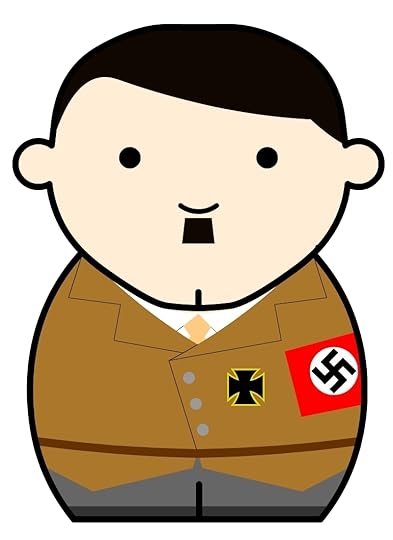
Hitler and The Dangers of Management Failure
While this might seem like something that should concern only the business world, in Edersheim’s hands, Drucker assumes much greater importance — he becomes the modern messiah who has to guide a faltering world. This is because in Drucker’s conception, the vibrancy of business and their direction is a guiding force for the direction of society itself.
The book thus represents Drucker’s driving passion for making organizations and management work well in the present to create a better tomorrow. The importance and need for great management derives directly from its importance as the vibrant driving force of society.
Europe’s economic free-fall in 1930s and the organizational failures were, to Drucker, directly connected to poor business and government management. The lack of a viable economic engine in Europe is what bright Hitler to power.
Without economic opportunity, he wrote back in 1933, “the European masses realized for the first time that existence in the society is governed not by what is rational and sensible, but by the blind irrational and demon forces.” He says that lack of an economic engine isolates people and they become destructive.
The Fragility and interdependence of our economic system and the enormous cost of failure along with the studies on the rise of Fascism and Communism further confirms Drucker’s view of the critical need for vibrant businesses in any economy to be able to function.
The Marauder’s Map of Questions
In interpreting Drucker, Edersheim has focused on today — the crazy times. The focus is on using the past learnings to drive future change, and to initiate them today. But more than the intent of the book, it is the method that should interest keen readers:
Drucker was famous for his Socratic style of questioning - forcing people to step back and think and arrive at answers - it was part of the ‘liberating’ that he was acclaimed for. This freedom to question and to accept new answers were part of that ‘liberation’.
Edersheim has used Drucker’s most insightful questions (that a company/management should ask itself) to structure every chapter in the book along with some insightful case studies as illustrations.The case studies are woven around them as model ways of posing these questions and the answers that were arrived at thus.
As we read, we are also encouraged to think through how and where we could pose these questions ourselves and how we might answer them. It is a very consultative book in that sense
The Structure
The book can best be described as a prep course for a long journey. The minimum essentials are to have a good map handy, to have the best vehicle outfitted and a good driver at the helm. The books is structured around these key requirements.
The first chapter lays out the map, ‘looking outside’ before using the famous Drucker concept of “looking in from outside” — laying out the importance changes that makes this century so crazy and dangerous for business.
The windshield of the car is the imaginatively titled ‘Marauder’s Map’ — what you see this changing environment through - the map is always in flux, changing along with the people, events and ideas; and what we need to understand is that it has to be accepted on those terms.
Chapter 2 is about the guy at the steering wheel - The Customer. The one who should be setting the direction and driving every change, every turn that the organization should take and also changing the map in the process.
Chapter 3-5 are the fundamentals needed on the journey — the four wheels: innovation, collaboration, people and knowledge.
Chapter 6 is about the the Decision mechanisms, Discipline and Values that connect all the fundamental things (well, wheels) together and gives shape to the vehicle that is the organiation - the chassis.
The last chapter is about the CEO — forced to think outside the box always, he stands outside the metaphor too!
The Engines of Democracy
According to Drucker, the world wars were a point of management transition - of transition from a mercantile economy to an industry economy — and resultant tensions between policy and reality.
Drucker believes that we are now in another critical moment of transition — from the Industrial economy to the knowledge-based economy — and we should expect radical changes in society and business and we haven’t by any means seen them all yet.
The Lego World, or Competion-less Capitalism
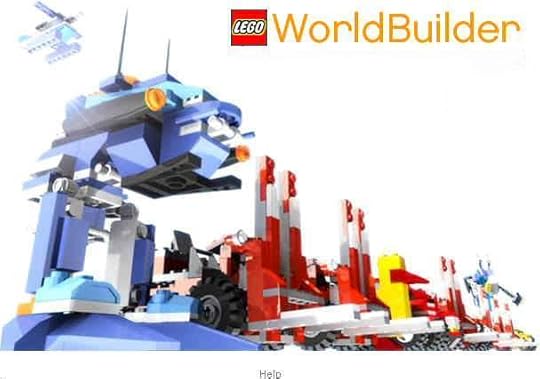
Drucker calls the modern world a Lego World — a world where corporations do not compete anymore, but are interchangeable (and sometimes unique) lego blocks that fit together in unique ways to provide specific value oppositions to the customers. Drucker throws a direct challenge to the “World Is Flat” viewpoint. He says that it is so only from an industrial viewpoint. But it is not flat from the viewpoint of organizations. There is plenty of rom for uniqueness — it is all about the coming together of the right Lego pieces.
In Ducker’s view, the current Economic Engine is facing its great threat in more than a 100 years — can modern corporations learn to be be strategic collaborators rather than than unilateral superstars??
The book repeatedly emphasizes Drucker’s conviction that Businesses are the critical engine of a thriving society — of a society that values individuals and rewards achievement, and Management is the key factor to keeping it running.
Business isn’t just business. It is the economic engine of democracy!
And liberated managers who can ask the right questions are needed to rise to this occasion and meet the grave challenges that are being posed of us.
The book is about learning to ask those few key questions.
Edersheim does an excellent job summarizing Drucker's advice through stories from clients and other people influenced by the master of modern management.
Although I've read a few books by Drucker, I was amazed at how much his ideas have been incorporated by other authors. Including myself. We're only beginning to learn what he understood.
Quintessential Drucker -great insights, lessons, and wisdom for those who manage people in various organizations. His biggest intellectual gap, however, is that he never steps outside the abstractions of economics, business, and other social-political concerns and diagnose and analyze the serious negative and exponential effects on the larger universe and physical world - climate, resources, ecology, population growth and so on.
Otherwise, his heart was seemingly in the right place with a deep concern for building open, positive, and constructive systems or frameworks for good people to work within - there is little doubt he had a profound impact on how modern organizations go about doing their business over the past 80 years.
A very thoughtful homage to the legendary father of modern management. What I love about this book is that rather than just recount this man's numerous accomplishments, the author really attempts to deliver some of value to you the reader/customer. And if anything I learned from this, is that the customer always comes first. I feel it did drag on a bit and it's a little disorganized in the questioning, but still worth a review if you are a fan of Drucker and something to use for reference in your future business exploits.
It is amazing, profoundly affecting in operation system design. The silent revolution is being outlined as in consequences of information/knowledge revolution, which has rendered a new perspective in information structure and restructuring. That being in an enterprise is reflected by info flow and power flow, and eventually boils down to redefining boundaries of the enterprise, and that of the outside, e.g. upstream & downstream players, competitors & alliances, etc.
This was a good book, but I think I'm not enough of a Peter Drucker fan, yet, to really appreciate it. The writing, structure and bottom line of the book are all well done; I just don't think I really got the bottom line Drucker points. As for a business / management / career book, just read the final chapter and you're good. Those ultimate points are great and well made. The book did give me an appreciation for Drucker and does make me want to read some of his original work.
If you are looking for a quick, uncritical overview of the management philosophies of Peter Drucker, this book will provide it. It is easy to read and replete with practical examples. However at times it is not easy to differentiate between the author's views on management and those of Drucker. In addition the constant self-references by the author throughout the book are distracting and detract from the insights gleaned from experience.
Not a bad book, just somewhat breezy and a recant of old material. The author does a good job of plugging her own experience. The dust jacket reviews all seem to be from executives lauded in the book. The book would be much improved by chopping it down into a long magazine article.
A great book about the thought process of the business great Peter Drucker. Excellent insight into the proper way to lead and get the best out of your organization
Powerful read on Druker's thinking- combined wisdom of most of his books. Amazing to notice that most of his thoughts are as relevant now and he was a man with foresight and vision.