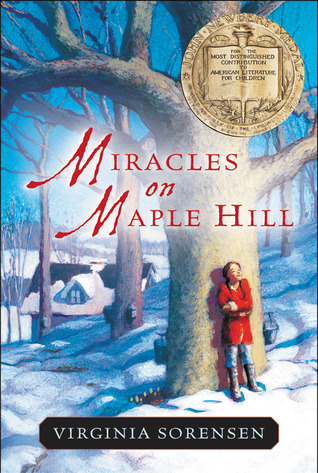
We had an hour to spare in the evening, and this very old Newbery (1956!) has been lying around for some time a la the sister unit, so we read it in one sitting and promptly went to bed. That is not a reflection on the quality of the book, necessarily. We have been tired. But this is the kind of book after which you can rest peacefully in bed, which recently we have been considering a good thing.
So are we going to talk about the plot? Well.
We're not sure what the plot is, exactly. We could start with blabbering something like "this is a story to warm the heart," which is a nice thought on wintry days, but marketing-blurb talk is cheap, so we won't. We could say it's about a family going to a lovely woodsy farm called Maple Hill - which is the premise of the novel, but what's the plot? What's the progression? The overarching conflict?
We are not sure. Things just happen on Maple Hill; the characters don't do things because they're compelled to make choices based on changing circumstances, but because it's the kind of thing they normally do. The novel is a fleeting snapshot of a forgotten lifestyle in seasons, sometimes saccharine-sweet, sometimes still and spare. Amid the vigorous heart-warming, the father's struggle with Post-Traumatic Stress Disorder surprised us. So did the sinuous thread of sexism, although this was 1956.
Still, we found no plot.
Reading this, however, is like reading a chapter from the Laura Ingalls Wilder books, or eating syrup. And it's cloying but harmless, tender yet distant, reflective though quaint. We didn't love it, or even like it that much really, but we might think of it when we content ourselves with cheap store-bought syrup because we never lived that world and never will. And probably at some point - because we do have a heart sometimes, we swear - we will pick up an old family photo album and admire how all the rough bits are fondly yet vigorously smoothed over by glossed surfaces and laughing color.
Or we might reread this book. Same thing.