A wise and richly symphonic first novel, Long for This World is a thoroughly contemporary family drama that hinges on a riveting medical dilemma. Dr. Henry Moss is a dedicated geneticist who stumbles upon a possible cure for a disease that causes rapid aging and early death in children. Although his discovery may hold the key to eternal youth, exploiting it is an ethical minefield. Henry must make a painful choice: he can save the life of a critically ill boy he has grown to love — at the cost of his career — or he can sell his findings for a fortune to match the wealth of his dot-com-rich Seattle neighbors. Henry turns to his family for support, and in their intimately detailed lives unfolds a story of unforgettable characters grappling with their own demons.
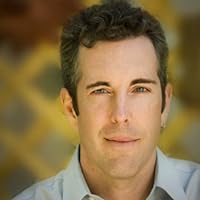
Michael Byers is the author of the story collection The Coast of Good Intentions, a finalist for the PEN/Hemingway Award, and the acclaimed novel Long for This World, winner of the First Novel Award from Virginia Commonwealth University. Both were New York Times Notable Books. A former Stegner Fellow and Whiting Award winner, he teaches at the University of Michigan.
Details, details, details. Michael Byers sweats the small stuff in "Long for This World" (great double-meaning title) and it pays off like crazy. Byers lovingly gives us backstories of his protagonist family -- 17-year-old daughter, 14-year-old (I'm guessing on ages) son, mother and father, takes his time building their personalities with small incidents, and overall does an absolutely fantastic job of telling a multifaceted story through character and excellent writing.
Don't look for a straight-line plot here. Byers isn't taking us along for a specific destination; when what one normally would think of as the "climax" comes, there's more story to go, and we realize life goes on (or doesn't), not following a determined path.
Byers spreads his focus wide on medical ethics, life choices, family relationships, teen romance, the dot.com boom, Seattle, neighbors, life and death. Generally speaking, this story is about a doctor's decision to bypass normal channels -- his teen patient, whom he has come to love as much as his own family, doesn't have time to wait for animal testing to play out -- and treat a boy with progeria (though it's seldom actually called that in the text) with a new treatment and hopefully save his life. The doctor has discovered a seeming miracle in a boy who should be sick with the same illness, but in fact is supremely, eerily healthy. Byers is expert in his handling of this difficult, self-absorbed, beautiful boy who could be the answer to what would virtually be eternal life. This is a big topic, but Byers takes the little way out every time, to the book's benefit.
"Long for This World" is tremendous at looking into the lives of the many young people who populate its world. Byers' ear for teen dialog is superb. His writing overall is excellent; though I'll admit I was more blown away by his prose in the first third.
One note: one prominent review blurb on the cover uses the term "medical thriller"; this is not a thriller in any way, and I don't want people to get the wrong idea. This is an outstanding novel that takes a small but probing look at a family, at the possibility of wealth and how it is handled, and some interesting medical possibilities and dilemmas. It's probably a 4.5 star book, but there was no way I could round this down.
This book, published in 2003, seems to be Byers' only novel; please, sir, may have some more?
Both medical ethics and life of a middle-class medical researcher who lives in Seattle during the dot com boom are given equal treatment in this novel about a hypothetical discovery and disease that resembles the real condition known as Hutchinson-Gilford Progeria Syndrome.
Set in Seattle during the dot.com heyday. I'm a sucker for a Seattle setting, but that was just gravy since I really liked the story of a medical researcher, his tender relationship with the Hickman patient he's studying and issues of medical ethics. The two main teenage characters were vivid and real to me, too. Wish this author still lived in Seattle and would set more books here ...
A beautiful book. How Byers manages to press so much life--life in all its luminous complexity--onto the page always mystifies me---in a good way. In the best way. A generous, immensely gifted writer.
Absorbing. I liked the medical aspect of this book, the weightiness of the medical jargon, the discussion of gene mutation rates. Byers detailed description of Seattle, my beloved home town, created a nostalgic longing in me, a sense of pride and ownership. It was thrilling to recognize the landmarks, to picture the streets and places of business, to see, in my mind's eye, the once familiar landscape. Too, the storyline is engaging. It was a bit slow though not in a detracting way. Byers judiciously fed me, the reader, bits of story, small tastes, consistently encouraging me to turn to the next page. Most of my favorite books are favorites in large part because of my affinity for the characters contained within them. Ironically, I felt no such tenderness for the characters here. Or, perhaps it was more that I could not particularly identify with any of them, did not share any personality traits. At least I did not feel I knew them well enough to see myself reflected. However, this lack of identification did not hinder my engagement in their lives. I was still curious enough to forage on. I was a bit disappointed in the ending. The rather large medical ethics question upon which the entire book is based seemed to be dropped, never having quite been resolved, not enough closure for my satisfaction anyway. Nonetheless, Byers use of language while not flowery, has a certain poetic nature, evoking a sense of serenity, never failing to properly paint a picture in my mind. He has truly mastered the art of "show, don't tell" writing.
I wanted to give this five stars, and I would have if I had stopped 75% of the way through. This book is beautifully written. Like, really really beautifully written. Sometimes when people try to write in purple prose, it's very pretentious, but this is not. Simply stunning use of the English language. And the characters all felt very real to me, especially Ilse. I felt like they could be a real family. I felt like I knew them.
All of this is enough to overcome my one big complaint with the book, which is that in some ways it lacked consequences. I don't feel like going in to spoiler territory with this one, simply because I think this is a book that's best to go into totally blind. It unfolds in a really nice, almost gentle way, but still manages to keep you interested. My problem is this: one of our main characters makes two very, very big decisions to do something really crazy. And he suffers no consequences. I kept waiting for the other shoe to drop, but... no.
As I was nearing the end of this book, I was waiting for that moment of revelation, when you finish a great read and you have to sit there and absorb it for a moment, letting it wash over you. I really loved reading this book, but I didn't get that feeling. I think it's because it didn't really stick the landing. The ending didn't really tie anything up, or suggest a new idea to go out on... it just sort of ended.
Like I said, I don't think that's enough to ruin the book or anything. But I guess I wanted a little more out of this one.
Unlike Byers’ first book, a collection of rapid paced realistic short stories titled The Coast of Good Intentions, his first novel travels at a much slower pace. By the time we reach the third chapter, we’re finally in Dr. Henry Moss lab learning necessary details about the fictional medical condition Byers calls the Hickman Syndrome, which resembles the Hutchinson-Gilford progeria syndrome (U.S. and French scientists linked a genetic defect to progeria in April 2003, and like the novel, may be on the path for finding drugs to treat this disorder), a genetic disorder that causes young children to deteriorate through the aging process, and most end up dead by heart failure or effects of old age by the time they’re nineteen. Byers is such a talented writer one will trod through this tedious beginning about how the parents fell in love at a medical conference and the details about the gymnasium where their daughter plays basketball to follow the author’s fascinating story. Byer’s father is a geneticist who specializes with people whose lives are shortened because of their medical conditions, and to some degree, Henry’s character is a reflection of Byers’ father. Henry is deeply attached to one of his patients who lives in Seattle, a rarity, like the disease. Fourteen-year-old William Durbin has lost all his hair, his head is swollen like an alien, body crumpled, but his mind is sharp, and he loves science and keeping up with the stock market. Henry has a son the same age, Darren, who develops a secret friendship over the phone with William, and never reveals this relationship to his father. Ever. Henry introduces the boys when they visit a planetarium together and the father is constantly feeling plagued by guilt thinking his son feels jealous over the affection he feels for William. Byers’ writing is brilliant when he shows these intricate relationships between his characters. The miraculous medical breakthrough occurs after Henry completes the routine blood work on the family of three-year-old Giles Benhamouda, who is also inflicted with the disease. Henry discovers that Gile’s seventeen-year-old brother, Thomas, has the Hickman gene, and is his first asymptomatic positive. Henry marvels over Thomas’ incredibly good looks and health and starts conjuring fantasies about patenting a cure for Hickmans and an even more profitable cure for longevity. Not only does Henry see himself living to be two hundred, but also he foresees a life of wealth and good health. Throughout the book, we hear characters talking about their great success with their dot.com fortunes. Henry jeopardizes his career and bypasses the normal protocol of utilizing mandated research and starts injecting William with Thomas’ enzyme, believing it’s both William’s last chance for survival, and his only chance for personal success. Watching Henry secretively inject William is compelling because of the nature of their conversations. The parents are always in the background, and they remain in the background. William’s father is a high-powered attorney who is Henry’s partner with the patent. The conversations with his son usually involve the stock market, whereas the good-natured joking and disturbing discussions regarding death remain between Henry and William. Oddly enough, we know more about the athletic build of William’s mother than how she feels as a mother. Thomas, the boy with the wonder gene, is a saucy character who’s always worried the doctors aren’t telling him something and that he too may die, though he has unnaturally good health. Like William and Darren, Henry’s seventeen-year-old daughter Sandra develops a heavy petting relationship with Thomas, much to her father’s horror since Thomas has been rather blunt about his past sexual conquerors. Unfortunately, we don’t hear much about the Benhamouda family, though they relocated to Seattle to be a part of this experiment, and we rarely see Giles and Thomas together. It’s Thomass’ embarrassment over his brother’s appearance, his coldness toward him that helps readers understand the fragility of the disease and Thomas’ vulnerable position. Nothing is said about why Henry doesn’t secretly inject Giles since he’s much younger and in better health than William. It is Gile’s brother, after all, with the miraculous enzyme. Like the disappearance of Giles' importance in this study, Thomas also disappears from the novel when Sandra meets another boy at basketball camp. Thomas is the character that lends this book the realistic, cynical edge. The Moss family keep everything a secret and are too even keyed to make us appreciate the darkness alluded to Henry’s nightmares. The family joke about their father’s nocturnal gibberish, and he moves to another room so everyone can have a good night’s sleep, and that’s that, even though the nightmares are mentioned throughout the novel. At times, the novel seems to be straining to reach a large audience. We have a long series of fart jokes between William and Darren, we hear more than necessary about the Sandra’s love life, and we get fairly lengthy descriptions about a neighbor’s continuous remodeling projects, which Ilse condemns. Ilse suffers a midlife crisis and gives up her hospital administration job so she can do something more useful for the Asians downtown. After her neighbor buys an expensive Suburban, Ilse buys an old Vespa so she can scoot around town. The more her neighbor remodels, the more Ilse makes trips to Goodwill to decorate her new office. The differences between these women are too obvious, making their conversations tedious and predictable. Another character who receives an unusual amount of attention is a neighbor who commits suicide. Henry and his teenaged daughter seem to obsess over this death, though no one in the neighborhood really knew this man, including them, and nothing really comes of it. Perhaps itís something that happened in the author’s neighborhood, something authentic to him, but it serves as a muddling distraction in the novel. Even though the pace of the book is hampered by the lengthy descriptions, and the audience appeal seemed to grovel for universal and Universal Studios appeal, the novel will be recognized as another family social novel, one that Oprah would have grabbed for her old book club. It’s hard to put the book down because of William’s relationship with Henry and Darren, and the allure of the deception and secrets. When Byers is seriously writing, he’s seriously intriguing.
From the book jacket this story sounded so promising. Medical ethics...man discovers something so exciting...what should he do with this knowledge? There was a lot of extra junk in this book and it really took away from the core story which was a shame. I felt like the book still needed to be edited. I loved the scenes between William and Henry and the ones with William and Darren. Heartbreaking stuff. My favorite scene hands-down had to be when Darren takes his Mom's scooter and gets William. That was good stuff. Made the ending just like a punch in the gut when you read the impact on Darren...him crying in the shower. The junk with sister at camp and the boyfriends...why why why...and the mom and her crabby odd mother...really this should have been edited out. *yawn* and the neighbor who offs himself? What in the world? The only reason I stuck this book out was because of William...beautiful, sweet, tragic William who reminded me of Owen Meany.
This book had much going for it - the story of a geneticist who faces a moral dilemma - but it was at least 100 pages too long. With needless meandering subplots, numerous bits of unnecessary backstory, extraneous characters, and a great deal of empty dialogue that lapsed into tedious conversation, the book was spoiled by a lack of disciplined editing. Too bad, as the main story and characters were interesting.
75 pages in, I have read mostly unnecessary backstory, told with heinous verbosity and lame dialogue. The real story is just starting, yet I still don't care about any of the characters enough to get through the remaining 350 pages. Cannot comment on the storyline, as I never made it that far.
Dr Henry Ross is a geneticist studying Hickman disease...where children age rapidly and die young. He is mostly well-meaning and ethical but he gets WAY too involved with certain patients. His own family is supportive and both his wife and son are well-written characters. (The son is especially terrific). This book kept my attention throughout but it was a bit bloated. There are many side-stories and a lot of whining about "dot.com rich" neighbors. The mother in law is cranky and irritable for no discernable reason and her story feels awkward and misplaced. Overall, an average read.
I wanted to like this book, and I stuck with it hoping to get over the hump, hoping the connection to the character would present itself, hoping that the plot would have a problem that came to a head instead of potential problems that never really came to fruition...and it all fell flat. Should have been a DNF.
Such a well written exploration of genetics, family, and bonds. His characters are some of the richest I've ever read. I feel like I actually know these people.
A book about medical ethics, examining geneticist Dr. Moss's decisions surrounding a possible cure for a terrible disease which may also hold the key to eternal youth.
Dr. Henry Moss is a physician, a researcher and a family man. In the course of this novel (the first by Byers) all of these facets of his life and more come into play. Plagued by self-doubts and the feeling that he is letting his family down, Moss nonetheless continues his research into the aging process. Working with two young patients, stricken with Hickman’s Syndrome, a serious disease which causes rapid aging in its victims, Moss discovers something that might not only help victims of this ailment, but could also unlock the aging process itself. Not only could the doctor help thousands of otherwise doomed people, but he could also become quite wealthy. It is this dilemma, which forms the central theme of this novel.
Moss is a good man, but like many parents he wants to leave something for his children. He desires to give them a future without want or worry. The financial security that his discovery could bring him, and in turn them, is something which makes Moss reconsider the medical ethics he has always believed. Does he possibly risk the life of one of his young patients and at the same time his medical license, or does he take the chance that he can both save a child and ensure his own well being? Set in late-1990s Seattle, Moss sees those around him becoming rich in the midst of the ‘dot.com’ boom of that era. He understands too well the sacrifices that he and his wife have made to give even a comfortable lifestyle to their two children. His daughter Sandra, a star on her high school basketball team may or may not be good enough to get a scholarship. Darren, his 14-year-old son, is typical of every boy of his age, but his father knows that he has the potential to be so much more. Byers brings all of these characters, along with Moss’ wife Ilse (also a doctor), into focus and makes us care about them. He also introduces a wide-range of others, some only briefly, but all realistic enough so that we feel for what they are going through. We wouldn’t care about any of this, if he weren’t able to bring these people to life. They suffer, surmount personal and physical obstacles and sometimes succumb to temptation. Still we recognize in them people we encounter in our own lives, so we understand why they do what they do.
I have to admit that when I read the cover blurb the idea of ‘loosing’ this review copy entered my mind. It certainly was not my idea of a ‘thriller’ and that is what I am supposed to review. I’m glad now that I decided to stick with it, since it was one of the most ‘human’ novels I’ve read in a while. This is owing to Byers’ creating more than a framework that he places around his theme of ‘medical and moral ethics’. He is a talented and creative writer and I hope that he’s not one of those ‘one hit wonders’ who can never again achieve that single moment of greatness.
This entire review has been hidden because of spoilers.
Set in Seattle at the peak of the dot-com boom, it's a time and place where greed repulses & tempts the nice, decent middle-class family at the heart of the story: middle-aged parents with a teenaged son & daughter. The 17-year-old daughter, a 6'1" basketball player & straight-A student, and the 14-year-old son are trying to find their place in the world, experimenting at low level, in age-appropriate ways, with sex--and talking to their parents, in mutually respectful but cautious & not fully open ways. The mother, a native Austrian, is frustrated with a sense of lack of accomplishment in her work as a hospital administrator, takes up running, & otherwise, like her kids, tries to define or redefine herself. But the plot line that most drives the narrative involves the work of the father, a geneticist who specializes in research on a rare disease that causes children to age rapidly & die by their mid-teens. He stumbles across a potential cure--one that may even have the potential to slow or halt the aging process in normal humans. He faces a series of ethical dilemmas, but the author keeps them relatively low-key & they never displace the domestic relationships. If that sometimes means the story moves slowly, it also makes for a refreshingly honest portrait of a decent, talented, professional family, presenting life from the perspective of each member of the family.
Long for This World has caused me to add a new shelf to my Goodreads profile: drama. Human drama would be more appropriate but, quite frankly, I can't imagine many other novels falling under this category. Michael Byers tells the touching, realistic story of Dr. Henry Moss and his research regarding the Hickman disease, a disorder that causes children to age prematurely. Henry is personally drawn to a certain child, William, and a possible cure he may find in another boy, Thomas. While this sounds like a standard medical thriller, or the latest episode of ER, Byers wisely incorporates Henry's family into the story, and this is where the true heart of the novel really lies. Byers is able to correctly characterize Henry's wife Isle, who is in the midst of a mid-life crisis, his daughter Sandra, a basketball star struggling with her feelings towards Thomas, and his son Darren, a 14-year old loner who displays all the classic traits of a helpless teenage boy. These characters all come together against the backdrop of the dotcom boom in 1999 Seattle, which does feel dated at times, but also seems relevant considering our current job market. Long for This World isn't a page-turner. It's a thoughtful, poignant novel that will reward the patient reader with a human story that is identifiable on a number of levels whether you're a man, woman or child of any age.
Good read for Seattle based people. Set in Seattle in the late 90's is a place I remember very well. It was fun taking a romp down memory lane when the dotcoms were taking over and everyone and their brother were becoming millionaires on paper. The characters are, dare I say it, normal. This makes the storyline quiet but not boring. By the end of the book, I loved each and every member of the family. Henry the researcher at the UW (this is an interesting book to read from a researcher's viewpoint), Ilse, his wife who is struggling with boredom in her career and searching for more meaning. The teenage children, Sandra and Darren as they grow up right before our eyes. One of the reasons I liked this book (other than the setting) is the author, Michael Byers, brought to life an entire family that you and I could know; they could live right around the corner, go to our children's schools, work with us. He demonstrates the conflict and struggles people have as they go about their day to day lives.
Docile, unassuming genetecist Henry Moss discovers a possible cure for the rare disorder that causes premature aging in children. Overwhelmed by the medical and financial possibilities of his findings, he is faced with ethical decisions and temptations. The discovery of the potentially wonderful mutation is engagingly described, but this is no medical thriller. The focus is always on Henry and his family (Austrian wife Ilse and two teenage kids) and their attempts to define themselves and their happiness.
It is slow going but believable and interesting. There are no special effects or cheap tricks. These are nice, decent people who for the most part are pretty happy. Henry and Ilse actually love each other and - gasp - have fun together! I can't remember the last time I encountered a happy fictional marriage. The kids are smart and well-behaved without coming off as miniature adults. I really enjoyed this low-key, domestic drama.
Dr. Henry Moss is a doctor who works with children afflicted with the congenital disease Hickman's that causes them to age quickly and die at a young age. He stumbles upon a boy that has the gene but no symptoms. The boy is perfectly healthy and appears to age slower than normal. He hopes that he has found a way to cure the disease but it may be too late for his favorite patient. Henry is excited to research the possibility of a cure but knows that clinical trials will take several years before he is allowed to try it on humans. The hospital would never allow him to inject the dying boy with the new genes because it is highly unethical but the boy will die soon without intervention. I liked this book but it read very slowly.
I enjoyed the book... a fictional story about a geneticist and his patients with Hickman's disease. The story may be fictional, but unfortunately, the disease is not. The story does raise some ethical issues regarding medical research. I actually saw (and heard from) a child with Hickman's on Oprah once. The story depicts the disease as I saw it described on Oprah. I believe the book treats the disease realistically without sensationalizing it. Unfortunately, if the book had sensationalized it, I suspect I might have given it a higher rating. It is worth reading, however.
I really enjoyed this book. I didn't *love* it, and it wasn't a compulsive read, but the characters were all complexly sympathetic in their own individual ways, I appreciated how independent but complementary the story lines of the family members were, and I'm a sucker for genetics. Good lab work gets me every time. The various conclusions for the separate characters were pleasingly balanced but not satisfying per se; because the novel was more a set of character studies than it was plot-driven, there wasn't the usual tying up of loose ends.
I found this novel based on a review that I think I'd heard on NPR. This is a literary thriller that I would recommend to someone who loves books but is looking for a rest between more "serious" or complicated tomes.
Byers puts together a delightful little novel about a man who discovers a cure for a disease in an unlikeable child but is temped to use it to treat a child he loves. A good book.
This book had large aspirations, and it drew an insightful picture of daily family dramas. The only place where I wished for more was in the ethical dilemma department -- it felt like Byers was trying to write about this new genetic discovery, but got caught up in his characters instead. But still, the book was full of moving moments, empathy, and insight into the human condition. It was lovely.
I wanted to love this book, I really did. The story sounded exciting and interesting, I loved that there was a medical breakthrough aspect to it but it dragged on. Should have been edited further and had all the pointless rambling taken out. If it had been edited to about 100 pages shorter, It would have read much better.
Good book, interesting story. But so much detail, I found myself scanning over entire paragraphs to get through it. The characters have such strange personalities, I had a hard time connecting with them.
I found this book somewhat difficult to read in the beginning. I wasn't drawn in until about halfway through. There was a lot of unecessary detail that made it difficult to become absorbed. I'm very glad I kept reading though. Overall it was a beautiful story.