Martin Amis was an English novelist, essayist, and short story writer. His works included the novels Money, London Fields and The Information.
The Guardian writes that "all his critics have noted what Kingsley Amis [his father] complained of as a 'terrible compulsive vividness in his style... that constant demonstrating of his command of English'; and it's true that the Amis-ness of Amis will be recognisable in any piece before he reaches his first full stop."
Amis's raw material is what he sees as the absurdity of the postmodern condition with its grotesque caricatures. He has thus sometimes been portrayed as the undisputed master of what the New York Times has called "the new unpleasantness."
(B) 74% | More than Satisfactory Notes: It's exquisitely written, but spins its wheels after an excellent first section. Too much exposition over not enough plot.
An unnamed former veteran of the Soviet slave camps in Martin Amis' somewhat disappointing 2006 novel is now a rich man in his mid 80s, who returns in 2004 to the site of his incarceration. On the news, Chechnyan terrorists have taken hostages in a school in Beslan, and the Russian military is preparing to lay siege. In a book-length letter to Venus, his American stepdaughter, we get wry remarks on contemporary Russia and the U.S. as the narrator, a hard-nosed archetype of the eternal Soviet nightmare, who raped his way across what would soon become East Germany, reminiscences of the years 1948 through 1956, when he and his gentle, idealistic brother Lev, suffered in the Norlag concentration camp. Of their rival love for the same woman, of the murders, sex attacks, and rebellions that stalked their their Arctic prison, and of what happened in the house reserved for conjugal visits by the wives of Soviet prisoners - the House of Meetings. The love interest is Zoya, a luscious, swivel-hipped Jewish woman, who happens to be the wife of the narrator’s brother. The narrator, with his stunted emotions caused by his history of sexual assault, fosters for Zoya a feeling he mistakes for love. He suffers with cold despising misery when Zoya visits the camp and has a night with Lev in the house of meetings. With irony the narrator explains the love story is triangular in shape, and the triangle is not equilateral, but its clear to see that the so called love for his brother’s bride is nothing more than lust and envy. On a good point, Amis is authentic enough on the deprivations of the camp; with that of hunger, boredom, and the transformation of priorities. He revels in the nuances and instruments of brutality, with the manic jack hammerings, and atrocious chiselling, and he can be funny, in a Nabokovian way, but I found the characters were too vague, and the lack of dialog didn't help either. It's described as a love story, but it is equally a novel about politics, resistance, chaos, solipsism and confession. Though there were certain things I did like about it, compared to Time's Arrow, which I'd read previous, House of Meetings just wasn't as good.
It's not that House of Meetings is a bad book; it's that it is simply not a necessary one. It is well-written and engaging, but doesn't add anything to Gulag literature - a genre populated by works by authentic survivors, such as the stories of Varlam Shalamov, memoirs of Gustaw Herling-Grudziński and the epic of Aleksandr Solzhenitsyn.
The biggest advantage of House of Meetings is that it was written by Martin Amis; its biggest disadvantage is that it was written by Martin Amis. To put it simply : there is too much Amis in a novel which is not supposed to have Amis in it. House of Meetings is comprised of a series of letters written by an unnamed Gulag survivor, who writes his recollections of the katorga to his estranged stepdaughter; much of it has to deal with the hardship of life in the Arctic, and the complex relationship between his younger half-brother, Lev, who is also imprisoned there. Both love the same woman - Lev's wife, Zoya, with whom the narrator becomes obsessed.
While the book is supposed to be written by an aging Gulag survivor, the voice is Amis through and through. The aging Gulag survivor sounds exactly like the dying writer in London Fields, a book with which the novel shares the same concept of repelling main character and a disastrous love triangle. But London Fields is an apocalyptic powerhouse; it is a repelling book in many ways, but one which is compelling and impossible to ignore. We can't stop staring at what's happening in London Fields even if what's happening are horrible things, but the horrible things in House of Meetings fail to pack near as much a punch - mostly because they have been described before, even by the author himself. Amis wrote a non-fiction book about Stalinism in Russia four years before this one - Koba the Dread - where he does a much better job at describing the horrors of totalitarianism' mostly because he has true historical accounts to work with, and doesn't have to try to mold them into a fictional narrative. Amis is certainly capable of writing passages of dark beauty, but for readers interested in the horrors of the Gulag I'd recommend readers to skip historical fiction and go straight to history.
This is the last Martin Amis novel I will ever read. Utter pants. I blame Christopher Allen for giving this one five stars and making me curious. Thanks mate.
What is it about? Who cares. Whether writing about amnesiac women, porn moguls, talentless writers, or life in a Gulag, the end product is always Martin Amis. The protagonist (a sixty-four-year-old Russian) is Martin Amis. Amis, Amis, fucking Amis.
I give up. Dude cannot write anymore. I give up, I give up, I give up. The Information is the only Amis novel worth reading. Forget the rest, Venus, forget it.
"»Ami nem öl meg, az erősebbé tesz.« Nem igaz! Nem igaz! Ami nem öl meg, nem tesz erősebbé. Gyengébbé tesz, és később öl meg."
Képzeljük el, hogy Shakespeare Rómeó és Júliája nem pusztán az emberi szenvedély drámája, amiben az egyének saját sorsuknak alávetve hol szerelmesek lesznek, hol meg meg akarják ölni egymást. Hanem ennek a tetejében Verona hercege egy paranoid diktátor, aki a színmű egyes (többé-kevésbé véletlenszerűen kiválasztott) szereplőit időnként elhurcolja, megkínozza, börtönbe vagy egy sarkvidéki munkatáborba viszi. Mert biztos unatkoznak. Jó sűrű darab lenne, nem?
No most Amis valami ilyesmit kísérel meg. Egyfelől vannak mindenféle évtizedeken keresztül húzódó személyes vágyak és sérelmek, amelyek önmagukban az önsorsrontás kényszerét váltanák ki a szereplőkből. És akkor még ott van a színpad, a sztálini Szovjetunió, ahol elég egy rosszul ütemezett sóhaj, és máris Vorkután találod magad. Ez a két szint könnyen olyan zsúfolt regényszerkezethez vezetne, ami összeroskad a saját súlya alatt. Ám Amis képes impozáns karaktereket teremteni, akik vannak annyira erőteljesek, hogy aláducolják az egészet. Lev, Zoja és az elbeszélő triásza az oszlop, amin a mennyezet nyugszik - érzéssel és komplexen vannak megírva, általuk a személyes és a történelmi tragédiák nem gyengítik egymást, hanem olybá tűnik, előbbiek szenvedélyeiben az utóbbi bűnei tükröződnek: az egyéni agresszió, érzelmesség vagy makacsság így válik a Nagy Orosz agresszió, érzelmesség és makacsság metaforájává. Az emberek önsorsrontásában pedig megpillantjuk egy egész ország hosszú-hosszú agóniáját, ami évszázadokkal ezelőtt kezdődött, és még most is tart, valahol az ukrán mezőkön. És bizony nincs veszélyesebb egy hosszasan agonizáló nemzetnél - mert egy ilyen nemzet mindig kész az erőszakra, csak hogy bebizonyítsa, nagyon is él. Fájdalmat okozni legalábbis képes.
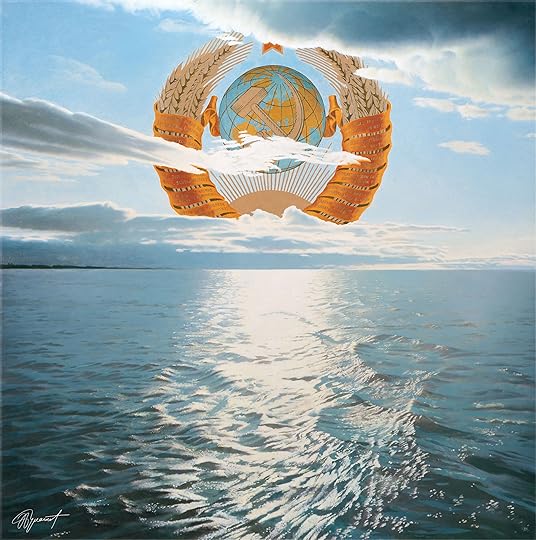
Devo riconoscere che leggendo in digitale, oltre al rapporto fisico con il libro, viene a mancare l’interazione con la copertina. Quella de “La casa degli incontri”, intravista in rete, era una bell’immagine del sole riflesso dall’acqua. A fine lettura mi interrogavo sul senso di quella copertina e così ho riaperto quella digitale, in bianco e nero, della mia edizione. Ebbene, guardando meglio, al posto del sole c’era il logo di una delle più utopistiche e fallimentari imprese del secolo scorso, contornata da due fasci di spighe (*2).
Se avessi maneggiato il libro in una qualsiasi libreria lo avrei riposto, il mio interesse per la Russia è inversamente proporzionale all’interesse conclamato per la produzione di Martin Amis. Non immaginavo che quel suddito di Sua Maestà avesse a cuore la questione al punto da documentarsi (e nei ringraziamenti lascia trapelare quanto) e da improvvisarsi prima eroe di guerra russo e poi prigioniero dei Gulag stalinisti. Non è semplice seguire la narrazione, vi sono dei salti temporali che disorientano, dei nomi che si sovrappongono e poi le epoche storiche scandite dalla morte dei presidenti sovietici che confondono. Credo che ciò avvenga soprattutto se non si è interessati al racconto, a tratti raccapricciante, di che cosa fosse la vita nei Gulag e ancora meno a cosa significhi essere eternamente russi. Sono due gli stratagemmi narrativi che Amis usa per raccontare una storia frutto della sua immaginazione e inserita in un contesto politico preciso: il primo è una sorta di autobiografia che il protagonista ottantenne scrive per la figliastra, il secondo è il viaggio di ritorno di costui nel luogo siberiano dove fu internato alla fine della seconda guerra mondiale.
Fu allora che la scorsi, nella tasca del cumulo pesante come piombo che stringevo tra le braccia: la lettera di Lev… Si potrebbe pensare che quattro anni di guerra e quasi sette al campo avessero messo la mia integrità a dura prova. Stupratore a tempo determinato (o almeno allora cosí sembrava), carnefice a sangue freddo (ma anche tumescente), intendevo, le rare volte in cui mi capitava di pensarci, tornare a essere la persona gentile che ero nel 1941. Ora mi viene da piangere alla sola idea che lo ritenessi possibile. Il genere di persona che, se paga meno del dovuto, segnala l’errore al negoziante; il genere di persona che cede il posto agli anziani e agli infermi; il genere di persona che non leggerebbe mai l’ultima pagina di un romanzo, ma ci arriverebbe con mezzi leali; e via dicendo. Ma c’era la lettera di Zoya, e io la presi.
Questo passo è un ottimo riassunto del libro, io però l’ho sottolineato perché tutte le azioni che qualificano come gentili le faccio imponendomi di farle, cioè devo far leva sull’educazione che ho ricevuto e non sull’istinto; solo leggere l’ultima pagina di un libro senza aver letto il resto per me non rappresenta neppure una tentazione. A me pare lo spregio peggiore che si possa fare ad un autore, non l’ho riservato neppure ai libri che ho abbandonato. Chi va a leggersi i finali a lettura in corso deve avere ragioni che io ignoro e non è detto abbiano a fare con la slealtà. Ho letto vari Amis con fortune alterne, nessuno di essi mi è piaciuto quanto “L’informazione”.
(*1) È la degenerazione del motto: “Quel che è mio è mio, quel che è tuo è nostro”
“…you see, when the depths stir like this, when a country sets a course for darkness, it comes to you not as horror but as unreality. Reality weighs nothing and everything is allowed.”
An aging political dissident/serial rapist reminisces about quality time spent with his kid brother in an arctic Russian gulag. And if that isn’t enough of a synopsis to send you scurrying over to Amazon.com, credit card in hand, let me risk further plot spoilage by telling you that both brothers are madly in love with the same woman.
“The love story is triangular in shape, and the triangle is not equilateral. I sometimes like to think that the triangle is isosceles: it certainly comes to a very sharp point.”
The title, House of Meetings, actually refers to the building in the prison camp where conjugal visits take place.
“You see, the house of meetings was also and always, the house of partings, even in the best possible case. There was a meeting and there was a parting, and then the years of separation resumed.”
This is my third Martin Amis novel. If he has a book out there where sex and misery are not key elements, I have yet to find it. He certainly doesn’t seem to be afraid of taking chances, and attempting to tell a compassionate tale of love and perseverance through the eyes of a brutal, murderous rapist is, inarguably, taking a big f-ing chance.
This entire review has been hidden because of spoilers.
Often I want to grab people who possess "big vocabularies" by the shoulders and shake them. Yes, you are wordy and intelligent, that does not mean you need to spew forth a litany of synonyms in place of words that would have worked much better when writing a novel. Then again, I feel that if Amis had written a bit more plainly, the novel would've been much shorter. I've seen many people on here say that Martin Amis has a certain flow and cadence with the written word, and I would have to disagree. I've not read any of his previous work, but I've seen it stated that his previous books were "better." I'm inclined to believe his mastery of the written word was prevalent in those novels, because it was not here. Oh, far from it.
This novel itself, Amis' writing style aside, was pretentious and boring. Reading the book jacket, I was intrigued, and now I feel like I was tricked. It's a trap! The book advertised is not the book that I read. Brothers? A love triangle? A Russian gulag? Sounds interesting! Yes, those elements are all there, but presented in the most ostentatious way. I'm not someone who needs everything spelled out for me, but my god, man, give us something to work with here. The words on the page did not evoke the least bit of tangible imagery for me, and were merely just that - words on a page. I could not get lost in this book, and what a shame that was. It was all so bland. Though, perhaps that was what Amis was going for? I would hope so, if only so he would succeed at something with this novel.
I could not get through the last 100 pages quickly enough.
The only thing I truly liked about this book was the typeface it was set in.
Интересен стил , който в началото ми беше приятен, после безумно ми досади. Мисля, че това, че действието се развива в трудов лагер не помогна четенето да върви лесно. Измъчих се с тази книга и я влачих както се влачи януари. През цялото време си задавах въпроса, който и Yellowface поставя - чие е правото на разказване на истории и може ли един британец да разказва за Русия като руснак. Малко арогантна ми беше тази гледна точка 'отвън' към зверствата на сталинизма.
Dom návštev je domom, na ktorý sa upierajú nádeje, túžby a pre niektorých väzňov v ruských pracovných táboroch aj zmysel, prečo prežiť všetko to zlo a násilie, s ktorým sú na tomto mieste denno denne konfrontovaní. Kniha Martina Amisa je príbehom dvoch nevlastných bratov. Rozprávačom príbehu je ten z nich, ktorý si vybral cestu násilia, aktívnej obrany voči násiliu a je aj jedným z väzňov, ktorý v pracovnom tábore vyvolá vzburu. Druhý z bratov je pacifista, do istej miery skoro romatik. Nepekná tvár, ale duša básnika a schopnosť lásku rozdávať aj prijímať rozhodne, že je šťastnejším v bratskom dueli o osudovú ženu, do ktorej sú zaľúbení obaja bratia. Femme fatale Zoja však so sebou neprináša pokoj, lásku, ani zmier. Knihe Dom návštev by som dala možno aj vyššie hodnotenie, keby nebola napísaná trocha starosvetskou formou fiktívneho rozprávania a listov nevlastnej dcére rozprávača príbehu. Touto formou a čiastočne aj štýlom písania vzdáva Amis hold svojim ruským literárnym vzoro- Nabokovovi a z časti aj Pasternakovi, ale forma spomaľuje a trocha znepredhľadňuje príbeh. Na druhej strane veľmi oceňujem prepojenosť príbehu oboch bratov s dejinami Ruska v 20. , dokonca aj 21. stor. Vojna v Afganistane, tragédia v tuneli Salang, Beslanská tragédia... Amis píše v prepojeniach.
This is an exceptional book. Written in the first person, as a series of memories and letters to his "daughter", an elderly man in simple, sometimes brutal, terms reveals parts of his life as a Russian male. Spanning the early parts of 20th century Russia to present, as a frame for his life, it's a pithy, witty, sometimes brutal, never ponderous book. I couldn't put it down.
This was a real disappointment - undisciplined, self-indulgent, and so lacking in depth -- I'm a huge fan of Zone of Interest, which is (compositionally-speaking) a real gem. This has none of that. Perhaps my expectations were too high.
The one good thing about this book is that it is quite readable, I finished it in two sittings (it helps that I find the Soviet Union fascinating -- in a "thank God I wasnt born there" way). Much of the rest often feels good and bad at the same time.
The protagonist/narrator *describes* himself as angry, well-read, a war veteran and rapist, labour-camp survivor, black marketeer, technical expert (ie. he is interesting, flawed, multifarious) but what *comes across* due to the writing is a pretentious, literary bore (Amis himself?).
The descriptions of the Gulag and insights into the Soviet Union are well put, but there is no feeling in them. Perhaps it's because Amis isnt Russian and it shows: one cant *write* British and *be* Russian at the same time (apparently the narrator's English is so good because he dated an Englishwoman!).
The suspense about the brother's letter is felt well by the reader, but there is absolutely no reason for keeping it. Moreover, the contents of the letter are totally and *pretentiously* anticlimactic. The writing towards the end feels confused, and it could be because after the anticlimax of the letter, all I wanted to do was finish the book fast.
On the whole, not a bad read, but left me with a "what was the point" dissatisfied feeling, so I wouldnt recommend it.
Напразни усилия на ехидността “Дом за свиждане”, Мартин Еймис, прев. Зорница Христова, “Фама”, 2006 г.
В края на септември прочутият британски разказвач Мартин Еймис за пръв път излиза на български. В книгата, чиято премиера е на една и съща дата както в оригинал, така и в съответните й преводи (правени по ръкописа, редовна практика при бестселърите на Гришъм или Коелю например), са включени три произведения. Романът “Дом за свиждане” е ситуиран в Русия, а разказите “Последните дни на Мохамед Атта” и “В двореца на края” – в САЩ от 11 септември 2001-а и “преддемократичен” Ирак съответно. Обединяват ги “екзотичните” човешки пейзажи и праведният гняв на автора.
Двата разказа се четат без вълнение, но свършват преди да са досадили (последните часове на единия атентатор срещу кулите-близнаци; навиците на платения двойник на един от синовете на Саддам). Романът обаче е проблем. Разгърнат като писмо от 85-годишен руски емигрант в Щатите до неговата доведена западна дъщеря, той дъвче лагери, реален социализъм, перестройки, малко Афганистан и малко заложническа криза в Северна Осетия, при повърхностно познаване на реалиите и пълна липса на емпатия. А това е мъчително.
“Дом за свиждане” страда от поне три тежки малформации, та е трудно да се каже коя точно го усмъртява много преди края му. Първа се усеща липсата на обща култура: рубахата и балалайката (в случая лагерната лексика и водката) не приближават Мартин Еймис до Русия повече, отколкото пернатата украса приближаваше Гойко Митич до Дивия Запад. Втори е огнеборският патос (срещу човешката лошотия? срещу нецивилизоваността? срещу диктатурите? просто така?), който – на години и километри дистанция от пожара – стои просто нелепо. Трето е желанието за протагонизъм на автора, което изтиква всичко останало на пети план. Темите (изборът, съвестта) и имената (Достоевски, Ахматова, Пастернак) са маркирани, не и развити, илюстрирани, анализирани, обговорени, отречени или каквото и да било там, което писателите правят обикновено с темите и имената.
Намерението уж е под лупата на личното да се разгледа социалният експеримент във “века на исполинските нищожества”. Всъщност обаче изглежда, че Еймис си е търсил труп, над който да е безопасно да повилнее – какво по-добро от СССР? “Анонимното злословие с цел лична облага е дълбоко престъпно и дълбоко руско, защото само руските престъпници биха твърдяли обратното”, заявява с необяснима увереност и кара своите марионетки да преглъщат “конско и каша al dente” с “чаша картофена водка”. Неговите “славянски матрони” са бледи, общуват с “благосклонно ръмжене” и разрешават на мъжете да ги галят под мишниците (?). А Русия “...вероятно не е успяла да покрие някой задължителен етап от развитието си. Научила се е да пълзи и да тича. Само дето не се е научила да върви.” Докато се смее на Набоковия английски, Еймис зачеква и баланса литература-история: “[Руската литература] толкова мощна и толкова истинска, [е] расла върху компост от кръв и лайна. Но английският пример показва, че литературата не печели легитимност от ужаса. Претендирайки за световно господство, английският роман попоглежда тревожно към французите, американците и – да – руснаците. Но английските стихове нямат нужда от съдници. Не е малко да имаш история и поезия, дето не познава страха...” И тъй нататък: кръв и лайна за руснаците и безстрашна политика и поезия за англичаните до тези последни редове: “Русия умира. И това ме радва.”
Спомням си “Pasha, darling!”. Така зовеше годеника си девойката Лара (Джули Кристи с изкуствена руса плитка и драматична жестомимика), малко преди в стереопорената виелица да се натъкне на египетския красавец доктор Живаго. Зле изговорените имена, хиперболичните поведения, странните одежди и кирилицата като част от декора са само част от непознаването на руското, най-малката. Останалата е нежеланието за познаване, което прави от милата наивност (американският Живаго) настървена глупост (английският Норлаг).
Освен че е син на прочутия британски разказвач Кингсли Еймис, Мартин Еймис е известен и с обилна продукция на разнообразни теми, с коментиран в пресата личен живот и – заради романа си “Пари” (1984) – с постоянния си абонамент за класации тип “100-те литературни достижения на ХХ век”. Това е повод “Дом за свиждане” да се прочете. Но ако имате една книга време за страхотиите на Русия, тичайте да си вземете колимските разкази на Варлам Шаламов. Или онова нечовешко московско произведение на Веничка Ерофеев. Или (ако ужасно държите на западния акцент) наградения с “Пулицър” Гулаг на Ан Апълбаум. Само не Еймис.
When I refer to House of Meetings as a pretty book I am not referring to the subject matter, plot or style of the book. I am instead referring to the lovely way that Martin Amis can string words together to make beautiful lyrical sentences, succinct and inventive turns of phrase and amazing descriptive passages.
Now on to the plot, which is one of the oldest, about two brothers and their love (or lust) of the same woman. Set in a Russian prison, both brothers are sent there, for being enemies of the state. Although their crimes are the same, each has a very different viewpoint about what it is to be human and how life is to be lived in an utterly bleak and unforgiving environment.
In the end, the plot loosens a bit too much for my taste and the ending is anticlimactic. If you love to wallow in language this is a book for you, if you read for a tightly plotted novel you may want to pass on this one.
Не обичам да захвърлям книги, ако от тях струи интелигентност и езиково богатство, но в този случай се предавам. Добра идея, добър замисъл, но твърде накъсано, хаотично изложение, неясни, неубедителни образи, отсъствие на диалогичност за сметка на трескава изповед. В тази история за любовен триъгълник отсъства всякакъв признак за любов. Мизерия, бруталност,завист са изместили всичко човешко в борбата за оцеляване и не мога да извлека нищо градивно от повествованието за себе си.
Selected notes from my review of Martin Amis' reading at the Seattle Town Hall in January:
Five Things Regarding the Writing of House of Meetings:
1. "I'm very reliant on the unconscious mind to write, but it wouldn't do a damn thing for me. The book was imploring me to write it. I don't think I could suffer the Gulag. Instead, I suffered the study."
2. "I was gratified when a Russian lady expressed incredulity that I hadn't been (to Russia)."
3. "It was murder getting to the point where I felt I had the right to do it. I ceased feeling like a writer at one point, and hit bottom. It's the throb you depend on, the thousand points of resistance. That's the job of the novel, to get beyond that resistance."
4. "I remember reaching for the proof pages with trembling hands. What had I done? But I was favorably impressed."
5. "There's a cartoon somewhere, where there's this guy by the pool, and he's on his second or third martini in the sun, and he's writing 'And on the third day the fourth child died'..."
Martin went on to discuss Communism, and his father's affiliation with the Party in the 1950s.
"I lived in a Communist household until I was seven, but, no I don't remember any famines or midnight arrests. When Kingsley quit the Party, he didn't become a reasonable person. He became an anti-Communist."
The question as to why the Gulag was, and remains, relative to the Holocaust, a dirty little footnote, Amis said, "Well, it's that old slogan. There are no enemies on the Left. And the Russian experiment had so much passion, so much hope that...well, who has a sentimental feeling for Fascism?"
"Fascists!" yelled some twentysomething.
"Yes, yes, I suppose," drawled Amis. "Quite fashionable to these...these kids with their doorkeys in one ear and their carkeys in the other. They're really the only ones who have time for that."
"And," said Amis darkly, "We're once again--a nod, here to Sir Penrose, upstairs--seeing Russia become this very...heavy...mass, centralizing power. Putin has his head down and there's...there's this great push, this vociferous...tendency...for status.
A Few Things Regarding the Writing of Money:
1. "I had a glorious three years writing it, and three horrible days reading it when I was done. I feared I would look outside and see a white van outside, with men in white coats, creeping..."
2. Amis pantomimed this approach by folding his hands over in front of him, like a rabbit's paws, and walking away from the podium in a half-squat.
3. "I feared that I had put all my eggs into one narrative voice."
Amis was, as could be expected, asked about the creative process. What advice did he have for writers?
"What would I have liked to hear when I was a budding 25-year-old writer? What would I want a kindly 57-year-old man say to me?" Amis drummed his lips and looked to the ceiling. A moment passed. He returned and said, "Okay, this: if you come to a difficulty when you're writing, walk away. For me, anymore, it's not even a conscious decision. I just get up and walk away. Go to the hammock and dream. Failing that, you might try to state the difficulty you're having in the narrative. Debate it in the fiction you're writing. You can always come back and disguise it, or moderate it. Just get it out there, so that it is no longer a dirty little secret. The difference, I can tell you, isn't there by accident."
A questioner stood and asked if Amis had read a recent book about the Gulag. The questioner also asked if the recent resurgence of interest in the Gulag inspired Amis to write his novel, or if his agent said that it would be a good move for the market.
"Oh, my, no. The day a writer takes story suggestions from an agent, well, that day will...that day will never come."
Amis acknowledged that, yes, Russian history was kind of filling the shelves.
"There's even one," he said drumming his chin, "about Superman arriving in Moscow in the 30s..."
For one reason or another, I missed this the first time round and because of the bleak subject matter - Modern Russia, the gulag - I avoided it, despite being (generally) an Amis completist.
That was a mistake - the book is a masterpiece.
A Russian slave-labourer, one of the Stakhanovites of the post war era, writes a memoir, in the form of a confessional, to his daughter in America recollecting a love triangle between the narrator, his younger brother and a beautiful woman, Zoya, who hypnotises them both.
The story itself is secondary to the writing, which is exquisite. There are paragraphs in this book which, for the writer, have two bipolar impacts. One, to inspire the writing of better prose. Two, to give up entirely because whatever appears on paper isn't going to be good enough.
Are you a writer? Read this paragraph, from the early stages of the book, the apogee of a long, long train journey across Siberia.
"With an hour to go, the train makes a stop at a humble township called Coercion. It says on the platform: Coercion. How to explain this onset of candour? Where are the sister settlements of Fabulation and Amnesia. As we pull out of Coercion, the carriage is suddenly visited by a cloudburst of mosquitos, and in silent unanimity - with no words or smiles or glances, with no sense of common purpose - the passengers set about killing every last one of them. By the time they are all dead (clapped in the hand, smeared across the window)you can see it on the shallow horizon: the heavy haze, like a fleece going yellow at the edges, there to warm the impossible city" (P59, para 3 & 4)
House of Meetings is chock full with paragraphs like that, a writing masterclass, a literary seminar, vignettes which say everything you need to know about mood, place, situation and character, and they say everything in a style only Amis can get away with - words as art.
Described in the multitude of reviewer praise as "the supreme stylist", many consider this to be Martin Amis' last great work, and certainly the climax of everything he has tried to achieve as a writer.
While slow in places, it's only towards the end that the reason for that becomes clear - there is a twist that hits like a sledgehammer, a blow I didn't see coming and I was standing next to it all the time.
Such was it's impact, it took me fifteen minutes to resume reading as I thought about the implications. In fact, the last thirty pages or so rank alongside "Money", or "London Fields", Amis' twin masterpieces.
Elsewhere, I reviewed "Lionel Asbo", his latest novel.
I reviewed it negatively - that's an underestimation: hell hath no fury like a (zealot? acolyte? fanboy? scorned).
House of Meetings reminded me of what I subconsciously knew and will always know - that Amis was the best British writer of his generation and the most exciting literary sorcerer there has ever been. Period.
"Ciò che non ti uccide ti indebolisce, per poi eventualmente ucciderti in un secondo momento"
dopo l'esperienza dei Campi di Detenzione, molti di quelli che sono riusciti a scampare alla morte si sono poi uccisi dopo, come a dire:"sono io che decido quando morire" il protagonista di questo lungo diario è uno dei sopravvissuti, ma non è mai più uscito dal Gulag, che resta il suo unico mondo anche anni dopo...non è una bella persona, Amis non ce lo rende certo meno realistico ammantandolo di poesia, molti lo erano, ma per sopravvivere in quelle circostanze, si sa, la prima cosa da sacrificare è proprio l'umanità, lui però era sporco anche prima e questo in un certo senso facilita le cose...ama la moglie di suo fratello, il fratello debole che lui deve difendere nel Gulag, quello che però sapeva amare, e che a un certo punto ne perde la capacità... è una storia dura, scritta col filtro dello storico che ci prova a identificarsi, ma il vetro resta, e forse è proprio per questo che si riesce a guardare in faccia l'Abisso, ci si riesce soltanto mettendoci un vetro davanti, per riflettere la propria immagine e evitare che Esso ci scruti a sua volta...
mi hanno preso tutto per il solo fatto che per me valesse tanto
So far, well-written but not my favorite Amis (Money, Time's Arrow), even with the Russian subject matter (the gulag 1950s, Stalin's death, love and the camps...) For some strange reason it reminds me of Andrew Weiner's The Marriage Artist, love and jealousy in times of atrocity... though that book had a lot more soul. Maybe I'm just too deep into my Russia book not to judge it in terms of what I like in a novel, what I would do--we call that 'the narcissism of minor differences.' While I find it admirable in its attempt to put you in the camp, I found Grey is the Color of Hope, an actual camp memoir by Irina Ratushinskaya, not to mention the superlative Day in the Life of Ivan Denisovich, by Solzhenitzyn, more emotionally engaging. I guess I found it all a little spare for my taste--though certainly has the feel of Russia and late soviet Russian writing. Reads surprisingly quickly. A voice piece an old man conveying by letter to a ?niece? Stepdaughter? his experience in the Arctic. Flawed work by Amis is still better than 95% of what's out there.
Not sure if Martin Amis is for me, this book didn’t do anything for me, I felt like I needed a thesaurus to read it and he had used one to write it, I’m not complaining about using “big words” but it felt like he was just showing off. I began to loose interest about a third of the way in, by halfway point I couldn’t care less what was happening. I’m also reading “London Fields” after that I think I’ll know if Amis is worth persisting with, or not.
With its Dostoevskian anti-hero and its willingness to explore the essence of humanity in the depths of degradation, Martin Amis’ House of Meetings may be the best Russian novel ever written by an Englishman.
In 2002, Amis published a slim non-fiction volume, Koba the Dread, in which he took liberal intellectuals to task for mostly downplaying Stalin’s tyranny in comparison to Hitler’s. It’s a comparison that still weighs on Amis’ mind in his new novel. The narrator, a Russian gulag survivor, recalls a discussion he had with his daughter about a paper she was writing for college. The question: “in the thirties and forties of the twentieth century, who was more disgusting, Russia or Germany? They were, I said. Much more disgusting. … Still, they recovered and we did not. Germany isn’t withering away, as Russia is. Rigorous atonement … reduces the weight of the offense. … In 2004, the German offense is a very slightly lighter thing than it was. The Russian offense, in 2004, is still the same offense.”
The narrator himself has much to atone for. Born in 1919, he is now “a vile-tempered and foul-mouthed old man – huge and shaggy, my hair not the downy white of the unprotesting dotard but a jagged and bitter gray.” He fought in World War II and, he tells us, “in the first three months of 1945, I raped my way across what would soon be East Germany.” But though he was a Communist Party member, he was sent to the gulag, north of the Arctic Circle, as a “socially hostile element” – meaning he had too much experience of the West to be trusted. Released in 1958, he enriched himself in the underground economy. “I had drive,” he says, “and all Russians hate that.”
The novel is cast as a memoir addressed to the narrator’s daughter. In it, he revisits the site of his 14-year imprisonment, this time as a tourist – he overhears a stewardess referring to him as “the Gulag bore in 2B.” He discovers that the place where the prison camp stood has metamorphosed into a different kind of hell, an industrialized nightmare of unchecked pollution where packs of wild dogs roam the streets. “Already uninhabitable by any sane standard, Predposylov has gone on to become perhaps the dirtiest place on earth. In the hotel there are incredulous environmentalists from Finland, from Japan, from Canada. Yet still the citizens swirl, and the smokestacks of the Kombinat puke proudly on.”
Obviously, the narrator hasn’t gone there to sightsee. Instead, it’s part of a quest to resolve a mystery left over from his days as a prisoner. In the gulag, he was reunited with his half-brother, Lev, who was almost his antitype: short, slight, pacifist, where the narrator is burly and driven. What they have most in common is their infatuation with the voluptuous Zoya, Lev’s wife.
Much of the novel deals with the ways in which the brothers survive the horrors of the gulag. But the key event happens in the thaw after Stalin’s death, when prisoners are allowed conjugal visits in a place called the House of Meetings. There, something happens between Lev and Zoya that Lev won’t speak about, but promises to reveal one day to the narrator.
This secret is hardly enough to propel the novel, and it’s possible to fault the book for a lack of authenticity: Amis’ wit, his tendency to go for the wry and very British epigrammatic insight, sometimes works against his attempt to feign a Russian sensibility. As the narrator puts it, “this is not a country of nuance.” But the power of Amis’ imagination makes up for most of the novel’s deficiencies. He has done his homework – his sources are cited in the acknowledgements. And Amis has understood that his characters are more than puppets in a work of fiction.
“I am not a character in a novel … ,” the narrator asserts. “Like many millions of others I and my brother are characters in a work of social history from below, in the age of the titanic nonentities.” Amis has brought his characters into emotional focus, to evoke the burden that history has imposed on Russia and the Russians. “Russia learned how to crawl, and she learned how to run,” the narrator says. “But she never learned how to walk.”
Hm. I think I just may not be cut out for traditional literary fiction, even when there seems to be a ripping good story attached. While there was a very distinctive narrative voice and a lot of the ideological rambling is very much in support of defining who that character is, after a certain point it just feels like authorial wankery more than anything else.
The interesting line with this book is how much of the wanking is the author trying to establish who his narrator is, a self-admitted rapist and murderer, and how much of it is descending into general author commentary. When, in the first thirty pages, the narrator whinges on about how there's been no real examination of the aftereffects of rape on the rapist and how that's not faaaaaaaaaair, yes, that's a crucial bit of information about the narrator. What squicks me is how it is written such that I think we are supposed to take the narrator seriously on this point, if even for a minute.
And so on and so forth for the next two hundred plus pages.
The other thing that left me a bit, "...is this for real?" is the big revelation at the end of the book. When the narrator finally finds out what happened between his brother and his brother's wife in the House of Meetings during their conjugal visit fifty years earlier. The thing that destroyed his brother. The problem was the sex was good and the brother just didn't care. Maybe I'm just not the target audience, but casting this entire tragedy of lives, the entirety of 20th century Russian history to some extent, through the prism of the sexual prowess of two brothers? Are you kidding me? This is totally an "The World Revolves Around My Penis" book, and I just don't give a damn any more.
Points, though, for structure. I found myself the most fascinated by the addressee of the book, the narrator's late-in-life stepdaughter. I thought the book was really well-constructed in how it created this entire relationship and life in the blank spaces around the story being told.
Points, too, to the author for having the balls to come out and say it directly, through the narrator, even - this is really a love story between the two brothers; the women are all excuses or intermediaries.
(Which, yes, that's kind of the point of the book and the narrator, but my god I'm tired of reading Serious Books in which the women are all excuses or substitutes. I think that's why the stepdaughter was so interesting - she was the only female who appeared in the entire book who was not judged solely on her sexual worth. And, of course, the stepdaughter never appeared at all.)
Yes, there are some brilliant turns of phrase. Yes, this was really skillfully constructed. But I'm not interested in literary ideological ponderings so much as I am in storytelling, and it's very clear which was more important in this book.
(Plus I just don't give a damn about the narrator's penis.)
This entire review has been hidden because of spoilers.
I didn't think a book as slim and quick to read as this one could be as powerful and epic as this. Condensing the turmoil and strife of Russian history with a parallel love triangle doomed to the same pain and repeated collapsings, Amis tells a masterful story with a narrative completely free of superfluity, sentimentalism, cliche, and woodenness.
The story runs fast and cuts deep with little recourse to clean cut resolution or apology. Horrific tragedy and the facelessness of state power are shown to the reader as hand in hand, with their simultaneous dehumanizing of the many and deification of the few (or more like the one)and the erroding of the individual in the acidic tides of totalitarian regime under different guises and faces and labels.
Basically, I'm now a Martin Amis fan because of this book, and as such I can't wait to read his other works.
This story can be read in so many different ways and under so many different lights, the point of it all, just read it, it's excellent.
The is the second, and last, I think, Martin Amis book I shall read. He does not write books that anyone would like to read(again, only a sample of 2). He seems to delight in amazing us with his prodigious vocabulary but totally overlooks the idea that what he says should seem believable, or tell a story. If you need to know what the gulag was like, read Solzhenitysn, who could actually also tell a story. This story is supposed to be a long email to his step-daughter, apologizing for being a brutish murderer rapist in the Russian Army. He meets his brother in the Gulag and is very upset that his brother has married the girl of his dreams. HIs brother, by the way, is supposed to be a poet. He tells us this but he never shows us or sells us on this the way Dostoevsky does. There is no bite to his presumably horrific scenes in the prison. They're largely nonsense. His brother, who dies in prison, leaves him with a letter detailing his love life with his wife, his brother's dream girl. Sounds screwy to me. The book, ditto.
Why Martin Amis suddenly lost his mojo is a fascinating question. This novel is clearly a labour of love and must have entailed an awful lot of research and work and yet – like all his recent novels it’s a novel that has a very faint pulse. The exuberant showmanship of Amis’ early writing is rarely on show here. It’s the story of a love triangle, sibling rivalry inside a Soviet forced labour camp. There is some good writing but ultimately so much of what happens inside the camp is indiscriminate that the writing itself begins to become indiscriminate too. Not an easy read.
I have no doubt that Martin Amis is an exceptional writer; I can surely see skill when I see it, the man writes beautifully and hence the two stars. This book just didn't do it for me. Not because of the style it was written in, clearly, skill is there, but it was more the story itself that bothered me: it was just too cliché for me (the classic love triangle between one woman and two brothers), nothing new under the sun.
Although readable, this book relied heavily upon clichés and lacked substance. The main character, though intentionally detestable, failed to provide anything of interest and the vocabulary did not seem fitting with his character throughout the first person account.
I was left disappointed by this one, but still maintain that Martin Amis is one of the finest writers... if you want something worthwhile to read, pick up 'Time's Arrow' instead.