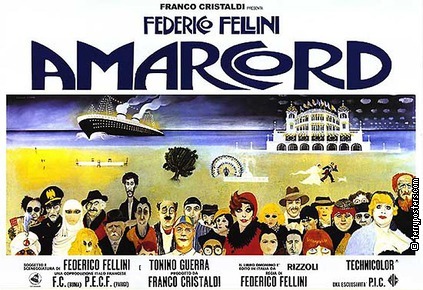
This study examines the career of one of Italy's most renowned filmmakers through close analysis of five masterpieces that span his career: La Strada, La Dolce Vita, 8 1/2, Amarcord and Interview. Providing an overview of Fellini's early career as a cartoonist and scriptwriter for Neorealist directors such as Roberto Rosselini, it traces the development of his unique and personal cinematic vision as it transcends Italian Neorealism. Rejecting an overtly ideological approach to Fellini's cinema, Bondanella emphasizes the director's interest in fantasy, the irrational, and individualism.
Peter Bondanella (1943–2017) was Distinguished Professor Emeritus of Italian, Comparative Literature, and Film Studies at Indiana University, United States.
After a biographical overview on the Italian filmmaker, Bondanella concentrates on what some consider to be the "most notable" films of Fellini. Most interesting to me was the approach on Fellini's personal "crisis" during the production of La Strada, in 1954. The filmmaker had recourse to a psychoanalyst and retained that habit of making sketches of his own dreams. Some acknowledged the profound influence Jung had on some of his movies. By 1963 he developed an interest in parapsychology.
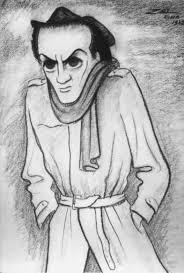
Fellini had had a job of caricaturist after Rome's liberation; he would draw caricatures and portraits for the Allied soldiers. According to Bondanella, Fellini reached maturity with La Dolce Vita.
Away from Neorealism, his style is thus worded as "a new subjective film narrative". Next are the movies at stake as in the sequence in the book.
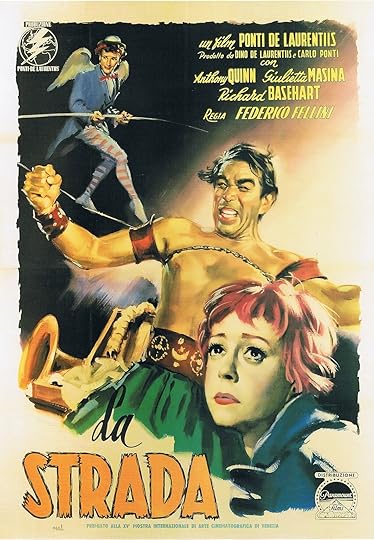
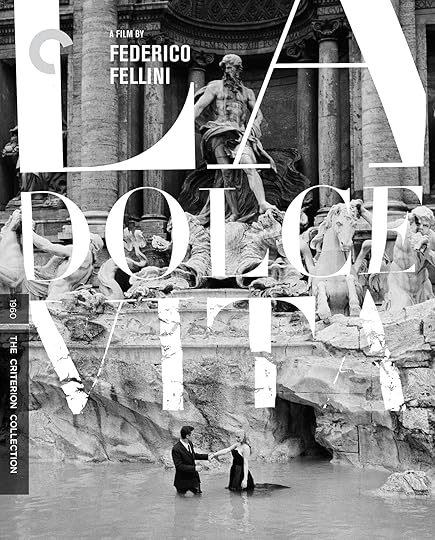
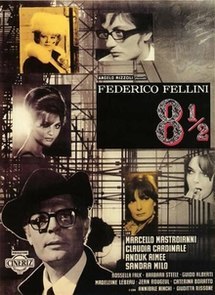
(La Strada: the cinema of poetry and the road beyond Neorealism) (La Dolce Vita: the art film spectacular) (8 1/2: the celebration of artistic creativity) (Amarcord: nostalgia and politics) (Intervista: a summation of a cinematic career)
3.5 stars. The author, Peter Bondanella, assesses the life and works of Federico Fellini in this piece, with essays focusing on five of Fellini's major films: La Strada (a film Fellini referred to as "the complete catalogue of my entire mythical world"; referred to by the author of this book as a "multilayered array of symbolic possibilities"), La Dolce Vita, 8 1/2 ("Nothing is more honest than a dream"), Amarcord and Intervista. While the work provides elucidation on some of Fellini's films and themes, at times delivering quotes from the famous Italian director or factual/historical points to substantiate, and other times offering some subjective analysis, the writing comes across at times as a bit stuffy and pedantic (slightly reminiscent in a way of Daumier, the French intellectual in 8 1/2) and many of the things Bondanella accuses other critics of doing, I feel he sometimes does himself in this work. Nonetheless, the work is illuminating, offering some insightful in-depth analysis of five Fellini films and some minor analysis of other films in Fellini's oeuvre.
This work can create a greater understanding for the viewer of Fellini's films (with so many possible subjective interpretations -- Fellini was a great poet, above all, communicating to his audience through images representing the subjective world of dreams, illusions, fantasies and complex emotions) even if one does not agree with the author on all points expressed. Despite some shortcomings, this work presents Fellini as a showman, a puppet-master, a poet and a lover of the art of illusion and the representation of dream and fantasy in cinema. As Fellini himself tells the Japanese interviewers in Intervista, "Film is a divine way of telling about life, of paralleling God the Father! No other profession lets you create a world that comes so close to the one we know, as well as to unknown, parallel, concentric ones. For me the ideal place . . . is Teatro 5 in Cinecittà when it's empty . . . a space to fill up, a world to create."
Aside from some intriguing analysis, the best parts of this work, for me, are: (1) the actual quotes from the auteur himself, something that makes me eager to read my next Fellini book, Fellini on Fellini (an apt title for a book by a director often accused of narcissism)and (2) the analysis of Fellini's pessimistic view of television as a medium antithetical to the art of cinema. For anyone interested in the work of Fellini, I recommend watching the films first, then reading these essays, then watching the films again to see how the interpretations of the author here may have shaped audience interpretation. Critical analysis, at its best (and sometimes worst), can shape or challenge our initial perceptions of art, altering our ways of seeing and understanding the artist's world.
A succinct companion book for a first foray into Fellini.
Far from comprehensive of Fellini's oeuvre, Bondanella instead identifies a few key threads of Fellini's artistic approach and tracks them through his career, selecting five films where these threads show the most. While the book does help you make better sense of these movies, Bondanella is primarily interested in exploring Fellini's mind and heart and in uncovering his motivations, which cast the most illuminating light on his unique and much celebrated cinema of poetry.
At times overly postulating, at times too celebratory, one gets the feeling that Bondanella had a tough time separating himself from his subject. While that passion that so clearly shows on the page can make the material more interesting to engage with, Bondanella's refusal to admit or analyze any flaw in Fellini's work has you ironically wondering why Fellini didn't win a dozen Best Director Oscars as you roll your eyes. Bondanella also seems too eager to advance his own interpretations rather than engaging with opposing views. But then, ironically, that seems almost appropriate when the subject is perhaps the most egotistical directors in world cinema history.
That may seem like a lot of negatives, but it's all really quite easy to brush past, and the real insight into Fellini and his films is well worth the effort. In fact I actually wish the book were more exhaustive, both in terms of breadth and depth. Each film has 20-25 pages of material - I feel 30-40 would not be unwarranted or unrewarding. And including more films would only allow Bondanella to more scrupulously examine Fellini's career arc. 8-10 films would not be too bloated - 300-450 pages instead of 160 (there are extensive resources in the back filling out the rest of the 205 total pages in my copy). Then I would be tempted to call this an "authoritative" text on the auteur. Instead it is merely an accessory - but one that any Fellini fan should make sure to add to their library.
This text was actually assigned reading for my capstone film class - Film 483: Cinema Auteurs, which this semester is 4 Fellini films and 4 Kubrick films (La Strada, La Dolce Vita, 8 1/2, Amarcord; Lolita, Dr Strangelove, A Clockwork Orange, Full Metal Jacket, for those curious). This ended up being a book I'm glad to have purchased. I look forward to reading my notes scribbled in the margins whenever I revisit these films in the future.
Which, for two of them, honestly will be a long long time, as I have to say that I actually hated 8 1/2 and Amarcord. But this book made trudging through them a little less pointless, as even if I thought the effects fell totally flat, reading Bondanella's inputs at least helped me understand what it is about the films that has garnered so much praise.
I absolutely recommend this book. For Fellini stans, you may just really enjoy Bondanella's thoughts even if you don't learn a tremendous amount. For Fellini beginners, well, you really can't go wrong here.
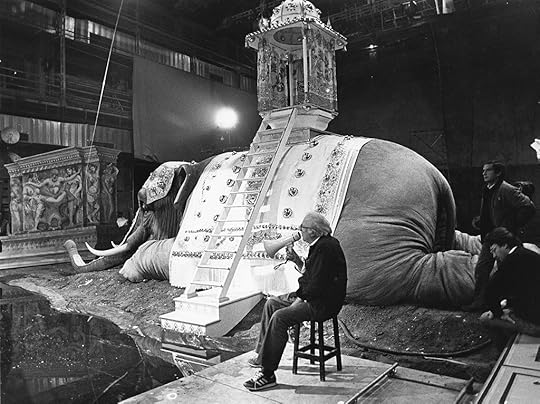
I will note that I paid full price on Amazon for this book, which was $25. For that price I was disappointed in the quality of this Cambridge University Press book, with cheap feeling glossy cover and a low res cover image, and particularly low res, black and white only stills. I would rather either pay half the price for this, or pay a bit more and get something really well done. But in the end that's neither here nor there as this is all that is available, and I would say that I do not regret the purchase one bit, and neither will you.
Good critical summary of Fellini's life and work and closer analyses of five masterworks: La strada, La dolce vita, 8 1/2, Amarcord, and Intervista.
Contains the usual annoying film critic elements, especially his apparent confidence that he is absolutely right about everything he says about Fellini's art. This is especially funny since Fellini himself launched a career-long attack on the representation of some kind of objective "reality."
But this is forgivable for me, at least, because Bondanella's writing did more to help me enjoy Fellini than it did to make me roll my eyes in frustration, and who can ask for more of a book of art criticism?