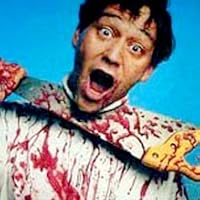
Bret Hart's honest, perceptive, startling account of his life in and out of the pro wrestling ring. "Wrestling fans will eat up all the backstage drama." —Publishers Weekly
The sixth-born son of the pro wrestling dynasty founded by Stu Hart and his elegant wife, Helen, Bret Hart is a Canadian icon. He achieved superstardom in pink tights, and won multiple wrestling belts in multiple territories, for both the WWF (now the WWE) and WCW. But he also paid the price in betrayals (most famously by Vince McMahon, a man he had served loyally); in tragic deaths, including the loss of his brother Owen, who died when a stunt went terribly wrong; and in his own massive stroke, most likely resulting from a concussion he received in the ring, and from which, with the spirit of a true champion, he has battled back.
Widely considered by his peers as one of the business's best technicians and workers, Hart describes pro wrestling as part dancing, part acting, and part dangerous physical pursuit. He is proud that in all his years in the ring he never seriously hurt a single wrestler, yet did his utmost to deliver to his fans an experience as credible as it was exciting. He also records the incredible toll the business takes on its he estimates that twenty or more of the wrestlers he was regularly matched with have died young, weakened by their own coping mechanisms, namely drugs, alcohol, and steroids. That toll included his own brother-in-law, Davey Boy Smith. No one has ever written about wrestling like Bret Hart. No one has ever lived a life like Bret Hart's.
Before you read any of this review, I would like to say I am and have been a huge Bret Hart fan and always will be especially now. Some of my opinions might be a little biased. I truly believe Bret was the greatest worker of all time.
Bret Hart, as a wrestler, was always known for bringing his A-game to the ring, and it should come as no surprise he does the same thing with his writing. One of the reviewers said this might be one of the best books he ever read period, it is hard to disagree with that. The book is well written, brutally honest, and spans not just Bret's entire career but his entire life to that point.
If you buy one wrestler's book, make sure it is this one. Another thing that makes this book better than all the rest is that Bret is not active as a wrestler anymore, and his book is independently published. He does not have to protect anyone or worry about future bookings. He talks about the drug problems in wrestling, from pain medication to recreational use. The majority of the names he has mentioned have already well-known drug problems or, unfortunately, have passed away (RIP). So there are no repercussions for them either.
Bret has been criticized for taking himself and the wrestling business too seriously. I do not think that was a criticism, if any of the young wrestlers had half the love for the business, or the desire to protect its secrets that Bret did then there would be a million more wrestling fans in the world.
Through this book, you will get to know Bret as a person and a worker, Bret leaves himself open for the reader to judge the kind of person he is. Two things that are feathered in this book are the Montreal screw job Bret describes the days as it happens and is backed up with photographic evidence of wrestling with shadows, Shawn's account in his book is completely different from what was filmed by the independent director. The death of his brothers (most famously Owen), his mother, and his father. Bret talks about his relationship with his other brothers, sisters, in-laws, and wrestlers.
I have been watching shoot interviews and articles Bret has taken apart over the years, I can honestly say Bret has not changed a word he has said then or over the years. No re-writing history here.
Just a side note to the kind of person Bret Hart is. I met Bret at an autograph secession recently, Bret was undoubtedly the biggest star there, but he did not have a separate stall or cubicle, he sat with all the other wrestlers signing, and for anyone going to these things you know you have to pay for everything the wrestler signs a Bret autograph was put down as £40 each. I and 5 other people with me had copies of his book. We asked instead of getting signed photos, if you could sign the books for us. He talked to us for a minute and signed the photos and the book without asking for a penny extra from any of us. For someone whose main source of income now is merchandising and secessions like these, he just turned down £200 in a matter of seconds, how many Celebrities would do that for their fans?
Hitman: My Real Life in the Cartoon World of Wrestling is the autobiography of former wrestler Bret "Hitman" Hart.
For a great portion of my wrestling fandom, Bret Hart was my favorite wrestler. He wasn't very big or very flashy but his matches were always the most believable on the card. Surprisingly, it took me quite a few years to actually pick this up but I'm glad I did.
For a wrestling book, this is a pretty hefty tome at close to 600 pages. Heavy enough to bludgeon another wrestler to death when the referee's back is turned, in fact. It also covers over forty years of Bret Hart's life. It covers Bret's pre-wrestling career a little more than I'd ordinarily like but since Bret grew up in the wrestling business, it didn't feel out of place. It covers Bret's sometime brutal childhood as 1 of 15 kids, wearing hand me downs and being left to his own devices a lot of the time.
Once Bret gets into the wrestling business, things take off. Bret talks about working in tiny towns for no money, driving Andre the Giant around, learning his craft and meeting veterans who came to his father's territory, Stampede Wrestling. Bret wrestles in Puerto Rico, the south, and Japan, before finally making it to the big time, the WWF.
Since Bret spent most of his career in the WWF, that's where most of the events in the book occur. He talks about forming the Hart Foundation, having great matches with the British Bulldogs, and finally being allowed to shine on his own as a singles wrestler. He talks about who was easy to have matches with, who his friends were backstage, and who was hard to deal with. He's honest about his drug use and many affairs, and what it was like to work in the WWF during the big downturn in the business around the time Vince was indicted on steroid charges.
When Bret leaves for WCW, the book takes a dark turn, not surprising since his tenure in WCW sucked from the moment he walked through the door to the moment he got his career ending concussion. From there, the constant infighting of his siblings, his stroke, and the deaths of his parents made the last 20% difficult to read.
Bret's a very good writer, especially considering he's suffered a severe concussion and had a stroke in the last decade. The book had a lot of road stories and he didn't paint himself to be better than everyone else, though his ego was probably pretty healthy.
As far as wresting biographies go, it'll be hard to top this one. 4.5 out of 5 stars.
Once again, a pro wrestling autobiography delivers the Schadenfreude like no other work can. Bret Hart is a narrator who is always willing to give himself the benefit of the doubt, while still assuming the worst about other people's intentions.
For example, other wrestlers took steroids because they wanted a quick path to the top. Hart did it because he hurt his knee and needed to keep working to feed his family. And his many, many, many extra-marital indiscretions -- covered in enthusiastic detail, of course -- yeah, he takes some responsibility for those, but he's not afraid to put a lot of it on his wife. I mean, sure Hart nailed tons of chicks on the road. But did his wife have to be such a bitch about it, even if she was raising their children all on her own while he spent a few hundred days a year on the road, wrestling and boozing and nailing chicks?
Yeah, that's the kind of ride you're in for. And it lasts over 600 pages, in small print, because Bret just has to tell you all about every single match he ever worked. Strap in.
Bret Hart is 'Best there is, the best there was, and the best there ever will be', can be also said where this belongs with the other wrestling related books. Mick Foleys Have A Nice Day: A Tale of Blood and Sweatsocks wins only for the one count, being a funniest wrestling autobiography. Bret Hart give's a honest and fascinating look of behind the scenes of a crazy world WWF/WCW and other promotions, i especially liked the 80s steroid-boosted era related stories. Chapters leading to the Montreal Screwjob and the chapter were edge-on-your-seat reading, even if you know all about this controversial (real life) professional wrestling event, it still is a great read. Almost everything after that is sad, depressing... wcw, accident, stroke, deaths...it gets under your skin and in the end i got little teary eyed, which is something to say of a book about 'cartoon world of wrestling'. I hope Bret Hart writes bonus chapter for future edition, because this ends before he get's back to WWE. This books is really a 'The Excellence of Execution'.
SO SO good and very well written- Bret Hart is actually a really well read person and writes this himself, without help from another author or ghostwriter. This book is awesome- especially if, like me, you're a hardcore Hitman fan and total WWE/wresting mark (fan). I have been watching WWE since I was about 7 years old + watched my 1st match at the home of cousins in the '80's. (It was a Macho Man Randy Savage match). That was IT. Since then, I have spent 25 years screaming at the TV, spending $$ on merchandise, traveling to WWE events (including RAW 3X, one episode of SmackDown, too many 'house shows' to count and 2 Pay Per View events, including Survivor Series 2016 in Toronto, where the Hart family wrestling tradition continues, as Bret's niece- Jim 'the Anvil' Neidhart's daughter, current WWE Women's Champ, NATAYLA fought. She is awesome).
Even if you are not a WWE fan, this story is great, especially if you're Canadian and grew up knowing about the famous Hart family of Alberta. Stu Hart, Bret's dad, ran STAMPEDE WRESTLING, a Canadian televised wrestling show, for decades, and the entire Hart family has been in the business. There are 12 kids in the Hart family, and all the boys were 'in the biz' in some way, with Bret being most famous, followed by his brother Owen Hart, and brothers-in-law, Jim 'the Anvil' Neidhart and 'British Bulldog' Davey Boy Smith. This book tells the bitter crazy truth of the world of wrasslin'- who was 'stiff', who was great, who was a drug addict, who was REALLY in charge in the locker room. (Apart from Vince MacMahon, of course).
All the dirt is here, but the book is NOT 'gossipy'. The details of Owen's death while in WWE at a PPV in 1999, the 'Montreal Screwjob' where Vince f***ed Bret out of the title and the arena almost rioted, the 'Monday Night Wars' between WWE and WCW, the life of superstars on the road, the beginnings of the careers of the Undertaker, Mick Foley, the Rock, Stone Cold Steve Austin and just HOW BIG an asshole Shawn Michaels really was at this time. (Shawn himself later admits that yes- he WAS a terrible human being in the 90s and hated by most other wrestlers, but hey- he was a drug addict, you know? Sigh).
Bret is a really good writer, although he DOES paint himself as completely selfless a little too much, perhaps. At least he is honest enough to admit to cheating on his wife on the road and other such things. These honest admissions leads readers to be able to believe the honesty behind the more unbelievable stories Bret tells.
I cannot recommend this book enough, especially is you're a WWE fan....but if you're not a fan, this is STILL an incredible biography of a crazy life and awesome athlete. --Jen from Quebec :0)
THE BEST THERE IS, THE BEST THERE WAS, THE BEST THERE EVER WILL BE! Bret Rules! I'm a fan for life, yo, and Bret's the best ever, IMO! (sorry...I kind 'marked out' there!)
Favorite quote (something to the effect of): "Wrestling is as real and as fake as you think it is."
First of all, from a writing standpoint, Bret Hart's memoir was mesmerizing. I couldn't put it down, and that's what, to me, makes a great read. By the end of the work I totally buy his allusions to Dante and Hemingway. I think he's probably much more well-read and well-rounded than anybody assumes he is. I would truly give this five stars with a bullet if I could. It's a fascinating, gripping account of a life spent in professional wrestling, much of which (the in-ring stuff, anyway) I remember vividly from my childhood.
I was a huge wrestling fan as a kid from the ages of 7-12 and cared more about it than baseball, football, or any other sport combined. It was about the only thing I'd put down a video game controller for. So it was great to read Hart's memoir and not only be drawn back to those days (and the days before and after) but to see it done with such credibility and straightforwardness. It's alternately dark, witty, deep, heartbreaking, and hilarious. Hart manages to come off a little egocentric, like all great performers tend to be, but tempers it with so much humanity and honesty that I really feel I'm getting not just a wrestling book, but a book that uses wrestling as a metaphor for life with all its quirks and frailties. Mainly he just comes off as a good man with failings. Also he sort of describes how he became an advocate for enhanced safety, medical attention, and unionization for those in the pro wrestling business. I applaud him for that given that I can think of a dozen wrestlers I watched as a kid that died before they hit their late forties.
Hart speaks with equal honesty about his brother's death and his extramarital affairs. But the best, most memorable anecdote is his time touring Jerusalem while on a wrestling tour at the height of his popularity. It's a fantastic inside look into the quirks of wrestling, the behind the scenes history, and the hidden artistry that made wrestling from BH's era so entertaining to watch. It stirred up my long abandoned childhood dreams of being a professional wrestler.
What would my gimmick be? Probably something about a mad scientist.
Very good book. Bret is now with the WWE and McMahon again. If things were so bad why does he keep going back? He seems like the spouse that calls the cops to report their spouse for abuse and then refuses to divorce the spouse. He seems to like the drama. I don't believe that he was always this way. As time and injuries have caught up with him, his options have sort of run out.
Bret has money. Bret has the ability to speak and write well. He was a hero to many because he always stayed true to himself. I hope that he will continue to act and get away from the world of wrestling.
It is not that wrestling is bad, or that Bret Hart is bad. Wrestling is a drug to him. It takes him back to a time in his life when things made sense. When he steps into the auditorium and he is cheered or booed it reminds him of his late brother Owen, his father Stu cheering him on, and the Members of the Hart Foundation (Most of whom had drug/steroid related deaths) at his side. There is no looking back. If you live in the past, the present becomes sour and turns into poison in your heart.
Bret Hart was my childhood idol, so I might have enjoyed this book more than the average person. There were more than a few things that shocked me - mostly the actions of his family members - but ultimately, it's a great companion to the stellar 3 disc DVD collection released in 2005. It could have used just a little more background on his WCW days but when you spent 12 years working for one company and 2 and a half working for another, you're going to concentrate less on the latter.
Once upon a time, from 6th through about 9th grade (approximately 1990-1994), I was a pro wrestling fan. Not just a fan, but a fanatic. In fact, you could say my obsession became a significant tool I used to survive junior high purgatory. Despite (and possibly because of) shameless gimmicks and ridiculous storylines, I was hooked. Call it moronic, call it fake, or stupid, or juvenile; you could never say it was boring. And one of the greatest ever to grace a leotard was Bret "Hitman" Hart. He brought actual skill to the ring to a sport where theatrics reign supreme, during an era where steroids were starting to get out of control (more on that later). I somehow got nostalgic about this era of my life a few years ago, and started searching for books on the subject. I got Davis County Library System to order Hart's autobiography, brilliantly titled Hitman: My Real Life in the Cartoon World of Wrestling. And in May, I read all 600 pages of it.
Anyone familiar with pro wrestling knows that it's as real as it is fake. There's only so much you can do to cushion yourself from the impact of piledrivers and suplexes (and turnbuckles and chairs). But the wear wrestlers' bodies take in the ring is just a start. In fact, if you Google the phrase "dead wrestlers," your computer will start to smoke like Snoop Dogg at Mardi Gras. There have been some high-profile casualties in the business, but many others, even famous ones, that have not generated much publicity. The media doesn't care because, at the end of the day, the general public doesn't care that much about a fake sport with scripted endings, even when there's a list of wrestlers who have died before the age of 50 - and the list is more than 70 names long. But if it were any other sport, those figures would make for a major scandal. Pro wrestling has grueling schedules, brutal physical punishment, and a tacit understanding that performance enhancers are okay. There is no off-season. There are no pension plans for retired wrestlers. The industry chews these guys up and spits them out, then their bodies give out and they die.
At any rate, Hart's insights into that industry are part of what made this a thinking book for me. But really, it only takes a paragraph or so to realize that even if you were an uppity reader, picking the book up out of sheer snobbery, Hart is a very intelligent man who cares deeply for the strange industry he was born into as well as his fans. I got the wistfulness I was looking for, especially the first 150 pages or so that focus on the early days working for his father's company, Stampede Wrestling, along with many others who would later become stars when wrestling had its heyday in the 1980s and 90s. And it went a long way for me that Hart doesn't attempt to make himself look perfect. He is completely forthcoming about his extramarital affairs on the road (which were many) and use of steroids (much more cautious than most of his contemporaries). Imperfections notwithstanding, I came away with an enormous amount of respect for the man behind the Hitman persona, and can't recommend this book highly enough.
Simply speaking, this is the best wrestling autobiography ever written. At almost 600 pages, it is incredibly detailed thanks to Bret Hart keeping diaries and voice-recorded journals throughout his career. The book also encompasses other aspects of his life besides wrestling. Such as: the tragic history of his family, drugs, adultery, marriage, having children, etc. After reading the book, one gets the feeling that Hart is more honest than most of his colleagues. With other books written by Hulk Hogan or Shawn Michaels, you get the feeling they are stretching the truth a bit. Make no mistake... Hart's ego is very present in this book. He likes himself a lot. However, unlike the Shawn Michaels or Hulk Hogan autobiographies, he has the testicular fortitude to admit the things he did wrong professionally and personally.
Hitman offers a compelling insider's view of the professional wrestling industry in the form of a narrative of Bret Hart's 23-year ring career, which concluded miserably in the chaos of WCW after Hart's time with Vince McMahon's WWF had ended in infamy with the Montreal Screwjob.
Hart doesn't always come across as likeable in his portrait of himself, particularly when he boasts of his countless extramarital affairs over the years, or the way in which he frames his own motives in noble contrast to those of his peers, even when he's essentially committing the same sins as they are. That he feels sorry for himself when the wife he takes for granted is distant or combative with him is indicative of an ego out of step with reality. Yet he does come out of this autobiography looking better than the likes of Shawn Michaels and Vince McMahon, who emerge as backstabbing villains in the sorry finale of Bret's WWF career.
Of course, it is the low points of Hart's life and career that make for the more engrossing chapters of the book. The Screwjob, the premature deaths of so many wrestlers (including Hart's brother Owen), the bad booking of Eric Bischoff and Vince Russo, the broken promises of various promoters, and the eventual submission of Bret's own battered body are fascinating to read about, not least because they're related in a deeply personal voice. Bret is, of course, his own biggest fan, and Hitman can be eyeroll-inducing when he gets too full of himself. As an account of an iconic career in a crazy business, however, Hitman is mostly riveting and certainly one of the best wrestling books I've read.
Bret Hart’s autobiography provides a detailed account of the trials and tribulations he faced growing up in the renowned Hart wrestling family in the cold plains of Calgary. From the infamous “Dungeon” training facility to his rise through the ranks of Stampede Wrestling, the WWE, and WCW, to his eventual retirement and personal tragedies, Hart is remarkably forthcoming in this compelling and well- structured biography.
This entire review has been hidden because of spoilers.
The sport of professional wrestling, or business, has always been a mystery. Even in this day and age where it is an open secret and popular form of entertainment for television, pro wrestling is still a mystery that baffles many people. While the UFC and the sport of mixed martial arts now rivals pro wrestling and delivers legitimate and unscripted bouts, the WWE and pro wrestling in the USA still aim to deliver scripted but nonetheless physical matches designed purely to entertain, rather than be strictly competition.
Lou Thesz states that it was in the mid-1920's when pro wrestling became sports entertainment, rather than pure sport. Other historians and wrestlers state it being a little later and others say it was even earlier, during the days of Frank Gotch and Georg Hackenschmidt, but this seems like pure speculation as championship matches back in those days lasted up to six hours. Whenever it was, professional wrestling used to be a combat sport, where highly conditioned athletes fought in real competition and the wrestlers themselves were legitimate wrestlers. However, decades later pro wrestling became worked, and this attracted a higher amount of showmen and superstars rather than legit shooters and pure wrestlers. Gimmicks, stories and rivalries became commonplace in order to heighten the entertainment value too. Kayfabe was a must in order to keep up the illusion that wrestling was real until the 80's when Vince McMahon publicly declared that wrestling was 'fake' and the athletes were entertaining rather than competing.
Bret Hart rarely sugarcoats wrestling. While defending it as a tough activity, he makes sure the reader knows just how each match works. The great thing is: Bret Hart was for real. A former champion amateur wrestler and a highly trained submission artist, Bret brought a legit atmosphere to each of his matches all without ever trying to hurt his opponents. Wrestling during the 80's and 90's looked tough as hell, and Bret Hart had a grueling and mentally destructive career. Steroids, alcohol, painkillers and other drugs were commonplace and Bret seemed to be floating through this cartoon world of entertainers, huge events and constant traveling. The great irony of the title is that, while seen as a popular form of entertainment, where larger than life wrestlers jump around a wrestling ring with outlandish moves, costumes and gimmicks, deep in the cave lurked career ending injuries, drug abuse, backstage politics and many -way too many- early deaths.
Bret Hart is a fantastic writer. His analytical prose flows well through a near 600 page book and his memoir is novelistic in its execution. It's an honest, frequently startling and deeply interesting memoir about a destructive yet insanely addictive sport that will always remain a mystery to the average Joe.
Reading Bret Hart’s 600-page tome was a trip down memory lane - it was hard to put down once you got engrossed in it. Bret was my favorite wrestler as I was a kid, so going back and reliving those years when I watched WWF from his point of view was very engaging. What I also enjoyed about this book is that there are a lot more layers to Bret, and to pro wrestling in general than what you see on the screen. The book is very well written and sometimes brutally raw and honest. However, I did struggle at times as events seemed to be narrated from Bret’s strict and biased point of view, often assuming the worse from others - it makes me wonder how other characters in Bret’s story would narrate the same events.
[This review also appears on FingerFlow.com, a site for review and discussion of creative works.]
Hitman: My Real Life in the Cartoon World of Wrestling describes in great detail the life of one of the greatest professional wrestlers of all time, as written by himself. Bret Hart paints a vivid picture of living at the legendary Hart house: what it was like to grow up poor in a huge family whose financial fortune was slowly sinking due to an unprofitable wrestling promotion that daddy Stu Hart wouldn't close. Having tough old Stu as a father and many older brothers hardened Bret, but for some reason it didn't embitter him. As his brothers and sisters backstabbed him and each other many times, Bret remained considerate and helpful when he could.
As a child of the 80s, my favorite parts of the books were Bret's descriptions of the fledgling WWF and it's subsequent monopoly over the pro wrestling business. Although his version of events seem a little bit one-sided, Bret reports many instances of being the nice guy while other wrestlers manipulated, cajoled and strong-armed their way to fame and riches. I couldn't help but feel Bret was naïve until the very end in his dealings with Vince McMahon, owner of the WWF/WWE. In his writing, it comes through that he knew McMahon was sneaky but let Vince walk all over him anyway.
Despite his attempts at objectivity, it's pretty clear from his first mention of him that Bret wasn't too fond of Shawn Michaels. I'm no fan of Michaels myself, but I could understand how he could negatively interpret some actions that Bret took against him, both in the ring and out. Bret took great umbrage at the direction pro wrestling was going and the people that were blocking him from having a better career, but from my perspective, it seemed like an old horse being angry at the road for having cars on it. Wrestling was changing and at the time, Bret didn't see that he didn't fit very well into what wrestling was morphing into: a more risque, even sleazy, harder and more dangerous form of entertainment.
I'm sure many wrestling fans would be interested in picking up this book for Bret's side of the infamous "Montreal Screwjob," the event at which McMahon promised to allow Bret to keep the World Championship, but then ended the match abruptly to make it seem as if Bret had succumbed to a submission hold by Shawn Michaels (Bret's own Sharpshooter hold, in fact). Although it was disappointing to read about how Bret was forced out of the WWF unceremoniously instead of graciously, it wasn't this part of the book that struck me emotionally. For me, it was the end of Bret's career at rival promotion WCW and the aftermath that were very difficult to get through. Bret's career ended because of a kick from an inexperienced wrestler that caused a concussion. Bret ignored the concussion, letting it get worse until a doctor told him he would end up worse that Muhammad Ali if he didn't stop wrestling immediately. The last part of the book is devoted to a description of Bret's stroke and recovery. It's heart-wrenching read, as it usually is when reading about a strong hero weakened by injury or old age.
For a wrestler/professional athlete, Bret is a very capable writer. Some of his descriptions of his matches get repetitive after a while and he refers to too many matches as "the best match [he:] ever had." He does a good job describing most typical wrestling terms, though there were a few that were not explained that I had to look up online. For the most part, Bret's view of himself is very even-handed: he points out his own faults and shortcomings, but revels in his successes. All in all, Hitman is an interesting and engaging read for wrestling fans, and especially for fans of the wrestler many consider to be the Best There Is, the Best There Was and the Best There Ever Will Be.
This was an absolute trip to listen to. Often credited as THE essential pro-wrestling autobiography, I was excited when this was finally released in audiobook form last month. At over 25 hours long, I knew I was going to be getting in-depth look at the career of Bret "the Hitman" Hart. And on that front, the book delivers. In the best ways and the absolute worst ways.
Bret is one of the best to ever do it but not a wrestler whose matches I don't regularly seek out to watch. While he is a brilliant technician, his style is often a bit too slow for my taste. Still, I was interested in this book because he is one of the best to ever do it and I remember growing up watching a lot of Bret Hart content. I was always a Shawn Michaels guy though so Bret Hart was the anti-thesis of that fandom.
This book is incredibly detailed with in-depth looks at his time growing up and training in the Hart Family Dungeon to his time in Stampede Wrestling before finally making it to the WWF. I love hearing the history of matches and the backstage antics that took place. I've listened to a couple of different books this year about wrestling and, while those kept things surface level, this book tells you everything. Yeah, some books will tell you wrestlers did steroids. Bret tells you exactly which ones and which butt cheek they injected them into. It is that detailed. Wanna know when Bret Hart lost his virginity? Yep, that's in there! Shout out to some "ring rat" named Sheila!
And this is where the book is brilliant and tedious. We learn everything about everything. It is always interesting, without necessarily being boring, but he does tend to go on a bit too long about some things. His time in Stampede Wrestling, while interesting, went on forever when most people want to know about his WWF time. Still, it is captivating stuff and the runtime seemed to fly by.
Now, why is the greatest wrestling book of all-time only getting 4 stars? That is because there is no bigger fan of Bret Hart than Bret Hart. It because exhausting about halfway through the book when Bret would stop whatever he was talking about to go off on a tangent about how someone told him how he was the greatest, most athletic, or sexiest to ever step foot in the ring. If you believe Bret, he couldn't go anywhere without droves of people approaching him (while weeping) and telling him how he is the greatest wrestler alive. Multiple times throughout the book he says "so and so came to me with tears in their eyes and said 'Bret, you're the best to ever do this.'" It's like, we get it. You are super talented, you don't have to tell us EVERY time someone said you were.
The other part that was mildly entertaining at first but became sad by the end is how his extra marital affairs are portrayed. At first, they are understandable because he's a young man on the road living his dream or whatever. And I'm not excusing the behavior, it is just written in an entertaining way. But by the time he is describing the 30th or 40th woman (in vivid detail) he is picking up while his wife was pregnant with one of their kids, it just becomes incredibly sad. He doesn't talk about his wife in a kind way at all. And she was at home raising his kids. I'd hate to be her reading this book hearing about all the beautiful women he decided to dedicate pages to memorializing in his book.
Overall, this is an incredible book for any fans of wrestling and I did learn a lot, mostly about how awful and dysfunctional the Hart family is. But Bret's constant self-praise and the way he talks about his wife, really brought it down for me. Still, a must-read for all wrestling fans.
"A show of excellence of execution in how to write an autobiography"
Bret Hart, one of twelve brother and sisters born to Stu and Helen becomes one of the greatest professional wrestlers of all time. This is his story of what happened from his childhood to a life in the ring.
As a kid I watched this guy rise from a jobber (slang for someone who always loses) to a world champion. I loved his intensity and no shit attitude. What I never knew was what made him the wrestler he was. It's an extremely honest if somewhat diary style autobiography, in which he talks about his home life to other wrestlers such as Jim "The Anvil" Neitheart, The Dynamite Kid and Davey Boy Smith. Bret is very open about the drug culture within wrestling and certainly is candid about the sex and violence that accompanied them while touring, especially during their Stampede days during the 80s.
There are parts of the book which will no doubt shock and appall the reader, Bret and many other wrestlers like him, lived in a world of temptation - it's going to shatter a few childhood illusions, if you buy into what Bret writes.
The first half of the book focuses on his childhood, and his extending family. I particularly enjoyed reading the parts that involved his early days as a wrestler for Stampede Wrestling and some of the tours that he went through, look for his days with a Puerto Rico organisation, it's rather amusing. Another worthwhile mention is the camaraderie he shared with wrestlers, driving around in a banged up old van with ten other wrestlers for hundreds of miles. There's some funny antics and ribbing during these journeys.
Some of the real beauty of this book involves the shared camaraderie as I've mentioned. There are also examples of behind-the-scenes glimpses into other wrestler’s lives, from Hulk Hogan, Randy Savage, The Undertaker and other less known figures. Bret doesn't pull any punches when it comes to who was a good worker, who sucked and who was good and bad for the business. I wasn't surprised to read The Ultimate Warrior was a terrible worker and had no interest in mixing with the other wrestlers. There are also some candid opinions about Triple H, Shawn Michaels, Scott Hall and Kevin Nash - this being the so-called "Clique" who apparently were running the WWF show behind the scenes. According to Bret, Vince McMahon believed Bret was too small to make it in the big time. This was during the time of big muscles and steroid crazy elephant men in the 80s. In time he would prove Vince wrong - perhaps this led to the infamous "Montreal screwjob", that lead to Bret, literally, being cheated out of his world championship belt by Vince McMahon and Shawn Michaels.
Bret talks about the death of his brother, not just how it affected him personally, but also how it tore his family apart. It's a rather sad tale of greed overruling Bret and his mother and fathers’ chance to grieve. He certainly shoots from the heart.
Having said all of this, we're only presented with one side of the story, which has many many other angles to it. This is typical with an autobiography and some of the claims could be suggested to be mere speculation - we're never know, so feel free to draw your own conclusions. For me, I enjoyed reading about the parts that were directly about the wrestling and how Bret evolved from being a kid to a world class athlete.
Bret Hart is my favorite wrestler, but I would never tag him as a particularly gifted speaker. Imagine my surprise, then, that his memoir (which, despite the blurred reality surrounding wrestling, everyone insists he wrote entirely himself) is so fluid, engaging and impassioned. Hart offers copious anecdotes of growing up in a hot-headed clan of 12 siblings all placed in the crucible of local notoriety and domestic hyperreality as the son of a legendary wrestling promoter and trainer; the chapters on the wrestler's pre-WWF life and career could almost be their own stand-alone volume of sometimes scary, often hilarious tales of vying for attention from exhausted parents and regional promotions.
But it is when Hart moves on to his entrance into the mainstream that the book becomes truly captivating, laying out the endless backstage politics, arduous ladder-climbing and endless push for innovation that goes into getting even the smallest break. You can end this book with the impression that simply getting yourself booked properly takes more of a toll than the actual wrestling. It's thrilling to see Hart, in his own recollection, finally edge toward a long-delayed breakthrough and become, for a time, the top draw in American wrestling, only for it all to fall into despair as more and more people in Hart's life succumb to drugs, injury, jealousy and dejection. I wonder how this book might have been written if he'd waited until this decade, after his complete reconciliation with WWE/McMahon, the professional debuts of the next generation of Harts, and the general softening of time. As it is, though, misery is fresh in Hart's mind, and even the mild glimmer of hope budding at the end cannot dilute the sheer horror of a family's collapse by the end of the book. There's plenty of bullshit here (Bret always seems to be the only voice of reason in an industry rapidly losing its way yet becoming more profitable than ever, and everyone always seems to need his help and instruction to wrestle to their fullest) but this is nonetheless a great, often raw autobiography that both underscores the greatness of truly inspired, artful wrestling and the horror of an industry built around faked results and real pain.
They say you should never meet your heroes. Maybe you shouldn't read their autobiographies either. This tedious book consists of three things: Bret Hart settling old scores with all the people that he feels wronged him (Bret is blameless in all of it, naturally), bragging about all the women he slept with, and detailing all the times his fellow wrestlers told him how great he was (always with tears in their eyes, "he had tears is his eyes" is a phrase used so often in this book it becomes a distraction once you notice it). He lays it on thick with the emotion throughout and it only serves to pull you out of the story. As a wrestling fan during this time and a big Bret Hart / Hart Foundation fan it's fun to revisit this era, but this is basically a 500 page poison pen letter to wrestling written by a very bitter man.
I'm not sure what to make of this. On one hand, it's the story of a tragic family. On the other, it's a story of karma at work. Namely if you associate with sleazy individuals you're bound to receive the same treatment in the end. And if you persist in marital infidelity, your spouse will eventually get fed up and divorce you. And if you keep enabling toxic people, well... Unfortunately Hart doesn't seem to get it and blames everyone but himself for how things turned out. The only one I truly felt sorry for was brother Owen, who seemed innocent of what fate befell him.
This is one of the best books I've ever read. You get a good insight into the politics and inner workings of the wrestling business. Along with a history of Bret's career, this is a great document of wrestling history.
You just know that Bret Hart is such a mark for himself that he probably wrote this autobiography in the third person and gave his editor a headache. And then the editor thanked Hart for the opportunity to work with the best. At least that's how Hart remembers it.
Hitman is the autobiography of one of the greatest professional wrestlers of all time, Bret ‘The Hitman’ Hart. For those unaccustomed to wrestling, being good doesn’t necessarily mean that he won the most (though he was a celebrated world champion), but that he was one of the best in the art (and it is an art) of professional wrestling.
Through this book you can almost feel the sweat, tears and, at times, blood that Bret shed for the business. From his earliest days working for his dad in Stampede Wrestling, to his bright prime working with his family in the WWF (now known as the WWE) or his catastrophic final days as a wrestler and beyond.
Bret’s story is so interesting because it catalogues such an interesting time in wrestling. From the death of the local territory scene in the early 80’s all the way to the near-monopolisation of professional wrestling in America, Bret saw (and wrestled) it all. What helps is that Bret is a fantastically detailed writer, taking the time to speak on other wrestlers and his opinions of them, even giving time to speak on anecdotes that he had of them. I especially enjoyed ones surrounding larger-than-life near- mythological figures in the wrestling industry, such as Andre the Giant.
I could wax lyrical about this book and wrestling in general. I won’t. All I will say is that Bret’s story is one at times more real than you could ever imagine. He doesn’t shy from anything. He tells us how it is. He doesn’t claim to be unbiased. He is bitter in moments, beautiful in others. Really, it’s what an autobiography should be.
A surprisingly fascinating read that spans a wide range of topics and areas. It's part family saga, part show-biz tell-all, part athletic recap, part business analysis, all of it interesting. I have to admit I was doubtful that a pro-wrestler's life (who was in his 40s no less) could deliver 550 pages' worth of interesting material, and I'm happy to say I was wrong.
I was a fan of the WWE (then WWF) in the mid-9os as a pre-teen, and Bret Hart was one of my favorites. I picked this up after a wikipedia clickhole took me back to those days, and I'm glad I did. Hart's childhood and early career in Stu's dungeon and Stampede wrestling in Calgary is a history of pro wrestling's last days outside the mainstream. Hart then documents the transition to the present day, with pro wrestling well established as part of the entertainment industry. The challenges of the schedule (and the drugs that make it tolerable) and the toll the business takes on the wrestlers are chronicled as one-by-one wrestlers are killed or crippled by their lifestyle. Combining sports and entertainment basically brings on the problems of both, and it shows. The business dealings behind the scenes are similarly interesting, showing a business based on promises and hope where talent is only a small part of the equation. The effect this has on a family - and Hart had 7 wrestling brothers and 4 sisters who married wrestlers - is also exactly what you'd expect, with ups and down.
I can’t believe it has taken me this long to read this book. As the old expression goes, “Better late than never.” This is an absolutely perfect wrestling book. As someone who grew up on 90’s professional wrestling, Bret Hart’s feud with his brother Owen is what initially got me interested in wrestling.
For my money, this is the best book ever written by a professional wrestler. It’s because Bret is an honorable man with integrity, courage, and honesty. He pulls no punches on those he has worked with or when it comes to describing himself.
There is so much to like about this book: First and foremost, Bret is a terrific writer with a great sense of humor. He describes wrestlers and stories with such vivid detail. It makes you feel as though you were right there with him along the way. I laughed out loud many times while reading this book.
He talks about his famous wrestling family, his work all over the world, the drama in his family, his use of painkillers and steroids, and also his love of women on the ring. The book also moved me to tears many times. Bret wears his heart on his sleeve, and it’s a great book because of it.
In a world where others can be easily bought or sold, Bret is the last of a dying breed.