Geopolitics identifies and scrutinizes the central features of geopolitics from the sixteenth century to the present. The book focuses on five key concepts of the modern geopolitical * Visualising the world as a whole * The definition of geographical areas as 'advanced' or 'primitive' * The notion of the state being the highest form of political organization * The pursuit of primacy by competing states * The necessity for hierarchy.
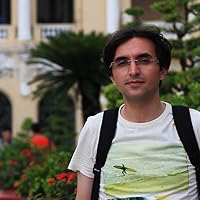
Agnew is currently Distinguished Professor of Geography at the University of California, Los Angeles (UCLA). From 1975 until 1995 he was a professor at Syracuse University in New York. Dr. Agnew teaches courses on political geography, the history of geography, European cities, and the Mediterranean World. From 1998 to 2002 he chaired the Department of Geography at UCLA.
He has written widely on questions of territory, place, and political power. He has also worked on issues of "science" in geography and how knowledge is created and circulates in and across places. He is best known for his work completely reinventing "geopolitics" as a field of study and for his theoretical and empirical efforts at showing how national politics is best understood in terms of the geographical dynamics of "places" and how they are made out of both local and long-distance determinants. Much of his empirical research involves Italy, Greece, and the United States.
Creo que tengo que ser sincero: el libro ha pasado de ser un libro sin mucha novedad y pensado a un libro más apasionante y novedoso en cuanto ha ido avanzando. Un punto fuerte es la fusión de aspectos de otras ciencias sociales, en una unidad necesaria. Me ha gustado esa unidad, pero siempre desde la parte geografía, cosa que a lo mejor menos me interesaría, sino una visión más integral. Me gusta por un lado que dé un repaso a la geopolítica a nivel teórico en la disciplina, aunque me ha dejado frío al no hablar más de ejemplos prácticos y realidades de esos marcos teóricos. Sinceramente, esperaba otra cosa (no una explicación teórica, sino práctica), para mi tema de las oposiciones. Aun así, aporta un marco interesante para precisamente el tema.
That book is complete waste of time and money. Just skip it. Geopolitics is considered from the perspective of globalization and miles away from explaining the regional issues.
It's an excellent book!! Agnew's perspective of geopolitics is completely very different to than the one accepted as normal nowadays. I'd say that he's more objective in his approach.
Geographers and political scientists apparently (I’m new to the genre) like medium-length sentences, but all the same medium-length, that they hammer out like newspaper headlines and that very extravagantly describe a thousand years and an entire globe in terms of theories of stages or lines or dichotomies of opposing ideas (all very graph worthy), pulling from and namedropping philosophers (Hegel here, Kant there) and theorists from all over the (European) world including Greeks and Christian theologians, with skirt-sweeping theatricality and grandiosity. I’d like to say I understand more now, but I’m a bit dizzy from all the waltzing and fake sabre-rattling. And those pie charts.
Tl;dr? Wild party, music was loud and everyone drank too much, the US (obviously) especially.
Pd. Why are we still discussing the Soviet Union like some nebulous threat no one understands/understood or knows anything about? And why is writing that cloudiness from the perspective of the US qua neutrality accepted? Do tell.
Pd. Honestly, the book is 20 years old, coming on the heels of 9/11, and clearly a sort of mildly critical and revisionist/progressive (?) textbook for undergrads. It’s perfect for what it was meant for. But still.
Excellent introduction to the subject and it’s intellectual underpinnings. First major book I’ve read toward a PhD in geography with a focus on geopolitics.
Voy a ser breve; este libro es una pérdida de tiempo. Si ya tienes unos conocimientos básicos de geopolítica, ignóralo, no te va a aportar nada nuevo. Y si no los tienes, no utilices este libro para iniciarte, porque va a hacer que pierdas todo el interés en la geopolítica.