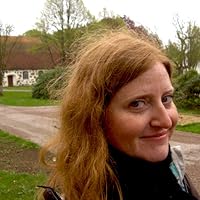
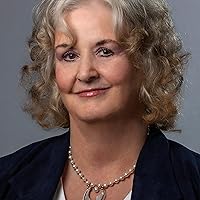
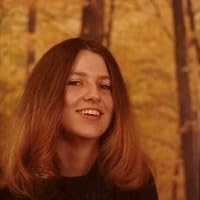
Sharon Butala (born Sharon Annette LeBlanc, August 24, 1940 in Nipawin, Saskatchewan) is a Canadian writer and novelist.
Her first book, Country of the Heart, was published in 1984 and won the Books in Canada First Novel Award.
As head of the Eastend Arts Council she spearheaded the creation of the Wallace Stegner House Residence for Artists in which Wallace Stegner's childhood home was turned into a retreat for writers and artists.[14]
She lived in Eastend until Peter's death in 2007. She now lives in Calgary, Alberta.
She was shortlisted for the Governor General's award twice, once for fiction for Queen of the Headaches, and once for nonfiction for The Perfection of the Morning.
The Fall 2012 issue of Prairie Fire, entitled The Visionary Art of Sharon Butala was dedicated to Butala and her work and influence.
It is a very personal book, and yet the writer is very careful to keep certain things at bay. There is much in her thoughts and experiences that resonate with human beings.
Writing about her life in nature, she says; "I inhabit another world now ... that is worked out physically in canning and sewing and driving the combine, where sorrow and rage and bewilderment are worked out in sky and hills, grass and wind, in the song of the meadowlark and the nightly cries of the coyotes, in the mystery of the northern lights and the moon and stars." Often one reads such beautiful and heartfelt lines.
While reading, I was annoyed by certain aspects of the book. For instance, if I adore and value something I do not have to critique something else. I do not have to constantly compare, contrast, and dismiss one lifestyle to uphold another. Although I understand why she does it, at some deeper level I detect a great degree of nostalgia of the past. In the book, she often compares herself with the women who have been living as farmers in the hostile/ beautiful nature for generations, but it seems like for her this desire to belong to such a setting is an experiment that she can afford to luxuriate in whereas for the country women it is their reality.
She writes beautifully about nature but she hardly says anything about the human pull that she is drawn, that makes her leave her professorship. She goes to live there for a farmer named Peter. While reading about her dreams and strong connection with the landscape, as a reader I want to know more about her relationship with her husband.
As one goes on reading and appreciating the hardworking farmers and their tremendous resilience, I feel admiration. Even as a superficial student of history, I wonder what kind of place this was where all these people were doing so much work by themselves (where were the slaves? Were there any natives in these places?). Almost half-through the book and there is no mention of Indian presence, and then they appear like an afterthought.
Perhaps, it is difficult to write definitively about a place when the history of the self is torn, when one history comes in the way of the other. Having said this, I would like to add that there is much in the book that is worth reading. Her intensity, passion for nature never flag as one flips through the book.
I find it very amusing that Butala writes of books "jumping" out at her during this very transitional period of her life, moving from the urban to the rural, from inclusion to isolation, from youth to maturity, from the academic to the artistic. Though published in the mid-1990s, Perfection of the Morning is a book one comes upon from time to time in Saskatchewan. I saw it many years ago on a shelf in a bookstore and thought, yes, I should read this someday but, for whatever reason, I did not buy it. When I came across it at a thrift store last week I snatched it up immediately. It was the perfect book at the perfect time. Twenty years ago, I would have had no connection to the Great Plains of Southwest Saskatchewan nor the common experience of transitioning from city life to country life and all of the aforementioned. Butala's writing is so lovely and true. Her exploration of nature and the effect of the landscape on the creative and spiritual process is moving and profound. I love it when I find an author who can give expression to some aspect of my lived experience--and near my geographic location no less! I feel as if I have found a seam of gold in my backyard and I look forward to mining Butala's work for more serendipitous wisdom.
It takes a while to get to the nuggets in this book but I have to say it's worth it. Her convoluted sentences irritated me as I had to re-read them at times to make sense of them. Positives: (1) I love how she delved into the aboriginal history of the land her husband owns. (2) Also he depth of feeling about the displaced native peoples who respected and worked these lands using the buffalo as food source. (3) She explores feminism from the viewpoint of men's erasure as to what it means to be a woman.
P152 "the more sorrowful I feel about the subjugation of my gender about how men abuse women, the best men with the best motives, by completely missing the point, by failing to support even in trivial ways by expecting us all to be mothers to them.........denying our full humanity.....that we might have a history of our own, an archetypal existence not as wounded, failed men, as graceful handmaidens or chattel but as women were or woman was".
"We had only one model for life and it was the one males devised for us."
The many dreams were also a drawback to rating this a 5/5
P. 40 (after her 1st husband had thrown her paintings in the garbage) “And I didn’t mean to let it matter, I thought if I didn’t let it, it wouldn’t. I didn’t know that there is a place deep inside where one’s real life goes on, much like an underground river in parched, dry country, which flows whether one knows about it or not. Although it was such a blow I couldn’t even respond, having been knocked to my knees metaphorically, it was a blow that I would eventually find had nonetheless left a lasting wound.” P. 65 “the world is more wonderful than any of us have dared to guess, as all great poets have been telling us since the invention of poetry. To discover these truths we don’t need to scale Mount Everest or white-water raft the Colorado or take up skydiving. We need only go for walks.” P. 105 “More and more I am coming to believe that our alienation from the natural world is at the root of much that has gone so wrong in the modern world, and that if Nature has anything to teach us at all, her first lesson is in humility.” P. 172 “The older I get and the more I see of the world, the more I understand the extent of, and the more sorrowful I feel about, the subjugation of my gender: about how men abuse women, the best men, with the best motives, by completely missing the point, by failing to support in even trivial ways, by expecting us all to be mothers to them whether we are or not, in short, in small ways, day after day, century after century, denying us our full humanity.” P. 186 “I did not think our subjugation would end until each of us were able to say from the depth of our soul, I am a woman, meaning, I am half the universe, I am made in the image of the goddess, as men at least for the last five thousand years have been saying, I am made in the image of God.” P. 213 “Why else, I thought, but because, whether we say it out loud or not, or to ourselves or not, or to each other or not, we all know, we all understand in our hearts that women are the soul of the world.”
Some books speak to us at just the right time; it’s unsettling to realize that there may be other books or voices that we’ve ignored in the past because we weren’t who we are today.
On the surface it makes little sense that this book would move me. There are no relationships, no conversations; other humans appear only briefly and even then it’s through a smudged telescope, vague hazy impressions with no sense of how their orbits affect Butala’s. There’s an epic loneliness all throughout the book, so vast that it feels almost Holy. Butala also spends rather a lot of time navelgazing: ruminating on dreams, looping about the cosmic significance of finding a certain rock in just the right place at the right time. What I usually call Meaningfulness Junkie thinking. (But then, near the end, she disarmingly writes: “I am a writer. [...] I will always go too far, say too much, examine nuances too minutely for everyday life.” Touché).
Under that surface though is a powerful bedrock of insight and, okay, Meaning. Over years of living in stark remote country Butala develops a deep appreciation for the natural world. That in itself isn’t surprising; what I find remarkable is how Butala shares that process of discovery. And especially connection: many of her insights resonate with me in a way that would not have been imaginable to pre-2014 me; before my first exposure to entheogenic medicine. That brings up such a complex swirl of emotions: loss over what I’ve missed and might still be missing; wonder, at her ability to see and describe; awe at this world and our place in it; joy. And much more, but right now what seems important is to wrap this up and go outside, get lost in the woods for a few hours. All I can say in closing is: there’s much much more: about culture, being a woman, climate change, loss. I think there’s a subset of my friends who would really appreciate this book, who will get much out of it and (if female) much different than what I did; and I would love to compare notes one day.
I read this in my early 20s and just re-read it. It means so much more to me; I have an understanding of isolation, outsider nature and a greater appreciation for writing. Loved all the details about life on the ranch and the isolation of rural life.
I enjoyed the focus of geography, place and lifestyle. Living in Whitehorse for the last three years, I have developed my closest relationship with Nature spending so much time in its many forests, by its waterbodies and on its mountains. I have heard and felt the strength of a Raven's wings above me. Athought fleeting, it is quite something. A whole body experience.
I was surprised, bored and disappointed when the narration became saturated with narrow anger and proud statements, such as the life killing the women while the men lived the good life. It then flipped to the country women being ripped from the bountiful arms of Nature to toil in the city as the rain didn't fall anymore.
I found myself reading a biography on feminist views, mysticism, and country gatekeepers of Nature. The world view that big bad city folks need the country, but can't know or understand it. Nature is not their place of residence or spiritual guide. The writer's ingnorant and dismissiveness view of the city where her older valued girlfriends live was also contradictory and in the same vein as the common dismiss of "country bumpkins". However, I did keep reading, although my consumption was broken into smaller pieces.
There is value in the writing and the personal expose. But the message of Nature and us was drowned out. I ended it contemplating the challenge to establish homogeneous wild landscapes and people over time that won't decay or exclude.
It took me a long time to read this because it wasn’t a gripping narrative and there was lots to digest. Some of the chapters were really moving for me. Despite being written almost 25 years ago, some of the writing about mindfulness and the power of nature spoke exactly and profoundly to some of my experiences during the pandemic. And then there were chapters about dreams and mythical archetypes, etc that just weren’t a hit for me. Still, I’m glad I read this and will be copying some passages into my journal to look back on.
Fantastic Memoir about a woman who moves from the city to rural cattle and farming land in Saskatchewan. Sharon Butala has captured some critical insights into the importance of nature in our our lives, how we are divorced from it as urban dwellers and how vital it is to be in touch with nature in order to steep into our full empowerment. I was captivated by the story from beginning to end. A must read.
Fabulous. I connected to Butala as a woman in way I did not expect. I am familiar with the landscape and connected to her vivid descriptions of the land.
Here's a puzzle: I'd wanted to read this for so long before I actually got around to reading it that I'd sort of forgotten what it was that I thought the book was about: not why I wanted to read it (Saskatchewan, dammit), but the basic shape of Butala's life in Saskatchewan (as told y the book description).
Having read it, though...it strikes me that hers is a very very different story than it might have been had the marriage she writes about here not been a midlife marriage. She describes a kind of freedom that I've never seen in a memoir about marrying into a ranching life—no pressure, in Butala's ranching life, to take on a specific job along with her marriage, or to conform to a certain set of ideals and capacities. This isn't meant as a criticism of any kind (against Butala or anyone else)—just an observation. Life stages change things.
Beyond that: it wasn't quite the book I was looking for (whatever that was), I think because it was so heavy on meditative and metaphysical details and less so on physical landscape. It's well-crafted and thoughtful, though, and remains at least partly to blame for my curiosity about Saskatchewan.
"If wilderness has anything to teach us, it is about our own weakness, our failure to control much less understand this earth onto which we are all born. And with this growing humility in the face of the unknown, slowly a sense of being in the presence of some great consciousness, other than one's own, begins to grow too". Butala had courage to write her story especially as she says we don't really have the words to articulate this "otherness". Especially because she went through this metamorphosis in the 1980's and wrote the book in 1994 - was anyone else admiting to such thoughts and questions? So much of what she does articulate pulls together a lot of other ideas and themes that I've been reading in the last while. It certainly does make you question our busy urban lives - and it does make you want to spend some time in solitude and in nature.
I appreciate her years'-dawning realization that we are completely different when shaped by urban environments than we are when we're surrounded by nature. And I loved that she started having mystical dreams and experiences when she moved to the prairie. It was a reminder that this connection is always there, and just covered up by the busyness and noise of daily life.
Sharon Butala must have put her heart into these reflections on her life and nature. It seemed to me a brave act to reveal thoughts and troubles in a manner that came through as self-confessional - though at one point she said it was not that. In 1975, at age thirty-five, Sharon Butala married her second husband, Peter Butala and moved to his ranch in southern Saskatchewan near Eastend located in the arid Paliser's Triangle. She left an urban lifestyle, a son, an ex-husband, academic pursuits and employment, friends and family, to take up life as a rancher's wife, completely unprepared for and untutored in rural life. Except, as she gradually realized with the deepening of her attachment to the prairie grasslands, the union with a natural environment was in her bones beginning with an early childhood on her parents' farm in Nipawin, Saskatchewan.
The beauty in "Perfection of the Morning" is the sensitivity to Nature, communing with animals, the meditative walks, and receptivity to the spiritual vibes emanating from the land and indigenous peoples.
"Close proximity to a natural environment -- being in Nature -- alters all of us in ways which remain pretty much unexplored, even undescribed in our culture." (Pg 92)
There is much to learn from the indigenous peoples in their respectful regard for land - and observed that their "understandings of the spirit world ... come with nature, come out of Nature itself; come with the land and are taught by it."
The 1980s was a decade of crisis for the prairies - drought, heat, wind - a catastrophe that portended the future. Farms failed, farming families of multiple generations lost their land, and agriculture became more corporate. As Butala wrote:
"North America, obsessed with the notion of progress and the technological means to achieve it, and increasingly urbanized, has failed to make a place for people on the land. Thousands of people, rural for generations, have been driven off it. We have raped our natural resources and despoiled them, overused pesticides, insecticides, chemical fertilizers and huge machinery to subdue Nature, and devalued the rural peoples and his/her way of life along with rural culture." (pp 178-179)
Humankind needs to adopt and live a different model, learning from the indigenous, or else we lose our humanity.
Butala in her reflections and observations on Nature, including the bloom of the yellow clover, evokes for readers the "purity of the morning".
About ten years after the publication of "Perfection ...", the Butalas donated over 5200 hectares of the ranch land to the Nature Conservancy Association of Canada. This is currently being used for sustainable cattle razing, plains bison, habitat conservation, and protection of indigenous encampments.
Throughout, Butala refers to authors whose writings helped her understand and learn. A rarity in memoirs, I think, the back of the book has two pages of sources.
This was an intensely personal memoir about the author’s transformation from urban sophisticate to rancher’s wife. I would not have thought Saskatoon so far removed from the native grasslands of southern Saskatchewan, but this account makes it seem as if they are on different planets. Butala’s description of her struggle to find her own meaning in this new environment, so alien to her, is very moving, and so beautifully written that I felt her pain. What saved her ultimately was the deep connection she developed with the landscape. This was a terribly serious book and at times I wished she had found the humor in some of her unfamiliar experiences. The descriptions of the land and sky, however, were very powerful and I could almost taste the wind and hear the grass moving. Prairie folks will know what I mean.
I read this years ago and I enjoyed it and enjoyed the book this time. Sharon has a few themes here one is discovering herself which I did not find so interesting. What I did like was the detailing of farm life especially for woman. Coming from a farm that resonated with me. My favorite theme was how the land shapes one and she speaks to nature's power. I agree with Sharon that those not of the land cannot understand, (mostly now our politicians and the majority of the population) how important it is to have many who understand nature and the land on which they live and work. It is amazing to realize the changes that have taken place in my lifetime. I know we are not better off with the changes.
After living adult years in a city, working and teaching at a university, adjusting to a rural life, many hundred miles from a city, in mid-life can be a huge challenge as Butala writes. So much of the adjustment for Butala was making an intimate connection with Nature.
I pondered at length about my mother, some questions the author pondered: are rural wives fulfilled- did they have times for books and reading, had more children that they wanted, did they want more education that was possible, want more music, art, glamour, fashion in their lives. I wish I could explore these with my mother.
A non-fiction book about the author's connection to nature and spiritual awakening after she moves to an isolated ranch in southwestern Saskatchewan. Some chapters are quite touching as Sharon Butala moves from an general observer to a a person with a deep awareness and appreciation of the land, nature, flora and fauna over a period of time. The chapters on the spiritual journey represented by her dreams seem a little self-indulgent. Her comparison of the rural vs urban female relationships comes across as being biased towards what she feels are stronger female friendships due to higher levels of education and exposure to media and culture found in urban areas.
I really appreciated the braid of inner analysis, tangible description and well-selected history/information that Butala wove. It had great balance overall; I especially loved how she dove into the stark contrast of urban vs. rural life and the unique challenges faced within both ways of life.
I did find myself wanting to know more about her interactions and history within her relationship with her husband which I felt were so central to what drew her to and deeper within the natural landscape which she came to appreciate.
Read this book a number of years ago, and many of the feelings I had are still with me. I highly recommend this book, which would be helpful to anyone trying to get a sense of the prairies, rural & small-town life, and some of Canadian history. I have visited a number of places in Saskatchewan, and the Grasslands National Park in Saskatchewan, some of which contains the ranch that Butala moved to, following her marriage to Peter. I believe the ranch was donated via the Nature Conservancy of Canada for the Park.
This was clearly a break from my usual genre. I wanted to read something different and Perfection of the Morning was intriguing. I am very respectful of Butala's growth and love of nature. I really did enjoy her thoughtful and well written descriptions of her walks and the impact the environment had on her daily life; however there were also moments I wanted her to just get on with self acceptance and be happy with her choices .
I read this stunning account of Sharon Butala's life on her husband Peter's ranch in the dry Palliser Triangle area of southwestern Saskatchewan shortly after returning to Canada. The Perfection of the Morning is the perfect introduction to this author of 22 books of fiction and nonfiction. Winner of the Governor General's Award when it was published, more than a decade later, it remains a seminal work of prairie natural history and testament to the healing power of nature.
Perfection of the Morning was published in 1995. I just encountered the book in 2021. Sharon Butala's words spoke to me as few authors do. I felt an immediate synchronicity with her dawning awareness of the power of Nature. This is a terrific book for anyone interested in and/or concerned about their world.
I've never travelled to our Canadian Prairies, but for some reason have always been drawn to stories about, in particular, Saskatchewan. (Might I have been influenced early in my reading life by Laura Ingalls Wilder's books?) Sharon Butala's story of her years and adjustment to living in a particularly unique area of southern Saskatchewan was a moving, satisfying read.
This was a good book? Felt like an extreme waste of time. You felt there should be a point to all the 'Navel gazing'. There wasn't! Quite disappointing. I feel sorry for her husband (Peter) and her son. Get out and live life lady. Writing about it misses the point!
I was going to rate this a 3 star book as it was slow going about half way through, but the last 3 chapters connecting feminism, Nature and rural life were so interesting that I had to give the book 4 stars.
A beautifully written and thought provoking book. I read this book many years ago. Having recently read Butala's recent book of short stories, I borrowed this one from the library and reread it. I was not disappointed. It resonated as much this time as 20 some years ago.
I loved this work until I didn’t. What began as a memoir about identity lost and found in nature quickly turned into a literary review and essay on those who came before us.
I found the piece itself to have a lack of identity and lost pace alongside loss of focus.