Had someone passed me a copy of The Easter Parade without me knowing who wrote it, I would have come to two conclusions after finishing. It was either written by a depressed female writer, or if not, then Richard Yates, in fact the very first sentence of "Neither of the Grimes sisters would have a happy life", basically gave the game away. I can imagine him sat there, with alcohol running through his veins, ready to inflict more downheartedness upon the literary world. And if there is one thing with Yates, he never strays away from his themes of misery, abandonment and the stark evocation of the middle class living unfulfilled lives.
This was my forth novel from Mr Yates, and although it didn't hit the heights of either "Revolutionary Road" or the short-story collection "Eleven Kinds of Loneliness" (I believe to be his masterpiece), any fan would find this most readable. And yes, it is a painfully sad piece of writing, that gives you hope one minute, only to drag you down into the depths of despair the next. But that's what he does, and does so well, as with the old saying "If it ain't broke, don't fix it. I only wish it was read predominantly during a torrential downpour, rather than an early warm summers day.
Much of the story is told with Yates’s simple, matter-of-fact style, he relates to the characters in a no-thrills way, and nails people with just a few words spoken. Two sisters, Emily & Sarah Grimes are the leading ladies and both are looked at over the years, from youth to middle age, but not in a 'under the microscope' kind of way, because with Yates, he skims over the joys of motherhood, Aunthood, love, and friendship that punctuate life, and goes full tilt at the nasty stuff, wife-beaters, psychiatric hospitals, drunkenness, and heartbreak. Only rarely does he seem to have taken a happy pill, but generally it's gloom, dreams flutter and die.
Set in his usual stomping ground of New York City and Long Island, sisters Emily and Sarah would have a bittersweet childhood, giddy with the promise that life holds, but learn all too soon that things are no bed of roses, that the the world does indeed contain physically and emotionally cruel people, both yearn for affection, success but also escape. Bleak as it is, hats off to Yates, as he manages to make the novel not only readable but also enthralling, and is a solid testament to his capacity as a great storyteller. And less does mean more, his pared-down style and conscious absence of literary complexities results in story-telling that is simultaneously easy to digest, with each page flowing like a river out to sea, even if it does lead to stormy waters.
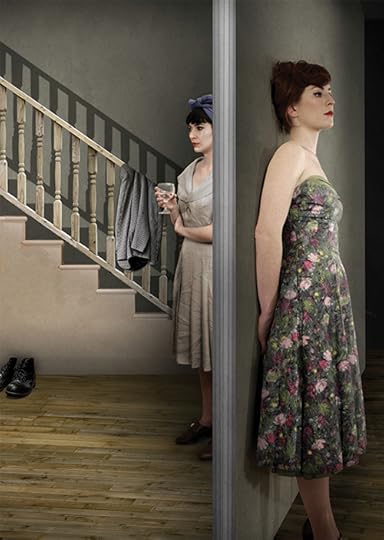
Growing up with their flighty, deluded mother (who they call Pookie), both girls would suffer in the absence of their father, Sarah embraces conventionality and settles down early for what she hopes is an idyllic life, Emily seems distant but more independant; she gets the sex before marriage and decides she rather likes it, so casual relationships are her thing, at least to begin with. But long-term happiness is elusive for both sisters. they keep in touch, but slowly drift apart, and their sisterly stature is as complex as siblings can be, both are in there own way partly jealous of each the other. Sarah would have three boys with her thuggish husband Tony, while with Emily it appears to be just one failure after another, men would come and go, and leave her burdening loneliness.
Huge moments in life are covered, but touched ever so lightly, this works well though, as we are not spoon-fed all the necessiities, leaving the reader to contemplate, with Yates’s refusal to give into sentimentality undoubtedly his greatest skill. The Easter Parade is a miserable read, no denying that, but is also very moving in places, the middle of Sarah's Sons is a ray of light through the darkness, and reaches out to Emily in a time of need towards the end.
I felt deeply for both the Grimes sisters, and rooted for each of them at different times during their difficult lives, whilst also being reminded that nothing changes the misery without our own desire to make the changes happen.