Shortlisted for the 2009 Booker
The High Beach Private Asylum, at the edge of the Epping Forest, is the place where Alan Foulds’ beautiful, poetic, and elegiac novel, The Quickening Maze takes place. The asylum had been founded by a Scottish doctor, Matthew Allen, who lived with his family on the property. The English nature poet, John Clare was sheltered at High Beach from 1837 to 1841. He was, more-or-less, unable to tell fantasy from reality and he becomes completely delusional by the book’s end, believing himself to be Lord Byron and married to his first love, Mary, as well as to his actual wife, Patty.
As the book opens, Dr. Allen and his family are awaiting Alfred Tennyson and his brother, Septimus. It is Septimus who is in need of psychiatric treatment for depression, though Alfred, after the death of his father, suffers significant upheaval and hardship himself. As a result, he decides to move to High Beach in 1837. This brings Allen in close association with both Clare and Tennyson, who, ironically, never meet. It also makes Allen and his family, especially his teenage daughter, Hannah, the center of the book, though I think most people will be interested in Alfred Tennyson, since he is the best known.
Matthew Allen was known as a humane physician, but in business matters, he was something of a scoundrel who was open to scams and illegal schemes to make money. Clare, whose hold on reality was weakening day-by-day, was still able to recognize that Allen’s business practices were more than a bit dodgy, whereas Tennyson trusted Allen far too much.
In November 1841, Allen became very enthusiastic about a wood-carving invention he believed would make him and any investors a lot of money. Of course, Allen, himself, claimed the UK patent. He bragged to Tennyson, “...we shall have an immense business. All is hope, fear is gone and I feel happy. We are all safe. Orders are flowing in from all the great ones.” And of course, he convinced Tennyson to invest his savings in the invention. However, by 1843, the whole thing had collapsed. Allen wrote, “Every stick and stave is to be sold to pay A.T. this day…and yet people boast! I ail! And I suffer! And I die!” But it was Tennyson who suffered the biggest blow. It was only Allen’s death in 1845 that saved Tennyson from legal pensury, and the amount he received wasn’t that much.
Clare, the nature poet, is presented as a free-thinker, but so is Allen’s seventeen-year-old daughter, Hannah. From the beginning of the book, Hannah’s mind is occupied with three things: men, marriage, and her own future. She waits on the arrival of the Tennyson brothers impatiently, and when they do arrive, she immediately takes a shine to the dark and brooding Alfred. I love this book, but I would have loved it a bit more had Hannah’s doomed relationship with Alfred not occupied so much of the narrative.
And some time is spent on Clare’s involvement with the Gypsies who live in the forest. They aren’t allowed to set up their camp there, so they are very suspicious of Clare, but after he shows them that he means no harm and even convinces them that he is great friends with another Gypsy family, they welcome him with open arms.
The part of the book that concentrates on Allen’s doomed wood-carving machine is interesting as is the character of Hannah, but what I felt most fascinating was Tennyson’s depression over the death of a good friend, Arthur Henry Hallum, at age twenty-two. Hallum was set to marry Tennyson’s sister, and his premature death plunged Tennyson into a deep depression that paralyzed his creative powers and lasted for years. During this time, Tennyson struggled to write an elegy he thought worthy of his friend; however, it took seventeen long years, until 1850, before he was able to produce In Memoriam: A.H.H., a cycle of poems he dedicated to Hallum.
Foulds does an excellent job of folding the story of Allen and his failed wood-carving machine, Hannah’s almost obsessive pursuit of Tennyson, John Clare’s steady, progressive descent into madness, and Tennyson’s grief over the death of his good friend, Arthur Henry Hallum and his inability to write the poem he wants to dedicate to his fallen friend into one seamless narrative. All of the characters are so fully realized and so…well…human, that it’s easy to see that Foulds lavished much love on them, and it’s easy to love them in return. However, as I wrote earlier, I was under the mistaken impression that this would be a book concentrating on Tennyson’s profound grief, and that it is not, but that turned out to be a quibble.
At its core, The Quickening Maze is such a shimmering book, filled with such exquisite prose, I found I was still very happy with it and count it as one of my very favorites. Now, I must add that the bulk of this book takes place in a psychiatric asylum. There are going to be sections that aren’t so shimmeringly beautiful. In the early pages alone, we encounter a graphic description of Dr. Allen giving an enema to a patient who hasn’t voided for three weeks. (Your imagination can fill in how horrible this would be, and to add to that, the patient doesn’t want the enema.) And that’s just the beginning of the ugly side of psychiatric asylums in the 19th century.
The ugly parts of daily asylum life are held to a minimum, though, and the book just soars with detail (a little too much detail for some, I think) and shimmering, poetic prose. It’s exactly the kind of book I love to read and reread.
5/5
Recommended: Only to those who love genuinely literary masterpieces and can tolerate a historical novel, not a book filled with only facts, however it’s very clear that Foulds has done his research and done it well.
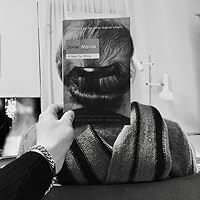
Note: I really think this book could have won the 2009 Booker, but it was up against Hilary Mantel’s Wolf Hall, and I don’t think there’s a book in existence that could stand up to that masterpiece. (I realize you might not even like Wolf Hall, and that’s fine. We all have our own ideas about what makes literature great.)
Please visit my author's Website at bellagrimaldi.com