This is a pre-1923 historical reproduction that was curated for quality. Quality assurance was conducted on each of these books in an attempt to remove books with imperfections introduced by the digitization process. Though we have made best efforts - the books may have occasional errors that do not impede the reading experience. We believe this work is culturally important and have elected to bring the book back into print as part of our continuing commitment to the preservation of printed works worldwide.
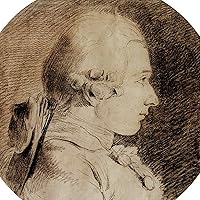
Plato (Greek: Πλάτων), born Aristocles (c. 427 – 348 BC), was an ancient Greek philosopher of the Classical period who is considered a foundational thinker in Western philosophy and an innovator of the written dialogue and dialectic forms. He raised problems for what became all the major areas of both theoretical philosophy and practical philosophy, and was the founder of the Platonic Academy, a philosophical school in Athens where Plato taught the doctrines that would later become known as Platonism. Plato's most famous contribution is the theory of forms (or ideas), which has been interpreted as advancing a solution to what is now known as the problem of universals. He was decisively influenced by the pre-Socratic thinkers Pythagoras, Heraclitus, and Parmenides, although much of what is known about them is derived from Plato himself. Along with his teacher Socrates, and Aristotle, his student, Plato is a central figure in the history of philosophy. Plato's entire body of work is believed to have survived intact for over 2,400 years—unlike that of nearly all of his contemporaries. Although their popularity has fluctuated, they have consistently been read and studied through the ages. Through Neoplatonism, he also greatly influenced both Christian and Islamic philosophy. In modern times, Alfred North Whitehead famously said: "the safest general characterization of the European philosophical tradition is that it consists of a series of footnotes to Plato."
Cette fiction philosophique platonicienne relate le procès, l’emprisonnement et les derniers moments de Socrate. Ces évènements, certainement marquant pour Platon, se situent à la source de toute la tradition philosophique occidentale. Pour le lecteur ordinaire, c’est une occasion pour réfléchir sur les valeurs sans lesquelles, sa vie ne mérite pas d’être vécue, sur ses devoirs envers autrui et son affrontement fatal avec la mort.
Plus que toute œuvre de Platon, le Socrate de l’Apologie peut être considéré comme le plus proche du Socrate historique. Accusé d’impiété, de corrompre les jeunes et de croire en des affaires de démons, il répond qu’il est au service des dieux, pour le bien de sa cité, ne détenant aucun savoir sauf la certitude de ne rien savoir, et c’est ce savoir qu’il transmettait à ces concitoyens, non sans semer le malaise et le désarroi dans leur esprit. Socrate n’a pas attendu le jour de son procès pour se défendre, il se défendait par sa conduite depuis toujours. Ni les opinions de la multitude ni le risque de la mort ne le changeront ou le feront abandonner son devoir.
Quand la condamnation à mort tombera, la discussion développée dans le Criton portera sur la question de s’exécuter à ce jugement quoiqu’injuste et démesuré. Doit-on obéir à la loi même quand elle est déviée sur sa vocation première qui est de rendre justice. Socrate expose sa conception de la loi, et ses raisons pour la respecter même dans ce cas problématique, et comment l’atteinte à la loi est un crime d’une immense gravité, qui menace l’ordre publique.
Le Phédon est de loin le dialogue le plus long et le plus sophistiqué. Il aborde un sujet crucial de la pensée platonicienne : l’âme. Si l’existence de l’âme est de l’ordre de postulat chez Platon, son immortalité reste à démontrer. Ainsi, c’est la discussion parfaite à mener pour Socrate vivant ses derniers moments. Face aux lamentations de ses disciples, à leur désespoir et crainte de voir leur ami disparaitre à jamais, Socrate montre une tranquillité et une assurance peu communes chez les humains dans sa position. Il essaie de persuader ses compagnons que la mort n’est pas un mal, et ne peut l’être, qu’une fois mort l’âme est délivrée de son fardeau terrestre, source de toute ses calamités : le corps, elle admirera les Formes avec lesquelles elle est assimilée, et laissera derrière elle le monde du changement, du devenir et du composé. Si le raisonnement trouve ses limites çà et là, c’est chose admise par Platon, mais ce n’est pas une excuse pour abandonner la recherche, ceci n’est pas l’attitude de l’homme virile et courageux qui exerce son âme à la vertu et à la justice. Au-delà de la raison, Platon introduit le mythe, en invitant ses auditeurs à l’entendre, il insiste sur la distinction entre lui et tout discours raisonné, et sur leur droit de ne pas l’accepter.
Les derniers instants de Socrate sont un tableau magnifiquement orné par Platon, la mort très paisible d’un homme qui a vécu une vie exemplaire, pleine de tempérance et de mesure, de suffisance à soi et de magnanimité aux autres, de courage et de justice et de piété.
The first two dialogues are worthwhile in considering the notion of citizenship, honesty, and virtue. The Phaedo, however, is insufferably tedious to read. While useful as a vocabulary-building tool, the argument that Socrates proposes rests entirely on barriers of linguistic binaries (such as contraries like “sleeping” and “waking,” “worse” and “better”), and frankly outdated notions of memory and perception. Because it presupposes too many assumptions to be worthwhile, I only found it slightly enriching as an example of Ancient Greek thought and religion. The description of Hades, for instance, is marvelously captivating. In short, judge for yourself, but as an actual argument, I found the Phaedo obnoxiously wishful and terribly weak.
This is an amazing book of philosophy and trial of Socrates, the man considered to be the Father of World Philosophy. The book is written by Plato, one of the staunch devoted pupil of Socrates and prominent ancient philosopher. The book is nothing but the translation of three of Plato’s works namely, “The Apologia”, “The Crito” and “The Phaedo” all of which have reference to the trial, imprisonment and death of Socrates. The first part represents the trial of Socrates in the court of law at Athens, where he argues for himself at the age of seventy, on the charges against him, that he did not believe in the Gods recognized by the State and that he had corrupted the Athenian youth by his teachings. Though Socrates gives all reasonable and logical explanations to prove his integrity and innocence, the judges sentence him to 'death by poison', which Socrates obeys, as he was committed to follow the law of the land. In the second part, Plato records the visit of Crito, Simmias, Cebes and Phaedo along with many of friends and pupils of Socrates, in the prison, to offer him a secret escape. But Socrates convinces all of them against such act, as he believes in obeying the diktat of the supreme law governing Athens. The third and the last part records the final day of Socrates in the prison when he teaches the immortality of soul, its pre-existence, its journey and the law of contraries. He comes to a conclusion that death brings about liberation of his good soul to a different world of peace and harmony and hence he welcomes such a separation without any grief or pain. He finally bids farewell to his pupils, friends, family, takes a bath and drinks the poison to lie down and pass on to eternal sleep, which he calls ‘death’ or separation of the immortal soul from the moral body.
Positives: The book gives deep insights into the understanding of wisdom and knowledge, the true identity of a great philosopher. The ideology of Socrates which brings about distinct separation of the immortal soul and mortal body through various logical explanations related to common examples that can be easily understood by a reasonably intelligent person, is well illustrated. One can get the basics of philosophical thinking and start to experience detachment from materialistic things once he finishes reading this book with utmost concentration.
Negatives: Many tough logical reasonings can be above the grasping power of many and consider Socrates philosophy as ‘insane’. Very difficult to understand some parts, if not read with concentration.
3,75/4 Le héros meurt à la fin💀 Plus sérieusement, j’ai bien aimé même si je pense ne pas suffisament être philosophe pour apprécier pleinement la parole de Socrate. J’avoue que Phédon m’a beaucoup moins plu que L’apologie ou Criton que je recommande.
This entire review has been hidden because of spoilers.
This is excellent window to Socratic thinking. Presented with the possibility of his own death he chose the road less taken. Socrates incredible trial set the scene for deep thinking in the Western tradition, about the value of philosophy and how it changes people and their values, but it's no less a deep consideration of matters of life and death. And even metaphysical matters.
Socrates has been accused to being an atheist, which he completely denied. He also denied corrupting the youth of the time. And he has lost his life because young people liked to see older citizens of Athens being put on a pickle by the Socratic method. I sometimes feel that Socrates went too far. I reckon I could have changed his mind. That was what Crito attempted to do rather unsuccessfully. Socrates put his mind at ease and defended his own death. ( I think at this point he'd be so upset that would rather die than to live. I am sorry that I was nowhere near as persuaded by his arguments as Crito appeared to be at the end there.)
The third is an account by Phaedo of the latest moments of Socrates. Much to learn here. And most of it about metaphysical issues. I think this is the most significative book, even though I probably enjoyed the Apology as a powerful example with many questions still relevant for the thinking person living in the early 21st century.
An Old Brazilian song sprung to my mind, and would many centuries later say that "any life is bigger than any song" perhaps we've learnt something since! Evoé Socrates!
Los dialogos de Critón se me han hecho bastante irrelevantes. Los dialogos de Fedón han tenido muy buenos puntos y discusiones pero me ha resultado repetitivo y insistente en temas bajo a mi parecer con poco fondo. En cuanto a la apología de Socrates me quedo con lo bien que argumentaba y dominaba el discurso más que en los argumentos en sí.
It's no wonder Socrates was so revered in his time: he's damnably clever; and the methodical way in which he reaches his conclusions are such fun to follow that even were you not to agree with him, as I often didn't, you couldn't help but wish you did. Sure, confident, unflagging in stoic persistence -- would anyone want to argue? You just want to listen.
Phaedo is probably the least relevant to modern readers. A belief in Greek mythology forms the basis of the men's speculation on death, so if Socrates were to hold the same death-bed conference today, his line of reasoning would necessarily be founded on different assmptions. But that makes his words no less fun, and his composure in the face of annihilation is still inspiring. "Death," he said, "is but the next great adventure," and --
Oh, wait. That was Dumbledore. Well -- Socrates meant as much, anyway.
Volume com uma nota introdutória de 32 páginas e uma nota bibliográfica e histórica. Apologia - apresenta a defesa de Sócrates antes da condenação, o discurso de Sócrates aos seus juízes e ao povo após a condenação falando quer aos que o condenaram quer aos que o ilibaram Críton - Pequeno diálogo sobre o Dever, que Sócrates tem com Críton quando na prisão à espera da execução da condenação com quem o incentiva para fugir, explicando as razões porque o não faz. Fédon ou Sobre a Alma - Fédon conta a Equécrates da cidade de Fliunte os últimos momentos de Sócrates antes de este tomar a cicuta, quem estava com ele, do que conversaram e do que Sócrates lhes ensinou, sobretudo das razões para aceitar a sentença e a sua execução.
Sócrates, para Cebes: - Decerto compreenderias, penso eu, que, ao afirmares que um homem é maior ou mais pequeno por causa da cabeça, não terias de responder a um objector que te dissesse, antes de mais, que era pela mesma coisa que o maior é maior e o mais pequeno é mais pequeno e, depois, concluísse ser pela cabeça, que é pequena, que o maior é o maior, sendo prodigioso que um homem seja grande por causa de uma coisa pequena. Não recearias tais objecções? - Sim - respondeu Cebes, rindo-se.
Este livro despertou o meu interesse por filosofia, tinha 17 anos quando li esta historia, na altura era uma versão muitíssimo resumida da Guimarães editores, 4 anos se passaram e afinal, existe outras versões bastante mais completas, grandes pormenores me escaparam na altura. Duvidas sobre a existência da alma de cada um são assuntos esclarecidos por Sócrates, por exemplo... É um livro absolutamente fabuloso, RECOMENDO !
Encore une fois, une œuvre pas si évidente pour une review, mais très accessible selon moi. La première partie relate le procès de Socrate, son plaidoyer, et sa condamnation. La seconde partie, elle, relate de la proposition de Criton à ce dernier de s'échapper, mais des raisons qui poussent Socrate à refuser, et accepter son jugement. La troisième et dernière partie relatera de la mort de Socrate sur fonds de réflexions philosophiques où se confondront la pensée de Socrate et de Platon. Socrate dérangeait. Corruption des jeunes en les poussant à réfléchir, penser et débattre -et donc remettre en question les philosophes professionnels de l'époque- ; et sans compter son athéisme -présumé-.
Entre les moyens employés par Socrate pour démonter les arguments de ses interlocuteurs afin de les pousser à admettre leur défaite dans la plaidoirie, sans pour autant chercher à les humilier ; mais également la façon dont il défend les lois lorsque Criton lui propose de s'échapper, c'est très riche, et très clair.
Cette clarté est un point fort, récurrent chez Platon au travers de son professeur, pour ceux voulant s'essayer aux ouvrages philosophiques. (⁀ᗢ⁀)
I've read this version only for the Crito, of which I could find separately no where else on Amazon for free, like I could the other dialogues. I was hesitant to believe that Socrates could convince me that the laws should he obeyed at any cost, but he seems to have done a very good job. Still, I must reflect on what to do when the laws are clearly unjust, and must be revolted. Of course, what I am referring to is my reverence of the American Revolution, and my hypocrisy in both believing the laws should be obeyed while also believing the revolution was just. I still believe this, despite its apparent hypocrisy, but I will have to reflect more on it. Socrates makes a compelling argument for the purpose of laws, and the purpose of following the laws. Even in his arguments, he makes points that I have often thought, yet never organized in such a way as he. Truly a great philosopher and a great man.
I think it is surprising how easy these dialogues read. I would say the emphasis here is the immortality of the soul, the value of philosophy (to prepare you for a better afterlife), and why we should not fear death. You may not agree with all of his conclusions, but still worth reading to consider how one of most important philosophers reasoned through these things. (Oliver Wendell Holmes said that all of philosophy is just commentary on Plato).
Sorprendentemente este libro ha sido muy fácil de leer. Es interesante entender la forma de pensar y de interpretar que tenían los filósofos de antes, especialmente las percepciones y dudas que surgían con respecto a la justicia, la vida, la muerte, Dios e incluso la ciencia.
Es un muy buen libro, puede llegar a ser tedioso pero en general es más que todo cautivador.
Thrilling read, specially Phaedo! It's definitely a must read for cynics like myself who find themselves left about and alone in the world pondering why isn't everyone so reasonable, we find a companion in socrates and his friends. I think i am going to go back to this book again and again....
Points where semantics are represented as philosophy and others places where you're in awe of the intelligence spoken over 2 thousand years ago. Man still hasn't caught up to Socrates. Important to understand western thought. Many overlaps with the main religions of the world.